Exhibition Diary: A Double Feast at the Pudong Art Museum — Picasso's Color Revolution and the Pattern Miracles of the Louvre
Meta Description: Explore Picasso's color revolution and Louvre's pattern miracles at Pudong Art Museum. Discover Paul Smith's immersive curation, Cubist masterpieces, and Islamic geometric art in this 1500-word SEO-optimized guide.
Introduction: A Last-Minute Art Pilgrimage to Shanghai's Pudong Art Museum
In May, Shanghai's air carried the damp breath of early summer. On the very last day before two major exhibitions — "Extraordinary Picasso" and "The Miracle of Patterns" — were to close, I finally stepped into the Pudong Art Museum. To be honest, the decision was somewhat hasty. But when I stood in those worlds built from color and line, all the rush became worthwhile.
This exhibition journey felt like a dialogue across time — on one side, Picasso's lifelong obsession with "painting like a child"; on the other, the breathtaking precision of Islamic geometric art. Two completely different aesthetics, yet they resonated strangely in the same space.
If you're planning a visit to the Pudong Art Museum or searching for the best Picasso exhibitions in Shanghai, this guide will walk you through the highlights, curatorial innovations, and hidden gems that make this double feast unforgettable.
Extraordinary Picasso: When a Fashion Designer Reshaped the Master's Exhibition
A Curatorial Experiment That Defied Tradition
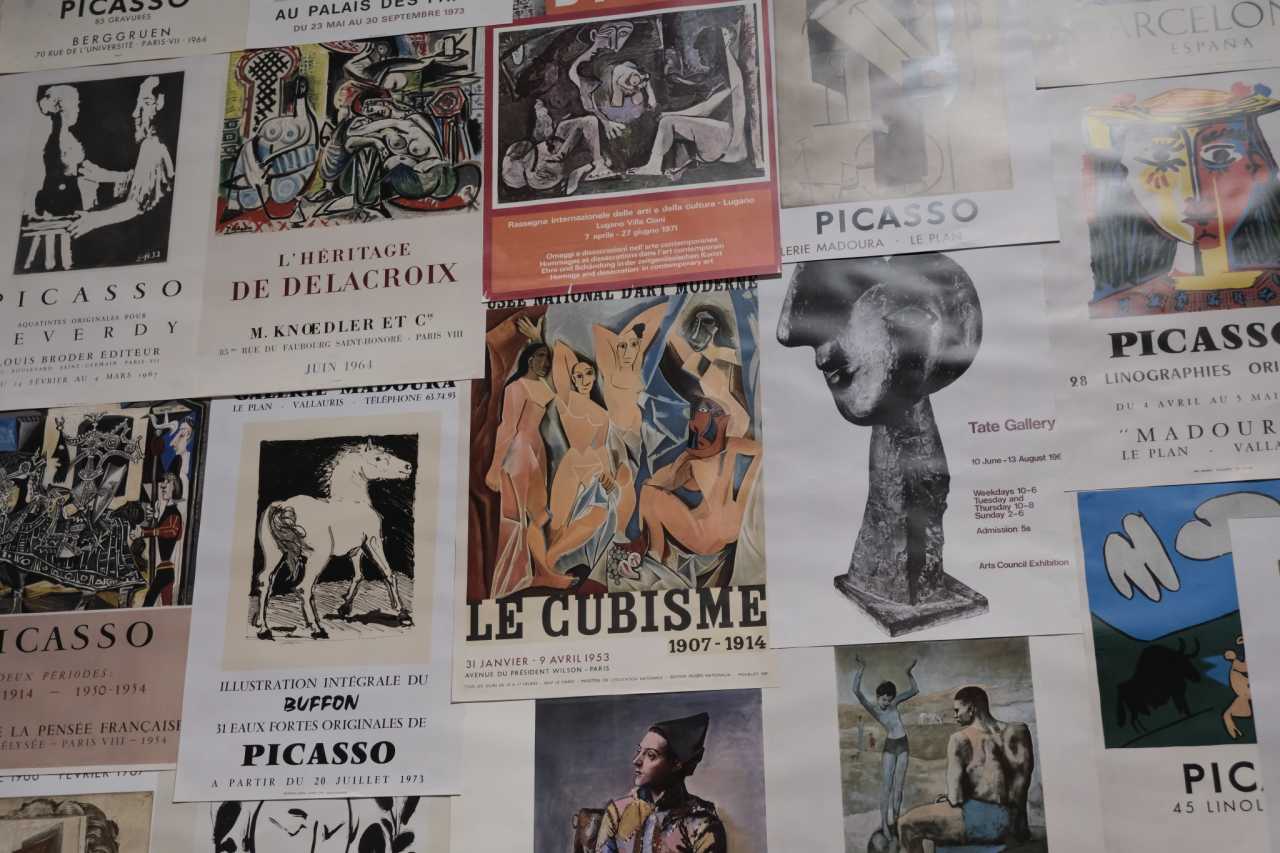
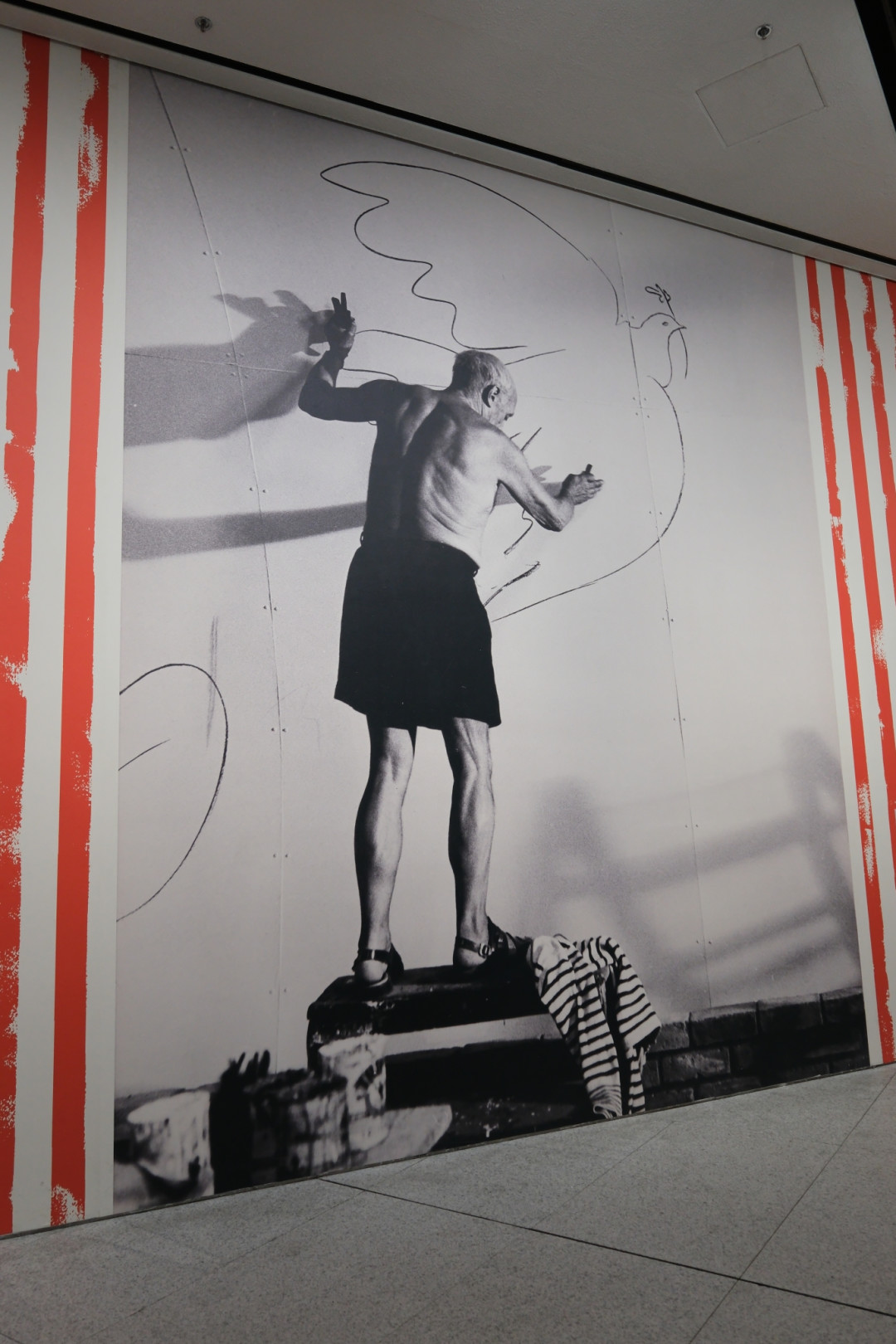
Usually, when we walk into an art museum, we see white walls, spotlights, picture frames — the standard "serious art" setup. But this time was different. British fashion designer Paul Smith took the curatorial reins, and he was blunt: traditional white walls made Picasso seem too "aloof."
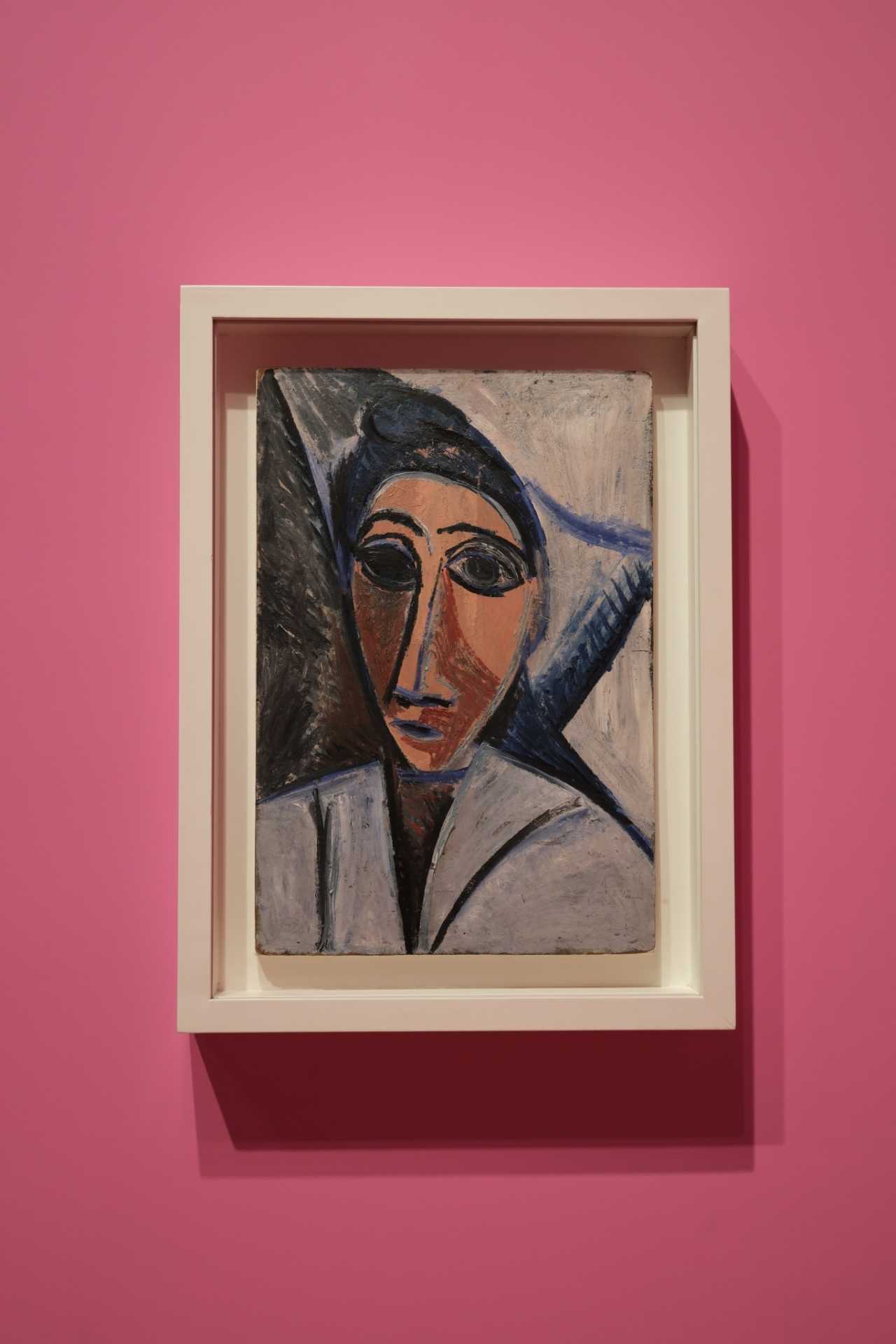
So he did something bold: he used color, stripes, and patterns to construct every exhibition zone. The melancholy of the Blue Period was wrapped in deep blue walls; the tenderness of the Rose Period was set off by rose-colored spaces; the Cubist section was echoed with geometric color blocks. You were no longer standing outside the paintings "appreciating" Picasso — you were stepping into his world, surrounded by his emotions.
This immersive design turned the entire exhibition into an adventure in color and emotion. For anyone interested in immersive art exhibitions in Shanghai, Paul Smith's approach offers a masterclass in breaking the fourth wall between viewer and artwork.
Picasso: A Genius's Journey Back to Childhood
Pablo Picasso (1881–1973) — the name itself is a chapter in modern art history. At age seven, he began learning to paint from his father, an art teacher. By eight, he had completed his first oil painting, The Matador. At fourteen, he entered the La Llotja School of Fine Arts in Barcelona, producing academic works like First Communion, which won praise at the city's art exhibition. At fifteen, his Science and Charity won a gold medal at the Malaga Provincial Fine Arts Exhibition.
But what's most astonishing about this genius isn't how technically skilled he was as a youth — it's his later quote: "I could paint like Raphael at fourteen, but I spent a lifetime learning to paint like a child."
From the melancholy of the Blue Period to the tenderness of the Rose Period, from the upheaval of Cubism to a final return to childlike freedom — his life was a constant journey back to childhood. This Picasso artistic evolution is perfectly captured in the Pudong Art Museum's layout.
[Link: Explore more about Picasso's artistic periods and their influence on modern art]
The Blue Period: The Color of Poverty and Sorrow
From 1900 to 1903, Picasso was at a low point. He had just arrived in Paris and witnessed poverty, despair, and loneliness. More devastatingly, his close friend Carles Casagemas committed suicide in a café after a failed romance. These experiences drove Picasso to ponder the essence of life, love, and death.
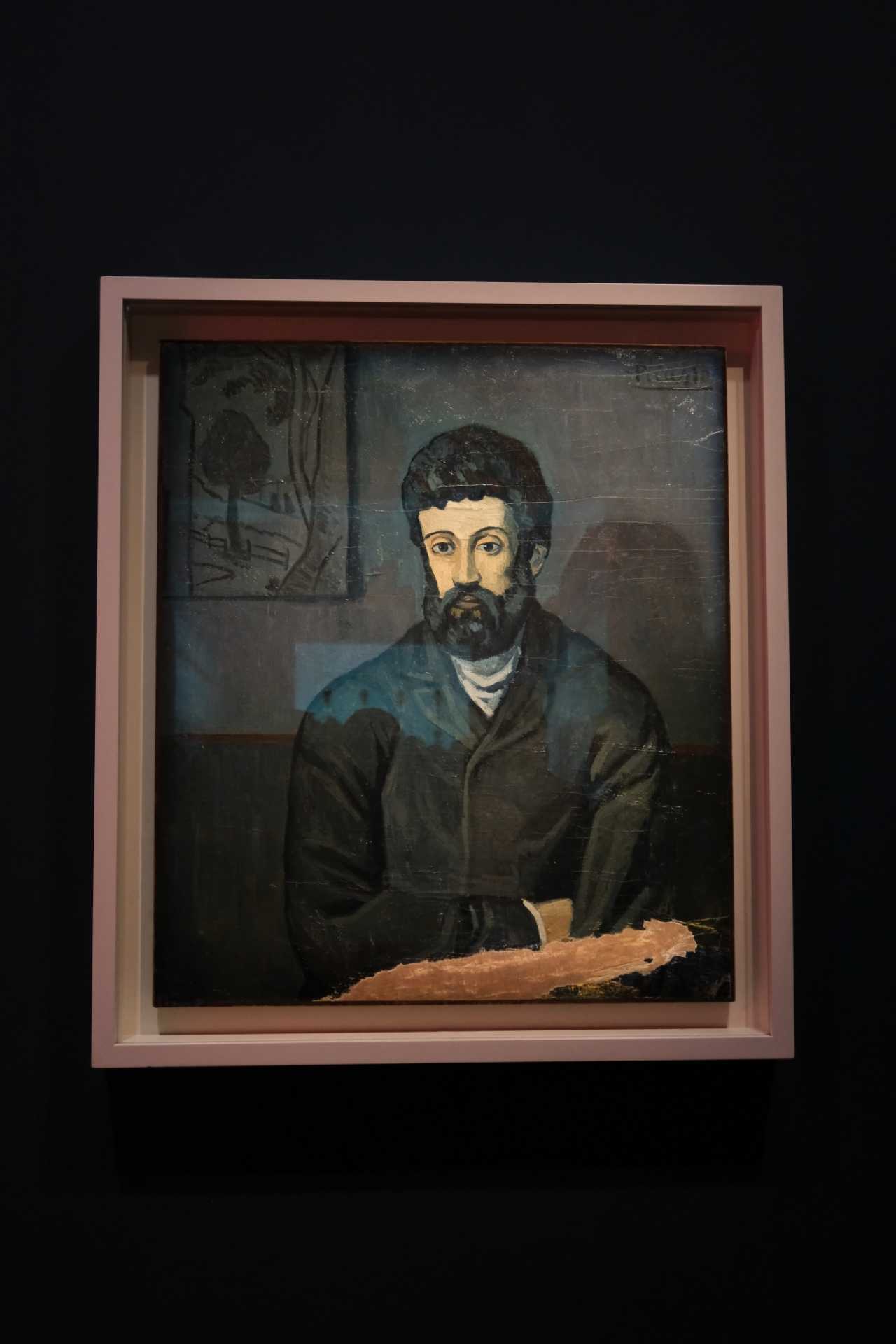
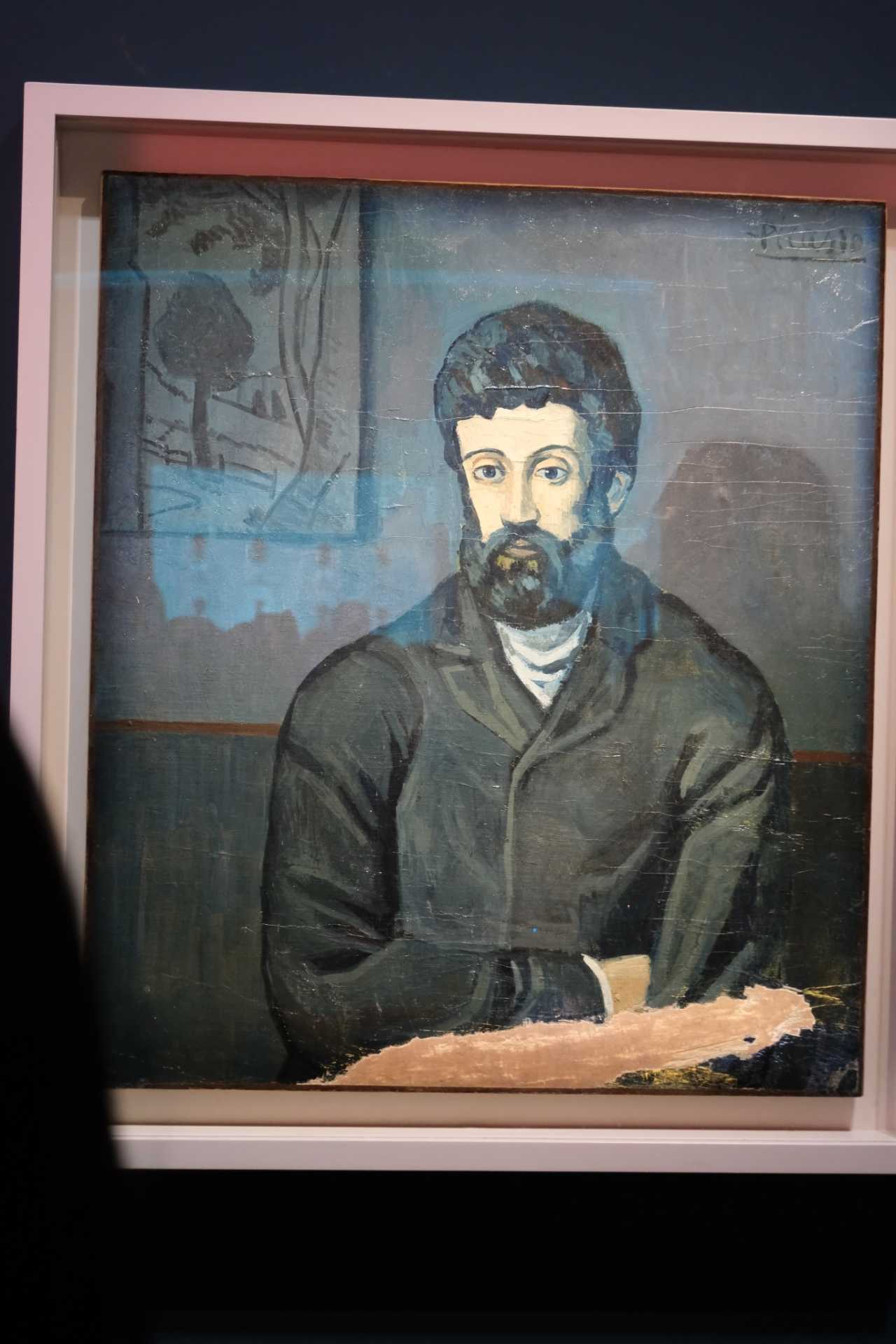
The paintings from this period are almost entirely dominated by blue — that cold, melancholic, suffocating blue. The Portrait of a Man in the exhibition was particularly striking: the man stares blankly, arms crossed in a defensive posture. Interestingly, there is a brownish mark at the bottom of the canvas — damage from handling during transport. This "accident" added an extra layer of time's texture to the work.
For art lovers seeking Picasso Blue Period paintings in Shanghai, this exhibition offers rare access to works that capture the artist's most vulnerable moments.
The Rose Period: The Warmth of Love
In 1904, Picasso settled in the Montmartre district of Paris and began living with Fernande Olivier. On his canvases, blue gradually faded, and soft pink began to seep in. The painting Boy with a Pipe in the exhibition is a typical example — though the boy wears blue work clothes, the background wall is filled with rose pink and painted with two large bouquets of flowers.
This shift wasn't just the warmth brought by love; it was also a choice of the era. The rise of photography meant that "recording reality" was no longer painting's exclusive mission. Artists began searching for new paths.
The Rose Period of Picasso marks a pivotal transition in his career, and the Pudong Art Museum's exhibition does justice to this tender, transformative phase.
Cubism: Breaking the World Apart and Reassembling It
In 1907, at the Trocadéro Palace's ethnographic museum in Paris, Picasso saw African wood-carved masks. Those rough, exaggerated, primal forms deeply shocked him. At the same time, he was influenced by Cézanne's idea of "treating nature by the cylinder, the sphere, the cone."
Thus, Cubism was born.
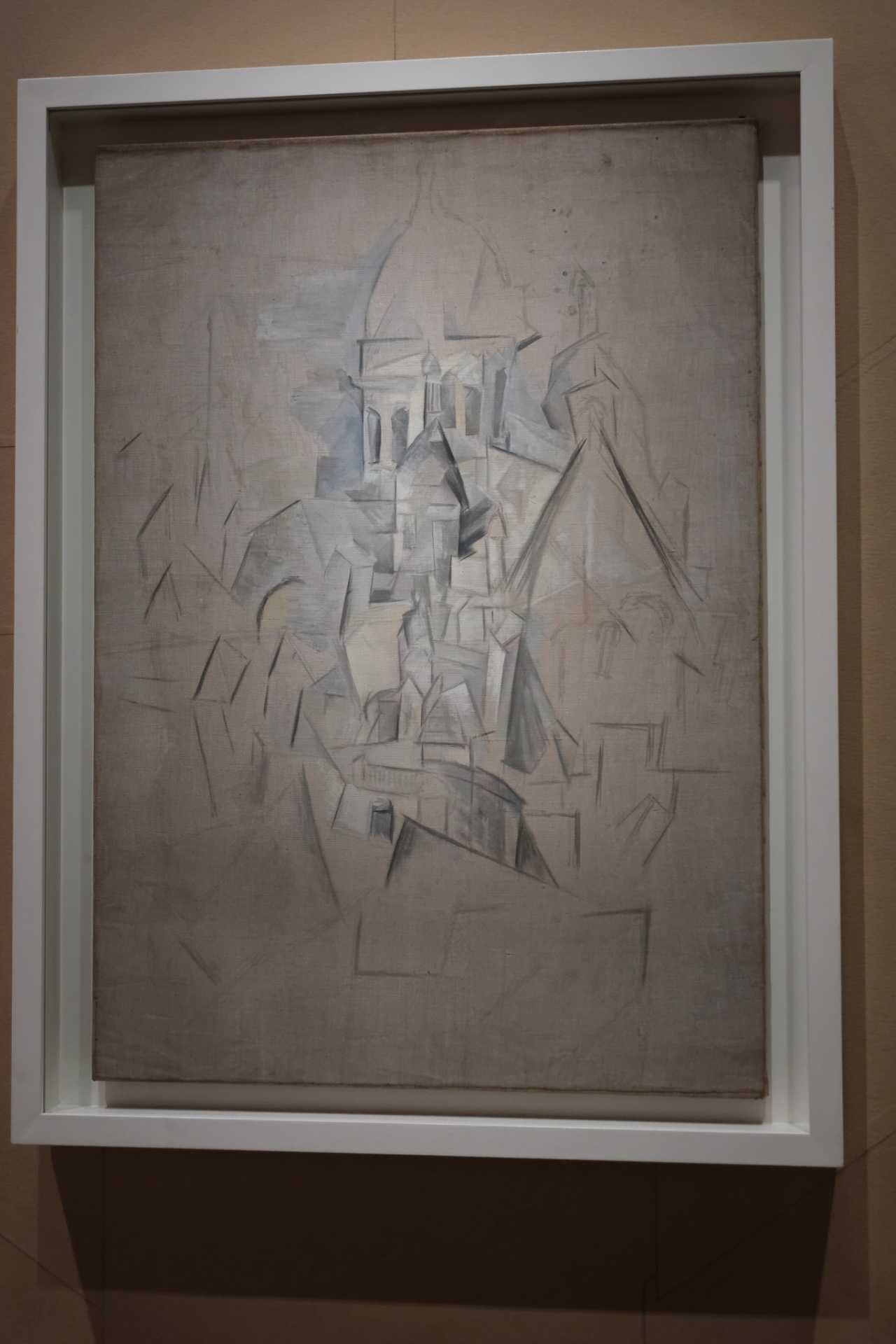
In the "Cubist Laboratory" section, there was a painting of The Sacré-Cœur Basilica (1909–1910). What did this Parisian landmark become under Picasso's brush? Multiple interwoven geometric planes — the church seen from the top, bottom, and sides — were abstracted into different geometric forms, all presented on a single canvas. The church was no longer a fixed landmark but a dynamic entity tightly connected to its surrounding space.
This technique of "simultaneous multiple perspectives" reached its peak in Child Playing with a Toy Truck. In the painting, a child bends over to play — as if we are standing upright looking down at him — yet his facial features are presented from a straight-on, eye-level angle. The background is vivid green, the ground fiery red, with childlike, simple floral patterns. It is a work full of life that completely breaks the rules of perspective.
For those fascinated by Cubist art exhibitions in China, this section alone is worth the trip.
Collage Art: The Magic of Everyday Objects
Picasso didn't just paint; he also loved making sculptures — combining everyday objects. In the exhibition, there was Man with a Mustache, an oil painting on canvas with printed fabric attached — a bit playful, a bit witty. And then there was Guitar, which was later turned into a handbag accessory — quite beautiful.
This "anything goes" attitude freed art from the picture frame and brought it into daily life. Picasso collage techniques continue to inspire contemporary artists and designers worldwide.
The Theme of Childhood: Painting Like a Child
Picasso always considered childhood the core of his creation. He not only painted his own children but also borrowed from children's doodles, seeing the world through their eyes.

The piece that moved me most in the exhibition was Paul as Harlequin (1924). The Paul in the painting is Picasso's eldest son, then only three years old. Picasso was designing costumes and stage sets for a ballet company at the time and used his son as a model.
Look closely: Paul has three legs in this painting — one of them is just a sketch line. That's because the work is unfinished. Picasso created many unfinished paintings throughout his life. He believed that children should have infinite possibilities, and a work of art, before it is finished, also holds infinite possibilities.
That thought made me stand in front of the painting for a long time. Picasso's childlike artistic vision is a recurring theme that resonates deeply with modern audiences.
Classicism and Bullfighting: Return and Obsession
From 1918 to 1923, Picasso entered his "Neoclassical period." The chaos of World War I led him to temporarily abandon the disorder of the avant-garde and return to rigorous sculpting techniques. The painting Young Men and Women Taking First Communion (1919) features smooth, simplified lines and figures that are no longer realistically proportioned — this was his version of "neoclassicism."
Bullfighting, however, was a theme that ran through his entire life. The bullfighting piece in the exhibition was the most vividly colored of all: the bull glares angrily, the wounded white horse screams in agony, the matador is gored, his head separated from his body. The bright red muleta looks like flowing blood. Nearby were several bullfighting sketches with fluid lines, reminiscent of Chinese ink paintings.
For anyone interested in Picasso bullfighting art, this exhibition provides a visceral, emotional experience.
The Miracle Year of 1932: Love and Stripes
1932 was Picasso's "miracle year." That year, inspired by his lover Marie-Thérèse Walter, he created over one hundred works.
Their story reads like a romantic yet controversial film. In 1927, seventeen-year-old Marie-Thérèse was shopping at Galeries Lafayette in Paris when a stranger called out to her. "You have an interesting face," the stranger said. That stranger was Picasso.
The Picasso 1932 masterpieces displayed at the Pudong Art Museum capture the intensity and passion of this period, with bold colors and sensual forms that broke new ground.
The Miracle of Patterns: Islamic Geometric Art from the Louvre
While Picasso dominated the first half of the exhibition, the second half — "The Miracle of Patterns" — offered a stunning counterpoint. Featuring Islamic geometric art from the Louvre's collection, this section showcased the precision, symmetry, and spiritual depth of patterns that have inspired artists for centuries.
From intricate tilework to delicate textiles, the Louvre Islamic art exhibition at Pudong Art Museum demonstrated how patterns can create a sense of infinite space and divine order. For design enthusiasts and art historians, this was a rare opportunity to see masterpieces that rarely travel outside France.
[Link: Discover more about Islamic geometric patterns and their influence on modern design]
FAQ: Your Questions About the Pudong Art Museum Exhibitions
1. What are the current exhibitions at the Pudong Art Museum?
The Pudong Art Museum regularly hosts world-class exhibitions. Recent highlights include "Extraordinary Picasso" and "The Miracle of Patterns" from the Louvre. Check the museum's official website for the latest schedule and ticket information.
2. How long does it take to see both exhibitions?
Plan for at least 3–4 hours to fully appreciate both exhibitions. The Picasso section alone requires 1.5–2 hours for a thorough visit, while the pattern exhibition can take another 1–2 hours.
3. Is the Pudong Art Museum suitable for children?
Yes, especially the Picasso exhibition. The immersive, colorful design by Paul Smith appeals to children, and Picasso's childlike artistic vision makes the works accessible. However, some bullfighting scenes may be intense for very young children.
4. Can I take photos inside the exhibitions?
Photography policies vary by exhibition. Generally, non-flash photography is allowed in most areas, but check for specific restrictions at the entrance. The Paul Smith-designed zones are particularly Instagram-worthy.
5. How do I get to the Pudong Art Museum?
The museum is located in the Pudong New Area of Shanghai. Take Metro Line 2 to Shanghai Science and Technology Museum Station, then walk or take a short taxi ride. Alternatively, take Line 4 to Pudong Avenue Station and transfer.
Conclusion: A Double Feast for the Senses
Walking out of the Pudong Art Museum, I felt a strange lightness. Picasso's journey — from the sorrow of blue to the freedom of childhood — reminded me that art is not about perfection but about constant exploration. And the Islamic patterns from the Louvre reminded me that beauty can also be found in order, repetition, and devotion.
If you missed this exhibition, don't worry. The Pudong Art Museum continues to host world-class shows. Whether you're a lifelong art lover or a curious first-timer, there's always something waiting to surprise you.
Ready to plan your visit? Check the Pudong Art Museum's official website for current exhibitions, ticket prices, and guided tours. Don't miss the next cultural feast — book your tickets today!
[Link: Plan your visit to the Pudong Art Museum with our complete guide to Shanghai art exhibitions]
You may also like