The First Bend of the Huangpu River Park: Shanghai's Hidden Waterfront Sanctuary for Nature Lovers
Meta Description: Discover Shanghai's First Bend of the Huangpu River Park—a free, serene waterfront escape with cycling paths, wetlands, birdwatching, and stunning sunsets. Perfect for a peaceful day trip from downtown.
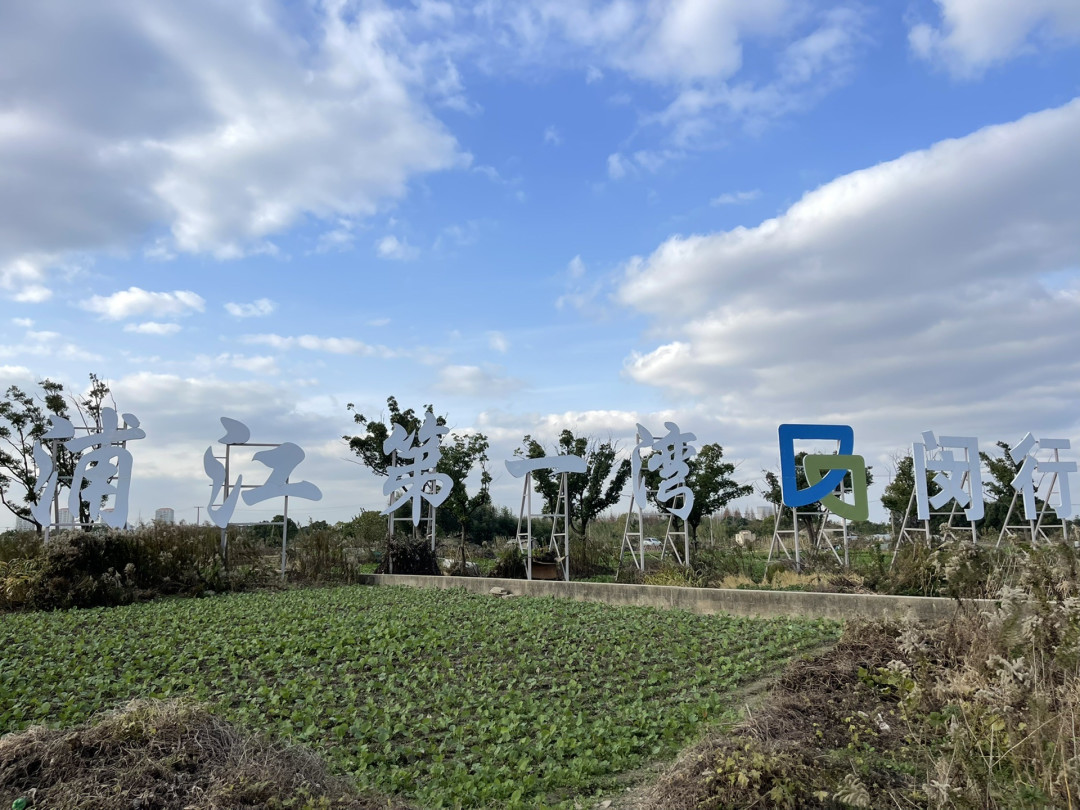
Have you ever imagined that in a city as fast-paced as Shanghai, you could still find a place to "waste" time on river breezes, green lawns, and glowing sunsets? Not the surging crowds of the Bund, not the glass skyscrapers of Lujiazui, but a corner where you can truly breathe deep and slow down—the First Bend of the Huangpu River Park (浦江第一湾公园). There's no entrance fee, no packed tour groups, just the Huangpu River making an elegant curve here, as if reminding us: life doesn't always have to be a straight sprint.
This comprehensive guide covers everything you need to plan your visit—from the park's unique geography and top attractions to practical tips on getting there, the best times to go, and what to bring.
Why "The First Bend"? — The Huangpu River's Gentle Turn
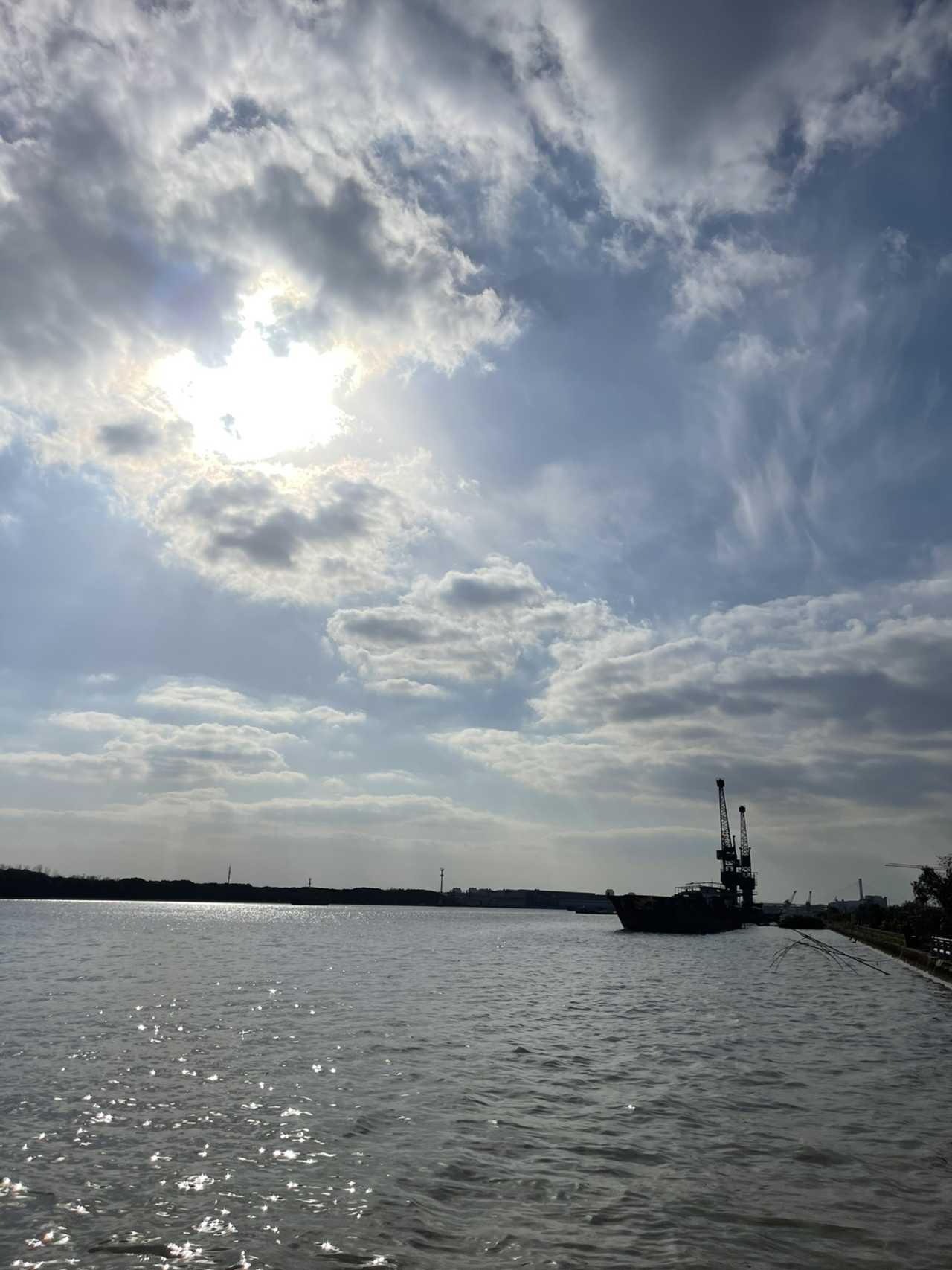
If you stand on the park's observation deck, you'll see the Huangpu River trace an almost perfect arc. The water surges from the southwest, then near Wujing Town in Minhang District, it suddenly turns northeast, forming a massive "U"-shaped bend. This isn't just any curve—it's the Huangpu River's most spectacular natural turning point within Shanghai, earning it the name "The First Bend of the Huangpu River."

Geographically, this is the watershed where the river transitions from its narrow, shallow upper reaches into the broad lower channel. Here, the current slows, as if gathering strength for its grand journey into the Yangtze River and eventually the sea.
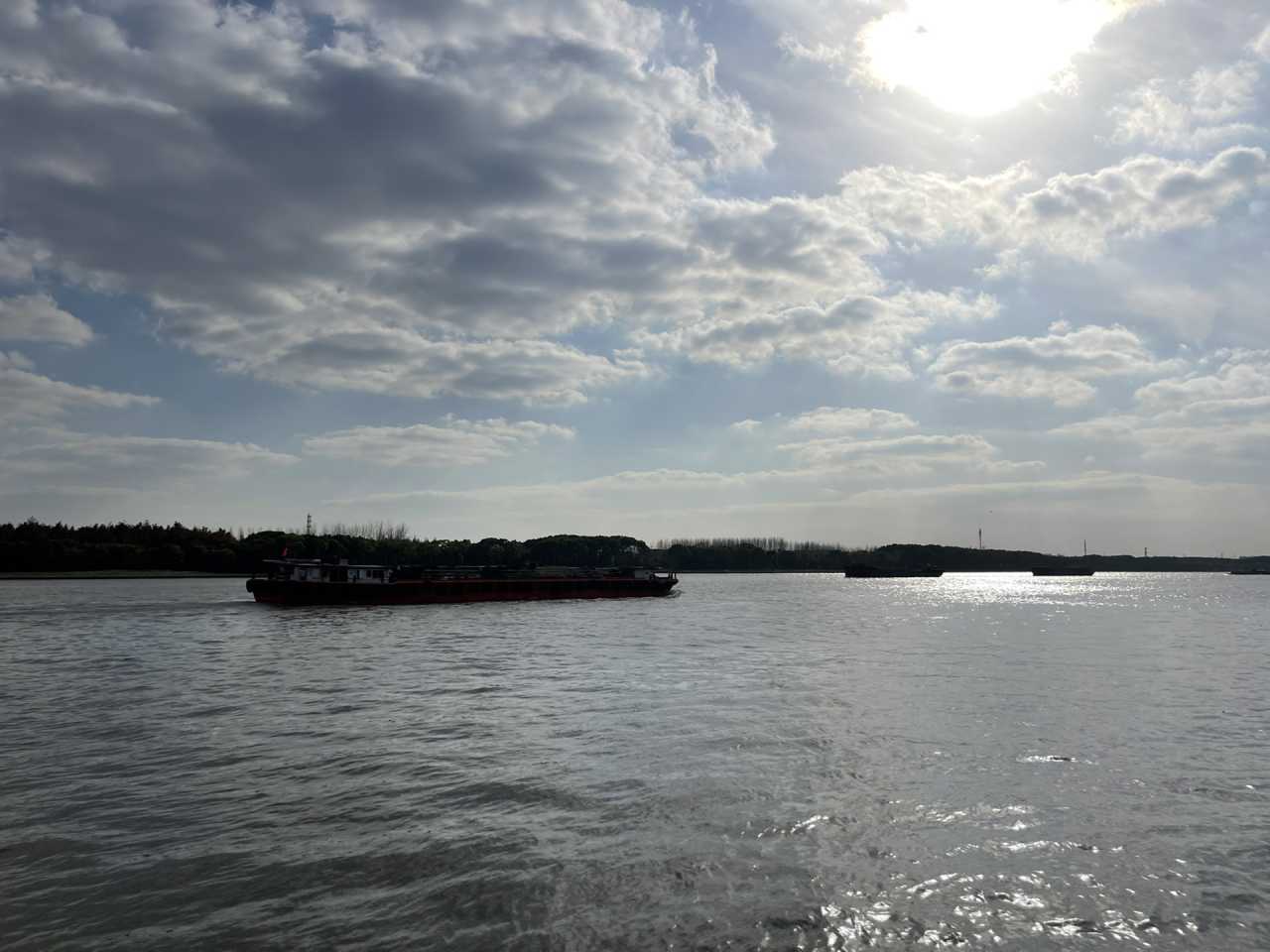
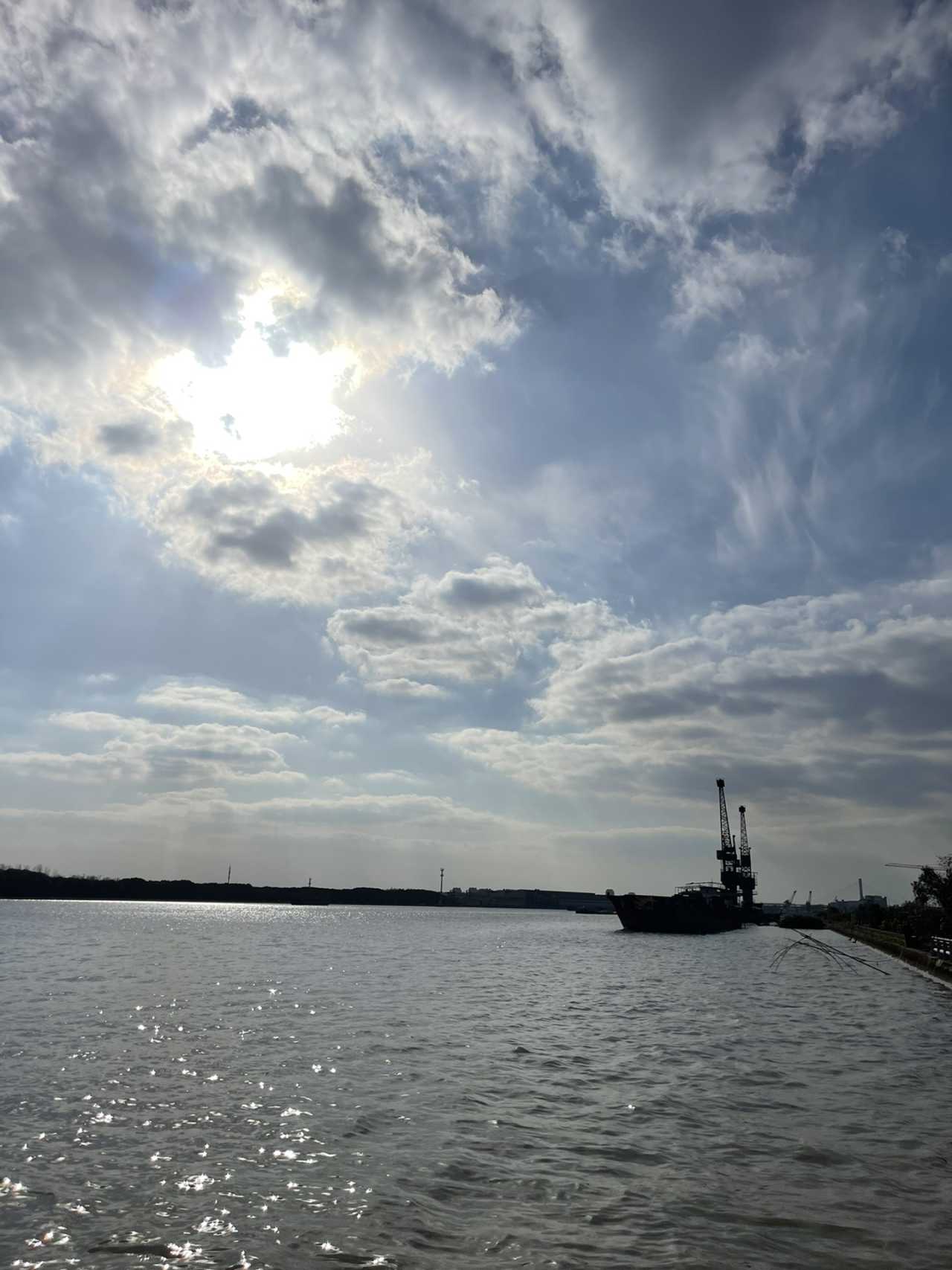
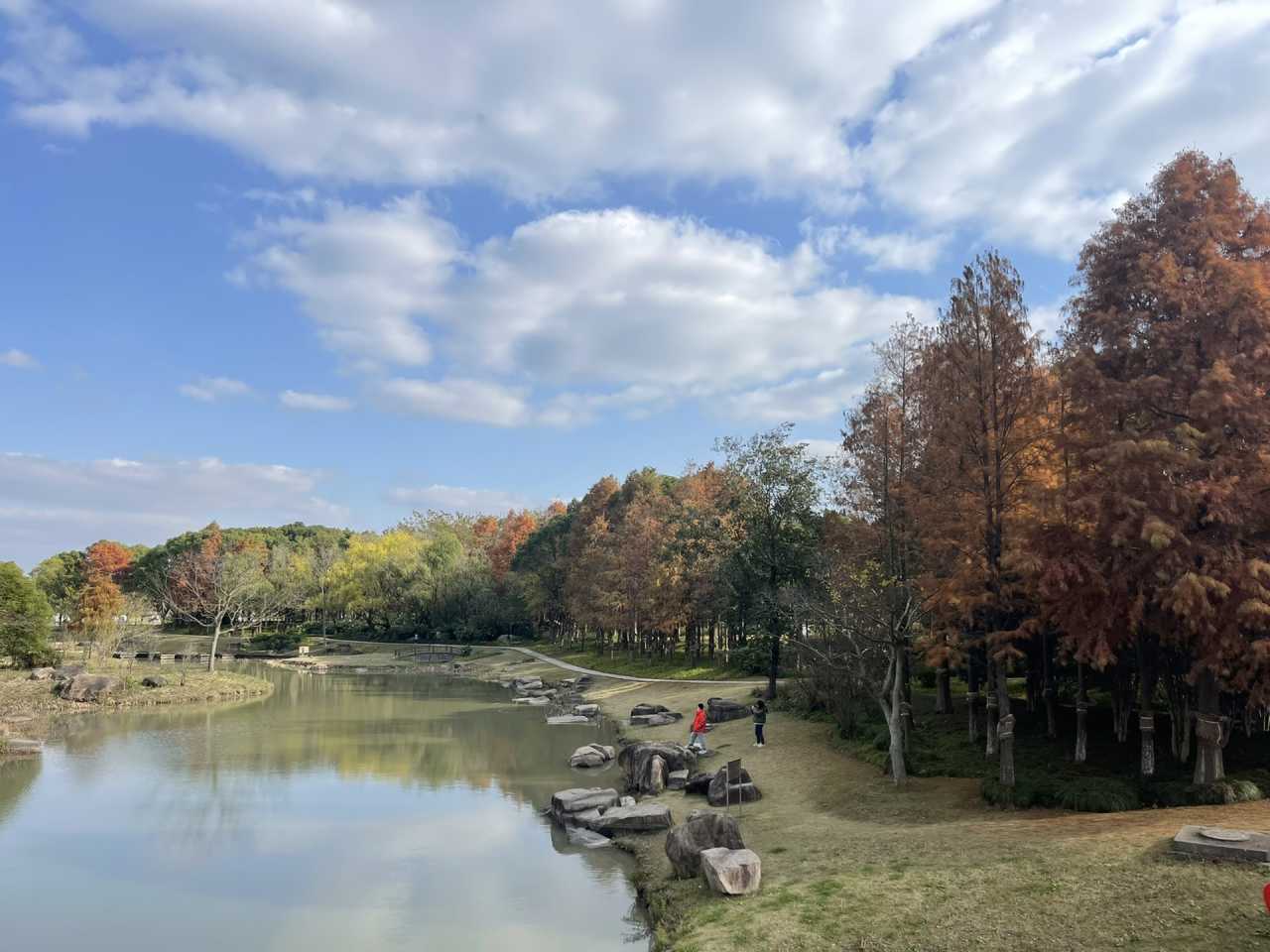
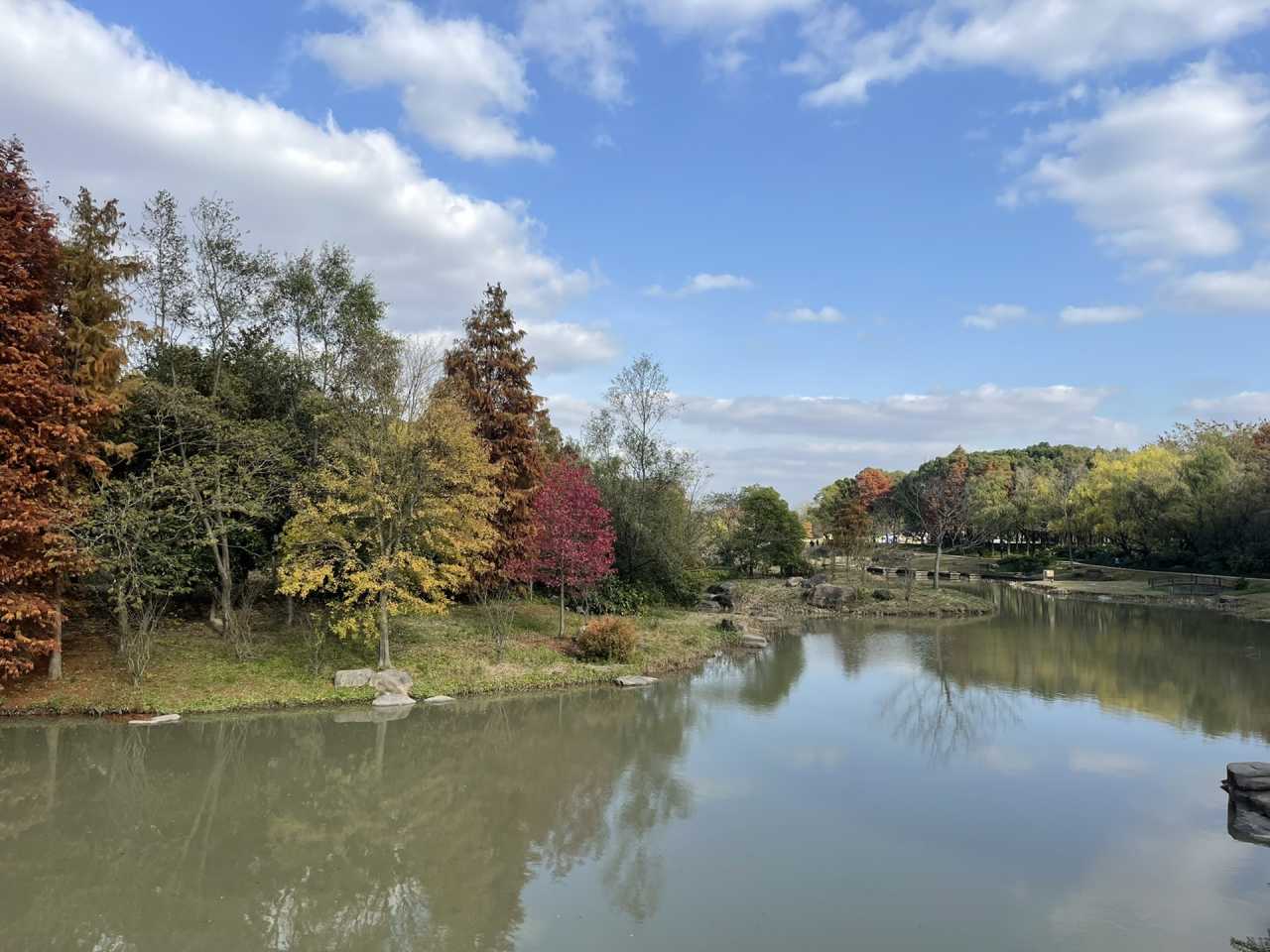
For visitors, the meaning of this bend is simpler: standing on the bank, you watch the water flow gently past on both sides, your view framed by green trees and blue sky into a soft picture. In the early morning or at dusk, sunlight slants across the surface, shimmering like scattered gold dust. There are no towering skyscrapers blocking the view, only the wide river and the ecological woodlands on the opposite bank—a rare sense of "wilderness" in Shanghai.
[Link: Huangpu River attractions in Shanghai]
What's Inside the Park? — More Than Just a Stroll
Walking and Cycling Paths: Measuring the Riverbank Step by Step
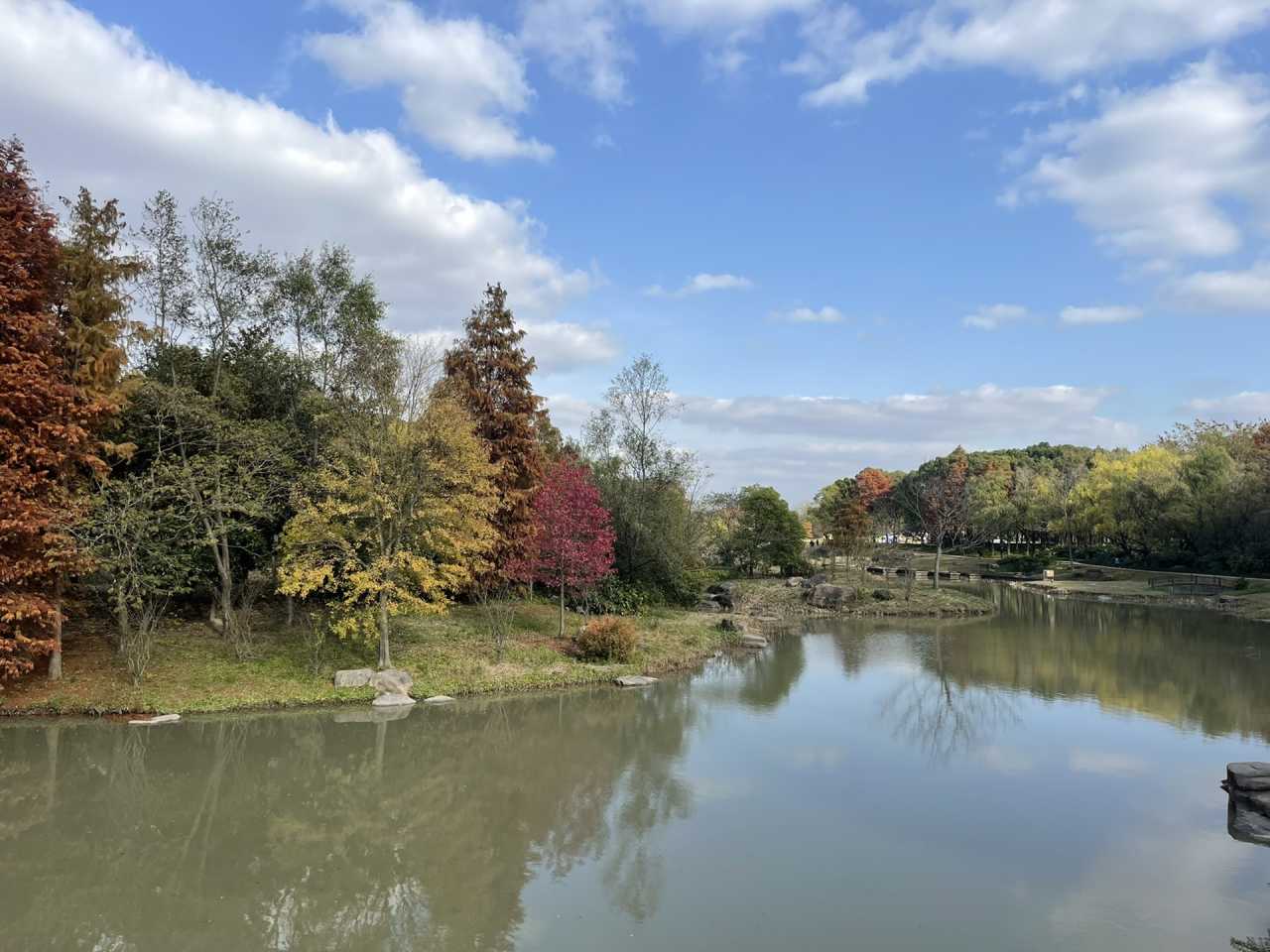
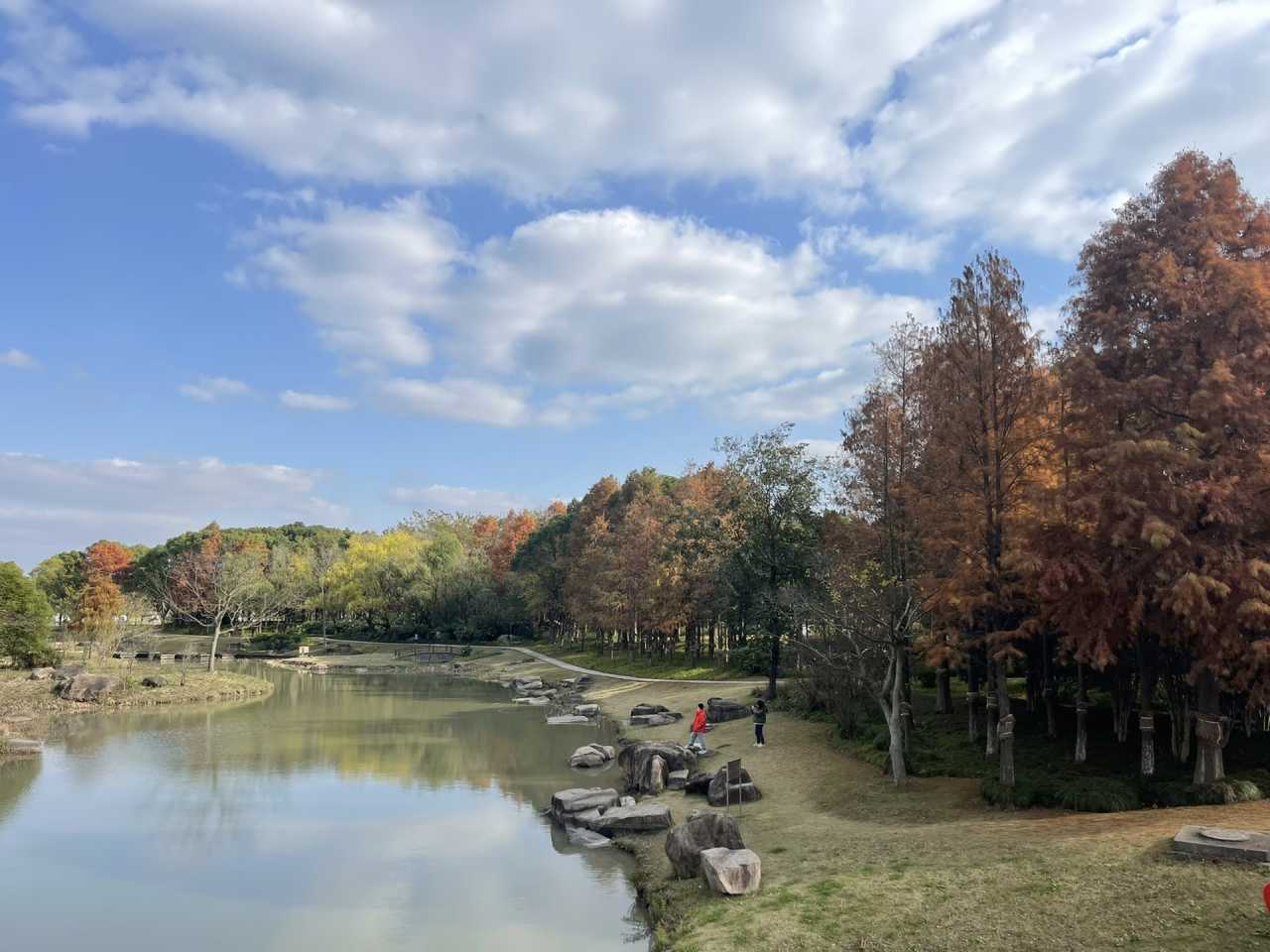
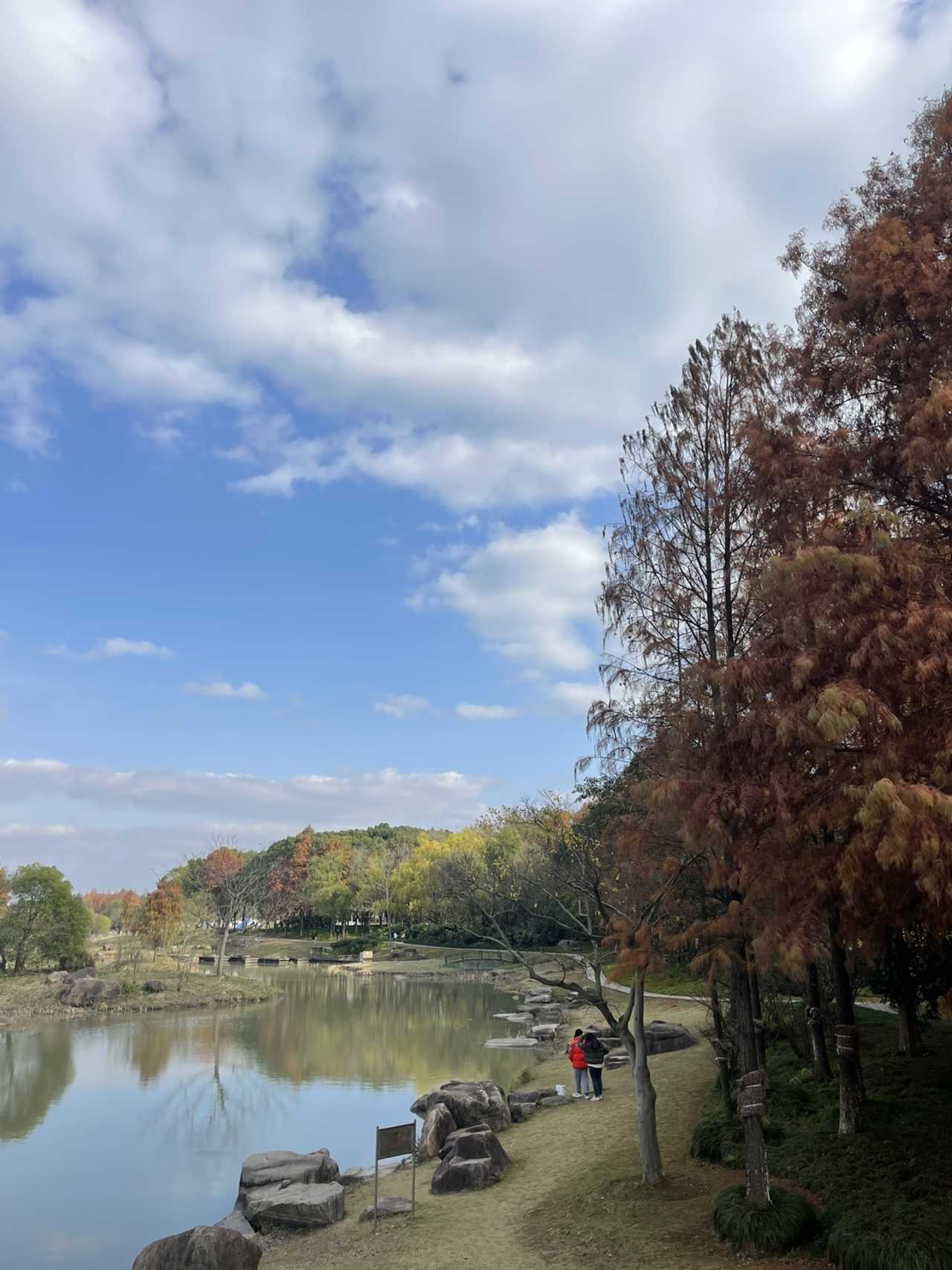
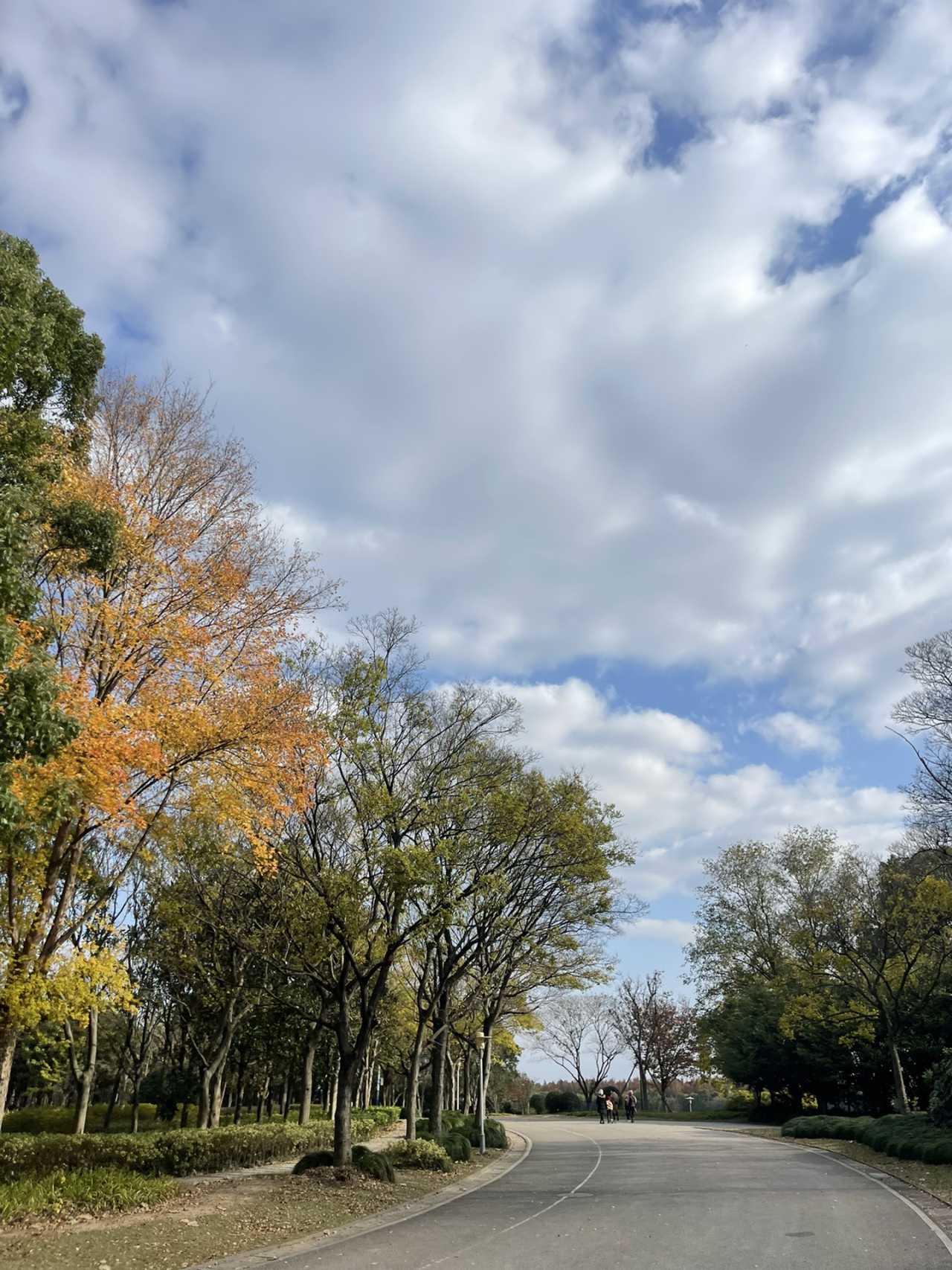
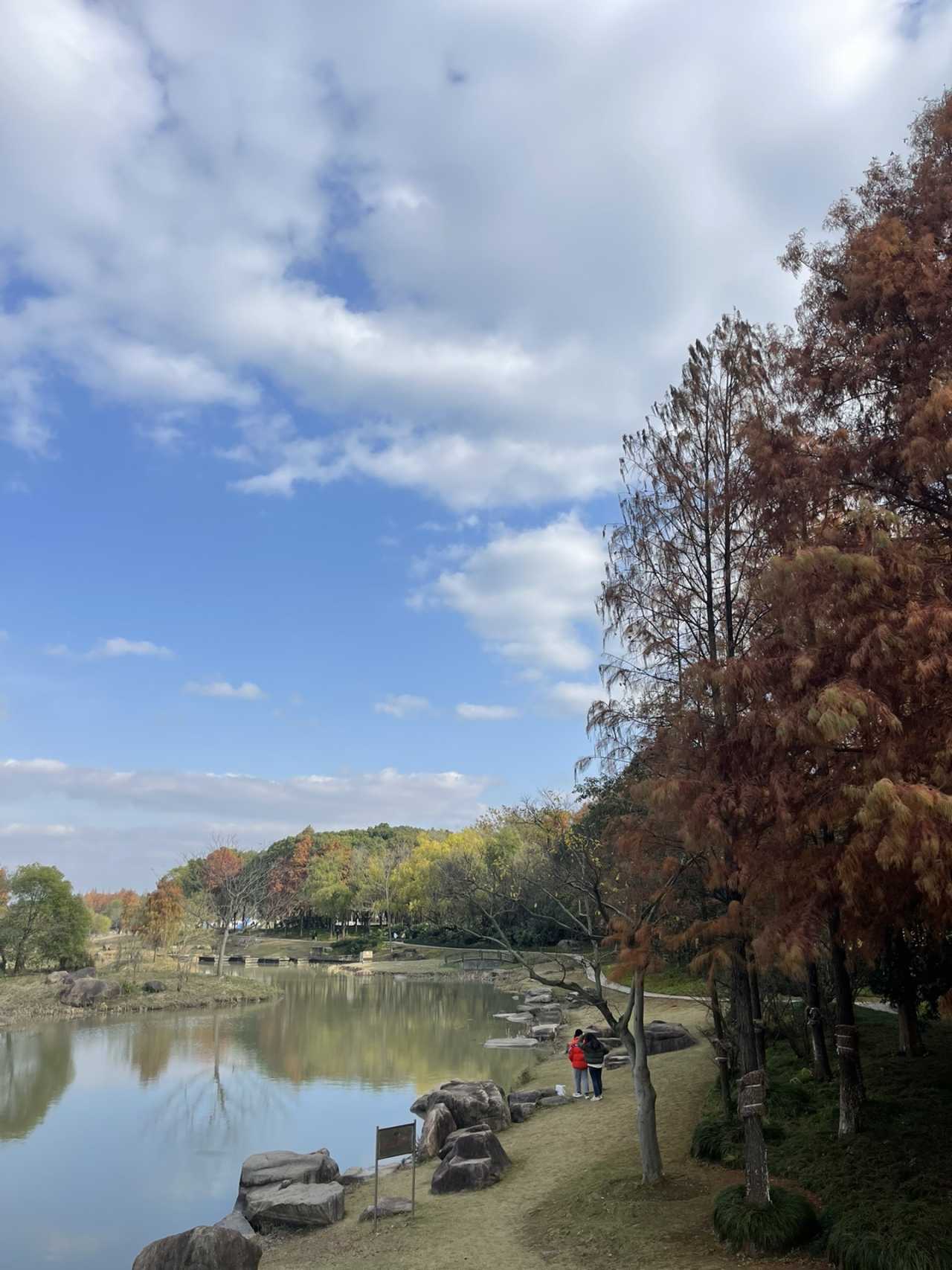
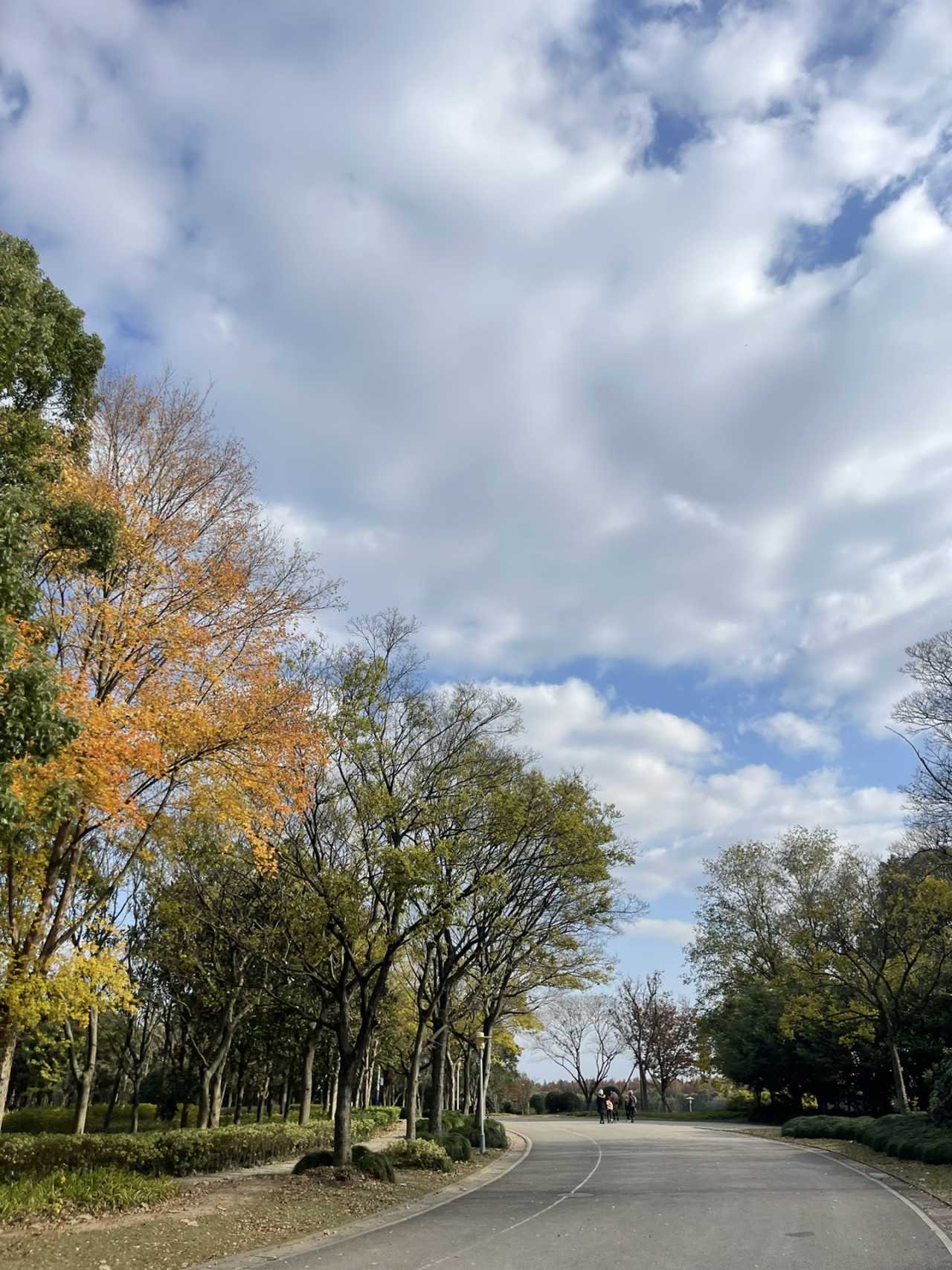
The park's backbone is a 2.5-kilometer (1.5-mile) riverside path, smooth and perfect for walking, jogging, or cycling. On one side flows the Huangpu River; on the other, a dense green belt planted with camphor trees, osmanthus, cherry blossoms, and dozens of other species. In spring, the cherry blossom lane becomes a pink-and-white corridor; in autumn, the sweet fragrance of osmanthus mingles with the river's fresh, clean scent.
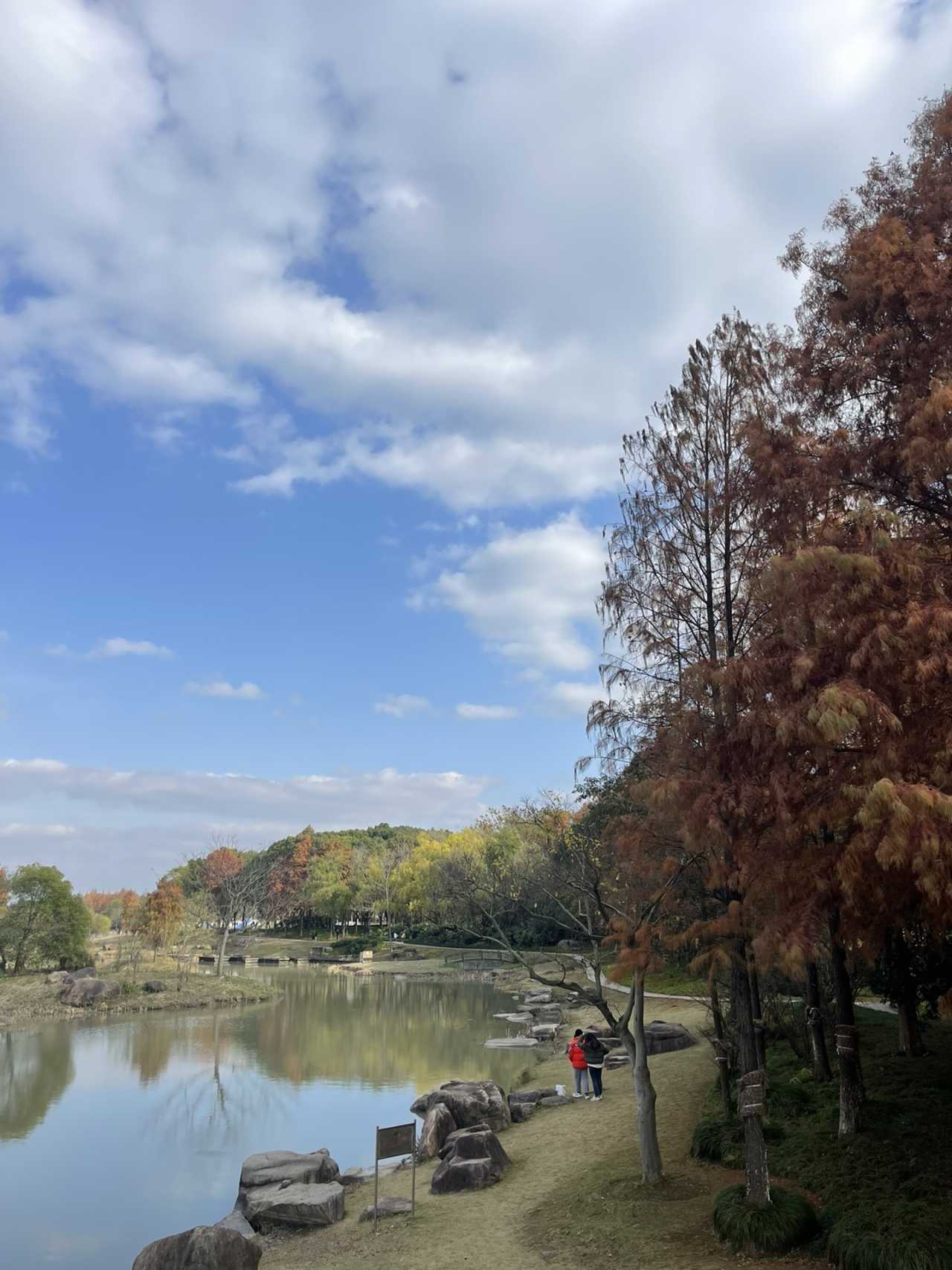
If you're a cycling enthusiast, enter from the southern gate and ride north. The path is almost entirely flat, very beginner-friendly. Along the way, you'll pass several viewing platforms where you can stop for photos and a breath of river air. The most recommended spot is the observation deck near "Jiangwan Square" (江湾广场)—it offers the widest view, letting you see the full curve of the "First Bend." Around 7 a.m., when morning mist hasn't yet lifted, a thin layer of vapor floats on the river, and the distant Minpu Bridge (闵浦大桥) appears and disappears like the blank spaces in a Chinese ink painting.
[Link: Best cycling routes in Shanghai]
Wetlands and Ecology: The City's "Green Lung"
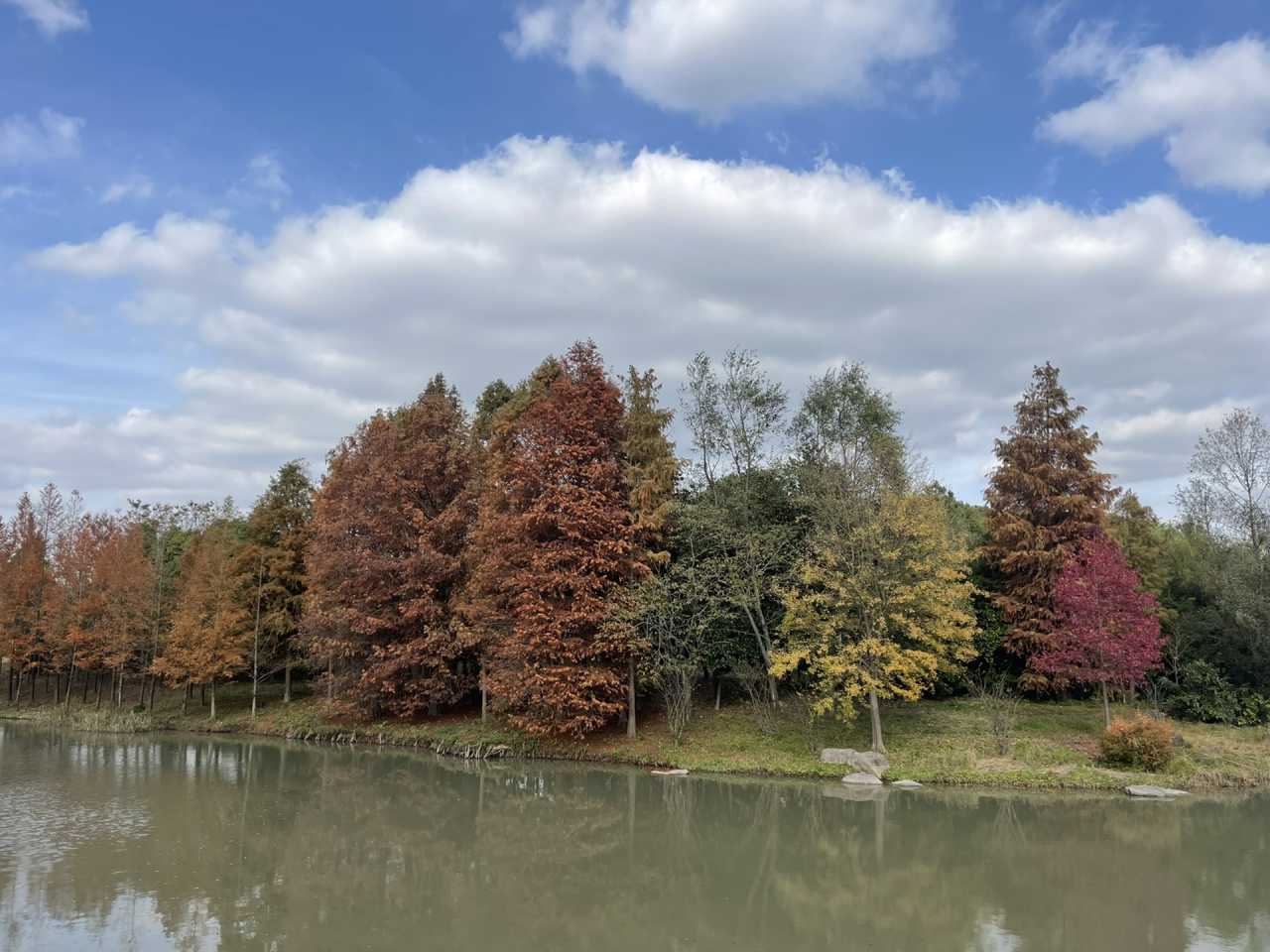
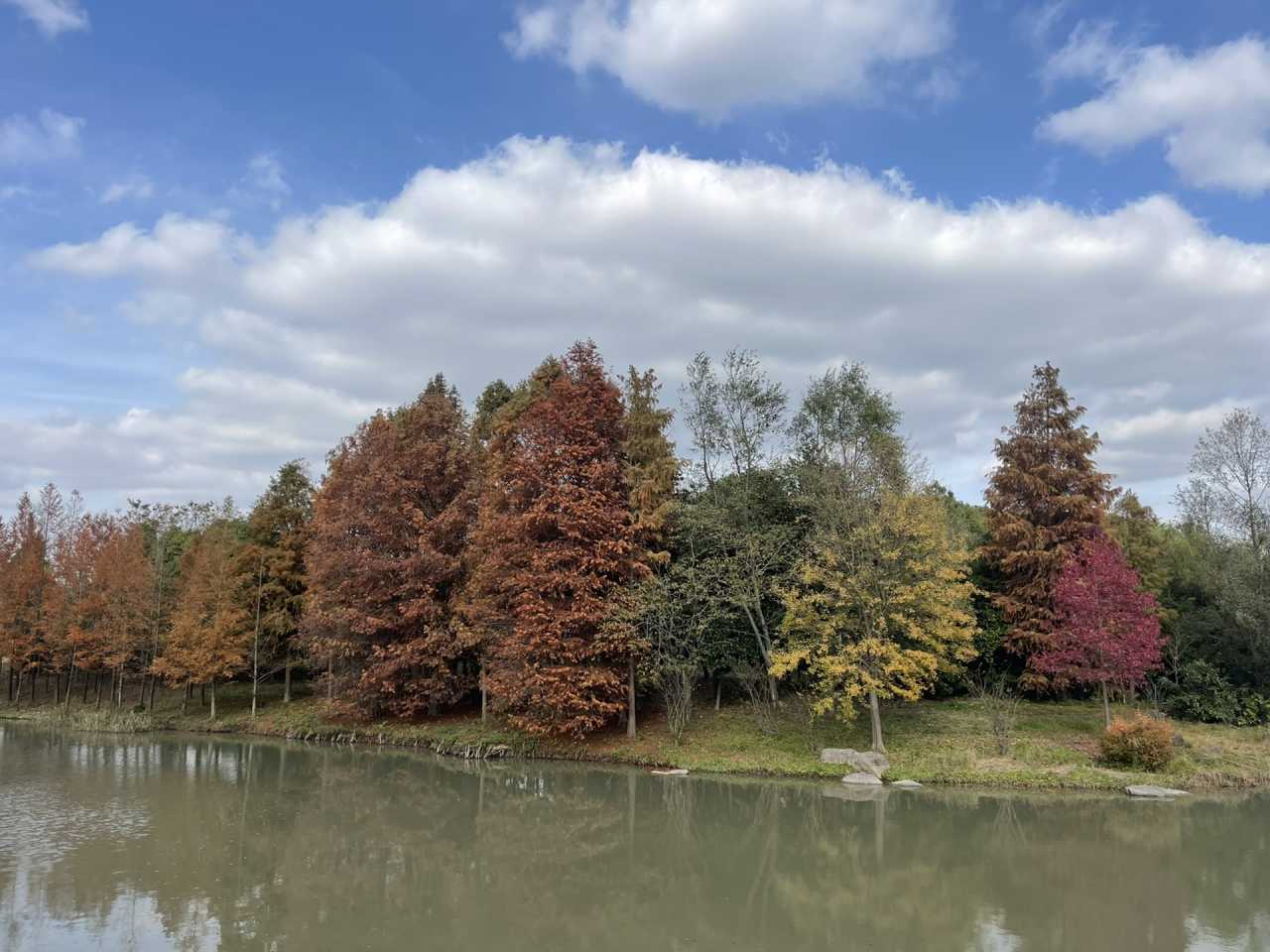
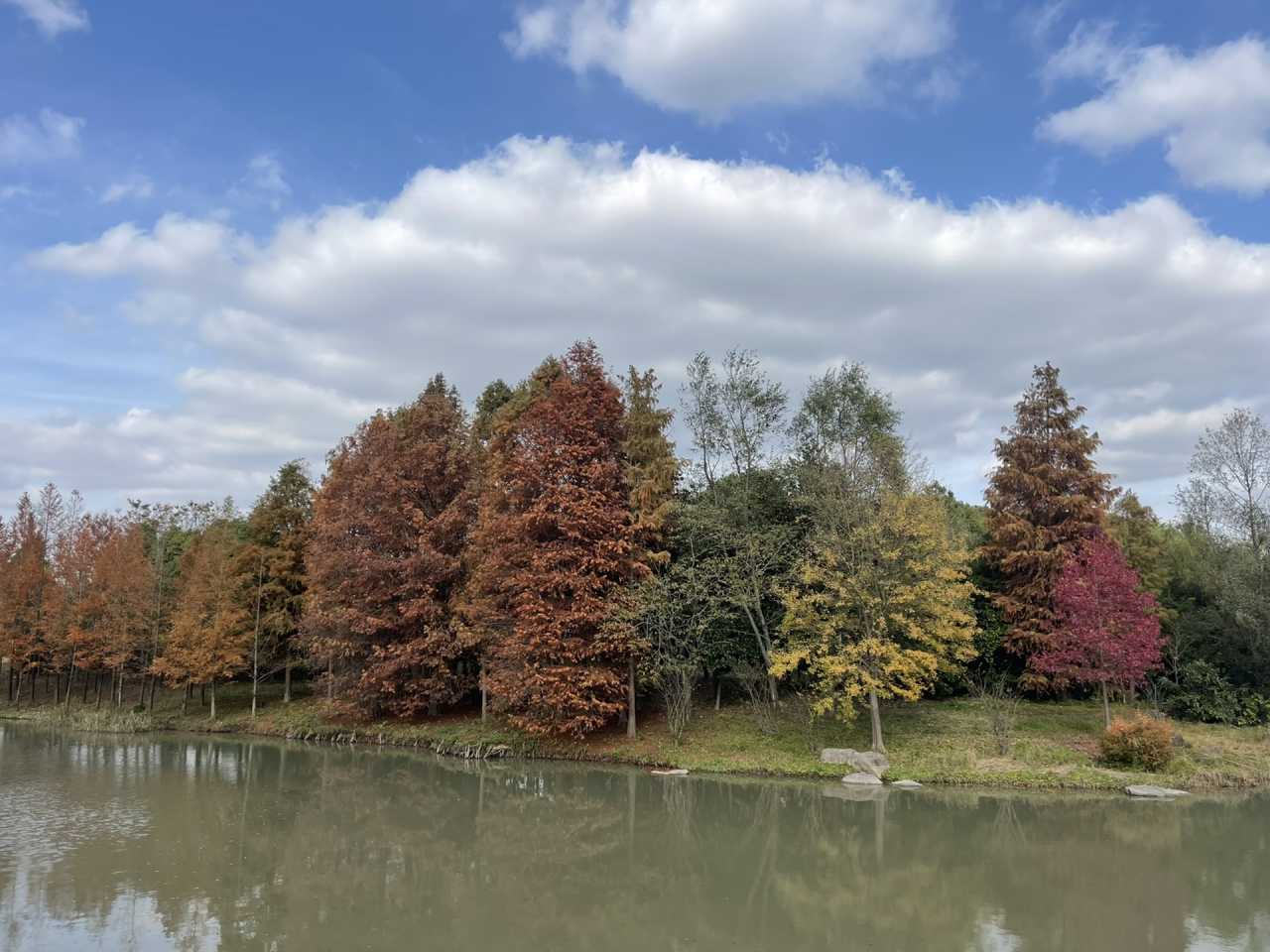
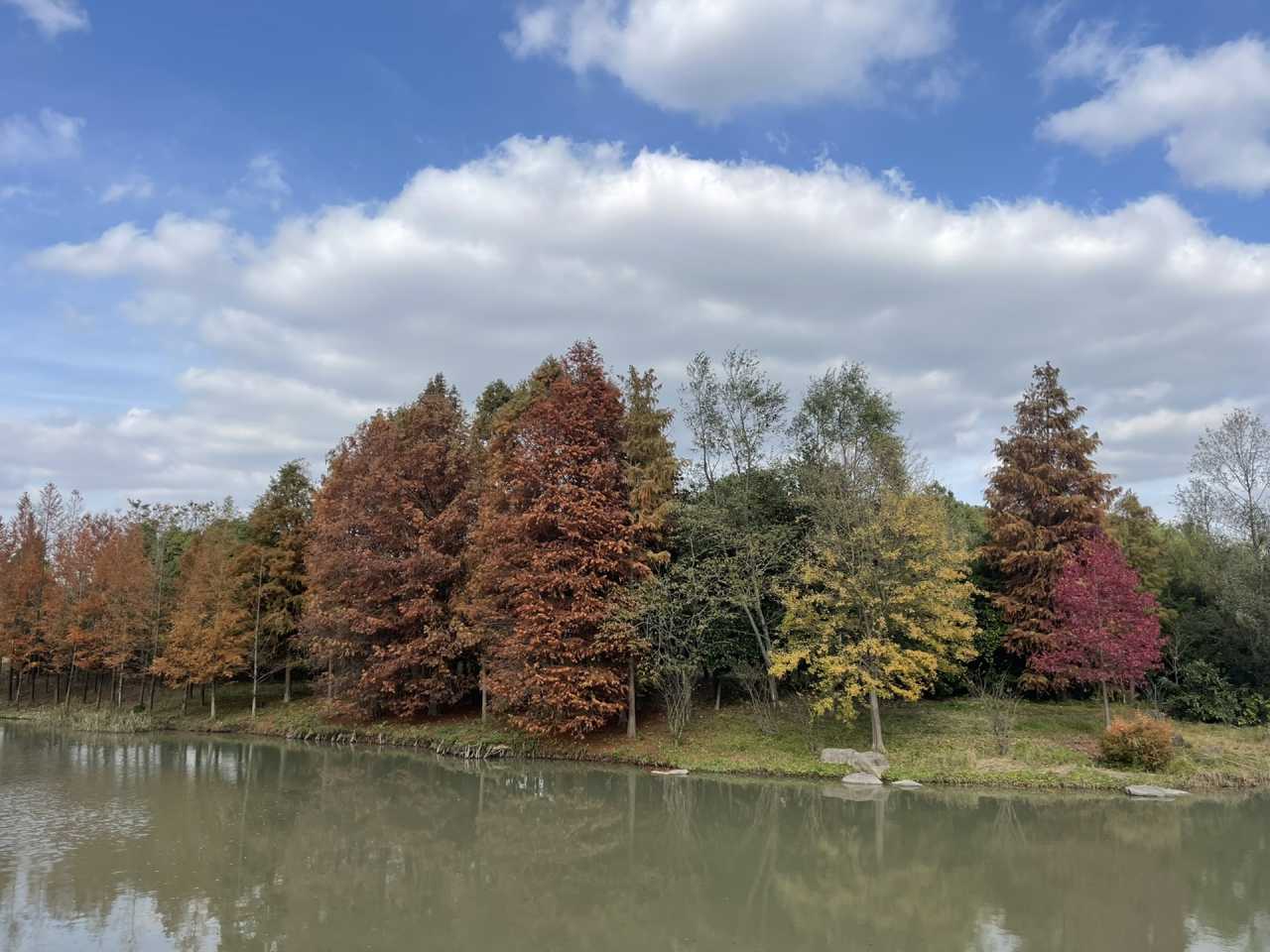
The eastern side of the park preserves large areas of native wetlands, where reed marshes, dawn redwood forests, and shallow shoals form a miniature ecosystem. Walking on the boardwalk, you'll often spot egrets foraging in the shallows, and occasionally wild ducks flap past noisily. The bird diversity here far exceeds that of downtown parks.
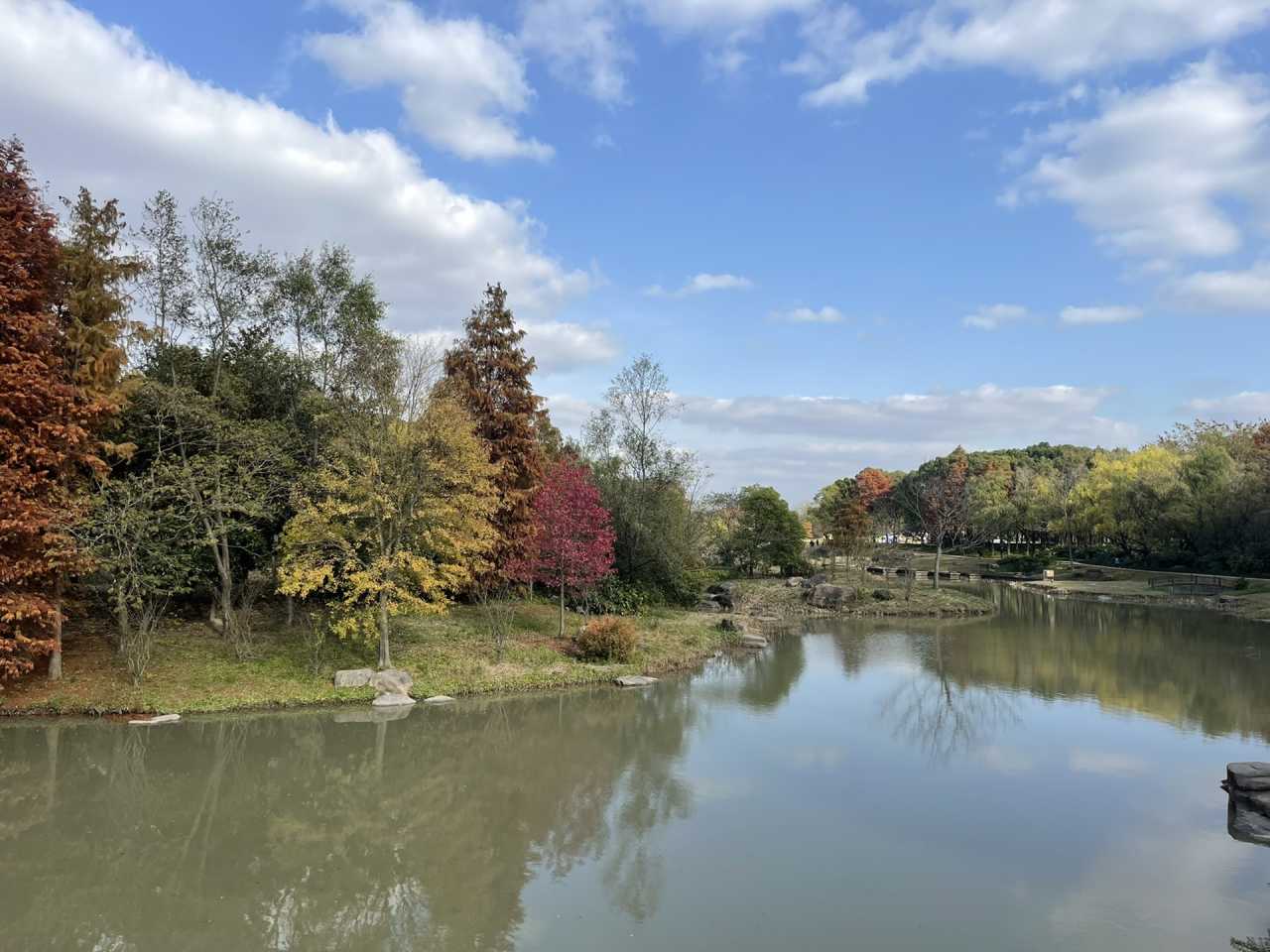
Birdwatchers should bring binoculars and stake out a spot in the early morning or at dusk. Once, I sat on a bench by the wetlands for an entire afternoon. A kingfisher swooped overhead, landed on a reed stalk, its turquoise feathers flashing in the sun, then plunged like an arrow into the water—the whole thing took less than three seconds, but I've remembered it ever since.
Next to the wetlands is an "Ecological Education Garden" with panels explaining the Huangpu River's hydrology and native plants and animals. The content isn't too deep, but if you bring kids, it's a great chance for a living nature lesson. The garden also features several centuries-old trees. The oldest, a ginkgo, is said to be over 120 years old. When its leaves turn golden in autumn, the ground beneath is carpeted with fan-shaped leaves that rustle underfoot.
[Link: Family-friendly parks in Shanghai]
Children's Playground and Lawn: A Family Weekend Option
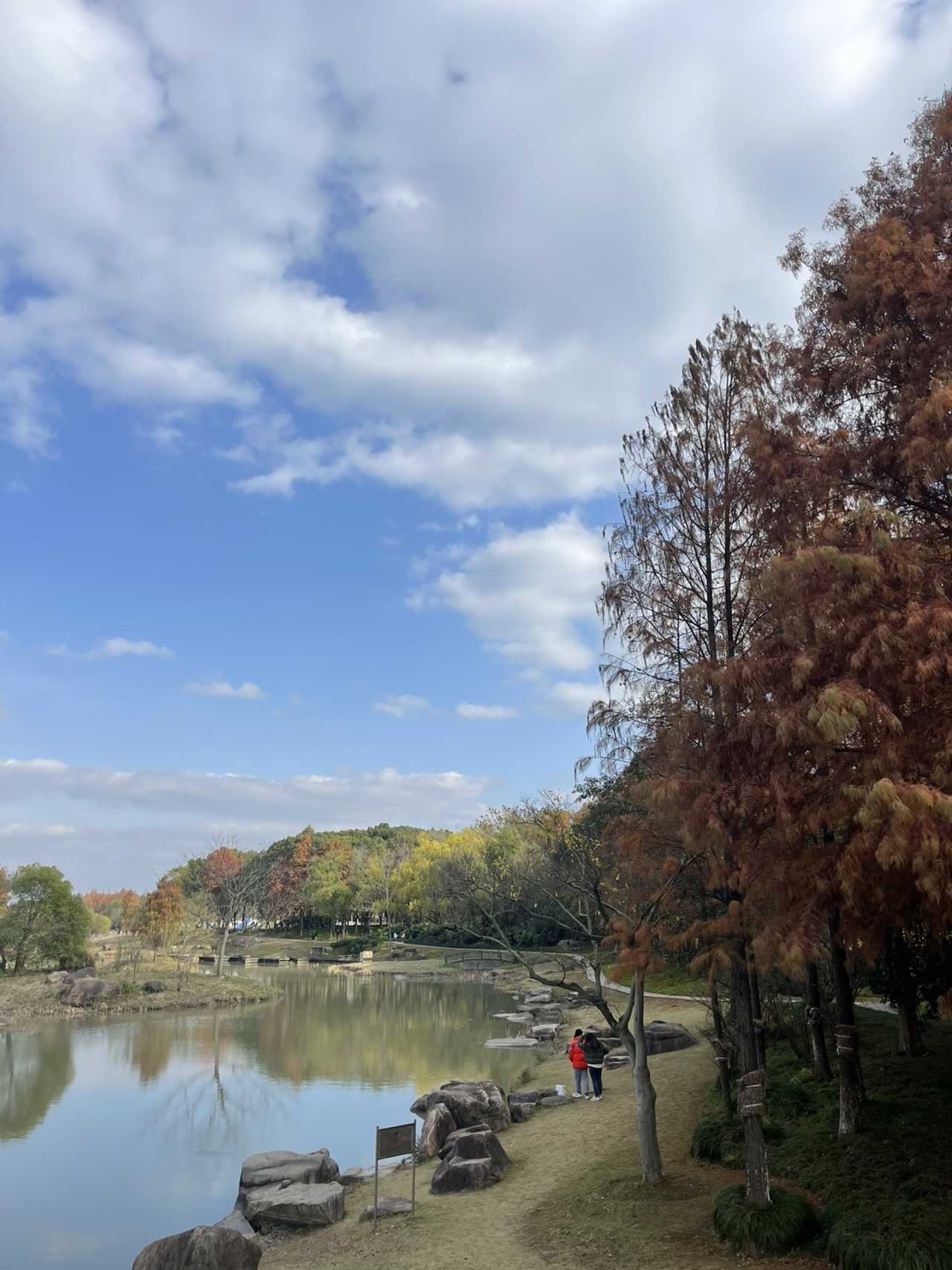
The park has a dedicated children's play area with slides, swings, and climbing frames, all on rubber safety surfacing. Right next to it is a large lawn where families often spread picnic blankets on weekends, kids kicking soccer balls or flying kites. The lawn is spacious enough that you won't feel crowded—even on holidays, it's far quieter than Century Park.
If you want to go a bit "wilder," bring a tent or hammock and find a shady spot in the woods by the lawn. The river breeze rustles through the leaves, and birdsong drifts from afar. This kind of "lying flat" experience is rare within Shanghai proper. One note: open flames are prohibited, so no barbecues, but sandwiches, fruit, and cold drinks are perfectly fine.
Practical Information: What You Need to Know Before You Go
How to Get There
- Public Transit: Take Metro Line 8 to "Shendu Highway" station, then transfer to Bus Minhang 10 or Pujiang 3, and get off at "First Bend of the Huangpu River Park" stop. From downtown, it takes about an hour.
- Driving: Navigate directly to "First Bend of the Huangpu River Park." There's free parking at the entrance, but weekend spots fill up fast—arrive before 10 a.m. if possible. The lot holds about 50 cars; if full, you can park at the adjacent "Pujiang Country Park" lot and walk over in about 10 minutes.
[Link: Minhang District attractions]
When Is the Best Time to Visit?
- Spring (March–May): Cherry blossoms, crabapple, and tulips bloom in succession. Temperatures are pleasant—prime time for walks and picnics.
- Autumn (September–November): Clear skies, light clouds, and the fragrance of osmanthus. Ginkgo and red maple turn the park into a palette of colors. Late October to early November is especially recommended, when autumn hues are at their peak.
- Summer (June–August): Hot, but the evening river breeze is refreshing, making it ideal for sunset viewing. Bring mosquito repellent—the mosquitoes near the wetlands are aggressive.
- Winter (December–February): Fewer visitors, peaceful and quiet. You can capture stark, beautiful river scenes, but the wind is strong, so wear a thick coat.
What to Bring
- Sunscreen and a hat (UV rays are strong by the river)
- Picnic mat, snacks, and water (no convenience stores inside the park, only vending machines with limited options)
- Binoculars (for birdwatching)
- Camera or phone (for river views, sunsets, and birds)
- Trash bags (the park promotes leave-no-trace outings)
What Else Is Nearby?
- Pujiang Country Park (浦江郊野公园): Right next door, much larger, with forests, flower fields, and farmland—great for hiking or cycling.
- Zhaojialou Ancient Town (召稼楼古镇): A 15-minute drive away, a well-preserved water town where you can enjoy authentic "Xiasha Shaomai" (下沙烧卖, a type of steamed dumpling).
- Minpu Bridge (闵浦大桥): Visible from the park itself, this cable-stayed bridge is spectacular when lit up at dusk, perfect for silhouette photos.
[Link: Day trips from Shanghai]
The Little Details That Make a Difference
What truly moves me about the First Bend of the Huangpu River Park are the "non-sightseeing" moments. Take the crooked willow tree halfway along the path, its trunk stretching almost horizontally toward the river, as if greeting the water. Many locals fish beneath it, sitting for an entire day. Once, an old man reeled in a palm-sized crucian carp, smiled, and gently released it, saying, "Too small, let it grow a bit more." That unhurried ease is more "Shanghai" than any landmark.
And the park's seating—not the standard long benches, but wooden chairs in varied shapes scattered along the path, some wavy, some petal-like. The best part: each seat faces a different direction. One faces the river, another faces the wetlands, a third faces the cherry blossom grove. It's as if the designers wanted to give every visitor a unique perspective on the same beautiful place.
Frequently Asked Questions (FAQ)
1. Is the First Bend of the Huangpu River Park free to enter?
 Yes, the park is completely free to enter. There is no admission fee, and parking at the entrance is also free (though limited on weekends).
2. Can I bring my dog to the park?
 Yes, dogs are allowed on a leash. However, be mindful of the wetlands and bird habitats—keep your pet away from the boardwalk areas where birds nest.
3. Are there restrooms inside the park?
 Yes, there are public restrooms near the main entrance and at the children's playground area. They are clean but basic, so bring your own hand sanitizer.
4. How long should I plan to spend at the park?
 Most visitors spend 2–4 hours walking the full loop, enjoying the views, and having a picnic. If you want to do birdwatching or relax on the lawn, plan for a half-day trip.
5. Is the park suitable for elderly visitors or those with mobility issues?
The park is mostly flat with smooth, paved paths, making it accessible for wheelchairs and strollers. Benches are located every 100–200 meters along the route.
Your Invitation to Discover Shanghai's Hidden Sanctuary
The First Bend of the Huangpu River Park isn't just another green space on a map—it's a reminder that even in China's most dynamic city, nature still holds space for quiet reflection. Whether you're a cyclist seeking a smooth riverside ride, a family looking for a weekend picnic spot, a birdwatcher chasing rare sightings, or simply someone who needs to escape the urban noise for a few hours, this park delivers.
No entrance fee. No crowds. Just the Huangpu River curving gently past, the rustle of leaves in the breeze, and the golden light of sunset painting the water. Pack your picnic, grab your camera, and come find your own moment of poetry at Shanghai's hidden waterfront sanctuary.
Plan your visit today—and don't forget to share your favorite spot in the comments below!