Strolling Along Suzhou Creek: Measuring a Century of Shanghai’s Splendor on Foot
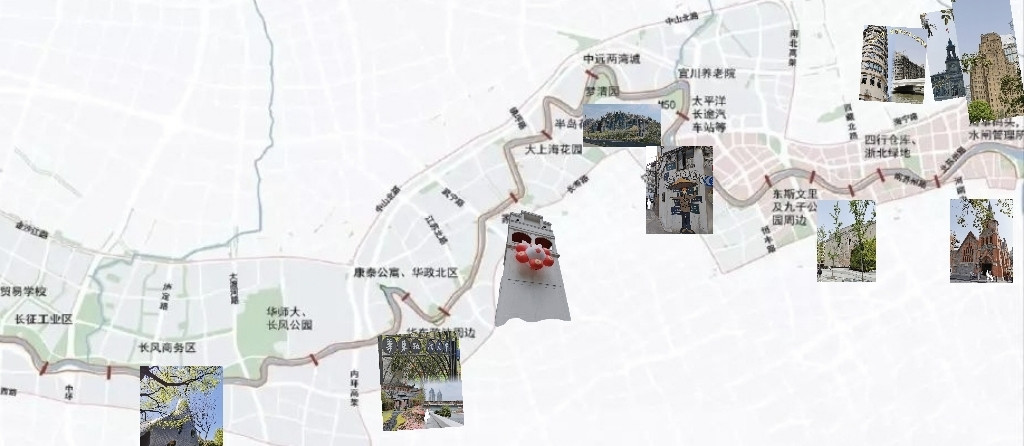
Meta Description: Discover Shanghai's Suzhou Creek walking routes—from industrial past to modern promenades. Explore historical campuses, creative parks, and riverside dining. Your guide to unlocking urban memories.
Introduction: Why Suzhou Creek is Shanghai’s Most Underrated Walking Trail
When Fiona Sit’s song Suzhou Creek flows through your earphones, the line “I am just a fishing fire, you are the foam” strikes a deep chord. But here’s the twist: the song describes a waterway outside Suzhou’s ancient city walls. What we’re exploring today is the winding, serpentine Suzhou Creek in the heart of Shanghai—a 53-kilometer urban artery carrying the weight of industrial memory, colonial imprints, and modern transformation.
From the fully connected riverside promenade that opened in 2020 to scattered historical buildings, creative parks, and trendy restaurants along its banks, Suzhou Creek is no longer the “black and stinky” industrial cesspool it once was. We spent four weekends walking the most scenic sections, each leg like opening a time capsule, revealing the city’s past and present.
The Transformation of Suzhou Creek: From Industrial Sewer to Urban Gem
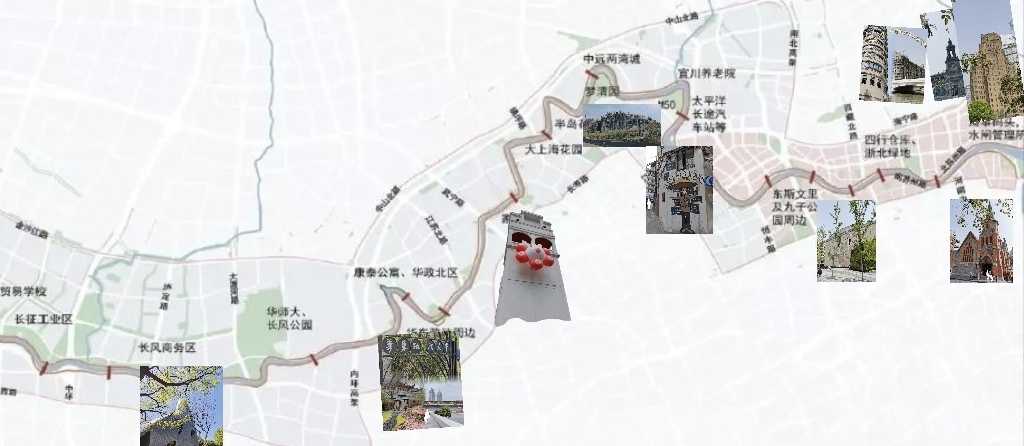
Originally called Wusong River (and in ancient times, Songjiang), Suzhou Creek originates from East Taihu Lake, flows through Suzhou, and joins the Huangpu River. During the concession era, foreign expats often took boats from here to Suzhou, hence the name “Suzhou Creek.” But before liberation, the banks were lined with factories and shantytowns. Industrial wastewater and domestic sewage were dumped directly into the river. In summer, residents dared not open their windows—that stench was the pungent footnote of an era.
The turning point came in 2008 with a large-scale wastewater treatment project. After more than a decade, by 2020, the riverside promenade had taken shape. Today, it’s a new calling card for Shanghai—a treasure trove for locals to stroll, cycle, walk their kids, and camp. The historical buildings, creative parks, and food spots along the bank are like scattered pearls, strung together by this promenade into a brilliant necklace. [Link: Shanghai urban renewal projects]
Four Essential Suzhou Creek Walking Routes

Route 1: Putuo Section – From the “Serpent” Walkway to Everyday Life
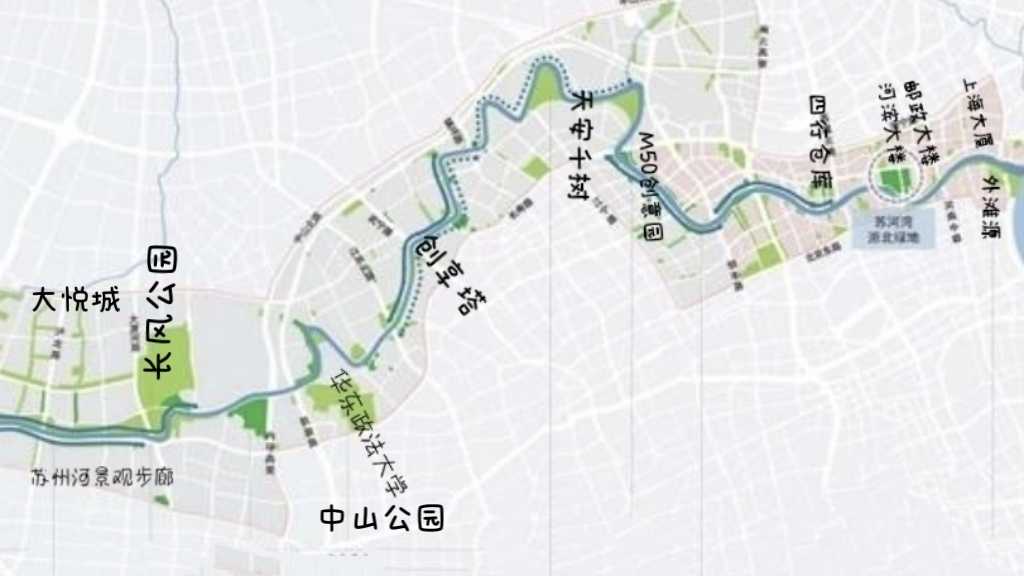
Start: Intersection of Changning Road and Furongjiang Road (Metro Line 2, Weining Road Station)
End: Zhongshan Park
Distance: About 3–4 kilometers
Highlights: Suzhou Creek Landscape Walkway, Half Marathon Suzhou River Park, Joy City food
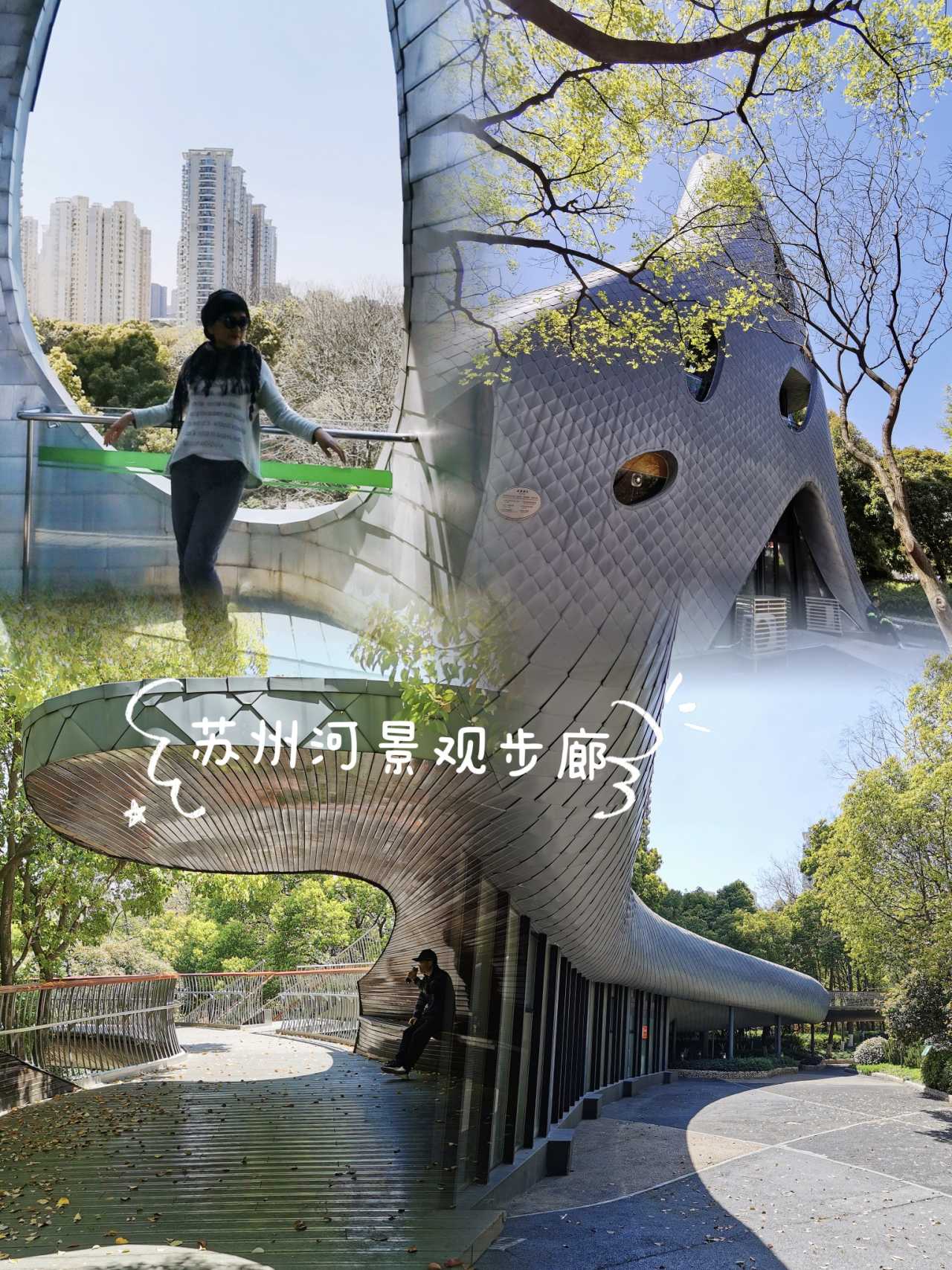
Our first stop begins at the Suzhou Creek Landscape Walkway. From a distance, this silver-gray metal-clad walkway looks like a giant python lurking in the woods, winding and twisting, with a tower at its end like the serpent’s raised head. Walking along the “tail” and entering the “head,” a spiral staircase leads you to viewing portals facing different directions—from there, the scenery across Suzhou Creek is framed like a painting.
On weekends, it’s surprisingly quiet here. We only met a mother and daughter; the little girl took a few steps and started complaining she was scared. Crossing the bridge brings you to Half Marathon Suzhou River Park. When spring flowers bloom, the lawn is covered with tents—people barbecuing, flying kites, camping, each enjoying their own pleasures. You can also take a boat ride for a different perspective of Suzhou Creek.
For lunch, head to Joy City across from the park. We picked a restaurant called Xunxiang BBQ (Seek Fragrance Barbecue). The 118-yuan set meal for two was excellent value, and with a glass of fresh draft beer, it was perfect. After eating, continue strolling along the river. Plum blossoms, peach blossoms, and cherry blossoms were all in full bloom. Along the way, people were camping, flying kites, walking kids, playing cards, fishing… and aimless wanderers like us. After about two or three kilometers, reach Zhongshan Park, wrapping up the first leg perfectly. [Link: Best parks in Shanghai for families]
Route 2: Changning Section – The “Oriental Little Harvard” on a Century-Old Campus
Start: 20 Huayang Road (East China University of Political Science and Law)
End: Chuangxiang Tower
Distance: About 2+ kilometers
Highlights: ECUPL campus, Suzhou Creek promenade, Xiaofangting Restaurant
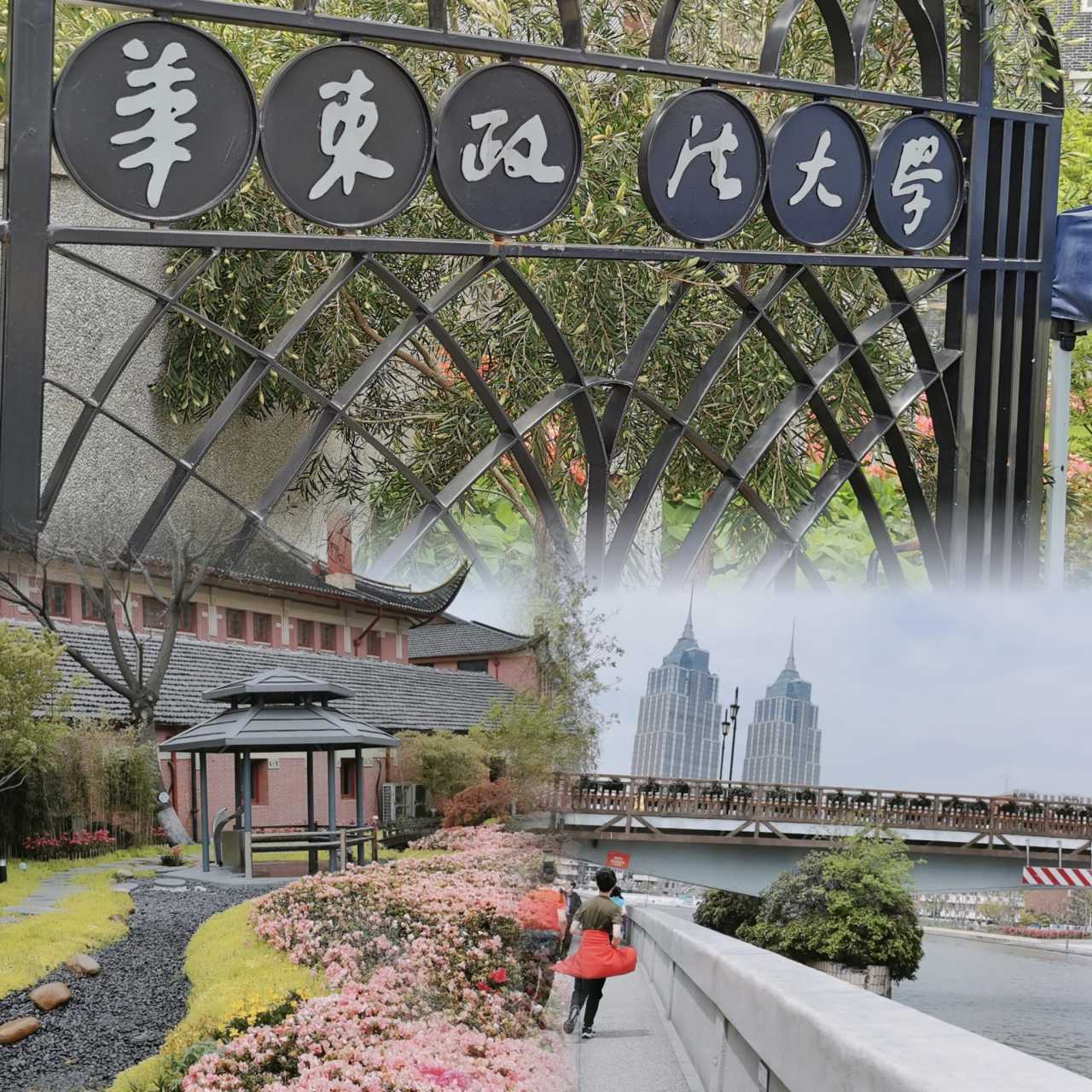
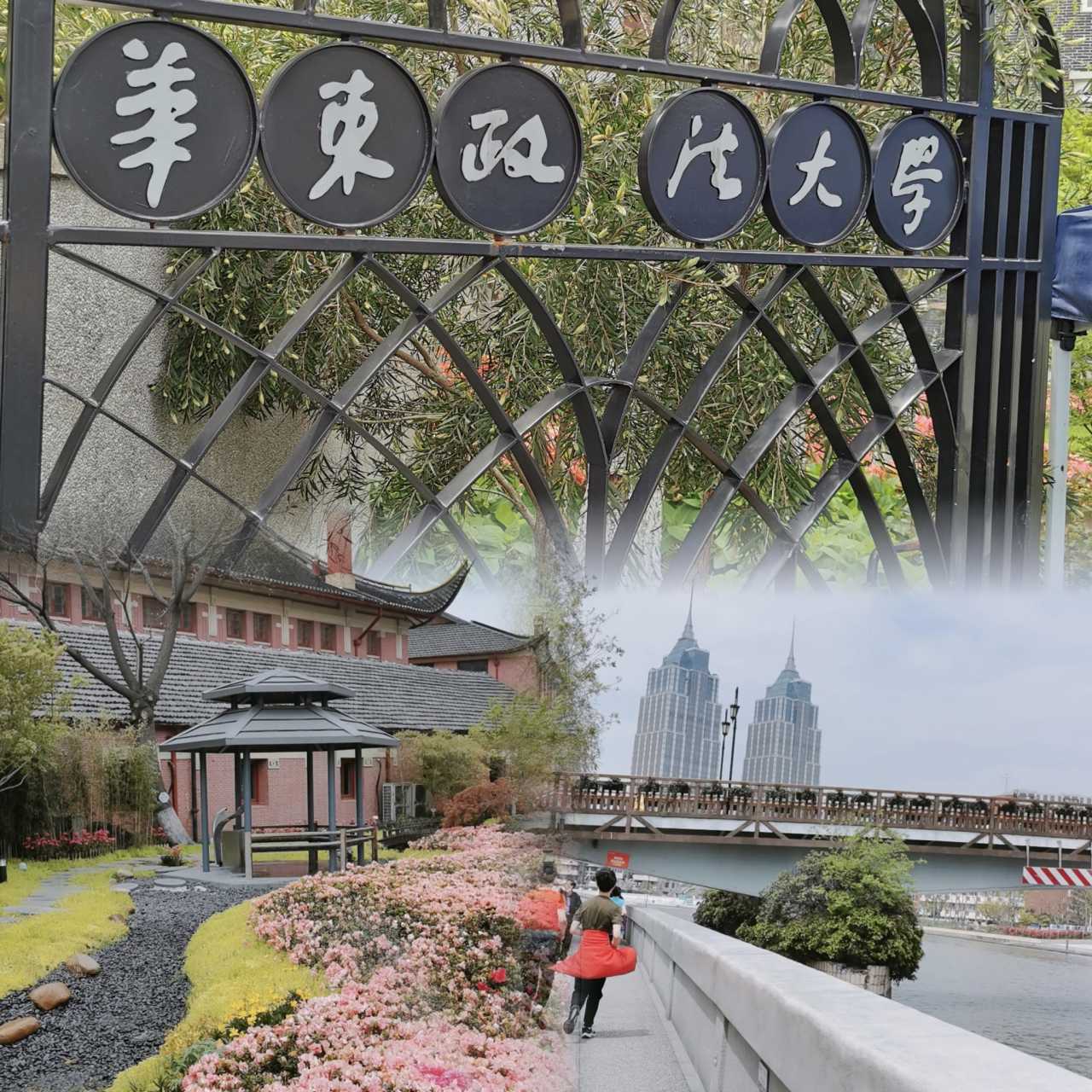
The second leg starts at East China University of Political Science and Law (ECUPL) . This campus was originally the site of St. John’s University—the first church-run institution of higher learning in China, founded in 1877 by Bishop Samuel Isaac Joseph Schereschewsky of the American Episcopal Church. After the 1952 nationwide reorganization of academic departments, it was dissolved and the site was given to ECUPL. Notable figures like T.V. Soong, Lin Yutang, Zou Taofen, and Rong Yiren all studied here.
In October 2021, the riverside section of the campus officially opened to the public. Stepping onto the campus feels like traveling back to the Republican era. “Gezhi Hall,” “Simeng Hall,” “Yizhu Garden,” “ECUPL Bridge,” “Law Theater,” “Ginkgo Garden”… 27 century-old heritage buildings are scattered across the grounds, leading some to call it the “Oriental Little Harvard.” The promenade is about two kilometers long, forming a wide curve that winds along Suzhou Creek. Entry is free with ID registration, and opening hours are 7:00 AM to 9:00 PM (after 8:45 PM, exit only).
Leaving ECUPL, continue along the river. Across the street is a mint—who knows if it’s still in operation. This area was once the heart of Shanghai’s western industrial district, with factories lining both banks: textiles, light industry, grain and oil, machinery manufacturing, chemicals… many were among the earliest and largest enterprises in Shanghai and even China. Now, the factories have moved out, and artists have taken over these empty warehouses, transforming them into studios and galleries.
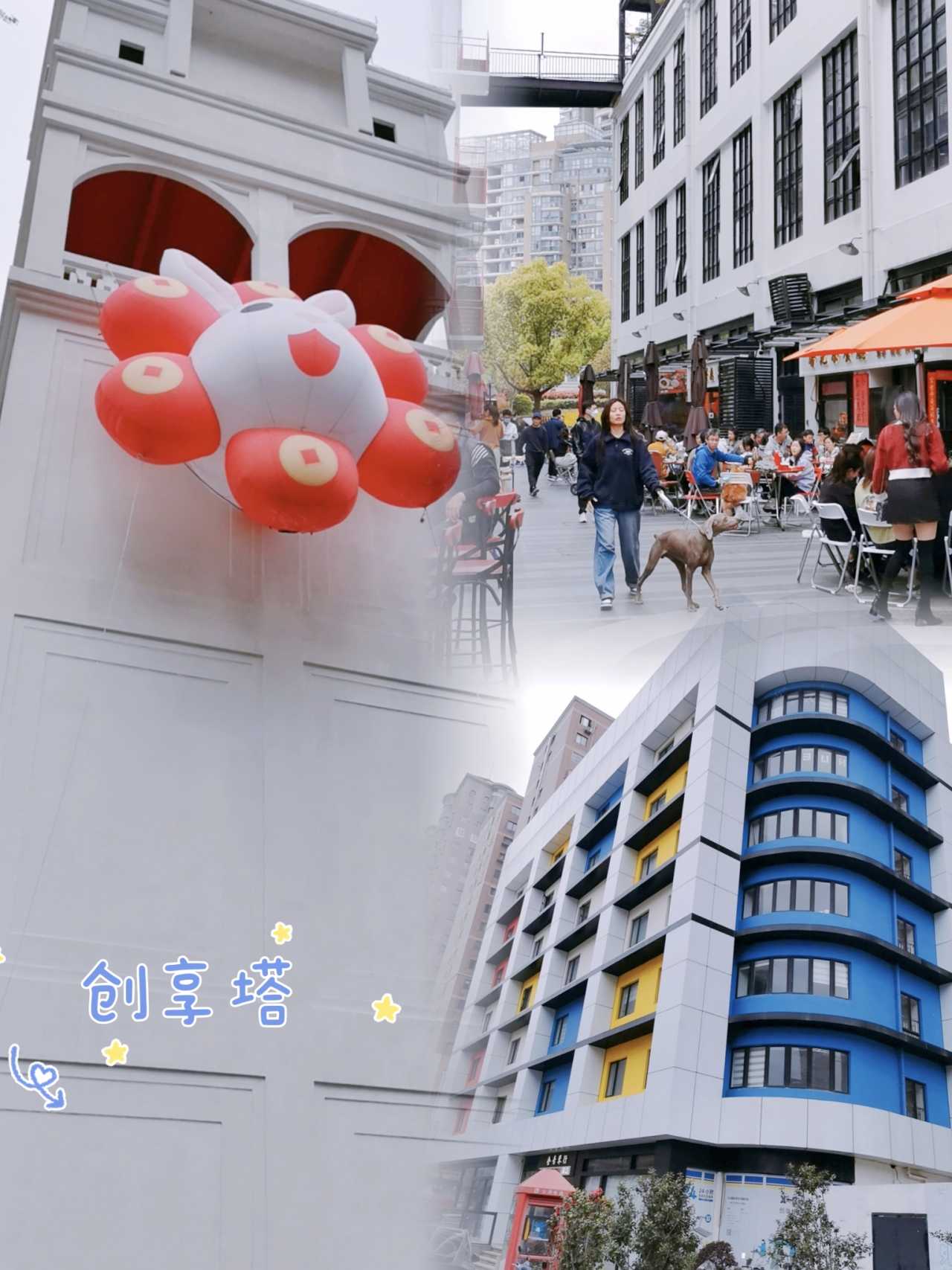
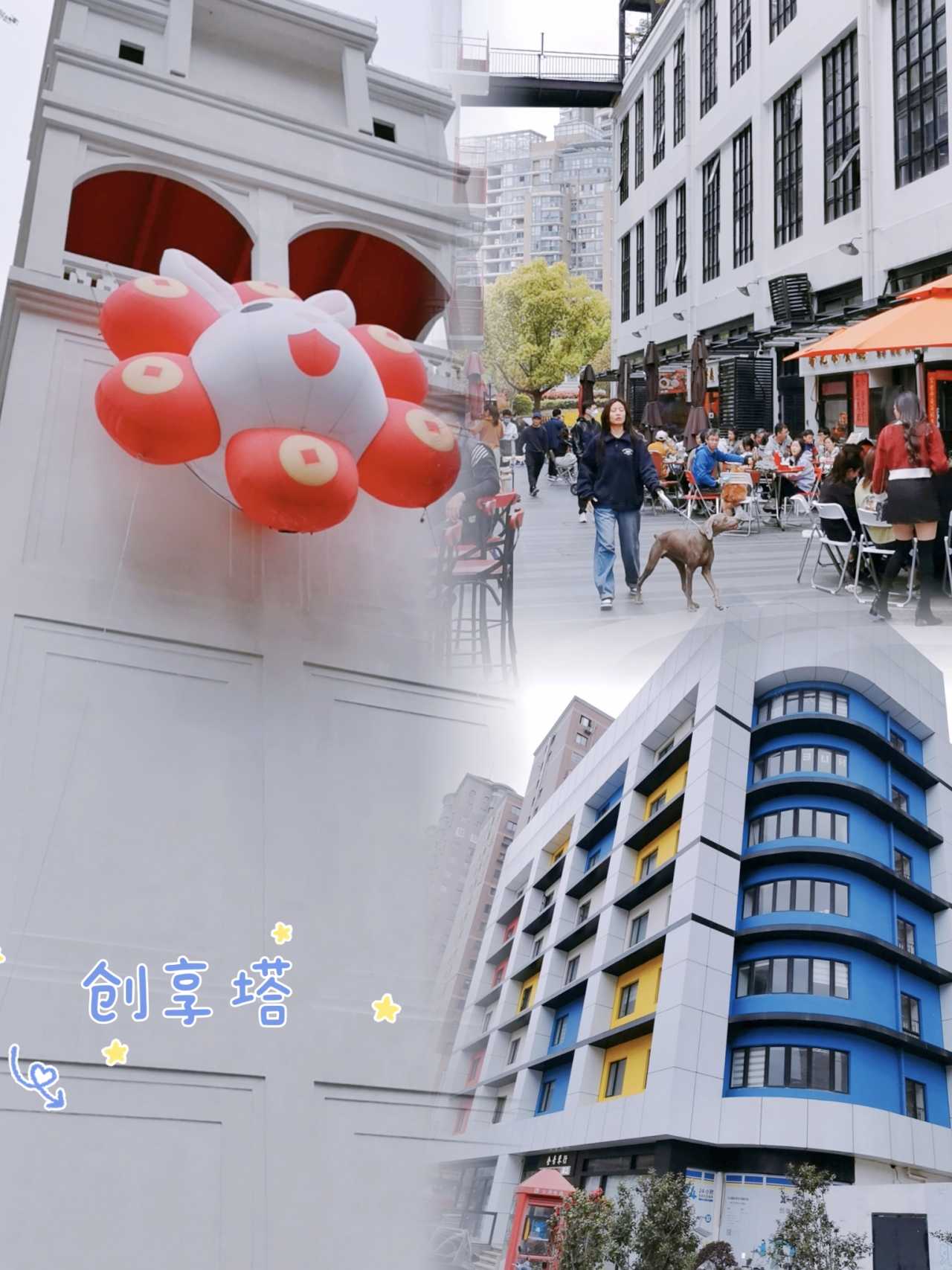
We had lunch at Xiaofangting (Little Fangting) —a vintage restaurant surrounded by flowers, European-style nostalgic decor, and full of people taking photos. The 258-yuan Texas-style roast chicken set meal was tender and flavorful, the caramel pudding sweet but not cloying, and the watermelon juice refreshing. Word has it the restaurant is run by the daughter of the owner of the antique shop next door. After eating, we wanted to check out the nearby Chuangxiang Tower, but the elevator was locked, so we had to give up. [Link: Shanghai’s best hidden gem restaurants]
Route 3: Old Zhabei Section – From Shantytown to Art Paradise
Start: Chuangxiang Tower
End: Tian’an Thousand Trees
Distance: About 3 kilometers
Highlights: M50 Creative Park, Tian’an Thousand Trees, trendy restaurants
The third leg starts at Chuangxiang Tower. The houses on the opposite bank are of excellent quality, with seagulls flying over Suzhou Creek. I checked on Lianjia (a real estate platform): about 130,000 yuan per square meter. But before liberation, this was a notorious shantytown—over 3,000 households, 15,000 poor people living in bamboo-and-reed huts, no electricity, no plumbing, drinking and washing water all from Suzhou Creek. When it rained, sewage flowed everywhere. That road was called “Yanwang Road” (Road to Hell) . The contrast between then and now is sobering.
A section of old railway track is preserved under glass, a memorial to those tumultuous years. Continuing on, we arrived at M50 Creative Park—one of Shanghai’s earliest creative parks, converted from the Chunming Coarse Textile Mill. Time magazine once called it a Shanghai fashion landmark. There are new exhibitions almost every month, most of them free—perfect for art lovers. Most galleries don’t allow photography, though, so you have to appreciate with your eyes and heart.
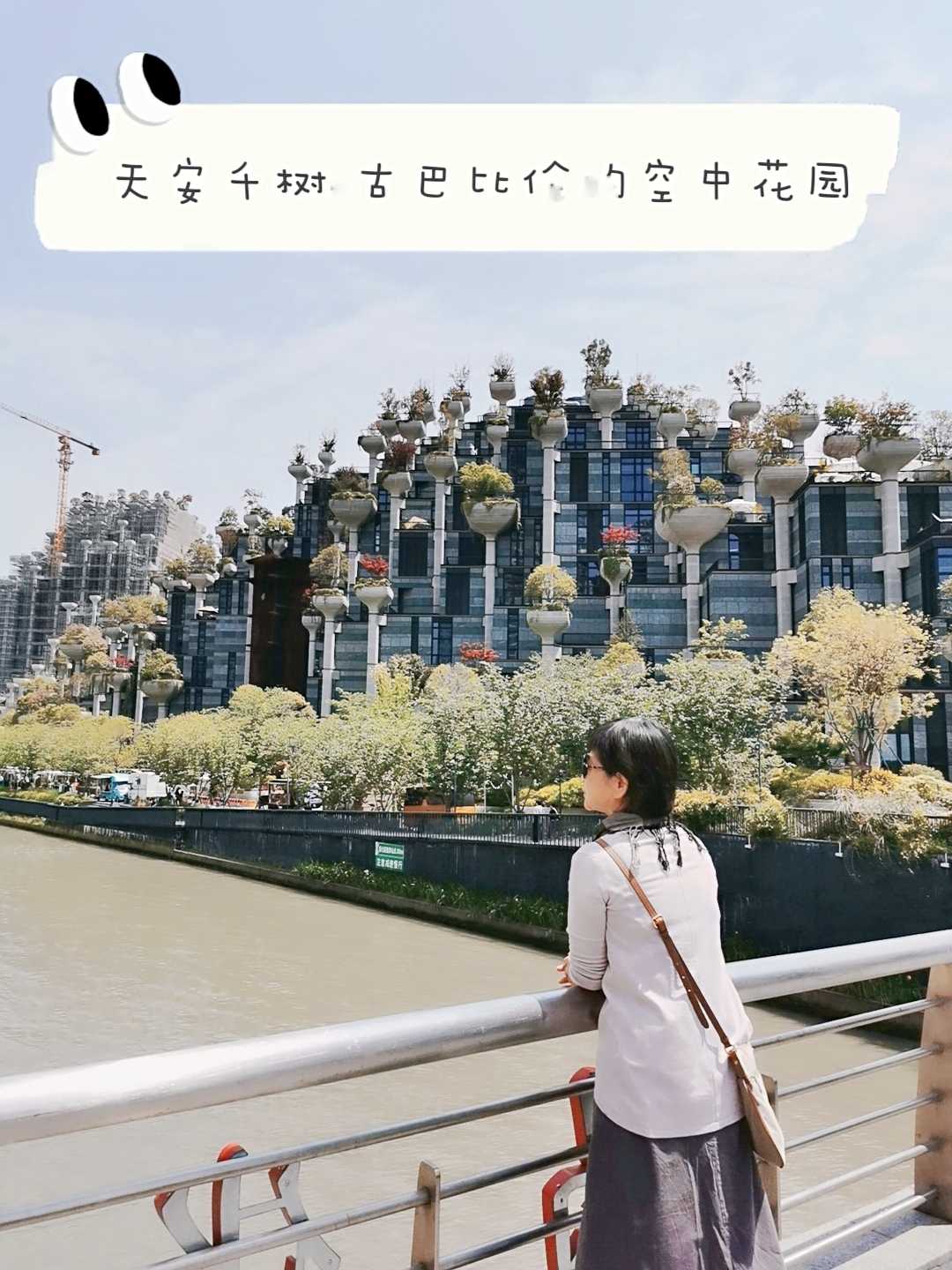
Leaving M50, we doubled back to Tian’an Thousand Trees. This shopping mall, opened at the end of 2021, had already gone viral in global design circles before it was even completed. Its iconic “thousand trees” facade makes it a must-see for architecture enthusiasts. [Link: Shanghai’s most Instagrammable architecture]
Route 4: Huangpu & Jing’an Section – The Confluence of Past and Future
Start: Tian’an Thousand Trees
End: The Bund (Suzhou Creek estuary)
Distance: About 4 kilometers
Highlights: Shanghai Postal Museum, Waibaidu Bridge, Rock Bund
This final section takes you from the creative energy of Tian’an Thousand Trees toward the iconic Bund. Along the way, you’ll pass the Shanghai Postal Museum—a stunning Baroque-style building that once housed the city’s central post office. The building’s clock tower is a beloved landmark.
Continue to Waibaidu Bridge, Shanghai’s first all-steel bridge, built in 1907. This is where Suzhou Creek meets the Huangpu River—a symbolic confluence of old and new Shanghai. Cross the bridge to reach Rock Bund, a luxury shopping and dining complex that perfectly blends historical preservation with modern design.
This leg is perfect for sunset photography, as the golden hour casts warm light on the colonial-era buildings along the Bund. [Link: Best sunset spots in Shanghai]
Frequently Asked Questions About Walking Suzhou Creek
1. How long does it take to walk the entire Suzhou Creek promenade?
The full 53-kilometer promenade within Shanghai’s city limits takes about 10–12 hours of continuous walking. Most visitors choose to break it into 2–4 separate weekend walks, as we did. The four routes described above cover the most scenic and historically rich sections.
2. Is the Suzhou Creek promenade suitable for cycling?
Yes! The promenade is fully connected and bike-friendly in most sections. You can rent a shared bike (like Mobike or HelloBike) at various points along the route. Cycling the entire stretch takes about 3–4 hours.
3. What is the best time of year to visit?
Spring (March–May) and autumn (September–November) offer the most comfortable temperatures and beautiful scenery. Spring brings blooming cherry blossoms and plum blossoms, while autumn offers golden ginkgo leaves. Summer can be hot and humid, but early mornings and evenings are pleasant.
4. Are there restrooms and food options along the way?
Yes. The promenade is well-equipped with public restrooms at regular intervals. There are also many cafes, restaurants, and food stalls along the route, especially near creative parks like M50 and shopping centers like Joy City and Tian’an Thousand Trees.
5. Is the walk free?
Absolutely. Access to the Suzhou Creek promenade is completely free. Some attractions along the way (like the Shanghai Postal Museum) may have small entrance fees, but the walking route itself costs nothing.
Conclusion: Your Shanghai Urban Memory Awaits
Suzhou Creek is more than a waterway—it’s a living museum of Shanghai’s transformation from a treaty-port industrial hub to a global metropolis. Each step along its banks reveals layers of history: colonial architecture, industrial relics, creative renewal, and modern urban planning.
Whether you’re a history buff, a photography enthusiast, a foodie, or simply someone who loves a good walk, Suzhou Creek offers something for everyone. The best part? You can take it at your own pace, stopping for coffee, snapping photos, or just sitting on a bench watching the boats drift by.
Ready to explore? Start your journey this weekend. Pick one of the four routes above, pack comfortable shoes, bring your camera, and discover why Suzhou Creek is Shanghai’s most underrated walking trail. Share your experience with us in the comments below—we’d love to hear which section became your favorite.
Your Shanghai adventure starts at Suzhou Creek. Lace up and go.
You may also like