Solo Journey Through Southeast Guizhou: A Time Travel Through Zhaoxing Dong Village, Tang'an Rice Terraces, and the Basha Tribe
Meta Description: Discover the hidden gems of Southeast Guizhou on a solo journey through Zhaoxing Dong Village, Tang'an Rice Terraces, and the Basha Tribe. Experience authentic Dong culture, breathtaking landscapes, and timeless traditions in this comprehensive travel guide.
Introduction: Why Southeast Guizhou Deserves a Spot on Your Travel Bucket List
The vastness of the world always has room for both the sorrows and joys of time. Walking alone on the road, you truly understand what "freedom" means. For travelers seeking an authentic cultural immersion off China's beaten tourist path, Southeast Guizhou (Qiandongnan) offers an unparalleled experience. This region, home to the Dong and Miao ethnic minorities, preserves ancient traditions, stunning landscapes, and a way of life that feels untouched by modernity.
During the National Day holiday, while my social media feed was flooded with crowded tourist spots and identical check-in photos, I made a spontaneous decision that changed my perspective on travel forever. Holed up at home in Guiyang, watching my four-day vacation slip away, boredom finally got the better of me. I hastily packed a bag, booked a high-speed train ticket, and set my destination: Southeast Guizhou.
It wasn't a trendy choice, but it was a longing buried deep in my heart for years. An internship years ago at the power supply bureau in Taijiang County had forged an unbreakable bond with this land. Zhaoxing Dong Village—this name had been sitting on my travel wishlist for a long time. I just never expected to meet it in such a hasty and spontaneous way.
Day One: Zhaoxing Dong Village – Slow Time Under the Drum Tower

Getting to Zhaoxing Dong Village from Guiyang
From Guiyang, a 90-minute high-speed train ride took me to Congjiang Station. Exiting right, less than twenty meters away was the bus station. A ten-yuan direct shuttle ticket and a ten-minute ride later, I arrived at the Zhaoxing visitor center. This accessibility makes Zhaoxing Dong Village an ideal destination for both weekend getaways and extended cultural explorations.
The entrance ticket was 100 yuan, but 80 yuan if booked online. The electric cart cost 20 yuan. Despite it being National Day, there weren't many tourists, and there was no queue for tickets. Most people opted for the electric cart into the village, but I chose to walk slowly, strolling along the scenic trail with frequent stops. Half an hour later, I finally caught a glimpse of the village in the distance.
First Impression: The Premier Dong Village in a Mountain Basin

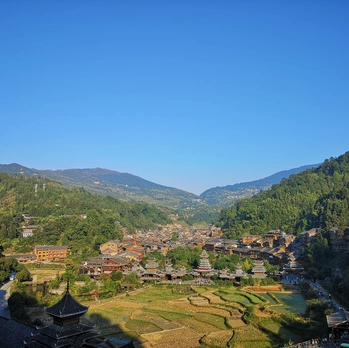
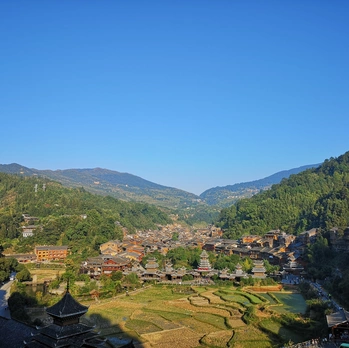
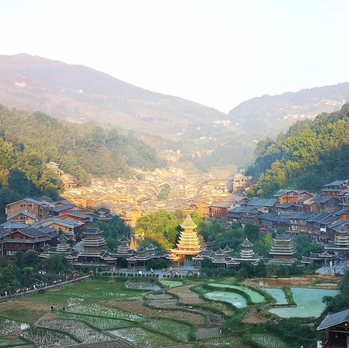
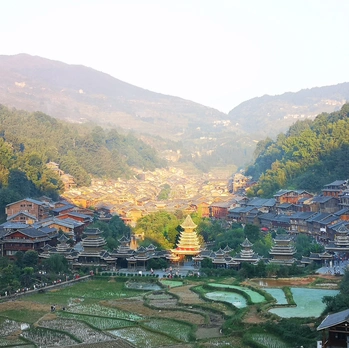
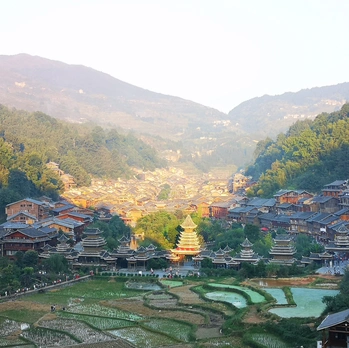
Standing on the observation platform outside the village, the entire Dong settlement unfolded before me—surrounded by mountains on all sides, the village lay quietly in a mountain basin like a pearl cradled in the palms of the hills. I didn't rush into the village. Instead, I stayed there for nearly two hours, watching people come and go, until dusk began to fall before heading down.
Once inside, I deliberately avoided the main street. Having visited too many ancient towns, I'd long grown tired of the "all ancient towns are the same" cliché. Zhaoxing Dong Village is gradually becoming commercialized, but if you turn into those nameless alleyways, you can still touch its most authentic pulse of daily life.
People returning from the autumn harvest carried loads on shoulder poles. Women on the wind-and-rain bridges chatted about everyday matters. Old men in the drum towers played chess. Cats and dogs dozed lazily on the ground. These scenes touched me more than any tourist attraction.
The Three Treasures of the Dong: Drum Towers, Grand Songs, and Charm
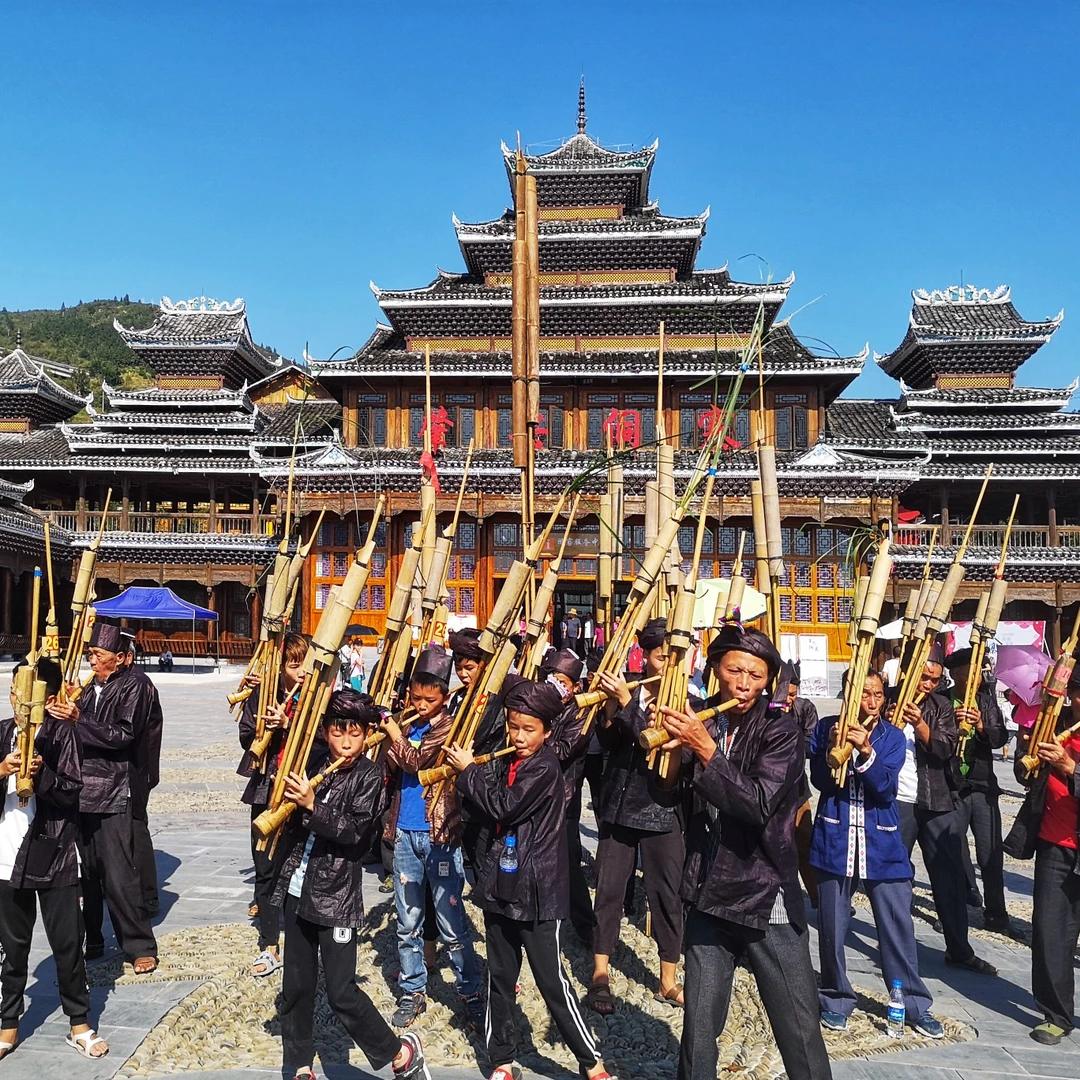
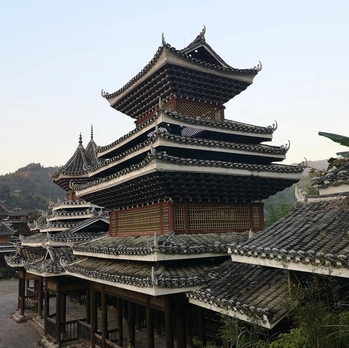
The Dong people have three treasures: drum towers, grand songs, and wind-and-rain bridges. As the largest Dong village in China, Zhaoxing boasts five drum towers, each representing one of the five clans (Ren, Yi, Li, Zhi, Xin—meaning Benevolence, Righteousness, Propriety, Wisdom, and Faith). These structures, built entirely of wood with mortise-and-tenon joints, were funded by the villagers themselves. They serve as places to rest and cool off, as well as centers for gatherings, discussions, and festival ceremonies.
At eight in the evening, the open-air Dong song and dance performance began on schedule. The moment the Dong Grand Song (Dongzu Dage) started, I was utterly stunned. This multi-part, conductor-less, unaccompanied folk chorus sounded like music from the heavens. These sounds, inscribed on UNESCO's Representative List of the Intangible Cultural Heritage of Humanity, can only be truly appreciated when heard in person—their power to pierce the soul is unparalleled.
A Pleasant Surprise: A Hundred-Yuan Inn and a Warm-Hearted Hostess
After the performance, I started looking for accommodation. Walking along the river, I found that rooms weren't tight even during National Day. I finally checked into a guesthouse called "Shuiyi" (Water Inn) . After some bargaining, it cost me just 100 yuan per night—an incredible price for the Golden Week holiday.
The inn was a typical all-cedarwood loft. Walking on the floorboards produced a loud creaking sound, and soundproofing was mediocre. But the warmth of the hostess, Lu Huaying, truly moved me. She not only proactively introduced sightseeing tips but also offered to have her husband drive me to Tang'an Rice Terraces (I politely declined). When I extended my stay for another night, she even upgraded me to a river-view room for free. The view from the window was so beautiful it made me want to stay forever.
Day Two: Hiking to Tang'an Rice Terraces – A Personal Pilgrimage
Departure: The Stone Path from Zhaoxing to Tang'an
Tang'an Dong Village is about six kilometers from Zhaoxing. It's a joint Sino-Norwegian project established as an open-air Dong ecological museum. Unlike conventional museums, the ancient village, fertile fields, every tree, and every blade of grass here are all part of the museum itself.
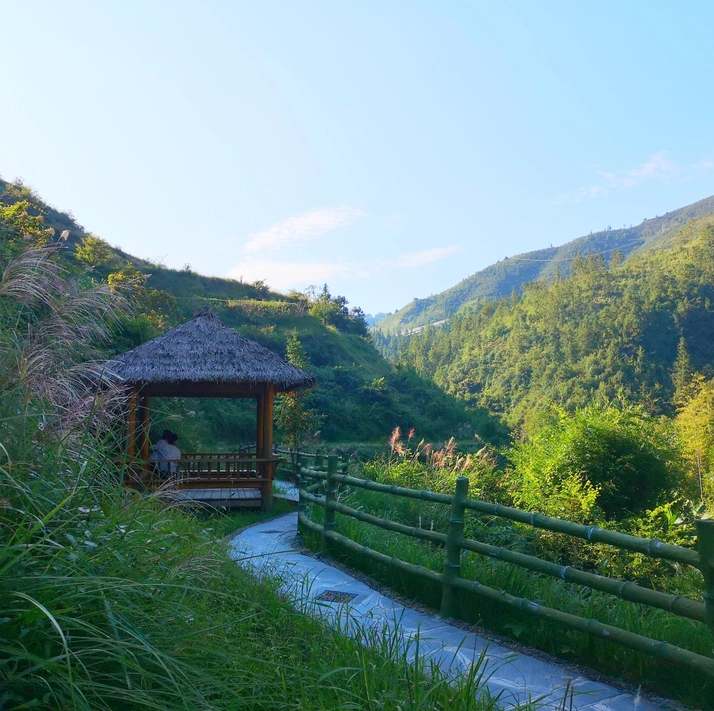
Zhaoxing sits in a valley, while Tang'an perches on a mountaintop. Before the road was built, the only connection was a stone footpath that crossed several hills and took about two hours to walk. This was exactly the hiking route through Southeast Guizhou I had planned.
At 2:30 PM, carrying two bottles of water and some snacks, I set off from Zhaoxing. The sun was blazing, the sky was clear, and the mountain path was rugged and winding. Following the stone path uphill through the valley, I was soon drenched in sweat.
Xiage Village: An Encounter with Childhood Innocence
An hour and a half later, I spotted a few houses and a group of children chasing each other in play. I thought it was Tang'an, but upon asking, I learned it was Xiage Village—a Dong settlement between Zhaoxing and Tang'an.
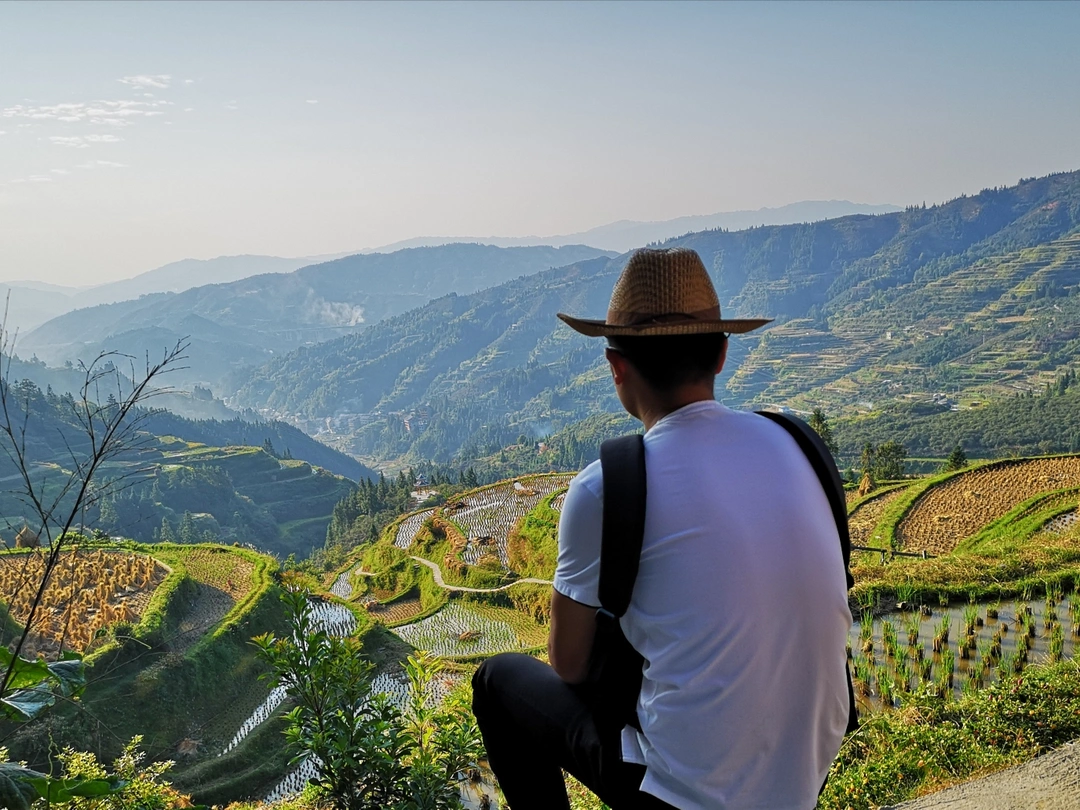
The rice terraces in Xiage were so beautiful I couldn't tear myself away. I borrowed a stool from a child and sat in his yard, greedily soaking in the stunning scenery. A few Dong children gathered around, their eyes full of curiosity and innocence. A little boy eagerly introduced himself and his friends, even remembering to introduce his dog to me.
They lived down the mountain, attended school in Zhaoxing, and only returned home on weekends. I asked if the walk to school was tiring. They shrugged it off: "It's not that far to walk." Compared to their parents' generation, who walked this mountain path to school every day, it truly wasn't much.
I shared my snacks with them, and a little girl began showing me her toys. Watching them do cartwheels in the yard, laughing and playing, touched the softest part of my heart.
Tang'an Rice Terraces: Awe in the Glow of Sunset
After resting for an hour in Xiage, I continued onward. The path from Xiage to Tang'an was steeper, but the terraced fields along the way made me forget my fatigue. About 35 minutes later, I finally arrived at Tang'an Dong Village.
Tang'an is built into the mountainside, surrounded by hills on three sides, with the other side opening onto a breathtaking expanse of terraced fields. Against the backdrop of the setting sun, the all-wooden stilted houses (diaojiaolou) were arranged in layers, smoke curling upward from chimneys, standing quietly in the mountains as if cut off from the world.
I sat alone on a ridge between the fields, watching the sunset glow and feeling the wind rustle through the grass. At that moment, I suddenly wished I had someone to share this beauty with—the most contradictory feeling for a solo traveler: enjoying freedom while craving companionship.
Descending in the Dark: Walking Alone Through the Night
I had planned to stay overnight in Tang'an, but all my luggage was still at the guesthouse in Zhaoxing. As the last traces of twilight faded, I had no choice but to descend the mountain. The night hike through Southeast Guizhou's mountains was both terrifying and exhilarating—the stars emerged one by one, and the sounds of the forest at night created a symphony that only solo travelers truly appreciate.
What Makes Southeast Guizhou a Unique Travel Destination
Southeast Guizhou offers something increasingly rare in modern travel: authentic cultural experiences without the crowds. Unlike popular destinations like Lijiang or凤凰古城, Zhaoxing Dong Village and its surrounding areas remain relatively untouched by mass tourism. Here are key reasons to add this region to your itinerary:
- Intangible Cultural Heritage: The Dong Grand Song is a UNESCO-recognized cultural treasure
- Architectural Marvels: Drum towers and wind-and-rain bridges showcase incredible traditional craftsmanship
- Breathtaking Landscapes: The Tang'an Rice Terraces rival those of Longji in Guangxi but with far fewer tourists
- Warm Hospitality: Local guesthouse owners go above and beyond for their guests
- Off-the-Beaten-Path Adventure: Perfect for solo travelers seeking meaningful connections
[Link: Best time to visit Southeast Guizhou for rice terrace views] [Link: How to combine Zhaoxing with the Basha Tribe and other nearby attractions]
Frequently Asked Questions About Solo Travel in Southeast Guizhou
1. Is Southeast Guizhou safe for solo female travelers?
 Absolutely. The region is very safe, with friendly locals and a low crime rate. The guesthouse hostess in Zhaoxing was particularly welcoming to solo travelers. However, always practice standard safety precautions, especially when hiking alone at night.
2. What is the best time to visit Zhaoxing Dong Village and Tang'an Rice Terraces?
The best times are spring (April-May) when the terraces are flooded for planting, creating mirror-like reflections, and autumn (September-October) when the rice turns golden. The National Day holiday (October 1-7) can be busy but still manageable.
3. How difficult is the hike from Zhaoxing to Tang'an?
 The 6-kilometer hike takes about 2 hours and is moderately challenging. It involves uphill sections and uneven stone paths. Bring plenty of water, wear sturdy shoes, and start early to avoid hiking in the dark.
4. Can I visit the Basha Tribe on the same trip?
Yes! The Basha Tribe, known for their unique gun-carrying tradition and ancient hairstyles, is located near Congjiang County, about 30 minutes from Zhaoxing. You can easily combine both destinations in a 2-3 day itinerary.
5. What should I pack for a solo trip to Southeast Guizhou?
Pack comfortable hiking shoes, light layers (mornings and evenings can be cool), insect repellent, a reusable water bottle, and a headlamp or flashlight for night walks. Cash is essential as many villages lack ATMs.
[Link: Complete packing list for Southeast Guizhou hiking trips]
Final Thoughts: Why You Should Book Your Trip Now
My spontaneous escape to Southeast Guizhou turned into one of the most memorable journeys of my life. From the haunting beauty of the Dong Grand Song echoing through Zhaoxing's drum towers to the golden glow of Tang'an Rice Terraces at sunset, every moment felt like stepping into a living postcard.
The Basha Tribe, with their ancient customs and warrior traditions, awaits your discovery. The wind-and-rain bridges of Zhaoxing invite you to sit and watch life unfold at a slower pace. The terraced fields of Southeast Guizhou call out to photographers, hikers, and dreamers alike.
This isn't just a travel destination—it's a journey into the heart of China's ethnic diversity, a chance to witness traditions that have survived for centuries, and an opportunity to reconnect with what truly matters: human connection, natural beauty, and the freedom to explore.
Ready to embark on your own solo journey through Southeast Guizhou? Start planning today. Book your high-speed train to Congjiang, reserve a room at a local guesthouse like Shuiyi, and prepare for an adventure that will stay with you forever. The drum towers are waiting, the terraces are glowing, and the Dong people are ready to welcome you with open arms.
[Book Your Southeast Guizhou Adventure Now →]
Have you visited Zhaoxing Dong Village or the Tang'an Rice Terraces? Share your experiences in the comments below!
[Link: More solo travel itineraries for ethnic minority regions in China] [Link: Guide to Dong Grand Song performances and festivals] [Link: How to respect local customs when visiting Dong and Miao villages]