Shanghai | Cartier: When Luxury Meets Art, a Visual Feast That Defies Perception
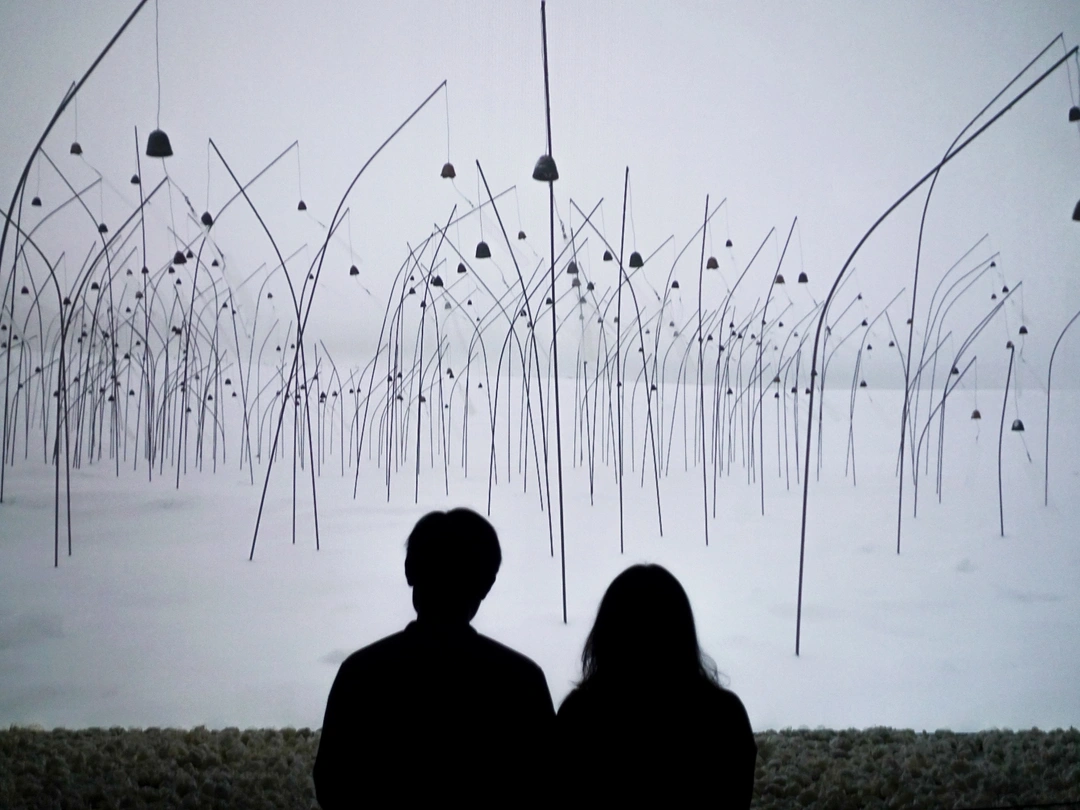
Meta Description: Explore the Cartier Fondation exhibition in Shanghai—"Unfamiliar Landscapes." Discover how luxury meets contemporary art, Christian Boltanski, Takeshi Kitano, and Chinese artists at Power Station of Art. A must-read for art lovers.
When you hear the name "Cartier," what comes to mind? Shimmering diamonds? Exquisite jewelry? An aura of untouchable luxury? That's perfectly normal. For decades, Cartier has been synonymous with "ultimate luxury" in the minds of millions.
But today, let's set aside those bling-bling fantasies. Join me in exploring a completely different side of Cartier—where there are no jewelry counters, no price tags. Just contemporary art installations that leave you speechless,影像作品 that strike straight at the soul, and a journey into the delicate boundary between the "unfamiliar" and the "familiar."
Ready? Let's dive into the pond of art and make some waves.
Unfamiliar Landscapes: Cartier's Cross-Border Artistic Adventure in Shanghai
In 2018, the Power Station of Art (PSA) in Shanghai hosted a landmark exhibition—"Unfamiliar Landscapes." The name itself is steeped in poetry and tension. The word "unfamiliar" carries a hint of danger, yet it draws in every curious soul like a magnet. We are born with a fascination for the unknown, a desire to explore the edges of the world—and this exhibition offered exactly that opportunity.
This was the first large-scale exhibition by the Fondation Cartier pour l'Art Contemporain in China. Established in 1984 by Cartier as a private cultural foundation, the Fondation is dedicated to supporting and promoting contemporary art. For over three decades, it has scoured the globe for the most avant-garde voices—and brought them to Shanghai.
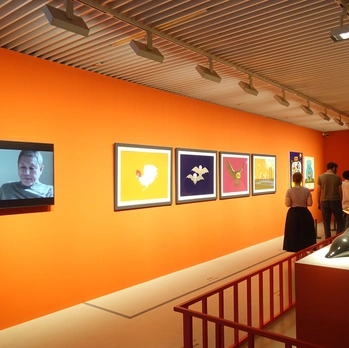
The exhibition brought together over 100 works by 31 artists from around the world. These artists come from different countries, speak different languages, and use vastly different media. But here's the fascinating part: when these works converge, they collectively build a strange "unfamiliar world"—a world where the everyday becomes surreal, where the ordinary suddenly takes on entirely new meaning.
[Link: Power Station of Art Shanghai exhibitions]
When Insects Take Center Stage: Christian Boltanski's "The Life of Mayflies"


As you step into the gallery, you might be drawn to a seemingly simple piece: amid shifting light and shadow, countless images of insects flutter, circle, and fall on the wall. This is French artist Christian Boltanski's work, "The Life of Mayflies."
Insects—we see them every day, often without a second glance. But under Boltanski's lens, these tiny creatures are imbued with monumental significance. Their brief lives—from birth to death, lasting just a few hours—are magnified, scrutinized, and given an almost sacred beauty. Suddenly, you realize that those insects you've never bothered to look at are also enacting the cycle of life. This is the power of the "unfamiliar": it forces you to re-examine what you thought you already "knew."
The Cosmic Journey of Everyday Objects: Sarah Sze's "Everything That Rises Must Converge"
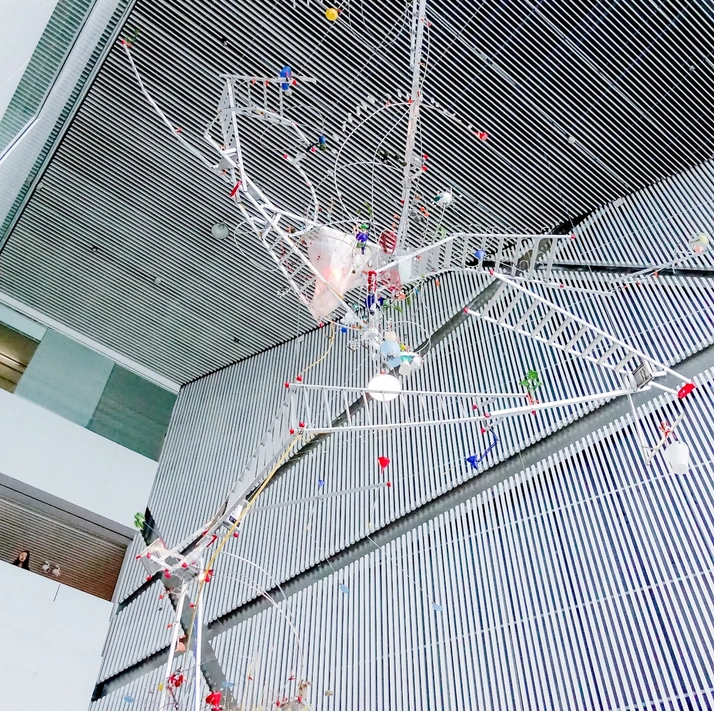
If Boltanski's work makes you reconsider tiny lives, then Sarah Sze's "Everything That Rises Must Converge" will spark entirely new imaginings about everyday objects.
Imagine this: the chairs, tables, teacups, books in your home—these most ordinary items—are suspended in the air, slowly ascending and converging in some mysterious trajectory. They are no longer the mundane clutter you know; they've become planets floating through the cosmos, spinning, colliding, and merging like celestial bodies.
Sze transforms our daily lives into a grand cosmic narrative. Those objects we take for granted are actually waiting for their own "moment of ascent." When they converge in unfamiliar postures, we suddenly realize: perhaps there really is some hidden connection between all things.
Takeshi Kitano's "The Painter's Child": When Flowers Meet Animals
When you think of Takeshi Kitano, you might recall his films, his violent aesthetics, his trademark deadpan expression. But you may not know that this Japanese film maestro is also a painter.
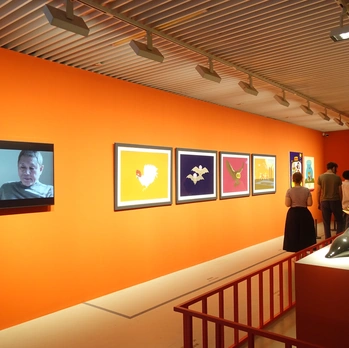
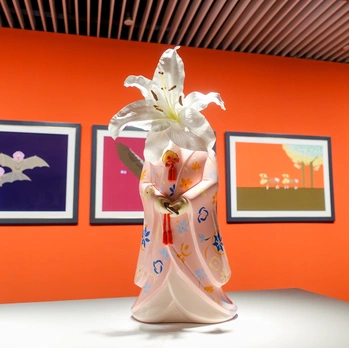
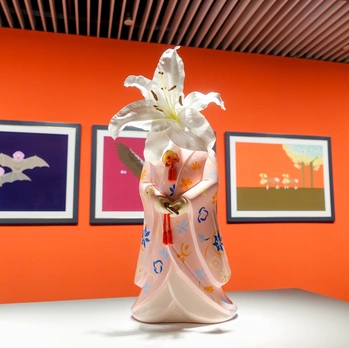
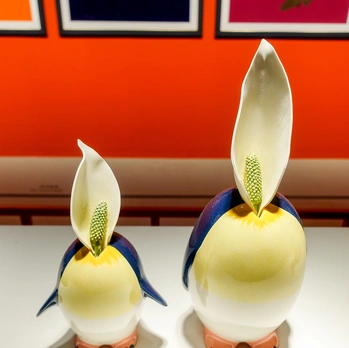
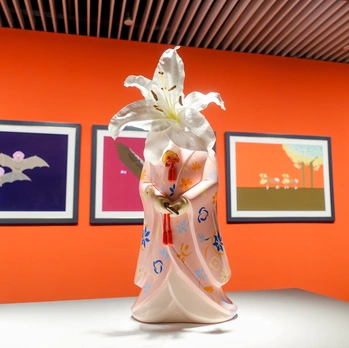
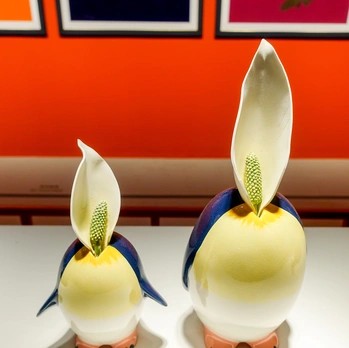
In this exhibition, Kitano brought his "The Painter's Child" series. The works center on vases, but each vase is covered with hybrid creatures—a lion with a flower for a head, a rabbit blooming with blossoms. The exhibition notes describe these designs as "playful." Honestly, at first glance, they do seem innocent and charming.
But as I lingered, my mind wandered to a film I'd recently watched, Annihilation—those eerie, mutated life forms, beautiful yet deadly. Kitano's works, on the surface childlike, harbor an unsettling strangeness beneath. This sense of the "unfamiliar" doesn't come from the works themselves, but from our own reinterpretation of the familiar.
[Link: Takeshi Kitano art exhibitions]
From Unfamiliar to Familiar: When Art Illuminates Reality
The "unfamiliar" doesn't just exist in art; it also resides within us. French artist Ron Mueck's work perfectly illustrates this.
Ron Mueck: When "People" No Longer Seem Human
Ron Mueck's sculptures are renowned for their astonishing realism. Every vein, every strand of hair, every wrinkle, every blemish is rendered with meticulous precision—they look like living, breathing people, frozen in a single moment.
But here's the eerie part: none of these "people" are anywhere near life-size. Some are gigantic, towering like giants; others are tiny, like dolls. When you stand before a massive "Shopping Woman," her eyes staring straight at you, you experience a strange illusion: Is she alive or dead? Is she real or unreal?
This experience of simultaneous similarity and profound difference is the core magic of Mueck's work. He uses the most realistic techniques to create the most surreal world. In this world, "people"—the species we know best—become unfamiliar and unsettling.
Daido Moriyama: Tokyo in a Different Light
If Ron Mueck's work makes you question "people," then Japanese photography master Daido Moriyama will give you an entirely new understanding of "the city."

Moriyama's photographs are famous for their distinctive graininess, blur, and distortion. His Tokyo is not the postcard-perfect scenery we're used to; it's a sharper, more brutal social sketch. Under his lens, neon lights become harsh blocks of color, crowds become blurred shadows, streets become flowing rivers.
Moriyama uses his camera to warp and granulate reality, creating a visual experience that is both familiar and alien. You know it's Tokyo, yet you feel you've never truly seen it before.
[Link: Daido Moriyama photography exhibitions]
Voices of Chinese Artists: When Cartier Meets the East
In this exhibition, Cartier's close collaboration with Chinese artists brought many surprises. Huang Yong Ping's "Should We Still Build a Cathedral?" raises profound questions about faith and architecture; Cai Guo-Qiang's gunpowder paintings use the most primal explosive material to create the most dazzling patterns; Gao Shan's photography series "The Eighth Day" captures the birth and passing of life; Hu Liu's paintings, Li Yongbin's video works—each piece is a powerful statement from Chinese contemporary art.
Special mention goes to Cai Guo-Qiang's "Time-Space Blur Project." This artist, world-famous for his gunpowder explosion art, "explodes" a work full of power and poetry onto canvas. Gunpowder—an element symbolizing destruction and rebirth in traditional Chinese culture—becomes a tool of creation in Cai's hands. He lets the gunpowder burn and explode freely on the canvas, producing unpredictable, one-of-a-kind patterns. The process itself is a dialogue between the "unfamiliar" and the "familiar"—you know gunpowder, but you've never seen it "paint" like this.
[Link: Cai Guo-Qiang gunpowder art Shanghai]
Memory House: When Heartbeats Become Art
Alongside "Unfamiliar Landscapes," another exhibition space called "Memory House" offered a deeply personal experience. Here, visitors could listen to the recorded heartbeats of artists and curators—a literal pulse of creativity. The installation transformed the abstract concept of memory into something tangible, audible, and deeply human.
This is the genius of Cartier's Fondation: it doesn't just display art; it creates experiences that resonate on a visceral level. The heartbeat becomes a metaphor for the living, breathing nature of contemporary art itself.
Frequently Asked Questions About Cartier's Art Exhibitions in Shanghai
1. What is the Fondation Cartier pour l'Art Contemporain?
The Fondation Cartier is a private cultural foundation established by Cartier in 1984. It supports and promotes contemporary art worldwide, organizing exhibitions, commissioning new works, and collaborating with artists across disciplines. It has no permanent collection but produces temporary exhibitions globally.
2. Where was the "Unfamiliar Landscapes" exhibition held in Shanghai?
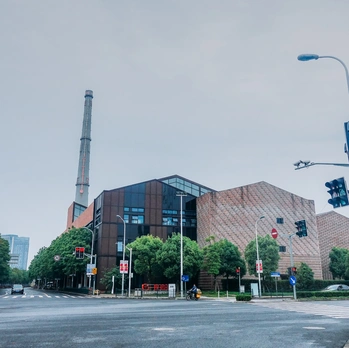
The exhibition was held at the Power Station of Art (PSA), Shanghai's first state-run contemporary art museum, located in the Huangpu District. The museum itself is a repurposed former power plant, adding to the industrial-chic atmosphere.
3. Which artists were featured in the Cartier Shanghai exhibition?
The exhibition featured over 100 works by 31 international artists, including Christian Boltanski (France), Sarah Sze (USA), Takeshi Kitano (Japan), Ron Mueck (Australia/UK), Daido Moriyama (Japan), and Chinese artists like Cai Guo-Qiang, Huang Yong Ping, Gao Shan, Hu Liu, and Li Yongbin.
4. Is the Cartier Fondation exhibition still on display in Shanghai?
The "Unfamiliar Landscapes" exhibition ran in 2018. However, the Fondation Cartier continues to organize exhibitions globally. To see current and upcoming shows, visit the official Fondation Cartier website or check major museums in Shanghai and other cities.
5. How does Cartier's art foundation differ from its jewelry business?
The Fondation Cartier operates independently from Cartier's commercial jewelry operations. While the brand's luxury goods focus on craftsmanship and precious materials, the foundation is dedicated to supporting contemporary art without commercial pressure. It commissions works, funds artist projects, and organizes exhibitions that often challenge conventional perceptions.
Why You Should Experience Cartier's Art World
If you're an art lover, a curious traveler, or someone who believes that luxury can also mean intellectual and emotional enrichment, the Fondation Cartier's exhibitions are not to be missed. They offer a rare opportunity to see how a global luxury house thinks beyond commerce—and how art can transform our perception of the familiar.
The next time Cartier brings an exhibition to Shanghai—or to a city near you—don't just think diamonds. Think of the mayflies, the floating chairs, the giant sculptures, and the gunpowder explosions. Think of the unfamiliar.
Ready to explore more art in Shanghai? Check out our guides to the Power Station of Art, M50 Art District, and Long Museum. And if you've visited a Cartier art exhibition, share your experience in the comments below. Let's keep the conversation going.
[Link: Best contemporary art museums in Shanghai] [Link: Luxury brand art foundations worldwide] [Link: Shanghai travel guide for art lovers]
Images: Courtesy of Fondation Cartier pour l'Art Contemporain and Power Station of Art, Shanghai.