Self-Drive China: The Ultimate 9-Day Northern Xinjiang Loop Journey to Kanas
Meta Description: Discover the magic of a 9-day self-drive Northern Xinjiang loop from Ürümqi to Kanas. Expert travel tips, hidden gems, and honest reviews for your China road trip adventure.
Introduction: Why Northern Xinjiang Belongs on Your Bucket List
Some places captivate you with their name alone. Xinjiang—this vast territory occupying one-sixth of China's landmass—always seems wrapped in a veil of mystery. It feels impossibly distant, yet so enigmatic that you can't resist the urge to explore.
When the grasslands we'd dreamed of finally beckoned, we decided to wait no longer. In October 2018, my partner and I set foot on this land, embarking on a 9-day self-drive loop through Northern Xinjiang. Starting from Ürümqi, we passed through Heavenly Lake, Beitun, Hemu, and Kanas, finally ending at Bahbah. Along the way, there were surprises, regrets, moments of awe, and touches of emotion.
If you too yearn for this land, this travelogue might offer some useful insights.
Part One: Arriving in Ürümqi—Your Gateway to Xinjiang Self-Drive
Landing Late at Night, Welcomed with Warmth

At 1:30 a.m., our plane touched down at Ürümqi Diwopu International Airport. It should have been a time for drowsiness, but I was wide awake—this was my first time setting foot on this "much-talked-about" land. Stepping out of the airport, aside from two conspicuous armored vehicles parked at the entrance, Ürümqi looked no different from any other Chinese city: taxi drivers hawking for fares, bright lights, bustling crowds. This was Xinjiang—that mysterious place in outsiders' eyes—and this was my first impression.
We found a hotel nearby and checked in, saving ourselves the trouble of searching late into the night.
Picking Up the Car, Great Food, and an Unexpected "Delay"
The next day, we slept in and headed to the high-speed rail station to pick up our rental car. On the way, our ride-hailing driver turned out to be an enthusiastic veteran traveler. When he heard our itinerary, he poured out endless advice—from route planning to food recommendations: the legendary ice-fed lamb from Tax County, the big-plate chicken from Shawan... He talked so passionately that I wished I could whip out a notebook and jot it all down. Before we got out, he even gave us detailed directions to the best food spots near the station. The warmth of Ürümqi's people was irresistible.
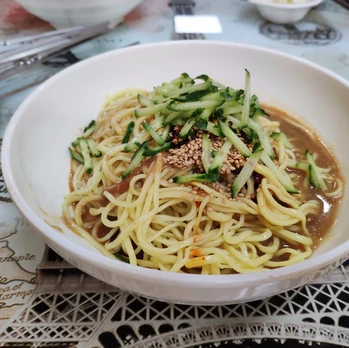
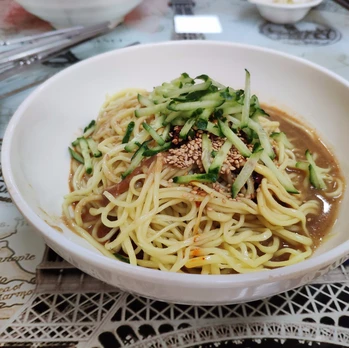
It was already 1:30 p.m. by the time we got the car. But thanks to the time zone difference, this was roughly equivalent to 11 a.m. back east. We headed first to "Brother Yellow Noodle" (Huáng Miàn Gē), recommended by the driver, and ordered their signature yellow noodles, skewers of meat, and apricot-skin tea (xìng pí chá).
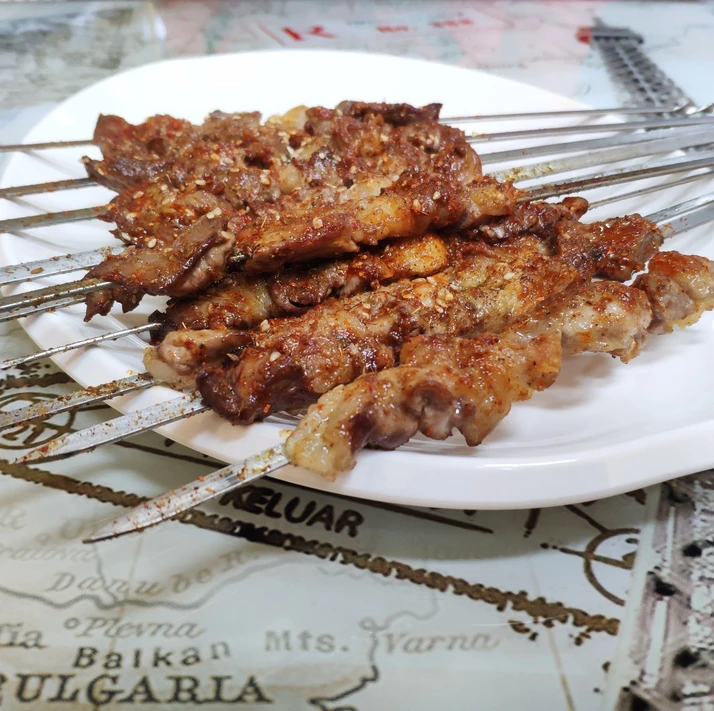
The meat skewers were absolutely stunning—every single kebab we had in Xinjiang outshone those anywhere else. They were addictive. The yellow noodles didn't look particularly spicy, but they packed a punch. As for the apricot-skin tea, it paled in comparison to Lanzhou's version—not recommended.
After eating our fill, we decided to stop by the nearby Wanda Plaza to stock up on supplies for the coming days. This seemingly casual decision led to an unexpected turn in our journey.
The underground parking lot at Wanda gave us two full hours of frustration. By the time we finished shopping, over two hours had evaporated, and our plan to hit the road that day was completely scuttled. So we reverted to our original plan—Heavenly Lake.
Heavenly Lake (Tiān Shān Tiān Chí): Regret Going? Regret Not Going?
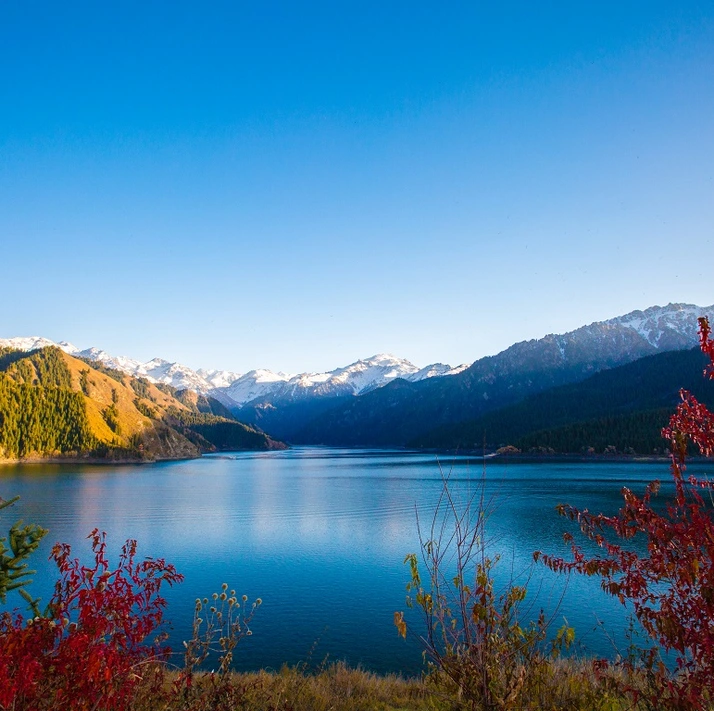
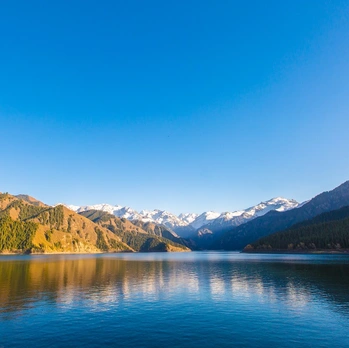
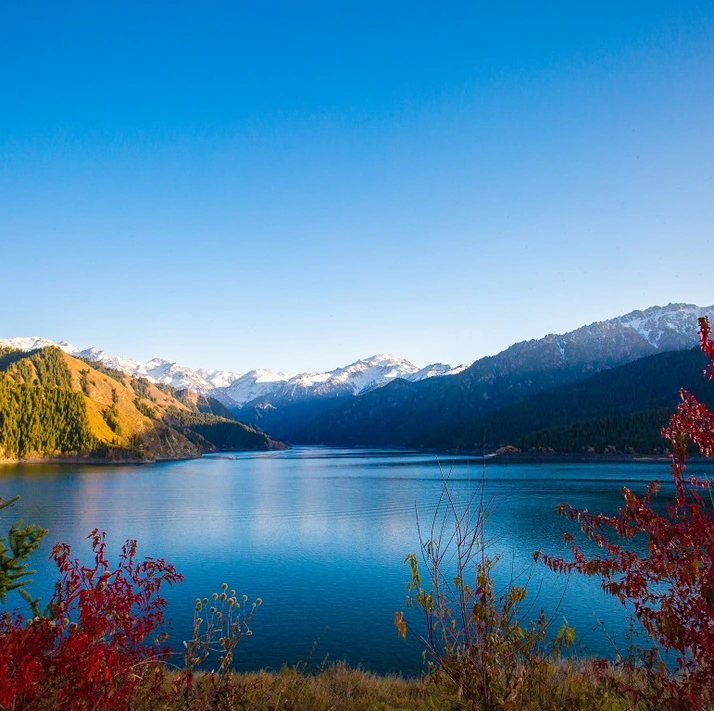
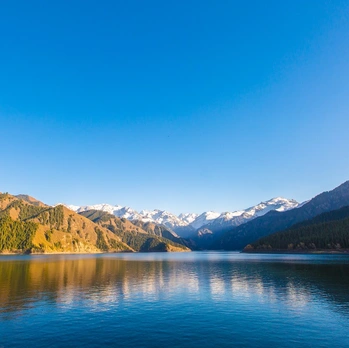
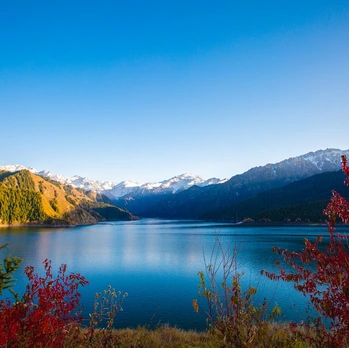
Heavenly Lake, a National 5A Scenic Area, a UNESCO World Natural Heritage site, an International Man and Biosphere Reserve... Its credentials are impressive. But as someone from Northeast China, my memories of "Heavenly Lake" belong more to Changbai Mountain. Once, Xinjiang's Heavenly Lake felt like a distant, mysterious place to me. Now, I was here.
Heavenly Lake is less than 100 kilometers from Ürümqi, with excellent road conditions all the way—about an hour's drive. Honestly, it was the most conflicted spot on our trip: many travelogues categorize it as "regret not going, but regret even more after going." So we'd originally planned to skip it if time was tight.
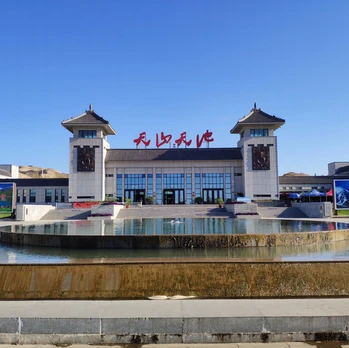
The advantage of off-peak travel was that by the time we arrived, most tour groups were already leaving. There were hardly any visitors. We bought tickets and boarded the shuttle bus—the ride was unusually long, over an hour. When we got off, there was no lake in sight. We walked uphill for another 15 minutes before catching a glimpse of the water. Along the way, there was also an electric cart option—unwary travelers might get ripped off. This "shuttle bus + walking" model is all too common at scenic spots across China; it seems the "learning" among destinations has been very effective.
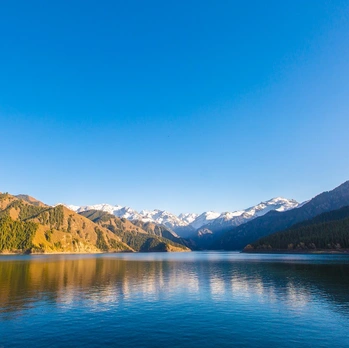
At Heavenly Lake, you can get up close to the water and even take a boat ride. But this also strips away some of its mystery—the lake within arm's reach, the boats disturbing the stillness, made the experience feel mediocre. Compared to Changbai Mountain's Heavenly Lake, there was indeed a gap.
Wooden boardwalks on both sides of the lake allow you to circle it, but I think a quick look is enough.
As we descended, the sky was darkening. Another hour-long shuttle ride back to the city. And then—the highlight of the evening: dinner at "Fat Old Man" (Pàng Lǎo Hàn), a Xinjiang-style spicy pepper chicken restaurant.
The restaurant's decor was distinctive—fresh and elegant, divided into several zones for different types of diners. Their signature spicy pepper chicken was beautifully colored and incredibly tasty—we devoured it all. Fried tofu skin (jiā shā), cold skin noodles (liáng pí), belt noodles (pí dài miàn), yogurt, lamb skewers... In Xinjiang, you just regret having only one stomach and too few companions.
That night's accommodation was another unexpected bonus: the Xinjiang Wild Horse Silk Road驿站 (Yě Mǎ Sī Lù Yì Zhàn), a hotel that could itself be considered a "scenic spot." If you come to Ürümqi, I strongly recommend spending a night here.
From the moment you enter the lobby, you feel its uniqueness. After checking in, a staff member escorts you to your room—because the place is so large that anyone with a poor sense of direction could easily get lost. Every space along the way is thoughtfully designed and decorated. The room itself was cozy and inviting. At that moment, I felt incredibly lucky that our earlier delay hadn't made us miss this place.
That evening, we even had the chance to meet the big boss of the Wild Horse Group—Chen Zhifeng.
Part Two: Blood-Pumping Ferghana Horses, Tear-Jerking Gobi Roads
Wild Horse Ancient Ecological Park: An Unexpected Surprise
We got up early, not for the hotel breakfast, but to catch a glimpse of the legendary Ferghana horses (hàn xuè bǎo mǎ).
Behind the hotel lies the Xinjiang Wild Horse Ancient Ecological Park, which is free to enter with your room card. The park is divided into three sections: the China Ferghana Horse Base, the Wild Horse Art Museum, and the Jurassic Silicified Wood Protection Base. The area is not large, but it's packed with attractions.
The Ferghana Horse Base is the largest of its kind in the world, housing over 300 Ferghana horses. There's also a Przewalski's horse exhibition area, a racetrack, and stables, with daily equestrian training and performances. On the track, mares leisurely stroll with their foals, and there are ponies for children to ride.
The park also contains China's largest collection of silicified wood, including the world's longest specimen—three meters longer than the one that holds a Guinness World Record in the United States. The art museum houses a vast collection of lifelike oil paintings related to wild horses and Xinjiang.
If you take your time, half a day isn't enough. Many things here are hard to find elsewhere. This was a complete surprise before our trip. Highly recommended—if you're in Ürümqi, really do come here.
We wandered until around 11 a.m., then hurriedly checked out to continue our journey.
G216: Soul-Crushing Speed Limits on the Gobi Highway
The road from Ürümqi to Beitun via G216 is a study in contrasts. The landscape shifts from urban sprawl to vast, empty Gobi desert. But the real challenge? The speed limits. Sections of this highway are mercilessly restricted to 60 km/h or even 40 km/h, with frequent police checkpoints and speed cameras. For self-drive travelers, this stretch can feel like an eternity.
Our advice: plan extra time for this segment. Bring podcasts, audiobooks, or a co-driver willing to chat. The scenery is starkly beautiful—endless horizons, salt flats shimmering in the heat—but the pace will test your patience.
[Link: Tips for driving G216 in Xinjiang]
Part Three: Hemu Village—A Fairytale in the Altai Mountains
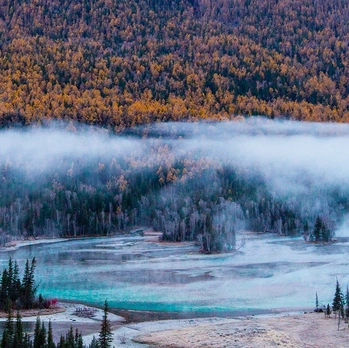
Arriving in Hemu: The Golden Autumn Dream
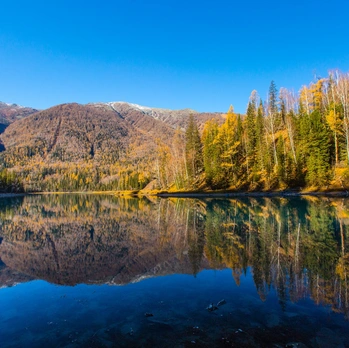
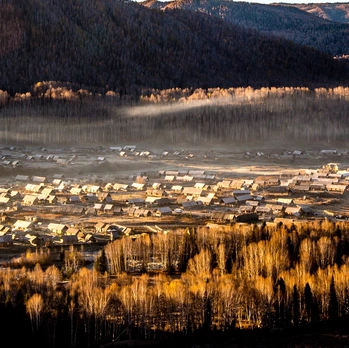
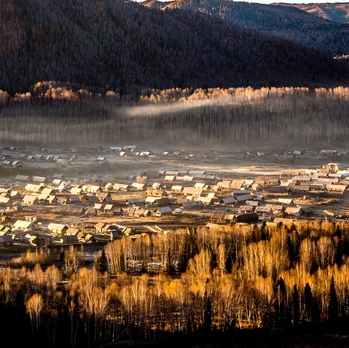
After surviving the Gobi, the landscape transforms dramatically as you approach the Altai Mountains. Hemu Village, a Tuvan settlement nestled in a valley, is one of the most photographed destinations in Northern Xinjiang. In autumn, the birch forests turn a brilliant gold, and the wooden houses with their smoke rising from chimneys create a scene straight out of a storybook.
We arrived in the late afternoon, just as the golden hour cast long shadows across the village. Parking is limited, so we left our car at the designated lot and took the village shuttle to our guesthouse.
Hemu Sunrise: Worth the Early Wake-Up Call
The next morning, we dragged ourselves out of bed at 6 a.m. to hike up to the observation platform overlooking the village. The climb is steep but short—about 20 minutes. At the top, a crowd had already gathered, tripods set up, breath fogging in the cold air.
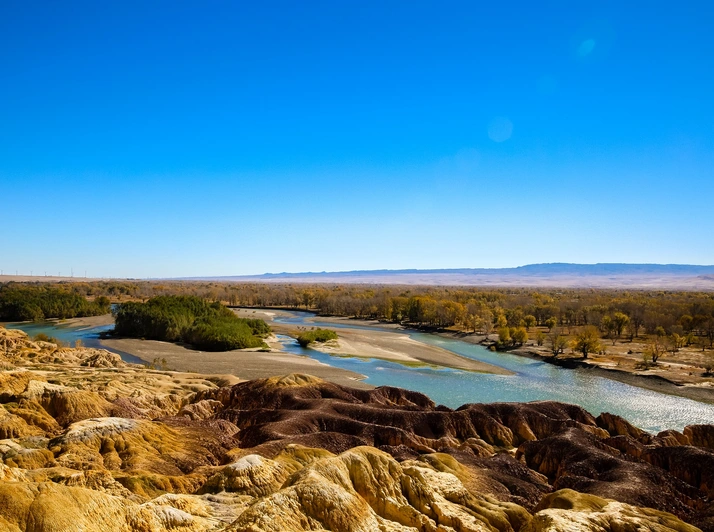
Then it happened: the first rays of sunlight hit the birch forest, and the entire valley seemed to catch fire. The mist rising from the river, the smoke from the chimneys, the golden leaves... it was a moment that made every early morning, every long drive, completely worth it.
[Link: Best photography spots in Hemu Village]
Part Four: Kanas Lake—The Heart of Northern Xinjiang
Entering Kanas National Park
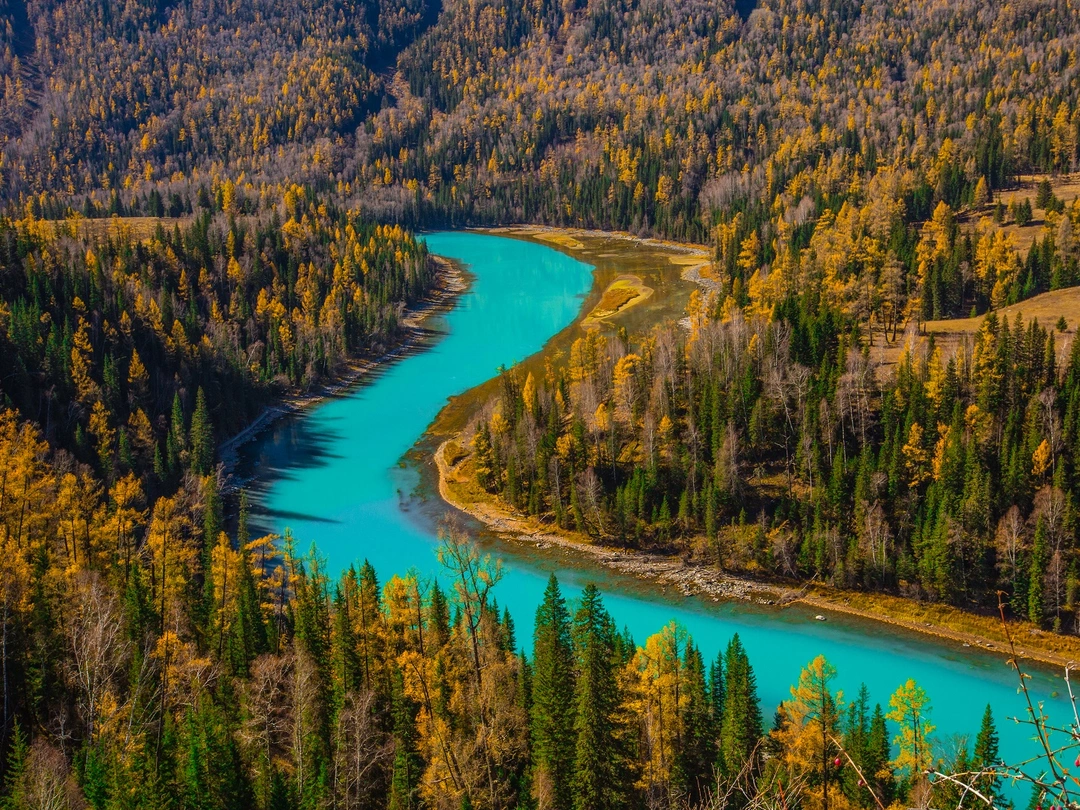
Kanas Lake is the crown jewel of Northern Xinjiang. This alpine lake, famous for its mysterious "lake monster" legends and ever-changing colors, draws visitors from around the world. The park is well-organized: you park at the entrance, take a shuttle bus deep into the reserve, and then explore on foot or by boat.
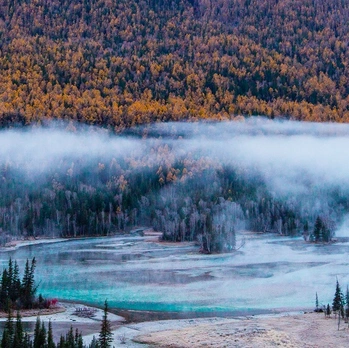
We visited in early October, just past peak autumn color. The crowds were thinner, and the lake was a deep, mesmerizing blue-green. The air was crisp, and the silence—broken only by the wind and birds—was profound.
The Kanas Lake Monster: Myth or Reality?
Local legend speaks of a giant creature lurking in the depths of Kanas Lake. Some say it's a giant fish, others claim it's a prehistoric relic. While we didn't spot any monsters, the mystery adds an undeniable allure to the lake. Even without mythical creatures, the sheer beauty of the place is enough to leave you spellbound.
Walking the Kanas Boardwalk
One of the best ways to experience Kanas is to walk the wooden boardwalk that follows the lake's edge. The path winds through birch and spruce forests, offering changing perspectives of the water. We spent a peaceful afternoon here, stopping frequently just to breathe in the scenery.
[Link: Kanas Lake travel guide]
Part Five: Returning to Ürümqi via Bahbah
The Scenic Drive Back
Our loop concluded with a drive from Kanas back toward Ürümqi, passing through Bahbah. This region offers a different flavor—rolling grasslands, grazing herds, and the occasional yurt. It's a reminder that Xinjiang's beauty isn't confined to its famous lakes and villages; the journey itself is a destination.
Final Feast in Ürümqi
Back in Ürümqi, we treated ourselves to one last Xinjiang feast: hand-pulled rice (zhuǎ fàn), roasted lamb, and endless cups of milk tea. The flavors of Xinjiang had become familiar by now, but they were no less satisfying.
FAQ: Planning Your Northern Xinjiang Self-Drive Trip
1. When is the best time to drive the Northern Xinjiang loop?
 The ideal time is September to October for autumn colors, or May to June for green grasslands. Winter driving is possible but challenging due to snow and ice.
2. Do I need a special permit to drive in Xinjiang?
 Foreign travelers need a Chinese driver's license and an International Driving Permit (IDP). Domestic travelers need a valid Chinese license. Some border areas require additional permits.
3. How are road conditions on the Northern Xinjiang loop?
 Major highways are well-maintained, but secondary roads can be rough. GPS and offline maps are essential, as cell service is spotty in remote areas.
4. Is it safe to self-drive in Xinjiang?
 Yes, but exercise caution. Checkpoints are common, and speed limits are strictly enforced. Carry your passport/ID at all times. Avoid driving at night on unfamiliar roads.
5. What should I pack for a September/October trip?
Layered clothing (temperatures range from 0°C to 20°C), sturdy walking shoes, sunscreen, sunglasses, a hat, and a reusable water bottle. A camera with a good zoom lens is highly recommended.
Conclusion: Why You Should Take This Journey
Nine days. 2,000 kilometers. Countless moments of wonder. The Northern Xinjiang loop is more than a road trip—it's an immersion into a land of staggering beauty, warm hospitality, and ancient cultures. From the golden birches of Hemu to the mysterious depths of Kanas Lake, every mile rewards you with something unforgettable.
Ready to plan your own Xinjiang self-drive adventure? Start by booking your rental car in Ürümqi, mapping out your route, and packing your sense of adventure. The road is waiting.
[Link: How to rent a car in Ürümqi for self-drive travel]
Have you driven the Northern Xinjiang loop? Share your tips and experiences in the comments below!
You may also like