Kawagebo: Yubeng Trek in Yunnan — A Journey of Rebirth and Self-Discovery
Meta Description: Experience the transformative Yubeng trek in Yunnan, China. Discover how hiking Kawagebo and Meili Snow Mountain leads to physical collapse, mental despair, and ultimate rebirth. A must-read for adventure seekers.
Introduction: Why We Leave — Not to Escape, But to Find Ourselves
In his book Confessions, Ma Liang wrote a passage that cuts deep: "All my arrogance comes from my inferiority, all my heroism from weakness, my eloquence from doubt, my depth of feeling from self-hatred."
Those words perfectly describe the state I'd been in for the past year.
After graduation, life became a photocopier — each day identical to the last. Morning subway commutes, evening overtime, weekends scrolling through my phone in a rented room. The edges I'd once had at work were worn smooth. I'd gone from the reckless kid who dared to say "no" to a "mature" person who had learned to nod and smile. But this maturity felt like an ill-fitting suit — it looked fine from the outside, but it was suffocating.
After the New Year, I started planning a trip. The destination didn't matter. What mattered was — leaving.
My colleagues later said I seemed like a different person after returning from Yunnan. Quieter, but with brighter eyes. They didn't know that some things simply can't be put into words. Every breath at high altitude, every clench of the jaw through muscle cramps, every bottle of hot water handed over by a stranger — language is too pale for moments like these.
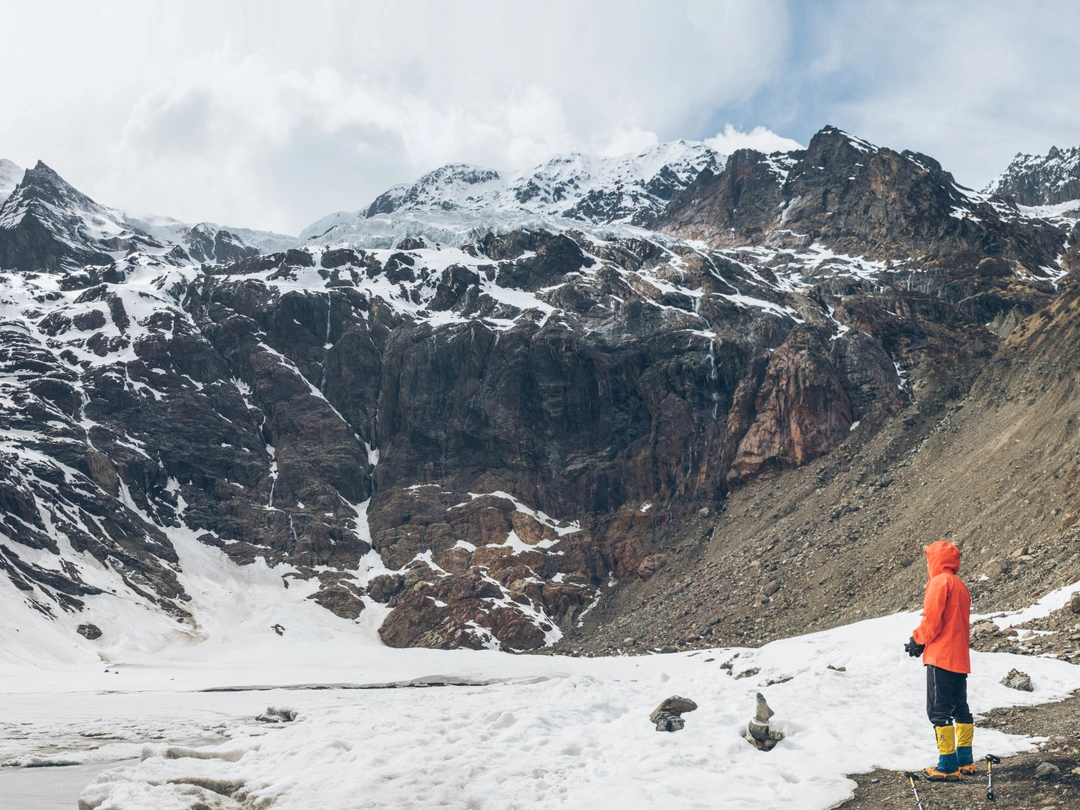
This is the story of the Yubeng trek in Yunnan — a journey of collapse, despair, and rebirth beneath the shadow of Kawagebo, the sacred peak of Meili Snow Mountain.
Planning Your Yubeng Trek: From Beijing to Lijiang

First Stop: An Epiphany Above the Clouds
March 31st, 2018. I sat on a flight to Kunming, looking out at endless white clouds beyond the window.
In 24 years of living in Beijing, I'd rarely seen sky like this. Pure white and deep blue — simple to the point of being stark, yet it instantly calmed my heart. When the plane hit turbulence, a thought struck me: if this were my last flight, what would I regret?
Not unfinished work. Not money I hadn't made.
It was the things I was perfectly capable of doing but had given up on out of fear.
Next to me sat a middle-aged couple. The woman was flying for the first time — loud, assertive, warm. She took my seat without asking, but as we got off the plane, she turned and said, "Alright, young man, we're off now!" In that moment, I realized that human kindness often begins with a small conflict. Takeoff, landing. Takeoff, landing again. Isn't life the same? The start and end points are identical. What matters is what you leave behind along the way.
First Impressions of Lijiang: Dicos, a Female Driver, and Mild Altitude Sickness
I landed in Lijiang starving and rushed straight into the Dicos fast food joint at the airport. My teammates later mocked me: "You flew all the way from Beijing just to see if Lijiang's Dicos tastes different from Beijing's?" — Fair point. The meal was rushed, but at least it filled my stomach.
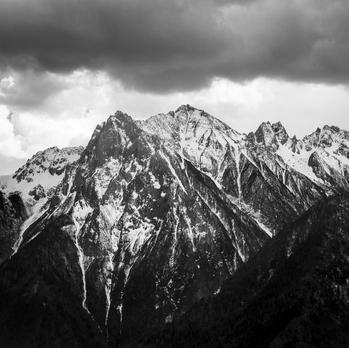
The airport bus would take an hour to arrive, so I opted for a taxi. The first driver was a woman, and I felt a twinge of unease — a female driver? That assumption says more about me than her. She drove calmly, chatting about Lijiang's climate, its ethnic groups, daily life. Meanwhile, I stared out the window, frantically clicking my camera shutter. Massive clouds, vast blue sky, Jade Dragon Snow Mountain standing quietly in the distance like a shy girl, its snowy peak glittering in the sunlight.
At the guesthouse, I met my first teammate — Duan Duan. Dark skin, lean build, clearly a seasoned outdoor enthusiast. He had the natural ability to strike up a conversation without making you feel uncomfortable — a real skill. Next came Lao Da (Hu Wanwan), an unapologetic foodie. Finally, Ming Ming, from Northeast China, whose accent gave him away the moment he spoke.
The Yubeng trekking squad was assembled.
But almost immediately, my head started pounding and throbbing. Duan Duan took one look at me and said, "Bro, are you getting altitude sickness?" Seriously? Altitude sickness in Lijiang, before we'd even reached Yubeng or Meili Snow Mountain? I quickly bought five packs of glucose oral solution (five small bottles per pack). As it turned out, this stuff saved my life.
[Link: How to prevent altitude sickness on high-altitude treks in Yunnan]
The Long Bus Ride: 8 Hours of Bumps for One Glimpse of Kawagebo

From Lijiang to Feilaisi: Crossing the 4,000-Meter Pass
The next morning at six, the four of us walked sleepily through the ancient streets of Lijiang. The sky was still dark, headlamps illuminating the cobblestones beneath our feet. Carrying over ten kilograms of gear, our heartbeats and breaths were clearly audible.
The bus departed from Lijiang, passed through Shangri-La, reached Deqin, and then transferred to Feilaisi. The whole journey took nearly eight hours. We'd all assumed the bus ride would be an easy day. By the time we arrived, we realized — riding the bus was more exhausting than hiking.
As the altitude climbed steadily, crossing the Baima Snow Mountain Pass, I started feeling seriously unwell. Four thousand meters above sea level was a serious test for someone on their first high-altitude trek. Fortunately, the altitude dropped after the pass, giving my body time to adjust.
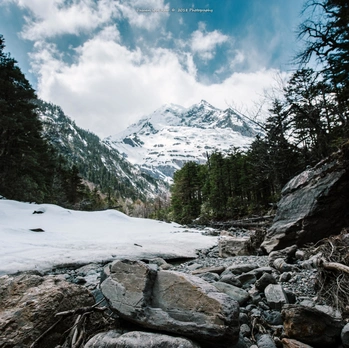
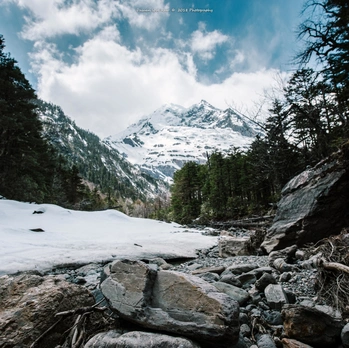
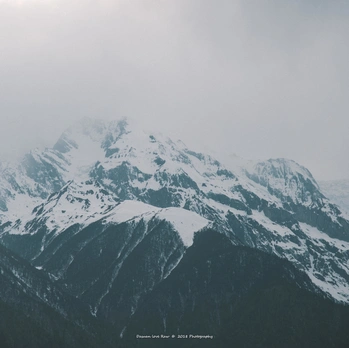
I kept my eyes closed most of the way, occasionally glancing out the window. Steep peaks, endless winding mountain roads, scattered rockslides — in the face of nature, humans are so small. I prayed silently as the bus weaved between tunnels and mountain roads. Then suddenly, light stung my eyes — Meili Snow Mountain stood there, solemn and majestic, gazing at me as I gazed at her.
Crossing mountains and ridges, just for you.
[Link: Best time to visit Meili Snow Mountain and Kawagebo]
The Road to Rebirth: Yubeng Trekking Day by Day
Day Three: From Despair to Rebirth
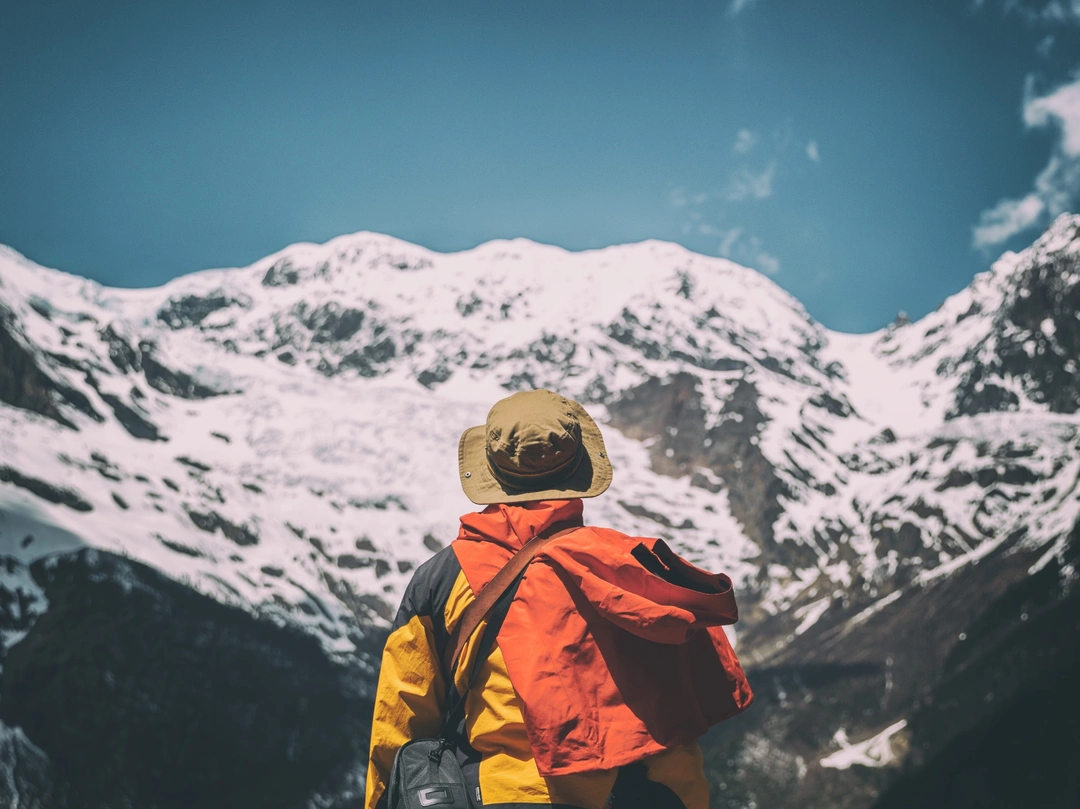
If I had to describe today's experience in eight words, it would be: collapse, despair, a helping hand, rebirth.
The road from Feilaisi to Xidang was far worse than yesterday's. For the first half, the mountain road had almost no guardrails — below the window was nothing but a sheer drop. Thankfully, our driver was experienced and got us safely to the Yubeng trekking entrance.
Yunnan has extreme temperature differences between morning and night, and the UV is brutal. We traveled light, reapplied sunscreen, packed water and food, and prepared to start the day's hike. But nothing went as smoothly as we'd imagined.
Twenty minutes in, my legs felt like they were filled with lead. My breathing grew faster and faster, my whole body felt like it was on fire. I stopped to drink water, hoping to recover, but things only got worse. My thigh muscles started cramping. I felt like I could collapse at any moment. The ten-plus kilograms on my back pressed down, making it hard to breathe.
I wanted to push through. I didn't want to slow the team down. But my body was no longer under my control.
Stop. A single voice in my head — stop.
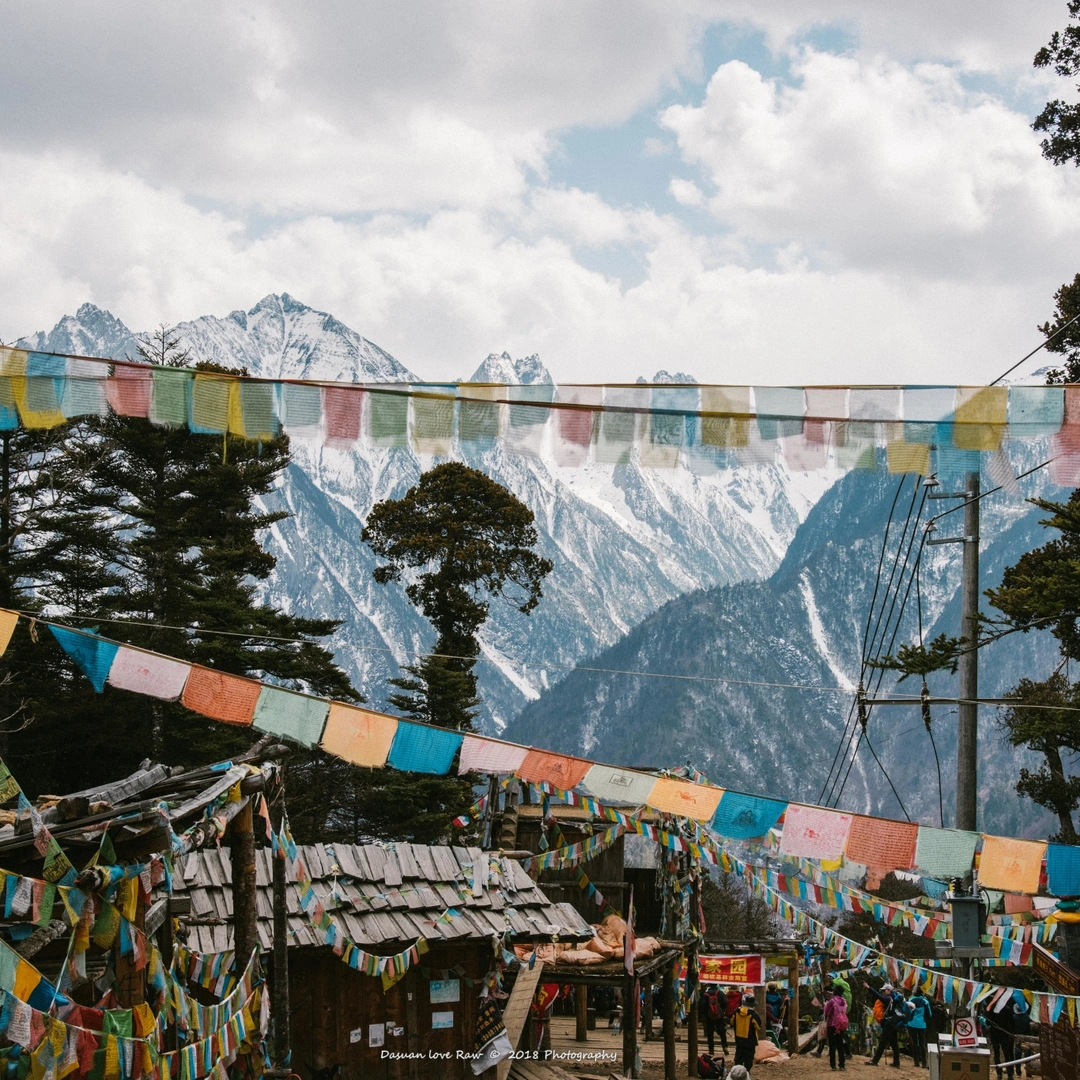
I gasped for air. My nose wasn't enough anymore. Snow began to fall from the sky. Collapse. Despair. I overheard other hikers asking each other: "Why do people do this? Why not just stay at home? Why come to a place like this to suffer?"
Yeah. Why?
Because I'm afraid. Afraid that when I'm old and can no longer move freely, I'll look back and remember that I had the ability but didn't see it through.
One leg cramp. One stop. One desperate gasp. One moment of collapse and despair. One deep breath. One fresh start. One outstretched hand. One word of concern. One look up at the sky.
My teammate handed me muscle injury patches, helped redistribute my backpack's weight, slowed down to wait for me. They said: "Don't give up!"
If you choose to persist, the whole world will clear a path for you.
I adjusted my breathing. I adjusted my backpack's load system. Each step of my trekking poles fell parallel to my feet. I pushed aside every distraction. Today had only one goal — reach Yubeng.
I don't know how long passed. The snow stopped. We reached the highest pass — Nanzheng First Pass, at 4,000 meters. The advance team was shouting ahead: "We're here! We've made it!"
We had arrived at Yubeng.
[Link: Essential gear checklist for Yubeng trekking]
Why the Yubeng Trek in Yunnan is a Journey of Rebirth
The Yubeng trek is not just a physical challenge — it's a spiritual pilgrimage. Here's why this trek around Kawagebo and Meili Snow Mountain changes people:
- Physical limits are tested — At 4,000 meters, every step is a battle. Your body screams. Your mind wants to quit. But when you push through, you discover strength you didn't know you had.
Mental clarity emerges — Away from city noise, social media, and workplace stress, your mind clears. The only thing that matters is the next step, the next breath.
Human connection deepens — Strangers become teammates. A bottle of hot water, a muscle patch, a word of encouragement — these small acts of kindness become lifelines.
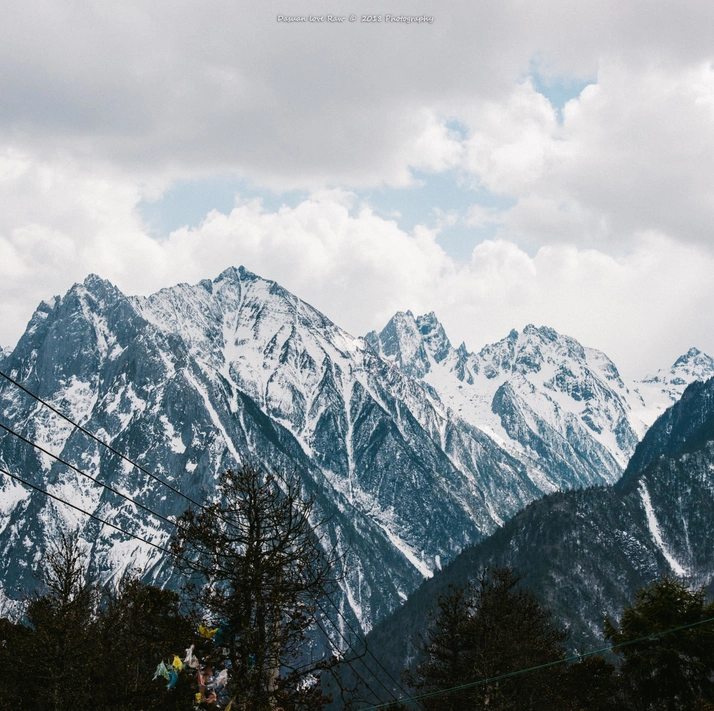
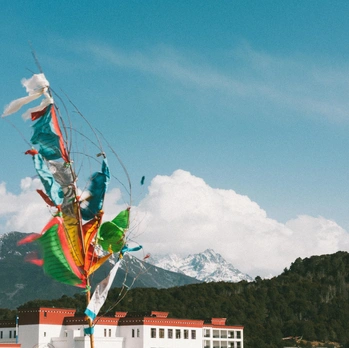
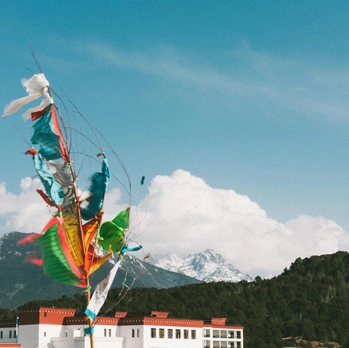
Nature humbles you — Standing beneath Kawagebo, the sacred peak of Tibetan Buddhism, you realize how small your problems really are.
Rebirth is real — After collapse comes rebuilding. After despair comes hope. After the Yubeng trek, you return home — but you're not the same person who left.
Yubeng Trek FAQ: Everything You Need to Know
Q1: How difficult is the Yubeng trek in Yunnan?
The Yubeng trek is considered moderate to challenging. It involves hiking at altitudes between 3,000 and 4,200 meters, with steep ascents and descents. Beginners can complete it with proper preparation, but altitude sickness is a real risk. Acclimatization days and glucose supplements are highly recommended.
Q2: What is the best time to visit Kawagebo and Meili Snow Mountain?
The best time for the Yubeng trek is October to November and April to May. During these months, weather is stable, skies are clear, and the views of Kawagebo and Meili Snow Mountain are spectacular. Avoid July and August (rainy season) and December to February (heavy snow).
Q3: Do I need a guide for the Yubeng trek?
While the trail is well-marked, hiring a local guide is strongly recommended for first-time visitors. Guides know the terrain, can help with altitude sickness, and provide cultural insights about Tibetan Buddhism and the sacred significance of Kawagebo.
Q4: What should I pack for the Yubeng trek?
Essentials include: sturdy hiking boots, trekking poles, warm layers (temperatures drop below freezing at night), waterproof jacket, sunscreen, sunglasses, glucose supplements, muscle injury patches, and a headlamp. Pack light — every kilogram matters at high altitude.
Q5: Is the Yubeng trek safe for solo travelers?
Yes, but with precautions. Join a group or hire a guide. Altitude sickness is the biggest risk — never hike alone if you feel unwell. The trail can be slippery and narrow in sections. Always carry a first-aid kit and let someone know your itinerary.
[Link: Solo trekking safety tips for Yunnan high-altitude trails]
Final Thoughts: Your Journey of Rebirth Awaits
The Yubeng trek in Yunnan is more than a hiking route. It's a mirror that reflects your fears, your limits, and your hidden strength. Beneath the shadow of Kawagebo, sacred peak of Meili Snow Mountain, you will collapse. You will despair. And then — if you choose to persist — you will be reborn.
I returned from Yunnan quieter, but with brighter eyes. My colleagues noticed. They didn't understand. But now you do.
Are you ready for your own journey of rebirth?
The trail is waiting. The mountains are calling. Pack your bag, book your flight, and take that first step. Because the person you'll meet at the end of this trek is someone you've been waiting to meet your whole life.
Start planning your Yubeng trek today. Your rebirth begins now.
Have you completed the Yubeng trek or visited Kawagebo? Share your experience in the comments below. For personalized trekking advice, contact our team at [Link: Yunnan trekking consultation].
You may also like