Half a Day Escaping the City: From Jinze’s Ancient Bridges to Zhujiajiao’s Lively Nights — A Spontaneous Qingpu Wander
Meta Description: Escape Shanghai for half a day! Discover Jinze Ancient Town's hidden bridges, the China Academy of Art's secret campus, and Zhujiajiao's nightlife. Your spontaneous Qingpu travel guide awaits.
Introduction: Why a Half-Day Qingpu Getaway Is the Perfect Weekend Escape
On the afternoon of the Dragon Boat Festival, sunlight lazily spilled across the windowsill as I scrolled through my phone, sprawled on the couch. Then a thought struck me — why not go out for a walk this afternoon? My family was instantly on board, so we jumped into the car and headed for Qingpu District, tucked away in Shanghai’s southwestern corner. No detailed itinerary, no restaurant reservations — just a desire to escape the city’s noise. What started as a half-day trip turned into an unexpected treasure hunt, from the disappointment of being turned away at one spot, to the serene beauty of Jinze Ancient Town, and finally to the lively bustle of Zhujiajiao. Every step felt like opening a blind box.
If you’re tired of binge-watching shows at home on weekends and just want a quick getaway, this travelogue might spark some ideas. It’s perfect for family outings, couple road trips, or even a solo adventure — half a day is just right.
[Link: Best Weekend Getaways from Shanghai]
First Stop: Songjiang·Guangfulin — An Unexpected View from a Closed Door
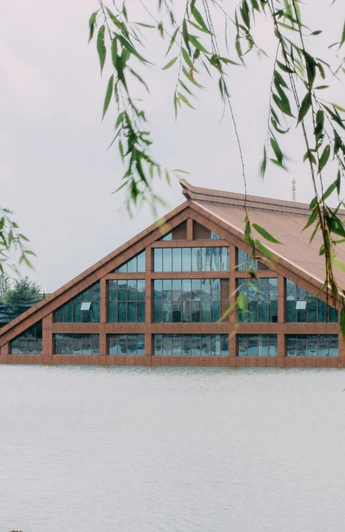
Our first stop was originally the Guangfulin Ruins Park in Songjiang. To be honest, I’d heard about it long before — that museum built underwater, with its roof floating like a pyramid on the lake, looking impossibly beautiful in photos. It used to be free, but I kept telling myself, “I’ll go next time,” until it started charging admission. I figured, fine, I’ll pay to see it, so we headed straight there in the afternoon.
But reality gave me a gentle slap. As we pulled up to the gate, the security guard, expressionless, waved us off: “It’s not officially open yet. You can’t get in.” Turns out, although Guangfulin’s facilities are complete, it hasn’t opened to the public. Currently, it only admits residents with tickets issued by local neighborhood committees. As for regular tickets? They’re not even on sale yet! If you really want to get in, word has it you can sneak in from a nearby construction site — but as a lazy person, I quickly abandoned any such “adventure” plans.

So we just drove around Guangfulin for a loop. From a distance, that underwater building gleamed faintly under the midday sun, reflecting on the lake like an unfinished ink painting. Though we couldn’t go in, I silently noted this regret — once it officially opens, I’ll definitely come back in the evening, when the sunset paints the water with reflections and golden light. The thought alone makes my heart race.
Practical Tip: Guangfulin is not yet open to the public. Follow its official WeChat account for updates. If you’re desperate to visit, keep an eye on community events nearby, but don’t get your hopes up.
[Link: Songjiang Travel Guide: Things to Do]
Second Stop: Jinze Ancient Town — The Hidden “Bridge Village” Gem
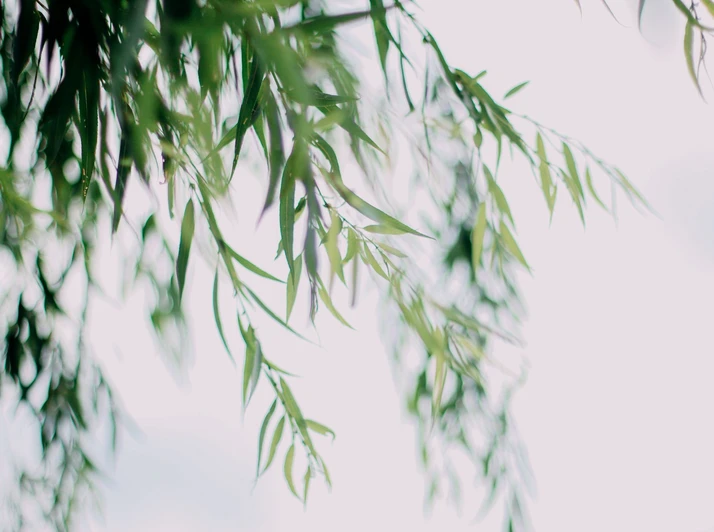
Leaving Songjiang, we headed straight for Jinze. Honestly, before we set out, my dad muttered, “Jinze? I heard there’s not much to see.” But sometimes, “not much to see” turns out to be the most precious experience.
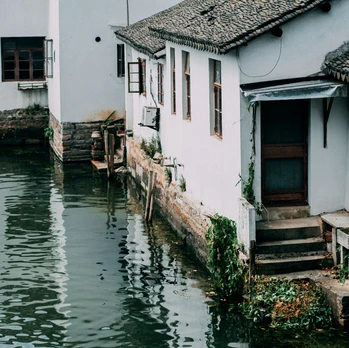
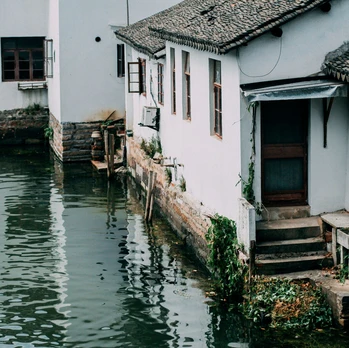
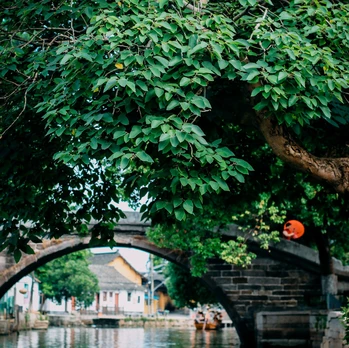
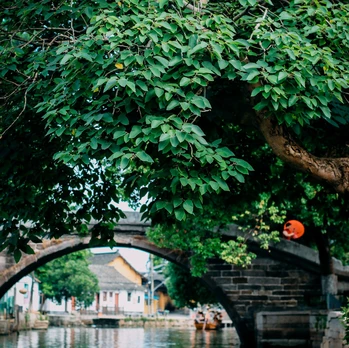
Jinze — the name might be unfamiliar to many. It sits in southwestern Qingpu District, bordering Jiangsu Province, and is a thousand-year-old ancient town. Known for its bridges, it was once famed for “six temples, one pagoda, thirteen archways, and forty-two rainbow bridges.” Though many of its historic sites are long gone, seven ancient bridges remain, including Shanghai’s oldest surviving stone bridge.
First Impressions of Jinze: A Peacefulness That Makes You Want to Cry
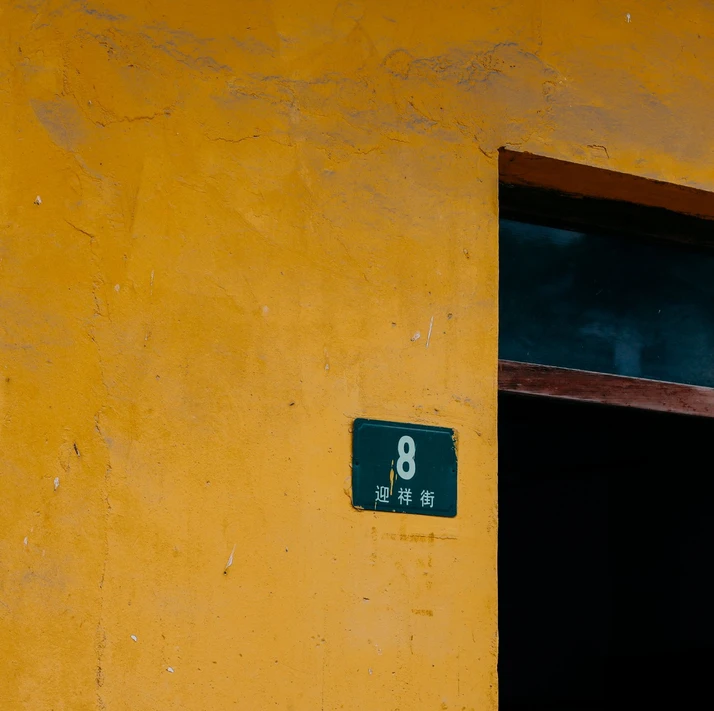
We took the G50 Shanghai-Chongqing Expressway to the Jinze exit, or you can drive along Yan’an Road Viaduct onto the Shanghai-Qingpu Highway. We parked on Jinze Road — free parking, which is a luxury around Shanghai. After parking, we walked through a small alley, entered via Yingxiang Street, and the first thing that caught our eye was a temple. Locals told us it was originally a prime minister’s residence. To avoid arousing the emperor’s suspicion, the owner painted the exterior to look like a Taoist temple — an ancient version of “keeping a low profile.”
Stepping into the ancient town, we were instantly wrapped in a long-lost tranquility. No crowds of tourists, no blaring loudspeakers — just the occasional bird chirp and the rustle of wind through leaves. The entire street had only one small shop, a stall selling deep-fried dough sticks, and a tiny local eatery — all run by locals, with zero commercial vibe. If you’re tired of the noisy “ancient town commercial streets” like Zhouzhuang or Xitang, Jinze is your place.
[Link: Off-the-Beaten-Path Ancient Towns Near Shanghai]
Bridge Pilgrimage: Seven Bridges, Seven Stories
Jinze’s essence lies in its bridges. I strolled slowly along the river, trying to find all seven ancient bridges, but only managed six — though that was more than enough to satisfy me.
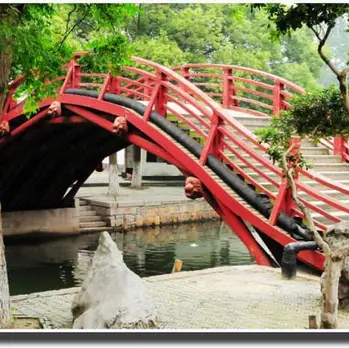
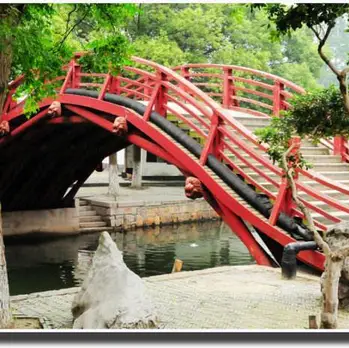
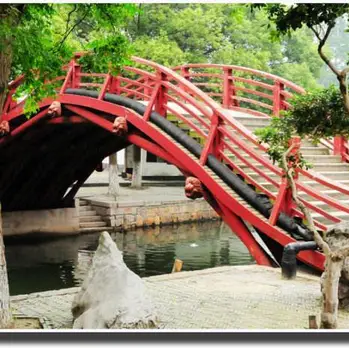
The first bridge was Puqing Bridge, a pure wooden red structure built without a single nail. When I arrived, a group of aunties in cheongsams were posing for photos on it — red bridge, red umbrellas, a charming sight. Once they finished, the bridge returned to its quiet self, with locals drying quilts on it, life flowing naturally.
The second was Puji Bridge, Shanghai’s best-preserved and oldest stone bridge, over 700 years old. Its bluestone slabs were polished smooth by time, the river below clear and teeming with snails — spotting them, I decided that night to make a spicy stir-fried snail dish.
The third was Yingxiang Bridge, built in the Yuan Dynasty. Its paved surface has no steps or railings, reportedly because cavalry often galloped across it, so it was designed for speed. Walking on it felt a bit precarious, but the bridge’s flowing lines and the warm gleam of its bluestone surface under the sun were mesmerizing.
The remaining bridges included Tahui Bridge and Fangsheng Bridge, each with its own story. Tahui Bridge once marked the confluence of two rivers, a bustling hub in its day. Now, one side houses a branch of the China Academy of Art, and the other is still the academy. Fangsheng Bridge was hidden among metasequoia trees, with water murmuring beneath, carrying a Zen-like calm.
[Link: Shanghai’s Best Ancient Bridges to Visit]
A Surprise Discovery: China Academy of Art’s Branch
If Jinze’s bridges were the expected highlight, the China Academy of Art’s branch was an unexpected delight. Tucked deep in the ancient town, it’s not open to the public, but even a distant glimpse was enough to stir longing.
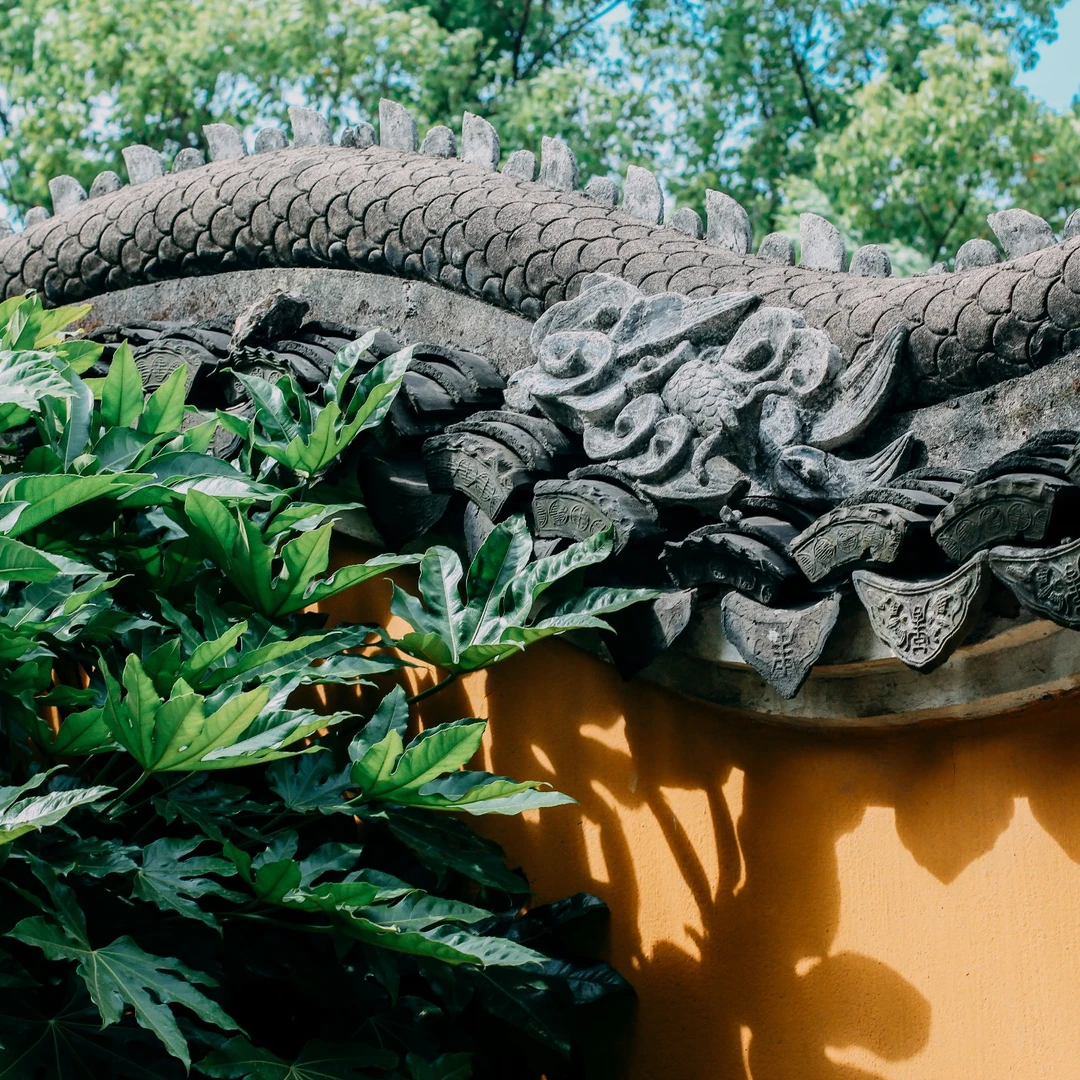
We walked from the back wall to the main gate, along walls built with extraordinary artistry — not the usual plain white, but a patchwork of different bricks and stones, adorned with climbing plants, as if lifted from a painting. Through gaps in the wall, we could see the courtyard inside — rockeries, ponds, bamboo groves, every detail exuding the elegance of Eastern aesthetics.
At the main gate, a cat lay lazily on the steps, as if to say, “You mortals can’t come in.” Next to the gate stood a pavilion. What was inside? We leaned in — it was the academy’s trash can! Even the garbage bin had such design flair. No wonder it’s the art academy.
Standing on Yingxiang Bridge, looking at the academy, the entire complex appeared and disappeared among the green trees, like a three-dimensional landscape painting. I suddenly understood why the academy chose this spot — Jinze’s stillness and antiquity are the perfect soil for artistic creation. Locals worry Jinze might be overdeveloped like Zhujiajiao, but I think, with an institution like the art academy as a guardian, this serene land will be well protected.
[Link: China Academy of Art: A Cultural Gem]
Practical Tips for Visiting Jinze Ancient Town
- Driving Route: Take G50 Shanghai-Chongqing Expressway to Jinze exit, or follow Yan’an Road Viaduct to Shanghai-Qingpu Highway.
- Parking: Free on Jinze Road, but limited spots — arrive early.
- Time Needed: 2-3 hours is enough for a half-day visit.
- Boat Ride: 10 yuan per person; the boatman explains the history of the bridges, lasting 20-30 minutes.
- Food: Only one small shop and a snack stall — bring snacks if you’re hungry.
Third Stop: Zhujiajiao’s Lively Nights — From Serenity to Bustle
As dusk fell, we drove from Jinze to Zhujiajiao — just 20 minutes away. The contrast was immediate: Jinze was a quiet library, Zhujiajiao a lively night market. The change in atmosphere was as dramatic as flipping a switch.
Zhujiajiao’s night scene is something else. Red lanterns reflected on the water, creating golden ripples. The boatmen sang folk songs as they rowed, their voices carrying across the canal. The air was thick with the aroma of sizzling street food — stinky tofu, grilled squid, candied hawthorns. We grabbed a table at a riverside restaurant, ordered some local dishes, and watched the world go by.
If Jinze was about stillness and reflection, Zhujiajiao was about energy and connection. The two towns, just 20 minutes apart, offered two completely different experiences. That’s the beauty of Qingpu — you can have both in one afternoon.
[Link: Zhujiajiao Nightlife Guide]
Frequently Asked Questions About the Qingpu Half-Day Trip
1. Is Jinze Ancient Town free to enter?
 Yes, Jinze Ancient Town is completely free to enter. There is no entrance fee, and parking on Jinze Road is also free. However, parking spaces are limited, so arriving early is recommended.
2. How far is Jinze from Shanghai city center?
 Jinze is approximately 50 kilometers southwest of Shanghai’s city center. By car, it takes about 1 hour via the G50 Shanghai-Chongqing Expressway. Public transportation options are limited, so driving is the most convenient way.
3. Can I visit both Jinze and Zhujiajiao in one day?
 Absolutely! The two towns are only 20 minutes apart by car. Start with Jinze in the afternoon for its serene bridges and art academy, then head to Zhujiajiao for dinner and the lively night scene. A half-day itinerary works perfectly.
4. What is the best time to visit Jinze Ancient Town?
 Late afternoon is ideal. The golden sunlight casts a warm glow on the ancient bridges, and the crowds are thinner. Plus, you can easily combine it with a Zhujiajiao evening visit.
5. Are there any good restaurants in Jinze?
Jinze has very limited dining options — just one small shop and a snack stall. Most visitors bring their own snacks or eat in Zhujiajiao, which has a wide variety of riverside restaurants.
Conclusion: Your Spontaneous Qingpu Adventure Awaits
This half-day Qingpu wander was a reminder that the best adventures often come unplanned. From the closed doors of Guangfulin to the ancient bridges of Jinze and the lively nights of Zhujiajiao, every moment felt like opening a blind box — full of surprises, beauty, and a little bit of mystery.
Whether you’re a Shanghai local looking for a quick escape, a couple seeking a romantic evening, or a solo traveler craving some quiet reflection, this route has something for everyone. No elaborate planning needed — just a car, a sense of curiosity, and an afternoon to spare.
Ready to escape the city? Pack a light bag, grab your camera, and hit the road. Jinze’s bridges are waiting, and Zhujiajiao’s lanterns are glowing. Your half-day Qingpu adventure starts now.
[Link: Shanghai Day Trip Ideas] [Link: Best Road Trips from Shanghai]
Have you visited Jinze or Zhujiajiao? Share your experience in the comments below — we’d love to hear your hidden gem discoveries!
You may also like