Deep Courtyards: Five Hundred Years of Shanxi Merchants' Rise and Fall, Witnessed in Silence
Meta Description: Discover the silent stories of Shanxi merchant courtyards—from Zhangbi Ancient Fortress to Wang Family Courtyard. Explore 1,600 years of history, architecture, and the rise and fall of China's legendary merchant families. Plan your Shanxi travel guide today.
Introduction: Why Shanxi Courtyards Tell China's Greatest Merchant Story
Shanxi Province, cradled in the heart of the Loess Plateau, has never been short of legends. But the grand courtyards of the Shanxi merchants—the Jin merchants—are the most silent yet powerful storytellers of these tales. On my third visit to Shanxi, I planned to visit the Wang Family Courtyard, the Ancient City of Pingyao, the Qiao Family Courtyard, and the Chang Family Estate. But a local's offhand comment—"I wouldn't recommend the Qiao Family Courtyard"—threw my plans into disarray. Half a month later, news broke that the Qiao Family Courtyard had lost its "5A" rating. I felt a quiet sense of vindication—sometimes, time proves your choices right.
So I reshuffled my itinerary, dedicating more time to the Ancient City of Pingyao and spontaneously signing up for a day trip combining the Zhangbi Ancient Fortress and the Wang Family Courtyard. Little did I know, this journey would be filled with surprises and delights from the very start.
Zhangbi Ancient Fortress: Millennia-Old Secrets Beneath the Earth
Getting There: A Traveler's Tale of High-Speed Rail and Serendipity

Looking at the map, the nearest high-speed rail station to Zhangbi Ancient Fortress is Jiexiu East. The name "Jiexiu" comes from the legend of Jie Zitui resting here, and nearby lies Mount Mian—those ancient stories seem to lie right beneath your feet. It was peak summer, and high-speed rail tickets were nearly impossible to come by. I managed to snag one from "Baoji South to Jiexiu East" only with Ctrip's acceleration booster. But the day tour required departure from Pingyao Ancient City. I thought to myself, "Pingyao Ancient City is just the next stop after Jiexiu East, right?" I'd just buy a ticket on the train.
However, after the train passed Xi'an, I glanced at the train information and realized it was skipping Pingyao Ancient City entirely, heading straight for Qixian East. In a panic, I got off at Wenxi West and bought a ticket back to Pingyao Ancient City. By sheer chance, I ended up in this unheard-of Wenxi County, walking into the smallest high-speed rail station I'd ever seen—ticket sales and security checks were crammed into a single hall. I opened Dianping, and within a several-kilometer radius, there wasn't a single restaurant. Dinner was a pack of instant noodles from the station. The place was so small that I ate while involuntarily eavesdropping on the ticket inspector and security guard chatting all evening. After all this hassle, I didn't arrive in Pingyao until midnight.
The next day, the driver picked me up from the hotel. Summer tourists were mostly families; in my car were a grandmother, grandfather, and their granddaughter, plus a young couple. About half an hour later, we arrived at Zhangbi Ancient Fortress.
The Architecture of Zhangbi: Above Ground and Below
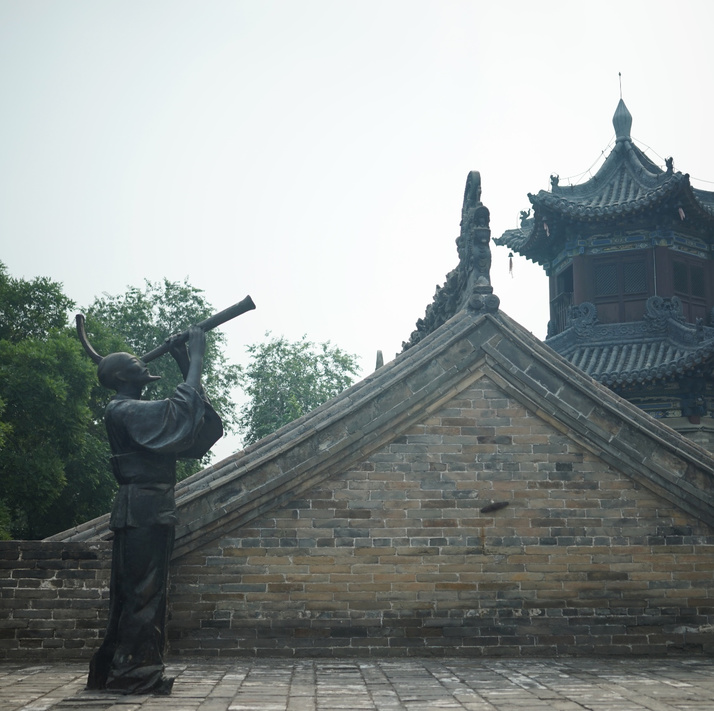
Zhangbi Ancient Fortress was first built during the Sixteen Kingdoms period, over 1,600 years ago. It concentrates numerous cultural relics and historical sites: ruins from the Xia and Shang dynasties, underground tunnels from the Northern Dynasties, tombs from the Jin Dynasty, a stage from the Yuan Dynasty, and residential buildings from the Ming and Qing dynasties. There's a folk saying: "The Kui Star in the heavens, Zhangbi on earth." The fortress still preserves the custom of "Star Worship" on the 28th day of the first lunar month and is known as "the number one Star Village under heaven."
The south side of the fortress backs onto Mount Mian, making it easy to defend and difficult to attack, with routes for both advance and retreat. Because the terrain is higher in the south and lower in the north, the ancients cleverly modified the north fortress gate and surrounding temples. They built "Erlang Temple" and "Zhenwu Temple" on the north fortress wall, raising their rooftops above the south gate, conforming to the urban site selection principle of "high north, low south."
The main street is paved with red flagstones, flanked by seven deep, winding ancient alleys. But what truly stuns is the world underground—the fortress is riddled with tunnels, interconnected in all directions and cleverly linked to the above-ground buildings. It's said to have been a major military garrison during the Northern Wei, Sui, and Tang dynasties. We followed a tour group into the tunnels, descending deeper and deeper. The tunnels had a three-tiered structure: the shallowest part was two meters underground, the deepest reaching 20 meters. After walking for what felt like ages, we emerged from an opening to face sheer loess ravines. Inside, the tunnels were functional, with wells, soldier quarters, and prisoner cells. Everyone followed the guide; no one dared take the side passages—since I was carpooling, I worried about losing my group and had to give up exploring. Next time, I'll think twice about joining a tour.
Cultural Treasures and Daily Life
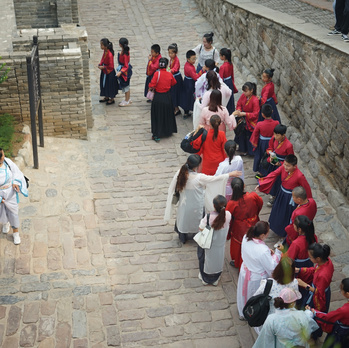
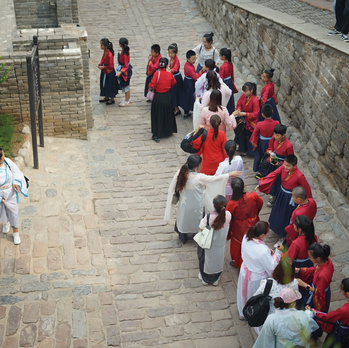
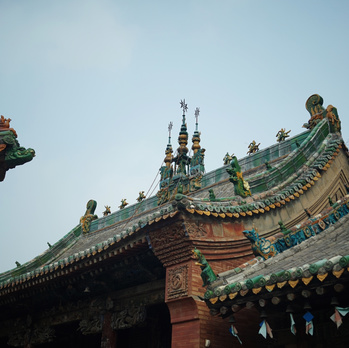
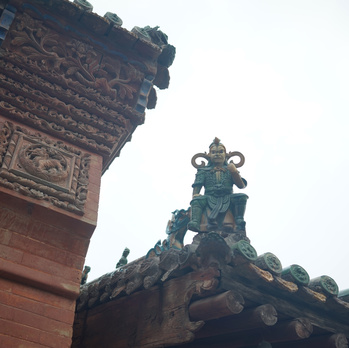
From the city wall, I could see children in Hanfu (traditional Chinese clothing) strolling through the grounds. The fortress had launched a Hanfu garden activity, probably for an educational tour group. The Ming Dynasty three-color glazed ceramic decorations on the temple roofs were exquisitely detailed, finely fired, and lifelike. The gable walls were painted with murals depicting the story of the Buddha of the Sky King achieving enlightenment.
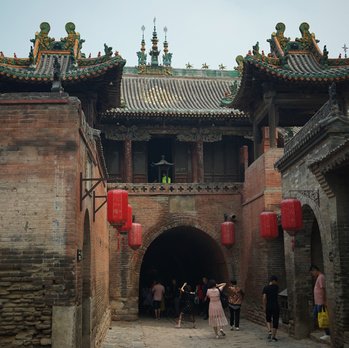
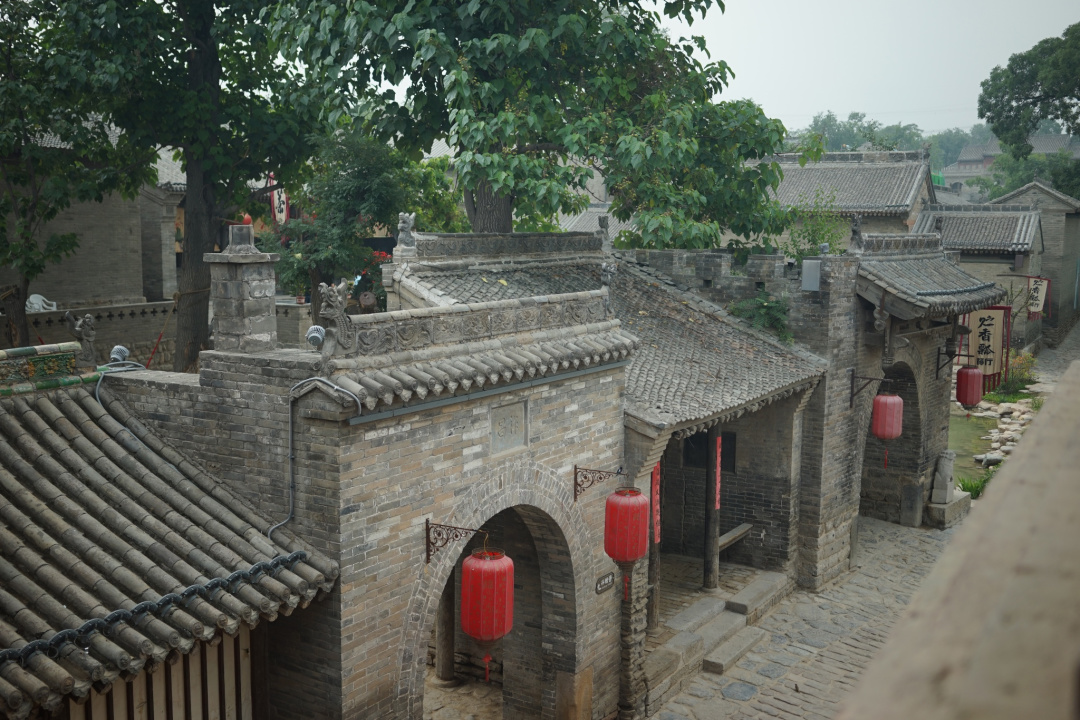
Zhangbi Ancient Fortress retains the lifang (ward) layout popular during the Sui and Tang dynasties. All roads are dead-end alleys shaped like the character "丁" (T), with alley gates serving as the only exits for each ward. Once the alley gates were closed, each ward became a relatively enclosed fortress within a fortress, capable of fighting independently or coordinating with others—a complete internal defense system.
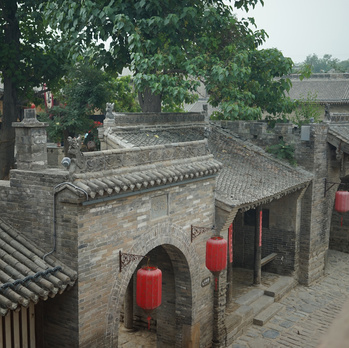
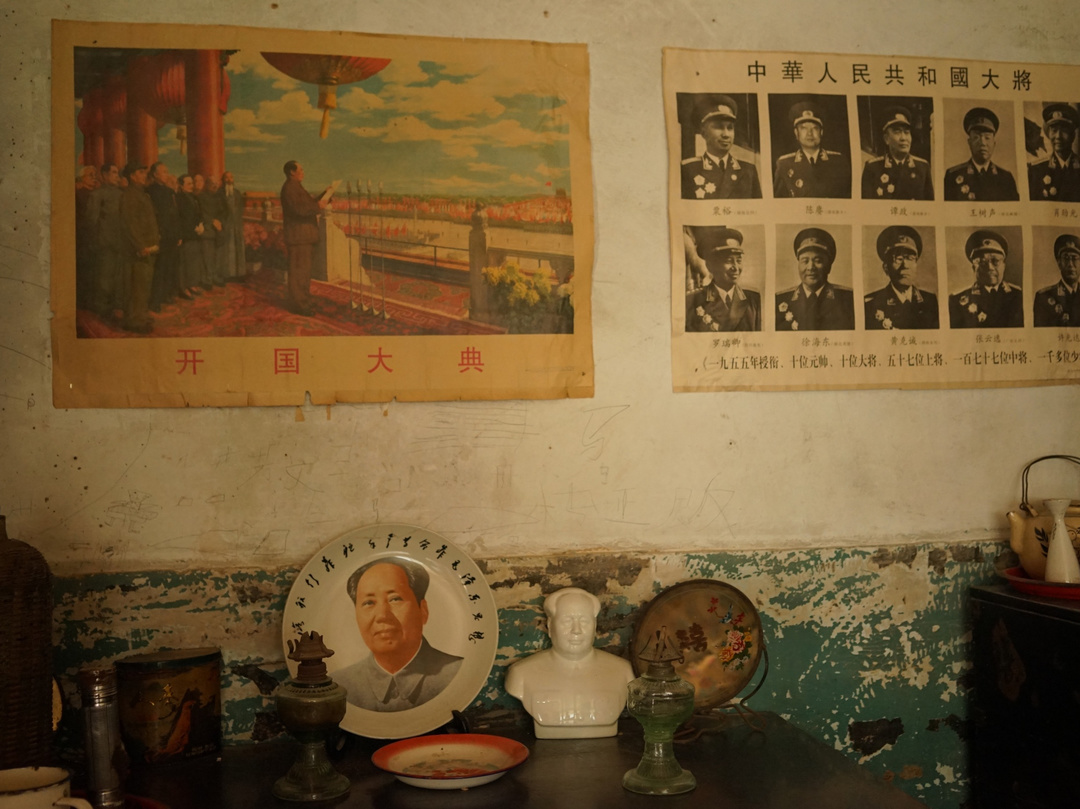
The earthen yellow brick walls were covered in climbing greenery, fresh yet rustic. A character for "福" (blessing) was carved with clever symbolism—more children and more land meant more blessings. The courtyards still bore traces of the Cultural Revolution era. Shanxi flower-shaped steamed buns (花馍) sat quietly on display, and I wondered if this craft piece would eventually be eaten.
[Link: Shanxi ancient fortress architecture guide]
Wang Family Courtyard: The Awe and Melancholy of a Folk Forbidden City
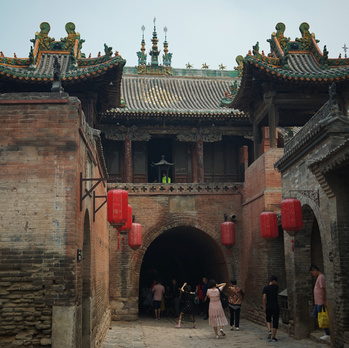
First Impressions: A City Within a City
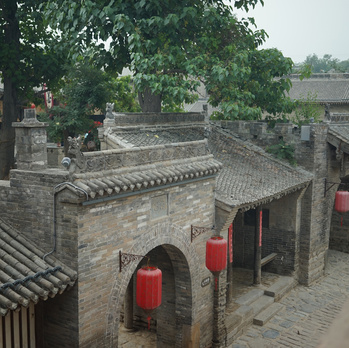
We arrived at the Wang Family Courtyard in the afternoon and grabbed a bowl of noodles at the entrance. The mother in our car group suggested hiring a guide, and everyone agreed. A chubby high school student became our guide. Soon, more and more tourists joined the eavesdropping audience.
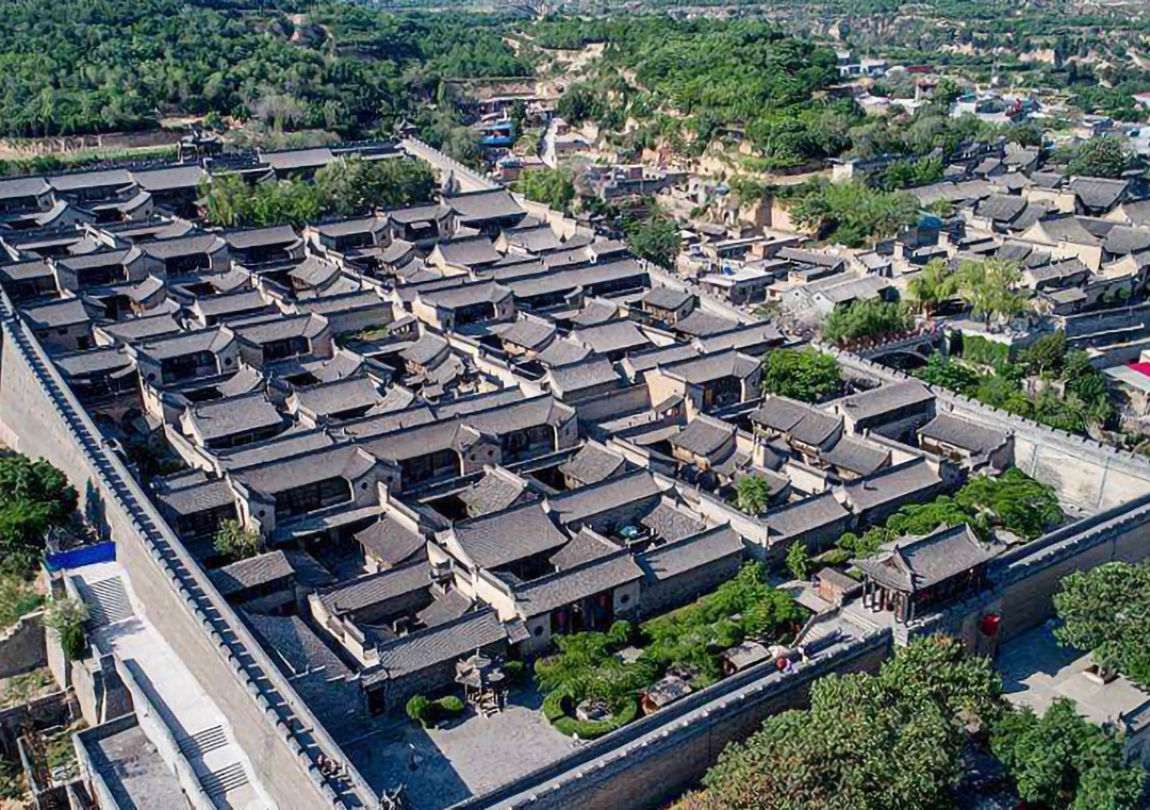
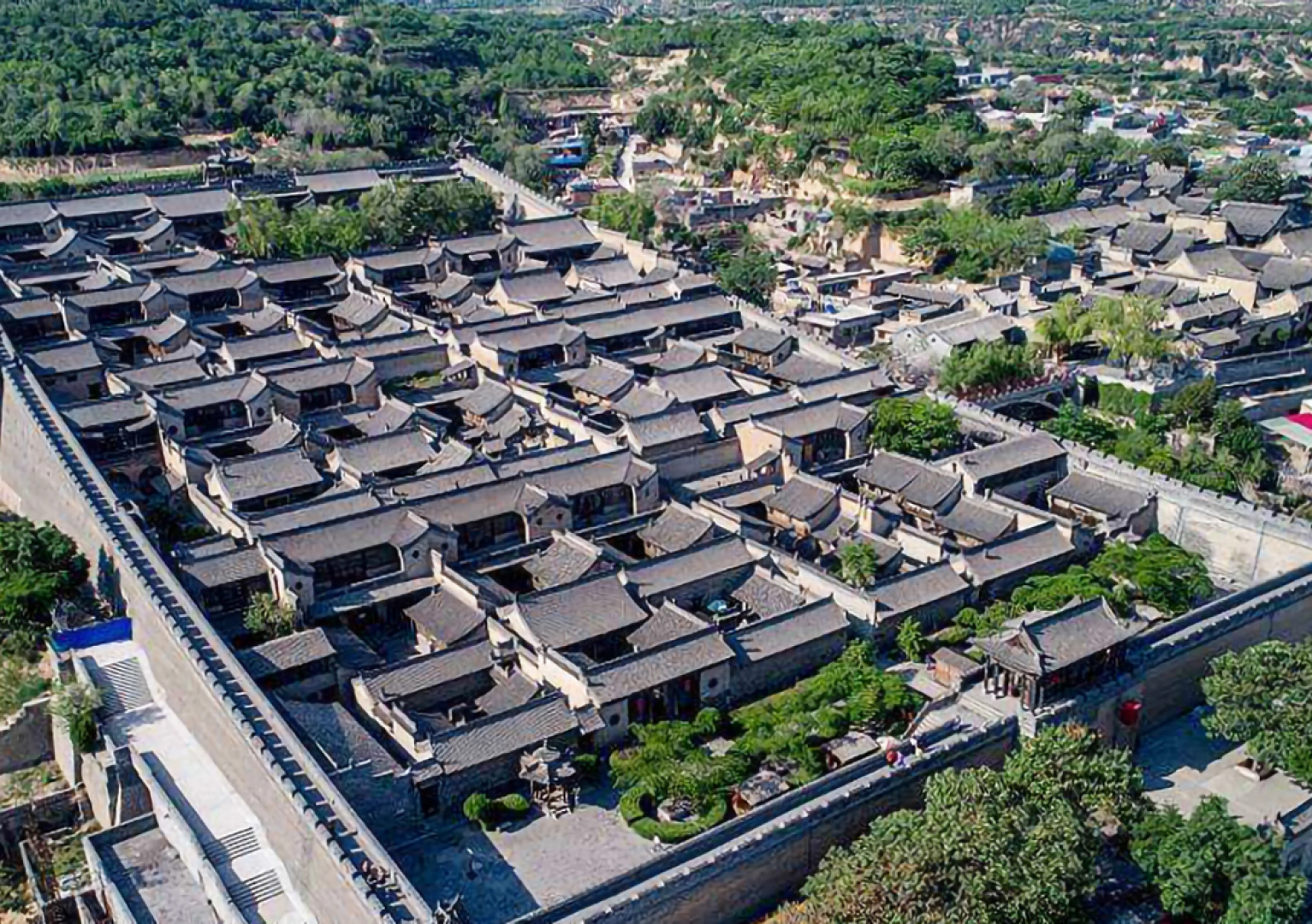
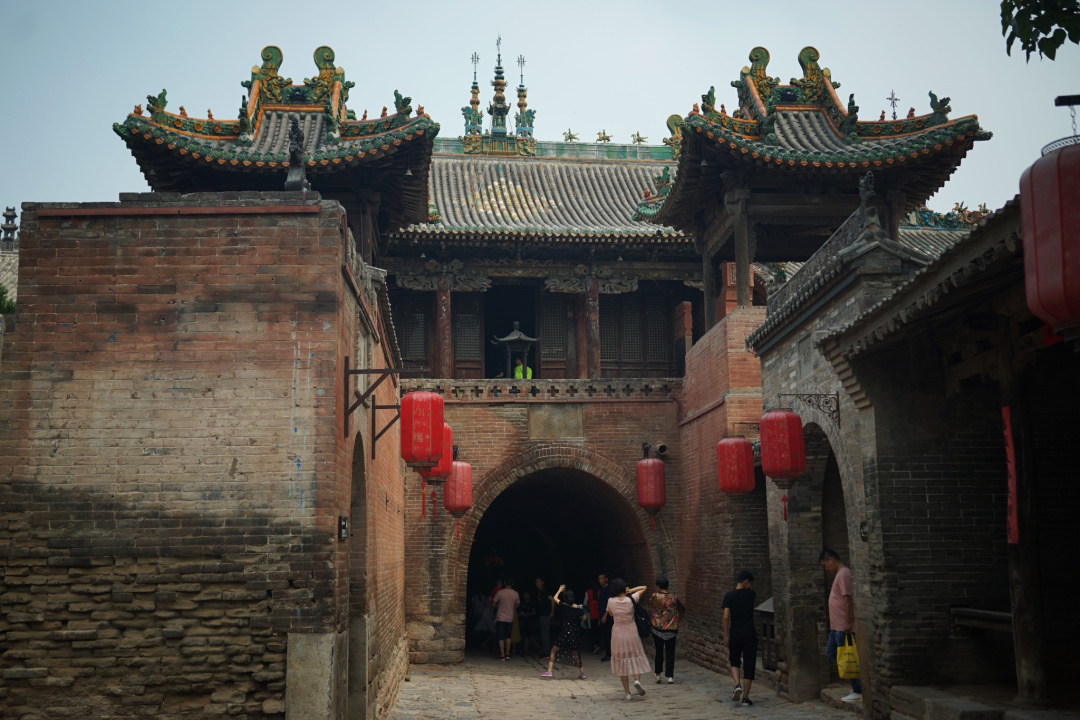
There's a folk saying: "After visiting the Wang Family Courtyard, no other courtyard is worth seeing." Staring at the towering gate and the immense scale of the buildings, we were awestruck even at the entrance. The architectural color of the Wang Family Courtyard is earth-yellow. It contains over a hundred courtyards and more than a thousand rooms. The city wall rises along the hillside, and within the walls, layers of buildings stack upon each other. "A home is a courtyard; a courtyard is half a city." As a folk Forbidden City, its total area is larger than the actual Forbidden City.
The Wang Family Legacy: Rise of a Merchant Empire
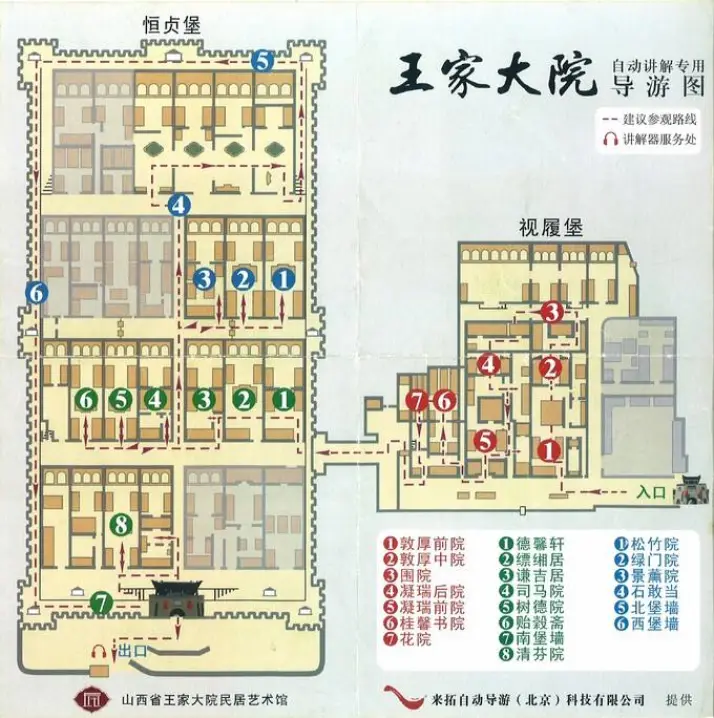
The Wang Family Courtyard was built by the Wang family of Jingsheng, one of the "Four Great Families" in Lingshi County's history. At its peak, there were five fortress-style residences. Today, two are open as scenic areas—facing each other east and west, connected by a bridge. The eastern compound is Gaojiaya; the western one is Hongmenbao. The various courtyards are interconnected yet can function independently. According to feng shui, the White Tiger must not overpower the Azure Dragon, so the east is higher than the west.
The majestic and profound Wang Family Courtyard is utterly different from the delicate and graceful gardens of Jiangnan (south of the Yangtze River). Jiangnan gardens were mostly built by literati, their free-spirited landscapes and courtyards serving as retreats from the world. But the masters of these grand courtyards were the rulers of aggressive, thriving commercial empires. They valued order, symmetry, and hierarchy—values reflected in every beam, every courtyard, every gate.
Architecture as Power: What the Courtyards Reveal
The Wang Family Courtyard is a masterclass in Shanxi merchant architecture. The layout follows strict Confucian principles: the central axis is reserved for the patriarch, while side courtyards house younger generations. The higher the status, the higher the roof ridge. The carvings—on beams, doors, windows, and walls—tell stories of filial piety, loyalty, and prosperity. Every detail was designed to impress visitors and reinforce the family's power.
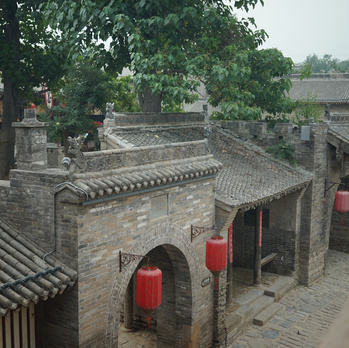
Yet, walking through these empty halls, you feel a profound melancholy. The Wang family's wealth once rivaled that of emperors, but their empire crumbled. The courtyards remain, silent witnesses to a five-hundred-year cycle of rise and fall. The merchants who built these walls were shrewd, hardworking, and ambitious. They financed armies, built roads, and controlled trade routes across China and beyond. But their decline was as spectacular as their ascent—a cautionary tale about the fragility of wealth built on political favor and family unity.
[Link: History of Shanxi merchants and their decline]
The Rise and Fall of the Shanxi Merchants: A Five-Hundred-Year Cycle
The Golden Age of Jin Merchants
The Shanxi merchants, also known as Jin merchants, dominated Chinese commerce from the Ming Dynasty through the Qing Dynasty. Their success was built on three pillars: salt trade, financial services, and long-distance trade. They established the first nationwide banking system—the piaohao (draft banks)—which allowed merchants to transfer money across provinces without carrying heavy silver. The Rishengchang Draft Bank in Pingyao is the most famous example.
At their peak, Shanxi merchants controlled the trade routes from Beijing to Xinjiang, from Mongolia to Southeast Asia. They financed the Qing military campaigns and even lent money to the imperial court. Their wealth was legendary, and their courtyards were the ultimate status symbols.
Why Did the Shanxi Merchants Decline?
The decline of the Shanxi merchants can be traced to several factors:
- Political upheaval: The fall of the Qing Dynasty and the rise of modern banking rendered the piaohao system obsolete.
- Foreign competition: Western banks and trading companies had superior technology and capital.
- Internal decay: Successive generations grew complacent, preferring luxury over enterprise.
- Wars and instability: The Taiping Rebellion, the Boxer Rebellion, and the Japanese invasion devastated Shanxi's economy.
By the early 20th century, the great merchant families had lost their fortunes. Their courtyards were abandoned, looted, or repurposed. Today, they stand as museums—beautiful, haunting, and frozen in time.
[Link: Reasons for the decline of Shanxi merchants]
Practical Travel Guide: Visiting Shanxi's Merchant Courtyards
Best Time to Visit
The best time to visit Shanxi's courtyards is spring (April-May) or autumn (September-October) when temperatures are mild. Summer can be scorching, and winter brings freezing temperatures and occasional snow.
How to Get Around
- High-speed rail: Major stations include Taiyuan, Pingyao Ancient City, and Jiexiu East. Book tickets in advance during peak season.
- Local tours: Many travelers join day tours from Pingyao Ancient City. These are convenient but limit your time at each site.
- Private car: Hiring a driver gives you flexibility, especially for visiting multiple courtyards in one day.
Recommended Itinerary
- Day 1: Arrive in Pingyao Ancient City. Explore the city walls, Rishengchang Draft Bank, and local markets.
- Day 2: Day trip to Zhangbi Ancient Fortress and Wang Family Courtyard.
- Day 3: Visit Qiao Family Courtyard (if you choose) or Chang Family Estate. Depart from Taiyuan.
[Link: Shanxi travel itinerary for history lovers]
FAQ: Shanxi Merchant Courtyards
1. What is the difference between Wang Family Courtyard and Qiao Family Courtyard?
The Wang Family Courtyard is much larger—often called the "Folk Forbidden City"—with over 100 courtyards and 1,000 rooms. The Qiao Family Courtyard is smaller but more famous due to the movie Raise the Red Lantern. Wang is more impressive in scale; Qiao is more intimate and has better name recognition.
2. Is Zhangbi Ancient Fortress worth visiting?
Absolutely. Zhangbi is unique for its underground tunnel system dating back 1,600 years. It's less crowded than the main courtyards and offers a fascinating glimpse into ancient military architecture. Most visitors combine it with a trip to Wang Family Courtyard.
3. How much time should I spend at Wang Family Courtyard?
Plan for at least 3-4 hours to explore both Gaojiaya and Hongmenbao. The site is massive, and you'll want time to appreciate the carvings, climb the city wall, and take photos.
4. What should I eat in Shanxi?
Shanxi is famous for its noodles—especially dao xiao mian (knife-cut noodles) and you mian kao lao (oat noodles). Also try Shanxi vinegar, flower-shaped steamed buns (花馍), and Pingyao beef. Most courtyard restaurants serve local specialties.
5. Can I visit multiple courtyards in one day?
Yes, but it's ambitious. A popular combination is Zhangbi Ancient Fortress (morning) + Wang Family Courtyard (afternoon). Qiao Family Courtyard is about an hour from Pingyao and can be added if you have a full day. Consider hiring a private driver for efficiency.
Conclusion: Why These Courtyards Matter Today
The deep courtyards of Shanxi are more than tourist attractions—they are time capsules of a vanished world. They speak of ambition and caution, of wealth and its fleeting nature, of family loyalty and generational decay. Standing in the silent halls of the Wang Family Courtyard, you can almost hear the whispers of merchants counting silver, the laughter of children playing in the courtyards, and the sigh of a dynasty crumbling.
These courtyards have witnessed five hundred years of Chinese history—the rise of the Ming, the prosperity of the Qing, the chaos of the 20th century, and the rebirth of modern China. They stand as monuments to the Shanxi merchant spirit: hardworking, shrewd, and fiercely proud.
Your turn: Have you visited any of Shanxi's merchant courtyards? Which one left the strongest impression on you? Share your thoughts in the comments below—or better yet, start planning your own journey to the Loess Plateau. The courtyards are waiting, and their stories are still being told.
[Link: Book your Shanxi courtyard tour] [Link: Recommended hotels near Pingyao Ancient City]
Article originally published on Mafengwo. Adapted and optimized for SEO by [Your Name].
You may also like