You Are My 39-Degree Wind, a Wind-Like Dream: A Solo Journey Through Prague, Vienna, and Budapest
Meta Description: Discover the magic of Central Europe on a solo journey through Prague, Vienna, and Budapest. From Charles Bridge to the Danube's glow, this guide covers hidden gems, transport tips, and must-see sights for independent travelers.
Some trips are for seeing the sights; others are for finding yourself. When I traced this arc across the map of Europe—from Prague to Vienna to Budapest—I had no idea what answers the journey would bring. But standing on Charles Bridge, watching the Vltava River flow silently; sitting in the State Opera House, listening to an aria echo beneath the dome; and gazing from Fisherman's Bastion at the shimmering lights on both banks of the Danube, I finally understood. These three cities are like three faces of a single person: colorful Prague, silent Vienna, and Budapest—bleak yet burning.
This was my second time traveling alone through Europe. The beauty of solo travel, I think, lies in this paradox: the more you empty your mind, the more focused you become; the more you stay silent, the more deeply you feel. When language is no longer a tool for socializing, and when your itinerary doesn't have to accommodate anyone else's pace, a pure dialogue opens up between you and the city.
Why a Solo Trip Through Prague, Vienna, and Budapest is Perfect for Self-Discovery

Traveling alone through these three capitals offers a unique rhythm. Each city has a distinct personality, yet they are connected by history, the Danube, and a shared Central European soul. For solo travelers, this route is manageable, safe, and rich with moments of quiet reflection. Whether you're a first-time soloist or a seasoned wanderer, this itinerary delivers both structure and spontaneity.
Color Is You, Black and White Is You: Exploring Prague on Your Own
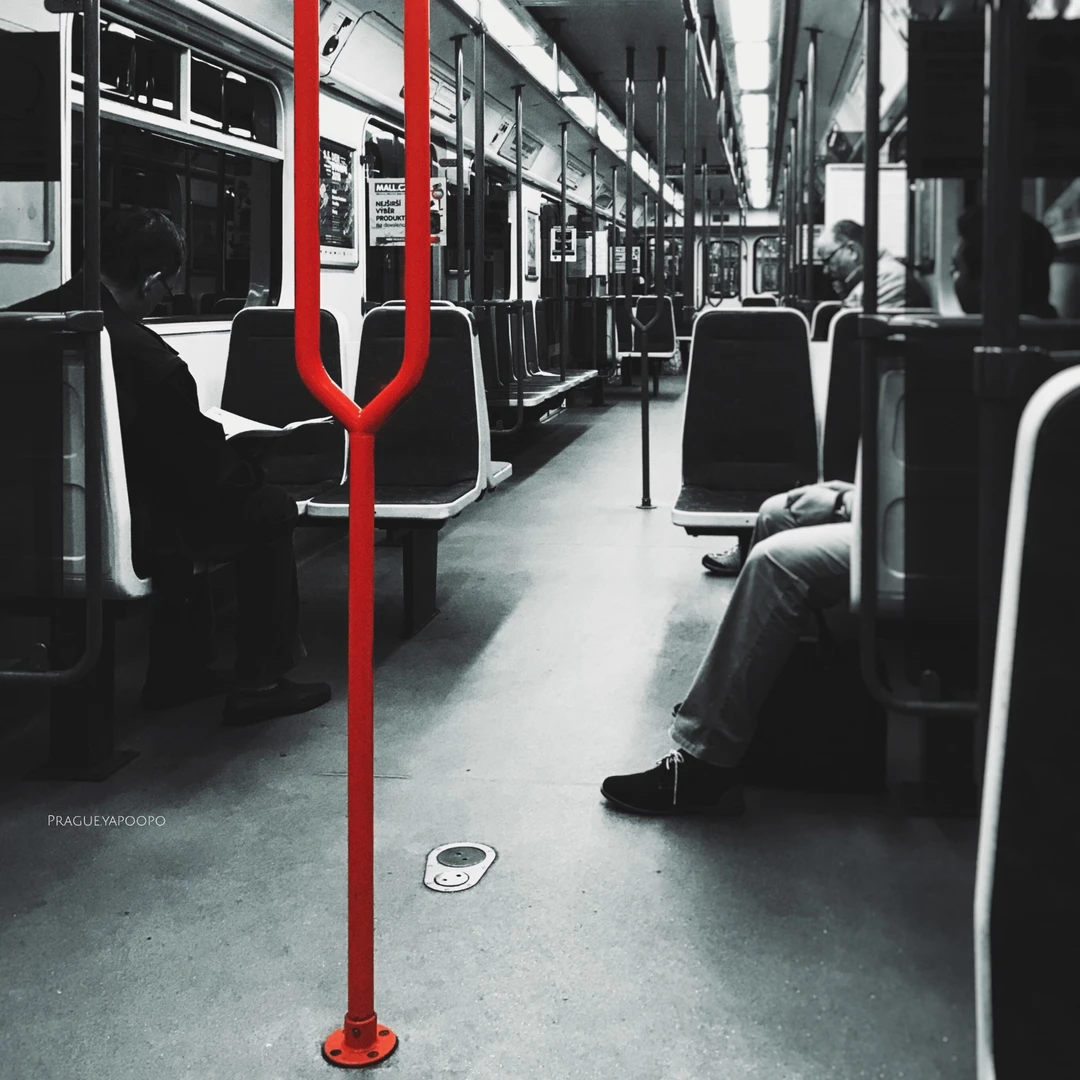
When people talk about Prague, almost every guidebook will tell you: red roofs, red trams, red metro lines. But when my flight landed in Prague, I was greeted by a solidly overcast sky. That's when I realized: the city's charm lies precisely in this—color is your true nature, but black and white is also one of your faces.
Prague Airport to City Center: A Solo Traveler's Transport Guide
Getting from Prague Airport to the city center requires a bus-to-metro transfer. There are ATMs at the airport exit that support UnionPay cards for cash withdrawals in Czech koruna or euros. I strongly recommend using your UnionPay card to withdraw cash directly—it's much more cost-effective than exchange counters, provided your card has no overseas withdrawal fees.
Inside the terminal, there's a ticket vending machine for public transport, but the queue is long. Don't bother waiting—step outside to the bus stop, where more machines are available with almost no line. These machines accept Mastercard and Visa credit cards, and I suggest using a card; cash is often rejected. A 90-minute ticket is enough to reach the city center.
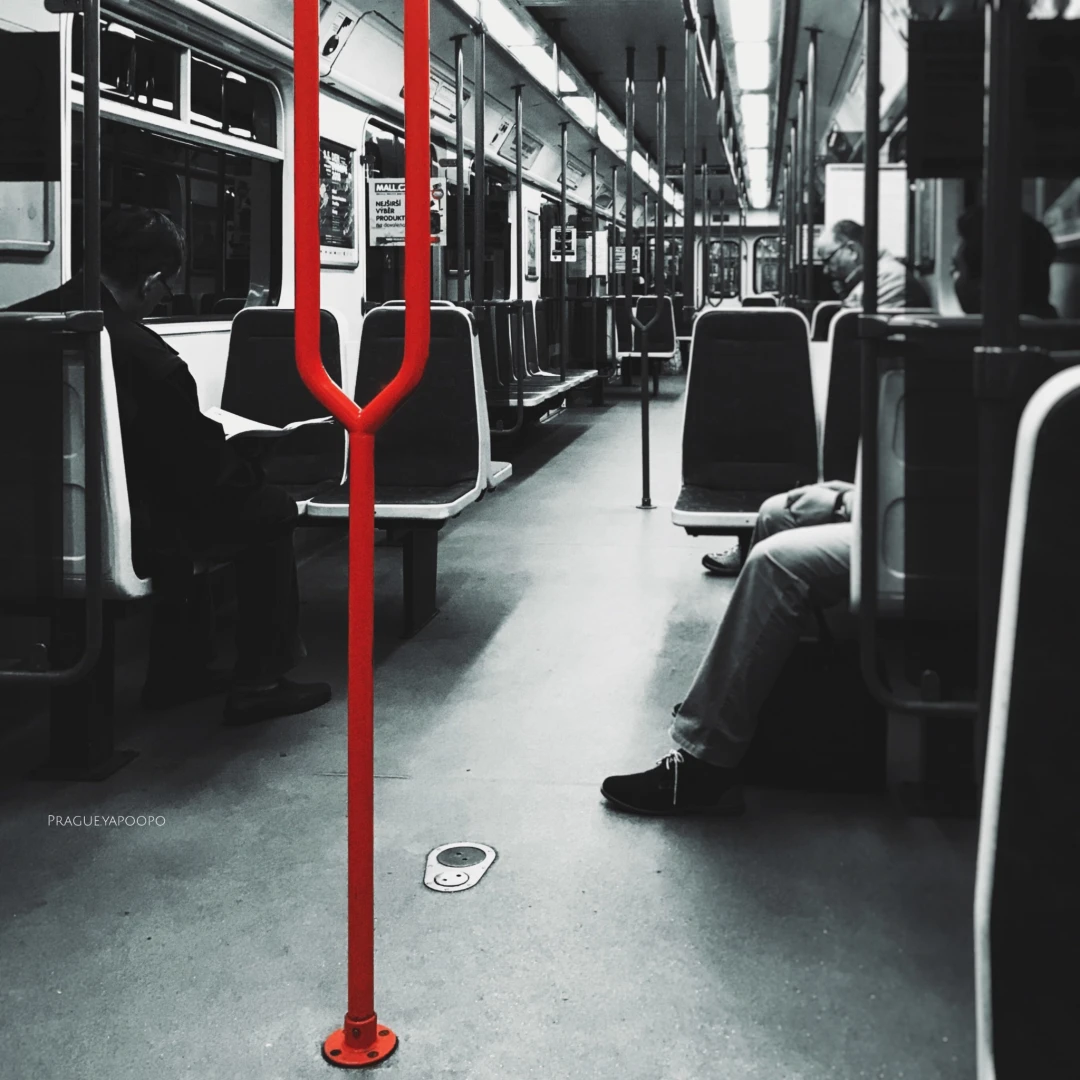
Prague's metro stations are uniformly red, not crowded, and nothing like Paris, where you constantly have to watch out for pickpockets.
The Dancing House and Vltava Riverbank: Where to Start Your Solo Exploration
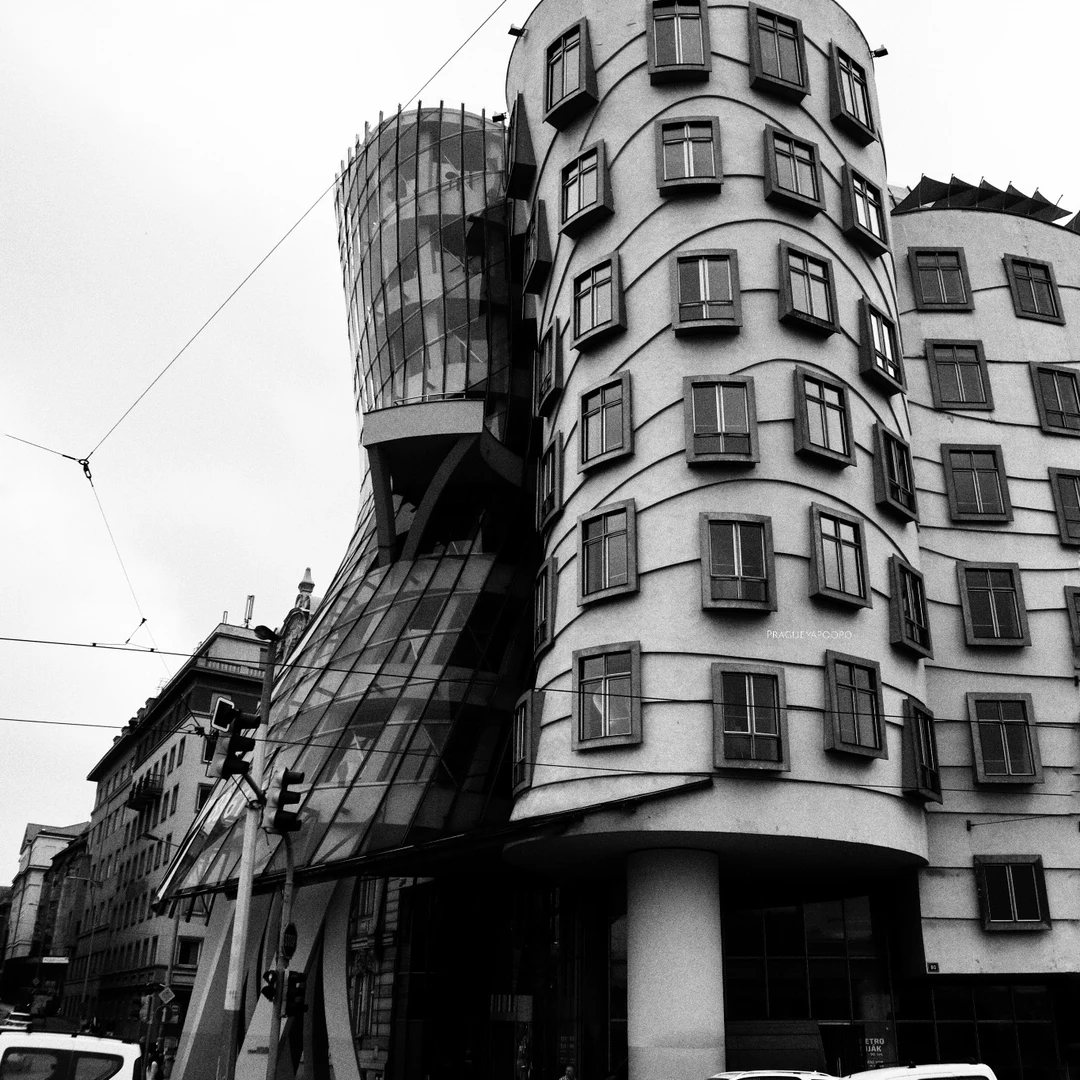
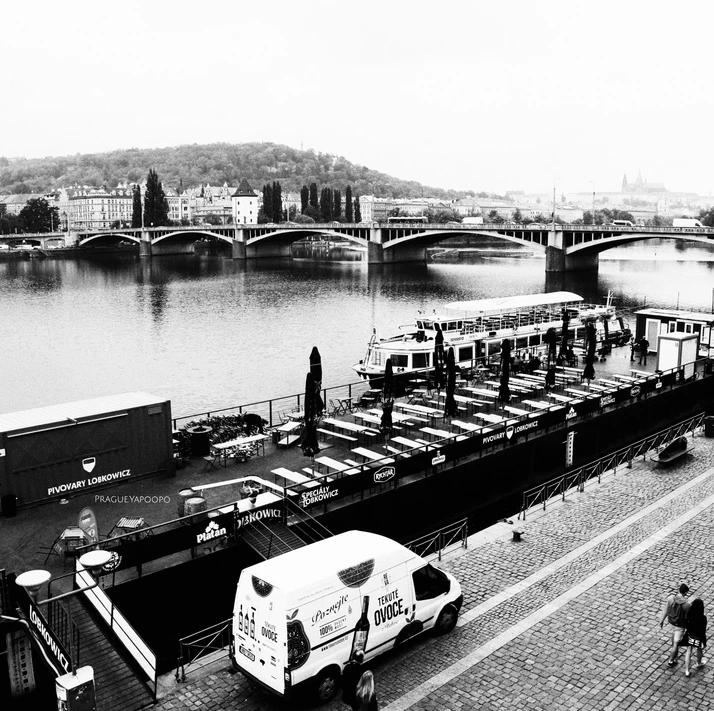
My hostel was right next to the Dancing House. The building's exterior is indeed amusing, but honestly, there's no need to go up to the top for photos—Prague has far better viewpoints. The Dancing House sits along the Vltava River, where bars line the banks. Prague is truly a city of beer—cheap and served in generous pints. Sitting by the river with a drink in summer is probably one of the most pleasant things you can do.
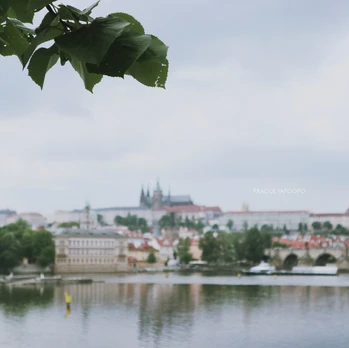
Luckily, after wandering for a while, the sky began to clear. Prague's city center is very small, so public transport is hardly necessary. From the Dancing House, heading north along the Vltava River will slowly take you to Charles Bridge. Cross it, and you'll reach Prague Castle.
Charles Bridge: The Most Lively Stage for Solo Travelers
Charles Bridge is probably the liveliest spot in Prague, much like Old Town Square—full of performers and tourists. Thirty Baroque statues line both sides of the bridge, and although the crowd makes it impossible to touch each one, admiring them from a distance is entertaining enough. For solo travelers, this is a great place to people-watch, ask fellow tourists for a photo, or simply pause and listen to street musicians.
Prague Castle: From Dark Fairy Tale to a Sea of Red Roofs
Prague Castle isn't a single attraction—it's a complex of sites. Walking up from Charles Bridge, you'll find a Starbucks with a rooftop terrace great for portraits, though not the best for landscape shots. There are many Korean tourists in Prague; I asked Korean girls to take my photos—they're skilled photographers and very patient.
Some sites within the castle complex require tickets. Remember to buy them at the information desk near the entrance to St. Vitus Cathedral, as ticket offices are scarce at the later sites. There are four types of combination tickets available, with discounts for students under 26. Indoor photography requires a separate photo permit.

Recommended route for solo travelers: St. Vitus Cathedral → Old Royal Palace → St. George's Basilica → Golden Lane, then follow the gardens down to the New Castle Steps. The gardens between Golden Lane and the New Castle Steps are the best spot for photos.
St. Vitus Cathedral is a classic Gothic structure with a dark fairy-tale feel. The Old Royal Palace is surprisingly sparse inside; many say photography isn't allowed, but that's not quite accurate—you can take photos with a permit. The hall's ceiling is distinctive, but compared to what you'll see later in Vienna and Budapest, it's almost modest.
St. George's Basilica and Golden Lane aren't particularly impressive, but after leaving the sites, spending time in the gardens—feeling the breeze, daydreaming, with few people around—is a wonderful experience. The gardens are full of viewpoints where you can snap endless photos, overlooking Prague's sea of red rooftops.
Descending the hill, I encountered Prague's red trams. This red city is simply too endearing.
Old Town Square: Standing in the Square at Dusk
The rest of my time in Prague was centered around Old Town Square. This is the place from the song I grew up hearing—"I stand in the square of Prague at dusk"—and just thinking about it was exciting.
Prague's Old Town Hall and Astronomical Clock are also on the square, but the clock's exterior is currently under renovation, expected to finish by the end of summer. That doesn't affect climbing the tower for a panoramic view of the square—it's absolutely one of the most worthwhile experiences. Few tourists, no queues. You can take the elevator up and walk down slowly; the elevator itself is quite cool.
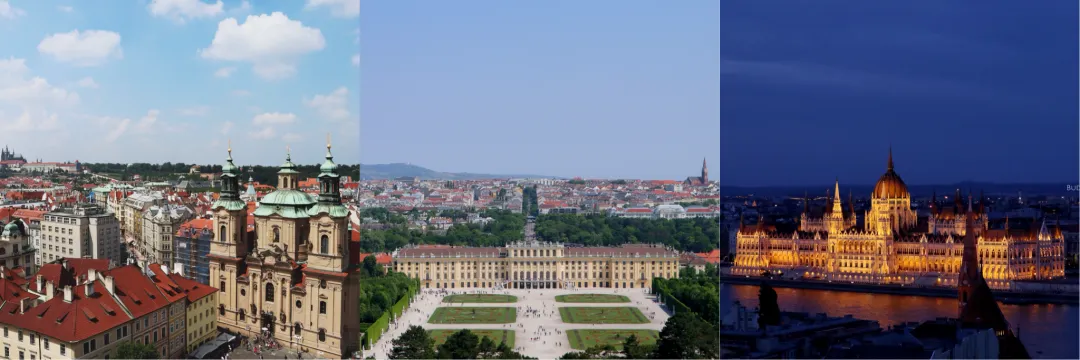
In the panoramic view, the green-domed Baroque building is St. Nicholas Church, with an opulent interior that regularly hosts concerts.
Silence Is You, Roaring Is You: Discovering Vienna Solo
Going from Prague to Vienna feels like moving from a small town to a big city. Vienna is the most developed of the three, but unlike the warmth and exuberance of the Czechs, German-speaking Austrians are dignified and serious, polite yet somewhat distant.
Schönbrunn Palace: The Garden of a Mini-Versailles
While planning, I kept wondering: why do people know the story of Empress Sisi by heart? Before deciding to visit Vienna, I had never even heard of the film. So choosing attractions was tricky—visiting the traces of a life I had no interest in felt odd. In the end, I only saw the gardens of Schönbrunn Palace, and at the Hofburg, I only visited the National Library.
The Schönbrunn gardens are indeed beautiful, often called a "mini-Versailles." From the "Little Triumphal Arch" at the back, the garden's scale is breathtaking. The gardens include a maze, a zoo (whose star attraction is a giant panda), a rose garden, and many locals out for a morning jog. [Link: Solo travel tips for Vienna's palaces]
The National Library: The Most Beautiful Library for Solo Wanderers
The Austrian National Library, originally the Imperial Court Library and later a national library, houses a vast collection of珍贵 documents. Simply put, it's the most beautiful library I've ever seen, and absolutely worth a visit. It's located within the Hofburg complex, with a separate ticket. For solo travelers, this is a quiet, contemplative space away from the crowds.
St. Stephen's Area: A Dialogue Between Gothic and Baroque
St. Stephen's Cathedral and St. Peter's Church are close to each other—the former is classic Gothic, the latter Baroque. St. Stephen's interior is solemn and restrained, while St. Peter's is dazzling and extravagant. This area is now one of Vienna's busiest commercial districts.
The Plague Column, commemorating the Great Plague of Vienna in 1679, carries heavy significance but is surprisingly ornate in design.
Vienna State Opera: A First Opera Experience for Solo Travelers
When people think of Vienna, the first thing that comes to mind is music. Attending an opera at the Vienna State Opera is a rite of passage. Even if you're alone, the experience is deeply moving. Standing-room tickets are affordable, and the acoustics are world-class. It's a moment where silence and roaring emotion meet—perfectly fitting for Vienna's dual nature.
Budapest: Bleak Yet Burning—The Final Chapter of Your Solo Journey
Budapest is the most dramatic of the three. It's raw, passionate, and unpolished. The city is split by the Danube: Buda is hilly and historic; Pest is flat and bustling. From Fisherman's Bastion, you can see both sides shimmering at night—a sight that will stay with you forever.
Key solo experiences in Budapest: - Fisherman's Bastion: Best at sunrise or sunset for photos without crowds. - Széchenyi Thermal Bath: A must for solo relaxation—bring a book and soak. - Ruin bars in the Jewish Quarter: Easy to meet fellow travelers.
[Link: Budget solo travel in Budapest]
Frequently Asked Questions About Solo Travel in Prague, Vienna, and Budapest
1. Is it safe to travel solo through Prague, Vienna, and Budapest?
Yes. All three cities are generally safe for solo travelers, including women. Standard precautions apply: watch your belongings in crowded areas, avoid poorly lit streets at night, and use licensed taxis or ride-sharing apps.
2. How many days should I spend in each city?
 A balanced itinerary is 3 days in Prague, 2-3 days in Vienna, and 3 days in Budapest. This allows time for major sights, spontaneous exploration, and travel between cities.
3. What is the best way to travel between these cities?
Trains are the best option. The Railjet service connects Prague to Vienna (4 hours) and Vienna to Budapest (2.5 hours). Book in advance for lower prices. [Link: Best train routes for Central Europe]
4. Do I need to speak German or Hungarian?
 English is widely spoken in tourist areas, restaurants, and hotels. Learning a few basic phrases (hello, thank you, please) is appreciated but not required.
5. What is the budget for a solo trip to these three cities?
Budget around €50-80 per day for hostels, meals, and attractions. Prague is the cheapest, Vienna the most expensive. Budapest offers excellent value for food and thermal baths.
Ready to Plan Your Own Solo Journey Through Central Europe?
Solo travel through Prague, Vienna, and Budapest is more than a vacation—it's a conversation with yourself, set against some of Europe's most beautiful backdrops. Whether you're sipping beer by the Vltava, listening to opera in Vienna, or soaking in a thermal bath in Budapest, each moment becomes part of your own story.
Start planning today. Book your train tickets, reserve a bed in a central hostel, and let the wind carry you through these three unforgettable cities. The 39-degree wind is waiting—and so is your dream.
Have you traveled solo through Prague, Vienna, or Budapest? Share your experience in the comments below, or tag us in your photos using #SoloCentralEurope. For more solo travel guides, [Link: sign up for our newsletter].
You may also like