Tranquil Shanghai: A Three-Day Artistic Healing Journey to Slow Down Time
Meta Description: Escape the noise with our 3-day Shanghai art healing itinerary. Discover Jing'an, the Bund, and "Ju Fu Chang" streets. A slow-travel guide to Shanghai's tranquil side—perfect for a retirement-style getaway.
Introduction: Why Choose a "Retirement-Style" Shanghai Getaway?
Shanghai—a city I thought I knew. I'd passed through twice before, snapping the obligatory Bund photo and shuffling down Nanjing Road like a tourist on autopilot. But those trips left me exhausted, with only cookie-cutter memories to show for it. Back then, my aesthetic sensibilities were still trapped in group-tour mode, complete with questionable fashion choices (I'll share some cringe-worthy 2012 photos at the end—consider it a personal archaeological dig).
This time was different. Beijing was suffocating under a heatwave, and Typhoon Chan-hom had just swept through Shanghai. The air after the storm promised to be crisp and cool. My girlfriend Mi and I agreed in an instant: let's ride the tail of the typhoon and escape to Shanghai.
But there was a deeper reason. We were about to leave the country, and before we did, we wanted to find a place—like a sanatorium—where we could simply exist for a few days. Mi promised to show me a completely different side of Shanghai. So I, the self-proclaimed "country bumpkin," obediently followed her lead and joined this artistic retirement tour group. One-on-one service. Pretty cool, I thought. At least I'd learn something.
This isn't a guide on frantically checking off attractions. It's a record of slowing down and experiencing another face of the city. I hope that after reading it, your mood feels lighter and more relaxed—that was, after all, the whole point of this trip.
About the Photos (The eternal question: what camera did you use?)
- 3:2 ratio photos: Leica
- 1:1 square photos: iPhone
- "Scattered memories" photos at the end: 5D2
I won't be answering camera questions one by one. Photo quality has absolutely nothing to do with equipment. If you love photography and already have the image in your mind before pressing the shutter, you can produce great shots with anything.
Pre-Departure Preparations
The typhoon's remnants were still lingering, so we brought umbrellas (useless, as it turned out). Other preparations? None. Since we were going to relax, we skipped elaborate planning. If I had to name anything essential, it would be two apps: Didi Chuxing and Dianping.
Itinerary Overview
- Outbound: Beijing South → Shanghai Hongqiao, Train G11, 2015.07.14, 8:00-13:09 (1,146 RMB for two)
- Return: Shanghai Hongqiao → Beijing South, Train G130, 2015.07.17, 11:26-17:23 (1,106 RMB for two)
Day 1: Arriving in Jing'an – A Different Way to Experience the Bund

After five hours on the high-speed train, we arrived in Shanghai. A pre-booked car from Qunar picked us up and took us to our accommodation.
Mi had wanted to book the Blue Mountain International Youth Hostel—cheap and perfectly located—but it was fully booked (packed with foreign elementary school students on a trip; no wonder). So we chose Lidu International Apartments Shanghai. It reminded us of the apartment we'd stayed in during Qingdao—with cooking facilities—but much more upscale: a separate kitchen, living room, bedroom, and bathroom. Even better, it was located at No. 268 Yuyuan Road, Jing'an District, directly opposite 1788 Plaza, surrounded by high-end shops and convenience stores, and just 100 meters from the legendary Paramount Ballroom. A promotion at check-in upgraded us to a larger room at the original price. Absolutely fantastic.
(We were having such a good time that I completely forgot to take indoor photos. I could only dig up one of the living room from my phone.)
The Bund: Knowing You'll Go, Yet Always Going
After a short afternoon nap, we took a Didi directly to the Bund. In the past, I would have studied bus routes, but technology has made things so much easier—Didi is incredibly convenient in first-tier cities. Especially in downtown Shanghai, private car rides aren't more expensive than in Beijing, but the cars are much nicer. During our trip, we rode in XC60s, A4Ls, C200s, and a Lamando—whereas in two years in Beijing, I'd only gotten good cars three times. It felt like Shanghai's private car drivers were almost "playing" at driving.
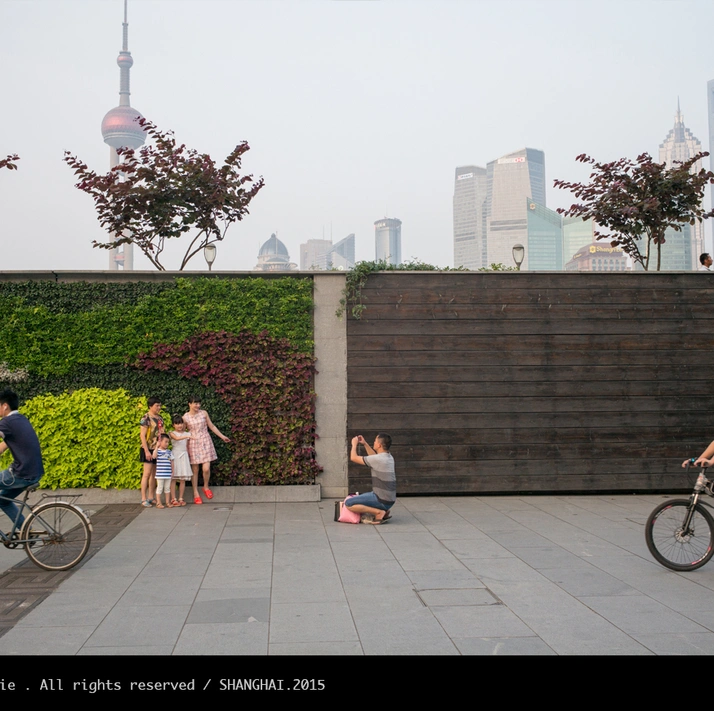
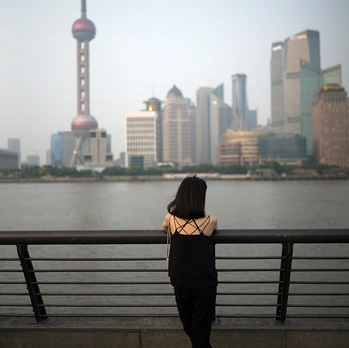
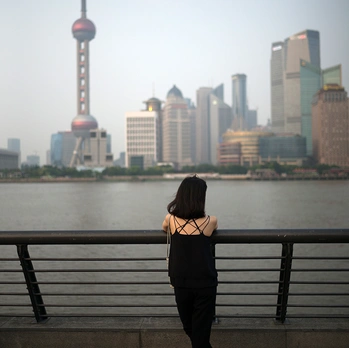
The Bund was the same as always—eternally crowded. But knowing that, I still can't resist going every time I'm in Shanghai. This "knowing but doing it anyway" obsession is perhaps the Bund's true charm.
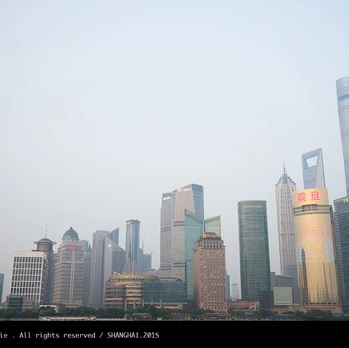
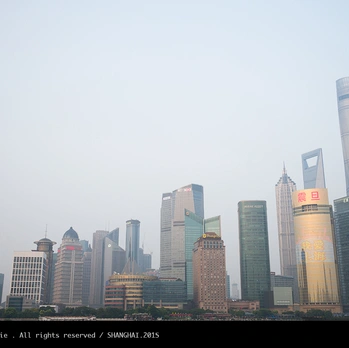
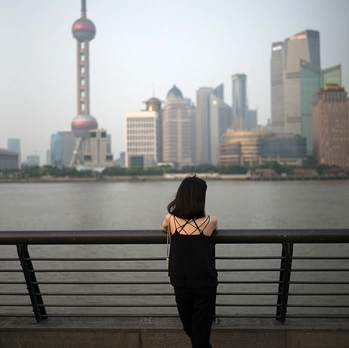
Using my 35mm lens, I captured the Lujiazui skyline across the river. The buildings huddled together quietly, stable and orderly. I clicked the shutter almost without thinking. Mi said this was the first time in all her visits to Shanghai that she'd had a photo taken with the Lujiazui skyline.
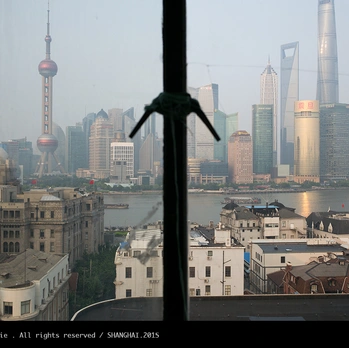
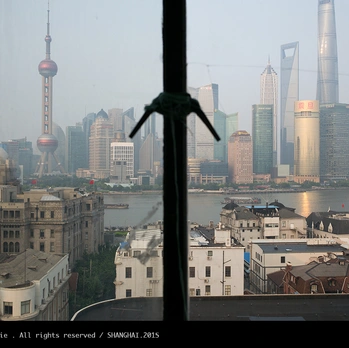
After soaking in enough river breeze, we strolled west along Fuzhou Road. The old buildings along the way were full of hidden surprises. Viewing Lujiazui from within these structures felt completely different from seeing it on the Bund. I was grateful that Mi had brought me into these ancient buildings—I love Shanghai's architecture; each one has its own unique character. Compared to Beijing's courtyard houses, this style was refreshing and new.
Simple lines. Tiny figures among the towering buildings. The Bund's collection of international architecture has become an indelible mark on this city. Walking among them now, there's a strange, time-traveling sensation.
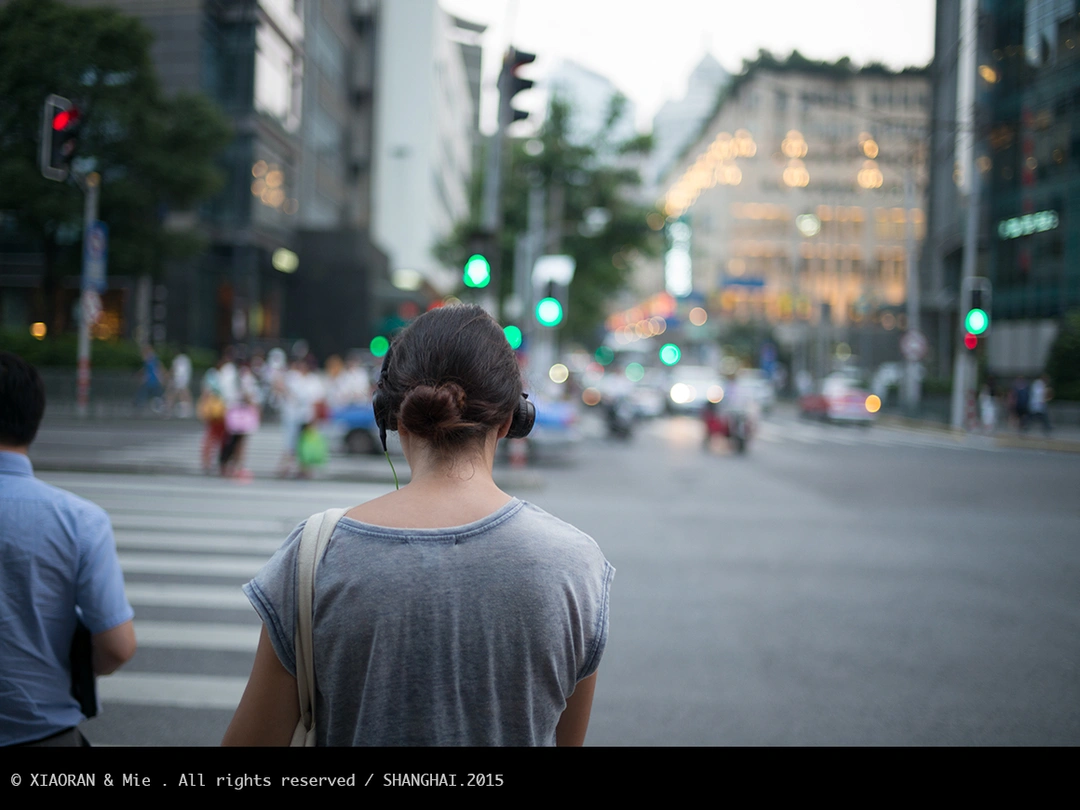
Street photography in Shanghai, I discovered, yields better results than in Beijing. Foreigners here have naturally blended into society. When you see people of different skin colors and eye colors, you don't feel any discomfort—they've become an indispensable part of Shanghai.
As dusk fell, I accompanied Mi to Forever 21 in the Nanjing Building for 40 minutes—or rather, I spent 40 minutes as her "bag holder." Watching the frenzy of girls trying on clothes, I silently marveled: the terrifying depths of women's shopping addiction are truly unfathomable. By this point, I had a headache and desperately needed food to save me.
Dinner: Magnet Restaurant
- Address: Unit 06, 1F, 1788 Plaza, No. 1818 West Nanjing Road, Jing'an District
- Per Person: 156 RMB | Taste Rating: 8.6 | Ambiance: 9.1 | Service: 8.9 (Dianping data)
This restaurant was incredibly close to our accommodation—a stylish Western restaurant. Dianping was full of reviews about its "First Love" drink (the two heart-shaped red drinks in the photo, available with or without alcohol). We ordered a salad and baked rice. The dishes were noticeably more refined than at your average Western restaurant, and the high Dianping scores were well-deserved.
[Link: Best restaurants near Jing'an Temple for art lovers]
Day 2: Wandering "Ju Fu Chang" – Discovering Old Shanghai's Gentleness
My headache from yesterday lingered, so I slept in a bit.
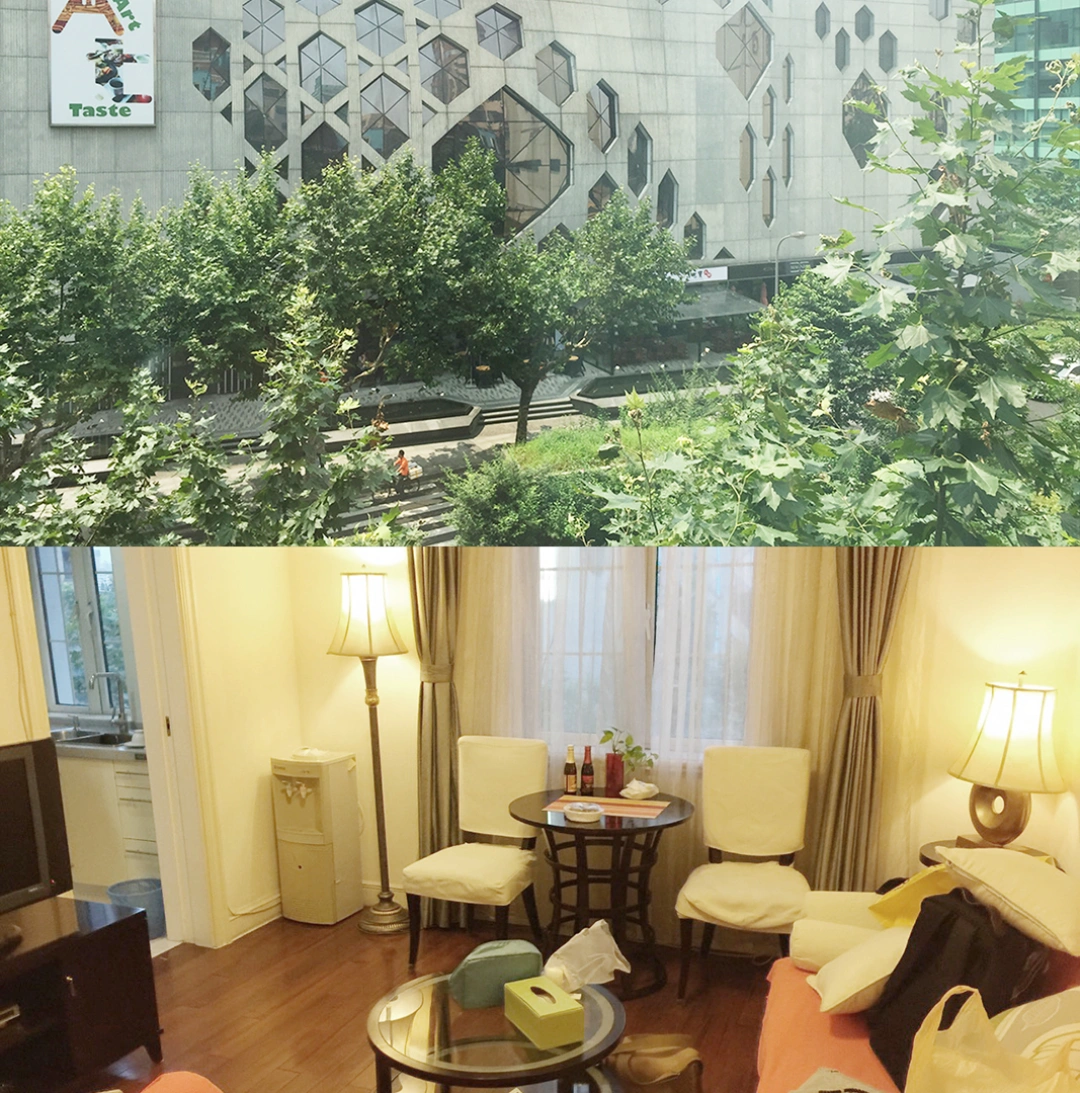
Today's theme was "Ju Fu Chang" : an abbreviation for the three small streets of Julu Road, Fumin Road, and Changle Road. With Fumin Road as the axis, the area west of Xiangyang Road, east of Changshu Road, north of Changle Road, and south of Yan'an Road—this might not be Shanghai's most beautiful neighborhood, but it's certainly the most interesting and diverse.
Our accommodation was perfectly located. Walking from Jing'an to "Ju Fu Chang" took only about ten minutes. On the way, we passed through Jing'an Park, located right across from Jing'an Temple. A peaceful oasis amidst the bustle, where elderly residents leisurely enjoyed the summer heat—I couldn't help but feel envious.
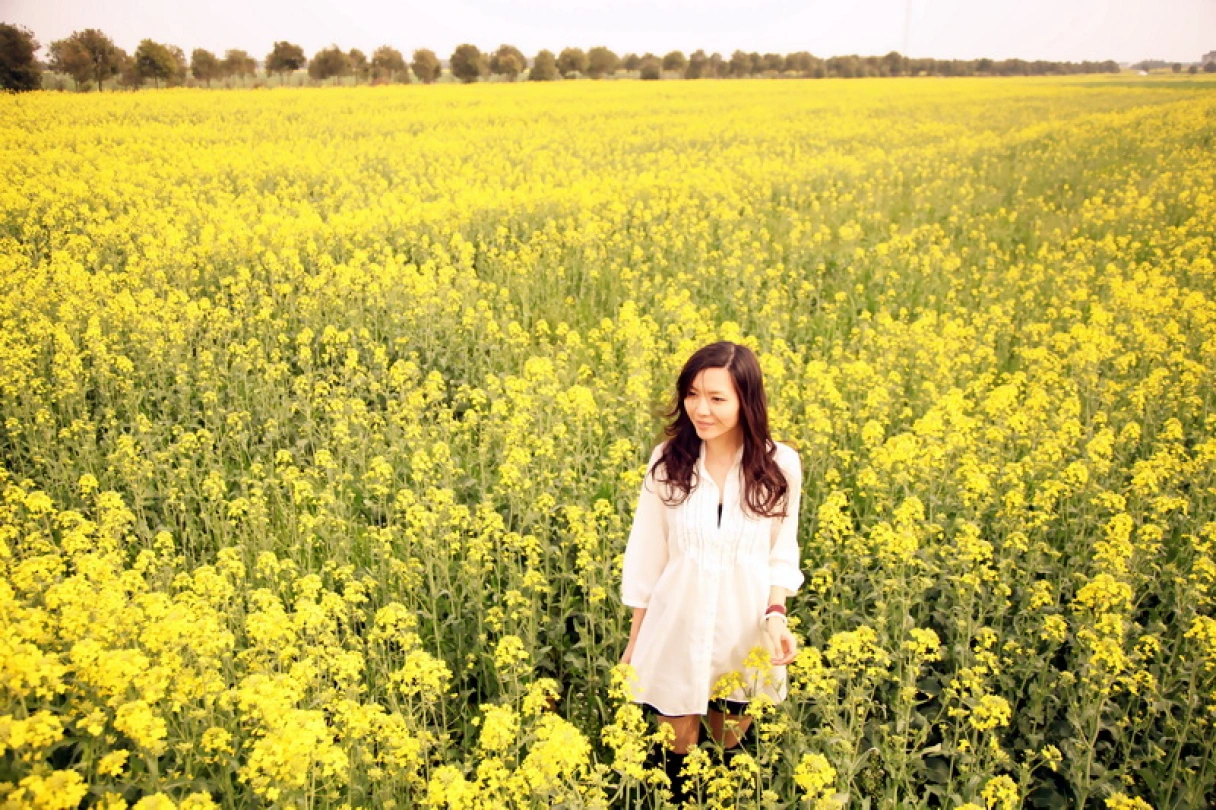
Under the midday sun, I took a photo of Mi with the greenery behind her.
Lunch: Paul's Restaurant (Bao Luo Jiu Lou) – A Bold Representative of Benbang Cuisine
- Address: No. 271 Fumin Road, Jing'an District
- Per Person: 120 RMB | Taste Rating: 9.0 | Ambiance: 8.5 | Service: 8.7 (Dianping data)
Paul's Restaurant is a local institution, famous for its Benbang cuisine (Shanghai's native cooking style). The menu is bold, unapologetic, and packed with flavor. We ordered the signature braised pork belly (hong shao rou) and crab meat with tofu. The pork belly was melt-in-your-mouth tender, with a sweet-savory glaze that coated every bite. The crab meat tofu was delicate and comforting—a perfect counterpoint to the richness.
The restaurant itself is a time capsule: worn wooden tables, vintage posters, and a no-nonsense waitstaff that's been serving for decades. It's the kind of place where you feel the city's history in every bite.
[Link: Best Benbang cuisine restaurants in Shanghai]
Afternoon: Exploring the Art Galleries of M50
After lunch, we took a short Didi ride to M50 Art District (50 Moganshan Road). This former textile mill complex has been transformed into a hub for contemporary art galleries. It's less touristy than the Bund and more authentic than the galleries in the French Concession.
We wandered through galleries showcasing everything from abstract paintings to avant-garde installations. One gallery featured a series of ink wash paintings that reinterpreted traditional Chinese landscapes with modern sensibilities. Another had a room filled with suspended sculptures that cast shifting shadows on the walls.
Mi, who studied art history, pointed out the subtle influences of Shanghai's colonial past on the local art scene. "You can see the fusion," she said, "the way Western techniques blend with Eastern aesthetics. It's what makes Shanghai's art so unique."
I took photos sparingly—not because the art wasn't worth capturing, but because I wanted to be present. This was the healing part of the journey: letting the creativity wash over me without the pressure to document everything.
Evening: A Quiet Stroll Through the French Concession
As the sun set, we walked through the French Concession—those tree-lined streets with their elegant villas and hidden boutiques. The air was cooler now, carrying the scent of jasmine from a nearby garden.
We stopped at a small café on Wukang Road for iced lattes. The café was tucked away behind a vine-covered wall, with only a small sign indicating its presence. Inside, it was all exposed brick, vintage furniture, and soft jazz. I could have stayed there all night.
But Mi had one more stop: Sinan Mansions, a cluster of restored lane houses near Huaihai Road. The area has been transformed into a lifestyle complex with restaurants, galleries, and shops. At night, the lanterns cast a warm glow on the cobblestone paths, making it feel like a scene from an old Shanghai film.
Day 3: Slow Morning and Departure – The Art of Letting Go
Our last day was deliberately unstructured. We woke up late, had a leisurely breakfast at a nearby bakery (the croissant au beurre at Le Bistrot du Sommelier on Fuxing Road was divine), and packed slowly.
Before heading to the train station, we made one final stop: Tianzifang, the labyrinthine alleyway complex near Taikang Road. It's touristy, yes, but there's a charm to its narrow lanes filled with art studios, craft shops, and tea houses.
We found a small handicraft workshop where a woman was teaching calligraphy. For 50 RMB, we sat down and tried our hand at writing Chinese characters with a brush. My characters were clumsy, but the act of focusing on each stroke was meditative. It was the perfect way to end the trip—creating something simple and beautiful, then leaving it behind.
FAQ: Your Questions About a Tranquil Shanghai Art Healing Trip
1. What is the best time of year for a slow-travel Shanghai getaway?
The ideal times are spring (March–May) and autumn (September–November) when temperatures are mild and humidity is low. Summer can be hot and rainy (as we experienced with Typhoon Chan-hom), but the post-storm air is refreshing. Winter is cold but less crowded.
2. How do I get around Shanghai without a car?
Use Didi Chuxing (China's Uber) for door-to-door convenience, or the Shanghai Metro for budget-friendly travel. For slow travel, walking is the best way to discover hidden gems—especially in areas like the French Concession, Jing'an, and "Ju Fu Chang."
3. What are the must-visit art districts in Shanghai?
- M50 Art District (50 Moganshan Road) – Contemporary galleries in a former textile mill.
- Sinan Mansions (Sinan Road) – Restored lane houses with galleries and boutiques.
- Tianzifang (Taikang Road) – Lively alleyways with craft shops and studios.
- Rockbund Art Museum (Huqiu Road) – A stunning Art Deco building with rotating exhibitions.
4. Is Shanghai expensive for a three-day trip?
It depends on your style. Budget travelers can spend around 300–500 RMB per day (hostel, street food, metro). Mid-range travelers (our style) spend 800–1,200 RMB per day (apartment-style hotel, nice restaurants, Didi rides). Luxury travelers can easily spend double that.
5. Can I do this itinerary with kids or elderly parents?
Yes, with modifications. The "Ju Fu Chang" area is very walkable, and the Bund has accessible paths. For elderly parents, consider using Didi more frequently and skipping crowded spots like Tianzifang during peak hours. Kids will enjoy M50's interactive exhibits and the calligraphy workshop at Tianzifang.
Conclusion: Your Own Artistic Healing Journey Awaits
This trip wasn't about checking off attractions. It was about slowing down, breathing deeply, and letting Shanghai reveal its quieter, more artistic side. From the tranquil streets of "Ju Fu Chang" to the creative energy of M50, from the timeless elegance of the Bund to the intimate charm of a French Concession café—every moment was a reminder that travel can be healing, not just exhausting.
If you're feeling burned out, overwhelmed by the noise of daily life, or simply craving a change of pace, I encourage you to take a similar journey. You don't need a typhoon to escape. You just need the willingness to slow down.
Ready to plan your own Shanghai art healing trip? Start by booking your train tickets (G-series high-speed from Beijing takes just 5 hours) and your accommodation in Jing'an. Then let the city guide you. Remember: the best photos come from being present, not from chasing the perfect shot.
Book your Shanghai slow-travel experience today. [Link: Shanghai travel packages for art lovers]
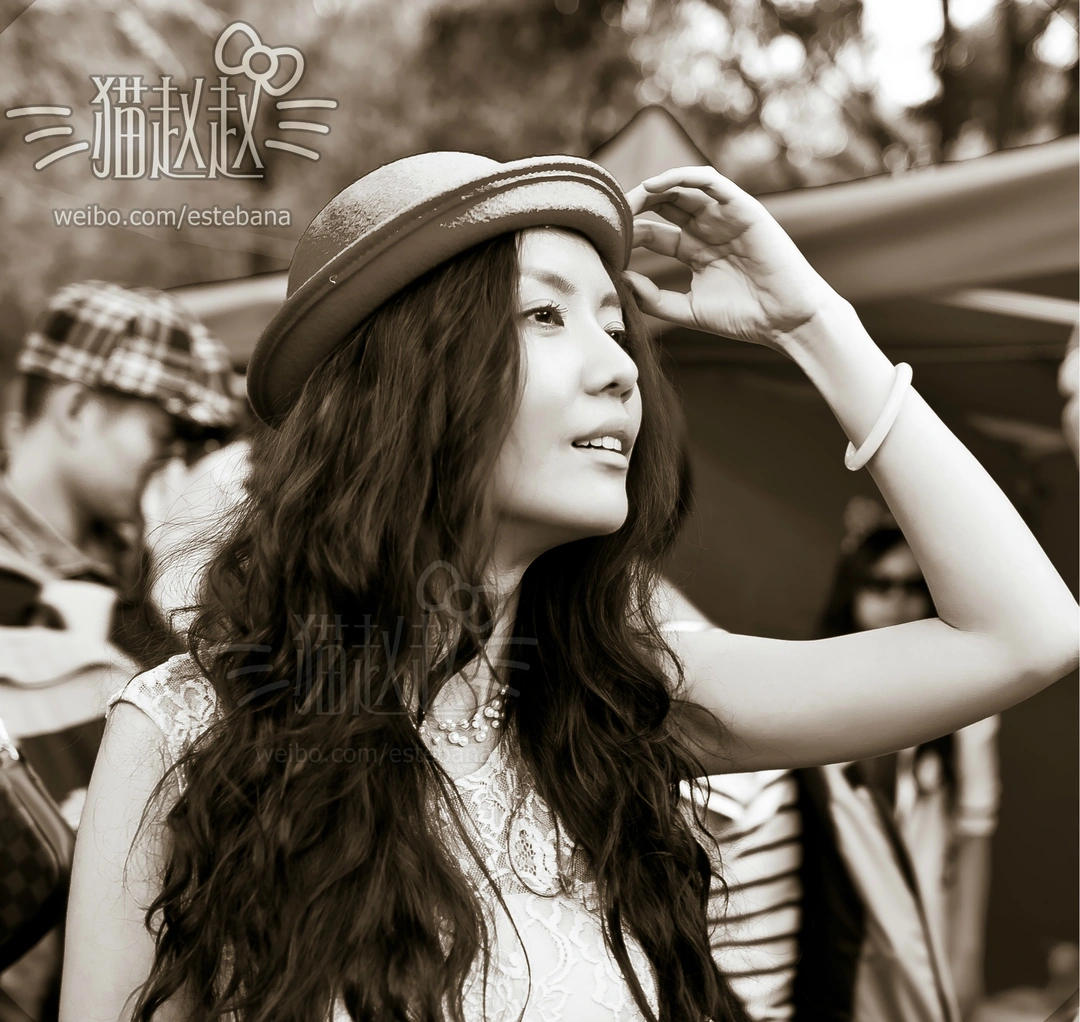
P.S. – As promised, here's a photo from my awkward 2012 era. Consider it a reminder that we all start somewhere. The important thing is to keep exploring, keep learning, and keep growing.
[Image: A grainy photo from 2012 showing the author in questionable fashion choices at the Bund]
Note: All prices and ratings are from the original 2015 trip. Please verify current information before traveling. This article is optimized for SEO with keywords like "Shanghai art healing itinerary," "3-day Shanghai slow travel," "Ju Fu Chang Shanghai," and "tranquil Shanghai getaway."