Tracing Dunhuang and Lu Xun: A Cultural Stroll Through Shanghai Across Millennia
Meta Description: Discover Shanghai's hidden cultural gems in this 1500-word guide. From the "Why Dunhuang" art exhibition at China Art Palace to Lu Xun's final decade on Duolun Road, explore millennia of art, history, and literary legacy in one unforgettable journey.
Shanghai is often celebrated as a city of skyscrapers and neon lights, but beneath its modern surface lies a rich tapestry of cultural heritage spanning thousands of years. In the deep autumn of 2024, I embarked on a unique pilgrimage—one that would trace the ancient Silk Road art of Dunhuang and the literary footsteps of Lu Xun, two seemingly disparate threads woven together in the fabric of this vibrant metropolis.
This cultural walk through Shanghai is more than a sightseeing itinerary; it's a journey across millennia. Whether you're an art enthusiast, a history buff, or a literature lover, this guide will help you experience the best of Shanghai's cultural offerings—from the awe-inspiring "Why Dunhuang" exhibition to the quiet streets where Lu Xun spent his final years.
Pre-Departure Homework: Cramming on Dunhuang
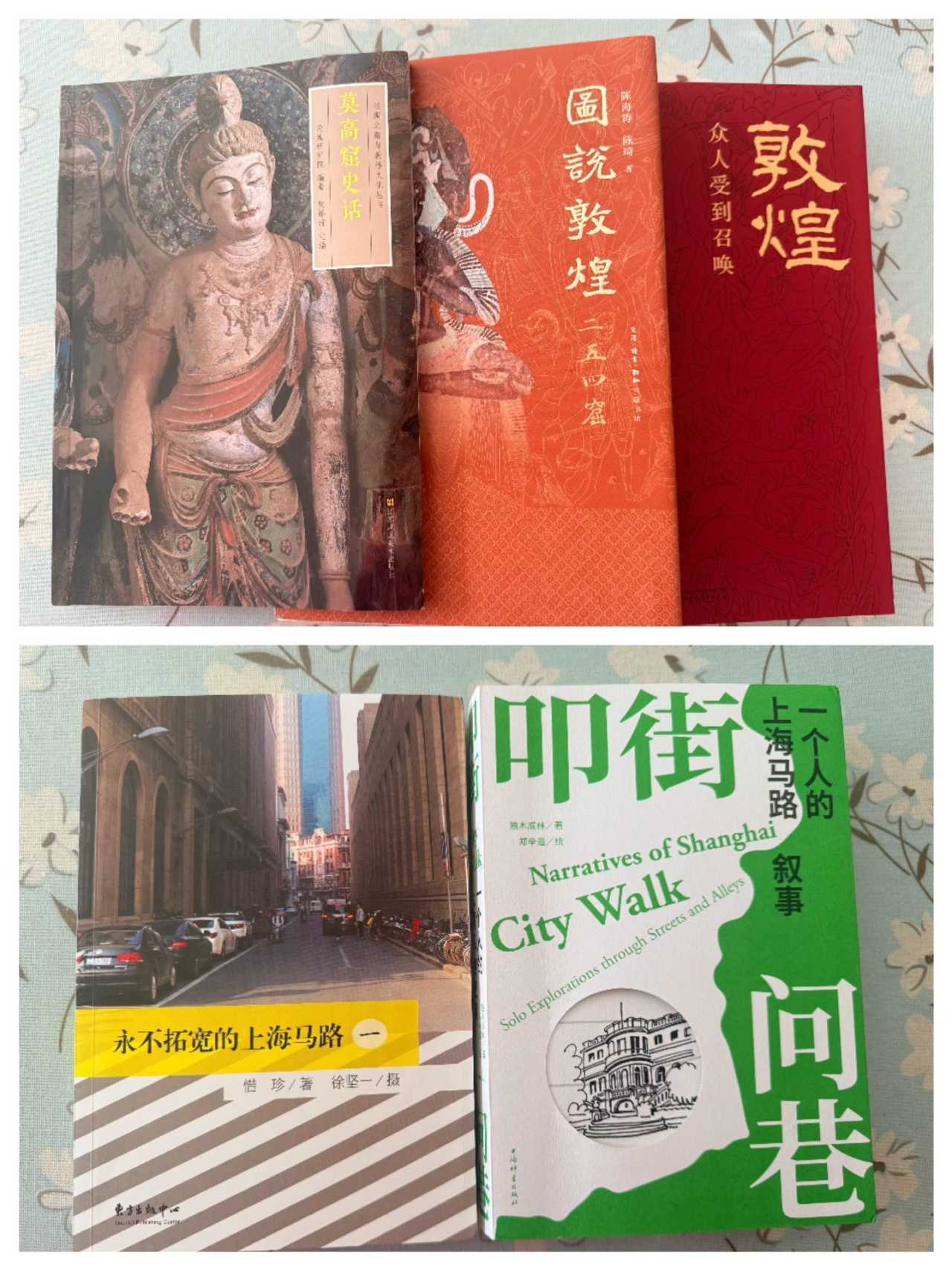
Before setting foot in the exhibition hall, I immersed myself in a crash course on Dunhuang art and history. The Mogao Caves, a UNESCO World Heritage site, represent one of humanity's greatest artistic achievements. To fully appreciate the "Why Dunhuang" exhibition, I recommend:
- Documentaries: Watch CCTV's 10-episode Dunhuang (2010) and the 4-episode The Great Dunhuang (2023)
- Biographical films: Learn about Chang Shuhong and Fan Jinshi, the guardians of Dunhuang
- Books: Pick up selected texts on Mogao Caves and Dunhuang studies
- City walk prep: Read Knocking on the Streets and Shanghai's Never-Widened Roads for context on Lu Xun's Shanghai
[Link: Best documentaries about Dunhuang art and history]
Day One: Why Dunhuang — A Question of Civilization
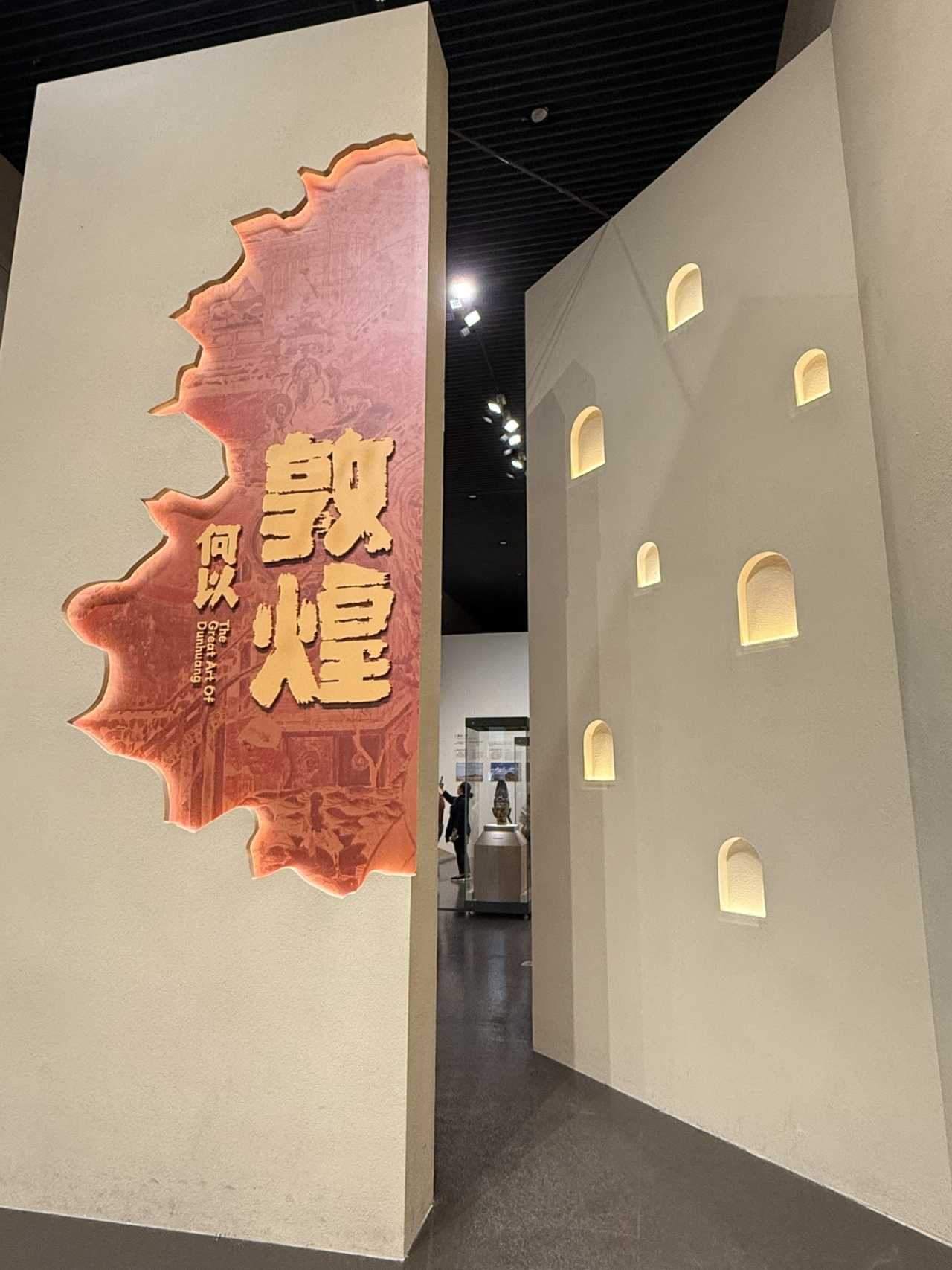
First Impressions of the Exhibition: The Gap Between Price and Experience
"Dun" means grand, and "Huang" means flourishing. Dunhuang became what it is because it was once the hub of East-West communication—the throat of the Silk Road where four great ancient civilizations—Chinese, Indian, Greek, and Islamic—converged and blended. This was not merely a gift of geography but a historical inevitability.
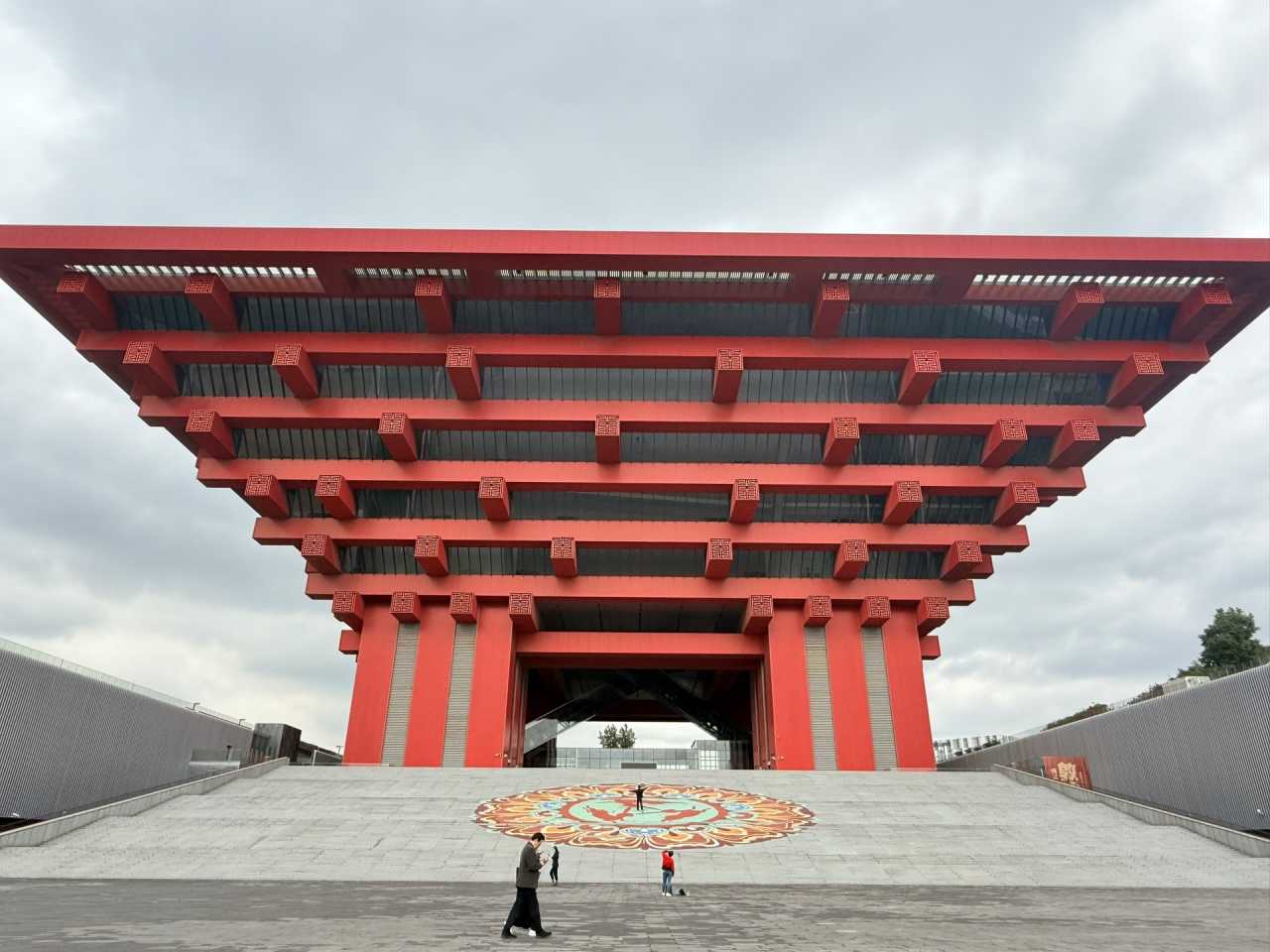
Yet, stepping into the "Why Dunhuang" exhibition hall at the China Art Palace, my first impression was mixed. The ticket cost 98 RMB. On Damai, a guided tour by a Dunhuang Academy researcher (for groups of over 20 people, lasting one hour on weekdays) was 198 RMB. On Ctrip, a tour by a humanities expert (for groups under 20, lasting 1.5 hours) was 168 RMB. We chose the 1 PM Ctrip tour.
Frankly, given the quality of the exhibits, the exhibition space, and the tour itself, the price felt steep. For the average person, this undoubtedly creates a barrier to art appreciation. The 1.5-hour tour was quite rushed, and the content was standard. It's hard to imagine what one could learn in just an hour.
The viewing experience was also compromised. Although the exhibition had been open for over two months and it was a weekday with a modest crowd, the hall still felt too small, and the displays were overly cramped. Nearly half of the visitors that day had purchased guided tours—a clear sign that many people genuinely want to understand Dunhuang art. However, the problem was that guides often stood right in front of the paintings, surrounded by a cluster of people, waving their laser pointers incessantly. Even if you gestured for them to move slightly to the side so others could see or take photos, they might glance at you but wouldn't budge. There is clearly room for improvement in basic guide etiquette.
Tip for visitors: If you're planning to visit, consider going on a weekday morning when crowds are thinner. Alternatively, opt for a self-guided audio tour to avoid the guide congestion.
[Link: China Art Palace exhibition tips and tickets]
Treasures from the Collection: Artifacts That Transcend Time
Despite the drawbacks, the exhibition's artifacts were substantial and awe-inspiring. Here are the must-see pieces:
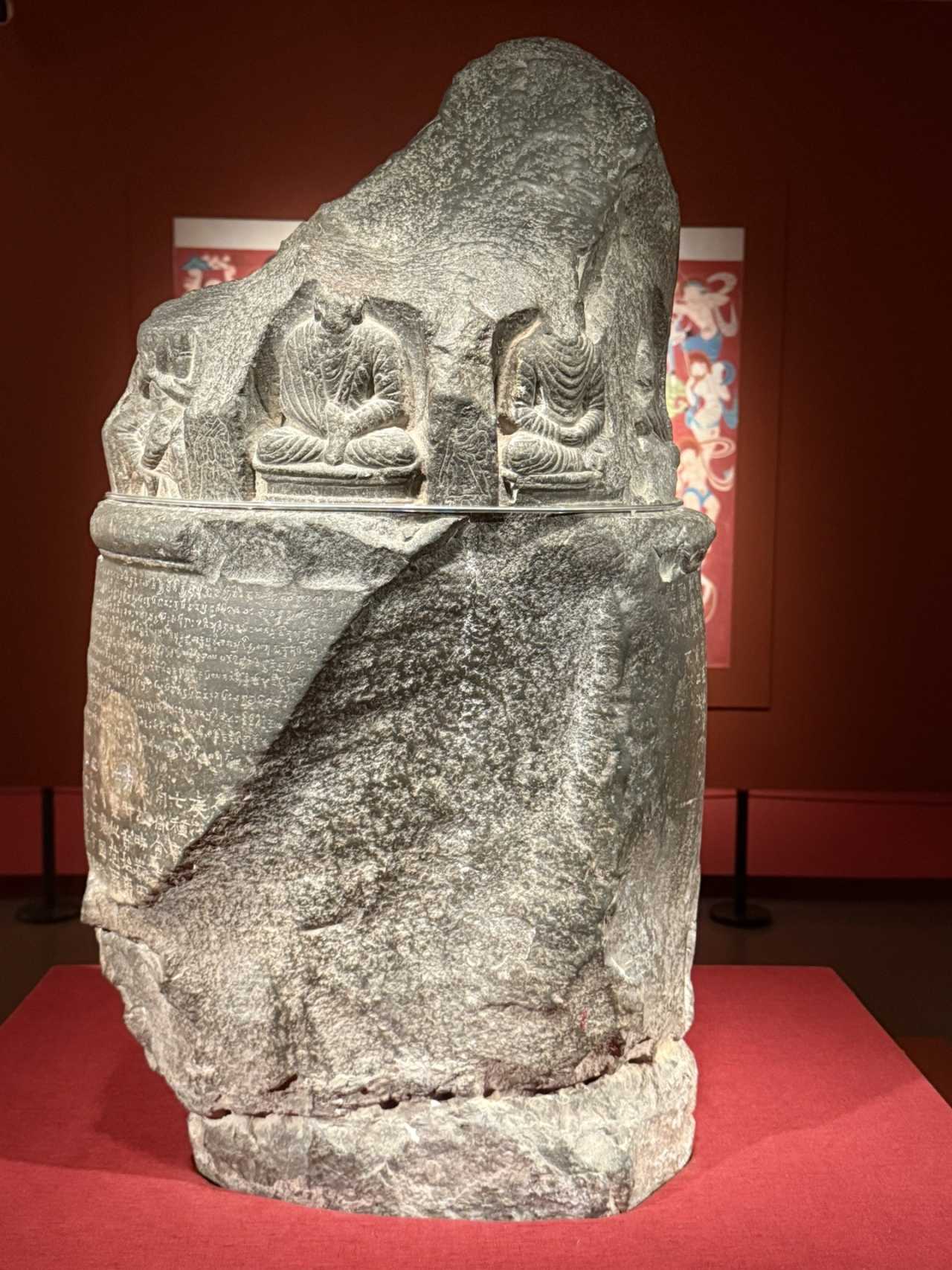
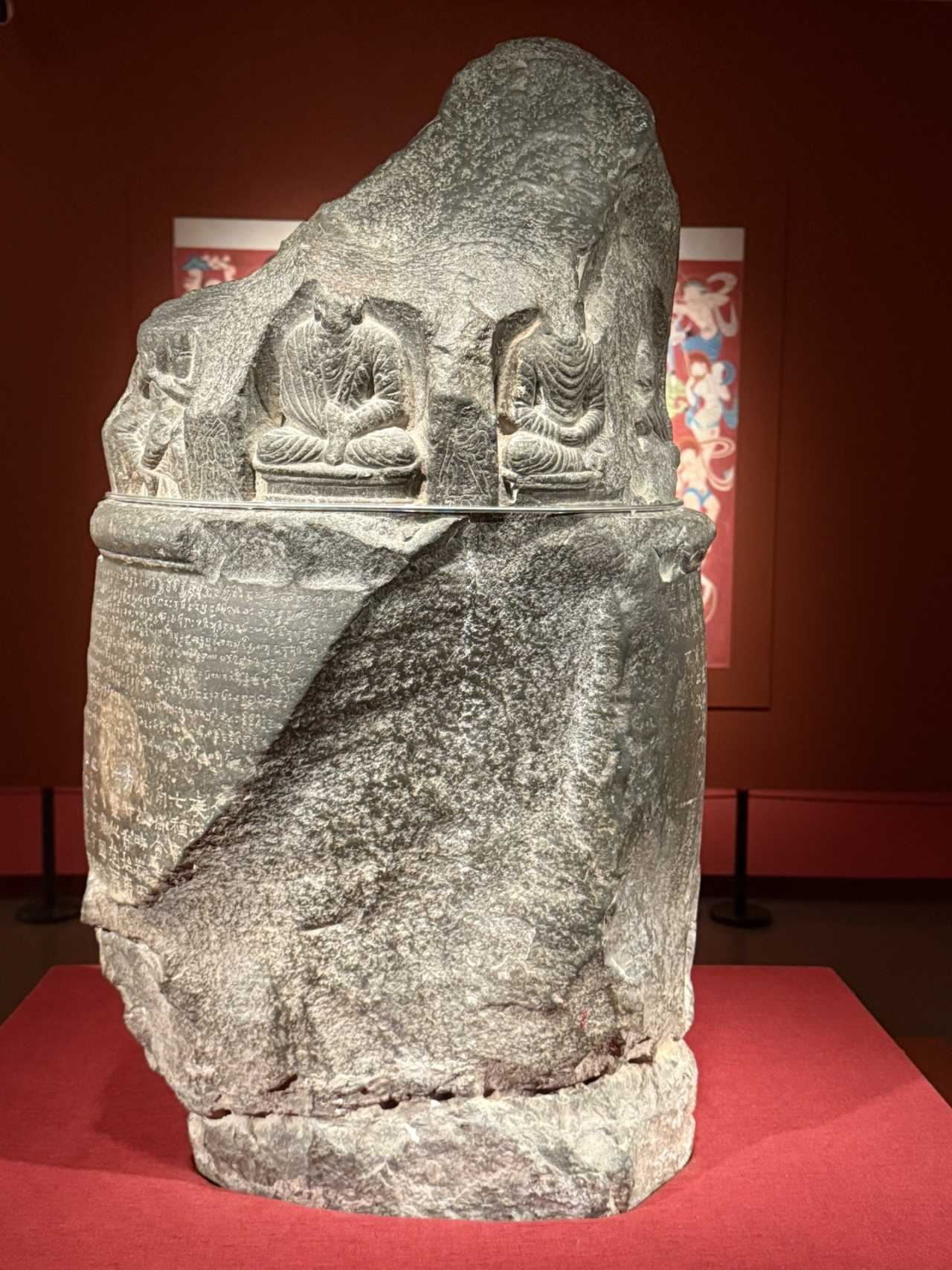
Northern Liang Stone Pagoda
This is the largest artifact in the Dunhuang Academy's collection and one of the earliest Buddhist stone pagodas in China. Its upper section features niches and seated Buddhas in relief, while the lower section is inscribed with sutras in both Chinese and Brahmi script. Its form, patterns, and inscriptions are clear evidence of Buddhism's eastward transmission and its fusion with Chinese culture.
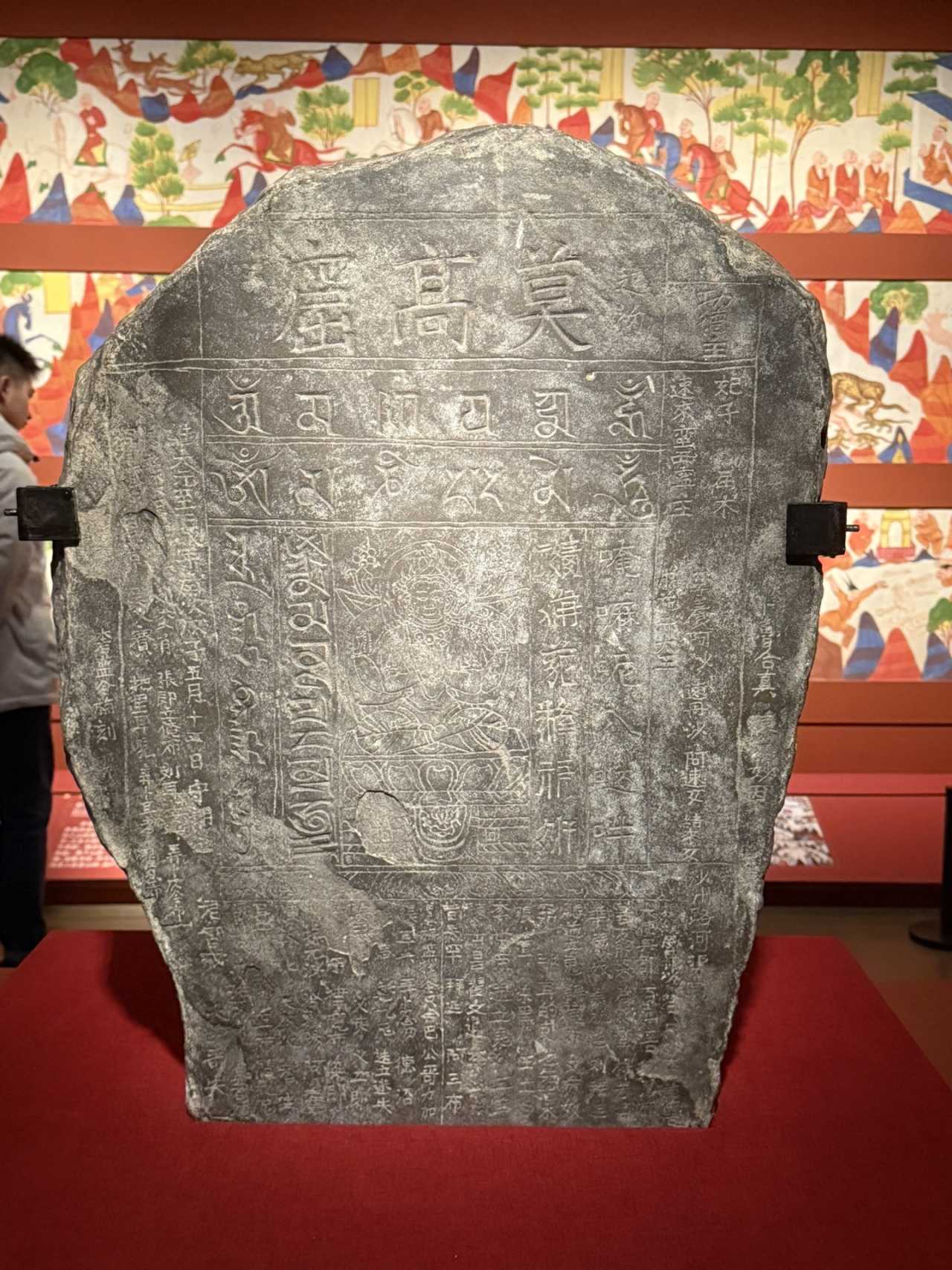
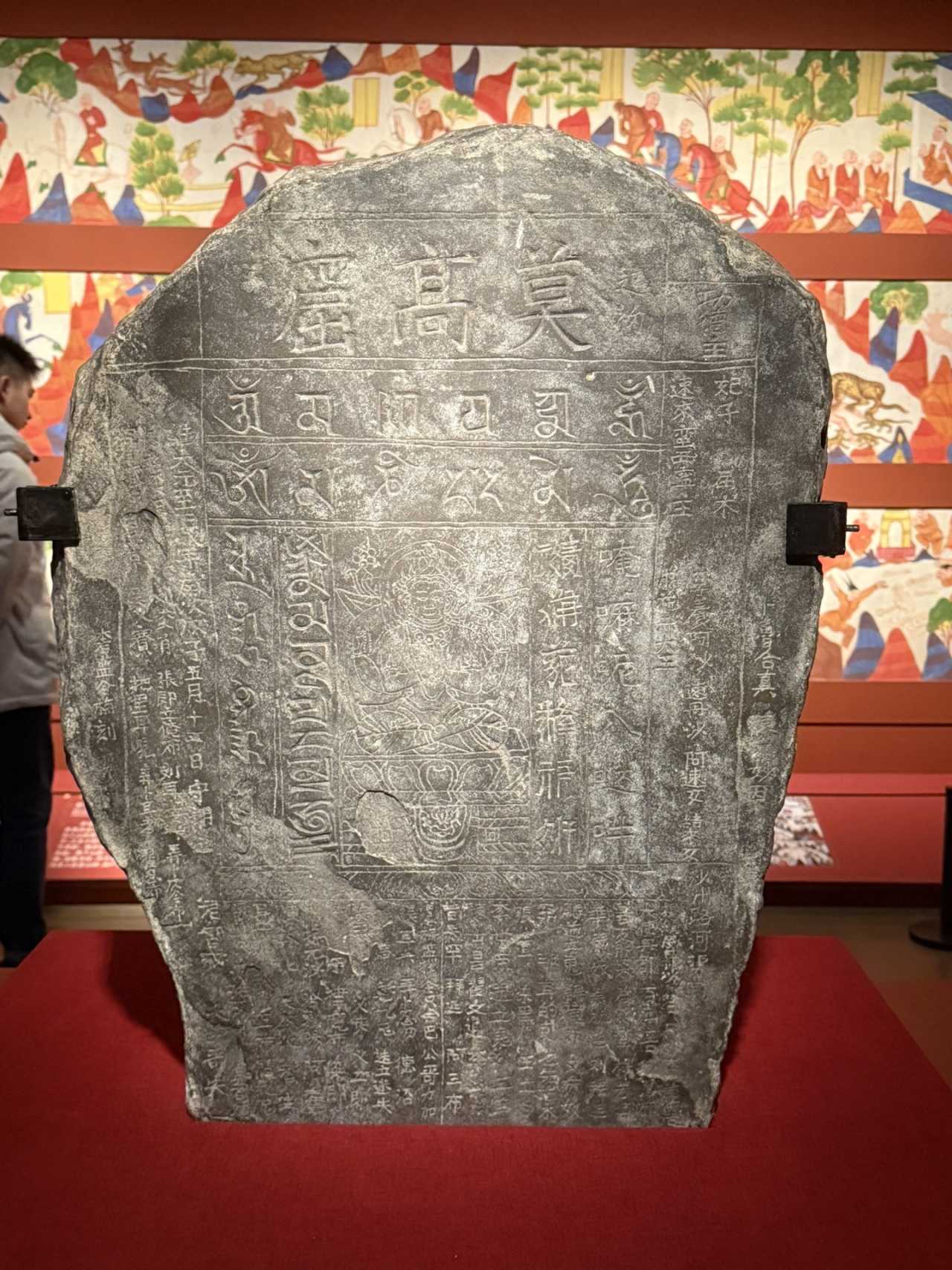
Six-Character Mantra Stele
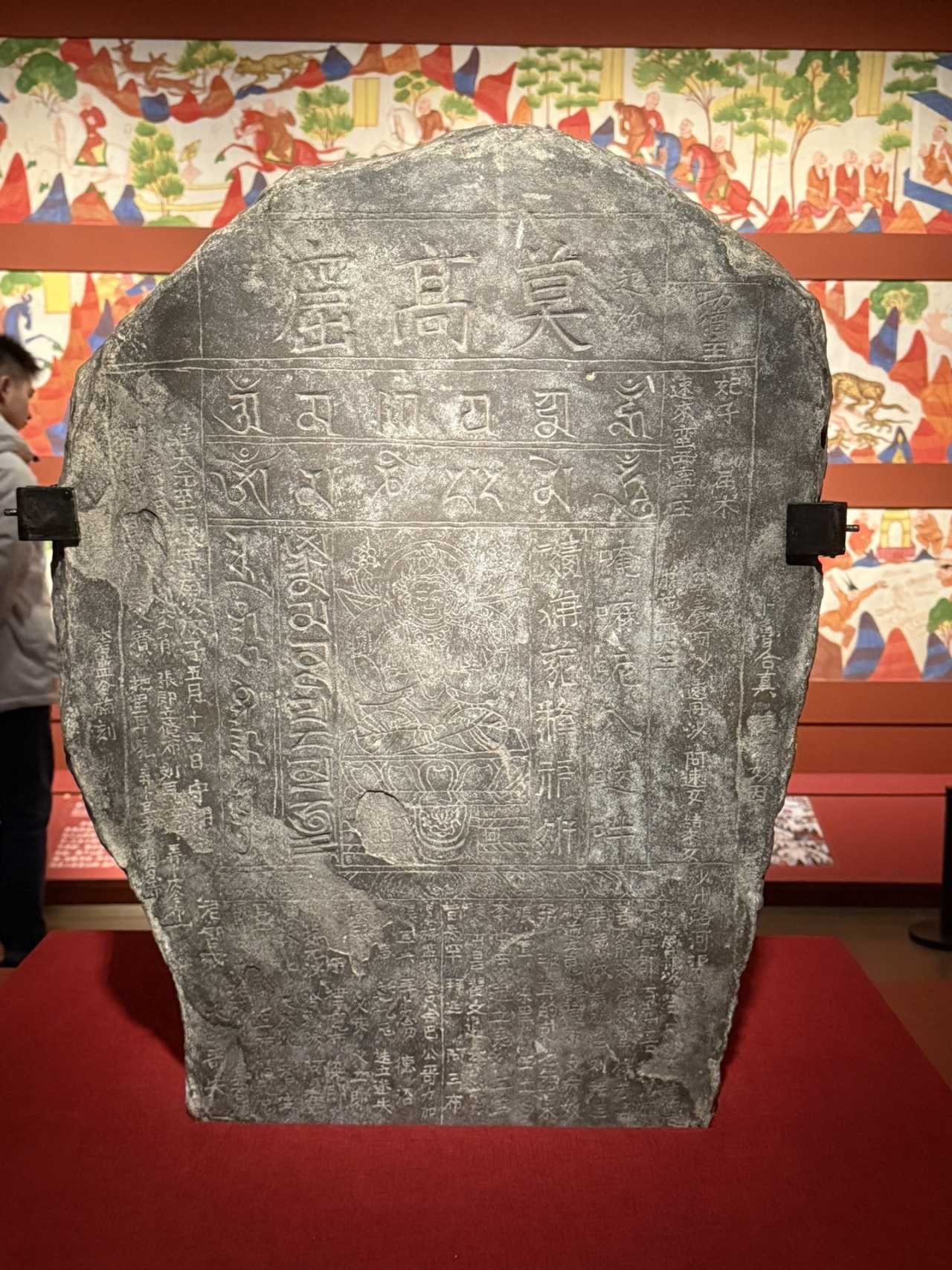
This stele bears witness to Dunhuang's cultural inclusiveness and mutual exchange. The top is engraved with the three characters "莫高窟" (Mogao Caves). At the center is a four-armed Avalokiteshvara image, surrounded by the mantra "Om Mani Padme Hum" inscribed in six scripts: Sanskrit, Tibetan, Chinese, Tangut, Mongolian, and Phags-pa. The stele also bears the Chinese names of 82 individuals, including Mongols, Han, Tanguts, and Uyghurs. This is a historical testament to the coexistence and mutual influence of multiple ethnic cultures along the Silk Road a thousand years ago.

Shengli Stele (Li Jun Mogao Caves Buddha Niche Stele)
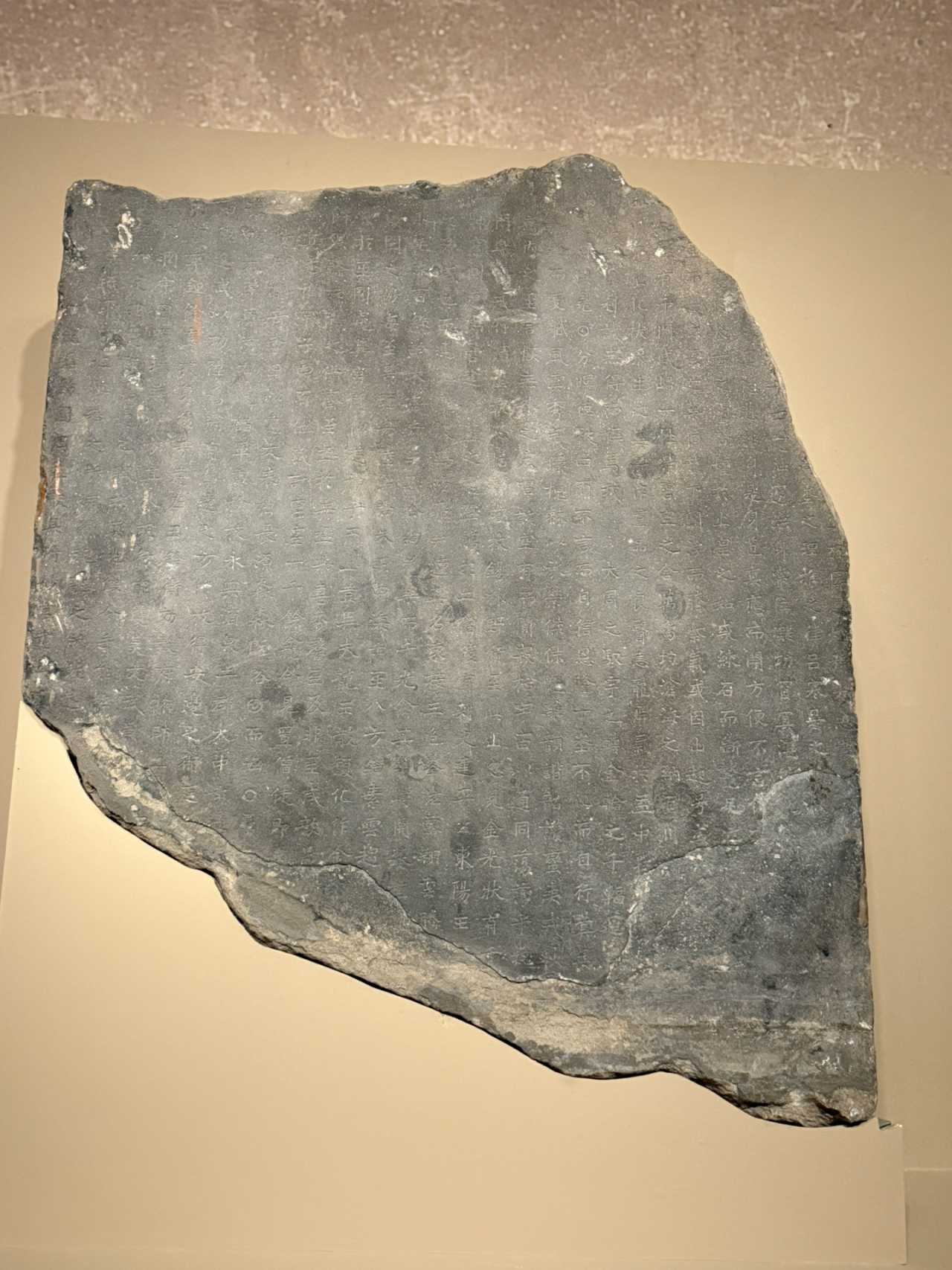
This stele confirms the date of the Mogao Caves' construction. The inscription tells us that in the second year of the Jianyuan era of the Former Qin dynasty, the monk Le Zun built one cave, followed by the monk Faliang who continued the work. While this may not definitively identify this as the very first cave of Mogao, it at least establishes that the construction of the first cave began around this time.
Northern Wei Embroidered Buddha with Donors
This is one of 195 artifacts in China that are prohibited from being exhibited abroad. This fragmentary embroidery features a Buddha, bodhisattvas, donors, and a dedicatory inscription. It is the earliest known example of a fully embroidered Buddhist icon and the earliest Buddhist embroidery work. Its unique stitching techniques, Wei stele calligraphy, figures' attire, and dedicatory text contain a wealth of historical information.
Gilded Bronze Head of Vairochana Buddha (Late Tubo Period)
Impressive in size and exquisite in craftsmanship, this piece showcases the artistic sophistication of the Tubo period.
Eleven-Headed, Eight-Armed Avalokiteshvara Wooden Statue (Northern Song Dynasty)
Carved from a single piece of poplar wood, this statue is extremely rare. Although damaged by fire, it is a remarkable survival—while many such images appear in Dunhuang murals, sculpted versions are exceptionally uncommon.
[Link: Top artifacts to see at the Why Dunhuang exhibition]
Replica Caves: A Journey Through Time and Space
The second section of the exhibition, "Caves and Pure Land," explains the cave construction process, the techniques of painted sculpture, and cave typology. It also features six life-size replica caves of classic Mogao grottoes, ranging from the Western Wei to the Late Tang dynasties.
These replicas are typically created using 3D printing technology and then hand-colored. The quality of the hand-coloring is crucial to their success. Some online commentators complained that the replicas lacked the spirit of the originals. Having never experienced the actual caves ourselves, we couldn't judge. However, we learned that another replica of Cave 285 was simultaneously on display in France.
Cave 45: A Masterpiece of High Tang Painted Sculpture
Inside the open niche on the main wall are seven bodhisattva statues: the central figure Shakyamuni, flanked by the disciples Kashyapa and Ananda, attendant bodhisattvas, and heavenly kings. Their faces, colors, and postures are superb. The murals are equally stunning: one wall depicts the "Sutra of Avalokiteshvara," with the bodhisattva at the center, the upper sides showing his thirty-three transformation forms, and the lower sections depicting scenes of his salvation from suffering. The other wall features the "Sutra of the Visualization of Amitayus," with the Western Pure Land at the center, flanked by the stories of "The Unborn Resentment" and "The Sixteen Visualizations."
Cave 285: The "Pantheon"
Called the "Pantheon" by scholar Duan Wenjie, Cave 285 was excavated during the Datong era of the Western Wei dynasty. It is the earliest cave at Mogao with a precise construction date. The four slopes of the ceiling are painted with figures from traditional Chinese mythology and Buddhist guardian deities, including the Mani pearl, vajra warriors, flying apsaras, Fuxi, Nüwa, the Thunder God, the Rain God, Hindu gods, and Western sun and moon deities.
[Link: What to expect from replica caves at Chinese art exhibitions]
Day Two: Tracing Lu Xun's Final Decade in Shanghai
After immersing ourselves in Dunhuang's ancient art, we shifted focus to modern Chinese literature. Lu Xun, often called the father of modern Chinese literature, spent his final ten years in Shanghai. His legacy is preserved in the streets and landmarks of Hongkou District.
Duolun Road: The Literary Heart of Shanghai
Duolun Road, once known as "the street of culture," was home to many of China's most influential writers and artists in the 1930s. Lu Xun lived here from 1927 to 1936, and the area remains a living museum of Shanghai's literary golden age.
Must-see spots on Duolun Road: - Lu Xun's Former Residence: A modest three-story townhouse where he wrote some of his most famous works - Shanghai Lu Xun Museum: A comprehensive museum dedicated to his life and work - Duolun Road Cultural Street: Lined with art galleries, bookshops, and cafes
[Link: Complete guide to Lu Xun's Shanghai]
Tian'ai Road and Shanyin Road: Walking in His Footsteps
These quiet, tree-lined streets offer a glimpse into the Shanghai Lu Xun knew. The architecture—a mix of Art Deco and traditional Chinese styles—has been remarkably preserved. Walking here feels like stepping back in time.
Lu Xun Park: A Final Resting Place
Lu Xun Park, formerly known as Hongkou Park, is where Lu Xun's ashes are interred. The park is a peaceful oasis in the heart of the city, featuring a memorial hall and a bronze statue of the writer. It's the perfect place to reflect on his legacy and the cultural journey you've undertaken.
Why Combine Dunhuang and Lu Xun?
At first glance, Dunhuang's ancient Buddhist art and Lu Xun's modern literary criticism seem worlds apart. Yet both represent pivotal moments in Chinese cultural history—the former as a testament to cross-cultural exchange along the Silk Road, the latter as a voice for social change in modern China. Together, they offer a comprehensive view of Chinese civilization's depth and resilience.
Frequently Asked Questions
1. How long should I spend at the "Why Dunhuang" exhibition?
We recommend at least 3-4 hours to fully appreciate the artifacts and replica caves. If you're taking a guided tour, add another 1-1.5 hours. Weekday mornings are less crowded.
2. Is the "Why Dunhuang" exhibition suitable for children?
 Yes, but younger children may find the guided tours too detailed. Consider a self-guided visit focusing on the replica caves and the most visually striking artifacts like the Northern Wei embroidered Buddha.
3. Can I visit Lu Xun's former residence and the Dunhuang exhibition in one day?
 It's possible but ambitious. We recommend dedicating one full day to the exhibition and another to the Lu Xun trail. The two locations are in different districts of Shanghai.
4. Are there English-language guides available for the Dunhuang exhibition?
Yes, but availability may vary. Check with the China Art Palace in advance or book through platforms like Ctrip or Damai. Some audio guides are also available in English.
5. What is the best time of year to visit Shanghai for this cultural walk?
 Autumn (September to November) offers mild weather and fewer crowds. Spring (March to May) is also pleasant. Avoid summer heat and winter chill if possible.
Your Next Step: Plan Your Own Cultural Journey
Shanghai is a city of layers—each street, each museum, each park tells a story that spans centuries. Whether you're drawn to the ancient caves of Dunhuang or the literary genius of Lu Xun, this cultural walk offers a unique perspective on Chinese civilization.
Ready to embark on your own journey? Start by booking your tickets for the "Why Dunhuang" exhibition at the China Art Palace, then map out your Lu Xun trail through Hongkou District. Don't forget to pack comfortable walking shoes, a notebook for reflections, and an open mind.
Share your experience: Have you visited the "Why Dunhuang" exhibition or walked in Lu Xun's footsteps? Leave a comment below with your tips and discoveries. And if you found this guide helpful, share it with fellow culture lovers planning their Shanghai adventure.
[Link: Book your Shanghai cultural tour package] [Link: Top 10 cultural attractions in Shanghai]
This article was written based on a personal visit in autumn 2024. Prices and availability may change. Please verify details with official sources before planning your trip.