The Solitary Weekend Walker: A 2-Hour CityWalk Literary Analysis and the Shanghai Relics of Eileen Chang
Meta Description: Explore Eileen Chang's Shanghai through a 2-hour CityWalk literary analysis. Discover the writer's haunted relics, from Bund to French Concession, in this SEO-optimized guide to the city's soul.
Prologue: Twilight Years, the Fragrance of Time
When I was young, I loved rummaging through our family bookcase, and I was particularly drawn to Eileen Chang.
Reading The Fallen Petal, the line "Laugh, and the world laughs with you; weep, and you weep alone" cut through me like a cold blade, slicing open my adolescent naivety about the world. Back then, I thought: there once existed a woman like this—with eyes so piercing, she could see through every pretense and affectation. In Love in a Fallen City, the line "If marriage is for mere survival, then it is nothing but long-term prostitution" was blunt, precise, and resolute, without a hint of hesitation.
Back then, I loved her audacity.
As I grew older, I still loved her. She once said, "Lonely people all have their own swamp." Who hasn't been shackled by life, struggling to make ends meet? The silent scream of loneliness gets stuck in your throat, unable to make a sound. She always seemed to prophesy the truth: we are all people accustomed to solitude, merely passing through this sea of blossoms.
In Shanghai, life is a gorgeous robe, crawling with fleas. In Shanghai, life is a thick painting, bearing witness to the passage of time.
I. Living Inside a Painting: The Glance Back at the Bund
"The mountain paths I walk were once slept on by Xu Xiake; the passes I cross were once hesitated before by the Six Kingdoms..." This passage once moved me to tears. Shanghai gives us two gifts: history and culture—the former to reflect upon the world, the latter to nourish the soul.
The people of the Bund are the elderly jazz band in the Peace Hotel, the busy figures in the late-Qing typing rooms, every solitary soul trudging through this city. If you ask whether there is feeling in this world, then this is both the beginning and the end.
Everyone carries a long list in their hearts, filled with countless beautiful things. Yet they are always tragically postponed, shelved, left to rot in the attic of time. What is really a question of courage is often mistaken for a question of time; and all that is heavy, oppressive, and unavoidable is simply called life itself.
And so we meet many people along the way. When it's time to get off the bus, even if it's hard to let go, we should be grateful, then wave goodbye. Until the surroundings grow dark, and we can no longer see clearly—first comes fear, then stillness. In that moment, you can hear the flow of air, see every step you've taken—this kind of solitude surpasses all encouragement.
The waters of the Bund are like a fish swimming in the March currents, heading south to meet the shoals. Fate is such that it's enough not to betray the other; to want to live without regret is truly difficult. All tears have a name, and the most bitter one is called regret.
The buildings of the Bund bear witness to the truth that "you may wish to buy osmanthus flowers and wine, but you are no longer the carefree youth you once were." Life always holds unexpected warmth and endless hope. Mu Dan once said, "Only then did I realize that all my efforts had merely accomplished an ordinary life." The world is always like this, always has been—Guanyin sits on the distant mountain, and poppies grow in their own fields.
II. The Flowing Suzhou Creek: A Yellowed Warmth

Life is a kind of rhythm; it needs light and shadow, left and right, sunshine and rain. The flavor lies in these twists and turns that are constant yet never violent.
Fuxin Flour Mill No. 1
In 1912, Rong Zongjing established Fuxin Mill No. 1 along Suzhou Creek, the beginning of his challenge to the great city of Shanghai. A decade later, one-third of China's flour came from his name, and the Rong family became a symbol of China's national capitalists.
Embankment Building
 "Whoever saves one life saves the world entire." When mentioning the friendship between China and the Jewish people, Shanghai is always brought up. This building was the lavish self-aggrandizement of Jewish tycoon Victor Sassoon, and it also witnessed his own redemption.
Sihang Warehouse
Every inch of mountain and river cost a drop of blood—this is the memory carved by time.
Shanghai Postal Museum
 "In the old days, time moved slowly; carriages, horses, and mail were all slow—a lifetime was only enough to love one person." Robert Hart, the most famous foreign civil servant in China, not only created an incorruptible and efficient Chinese customs service but also built the busiest postal hall in Asia a century ago.
Broadway Mansions
This was once the most luxurious hotel in Shanghai. Even after suffering the ravages of war, even as new luxury hotels spring up one after another, nothing can shake its glory. Because the bonds between China and luminaries like Einstein, Chaplin, and Bertrand Russell all began here.
Pujiang Hotel & Waibaidu Bridge
Pujiang Hotel has the most famous room in Shanghai—the one overlooking Waibaidu Bridge. And Waibaidu Bridge is, in the memory of the post-90s generation, the place where Yiping jumped into the river in the TV drama Romance in the Rain.
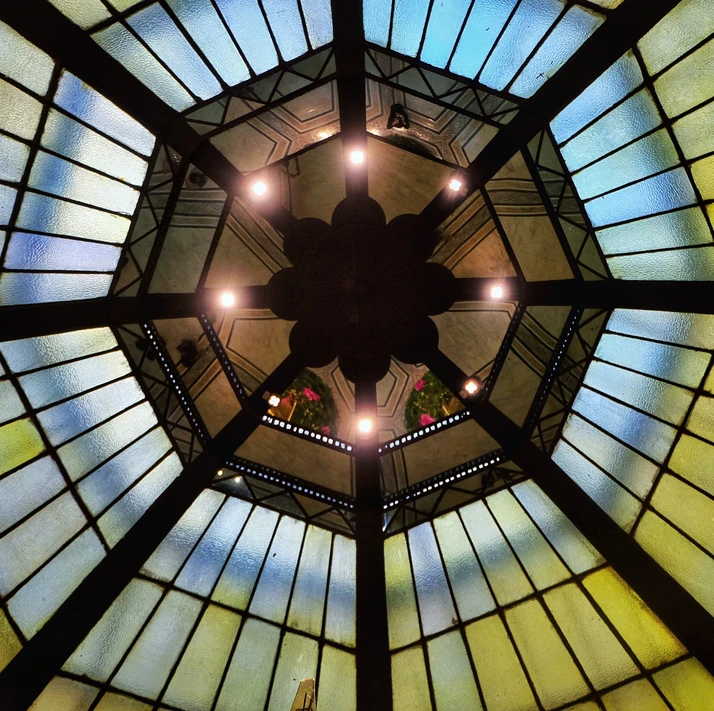
III. The Romantic French Concession: The Haze of Roses
"I truly, sincerely liked you. I thought about taking you to see the first snow at the Forbidden City every year, the coastline of Alaska..." But now, I truly don't like you anymore. The train station has fallen into disrepair, the bricks and tiles of Jiangnan are cracked, and the youthful fervor of "I won't turn back until I hit the wall" has long cooled. My apologies. Let's part ways here.
Life is like street photography: you have to go deep into every alley. Beauty doesn't lie on the surface but in the winding paths that lead to hidden places.
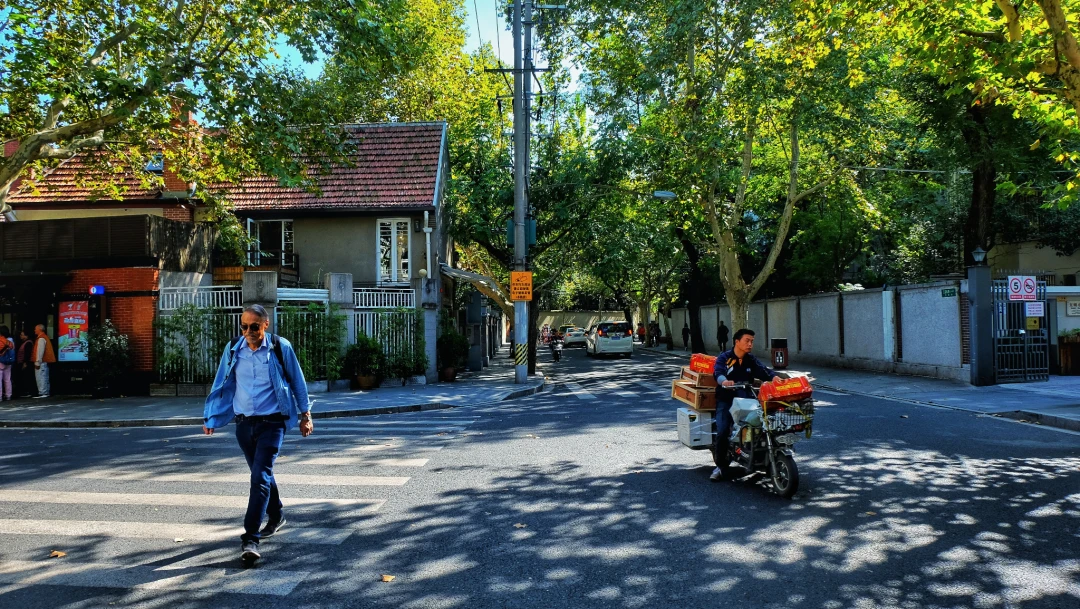
Yongfu Road, West Fuxing Road, Wuyuan Road, Wukang Road—at the end of the film Lust, Caution, after Wang Jiazhi lets Mr. Yi go, she casually hails a rickshaw, pretending nothing is wrong, and says, "To Fokaisen Road!" Here, stories always sway with the shadows of plane trees.
IV. The Passionate American Concession: The Spilling of Sunlight
You can't cry out in pain at every scratch, turn on the light every time you're afraid of the dark, reach out every time you miss someone, or empty your mind every time you're exhausted. The darkest stretches of road must be walked alone, so don't be afraid. Life is full of changes; you have to keep moving forward.
In Lu Xun Park, Lu Xun's words still echo: "I hope all Chinese youth will shake off the chill, just strive upward, and pay no heed to the words of those who are self-abandoned and defeatist. Have a bit of heat, emit a bit of light. Even if you are but a firefly, you can still shine a little light in the darkness—there is no need to wait for a torch. If there is no torch in the end, then I will be the only light."
Shanyin Road, Tian'ai Road, Duolun Road—every road has its own story.
V. On Words: Eileen Chang's Shanghai

"In a moment of looking back, I suddenly realized that all my life's efforts were merely to gain the approval of those around me. To win their praise and smiles, I anxiously forced myself into every mold, every shackle. Halfway through the journey, I suddenly discovered that I was left with only a blurred face and a road from which there was no turning back."
Even if your heart hides an ocean, what flows out are only two teardrops.
Eileen Chang's Shanghai Footprints
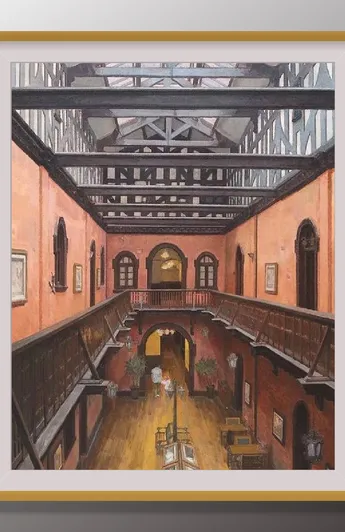
- No. 28, Lane 285, Jiangsu Road: Built in 1925. Eileen Chang's stepmother, father, and younger brother lived here successively and passed away here.
- Baolong Garden (No. 10, Lane 740, Middle Yan'an Road): A modern-style lane house built in 1930. After her parents' divorce, Eileen Chang lived here with her father and stepmother.
- Bairden Apartments (No. 213, South Shaanxi Road): Built in 1924, a neoclassical a
Frequently Asked Questions (FAQ)
1. What is the best time of year for a CityWalk literary tour in Shanghai?
The ideal months are March–May and September–November when temperatures are mild and the plane trees in the French Concession cast dappled light. Avoid summer heat and winter chill for a comfortable 2-hour walk.
2. How long does a self-guided Eileen Chang literary trail take?
 A focused 2-hour CityWalk covers key sites: Bund, Suzhou Creek, French Concession, and Chang's former residences. Add 30–60 minutes for photo stops and café breaks.
3. Are the Eileen Chang relics accessible to the public?
Most exteriors are viewable from the street. Bairden Apartments and Baolong Garden are private residences—respect occupants' privacy. The Shanghai Postal Museum and Sihang Warehouse are open to visitors.
4. Can I combine this walk with other Shanghai literary landmarks?
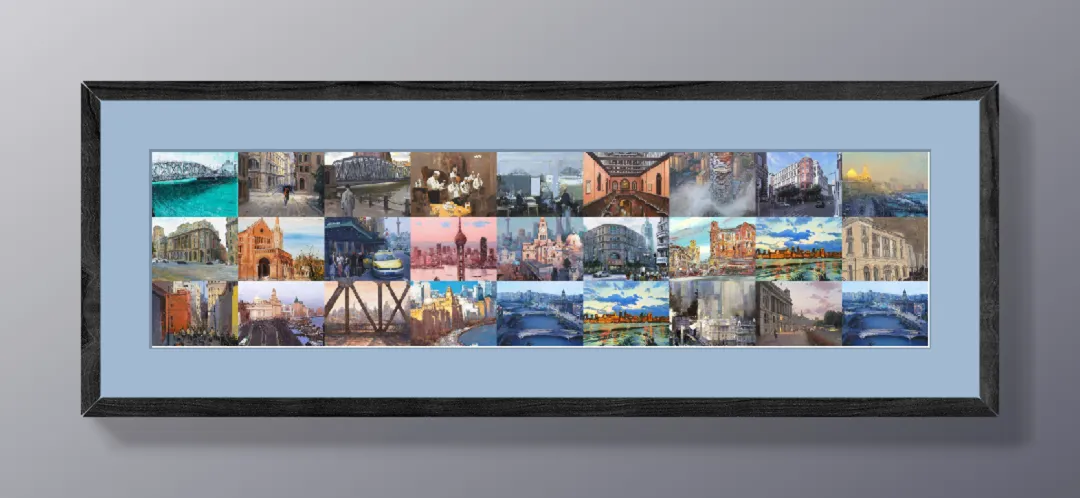 Absolutely. Consider adding Lu Xun Park and Duolun Road (American Concession) for a full-day literary itinerary. [Link: Shanghai literary walking routes]
5. What should I read before visiting Eileen Chang's Shanghai?
Start with Love in a Fallen City and The Fallen Petal for her signature tone. Lust, Caution (short story) pairs well with the French Concession section of this walk.
Call to Action: Walk Her Words. Feel Her City.
Eileen Chang's Shanghai is not a museum—it's a living, breathing map of loneliness and resilience. This 2-hour CityWalk is your invitation to trace her footsteps, hear her voice in the rustling plane trees, and see the city through her eyes.
Ready to walk? Download our free Shanghai literary map [Link: downloadable walking map PDF] and start your journey from the Bund at sunrise. Share your walk with #EileenChangCityWalk and tag us for a chance to be featured.
Your next step: Bookmark this guide. Lace up your walking shoes. Let the solitude of Shanghai's relics speak to you.
"Laugh, and the world laughs with you; weep, and you weep alone." — Eileen Chang
Internal Linking Suggestions: - [Link: Shanghai literary walking routes] - [Link: Best time to visit Shanghai for cultural tourism] - [Link: Eileen Chang biography and works] - [Link: French Concession architecture guide] - [Link: Bund history and landmarks]
You may also like