Rodin: The Hinge of Modern Sculpture – A Century of Artistic Dialogue in Shanghai
Meta Description: Explore "Rodin: The Hinge of Modern Sculpture" at Shanghai Rodin Art Center. Discover how the father of modern sculpture bridges classicism and modernity in this landmark exhibition.
If you think you know Rodin, think again. The father of modern sculpture is not just the creator of The Thinker or The Kiss. He is the hinge—the pivotal point—where 19th-century classicism pivots into 20th-century modernism. And now, for the first time in China, over 100 authentic works have landed in Shanghai, transforming the former French Pavilion of the 2010 World Expo into a temple of bronze, marble, and plaster.
This is not just an exhibition. It is an artistic dialogue across a century.
What is the Rodin: The Hinge of Modern Sculpture Exhibition?
The exhibition Rodin: The Hinge of Modern Sculpture is a comprehensive, two-year showcase at the Shanghai Rodin Art Center, running from September 28, 2024, to September 27, 2026. It features over 100 authentic works by Auguste Rodin, including six French national treasures. The title’s French word "Charnière" (meaning hinge or pivot) perfectly captures Rodin’s role as the bridge between classical tradition and modern artistic expression.
The Building: From World Expo French Pavilion to Rodin Art Center
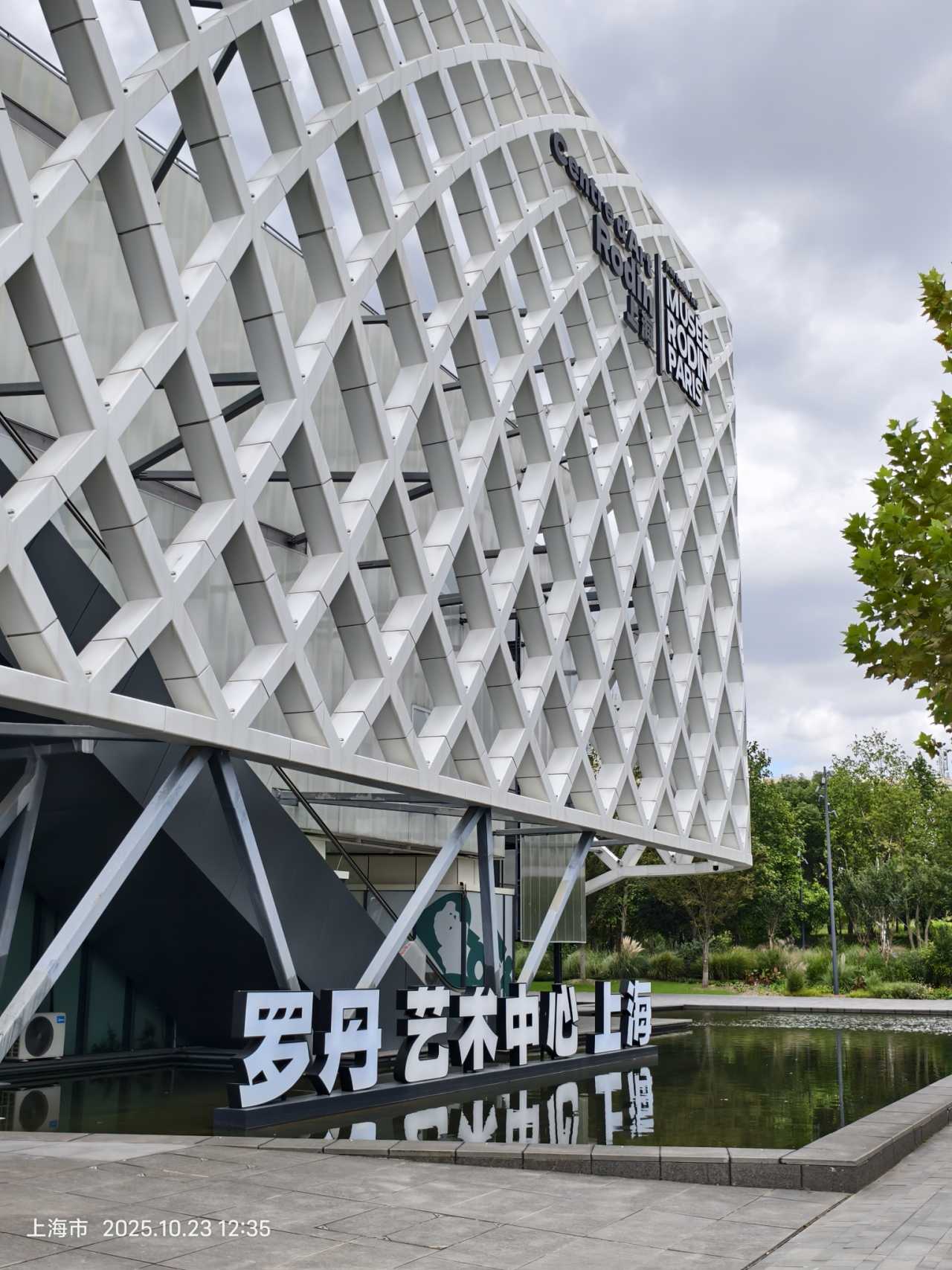
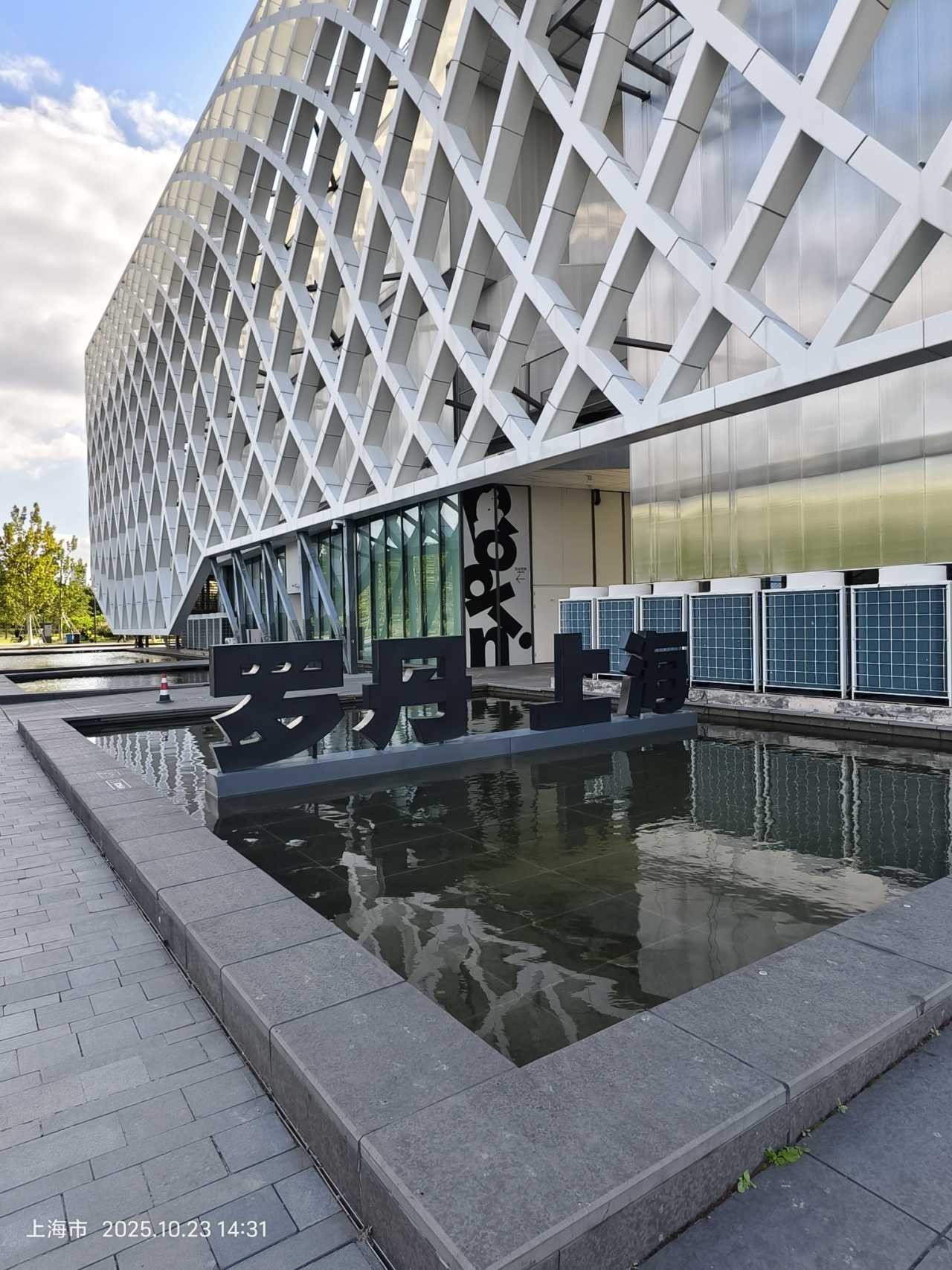
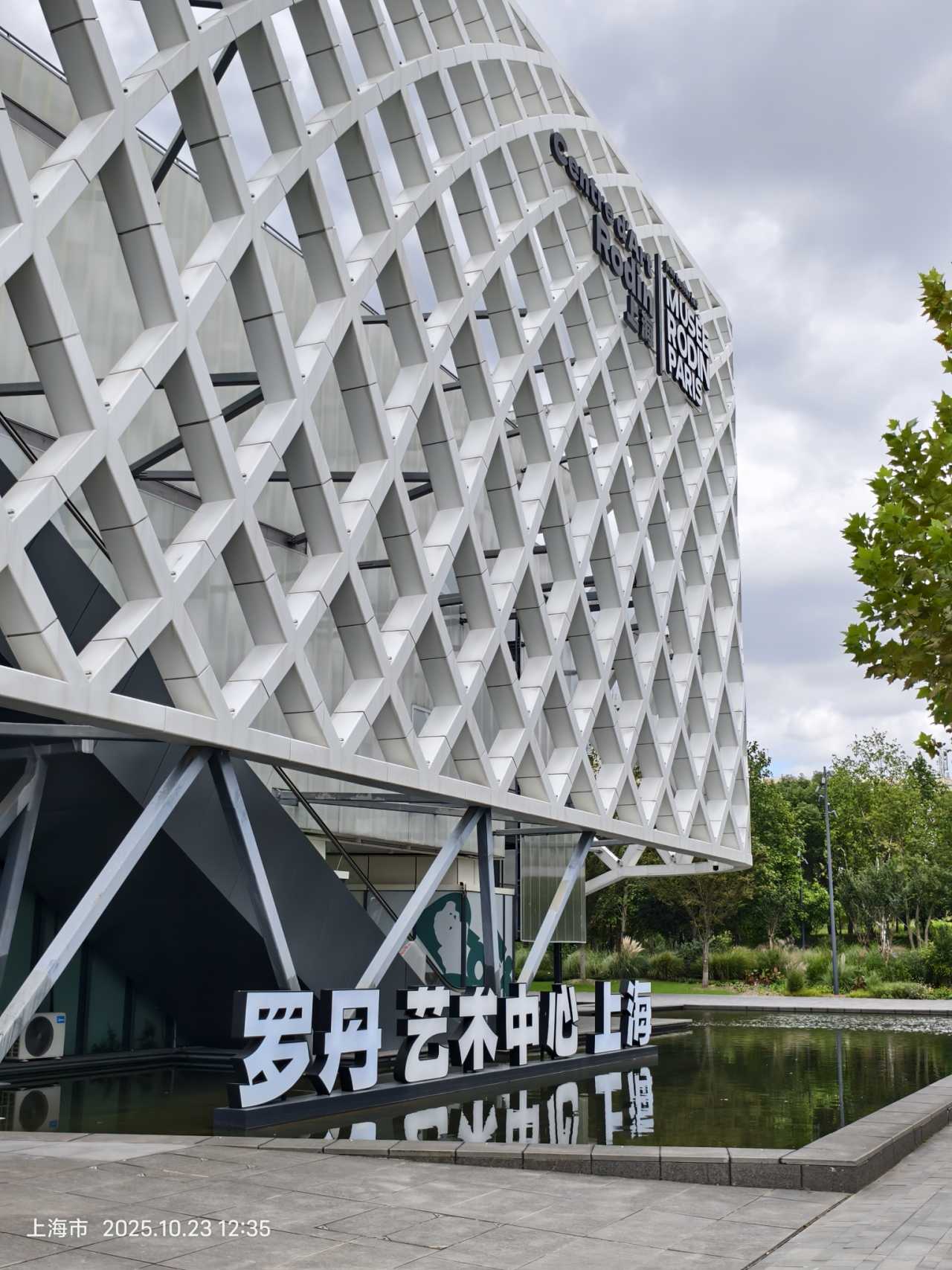
The venue itself tells a story of transformation. Spanning over 8,000 square meters with 4,200 square meters of exhibition space, this art sanctuary was originally the French Pavilion during the 2010 Shanghai World Expo, themed around the "Sensual City." Fifteen years later, it has been reborn as the only overseas authorized art center of the Musée Rodin in France.
On a world map of Rodin’s legacy, two red markers stand out: one points to the Musée Rodin in Paris and Rodin’s former home in Meudon; the other points right here—Shanghai.
[Link: Shanghai Rodin Art Center – Visitor Guide]
Why is Rodin Called the Father of Modern Sculpture?
Auguste Rodin (1840–1917) is regarded as one of the "Three Great Peaks of Western Sculpture," alongside the ancient Greek master Phidias and the Renaissance giant Michelangelo. But Rodin’s greatness lies not in his inheritance of classicism—it lies in his transcendence of it.
Born to an ordinary office worker’s family in Paris, Rodin applied three times to the prestigious École des Beaux-Arts—and was rejected each time. Fate, however, had other plans. He turned to sculpture, studying under Albert-Ernest Carrier-Belleuse, and entered his studio in 1864. From there, he embarked on a career that would upend the art world.
Rodin’s relentless pursuit of truth and nature, combined with his groundbreaking techniques and sculptural language, broke free from Neoclassical conventions. Together with his students Antoine Bourdelle and Aristide Maillol, he formed the "Three Pillars" of European sculpture—and he himself is honored as the "Father of Modern Sculpture."
Six Chapters, Two Special Sections: A Complete Artistic Journey
The exhibition is divided into six main chapters and two special sections, mapping Rodin’s career from his early apprenticeship to his creative peak and later reflection.
Chapter 1: A New Era, A New Form
This chapter transports visitors to the Second French Empire (1852–1870). At age 14, Rodin entered the Royal School of Drawing and Mathematics to study drawing before shifting to sculpture. His teacher, Carrier-Belleuse, was one of the most representative sculptors of the era, contributing to the Tuileries Palace, the Louvre Museum, and the Paris Opera.
Key works include Young Woman with Braids, Female Bust, Love, and Bacchante. Interestingly, art historical research reveals that Young Woman with Braids, though signed by Carrier-Belleuse, is actually Rodin’s work. This terracotta sculpture depicts a young woman with a peaceful, introspective expression—quite different from the seductive female figures Carrier-Belleuse typically created. It hints at the budding of Rodin’s early artistic individuality.
Special Section: Rodin’s World Map
One special section features a world map showing the global distribution of Rodin’s works. Black markers indicate museums worldwide that hold Rodin collections, while two red markers stand out: one in France (Musée Rodin and Rodin’s former home in Meudon), and the other—right beneath your feet—the Shanghai Rodin Art Center.
This is the only art institution authorized by the Musée Rodin in France to hold a systematic collection of over 100 authentic works. Its existence saves Chinese audiences the long journey abroad to admire Rodin’s masterpieces.
Core Exhibits: Masterpieces That Stir the Soul
Every core exhibit in this show is worthy of long, thoughtful contemplation.
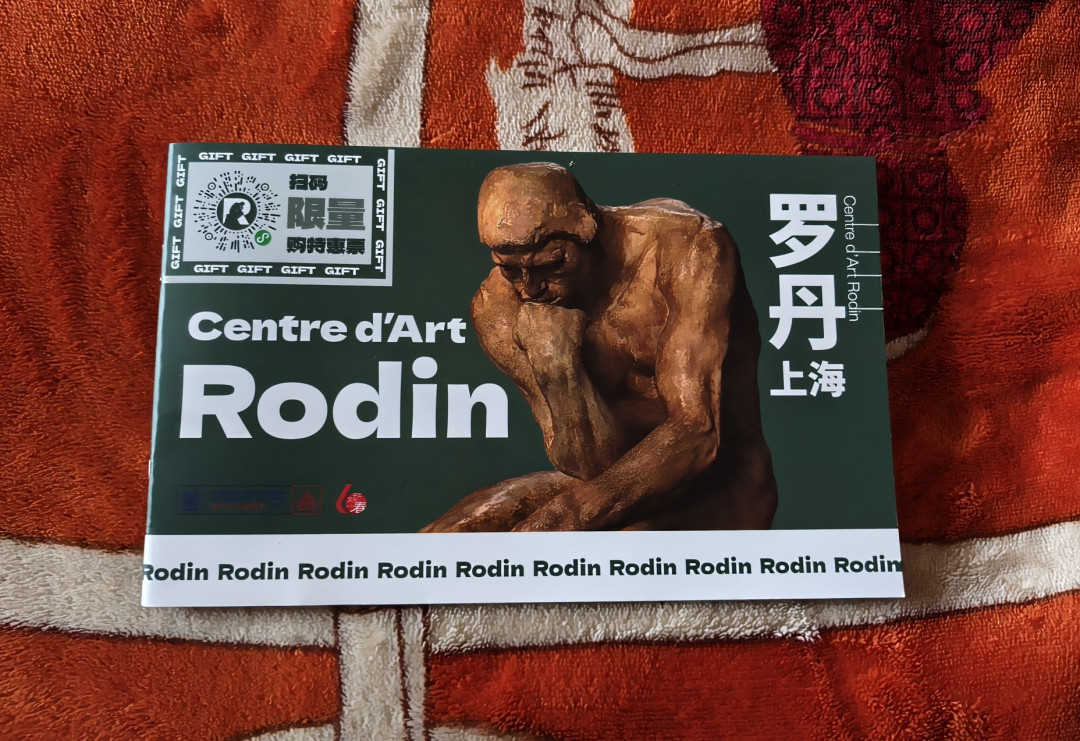
The Thinker – Original Maquette
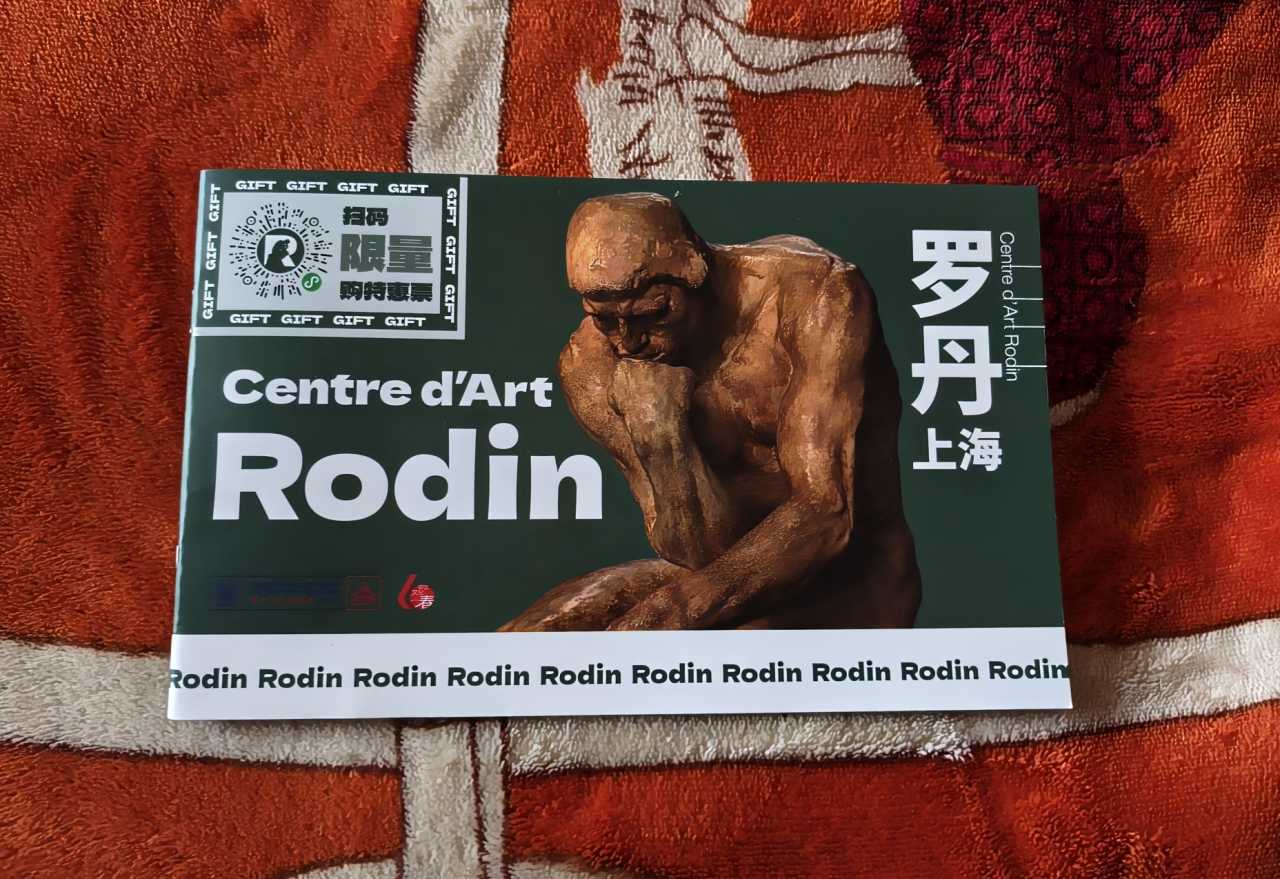
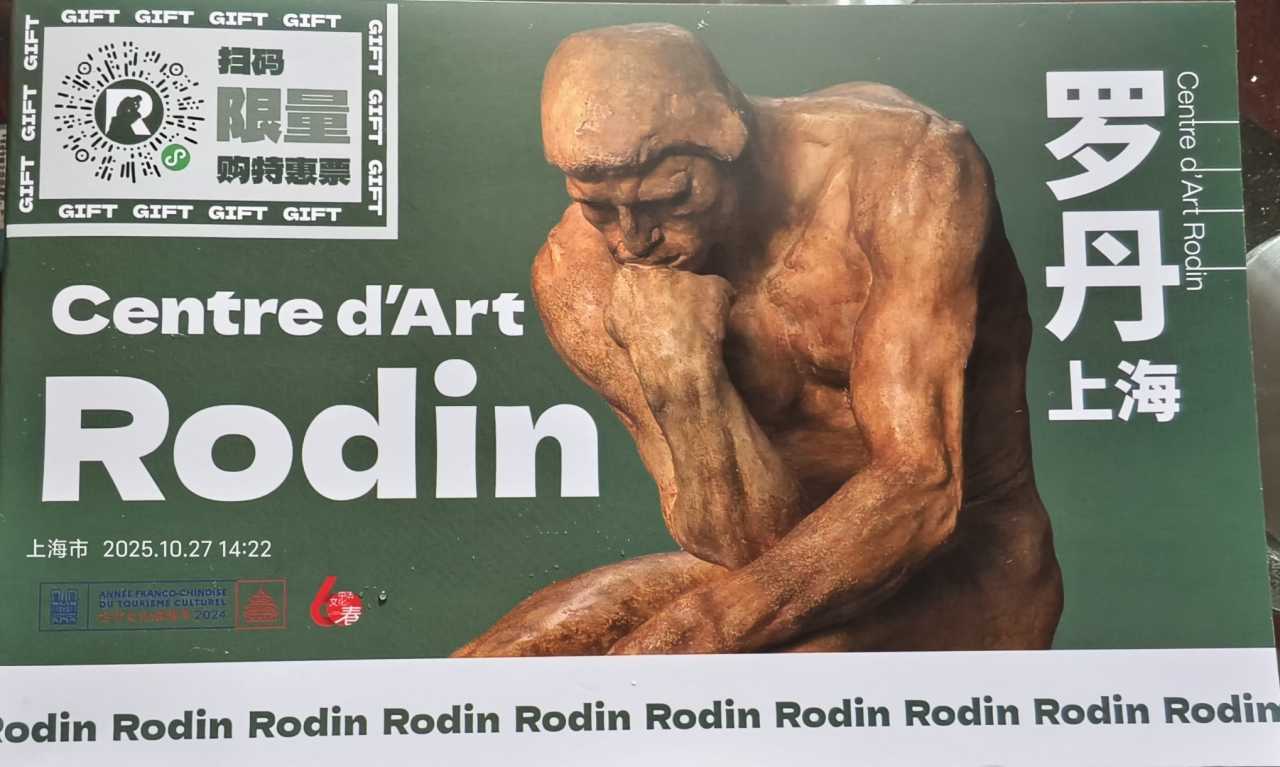
Originally created to decorate the lintel of The Gates of Hell, The Thinker was initially titled The Poet. It depicts Dante, the great poet who wrote The Divine Comedy. Through Dante’s image, Rodin expresses humanity’s power of introspection and the resolve to transform suffering through poetry. The version on display is the original maquette—a 72-centimeter-tall colored plaster sculpture—and it is leaving France for the first time.
The Age of Bronze
Created between 1876 and 1877, The Age of Bronze was Rodin’s work following his return from Italy. During his travels, he carefully studied the works of Donatello and Michelangelo, drawing deep inspiration. This piece, with its precise anatomical accuracy and natural, dynamic pose, announced the arrival of a sculptural master.
The Burghers of Calais and Balzac

The Burghers of Calais tells the story of six citizens of Calais who voluntarily offered their lives to save their city during the Hundred Years’ War in 1347, capturing human courage and tragedy. Balzac, a statue of the literary giant Honoré de Balzac, challenged public aesthetic sensibilities with its rough, vibrant form.
The Gates of Hell
This monumental project, begun in 1880 and continued until Rodin’s death in 1917, contains 186 figures inspired by Dante’s Divine Comedy. It represents the culmination of Rodin’s artistic thought.
Special Exhibit: Louis Mascré’s Stone Portrait of Rodin
The exhibition also features a special piece—Louis Mascré’s Stone Portrait of Rodin, created in 1919. Mascré was Rodin’s student, assistant, and employee, studying under and assisting Rodin from 1893 to 1910.
Rodin Sculpture Techniques: What Made Him Revolutionary?
Rodin’s revolutionary approach included:
- Rough, unfinished surfaces: He left tool marks visible, challenging the polished perfection of Neoclassicism.
- Fragmentation: He often isolated body parts (hands, torsos) as complete works, breaking the tradition of whole-figure sculpture.
- Emotional realism: He captured raw human emotion—suffering, passion, introspection—rather than idealized beauty.
- Dynamic poses: His figures twist, stretch, and contort, conveying movement and inner turmoil.
These techniques directly influenced 20th-century modernists like Henry Moore, Alberto Giacometti, and Louise Bourgeois.
Modern Sculpture History: Rodin’s Lasting Influence
Rodin’s legacy extends far beyond his own works. As the "hinge" of modern sculpture, he:
- Inspired Expressionism: His emotional intensity paved the way for artists like Ernst Barlach.
- Influenced Abstract Sculpture: His focus on form over narrative anticipated abstract movements.
- Transformed Public Monuments: The Burghers of Calais broke the tradition of heroic, single-figure monuments.
- Empowered Future Generations: His students Bourdelle and Maillol became pillars of European sculpture in their own right.
Shanghai Art Exhibitions 2025: Why This One Matters
The Shanghai Rodin Art Center is the only overseas authorized art center of the Musée Rodin. This means that for the first time, Chinese audiences can experience a systematic, comprehensive presentation of Rodin’s artistic evolution without traveling to Paris.
The exhibition runs from September 28, 2024, to September 27, 2026—with six French national treasures extending their stay until March 26, 2026. Such commitment and generous time frame make this one of the most significant Shanghai art exhibitions in recent years.
[Link: Musée d’Orsay Exhibition at Shanghai Museum of Art]
FAQ: Everything You Need to Know About the Rodin Exhibition
Q1: How long is the Rodin exhibition in Shanghai?
The exhibition runs from September 28, 2024, to September 27, 2026. Six French national treasures will remain on display until March 26, 2026.
Q2: Where is the Shanghai Rodin Art Center located?
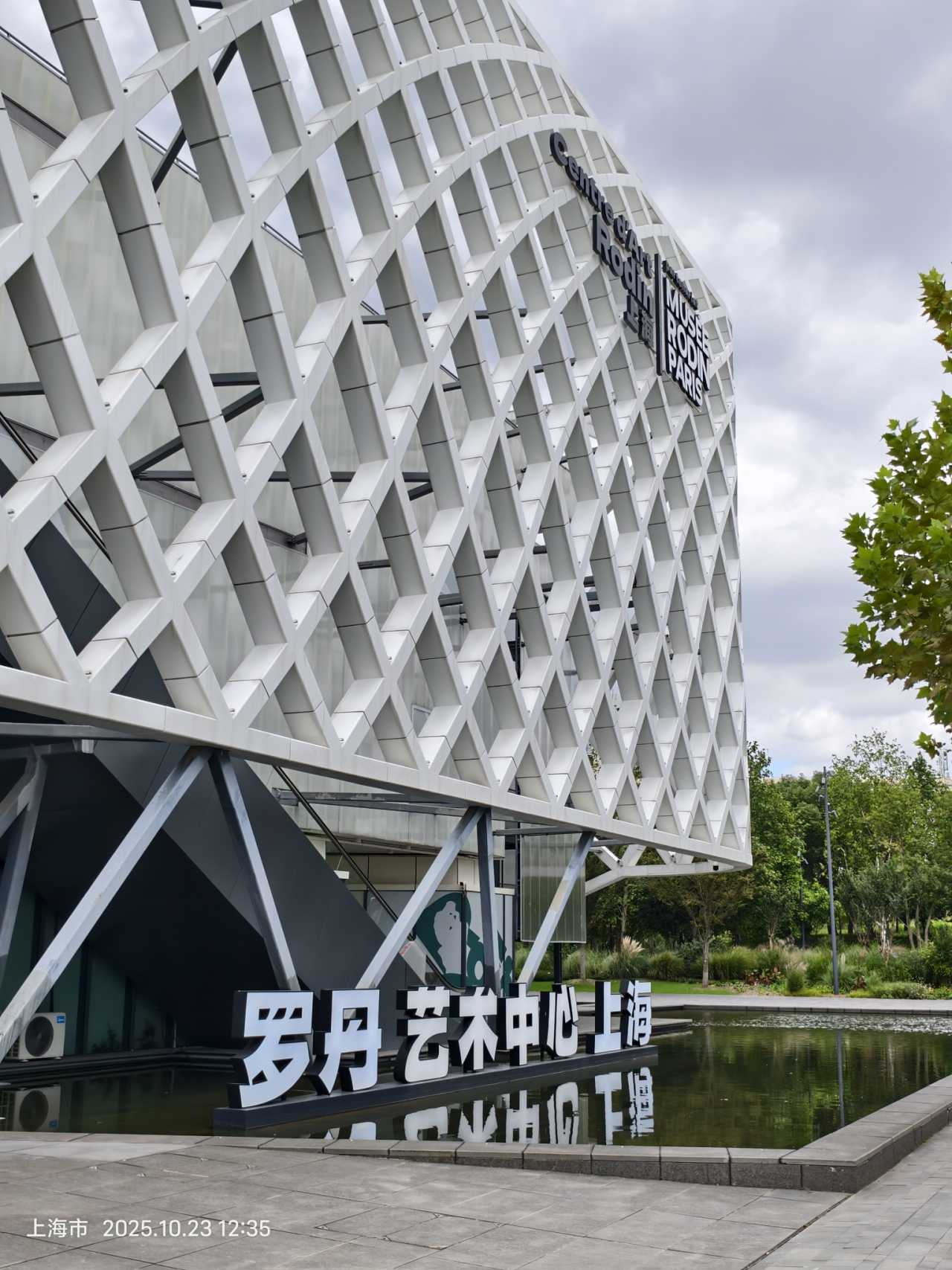
It is located at 1929 Expo Boulevard, Pudong, Shanghai—the former French Pavilion of the 2010 Shanghai World Expo.
Q3: How many authentic Rodin works are on display?
Over 100 authentic works are on display, including sculptures, drawings, and archival materials.
Q4: Is the original The Thinker on display?
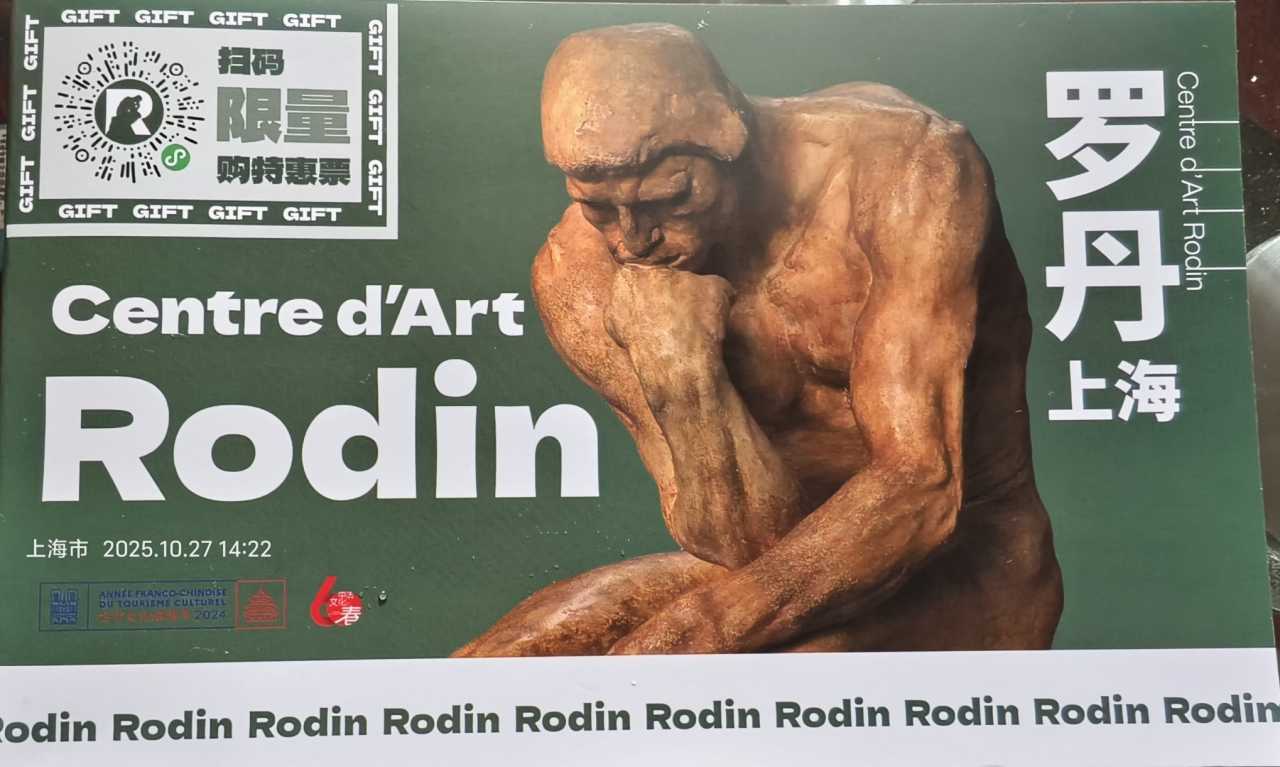
Yes, the original maquette of The Thinker—a 72-centimeter-tall colored plaster sculpture—is on display. It is leaving France for the first time.
Q5: Can I buy tickets at the door?
It is recommended to purchase tickets online in advance, especially during peak seasons and holidays. Check the official Shanghai Rodin Art Center website for pricing and availability.
Conclusion: Your Invitation to Witness History
Rodin once said, "There is no lack of beauty in the world—only a lack of eyes to see it."
Now, those eyes have a destination. The Shanghai Rodin Art Center offers a rare, once-in-a-decade opportunity to stand face-to-face with the works that changed sculpture forever. Whether you are an art enthusiast, a student of modern sculpture history, or simply someone seeking beauty and meaning, this exhibition will leave an indelible mark on your soul.
Don’t wait until the last moment. Plan your visit today. Book your tickets. Step into the hinge of modern sculpture—and let Rodin’s genius speak to you across a century.
[Link: Book Tickets – Shanghai Rodin Art Center]
Article by an SEO content strategist. Sources: Shanghai Rodin Art Center, Musée Rodin, and the original article on Mafengwo.