Raise a Glass to Your True Self: Exploring the World's Largest Starbucks Reserve Roastery in Shanghai
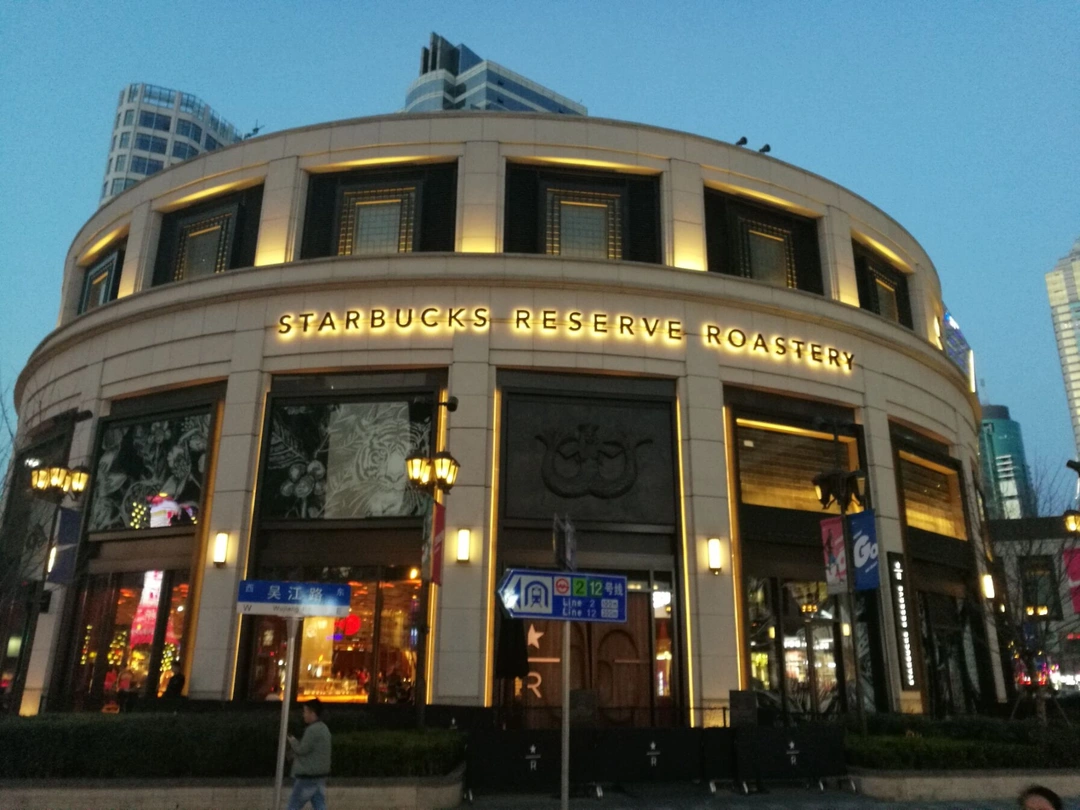
Meta Description: Discover Shanghai's Starbucks Reserve Roastery—the world's largest at 2,700 sqm. Explore coffee culture, seven brewing methods, and a copper cask with 1,000 Chinese seals. Plan your visit today.
Introduction: A Coffee Pilgrimage in the Heart of Shanghai
As night falls and the neon lights of West Nanjing Road begin to glow, the兴业太古汇 (HKR International Taikoo Hui) remains a bustling epicenter of Shanghai's vibrant energy. But hidden within this urban landscape lies a door that leads to something extraordinary—not just another coffee shop, but a 2,700-square-meter "Coffee Fantasyland." This is the world's largest Starbucks Reserve Roastery, a must-visit destination for coffee enthusiasts, travelers, and anyone seeking an immersive sensory experience.
Whether you're a devoted Starbucks collector or a curious first-timer, this Shanghai landmark transforms a simple cup of coffee into a journey—from raw bean to liquid art. In this guide, we'll explore why this roastery is a pilgrimage site, what makes it unique, and how you can plan your visit.
[Link: Best coffee shops in Shanghai for digital nomads]
From 3,000 Stores to a "Cathedral of Coffee"
Starbucks' growth in China has been nothing short of remarkable. With over 3,000 stores across 130+ cities, the brand has become a household name. Among these, Shanghai shines brightest—boasting more than 600 locations, making it one of the most Starbucks-dense cities globally.

But among those thousands of stores, the Shanghai Reserve Roastery stands alone. It is not merely a place to grab a latte; it is an immersive coffee experience that blends art, technology, and culture. When you push open those doors, you're greeted not just by the aroma of freshly roasted beans, but by a complete narrative—a journey from coffee cherry to cup.
[Link: Starbucks Reserve vs. regular Starbucks: What's the difference?]
Stepping into the "Coffee Fantasyland": A Feast for the Senses
The Copper Cask with Chinese Flair: Tradition Meets Modernity
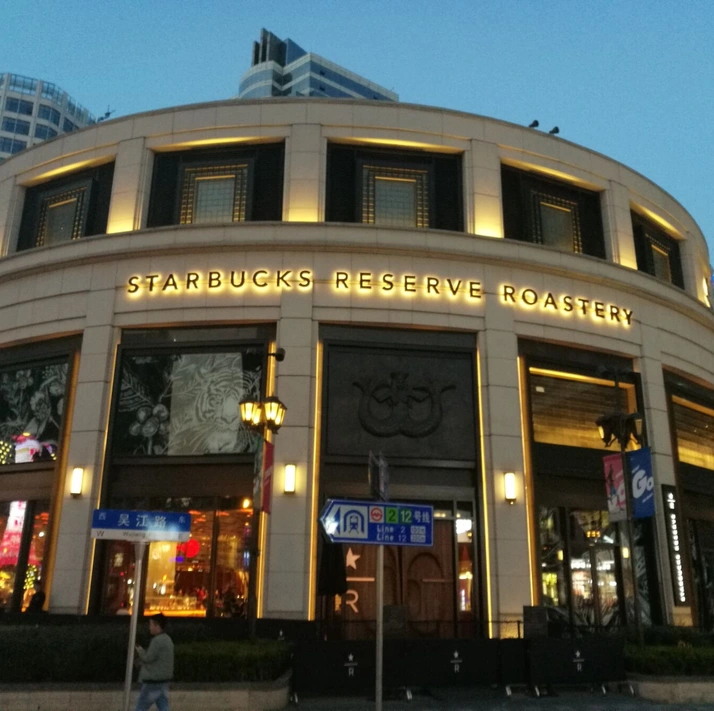
Upon entering, your eyes are immediately drawn to a towering two-story copper cask—twice the size of its counterpart at Starbucks' birthplace in Seattle. But what makes this cask truly breathtaking is its Eastern aesthetic. Over 1,000 traditional Chinese seals and seal-script motifs adorn its surface, each hand-engraved with stories of Starbucks and coffee. From oracle bone script to small seal script, from auspicious patterns to coffee bean shapes, these seals narrate a cultural dialogue that transcends time.
This isn't just a container for storing beans—it's a work of art that symbolizes the fusion of Chinese and Western culture. It reminds us that while coffee originated in the West, it is being imbued with entirely new meaning here in China.
The "Coffee Symphony Pipes": When Coffee Beans Play an Orchestra
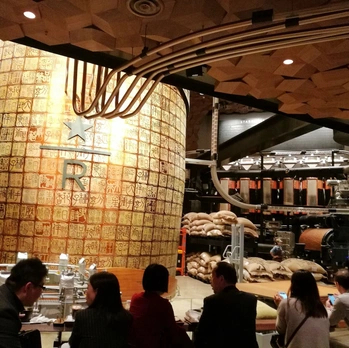
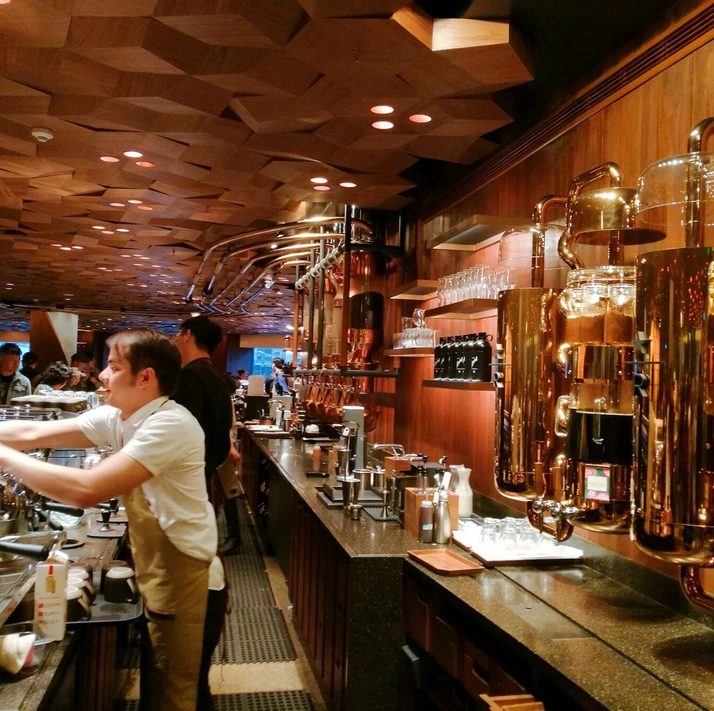
Look up, and you'll see the "Coffee Symphony Pipes" winding across the ceiling like roller coaster tracks. These pipes extend from the roasting area to the retail section, forming graceful arcs that transport roasted beans from the copper cask to finished-bean storage tanks.
But the most captivating element isn't visual—it's auditory. As coffee beans tumble and collide within the pipes, they produce sounds reminiscent of an orchestra: now crisp and clear, now deep and resonant. It's as if the beans themselves are playing a hymn dedicated to coffee.
Beside the copper cask, a digital sign displays the day's selection of Reserve coffee beans—premium beans sourced from around the world, undergoing their magnificent transformation here.
The Main Bar: Starbucks' Largest "Coffee Stage" Ever
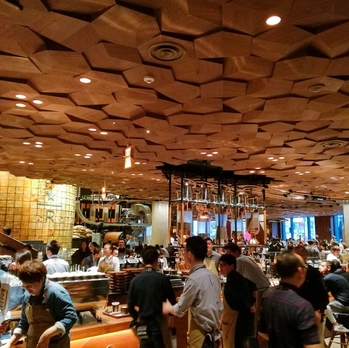
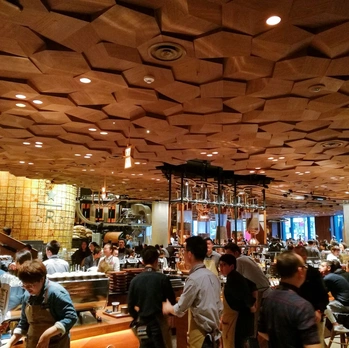
The main bar on the first floor is the largest bar Starbucks has ever built. Rumor has it that even at a full sprint, it takes 24 seconds to run from one end to the other. This bar is not only a stage for baristas to showcase their skills but also a starting point for coffee lovers to explore the world of flavor.
Here, you can experience seven different brewing methods:
- Siphon: Watch as water and coffee grounds merge under vacuum pressure—a chemistry experiment in action
- Vacuum Filtration: Precisely controls extraction time for every drop of water
- Precision Pour-Over: Technology replicates the delicacy of hand-poured coffee
- Cold Brew: Slow extraction at low temperatures preserves the purest flavors
- Espresso: The classic of classics—concentrated coffee, concentrated life
- Elegant Hand Pour: Each cup is an intimate conversation between barista and bean
- Nitro Cold Brew: Nitrogen and cold brew collide for a velvety, beer-like texture
Cold Brew and Nitro: A Dual Upgrade for Eyes and Palate
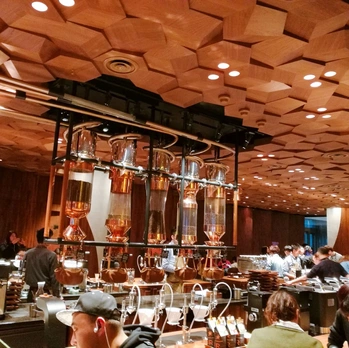
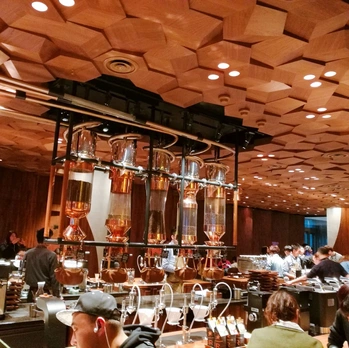
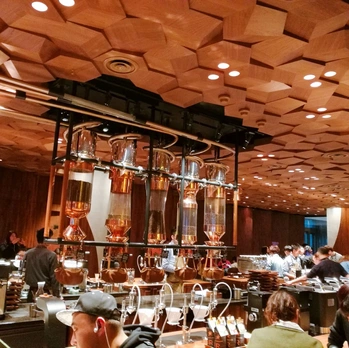
If you've seen built-in cold brew machines at other Reserve stores, the version here will blow your mind. On the left, cold brew coffee; on the right, nitro cold brew—but the visual impact is elevated to a whole new level. Inside transparent containers, the coffee swirls and settles under nitrogen pressure, creating a waterfall-like spectacle. Multiple coffee varieties are prepared simultaneously, greatly expanding your choices—you can sample different flavors in one visit and appreciate their subtle differences.
[Link: How to order cold brew like a pro at Starbucks]
The Second-Floor Perspective: The Complete Journey from Bean to Cup
Head upstairs to the second floor, and you can overlook the entire roasting area. From imported raw beans in burlap sacks to the finished roasted beans, the whole process unfolds before your eyes. Roasters work with focused intensity, cutting open bags of green beans from around the world, feeding them into the production line, and then roasting them.
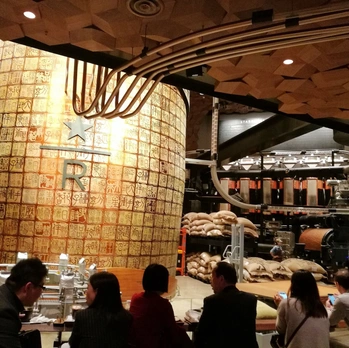
The most eye-catching element is the PROBAT roaster—a marvel of science and fantasy that serves as the "heart" of coffee roasting. It precisely controls temperature and timing to ensure every bean releases its optimal flavor.
Standing on the second floor, you not only inhale the aroma of beans during roasting but also feel a sense of ritual. Behind every cup of coffee lies the dedication and skill of countless individuals.
[Link: How Starbucks sources its Reserve coffee beans]
A Wall, A Coffee History: A Designer-Wrapped "Museum"
Another highlight of the roastery is a wall that initially appears to be made of "tiles." But look closer, and you'll realize these "tiles" aren't tiles at all—they are every Reserve coffee bean package ever sold by Starbucks, each one meticulously designed by professional artists.
For die-hard Starbucks fans, this wall is a treasure trove. It chronicles the evolution of Starbucks coffee and bears witness to the spread and innovation of coffee culture. If you're a collector, this wall will drive you wild. Behind every package lies a story about coffee, waiting to be uncovered.
[Link: Starbucks Reserve coffee packaging history and collectibles]
Practical Information: How to Get to This "Cathedral of Coffee"
- Address: N110-N201, 兴业太古汇 (HKR International Taikoo Hui), 789 West Nanjing Road, Shanghai
- Transportation: Take Metro Line 2, Line 12, or Line 13 to Nanjing West Road Station, then walk a short distance
- Hours: Typically 7:00 AM – 11:00 PM (check for seasonal changes)
- Best time to visit: Weekday mornings for fewer crowds; weekends for the full buzz
[Link: Top attractions near Nanjing West Road, Shanghai]
Frequently Asked Questions (FAQ)
1. What makes the Shanghai Starbucks Reserve Roastery different from other Starbucks stores?
This is the world's largest Starbucks at 2,700 square meters. It features a two-story copper cask with 1,000 Chinese seals, seven brewing methods, a PROBAT roaster, and the "Coffee Symphony Pipes" that create an auditory experience.
2. How much does it cost to visit the Shanghai Starbucks Reserve Roastery?
 Entry is free. You only pay for drinks and merchandise. Coffee prices range from 35–80 RMB for standard drinks, with Reserve and specialty beverages costing more.
3. Can I buy Starbucks Reserve coffee beans here?
 Yes. The roastery sells exclusive Reserve coffee beans that are roasted on-site. You can also purchase limited-edition merchandise and collectible packaging.
4. Is the Shanghai Starbucks Reserve Roastery suitable for non-coffee drinkers?
Absolutely. The roastery offers tea-based beverages, pastries, and desserts. The immersive environment—art, technology, and design—makes it enjoyable for everyone.
5. How long should I spend at the Shanghai Starbucks Reserve Roastery?
Plan for 1.5 to 2 hours to fully explore both floors, watch the roasting process, sample multiple brewing methods, and browse the retail section.
Conclusion: Coffee Is More Than a Drink—It's a Lifestyle
The Shanghai Starbucks Reserve Roastery is more than just a coffee shop. It is a space where coffee culture, art, technology, and the aesthetics of daily life are perfectly integrated. Here, you can witness the complete journey of coffee from raw bean to liquid in your cup. You can savor a feast of flavors from seven different brewing methods. You can experience the fusion of traditional Chinese seal art and Western coffee culture.
For coffee lovers, this is a pilgrimage site. For casual visitors, it is a space full of delightful surprises. Whether you're a seasoned coffee connoisseur or a first-time Starbucks guest, this "Coffee Fantasyland" offers a one-of-a-kind experience.
So, the next time you find yourself on West Nanjing Road, push open that door and step into this 2,700-square-meter world of coffee. Order your favorite drink, sit beside the copper cask, listen to the melody of the "Coffee Symphony Pipes," and feel the beans dancing as they pass through the tubes. You'll discover that coffee is far more than just a beverage.
Raise a glass to your true self—and to the magic of Shanghai's coffee culture.
[Link: Plan your Shanghai coffee tour with these 5 must-visit spots]
Have you visited the world's largest Starbucks Reserve Roastery? Share your experience in the comments below, or tag us on social media with your favorite moment from this coffee fantasyland.