One Person's Kansai Noodle Adventure: Finding Life's Rich Flavors Between Ramen, Udon, and Soba
Meta Description: Discover Osaka's best noodle spots in this solo Kansai food journey. From budget-friendly ramen to egg-topped udon, experience authentic Japanese flavors one bowl at a time.
Introduction: Why Kansai is the Ultimate Destination for Noodle Lovers
If you ask me what my first impression of Japan is, I'll answer without hesitation: ramen. In my imagination, Japanese streets would be lined with steaming ramen shops, each one wafting the rich aroma of pork bone broth. As a die-hard noodle fanatic, once this idea took root in my mind, I couldn't shake it loose.
So I booked a ticket to Kansai.
Why Kansai? Simple—I'd heard the people here are friendlier than in Tokyo, and besides Osaka, there are enchanting cities like Kyoto, Nara, Kobe, and Wakayama waiting nearby. For a first-time traveler setting foot in Japan, this was the perfect starting point for a Kansai noodle adventure.
Before leaving, I crammed a few key phrases into my head: ramen (ラーメン), udon (うどん), soba (そば), egg (たまご). These four words became my passport for the entire journey—a solo mission to explore Japan's noodle culture from the ground up.
Stop One: King Ramen (Kintaro Ramen) — A Solo Traveler's First Trial in Osaka
For my first meal after arriving in Osaka, I chose ramen without a second thought. Near Kuromon Market, I wandered aimlessly before stopping in front of a small shop called "King Ramen" (Kintaro Ramen). There weren't many people at the entrance—seemed like a good start.
But standing in front of that ticket machine, I instantly turned into an idiot.
Only four buttons, two types of ramen, and their corresponding meatier versions. Sounds simple, right? Yet my brain went completely blank. I stared at the machine, frantically calculating how to operate it. To make matters worse, someone was already lining up behind me.
"You first~" I tried to let the person go ahead, hoping to secretly learn from them. But they turned out to be politely stubborn too, insisting I go first. Under pressure, my IQ suddenly kicked in—isn't this just like a vending machine? Insert money first, then press the button!
I fed in a bill, and four buttons lit up. Though I couldn't read Japanese, I could read numbers. I selected the cheapest option at 450 yen, and the machine spat out a ticket and some change. I took the ticket to the counter inside, where a staff member took it and handed me a numbered placard.
The ice water dispenser also fascinated me. Three buttons: left for ice water, right for crushed ice, middle for both. Like a child, I pressed each one, eventually choosing the middle option. Taking a sip of that icy liquid, I felt instantly refreshed.

Just then, I heard "ご"—the number five! I glanced down at my placard, then looked up. The staff member was looking right at me. I rushed excitedly to the small window, and finally, my first bowl of Japanese ramen arrived.
It was just past five in the afternoon. From waking up at 4:30 AM to catch my flight to sitting in this ramen shop, this was my first meal of the day.
The seating was tatami-style. I slipped off my shoes, sat cross-legged, and began to "Susu" (slurp) my noodles. Was it strange to eat alone in this position? But when you're in a completely unfamiliar city with not a single person who knows you, that sense of freedom lets you fully let go.
Of course, that freedom came with a price—it's easy to do foolish things.
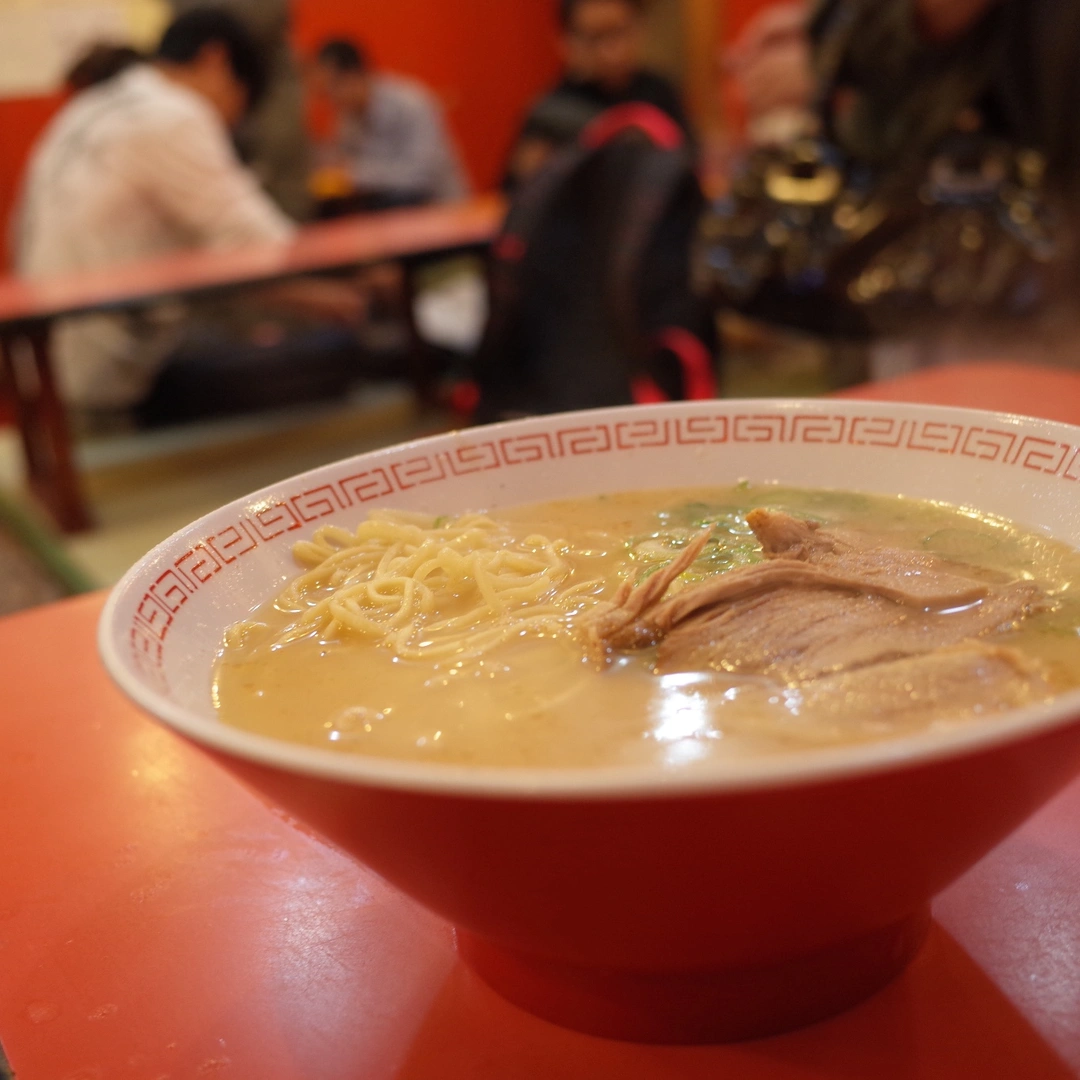
Like, after one bite of noodles, I had only one thought: "So salty!"
The broth was rich, sure, but so salty I couldn't finish it. I carefully placed my bowl and chopsticks at the return counter, walked out of the shop, and glanced back as if I'd just accomplished some great feat.
Tab: King Ramen — 450 yen
[Link: Best budget-friendly ramen in Osaka]
Stop Two: Marugame Seimen — The Perfect Marriage of Raw Egg and Mentaiko Udon
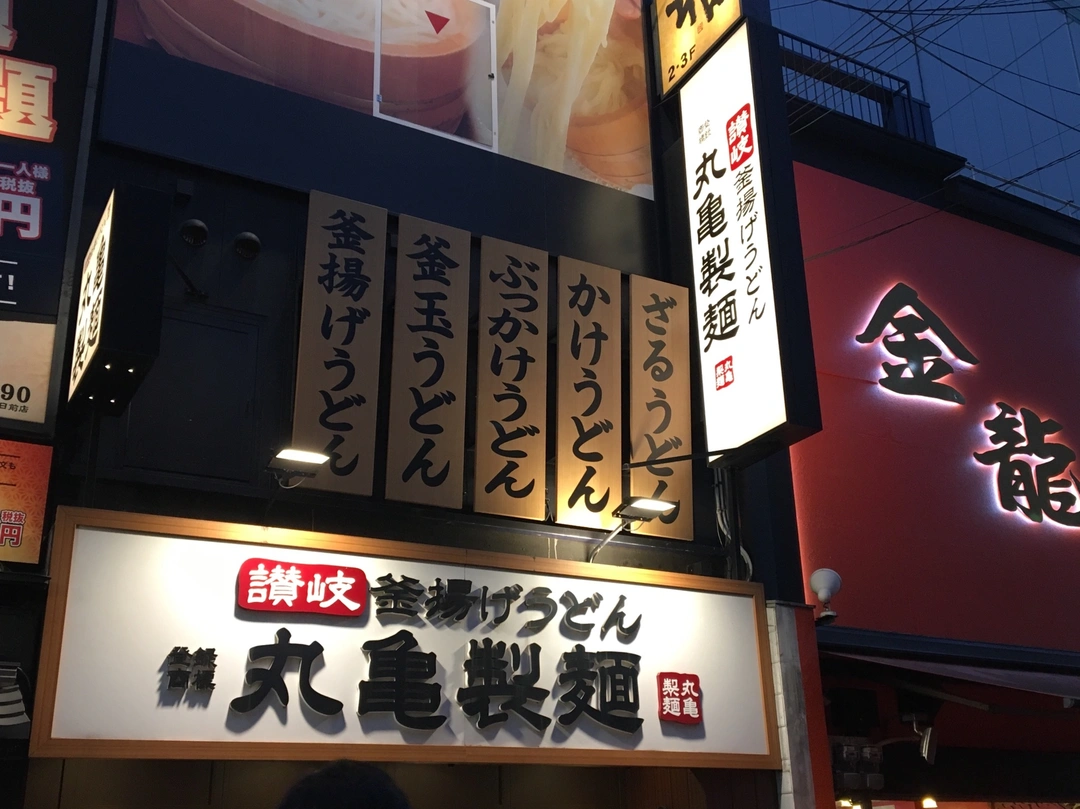
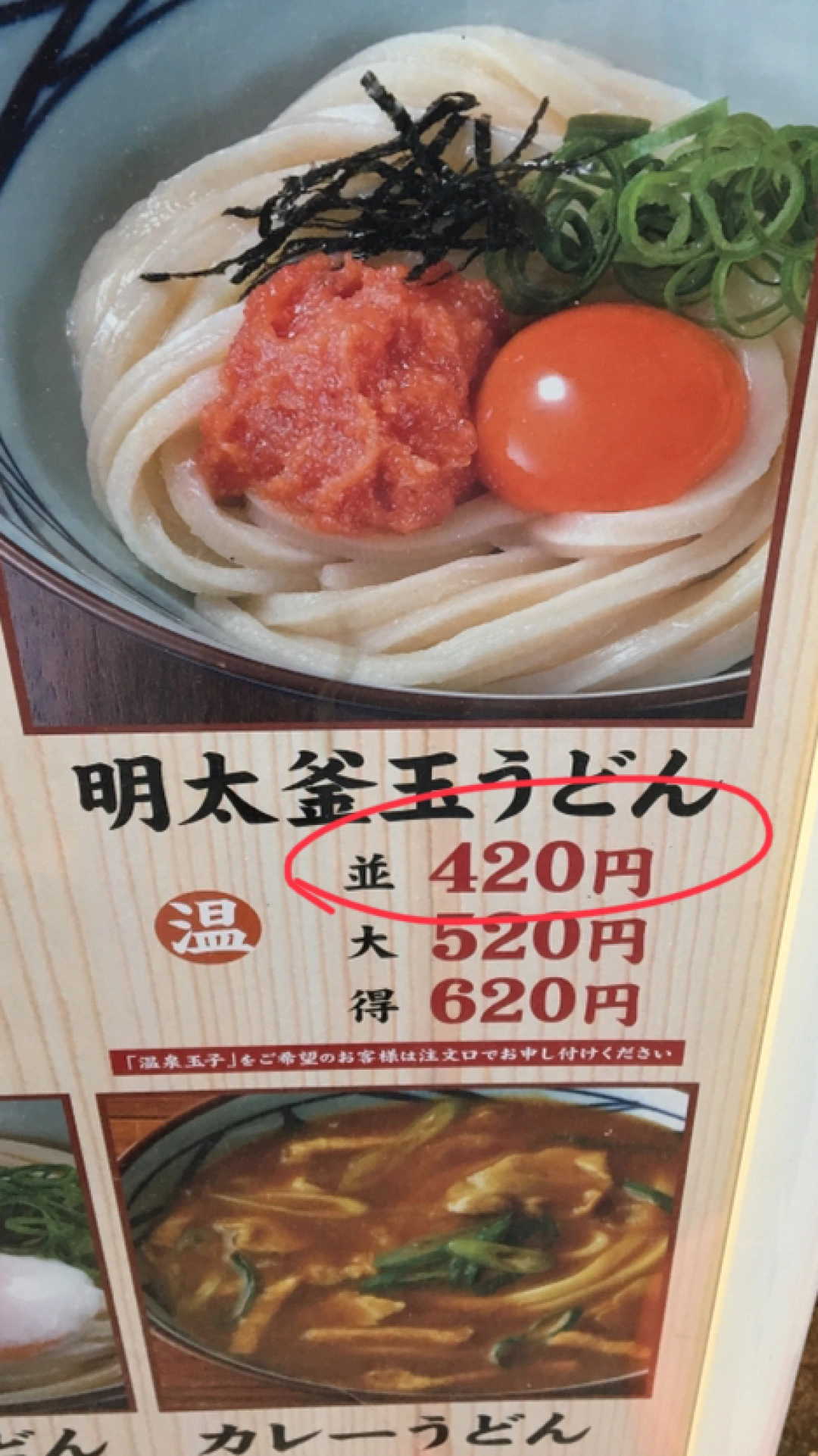
One bowl of ramen clearly wasn't enough to satisfy my astonishing appetite. Right next to King Ramen was Marugame Seimen, and the new product sign at the entrance immediately caught my eye—a raw egg and mentai (spicy cod roe) mixed udon that looked absolutely irresistible.
As a hardcore egg lover, I didn't hesitate. I pulled out my phone, snapped a photo of the sign, circled the udon, and walked cheerfully into the shop.
Since I'd eaten at Marugame Seimen in China before, I knew the ordering process: grab a tray, tell the first staff member what noodles you want, the second adds toppings, then the self-service tempura and drink section, and finally pay at the register. There's also a self-service station for green onions, garlic, soy sauce, vinegar, and crispy tempura bits.
Without the anxiety of King Ramen, I simply showed my phone photo to the staff member. We had an unspoken understanding, communicating only with our eyes. The young man kindly signaled to the next staff member that I wanted raw egg and mentaiko.
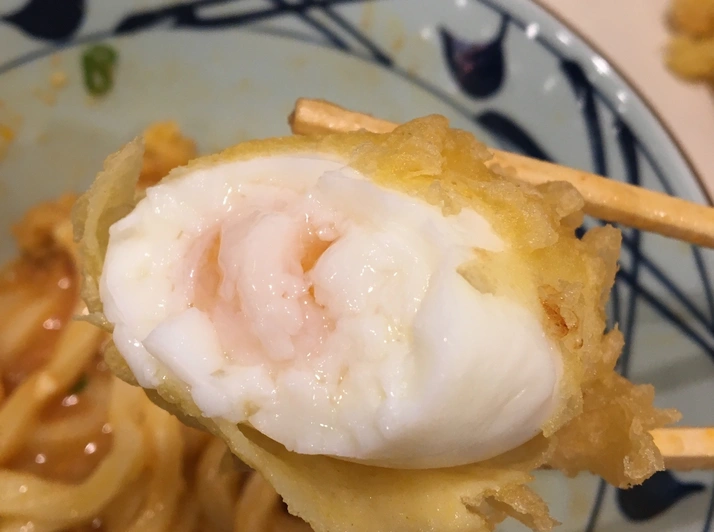
After smoothly receiving my udon, I headed to the tempura section. The variety here was far greater than at the branches in China. Following the "since I'm here anyway" mentality, even though I was already feeling full, I couldn't resist grabbing an egg tempura.
That first bite was a revelation!
Beneath the crispy coating was a soft-boiled egg. The moment I bit into it, the molten, half-cooked yolk exploded in my mouth. I could have eaten ten more! As I ate, I pondered: how on earth do they fry it to that perfect half-cooked state?
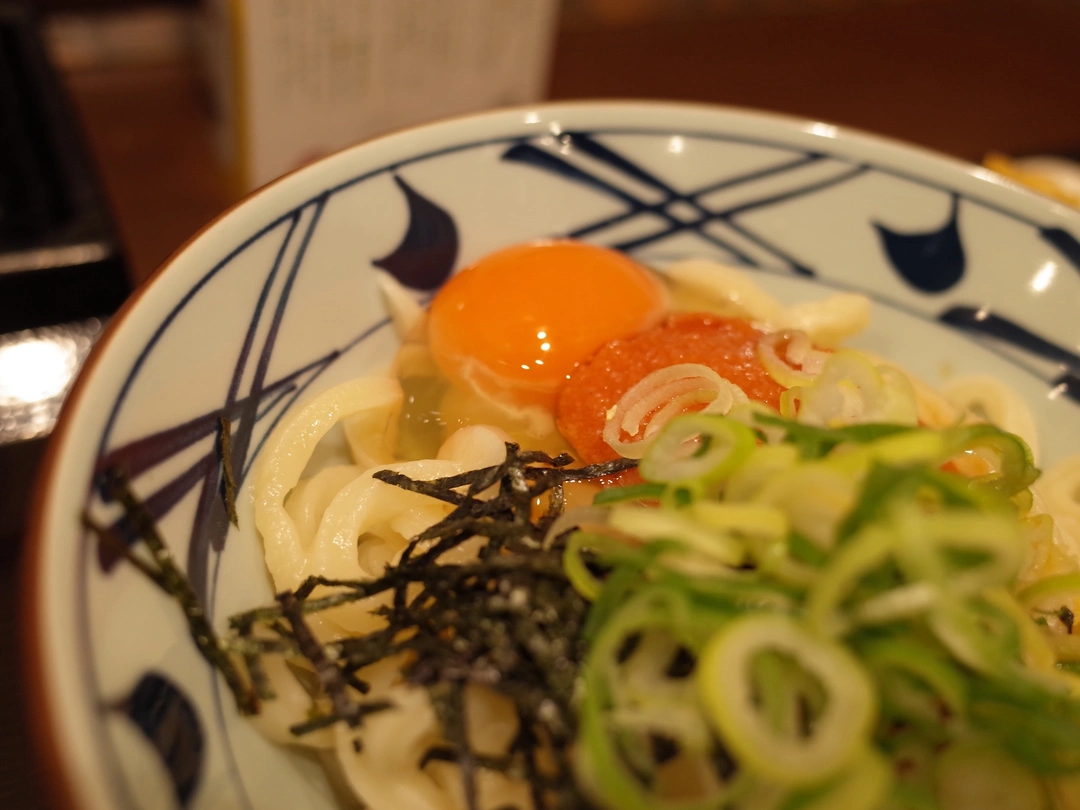
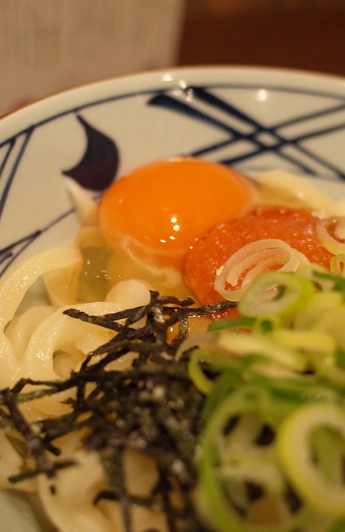
Back to the udon—a whole raw egg sat serenely on top of the noodles. Staring at that golden yolk, I recalled a rather obscure anime called When to Pop the Egg Yolk. The main character, a severe obsessive-compulsive, agonized over it for so long that I wanted to jump into the screen and pop it for him.
In real life, I didn't hesitate. I popped the yolk without a second thought. The golden liquid slowly spread over the udon, blending with the mentaiko, transforming the plain noodles into a tantalizingly colorful dish. One bite, and I was in heaven.
Yep, I'm definitely an unapologetic egg fanatic.
Tab: Mentaiko Butter Egg Udon (Mentai Tamagoto Udon) — 450 yen + Soft-boiled Egg Tempura — 120 yen + Shrimp Tempura — 290 yen = 830 yen
[Link: Best udon in Osaka for egg lovers]
Stop Three: The Nameless Soba Shop — A 180-Yen Surprise (and Shock)
After one bowl of ramen and one bowl of udon, I was more than satisfied. Coming out of the noodle shop, the sky was darkening, and the shopping street had lit up with a charm all its own.
But on my way to the subway station, I was drawn in by another self-service ticket machine tucked away in a small alley.
Rows of buttons, far more varieties than at King Ramen, but all in katakana—completely incomprehensible to me. I was about to take a photo and move on, but then I looked closer—a bowl of soba for only 180 yen, and adding an egg for just 50 yen.
That's ridiculously cheap!
After a semi-blind order, I found myself sitting alone in the shop, waiting for my soba. I didn't know what I'd ordered until it arrived. That mix of surprise and uncertainty made the dining experience delightfully unpredictable.
The seats all faced the counter, so I could watch the owner cooking the noodles. I handed the ticket from the machine to the owner, and the young man inside seemed to be asking whether I wanted the egg served separately or dropped directly into the noodles—though we couldn't communicate verbally, I could sense what he was trying to convey. After a moment of hesitation, he simply brought over a bowl of egg-drop soba, topped with a generous sprinkling of tempura bits.
After a few bites, the owner silently handed me a soup spoon.
"So salty!" Since he'd given me the spoon, I took a few sips of the broth. Really salty. Are people in Osaka naturally inclined toward saltier food? Thankfully, the portion was small, and I finished it quickly. I wanted to say "Gochisōsama deshita" (thank you for the meal) to the shopkeeper multiple times, but in the end, my shyness got the better of me, and I slipped away quietly.
Tab: Soba — 180 yen + Raw Egg — 50 yen = 230 yen
[Link: Budget-friendly soba in Osaka]
Stop Four: Kyoto Matcha Soba — A Refreshing Encounter in Kimono
I believe that every encounter with a restaurant is fate. Rather than searching for popular spots online and following a GPS to wait in lines, I prefer to wander and discover. That's exactly how I stumbled upon a tiny soba shop in Kyoto's Higashiyama district.
The shop was tucked between a kimono rental store and a matcha tea house. The owner, an elderly woman in a simple kimono, greeted me with a warm smile. The menu was handwritten in calligraphy on a wooden board—mostly soba varieties, with one special item: matcha soba.
At 800 yen, it was my most expensive noodle purchase so far, but curiosity won. The noodles arrived in a simple lacquer bowl, a pale green hue from the matcha powder mixed into the buckwheat dough. The broth was light, almost clear, with a subtle sweetness from kombu (kelp) and a hint of soy.
This was the opposite of Osaka's salty broths. The matcha soba was refreshing, almost cleansing. Each bite carried a faint grassy note that paired beautifully with the delicate dipping sauce. I finished every drop, and for the first time on this trip, I didn't crave extra seasoning.
As I left, the owner bowed and said something I didn't fully understand, but the warmth in her voice needed no translation.
Tab: Kyoto Matcha Soba — 800 yen
[Link: Best matcha soba in Kyoto]
FAQ: Your Kansai Noodle Adventure Questions Answered
1. What's the best time to visit Kansai for noodle lovers?
 Spring (March-May) and autumn (October-November) offer pleasant weather for walking between shops. Avoid peak summer (July-August) when humidity can make hot noodle soup less appealing.
2. How do I order noodles in Japan if I don't speak Japanese?
Learn these key phrases: "Sumimasen" (excuse me), "Kore o kudasai" (this one please), and "Gochisōsama deshita" (thank you for the meal). Most ramen shops use ticket machines with pictures or numbers.
3. What's the difference between ramen, udon, and soba?
 - Ramen: Chinese-style wheat noodles in rich broth (pork, chicken, or miso) - Udon: Thick, chewy wheat noodles in mild broth, often served hot or cold - Soba: Thin buckwheat noodles with nutty flavor, served hot or cold with dipping sauce
4. Is it okay to eat alone at noodle shops in Japan?
Absolutely! Solo dining is common and respected. Many ramen shops even have counter seating designed for single customers.
5. What's the average cost of a bowl of noodles in Kansai?
Budget options start at 180-450 yen (ramen/soba), mid-range udon costs 500-800 yen, and specialty soba (like matcha) can reach 800-1,200 yen.
Conclusion: Your Kansai Noodle Adventure Awaits
From the salty shock of King Ramen to the eggy bliss of Marugame Seimen, the budget surprise of the nameless soba shop, and the refined elegance of Kyoto matcha soba—my Kansai noodle adventure taught me that life's richest flavors are found between bowls.
Each shop had its own story, each broth its own character. And the best part? You don't need to speak Japanese or navigate complex menus to enjoy them. A smile, a pointed finger, and a willingness to slurp loudly are all you need.
So pack your bags, learn those four key words (ramen, udon, soba, egg), and set off on your own solo journey through Kansai's noodle scene. Whether you're a ramen fanatic like me or a curious first-timer, the noodles are waiting.
Are you ready for your Kansai noodle adventure? Book your flight, grab your chopsticks, and start slurping. The flavors of Osaka, Kyoto, and beyond are calling your name.
[Link: Complete Kansai travel guide for food lovers]
You may also like