Japan Actually Has a Desert? Discover Tottori Sand Dunes – Where the Sea Meets the Sand After 100,000 Years
Meta Description: Explore Japan's hidden desert gem—the Tottori Sand Dunes. Discover how 100,000 years of wind and waves created this stunning landscape where the Sea of Japan meets golden sand. Plan your visit now.
When you picture Japan, your mind likely jumps to Kyoto's ancient temples, Tokyo's neon-lit streets, or Hokkaido's snow-covered peaks. But a desert in Japan? It sounds almost impossible—yet it's real. Nestled in the unassuming Tottori Prefecture lies one of the country's most extraordinary natural wonders: the Tottori Sand Dunes. While it won't rival the Sahara in size or the deserts of northwestern China in stark majesty, this unique landscape blends ocean and sand in a way that feels almost surreal. It's a place where 100,000 years of geological artistry meet the raw beauty of the Sea of Japan—and it's waiting for you to discover it.
Why Tottori Sand Dunes Are Japan's Most Underrated Natural Wonder
Tottori Prefecture may be small—ranking seventh from the bottom in size among Japan's 47 prefectures and boasting the smallest population—but it punches far above its weight in natural beauty. Beyond the famous sand dunes, this region offers dramatic coastlines, mysterious volcanic landscapes, ancient hot springs, and a quiet, soul-calming energy that big cities simply can't replicate.
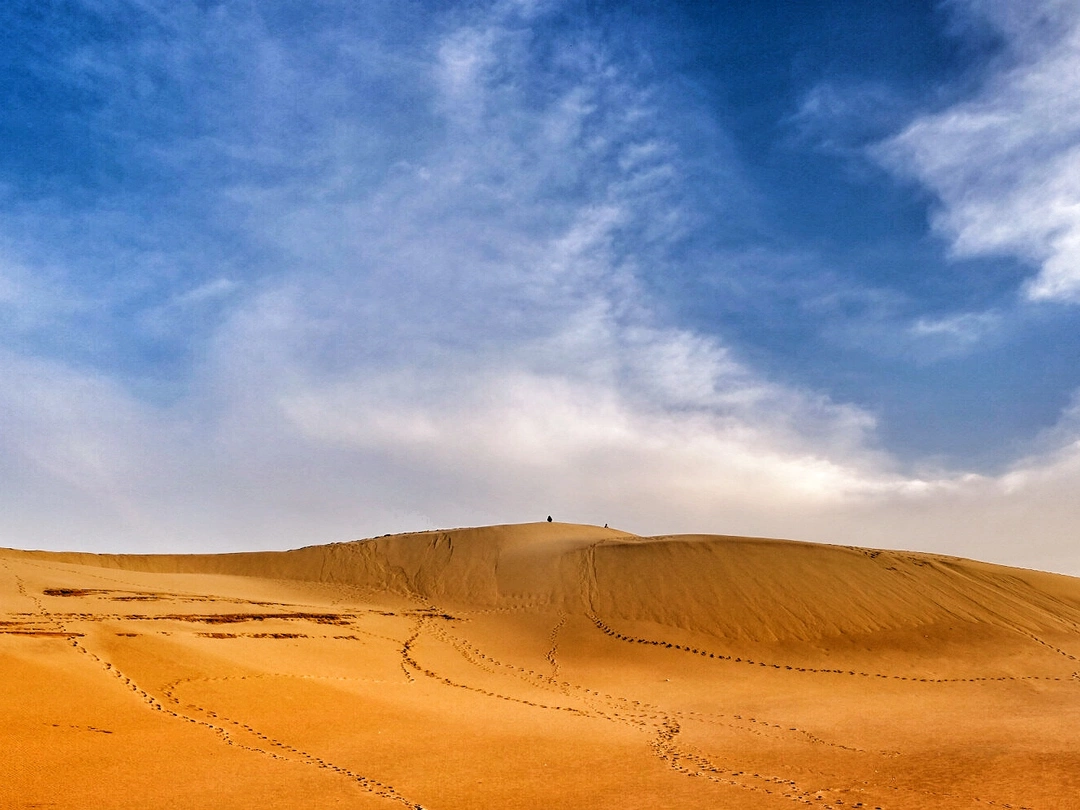
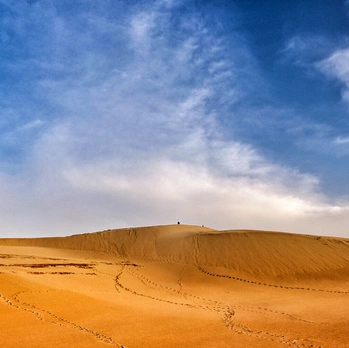
The Tottori Sand Dunes are the undisputed crown jewel of this hidden gem. Stretching approximately 16 kilometers from east to west and 2 kilometers from north to south, with a maximum elevation difference of 90 meters, these dunes create a breathtaking panorama. Stand at the summit, and you'll witness the vast Sea of Japan on one side and an endless golden sea of sand on the other—a visual paradox that will make you forget you're still in Japan.
The 100,000-Year Masterpiece: How the Tottori Sand Dunes Were Formed
The creation of the Tottori Sand Dunes is an epic natural saga spanning 100,000 years. It begins with sediment carried by the Sendai River (千代川) into the Sea of Japan. Over millennia, this sediment accumulated along the coastline under the influence of waves and tides. Then, powerful seasonal winds from the Sea of Japan swept the deposited sand inland, piling it into the majestic dunes we see today.
What makes these dunes truly unique, however, is the addition of volcanic ash. Ancient volcanic activity in the Tottori region deposited ash onto the sediment, mixing with the sand to create a distinctive geological structure. Over 100,000 years of wind and waves, nature patiently sculpted this dreamlike land where sand and sea intertwine—a testament to the slow, relentless power of natural forces.
The Changing Seasons: A Thousand Faces of the Tottori Sand Dunes

The beauty of the Tottori Sand Dunes is never static. Each season paints the landscape with a different personality, offering visitors a new experience every time they visit.
Spring: The Dunes Awaken
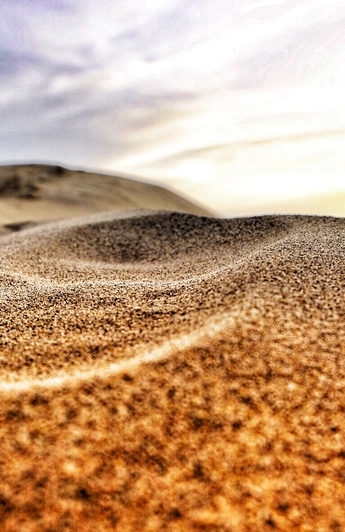
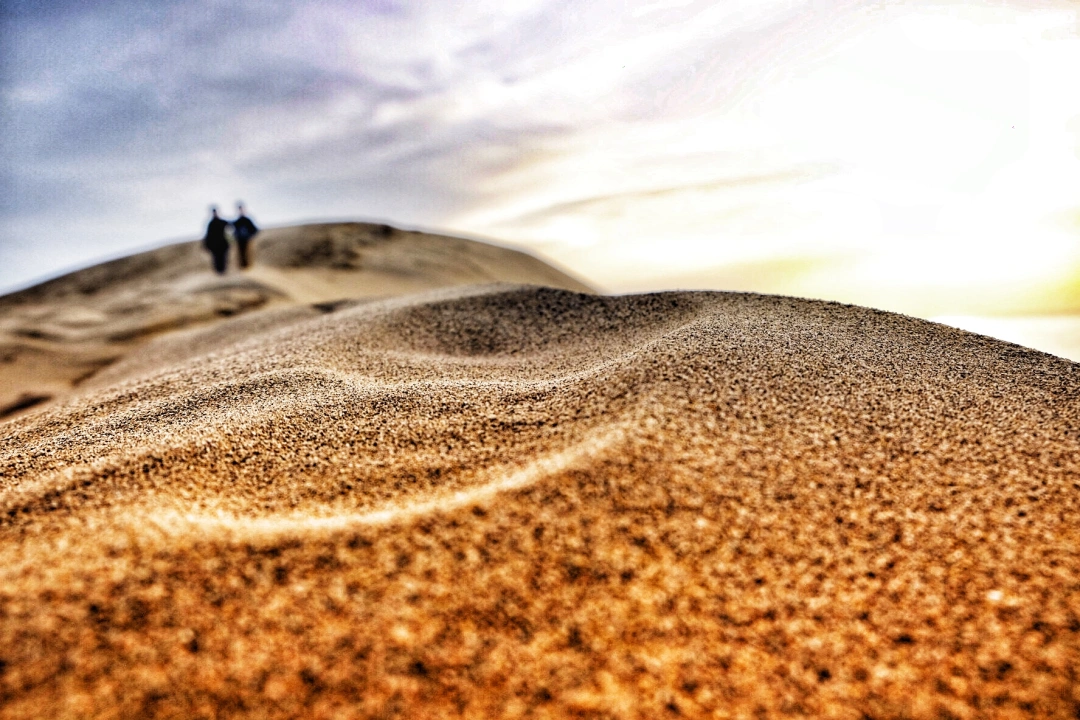
As the northwest winds weaken in spring, plants on the dunes begin to revive. The sky reflects brighter blues, and the sand glows a richer yellow. Early mornings and evenings reveal delicate wind ripples etched into the sand's surface—nature's own line drawings that shift with every breeze.
Summer: Walking Barefoot Between Sand and Sea
Summer is the liveliest season at the dunes. Feel the warm sand beneath your bare feet as you take in white beaches, azure skies, emerald waters, and drifting clouds. As the sun sets, the area grows quiet, far from city lights. The night sky above the dunes is almost free of light pollution, revealing a brilliant canopy of stars. Camping here, watching the Milky Way stretch across the horizon, is a dream experience for many travelers.
Autumn: A Romantic Purple Hue
From late October to early November, "辣韮" (a chive-like plant) planted on the dunes bursts into purple-red flowers, painting the entire landscape in romantic shades of violet. The dunes lose some of their desolation and gain a softer, gentler beauty—perfect for photographers and romantics alike.
Winter: A Silver Fairy Tale

Tottori lies in one of western Japan's heaviest snow zones. In winter, the dunes are blanketed in thick snow, transforming into a silver-white world. The contrast between sand and snow creates an extreme, almost fairy-tale beauty—a sight you won't find anywhere else in Japan.
[Link: Best time to visit Tottori Sand Dunes for seasonal photography]
Culture and the Dunes: From "Woman in the Dunes" to Conan Airport
The Tottori Sand Dunes are more than just a natural wonder—they are a wellspring of cultural inspiration. In the 1960s, renowned Japanese author Kōbō Abe set his existentialist novel Woman in the Dunes (砂の女) against the backdrop of the dunes. The story follows a man trapped in a sand pit, exploring the human condition in an absurd world. In 1964, the novel was adapted into an acclaimed film directed by Hiroshi Teshigahara, shot on location at the Tottori Sand Dunes.
Anime fans will love another quirky connection: Tottori Airport is officially nicknamed "Tottori Sand Dunes Conan Airport." Yes, it's named after Conan Edogawa, the protagonist of Detective Conan, whose creator, Gosho Aoyama, hails from Tottori Prefecture. The airport is filled with Conan-themed elements, adding a playful touch to your journey from the very start.
[Link: Top anime destinations in Japan for fans]
Exploring the Tottori Sand Dunes: More Than Just Scenery
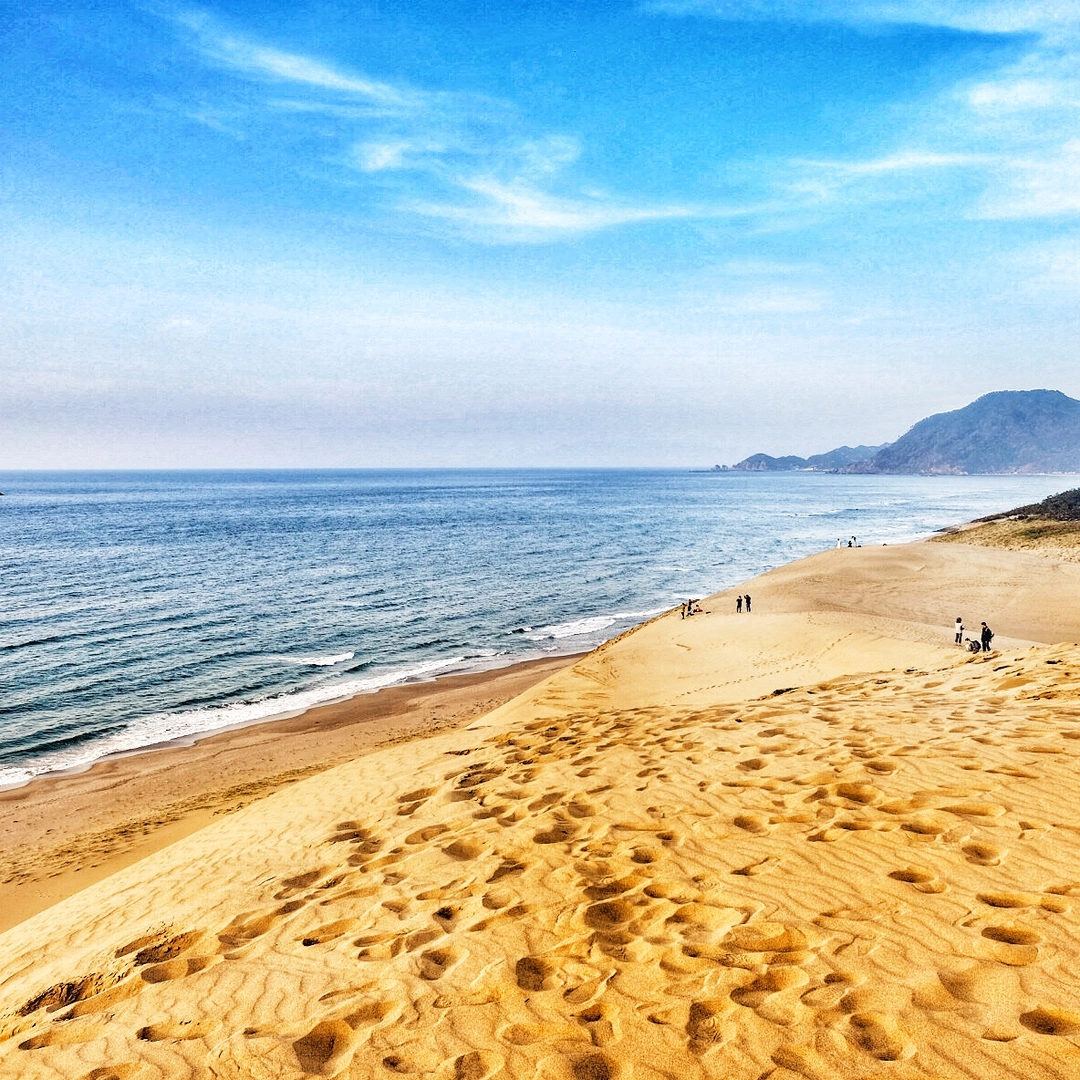
The appeal of the Tottori Sand Dunes lies not only in their beauty but also in the rich experiences they offer. Whether you're an adrenaline junkie or a culture enthusiast, there's something for everyone.
Camel Rides
Ride a camel across the dunes and feel like part of a desert caravan. While there aren't as many camels here as in the Sahara, trotting along the dunes with the ocean horizon in the distance is a unique experience you won't forget.
Sandboarding and Paragliding

If you're seeking thrills, try sandboarding or paragliding. Slide down from the top of a dune with the sound of wind and sand rushing past your ears—the speed gets your adrenaline pumping. Paragliding offers an entirely different perspective, letting you soar above the dunes and see the boundary where sand meets sea from the air.
The Sand Museum
Right next to the dunes is the Sand Museum, which houses giant sand sculptures created by artists from around the world. The exhibition theme changes every year, featuring everything from historical figures to anime characters. The museum is open from April to January, with an admission fee of 600 yen. Note that the last entry is at 7:30 PM—if you miss it, you'll only be able to see the cute little bear sand sculpture at the entrance.
[Link: Sand Museum Tottori – current exhibition and tips]
How to Get to Tottori Sand Dunes: Your Complete Travel Guide
Getting to this hidden gem is easier than you might think. Here's how to reach the Tottori Sand Dunes from major Japanese cities.
By Plane
If you're coming from another city in Japan, take a domestic flight to Tottori Airport. From the airport, take the Hinomaru Bus to Tottori Station, then transfer to a bus bound for the Tottori Sand Dunes. Get off at the Dune Center Observation Deck, Dune North Entrance, or Tottori Sand Dunes Station. The entire trip takes about 25 minutes by bus. On weekends and holidays, the "Kirin Lion" loop bus operates, with a single fare of 300 yen and a one-day pass for 600 yen.
By JR Train
Tottori is on the JR San'in Line. From Kyoto or Osaka, take the "Super Hakuto" limited express via the Chizu Express line directly to Tottori Station. From Himeji or Okayama, take the "Super Inaba." If you're coming from Tokyo, board the overnight sleeper train "Sunrise Izumo" or "Sunrise Seto," transfer at Kamigori to the "Super Inaba," and arrive in Tottori before 7:30 AM.
By Bus
From Tokyo's Shinagawa Bus Terminal, there's an overnight bus called "Camel" that goes directly to Tottori Station. This route is operated by Hinomaru Bus, Nihon Kotsu Bus, and Keikyu Bus—a great option for budget-conscious travelers who also want to save on accommodation.
By Taxi

A taxi from Tottori Station to the dunes takes about 20 minutes and costs around 2,300 yen. Tottori also offers a sightseeing taxi service for foreign visitors. Groups of up to four people can charter a taxi for three hours at a cost of 2,000 yen per person (children under 12 are free). Book this taxi at the Tottori City Tourist Information Center.
[Link: Budget travel tips for Tottori Prefecture]
Frequently Asked Questions About Tottori Sand Dunes
1. Is Tottori Sand Dunes a real desert?
 Technically, no. The Tottori Sand Dunes are a coastal dune system formed by wind and waves over 100,000 years. While they look like a desert, they lack the arid climate and extreme temperatures of true deserts. However, the visual experience is remarkably similar.
2. How long does it take to explore the Tottori Sand Dunes?
Most visitors spend 2–3 hours exploring the dunes, including time for walking, photography, and trying activities like sandboarding or camel rides. If you plan to visit the Sand Museum, add another 1–2 hours.
3. What is the best time of year to visit?
 Each season offers a unique experience. Spring and autumn provide mild weather and stunning colors. Summer is lively with clear skies and camping opportunities. Winter transforms the dunes into a snowy wonderland. For the least crowds, visit on weekdays outside of Japanese holidays.
4. Are the Tottori Sand Dunes accessible for families with children?
Absolutely. The dunes are family-friendly, with gentle slopes and plenty of open space for kids to run and play. Camel rides and sandboarding are popular with children. The Sand Museum is also a hit with young visitors.
5. Can I camp overnight at the Tottori Sand Dunes?
Yes, camping is permitted in designated areas. Summer is the most popular time for overnight stays, offering stunning stargazing opportunities. Be sure to bring warm clothing, as temperatures can drop significantly after sunset.
Final Thoughts: Why You Should Visit Tottori Sand Dunes
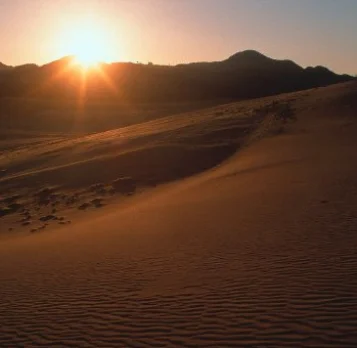
The Tottori Sand Dunes are a natural masterpiece forged over 100,000 years—one of Japan's most underrated attractions. They're not as famous as Mount Fuji, nor as crowded as Kyoto's temples, but they showcase nature's extraordinary craftsmanship in a way that few places can. Whether you're riding a camel across golden sand, sandboarding down a dune, or simply watching the sunset paint the landscape in hues of orange and purple, the Tottori Sand Dunes offer an experience you'll never forget.
Ready to discover Japan's hidden desert? Start planning your trip to Tottori today. Book your transportation, check the season's highlights, and prepare for an adventure that blends sand, sea, and sky in a way you've never imagined.
[Link: Book your Tottori travel package now]
You may also like