Ejina Banner: The Ultimate Autumn Romance in China's Golden Poplar Forests
Meta Description: Discover Ejina Banner's golden poplar forests in autumn—a 3,000-year desert miracle. Expert travel guide with routes, tips, and must-see spots for the perfect fall getaway.
If you ask me where the most captivating autumn scenery in northwest China lies, my answer will always be—Ejina Banner. This remote corner of Inner Mongolia transforms into a golden wonderland every October, when ancient poplar forests ignite in brilliant yellow hues against stark desert backdrops.
Here, you'll find vast Gobi deserts, rolling mountain ranges, crystal-clear lakes, the thousand-year echoes of the Silk Road, and a steaming bowl of lamb noodle soup. But what truly haunts the soul is that stretch of poplar forest that burns gold every autumn. Three thousand years of waiting, all for this single season of brilliance.
I packed my bags and set off on this journey in pursuit of gold. Here's everything you need to know to plan your own Ejina Banner autumn adventure.
How to Reach Ejina Banner: Transportation Guide

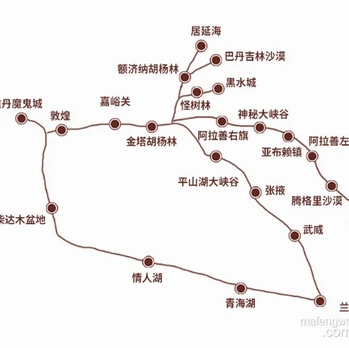
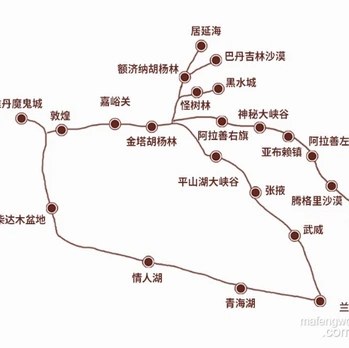
Ejina Banner is located in Alxa League, Inner Mongolia. It's remote, and transportation isn't exactly convenient. The typical Northwest Grand Loop usually goes through Qinghai Lake—Dunhuang—Jiuquan—Zhangye, while Ejina is a side branch that branches northeast after Jiayuguan. Most people start from Lanzhou or Xining.
Getting There from Major Cities
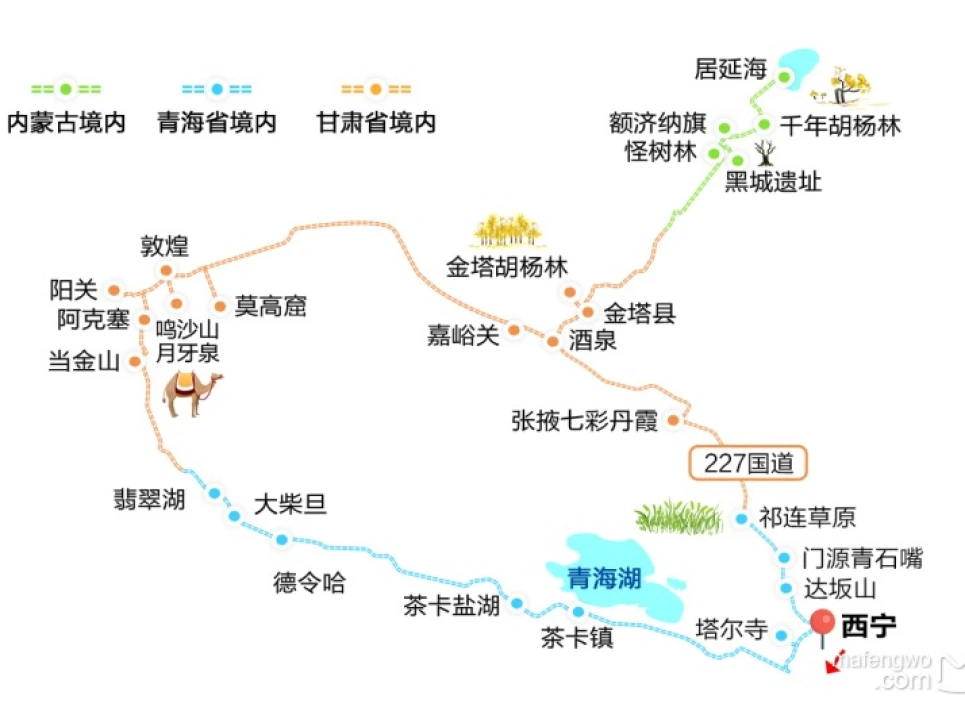
From Beijing: There's no direct route. You need to transfer through Lanzhou, Xining, Yinchuan, or Hohhot. I chose Yinchuan as my transfer point—from Yinchuan, you can hire a private car or rent one to drive to Ejina, about an 8-hour drive.
By Train: If you're short on time, take the K7911 train from Hohhot (departs 18:50, arrives 09:38 the next day, about 14 hours 48 minutes).
By Air: Fly from Alxa Left Banner to Ejina Taolai Airport (two flights daily at 9:30 and 11:00, each about 2 hours).
Best Transportation Options
- Groups of 1-4 people: Join a tour group for convenience and cost-effectiveness.
- Groups of 4 or more: Hire a private car. Private cars are charged per vehicle per day, including round trips, covering the driver's meals, accommodation, fuel, and tolls. Compare prices online from a few providers and pick a reasonable one.
- Homestay guests: Contact your host directly—they usually offer car rental services (with driver), charged by the day.
When to Visit Ejina Banner
The peak season for the poplar forests is September 25 to October 25. During National Day holiday (October 1-7), crowds and prices hit their peak. However, how yellow the poplar leaves turn depends entirely on the year's temperature. Do your homework in advance and try to avoid the National Day rush. The easiest way to get the latest updates on the poplars is to ask your host or driver.
[Link: Best time to visit Inner Mongolia]
First Impressions of Yinchuan: Drum Tower Street
When I arrived in Yinchuan, a light drizzle was falling. Mid-October, and the city hadn't started heating yet. The cold autumn wind made me pull my thin down jacket tighter. I'd communicated with my host in advance, and he'd prepared an electric heater in the room, along with air conditioning—enough to warm things up.
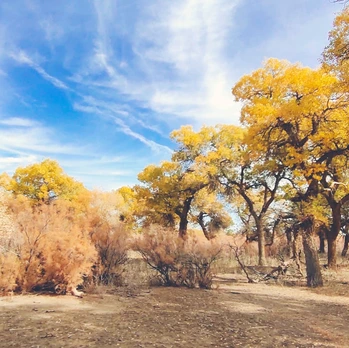
In the evening, I walked into a lamb hotpot restaurant. The steaming broth, tender lamb, and a mouthful of hot noodle soup—my stomach warmed up, and I felt utterly happy and content.
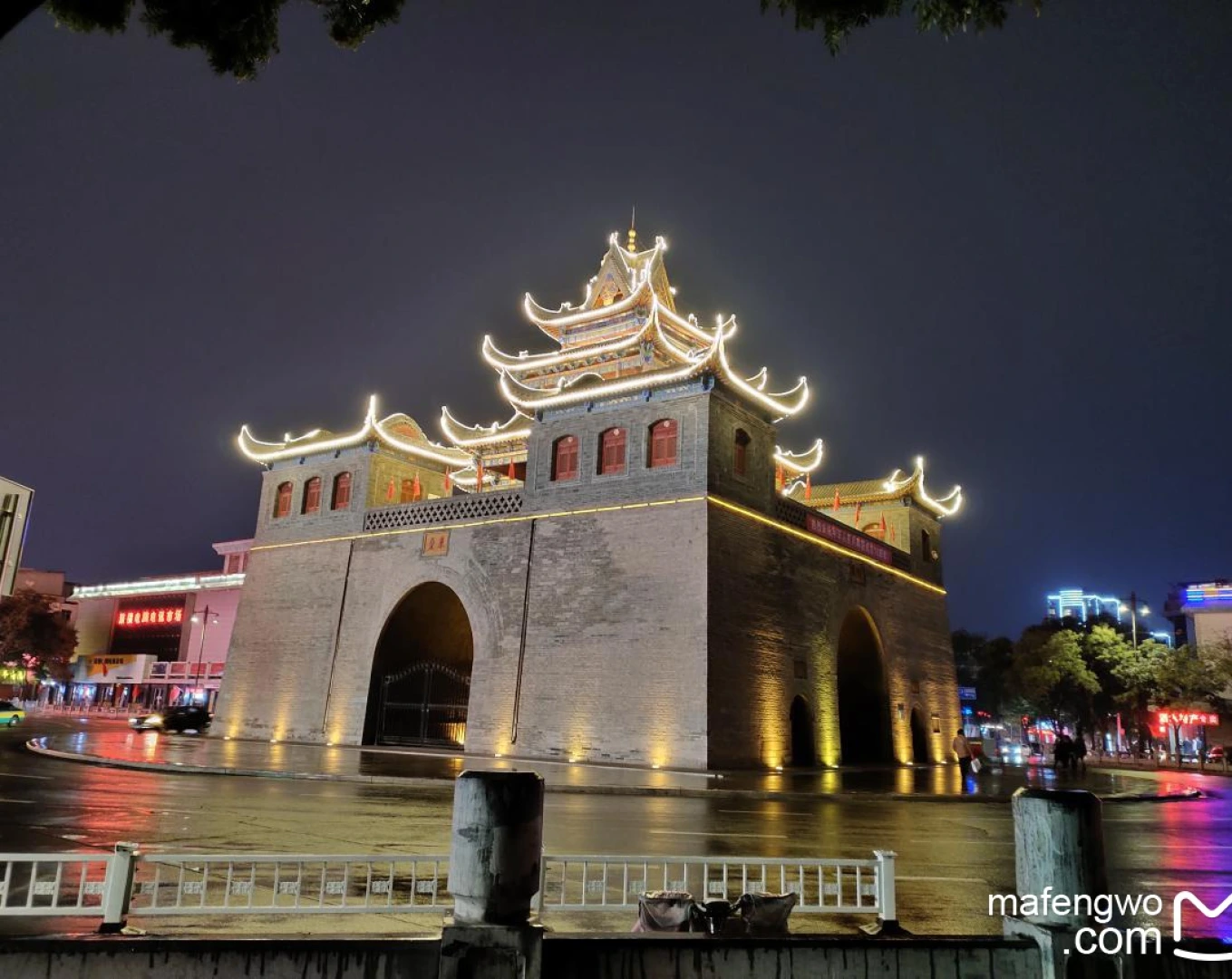
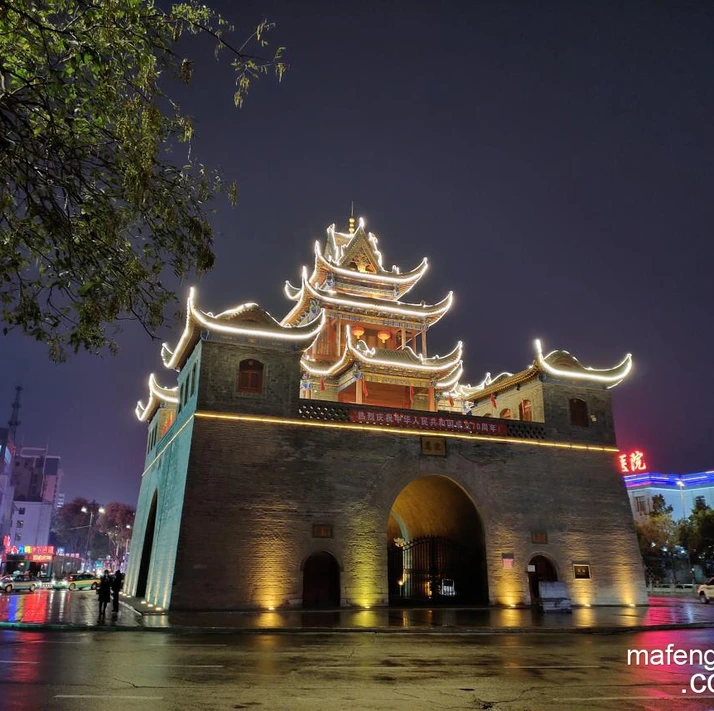
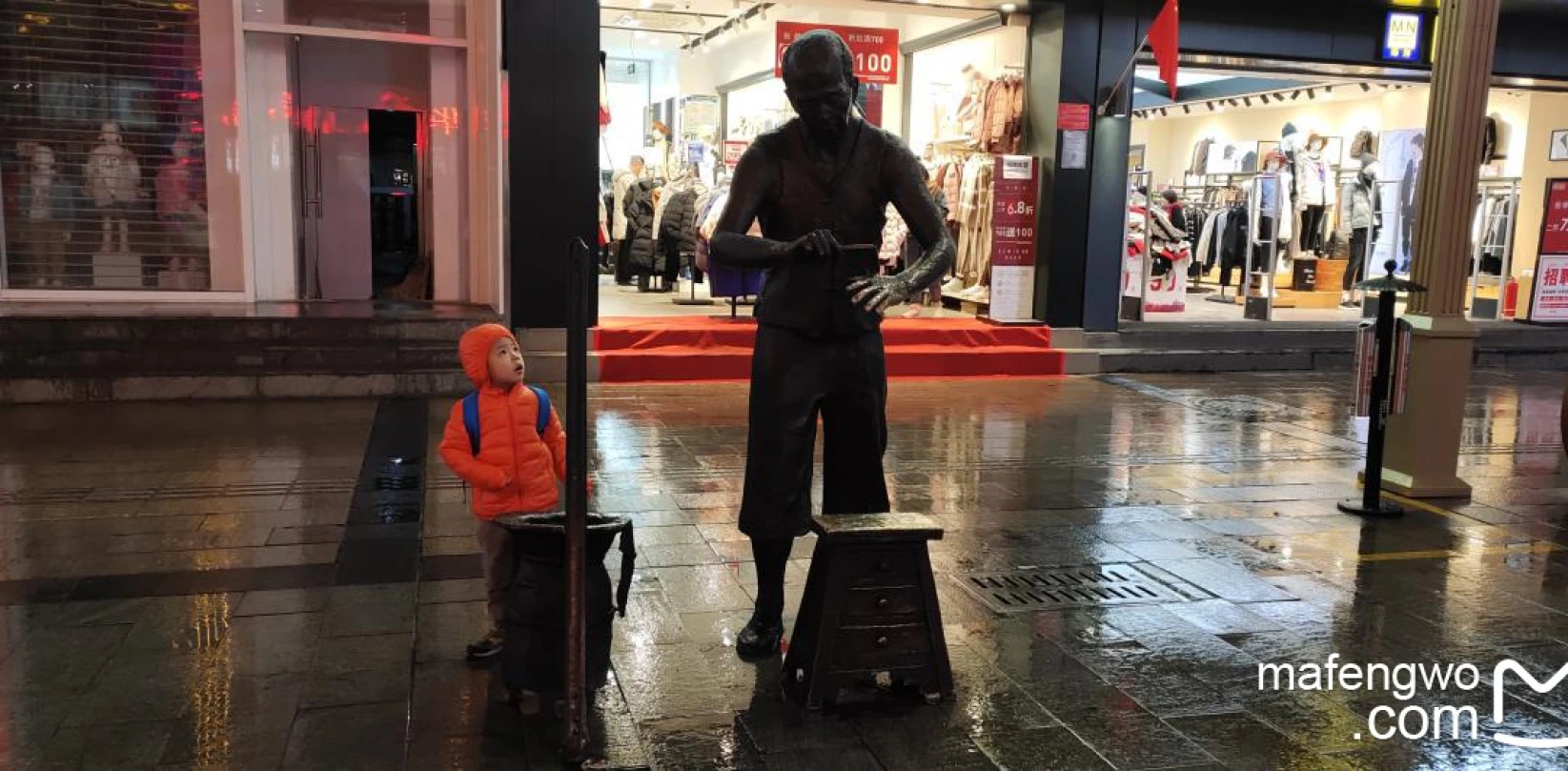
Yinchuan's Drum Tower Street is the heart of the city. The pedestrian street was filled with the aroma of baked durian pizza, which led me straight to a small shop. Across the street was Xinhua Department Store, a relatively new shopping mall. Every few steps along the street, there was a bronze statue—apparently to match the area's nickname, "Little Wangfujing."
[Link: Yinchuan travel guide]
On the Road: From Mist to Blue Sky
The second day was pure travel—an 8-hour drive from Yinchuan to Ejina.
The weather was still gloomy, and I worried Ejina's weather would weigh on my spirits just like Yinchuan's. At the border between Yinchuan and Alxa, a thick fog suddenly rolled in. The mountains ahead, the trees on both sides of the road—everything was shrouded in white mist. I laughed and said to my travel companion, "What if there's a peach blossom paradise behind this fog?"
About ten minutes later, the fog vanished just as suddenly. The blue sky and yellow-earth mountains appeared before us without warning. I looked back—behind us, the fog was still thick and impenetrable.
Ejina's Climate Facts: The area has a continental climate—dry year-round, with an average annual rainfall of only 35.20 mm and average annual evaporation of 3,136.60 mm. So there's basically no need to worry about the blue sky not showing up to complement the scenery.
We stopped at Wuliji for a break. The wind was fierce, but the sky was brilliantly blue! The kids were great—four dinosaur toys and two threading boards kept them entertained the whole way.
We arrived in Ejina around dinner time. The heating was already on indoors—Inner Mongolia's heating season runs from October 15 to April 15. Pretty nice, right?
I stayed at a friend's place—about 130 square meters, three bedrooms, two living rooms, two bathrooms, sleeping 6 to 10 people. The apartment itself is also rented out as a homestay, listed on Airbnb and Tujia, managed by a third party. It's only rented during the poplar season, and supposedly it can go for as much as 2,000 yuan a night at peak. The place is nice, and the location is great—right next to the poplar forest scenic area, within walking distance. During peak season, there are more people than rooms, so no matter how expensive, you still have to pay.
[Link: Ejina Banner accommodation tips]
Desert Poplar Forest: Reflections by the Water
Day three, I slept in. Had a bowl of pulled noodles near the neighborhood, packed lunch and water (the scenic area is huge, and there's hardly any proper food inside—a single lamb skewer costs 10 yuan, and who knows what kind of meat it is, so I didn't dare try it), then drove to the Desert Poplar Forest.
We got lucky—just after entering, we spotted a line of camels grazing by the roadside. After a while, they lined up on their own and slowly ambled away.
What to See in the Desert Poplar Forest
The Desert Poplar Forest scenic area covers:
- Poplar reflections by the water – Mirror-like lakes create stunning reflections of golden trees
- Desert poplars – Trees growing directly from sand dunes
- Dead poplar trees – Eerie, sculptural remains of ancient trees
- Primitive tribal village (the Poplar Woman's House)
For visitors short on time who still want to experience all the different poplar landscapes, this scenic area is a good fit. Even though it's large, you can get through it in about half a day.
The Legend of the Poplar Tree
The poplar is known as the "hero tree of the desert" —one of the few plants that can endure the arid conditions of the desert and tolerate high levels of salt and alkali. Its peculiar feature is that the same tree can grow three different types of leaves: maple-like, poplar-like, and willow-like, which is why people also call it the "three-leaf tree."
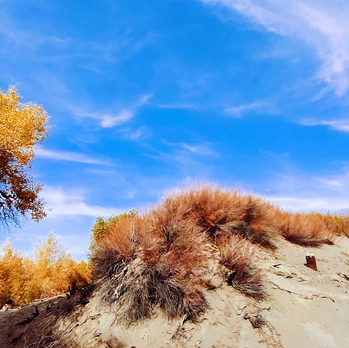
It's a living fossil comparable to the ginkgo. The poplar lives for three thousand years without dying, stands for three thousand years after death, and does not rot for three thousand years after falling—the spirit of "hard work, self-reliance, taking root at the frontier, and selfless dedication" embodied in this tree is exactly what the people of Ejina call the poplar spirit.
[Link: Desert poplar forest photography tips]
Black City and the Strange Forest: Echoes of History

In the afternoon, I headed to the Black City. I bought a combo ticket that included the Black City ruins, the Ruoshui Poplar Forest, the Strange Forest, and shuttle bus transfers between the sites.
Navigating the Black City Complex

The Strange Forest is a very long way from the Black City ruins shuttle stop. The Ruoshui River and the Strange Forest sit on opposite sides of the Black City. If you want to go back to the Strange Forest after seeing the Ruoshui River, you have to retrace your steps.
Pro tip: Before you set out, decide whether to enter through Gate 1 or Gate 2—once you're inside, you basically won't backtrack.
- Most people's route: Enter through Gate 1, see the Ruoshui Poplar Forest first, then the Black City ruins, and finally watch the sunset at the Strange Forest before exiting through Gate 2.
- My route (reverse): Entered through Gate 2 and explored the Strange Forest first, then the Black City ruins, and caught the sunset at Ruoshui Poplar Forest.
What Makes the Strange Forest Special
The Strange Forest is a haunting landscape of dead poplar trees that have stood for centuries after dying. Their twisted, bleached forms create an otherworldly scene—especially at sunset when the golden light casts long shadows across the desert floor. It's a photographer's paradise and a powerful reminder of nature's resilience.
[Link: Black City history and legends]
Ejina Banner Travel FAQ
1. What is the best time to visit Ejina Banner for the golden poplar forests?
The optimal window is September 25 to October 25, with peak colors typically occurring during the first two weeks of October. However, leaf color depends on annual temperature variations, so check local updates before booking. Avoid National Day holiday (October 1-7) if possible, as crowds and prices are at their highest.
2. How do I get to Ejina Banner from major Chinese cities?

Most travelers start from Yinchuan (8-hour drive), Lanzhou, or Hohhot. From Hohhot, you can take the overnight K7911 train (about 15 hours). There are also flights from Alxa Left Banner to Ejina Taolai Airport. There's no direct route from Beijing—you'll need to transfer through one of these cities.
3. Is Ejina Banner suitable for family travel with children?
Yes, but prepare accordingly. The long drives (8+ hours from Yinchuan) can be challenging for young children. Bring entertainment like toys or tablets. The scenic areas involve significant walking, so pack snacks, water, and sun protection. The desert climate is dry and can be cold in October, so dress in layers.
4. What should I pack for an Ejina Banner autumn trip?

Essentials include: warm layers (temperatures drop significantly at night), a down jacket, comfortable walking shoes, sun protection (hat, sunglasses, sunscreen), lip balm, moisturizer (the desert air is extremely dry), a reusable water bottle, and snacks for the scenic areas. A camera with a zoom lens is highly recommended for capturing the golden poplar forests.
5. How expensive is a trip to Ejina Banner during peak season?
Accommodation prices skyrocket during poplar season—homestays can cost 2,000 yuan per night or more during National Day. Private car hire costs vary but expect to pay per vehicle per day including driver expenses. Food inside scenic areas is expensive (lamb skewers at 10 yuan each). Budget at least 3,000-5,000 yuan per person for a 3-4 day trip from a nearby city, excluding transportation to the region.
Plan Your Ejina Banner Autumn Adventure
Ejina Banner offers one of China's most spectacular autumn experiences—a golden landscape that feels almost otherworldly. From the heroic poplar trees that have stood for millennia to the haunting beauty of the Strange Forest, every moment here is a photographer's dream and a traveler's treasure.
Ready to experience autumn's ultimate romance? Start planning your Ejina Banner trip today. Book your accommodation early (at least 2-3 months in advance for peak season), arrange your transportation, and prepare for an unforgettable journey into the heart of Inner Mongolia's golden wonderland.
[Link: Inner Mongolia travel packages] [Link: Northwest China Grand Loop itinerary]
Have you visited Ejina Banner's golden poplar forests? Share your experience in the comments below, or ask any questions—I'd love to help you plan your perfect autumn getaway!
You may also like