Cycling Around Lake Biwa: When Cherry Blossom Season Fooled Me, I Found Another Spring in Shiga
Here is the SEO-optimized, rewritten article based on your source material. It has been restructured for search engine visibility while preserving the author's unique voice and factual details.
SEO Title: Cycling Around Lake Biwa in Spring: A Guide to Shiga’s Hidden Charms (Even When Cherry Blossoms Fail)
Meta Description: Miss the cherry blossom peak in Japan? Discover the ultimate Lake Biwa cycling guide. From Italian road bikes to night blooms at Nijo Castle, find spring in Shiga.
Cycling Around Lake Biwa: When Cherry Blossom Season Fooled Me, I Found Another Spring in Shiga
April 2018. I stood at the JR counter in Kansai Airport, clutching a freshly exchanged rail pass, my heart a mix of nerves and excitement. Cherry blossom season in Japan is always a love-hate affair—you adore its splendor, but you loathe its fleeting nature. And me? I was that unlucky soul who "woke up early, only to arrive late for the party."
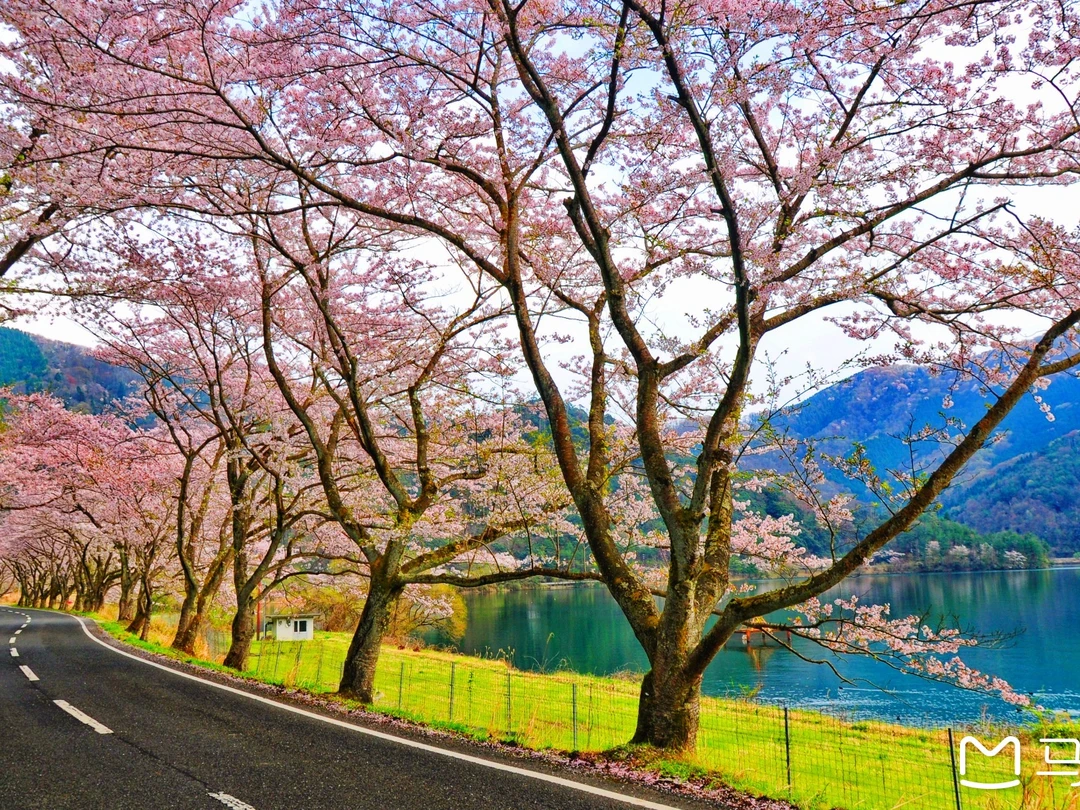
But here is the secret that trip taught me: When the cherry blossoms betray you, Shiga Prefecture offers a different kind of spring—one found on two wheels.
Why Shiga? The Backup Plan That Became the Main Attraction
The Cherry Blossom Forecast Betrayal
It all started with a catchy tune, Mankai Smile. This "hanami soy sauce" track from a CGSS event had completely hooked me, reminding me of last year's impulsive trip to Shizuoka for flower viewing. So in early 2018, I began planning meticulously. I studied the cherry blossom forecast like a hawk, scheduled my trip for after Qingming Festival, hoping to avoid crowds and high airfare.

But then, in early March, an unusual heatwave in Shanghai made me uneasy. I opened the cherry blossom prediction website and my heart sank—the expected blooming date had moved up by a full week. My carefully planned vacation would perfectly miss the peak bloom.
"Woke up early, arrived late for the party"—the phrase looped in my head.
Still, I quickly pulled myself together. I weighed my options between Niigata and Shiga. Shiga won for three reasons: 1. It was the only prefecture in the Kinki region I hadn't visited. 2. The logistics, flights, and attractions all made more sense. 3. Lake Biwa offers one of Japan's best cycling routes.
Pro Tip: If you are planning a Japan spring trip, always check the [Link: Japan Cherry Blossom Forecast Guide] and have a backup prefecture like Shiga ready.
Pre-Trip Preparation: A Carefully Calculated Adventure
Flights: The "Luxury" Choice of Korean Air
$430 —that's what I paid for a Korean Air ticket. Flying from China to Japan via South Korea? Honestly, even I thought I was crazy. But budget airlines? Never in my life. Other carriers were prohibitively expensive. I had a SkyTeam Gold card, which worked with Korean Air, and I could grab a meal at Incheon Airport. Why not?
Incheon's newly opened Terminal 2, which at the time only served Korean Air and its SkyTeam partners, was another reason for my choice. As it turned out, this decision didn't disappoint.
JR Pass: The $68 "Money-Saver"
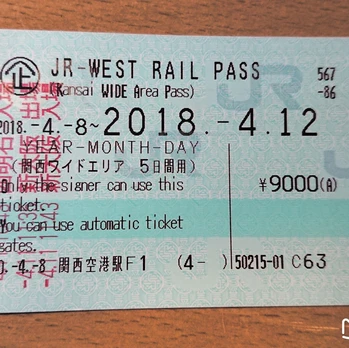
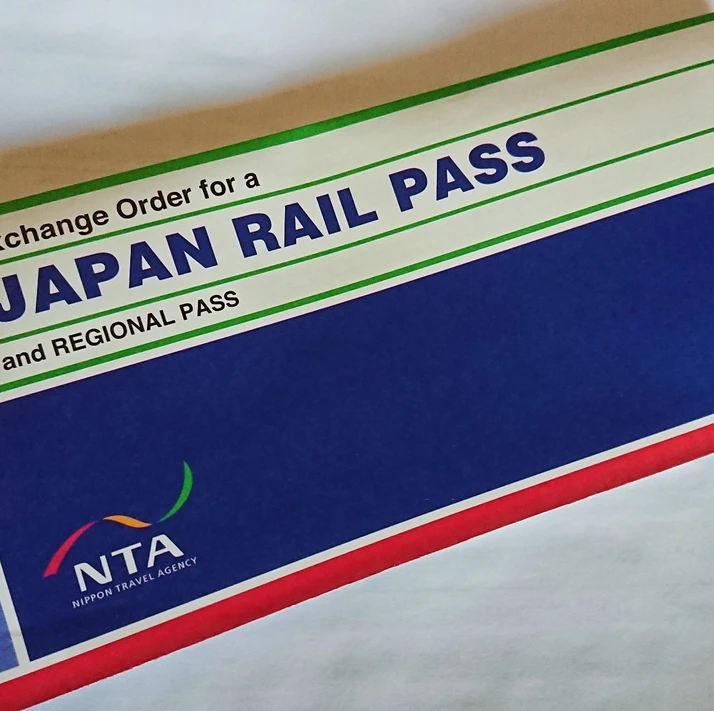
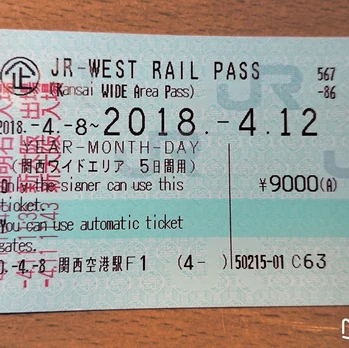
Most railways in Shiga are JR lines, so I bought a JR West Kansai Wide Area Pass, valid for five days. It cost ¥9,000 on the official website (about $53), but I snagged it for just $68 on a Chinese travel platform. Breaking even was a no-brainer—a one-way trip from Kansai Airport to Hikone alone costs ¥4,200, and with the limited express surcharge, it jumps to ¥5,400.
I debated between the five-day wide pass and a one-plus-two-day Kansai Thru Pass, but ultimately chose the former because I wanted to ride the Eva-themed Shinkansen.
Budget Tip: If you are planning a Lake Biwa cycling trip, the Kansai Wide Area Pass is your best bet for cost-effective transportation between major hubs like Kyoto, Osaka, and Hikone.
Accommodation: Capsule Hotels and Century-Old Houses
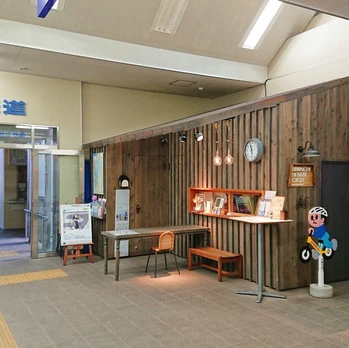
At ¥31 per night, I stayed at Calendar Hotel, a capsule hotel in Otsu. Accommodation options in Shiga are indeed limited—I spotted plenty of resorts and guesthouses along the cycling route, but the prices were probably eye-watering.
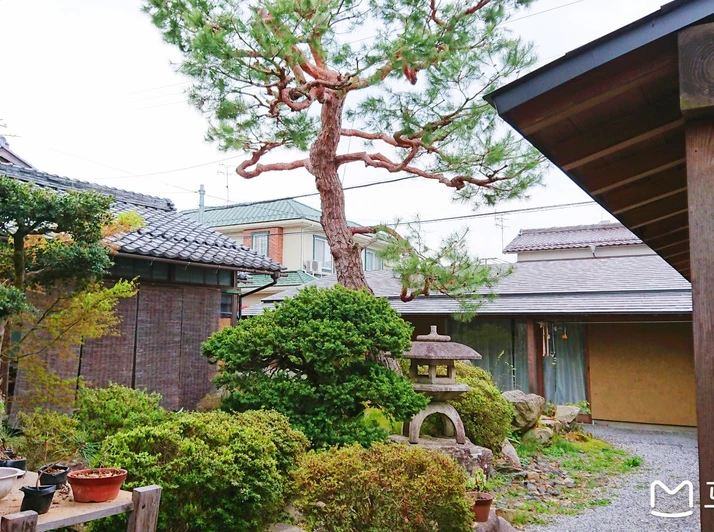
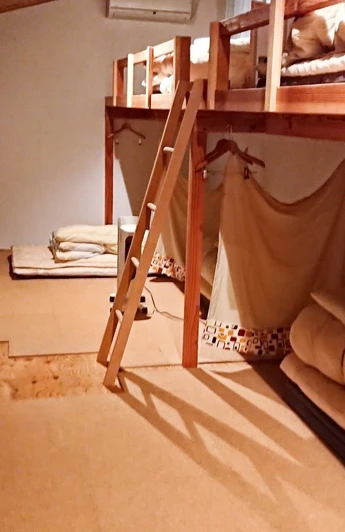
In Hikone, I stayed at Guesthouse Muga for ¥2,800 per night (totaling ¥8,400 for three nights). This century-old traditional house was run by a photography enthusiast who stood over 180 cm tall. The door frames, however, maxed out at 175 cm. I bumped my head several times in one night. But my first experience with a kotatsu (heated table) was pure bliss—the "devil's mouth" lived up to its reputation; once you got in, you never wanted to leave.
Bicycle: An Unexpected Italian Colnago
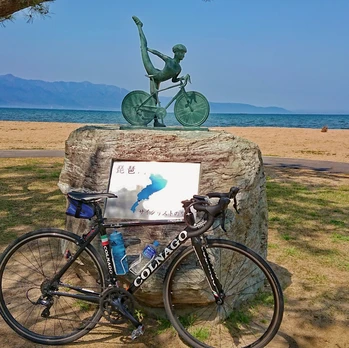
At the "Lake Biwa One-Week Bicycle Rental" in Maibara Station, I rented a road bike for two days at ¥6,500. I got an Italian Colnago Mondo, with an aluminum frame and carbon fork, equipped with a Sora groupset. It was a Japan-exclusive model, retailing for ¥130,000.
The bike was in such pristine condition that I wanted to throw away my own bike when I got home—the gears shifted smoothly, the ride was effortless. For a novice like me, it was more than enough.
Cycling Tip: If you are looking for a [Link: Lake Biwa cycling route guide], start at Maibara Station. The rental shop there offers high-quality road bikes perfect for the 200km circumference.
Day 1: Hopping Across China, South Korea, and Japan
The "Contrast" at Pudong Airport
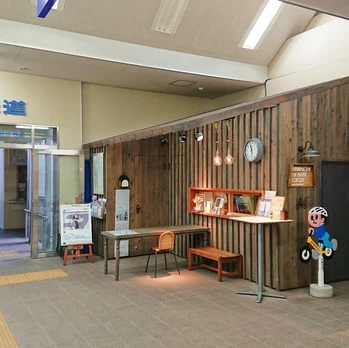
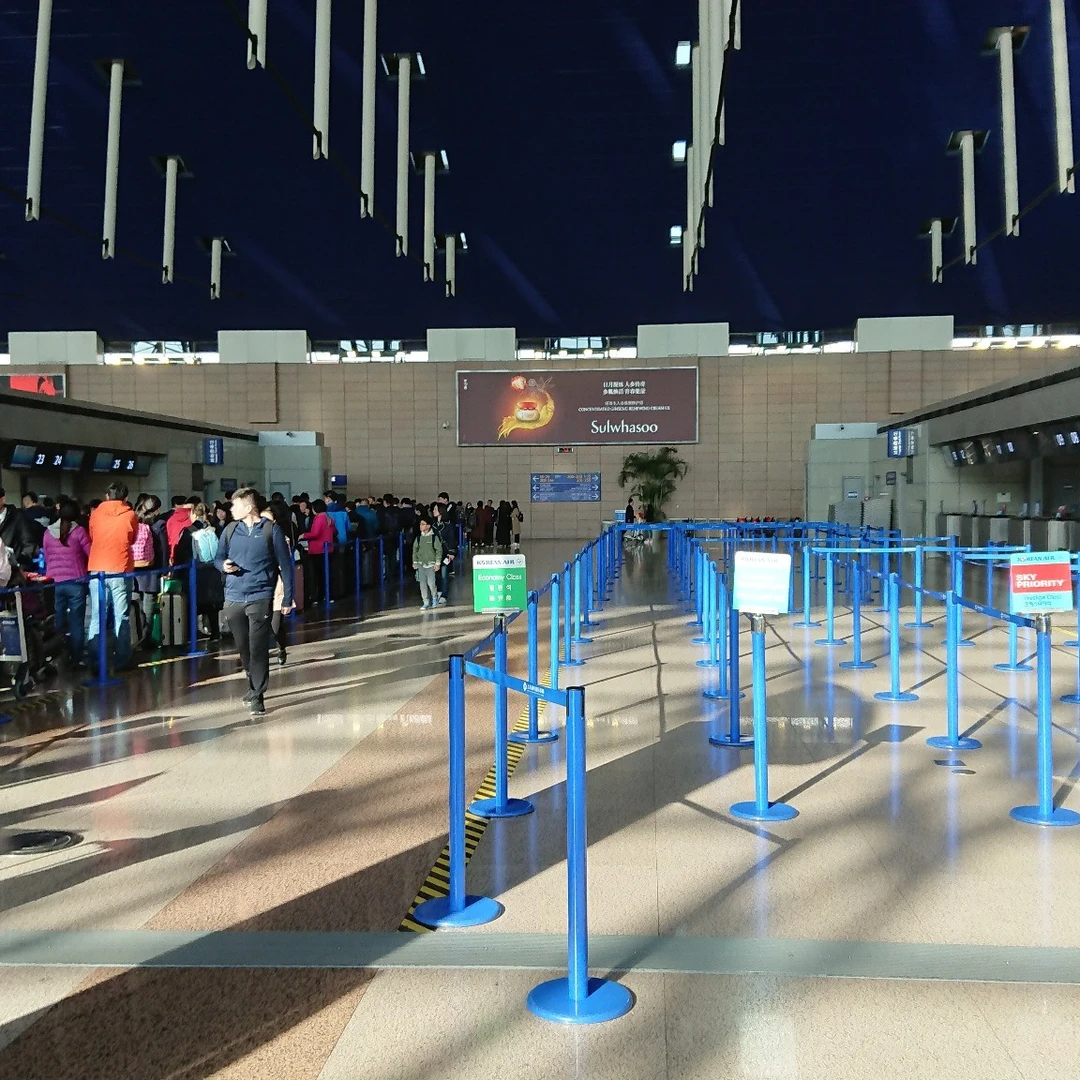
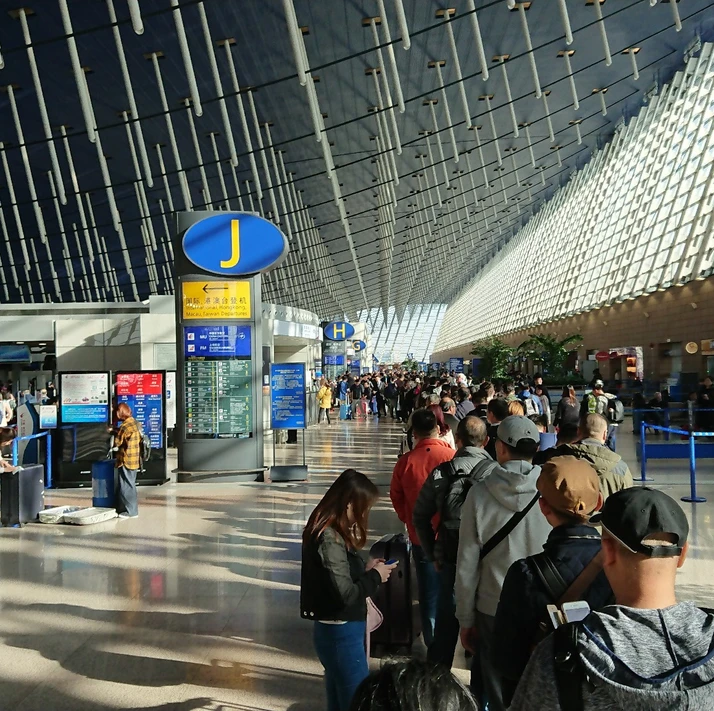
At the check-in counters, the China Eastern area was packed, stretching across three islands, while Korean Air's area was eerily quiet. I smugly walked over to the end of the China Eastern line, snapped a photo, and then sauntered away. China Eastern's popularity on China-Japan routes was obvious, but the orderly atmosphere was surprisingly pleasant.
Incheon T2: A Terminal That Breathes
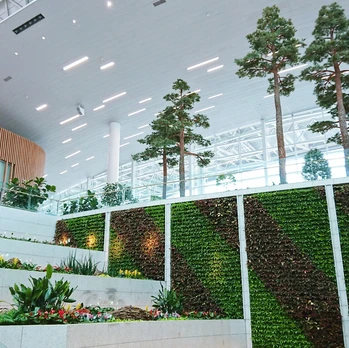
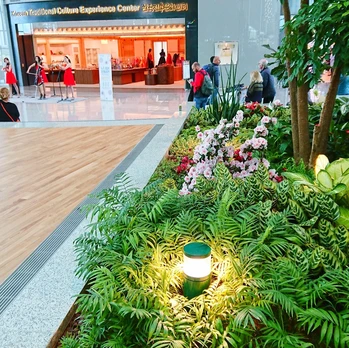
As soon as I stepped out of the transit hall, I saw tall pine trees growing inside the terminal. Planting trees in an airport terminal—Singapore's Changi probably started the trend, but Incheon T2 executed it well. LED screens were everywhere: flat, curved, even embedded in public art installations. It felt like a Korean LED display expo.
My only complaint? The entire terminal was bathed in a strange blue hue. When I got off the plane, I even wondered if something was wrong with my eyes. That blue resembled Korean Air's signature shade, but I've never thought it looked good—KLM's blue is way better!
The 747-8: An Unexpected Delight
I'd expected to fly on a Boeing 787, but instead, I got a 747-8. Could it get any better? Who doesn't respect the "Queen of the Skies"? There are only 47 passenger versions of the 747-8 in the world—aside from Air Force One and VIP jets, only Lufthansa, Korean Air, and Air China operate 36 of them. As a SkyTeam enthusiast, Korean Air was my only chance to ride this aircraft.
Before landing, the plane circled over Kansai Airport twice, and I managed to capture a photo of the entire first island of the world's largest man-made airport.
A Spontaneous Visit to Nijo Castle's Night Cherry Blossoms
I'd originally planned to head straight to Hikone and sleep, but after exchanging my JR pass, I realized I had time to catch the 18:16 Haruka limited express. So I decided to take a chance and visit Nijo Castle for its night cherry blossoms.
The result? The blossoms were almost gone, with only a few sparse trees remaining. White petals mixed with green leaves, illuminated by eerie yellow lights—I couldn't tell what I was looking at. A crowd had gathered around one cherry tree, clicking away furiously.
But the light show was surprisingly impressive. The karamon (Chinese-style gate) served as a backdrop, with projections of cherry blossoms and wisteria flowers, perfectly capturing the spring atmosphere while showcasing Japan's theme of harmony. The five-minute display was a small consolation.
Day 2: Hikone Castle and the Start of a 153-Kilometer Ride
Hikone Castle's Cherry Blossoms and the Cute Mascot
Passing through the Ginza-cho shopping street and entering Honmachi, I saw "Taisho Roman"-themed buildings that blended Japanese and Western styles. White walls and black roofs marked traditional Japanese houses, most of which were Omi beef restaurants. Unfortunately, I arrived too early to find breakfast.
The cherry blossoms at Hikone Castle had already entered their leaf-bloom stage. The color of the trees lining the moat was so ambiguous that I wondered if I was looking at autumn foliage instead. However, the weeping cherry tree in front of Shiga Prefectural Office was in full bloom—a pleasant surprise.
A bronze statue of Ii Naomasa, one of Tokugawa's Four Heavenly Kings, stood in front of the castle. On the other side, the adorable Heisei-era mascot, Hikonyan, was enthusiastically welcoming visitors. Well, cuteness is justice.
The 153-Kilometer Ride: From Maibara to Otsu
The ride began at Maibara Station. The Lake Biwa cycling path is well-marked and mostly flat, making it accessible for beginners. The route hugs the shoreline, offering stunning views of the lake and the distant mountains.
Key highlights of the ride: - Shirahige Shrine: A stunning torii gate standing in the water. - Omihachiman: A historic canal town perfect for a lunch break. - Otsu Port: The endpoint for the day, where the capsule hotel awaited.
Cycling Note: The full circumference of Lake Biwa is about 200km. I only did 153km in one day, but most cyclists break it into two or three days for a more relaxed pace.
FAQ: Cycling Around Lake Biwa
1. When is the best time to cycle around Lake Biwa?
 Answer: Late March to May (spring) and September to November (autumn) offer the best weather. The cherry blossom season (early April) is popular, but the lake is beautiful year-round. Summer can be humid, and winter brings snow to the northern shores.
2. Do I need to bring my own bike?
 Answer: No. The "Lake Biwa One-Week Bicycle Rental" in Maibara Station offers high-quality road bikes (like the Colnago I rented) and electric-assist bikes. Reservations are recommended during peak season.
3. Is the Lake Biwa cycling route suitable for beginners?
Answer: Yes. The path around the southern and eastern shores is mostly flat and well-paved. The northern section has some hills, but the views are worth the effort. Most cyclists complete the loop in 2-3 days.
4. What should I pack for a Lake Biwa cycling trip?
 Answer: Cycling gloves, a water bottle, sunscreen, a light jacket (wind can pick up near the lake), and a small repair kit. The rental shop provides helmets and lights.
5. Can I combine Lake Biwa with Kyoto or Osaka?
 Answer: Absolutely. Otsu (the capital of Shiga) is only 10 minutes from Kyoto by train. You can easily do a day trip from Kyoto to cycle a portion of the lake.
Conclusion: Why You Should Cycle Lake Biwa This Spring
The cherry blossoms might have fooled me, but Shiga Prefecture gave me something better: a sense of discovery. The Colnago glided smoothly over the lakeside paths, the kotatsu at Guesthouse Muga kept me warm, and the night view of Nijo Castle reminded me that even failed plans can yield beautiful memories.
Ready to plan your own Lake Biwa cycling adventure?
Don't let the cherry blossom season dictate your travel happiness. Book your JR pass, rent a bike at Maibara Station, and discover the "other spring" in Shiga. Whether you are a seasoned cyclist or a casual traveler, the Lake Biwa loop offers a unique blend of nature, history, and Japanese hospitality.
Start planning today. The road is waiting.
Internal Linking Suggestions: - [Link: Best Japan Rail Pass for Kansai Region 2024] - [Link: Hikone Castle Travel Guide and History] - [Link: Lake Biwa Cycling Route Map and Tips] - [Link: Guesthouse Muga Hikone Review] - [Link: Nijo Castle Night Illumination 2024 Schedule]