Art Sprint: A Tale of Three East Coast Cities — Running in Washington's Freezing Wind, Getting Lost in New York's Glitter, Chasing Dreams in Boston's Snow
Meta Description: Experience a 9-day East Coast art sprint through Washington D.C., New York, and Boston. From Van Gogh at the National Gallery to The Starry Night at MoMA, discover how to survive freezing temps and maximize museum time.
"Every wait eventually echoes back."
When all the tedious preparations — plane tickets, hotels, visas, time off from work, weather checks — finally fell into place, my companion and I stood in the departure hall of Hong Kong International Airport, dragging our suitcases, with only one thought in our minds: America, here we come.
This wasn't a leisurely vacation. It was an art-and-history-fueled "sprint-style" checklist marathon. Washington D.C., New York, Boston — three cities, nine days, wind chills of minus 15 degrees Celsius, and countless breathtaking moments.
Chapter One · Washington D.C.: Frozen Like an Ice Cream Cone, But Still Running in the Sun
First Encounter: The Customs Officer's "Hello"

Our plane landed at Washington Dulles Airport, and the first hurdle was immigration. Honestly, I had mentally prepared myself before departure — the tension of the U.S. visa interview was still fresh in my memory. But reality turned out to be surprisingly gentle: the customs officer saw my Chinese passport, greeted me with a clumsy but sincere "Hello," and pointed to a self-service printing machine nearby — visa documents could be printed on the spot, no queuing like in other countries.
At that moment, my first impression of America was a perfect score.
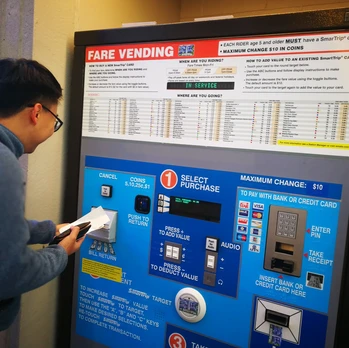
We took a train from the airport into the city. Outside the window, the setting sun painted the sky a deep orange. But jet lag had turned my brain to mush, and I felt groggy and disoriented. What made it worse? Sorry, but mobile payments don't exist here. The moment I pulled out my credit card, I truly realized I had crossed the Pacific.
Sprint Route: A Battle Plan Timed to the Minute
We had exactly one full day for Washington D.C. Yes, just 24 hours. So my route had to be timed to the minute:
- The White House (exterior photo, 5 minutes)
- 18-minute walk → Washington Monument Park (1 hour stay)
- 5-minute walk → Lincoln Memorial (20 minutes)
- 20-minute walk → National Gallery of Art (1.5 hours)
- 10-minute walk → U.S. Capitol (exterior only)
You think I'm joking? No, this was a race against time and temperature.
January in Washington: Frozen Like an Ice Cream Cone, But the Weather Was Stunning
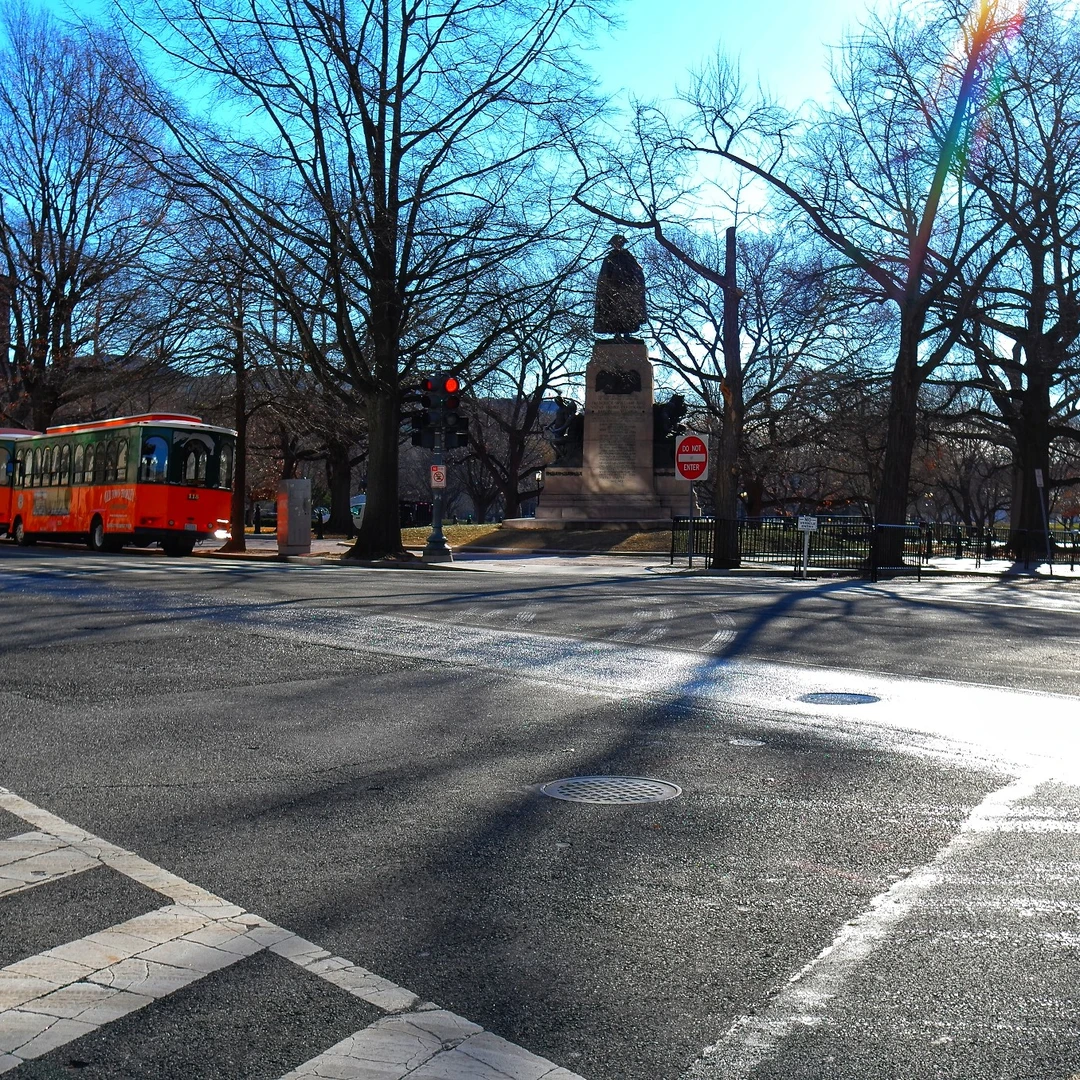
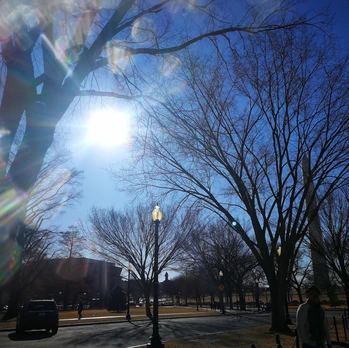
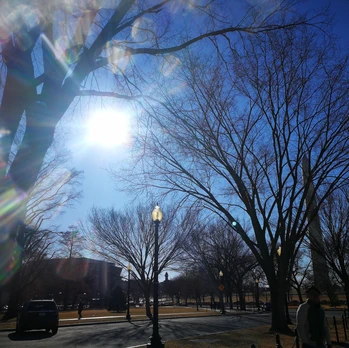
In January, the wind chill in Washington D.C. hovers around minus 15 degrees Celsius. I was bundled up in a down jacket, scarf, gloves, and hand warmers, yet I still felt like an ice cream cone fresh out of the freezer. But the weather gods were on our side — clear blue skies and brilliant sunshine.
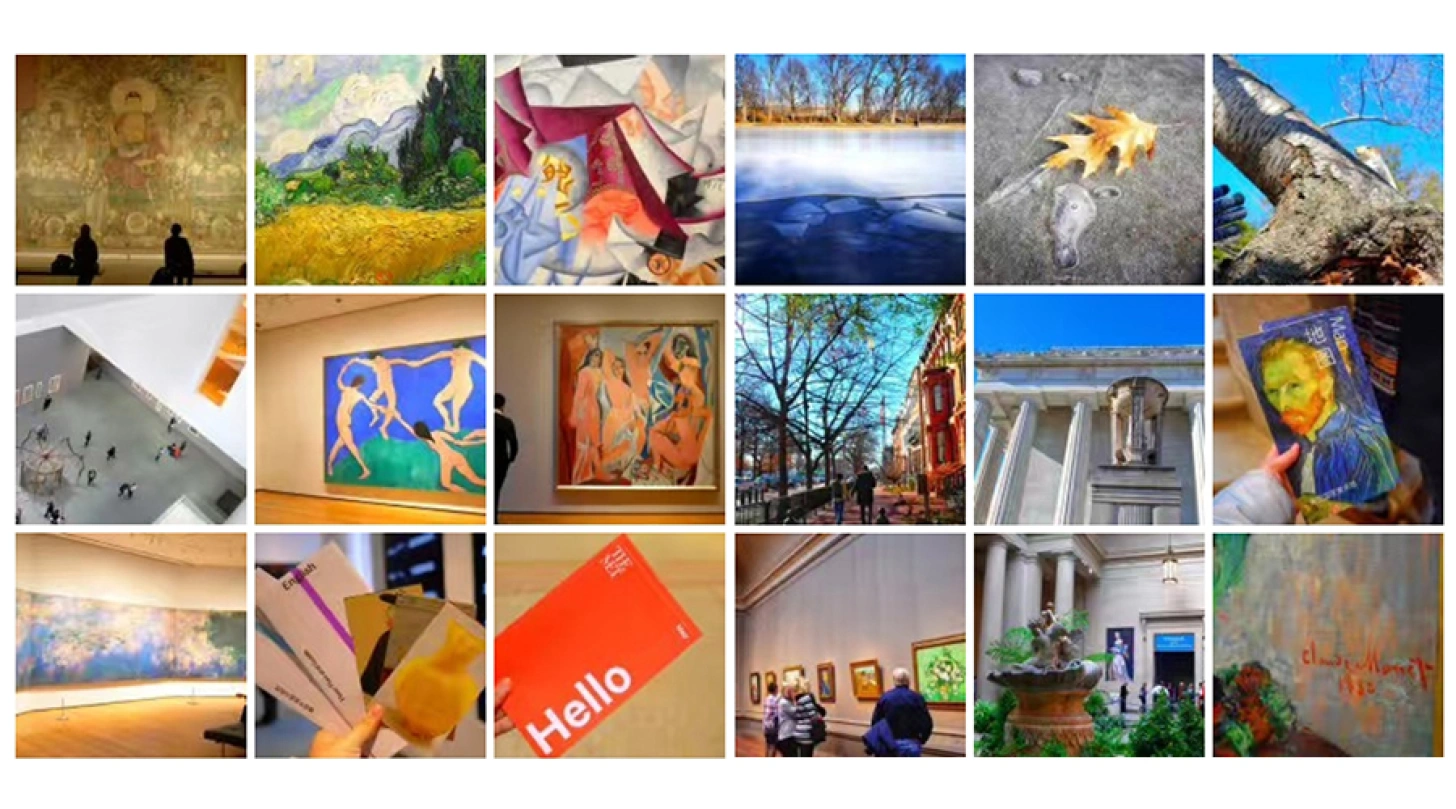
Walking along the National Mall, the lake was frozen solid, trapping bubbles and fallen leaves, creating a strangely serene beauty. Squirrels scurried around the trees — plump, fearless, and even approaching us to beg for food.
Oh, and that obelisk you've all been asking about — the Washington Monument stood against the blue sky, its reflection shimmering on the icy lake. It was unreal.
Don't ask me why the photo saturation is so high — because I shot it with a Leica.
The National Gallery: Face to Face with Van Gogh, Monet, and da Vinci
The National Gallery is divided into East and West buildings — half classical, half modern. I headed straight for the West Building, where Van Gogh, Monet, and the only da Vinci painting in the United States were housed.
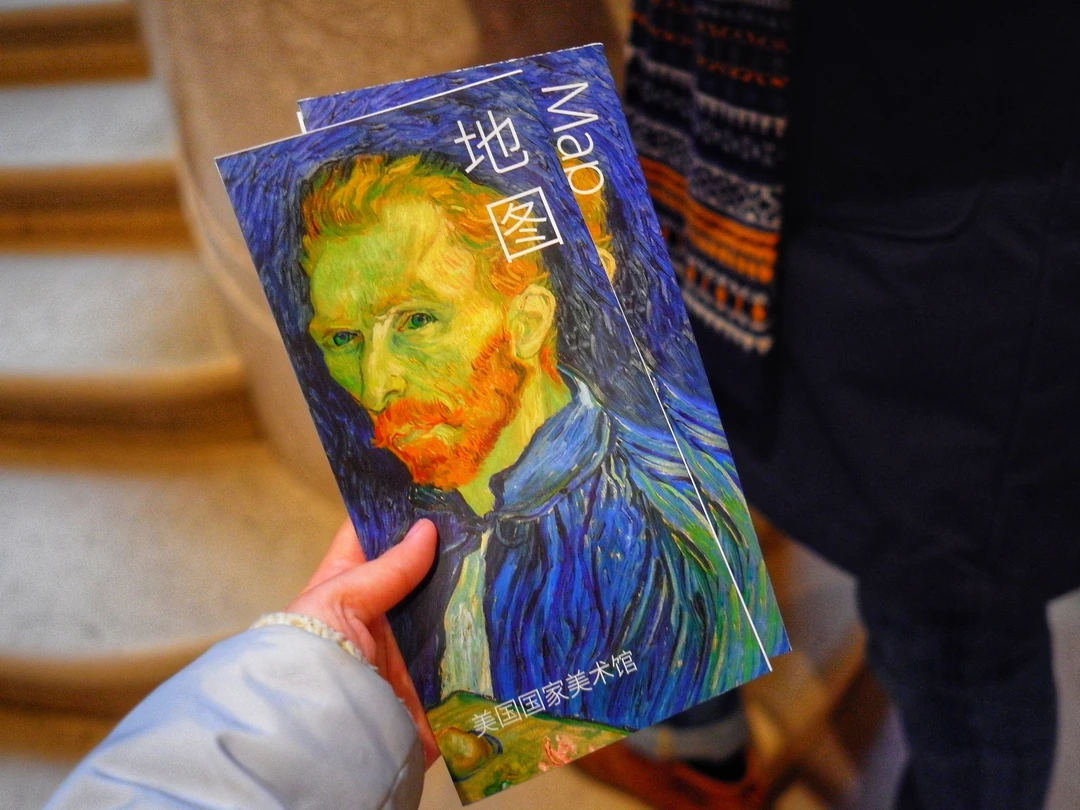
The galleries were arranged chronologically, starting with classical art. By the time I reached the Impressionist section, my pace had slowed involuntarily. Van Gogh's self-portrait was right in front of me — bold, powerful brushstrokes that seemed to channel his inner turmoil and struggle. Monet's Woman in the Wind was so tender it almost made me cry; that faint signature "Monet" felt like a kiss he'd left behind.
Even more fortunate, I stumbled upon a special Vermeer exhibition. The queue stretched for two or three hundred people. Although I didn't get to see Girl with a Pearl Earring, the waiting itself felt like a pilgrimage.
The East Building housed modern art — and honestly, I preferred the classics. Contemporary works felt too sharp, too emotionally intense, and harder to grasp. But standing before them, I still felt a jolt: Art isn't meant to be "understood" — it's meant to be "felt."
A Small Grumble: U.S. Intercity Transportation
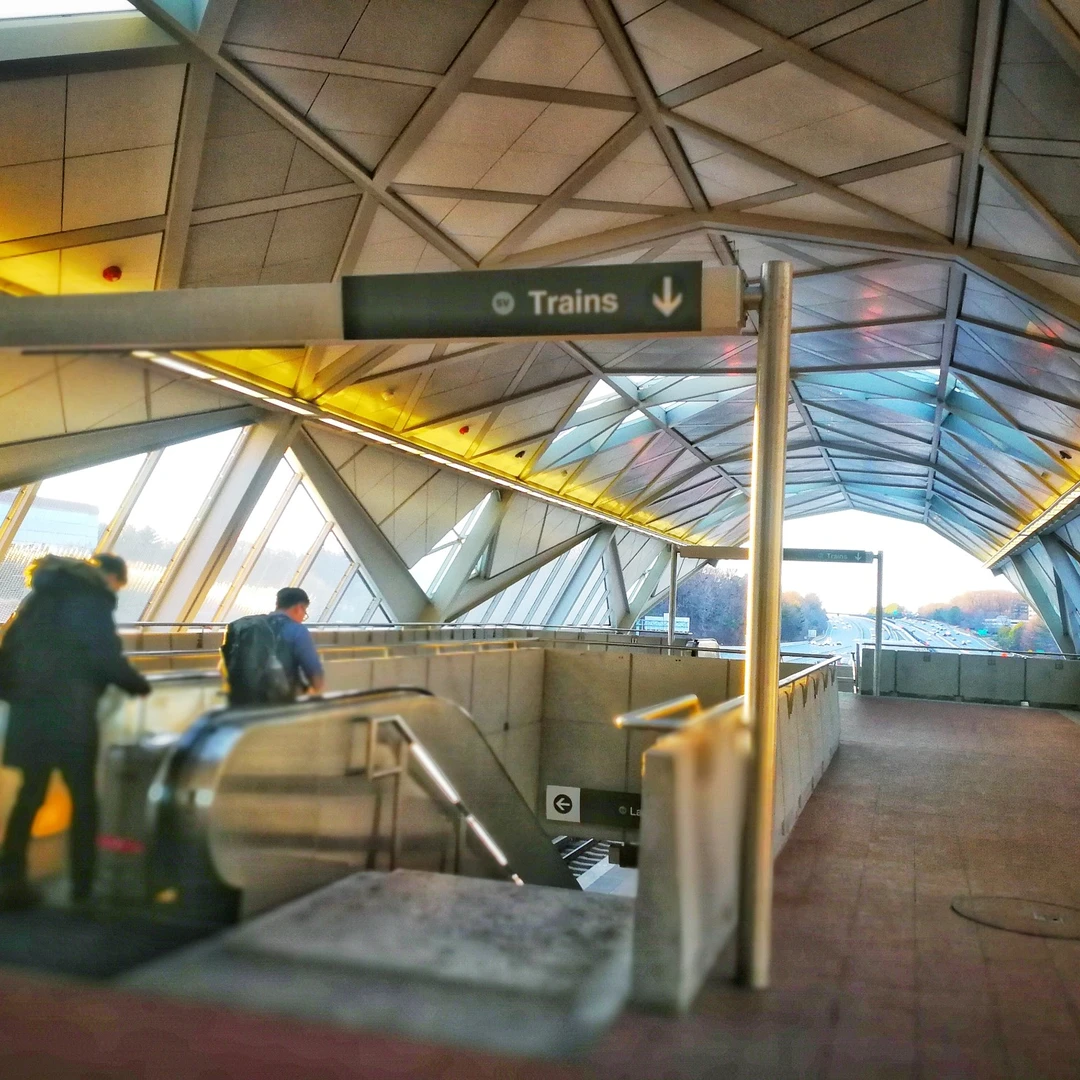
I can't help but marvel at China's high-speed rail. From Guangzhou to Shanghai, spanning half the country, it takes just a few hours and costs a few hundred yuan. In America, to go from Washington D.C. to New York on a budget, you're stuck with a 5-6 hour bus ride. In winter, the roads were slippery, the journey was nerve-wracking, and we hit traffic getting into the city. Efficiency? Not a thing.
[Link: How to travel between East Coast US cities on a budget]
Chapter Two · New York: At the Center of the World, Feeling Both Small and Grand
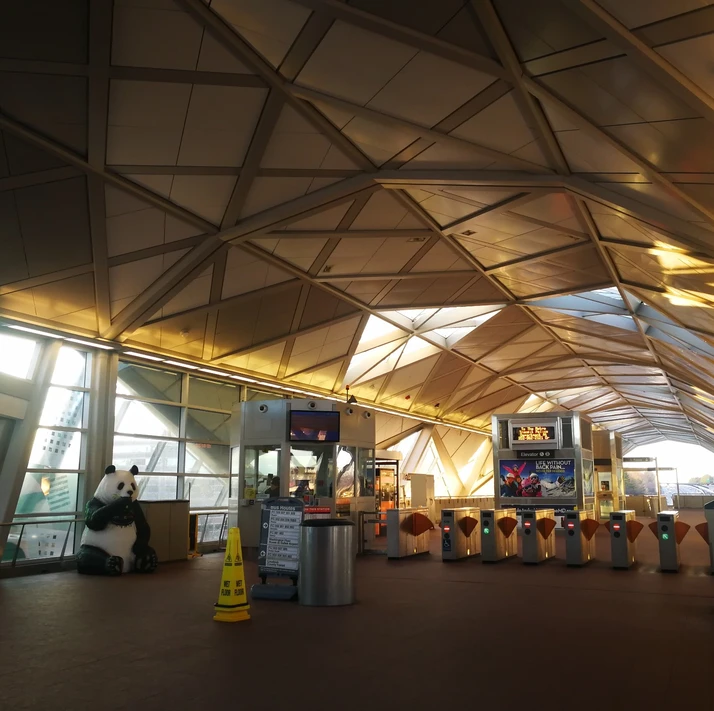
First Impression: This City Is Bigger Than You Think
New York lives up to its title as the "center of the world." If you think Shanghai's skyscrapers are impressive, New York's are like multiplying that by 1.5. Walking through Manhattan's streets, you feel like a speck of dust — but at the same time, you're awed by human creativity: For nearly a century, this city's wealth and ambition have never stopped flowing.
Day One: Statue of Liberty, Wall Street, The Met, Central Park
Route: Hotel → 1-hour subway → Statue of Liberty (1.5 hours) → 5-minute walk → Charging Bull → 40-minute subway → The Metropolitan Museum of Art (3 hours) → Central Park
We left the hotel at 9 a.m. Winter sunrises are late, and by the time we reached the ferry terminal, the sky was just brightening. The Statue of Liberty ferry slowly pulled away, seagulls circling, and looking back at the Manhattan skyline felt like a movie scene.
Weather: Though it wasn't as cold as Washington, the mix of rain and snow hitting your lungs was enough to make you cough for two weeks.
The Metropolitan Museum of Art — one of the world's four great museums. The moment I walked in, I was stunned by the Chinese Yuan Dynasty mural The Buddha of Medicine Bhaishajyaguru (Yaoshi Jingbian Tu) from Guangsi Temple in Shanxi — the museum's crown jewel, from my homeland. The Egyptian wing, the European painting galleries... every piece deserved a closer look. But time was short, so we could only skim the surface. Lucky for us, there was a Michelangelo special exhibition — original sketches and sculptures right before our eyes. The excitement was indescribable.
Central Park: In winter, the yellow leaves from autumn still blanketed the ground, their colors so vivid they were almost "eye-searing." Squirrels were everywhere, like something straight out of Fantastic Beasts and Where to Find Them when Newt Scamander chases a creature through the park.
[Link: Best time to visit New York museums to avoid crowds]
Day Two: MoMA, Grand Central Terminal, Empire State Building, Times Square
Route: Wake up naturally → 20-minute subway → MoMA (3 hours) → 16-minute walk → Grand Central Terminal → 10-minute walk along Fifth Avenue → Empire State Building (2 hours) → Times Square
MoMA (The Museum of Modern Art) was expensive, but totally worth it. Compared to The Met, MoMA felt younger and more relaxed. Van Gogh's The Starry Night was there — one of only two night-sky paintings he ever created; the other is in Europe. I stood in front of it for a long, long time. The brushstrokes swirled like a vortex, as if they could pull you in.
Picasso, Matisse, Dalí... every piece whispered: Art comes from life, but rises above it. It conveys a way of thinking. When life feels chaotic, visiting a museum and looking at everything with a detached perspective might just give you a new answer.
Empire State Building: The 86th-floor observation deck offered a panoramic view of Manhattan. As the streetlights came on, Fifth Avenue was a river of traffic. Watching the Empire State Building at sunset felt like a scene from a classic film — and if you're lucky, you might even spot the Sleepless in Seattle bench in Central Park.
Times Square: The Glittering Heart of New York
Times Square at night is a sensory overload — neon lights, giant billboards, street performers, and tourists from every corner of the globe. It's chaotic, overwhelming, and absolutely unforgettable. You can't help but feel like you're at the center of the world, even if just for a moment.
Chapter Three · Boston: Chasing Dreams in the Snow
Arrival: A City of History and Academia
Boston was our final stop, and it felt like a breath of fresh air after the intensity of New York. The city is smaller, quieter, and steeped in history. From the Freedom Trail to Harvard Yard, every corner whispers stories of the American Revolution and the pursuit of knowledge.
Harvard University: Walking in the Footsteps of Genius
We took a train from New York to Boston and headed straight for Harvard. The campus was covered in a light dusting of snow, and the red brick buildings looked like they belonged in a postcard. We walked through Harvard Yard, past the statue of John Harvard, and imagined the countless scholars who had passed through these gates.
The Harvard Art Museums were a hidden gem — smaller than The Met or MoMA, but with an impressive collection of European and Asian art. The highlight for me was a small gallery of Impressionist works, including a lovely Monet landscape.
Boston's Snow: A Winter Wonderland
Snow fell gently as we explored the city. The Freedom Trail, with its red brick line winding through historic sites, was a joy to follow — even in the cold. We visited the Old North Church, the Paul Revere House, and the Boston Common, where children were sledding down a small hill.
The Museum of Fine Arts, Boston was our final art stop. It's one of the largest museums in the United States, with an incredible collection of Asian art — including a stunning Chinese Buddhist sculpture gallery. We spent hours wandering through the galleries, from ancient Egyptian artifacts to contemporary installations.
[Link: Top 10 things to do in Boston in winter]
FAQ: Planning Your East Coast Art Sprint
1. Is it worth visiting the East Coast in winter?
 Absolutely. Yes, it's cold — but the crowds are thinner, flights are cheaper, and the winter light is beautiful for photography. Just pack thermal layers, a quality down jacket, and hand warmers.
2. How many days do I need for Washington D.C., New York, and Boston?
A minimum of 7-9 days is ideal. With 9 days, you can spend 2 days in D.C., 4 in New York, and 2 in Boston (plus travel time). If you're short on time, prioritize New York.
3. Which museums are must-visits for art lovers?
 - Washington D.C.: National Gallery of Art (West Building for classics) - New York: The Met (for breadth) and MoMA (for modern art) - Boston: Museum of Fine Arts (for Asian art and Impressionists)
4. How do I get between cities on a budget?
Book bus tickets in advance on platforms like Greyhound or FlixBus. The trip from D.C. to New York takes 4-5 hours; New York to Boston takes 4-5 hours. Amtrak trains are faster but more expensive.
5. Can I see all three cities in 9 days?
Yes, but it's a sprint, not a leisurely stroll. Plan your routes carefully, book museum tickets in advance, and be prepared for long days on your feet. It's exhausting but incredibly rewarding.
Final Thoughts: Why You Should Do This Trip
This art sprint across the East Coast taught me something important: Art isn't about seeing everything — it's about feeling something. Whether it was standing in front of Van Gogh's Starry Night at MoMA, watching the sunset over the Empire State Building, or chasing squirrels through Central Park, every moment was a reminder of why we travel.
If you're planning a similar trip, remember: - Pack for the cold — layers are your best friend. - Book museum tickets in advance — especially for special exhibitions. - Embrace the chaos — New York will overwhelm you, but that's the point. - Take time to just sit and watch — whether it's the National Mall or a snowy Boston street.
Ready to plan your own East Coast art sprint? Start by booking your flights, mapping out your museum routes, and packing your warmest coat. The art is waiting — and so is the adventure.
[Link: How to plan a budget-friendly US East Coast trip]
Have you visited any of these cities? Share your favorite museum moment in the comments below!
You may also like