24-Hour Getaway: A Lotus Date at Guyi Garden with Your Camera – The Ultimate Shanghai Summer Photography Guide
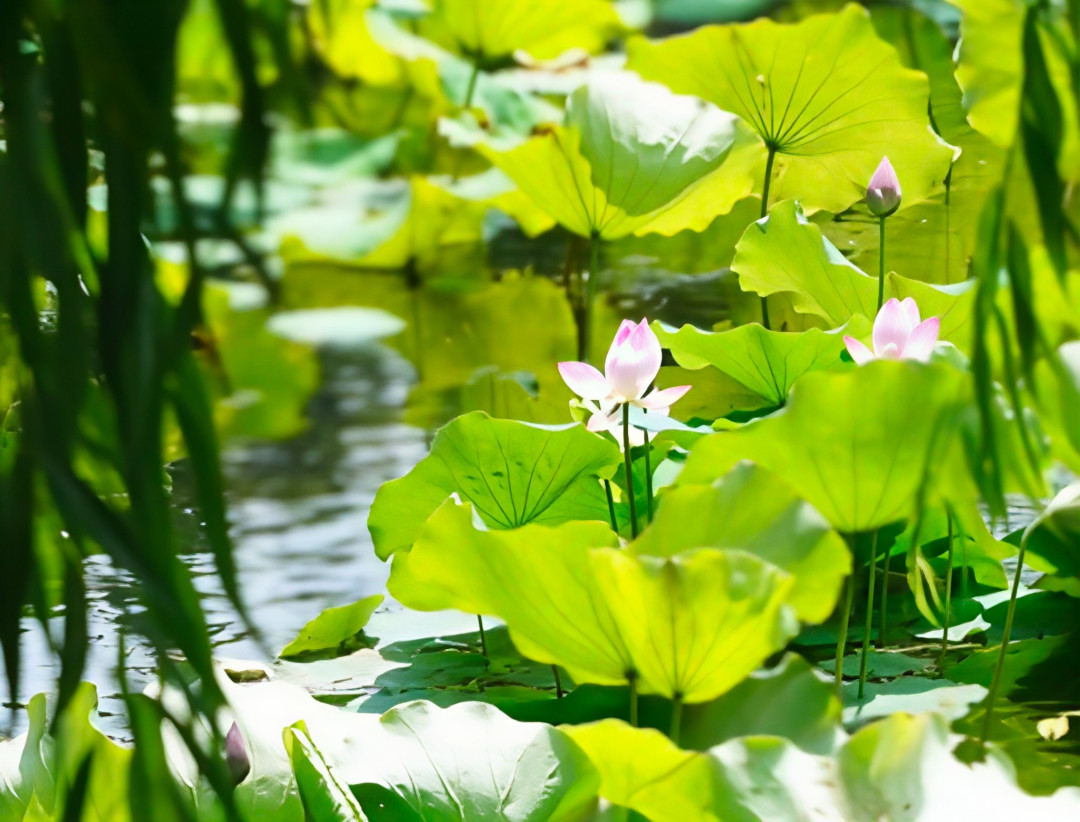
Meta Description: Escape Shanghai's 38°C heat with a 24-hour lotus photography getaway to Guyi Garden in Nanxiang. Discover hidden photo spots, gear tips, and a perfect itinerary for capturing Ming-era architecture and blooming lotuses.
Shanghai in high summer. The mercury hits 38°C, and the city turns into a giant steam cooker. Sure, air-conditioned rooms are cool, but stay inside too long, and you'll feel like a wilted leaf—limp, lifeless, lacking all energy. Yet the thought of hitting popular attractions brings its own dread: being squashed into a "human pancake" by the crowds. Is there a place where you can escape the heat and capture photos that'll make your friends' jaws drop?
The answer is yes. It's at Guyi Garden in Nanxiang—a 24-hour getaway that combines classical Chinese garden photography with the serene beauty of lotus season.
This isn't one of those trendy influencer spots. It's the pinnacle of "old-school" lotus appreciation. Ming and Qing dynasty timber architecture, Shanghai-style bonsai art, the rustle of wind through bamboo groves, and a pond bursting with blooming lotuses—just imagining it cuts the heat in half. Grab your camera and follow me. Let the fragrance of lotuses and the click of your shutter keep the scorching heat outside the garden gates.
Why Guyi Garden is Shanghai's Best Summer Photography Destination
When most people think of Shanghai summer photography, they imagine the Bund at sunset or the neon-lit skyline of Pudong. But for those in the know, Guyi Garden lotus photography offers something far more timeless. Located in Nanxiang, just 30 minutes from downtown Shanghai, this Ming-dynasty garden transforms into a photographer's paradise from late June through August.
The garden's unique selling point? It combines three elements that photographers crave: - Authentic Ming and Qing architecture with intricate timber details - Bonsai art that dates back centuries - Ponds overflowing with lotuses and water lilies that rival Monet's Giverny
[Link: Best Shanghai gardens for photography]
Route Planning: A Counter-Clockwise Loop, No Backtracking
Guyi Garden isn't huge, but its layout is exquisitely designed. To efficiently hit all the prime photo spots, enter through the South Gate and walk counter-clockwise along the left side. Here's the Guyi Garden photography route:
Bonsai Garden → Great Lawn → Mandarin Duck Lake → Bu Xi Zhou (Moored Boat Pavilion) → Sui Yue Xuan (Moon-Shattering Pavilion) → Xiao Yun Dou (Little Cloud Arch) → Guan Yue Tai (Moon-Viewing Terrace)
This way, you won't miss a single shooting location, and you'll save yourself the hassle of doubling back. The entire loop takes about 2 to 3 hours—plenty of time to calmly fire off a few hundred shots.
Essential Camera Gear for Garden Photography
As for gear, here's my advice for Shanghai garden photography equipment:
- Wide-angle lens (16-35mm): Perfect for sweeping panoramas of pond-grown lotuses. Majestic.
- Medium telephoto (70-200mm): Compresses the layers between pavilions and lotuses, giving your images more narrative depth.
- Macro lens (100mm): For water lily stamens and bonsai textures—a detail lover's dream.
- CPL polarizer + ND8 neutral density filter: Tames highlights and enables slow shutter speeds, turning swimming koi and ducks into silky, dreamlike streaks. Instant masterpiece material.
Pro tip: Pack light. The garden paths are narrow, and lugging a full kit can exhaust you before you reach the best spots.
[Link: Best camera lenses for Chinese garden photography]
Potted Lotuses: Bringing the Garden into Your Frame
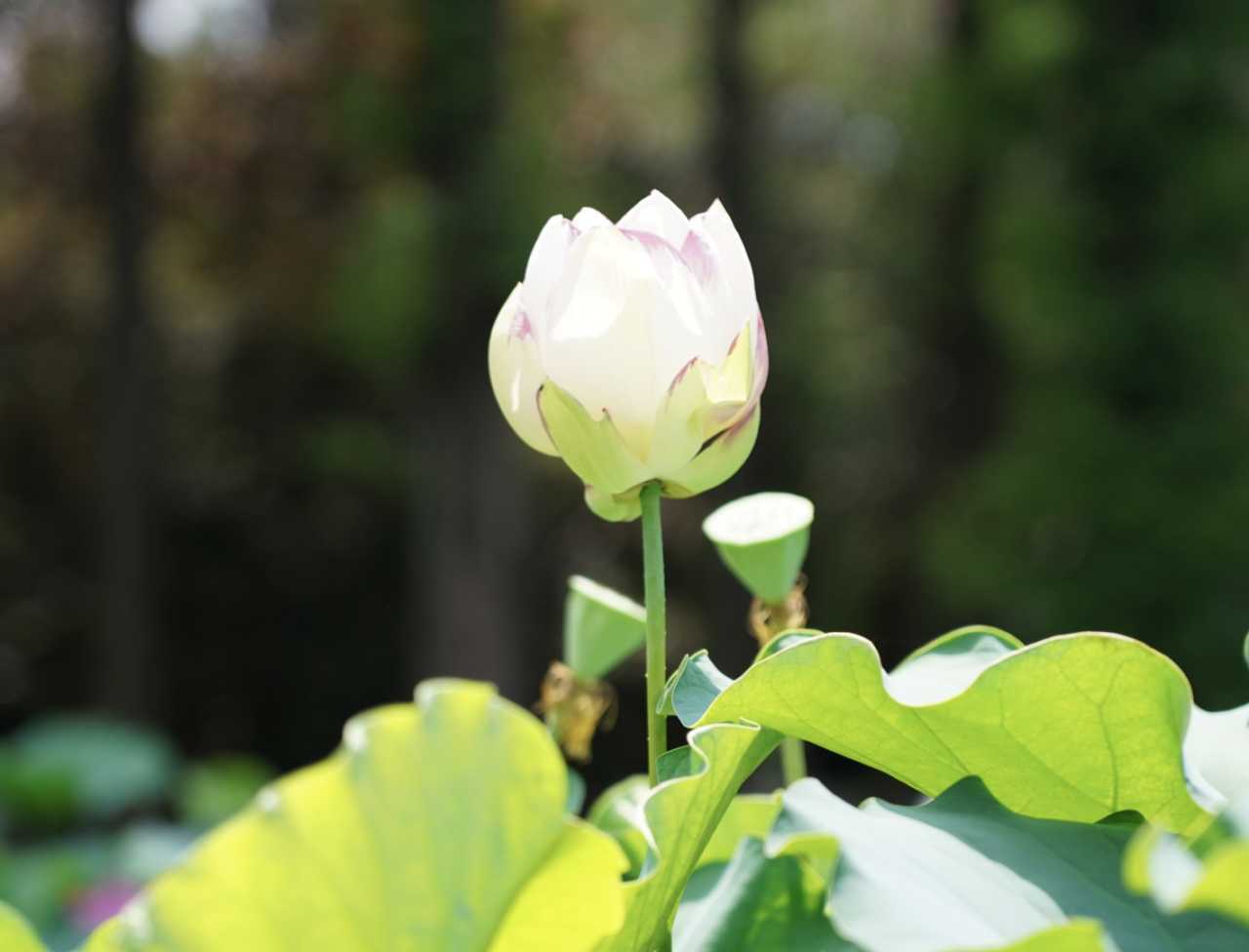
The bonsai area is a highlight of Guyi Garden, mainly spread across the "Yi Yi Huai Xiang" (Nostalgic Lotus) section on the Great Lawn and the Bonsai Garden. The lotus varieties here are rich, with petals as large as plates, shimmering brilliantly under the sun. Visitors often stop and stare, unable to resist pulling out their phones for a snap.
But if you're carrying a camera, think differently.
Best Lighting for Lotus Photography
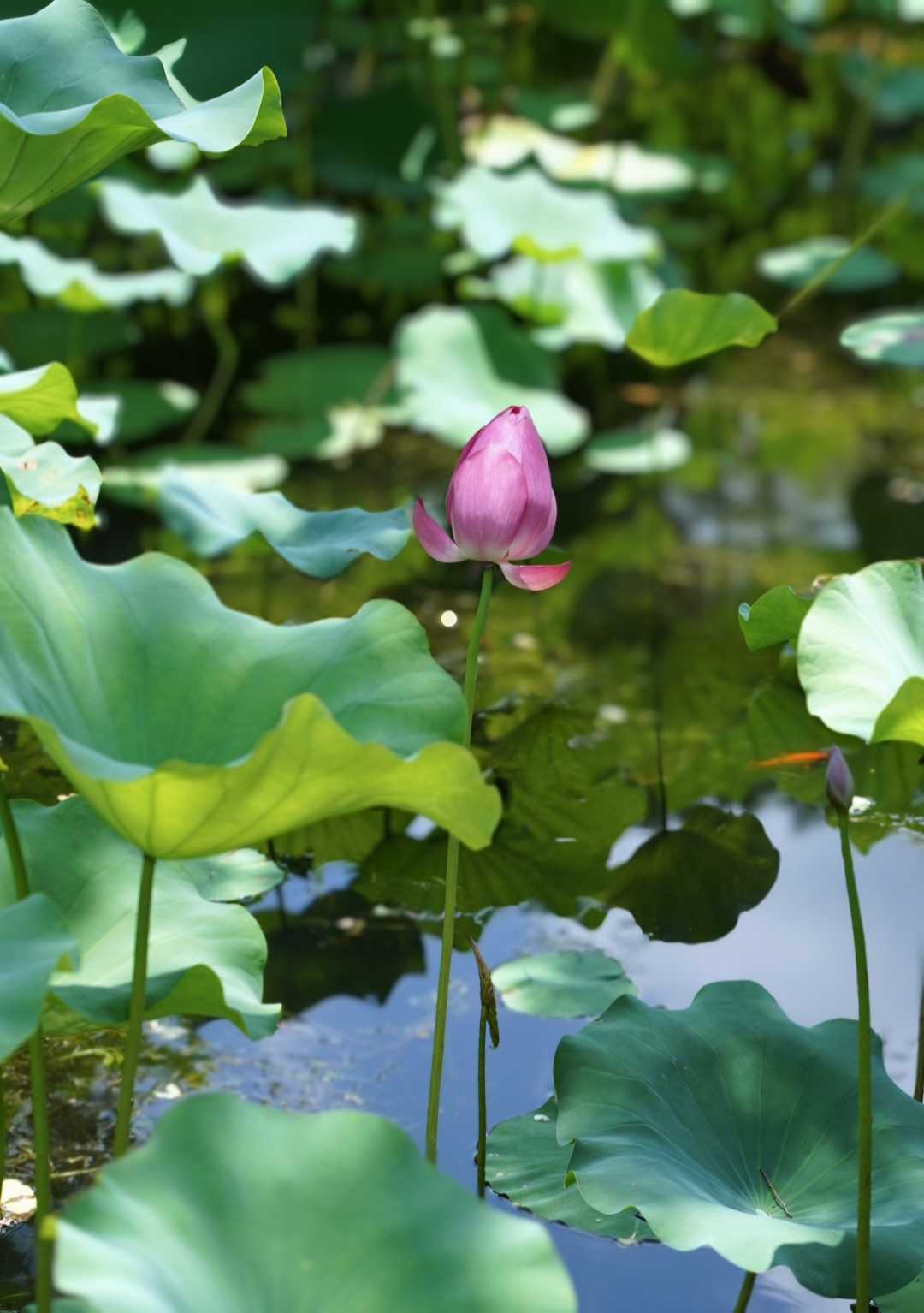
Recommended lighting: Soft side light from the east. At this angle, the lotus leaves become translucent, like natural lampshades, making the petals appear crystal-clear.
Shooting Tips for Potted Lotuses
- 45° overhead angle: Let the petals fill two-thirds of the frame, with the background blurred into Guyi Garden's whitewashed walls and dark tiles. Simple and elegant.
- Framing with foreground: Use a potted lotus as a "foreground frame," with a distant pavilion or rockery as the "background leading line." One photo can convey layers of depth.
- Extreme macro: Dewdrops roll along the lotus veins like a string of crystal prayer beads. Stop down to f/4.0 to keep the stamens sharp and the texture of the droplets perfect.
Pro tip: You can set up a tripod on the Great Lawn, but try to avoid the morning exercise crowd, or your frame might include a few "uninvited guests."
Pond-Grown Lotuses: Adding a Touch of Rouge to Ancient Architecture
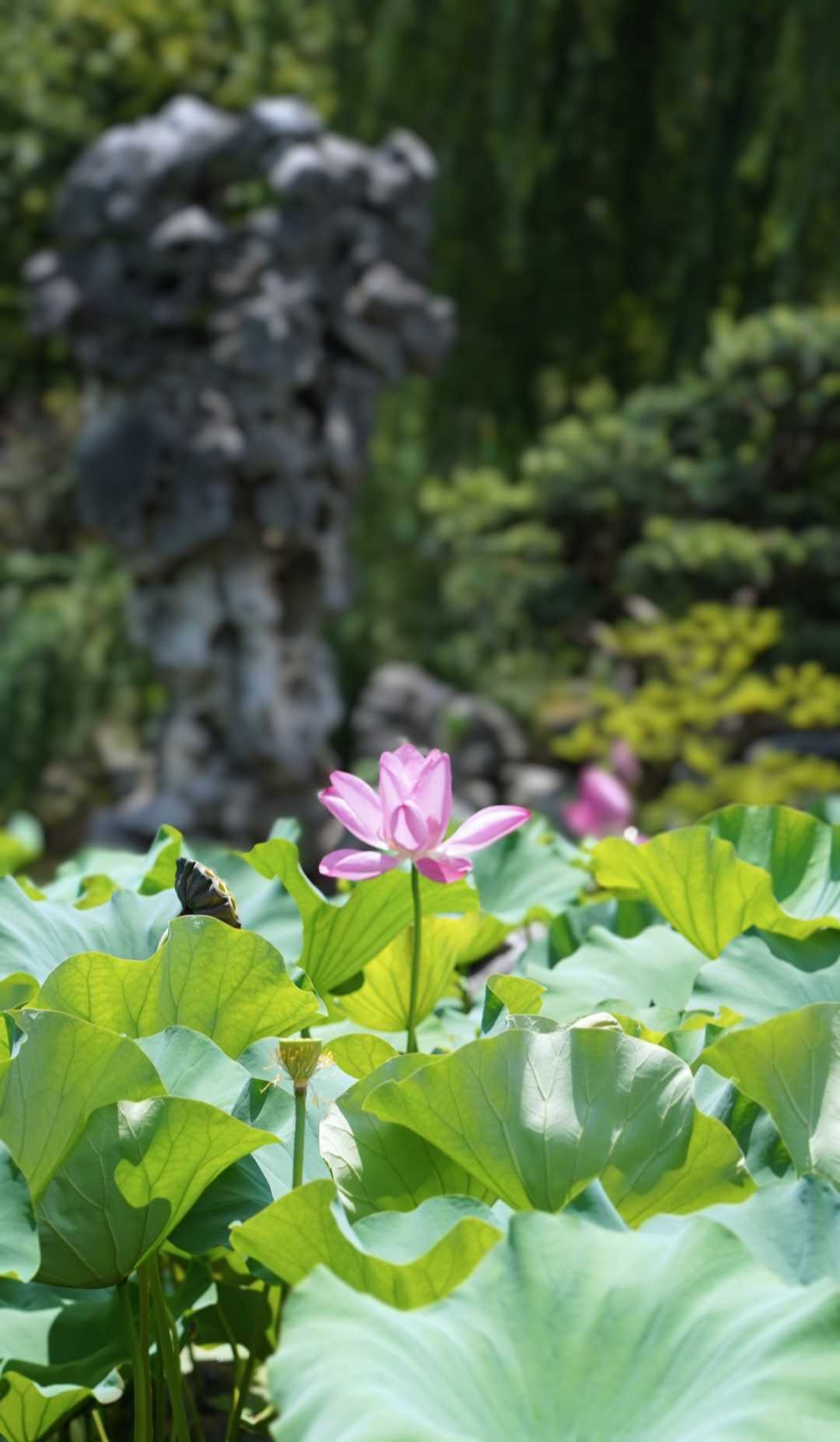
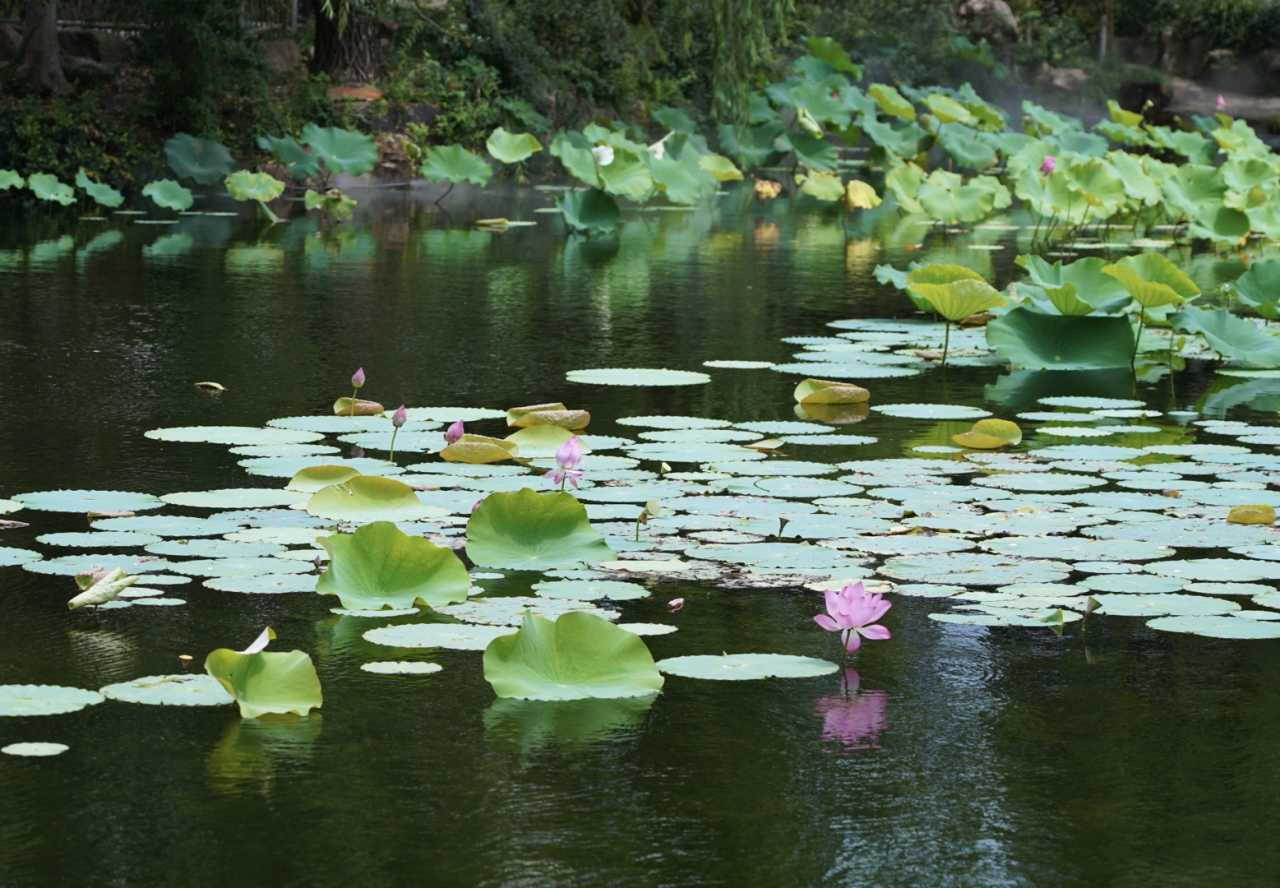
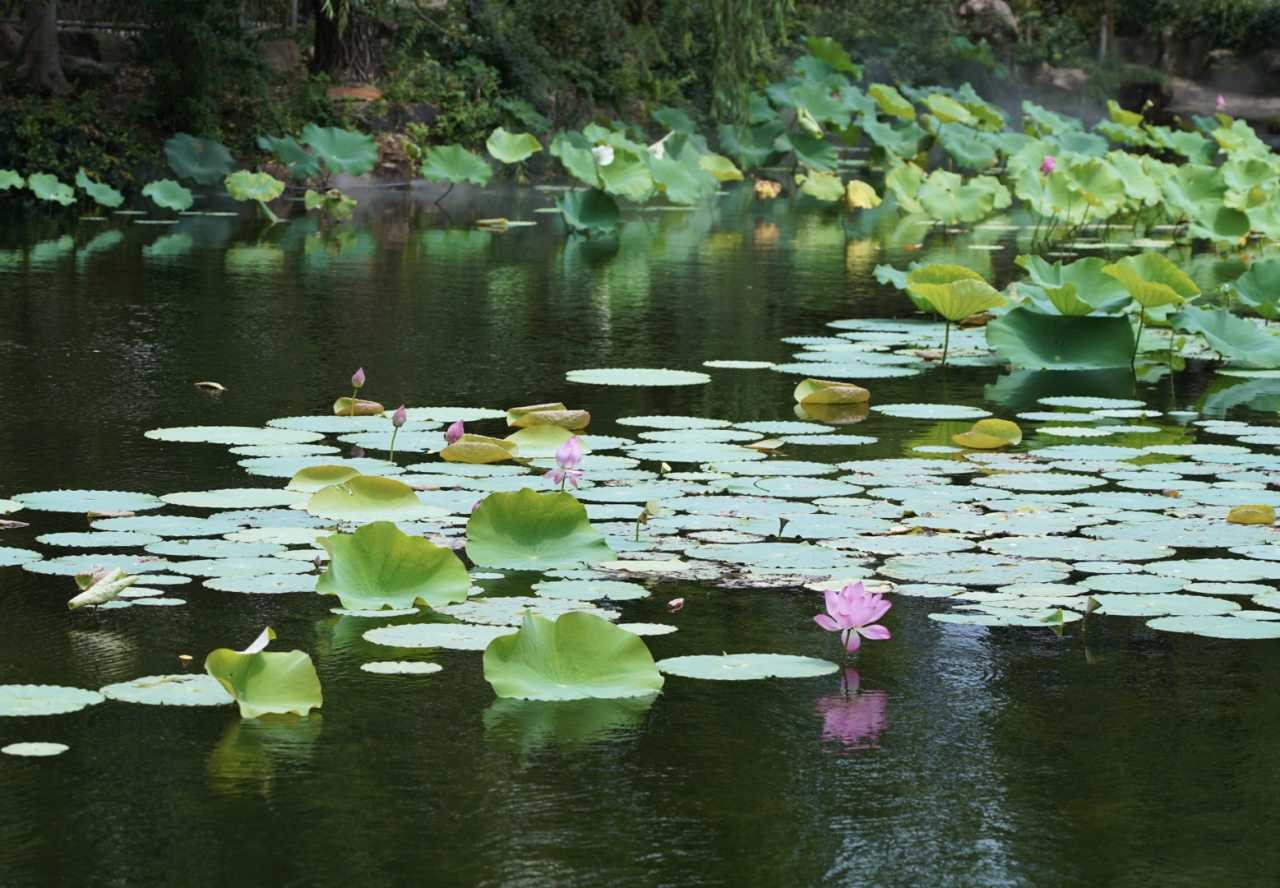
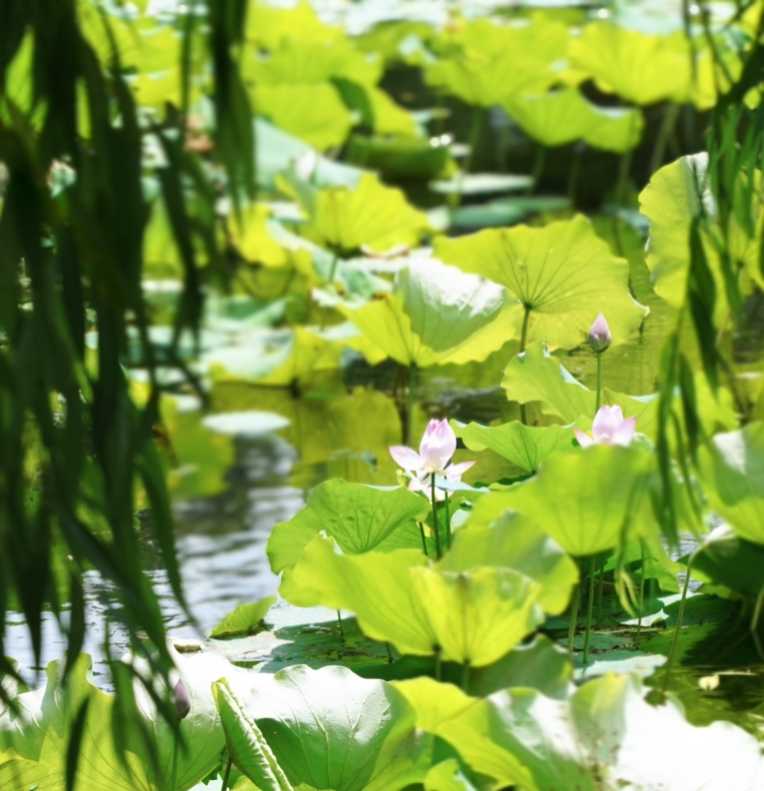
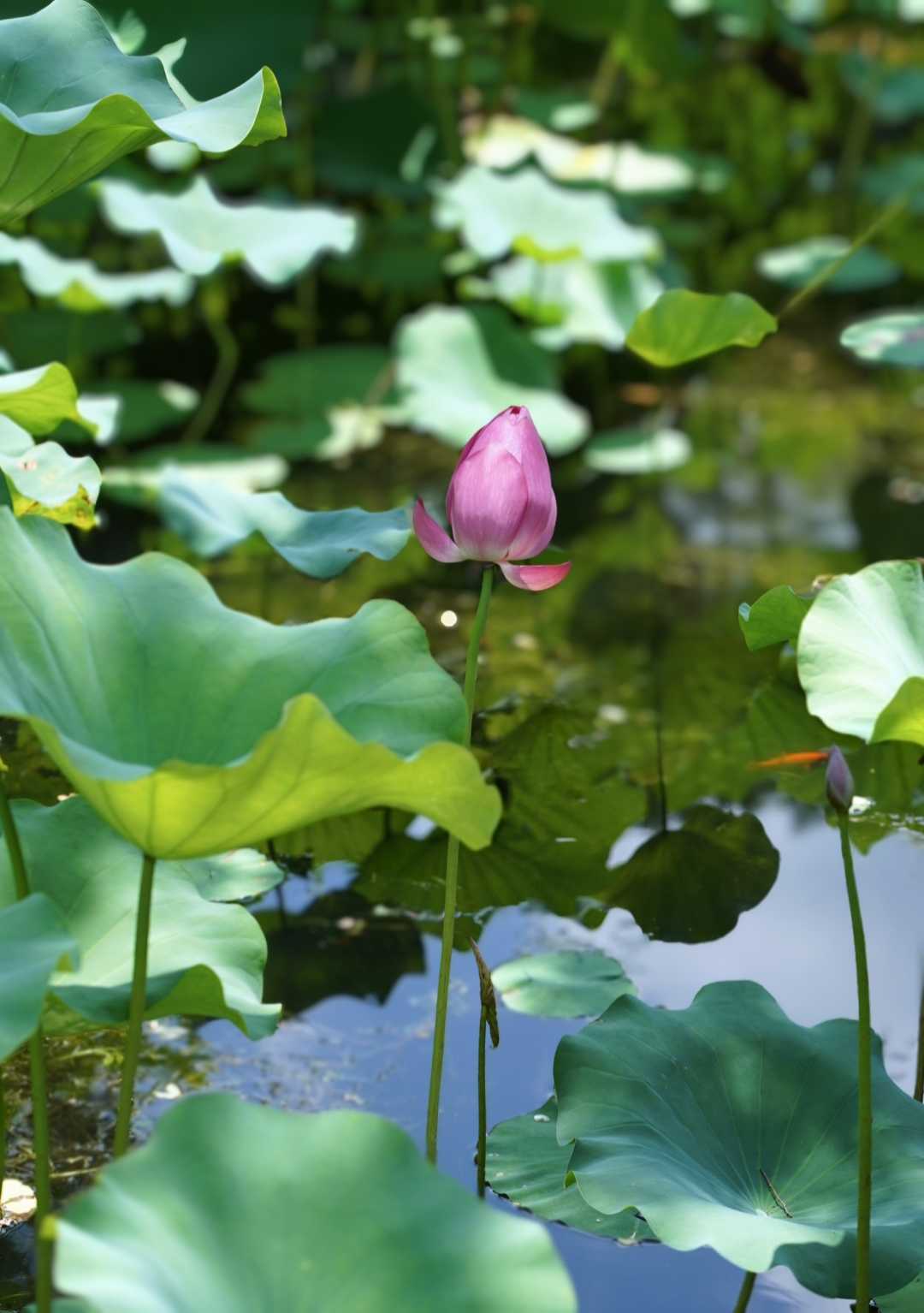
If potted lotuses are delicate "vignettes," the pond-grown lotuses are the "leading actors" of Guyi Garden. They're mainly found in four spots: Mandarin Duck Lake, Bu Xi Zhou, Sui Yue Xuan, and Guan Yue Tai. In the breeze, the lotuses sway gracefully, pink and white interweaving in a dazzling display, perfectly complementing the distant pavilions and towers, creating a tranquil, classical atmosphere.
In the pond, wild ducks and mandarin ducks play in pairs, while koi dart among the lotus leaves, stirring up rings of ripples. These dynamic elements breathe life into the static flowers.
Best Time for Pond Lotus Photography
Recommended lighting: When the sun is at about a 30° angle, side-backlighting makes the petals appear semi-transparent, as light as gauze. The best time for Guyi Garden photography is between 6:30 AM and 9:30 AM.
Advanced Composition Techniques
- Wide-angle 16mm, low angle: Place the foreground lotus leaves close to the lens, let the mid-ground lotus boats sway, and let the distant White Crane Pavilion form a silhouette. Three layers, rich in depth.
- Telephoto 200mm compression: Frame the flying eaves of Bu Xi Zhou with a twin lotus flower. Adjust the composition to a 3:2 ratio, like a Chinese ink painting with intentional blank space—instant classic.
- 1-second slow shutter with ND8 filter: Turn the koi into red streaks while the lotus leaves remain still. The contrast between motion and stillness is striking.
Pro tip: There's a row of stone railings on the west bank of Mandarin Duck Lake, perfect for setting up a tripod. But be warned: after 9:30 AM, tour boats start moving, which can ruin your composition. Shoot early.
[Link: How to photograph water reflections in Chinese gardens]
Water Lilies: Replicating Monet's Palette
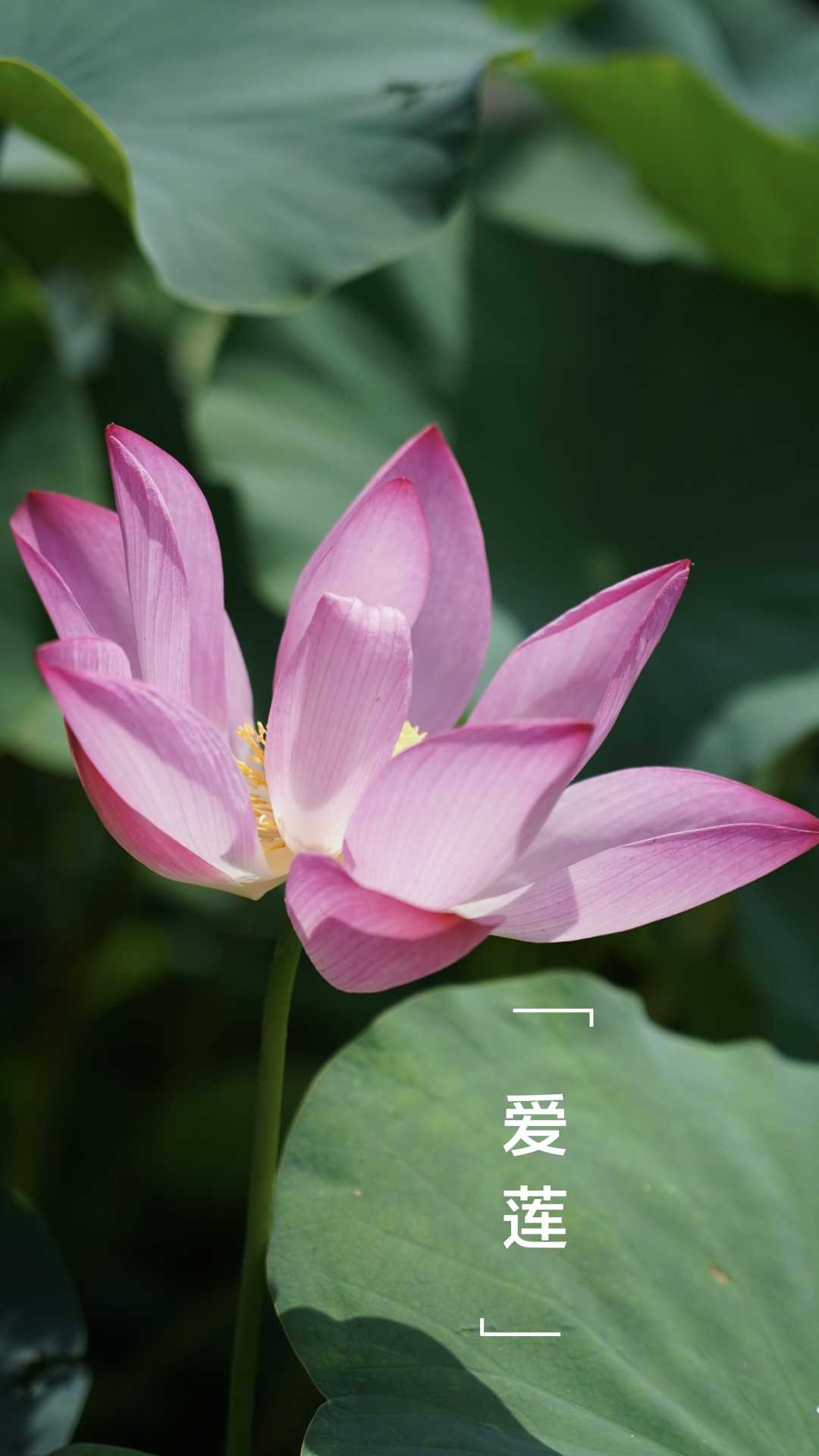
The water lily area isn't far from the pond-grown lotuses, mainly in the waters around Xiao Yun Dou, Sui Yue Xuan, and other buildings. By late July, the water lilies are in full bloom, each blossom as vibrant as a floating rainbow. The petals are tender and full, emitting a subtle, delicate fragrance.
Here, you can pull back for a wide shot, capturing a "Monet's Garden" style explosion of color, showcasing the grandeur and layers of the floral sea. Or, you can zoom in on a single, brilliantly colored flower, emphasizing its fine textures and the dreamlike beauty of its reflection in the water.
Water Lily Photography Techniques
Recommended lighting: When the overhead light starts getting harsh, use the water lily's own shadow as a natural softbox to create soft, gentle light effects.
Creative Water Lily Shots
- 90° overhead shot: Water lilies lie flat on the water like a mirror. Capture a perfectly symmetrical reflection. Add just a touch of soft focus in post-processing for an oil painting feel.
- Color contrast: Pair yellow water lilies with purple pickerelweed and green duckweed. Use complementary colors to grab the viewer's eye instantly.
- Macro close-up: The serrated edges of the petals look like lace; water droplets act as natural highlights. Focus on the second dewdrop for a more dynamic image.

Pro tip: The bridge at Xiao Yun Dou has a mist-spraying system that operates on a schedule (9:00 AM, 11:00 AM, 1:00 PM, 3:00 PM), each session lasting ten minutes. It creates an absolutely stunning artificial fairyland effect. Don't miss it.
[Link: Water lily photography settings for beginners]
Beyond the Shutter: A Taste of Nanxiang
After a morning of shooting, your stomach will be growling. Near Guyi Garden, there's a restaurant called "Feng Ji Lao Fan Dian" (Feng's Old Restaurant). The atmosphere is fantastic—Republic-era patterned windows, brass pendant lamps, dark red velvet curtains. Push open the door, and you feel like you've stepped onto the set of In the Mood for Love.
Nanxiang Dining Recommendations
Our group of three ordered a set meal for two, priced at 185 RMB. It follows a "Jiangnan charm + tourist-friendly" philosophy:
- Gong Bao Tiger Prawns: Sweet and tangy, with the sauce and nuts perfectly balanced
- Yellow Croaker: Crispy and fragrant, each bite bursting with savory flavor
- Taizhou Old Tofu soup: Rich, umami broth; the tofu seemed to bathe in a combination of cured pork and spring bamboo shoots
One sip of the soup, and you felt warmed from the inside out. The set meal wasn't earth-shattering, but it never failed—like an old flame, reliably satisfying your appetite.
However, the a la carte Bamboo Fish was a bit of a "loud thunder with little rain." The sauce only coated the surface.
[Link: Best local restaurants near Guyi Garden]
Practical Information for Your 24-Hour Getaway
Getting There
 - By Metro: Line 11 to Nanxiang Station, then a 10-minute taxi or bus ride - By Car: 30 minutes from downtown Shanghai via the Hu-Ning Expressway - Address: 218 Huyi Road, Nanxiang Town, Jiading District, Shanghai
Opening Hours
- Summer (April-October): 7:00 AM – 6:00 PM
- Winter (November-March): 7:00 AM – 5:30 PM
Ticket Prices
- Adults: 12 RMB (peak season), 10 RMB (off-peak)
- Seniors (60+): Free with ID
- Children under 1.3m: Free
Best Time to Visit
- Peak lotus bloom: Late June to mid-August
- Best photography hours: 6:30 AM – 9:30 AM (avoid crowds, get soft light)
- Weekdays: Far less crowded than weekends
FAQ: Guyi Garden Photography Guide
Q1: What is the best time of day for lotus photography at Guyi Garden?
 A: The golden hours are 6:30 AM to 9:30 AM. Morning light is soft, side-lit, and less harsh than midday. Plus, the garden opens at 7:00 AM, so you'll beat the crowds.
Q2: Can I use a tripod inside Guyi Garden?
A: Yes, tripods are allowed. However, avoid setting up on the Great Lawn during morning exercise hours (7:00-8:30 AM) to avoid capturing unwanted elements in your frame.
Q3: What lens should I bring for garden photography?
 A: A 70-200mm telephoto lens is most versatile for compressing layers between architecture and lotuses. A 16-35mm wide-angle is excellent for sweeping pond views. A macro lens (100mm) is ideal for water lily details.
Q4: Is Guyi Garden crowded during lotus season?
A: Weekends are very crowded, especially between 10:00 AM and 2:00 PM. For the best experience, visit on a weekday morning. If you must go on a weekend, arrive by 7:30 AM.
Q5: Are there any hidden photography spots in Guyi Garden?
A: Yes! The mist-spraying system at Xiao Yun Dou bridge operates at 9:00 AM, 11:00 AM, 1:00 PM, and 3:00 PM (10 minutes each). Also, the stone railings on the west bank of Mandarin Duck Lake offer excellent tripod positions.
Your 24-Hour Itinerary at a Glance
| Time | Activity |
|---|---|
| 7:00 AM | Arrive at South Gate, begin counter-clockwise loop |
| 7:15-8:30 AM | Shoot potted lotuses in Bonsai Garden and Great Lawn |
| 8:30-9:30 AM | Capture pond-grown lotuses at Mandarin Duck Lake |
| 9:00 AM | Catch the mist-spraying effect at Xiao Yun Dou |
| 9:30-10:30 AM | Photograph water lilies near Sui Yue Xuan |
| 10:30-11:30 AM | Final shots at Guan Yue Tai and Bu Xi Zhou |
| 12:00 PM | Lunch at Feng Ji Lao Fan Dian |
| 1:30 PM | Optional: Explore Nanxiang Old Street |
| 3:00 PM | Return to Shanghai |
Ready to Capture Your Own Lotus Masterpiece?
Shanghai's summer heat doesn't have to keep you indoors. With this 24-hour Guyi Garden photography guide, you're equipped to escape the city's steam-cooker atmosphere and create images that will transport your viewers to a serene, classical world.
Pack your camera, set your alarm for 6:30 AM, and head to Nanxiang. The lotuses are waiting—and they're ready for their close-up.
Bookmark this guide, share it with your photography buddies, and tag your best shots with #GuyiGardenLotus for a chance to be featured in our next article!
Have you photographed lotuses at Guyi Garden? Share your experience and tips in the comments below!
You may also like