Yunnan Dashanbao: Dancing with Black-Necked Cranes atop a Sea of Clouds – A Complete Travel Guide
Meta Description: Discover Yunnan's Dashanbao, a winter sanctuary for black-necked cranes atop a sea of clouds. Explore subalpine wetlands, Jiguan Mountain Grand Canyon, and authentic local cuisine. Plan your unforgettable journey now.
Introduction: A Landscape That Demands Your Journey
Some landscapes are destined only for those willing to set out. Some encounters, if you miss them by a single season, you miss them for a lifetime. Yunnan Dashanbao is one such place—a hidden gem nestled in subalpine wetlands, where endangered black-necked cranes dance atop a sea of clouds, and where every season paints a masterpiece.
I first heard the name "Dashanbao" during a trip to the Red Land of Dongchuan. A friend casually mentioned there was a place in Zhaotong where you could see a sea of clouds, speaking of it as if it were the most ordinary thing in the world. But when I returned home and started digging through travel guides and photos, I realized this place was far more than just clouds—it was a winter sanctuary for black-necked cranes migrating from Tibet, a place you could only truly describe as "serendipitous."
In that moment, I knew I had to go.
Why Dashanbao Should Be on Your Yunnan Travel Itinerary
Dashanbao Black-Necked Crane Nature Reserve sits at an average elevation of around 3,100 meters in Zhaotong City, northeastern Yunnan Province. Unlike the well-trodden tourist paths of Lijiang or Dali, Dashanbao offers raw, untamed beauty—a landscape shaped by altitude, wind, and the seasonal rhythms of migratory birds.
Key Highlights:
- Black-necked cranes – One of the world's rarest crane species, wintering here from November to March
- Sea of clouds – Particularly spectacular at Jiguan Mountain Grand Canyon
- Subalpine wetlands – Home to diverse flora and fauna
- Authentic local cuisine – Including potatoes roasted over cow dung (yes, really!)
- Wingsuit flying competitions – Held annually at the canyon

[Link: Best time to visit Yunnan for bird watching]
Planning Your Dashanbao Adventure: What You Need to Know
Getting There: A Spontaneous Journey from Chengdu
To be honest, before this trip, I was never what you'd call a "serious" traveler. When I went out to take photos, I either relied on my phone or borrowed a basic mirrorless camera. But for Dashanbao, I did something I'd never done before: I bought a proper telephoto lens camera. Not for any grand artistic ambition—simply because black-necked cranes are heartbreakingly wary creatures. You can never get close enough to them, yet you desperately want to capture every elegant turn of their necks, every graceful flap of their wings.
On November 27, 2015, my partner and I set out from Chengdu. A car, a camera, a down jacket, a pair of wool gloves, a scarf, plus Gaode Maps and the Ctrip app—that was our entire arsenal. No detailed itinerary, no pre-booked hotel, just a heart ready for an impromptu adventure.
I typed "Black-Necked Crane Nature Reserve (Dashanbao Township, Zhaotong City, Yunnan Province)" into the navigation. The total distance: about 600 kilometers.
First Stop: Zhaotong City
The first night, we stopped in Zhaotong city. Zhaotong's apples are famously good—thanks to the strong sunlight and the sharp temperature swings between day and night, the skins crack into frosty fissures. Bite into one, and it's crisp, sweet, and juicy, like a sugar bomb exploding in your mouth.
Pro tip: Stock up on apples before heading up the mountain—they're a perfect high-altitude snack.
Altitude Considerations
Dashanbao sits at an average elevation of around 3,100 meters. If you're prone to altitude sickness, remember to take some Rhodiola rosea in advance. Don't get so excited that you forget. Fortunately, I've been through enough high-altitude adventures that this elevation didn't faze me.
[Link: Altitude sickness prevention tips for Yunnan travel]
Circling the Great Lake: When Black-Necked Cranes Soar Overhead
The Arrival: Breaking Through the Clouds
Early the next morning, our car began winding up the mountain. The altitude climbed steadily. Just as we were approaching Dashanbao Township, thick fog rolled in. The pine trees along the roadside began to frost over, and the whole world seemed draped in a white veil.
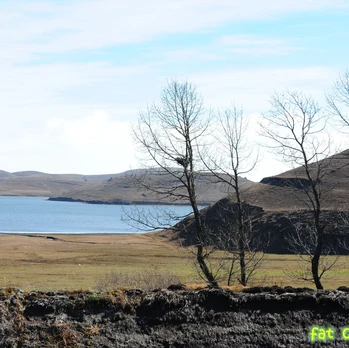
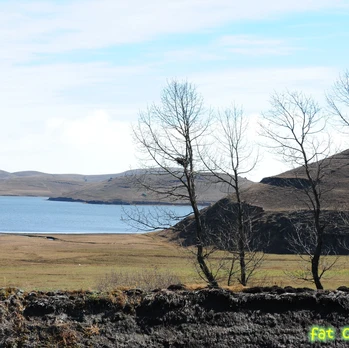
About half an hour later, the car burst through the clouds, and sunlight flooded the landscape—the sky was an impossibly vivid blue, the lake as clear and still as a mirror, the grasslands stretching endlessly into the distance. At that moment, only one thought crossed my mind: this must be what Tao Yuanming meant by "Shangri-La."
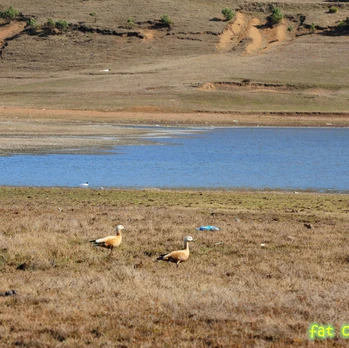
One of Dashanbao's core attractions is a highland lake called "Dahaizi" (Great Lake) . When we arrived, there wasn't a ticket booth yet—we could drive right in. There was hardly anyone else around. Just the wind, the sun, and the boundless meadows.
Wildlife Encounters: More Than Just Cranes
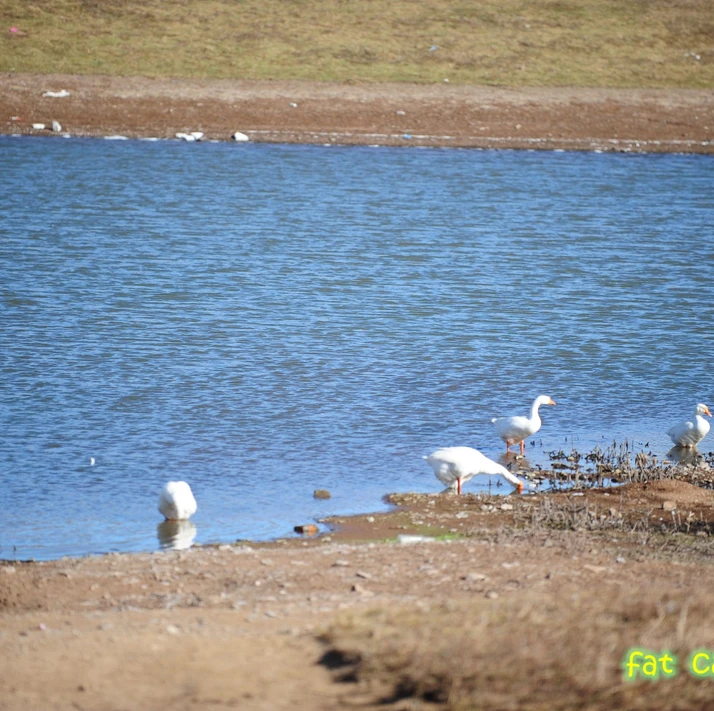
We wandered along the lake's edge, stopping whenever something caught our eye. On the golden hillsides, beside the sapphire-blue water, free-range cattle, horses, white geese, and even wild boars dotted the landscape. They grazed lazily, dozed, or ambled about, as if time had come to a standstill here.
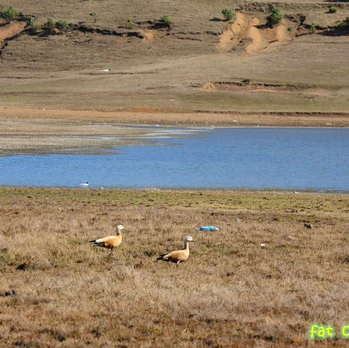
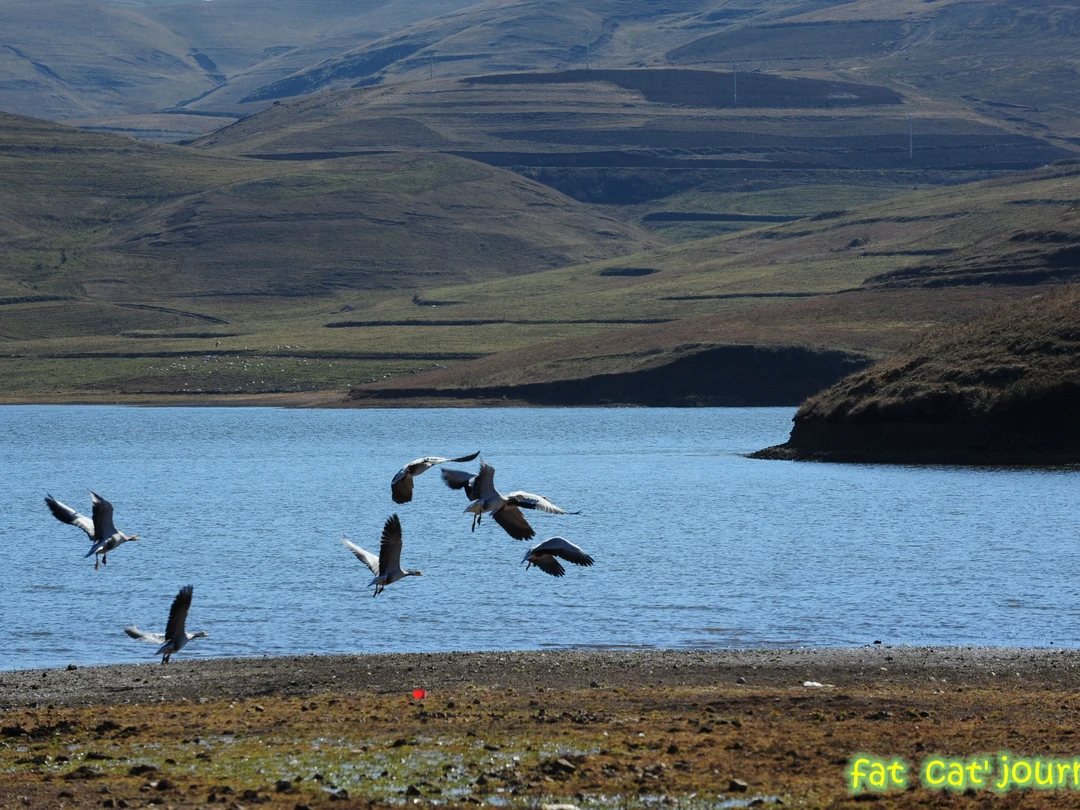
Black-necked cranes were the most alert. They foraged in twos and threes along the shore, constantly glancing around. At the slightest disturbance, they'd take off in a flock. As we approached, three cranes spread their wings and flew toward the hillside. A few more steps, and a whole group lifted off with a rustling whoosh, heading for the far side of the lake. The sound of their wings beating against the silent wilderness was startlingly clear.
Dashanbao's little lambs were so adorable they could melt your heart. Pure white, they looked like moving cotton candy. But don't let their cuteness fool you—there was also a wild boar roaming around, diligently rooting for potatoes with the swagger of a true farmyard boss. It actually chased us for a stretch, which made even horseback riding feel thrilling.
We met a young shepherd boy standing on a hillside, wrapped in a sheepskin coat. His eyes were as clear as the sky above.
Local Food: Potatoes Roasted in Cow Dung – A Taste of Heaven
Around noon, we came across a few locals selling food. In the biting cold wind, a roasted potato was nothing short of a lifesaver. They pulled one out of a smoldering pile of "grass," split it in two with a knife, and handed it over. "Eat," they said.
I took a bite and nearly swallowed my tongue—how could a potato taste this good? I asked what they'd used to roast it, and they told me that pile of "grass" was actually cow dung. Biofuel, right? Premium stuff. I never imagined the most unforgettable roasted potato of my life would be cooked over cow dung.
There was also lamb soup, so tender it melted in your mouth, and you could refill your bowl for free. The lamb skewers had no gamey taste at all. In the high-altitude cold, alternating between a bite of meat and a sip of soup, I felt an overwhelming sense of happiness.
[Link: Best local food in Zhaotong, Yunnan]
Jiguan Mountain Grand Canyon: Above the Sea of Clouds, Watching Wind and Clouds Surge
A Rare Meteorological Phenomenon
We drove on, stopping here and there, until we reached Jiguan Mountain Grand Canyon (Cockscomb Mountain Grand Canyon) . Locals told us that the sea of clouds had risen about 500 meters higher than usual over the past few days—a sight that appears only a handful of times a year. I stood on an unrailed observation deck, my jaw hanging open in awe, and sat there dumbfounded for an entire afternoon.
The canyon is a sheer, bottomless drop. The clouds form a sea, and the peaks rise like sails. This is a launch point for wingsuit flying—beneath that sea of clouds lies an abyss. I first learned about wingsuit flying right here. Every year, a major wingsuit competition is held at this spot. But you can't have it both ways: if the clouds are this thick, there's no wingsuit flying. No athlete would dare jump into the Jinsha River in these conditions.
The Ever-Changing Sea of Clouds
As the sun began to set, the sea of clouds started to shift and transform. Sometimes it rolled upward, forming cloud mountains and cloud seas. Sometimes it cascaded downward, creating cloud waterfalls and whirlpools. Sometimes it flowed gently, streaming slowly into the gorgeous twilight glow. I sat there, speechless, feeling the vastness of the world and the smallness of myself.
That night, we checked into a nearby guesthouse, planning to wake up early for sunrise.
[Link: Best photography spots at Jiguan Mountain Grand Canyon]
Sunrise at the Observation Deck: Waiting for the Cranes' Calls
Pre-Dawn Magic
We set out before dawn. The sky was full of stars, and the wind was bone-chilling. On the observation deck, quite a few people had already set up tripods, adjusting their lenses, ready to shoot. In front of the deck stretched an open grassland. By the faint starlight and moonlight, we could see black-necked cranes standing among the reeds by the lake, resting. They were as still as sculptures, only occasionally breaking the pre-dawn silence with a call.
The First Light
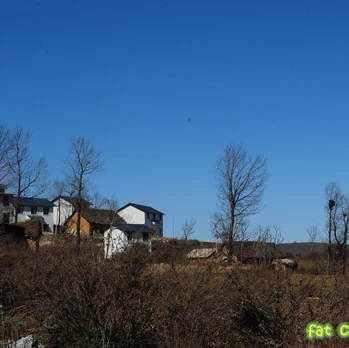
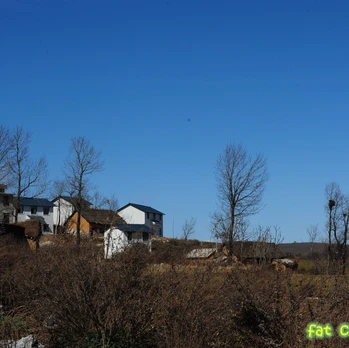
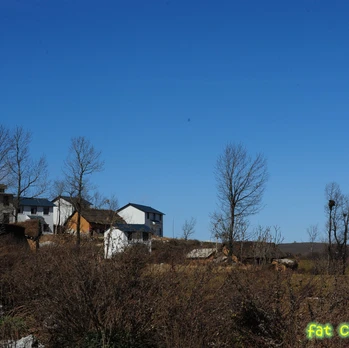
The first rays of morning light streamed in. Wild cranes flew out from the reeds now and then. After a night of frost, the roofs of the primitive village huts were covered in icicles. The mountain grass and rime ice were draped in silver, like a fairyland of jade and crystal.
Once the sun was fully up, the light was intense. The frost melted quickly, and the melted snow seeped into the earth, nourishing everything. Day had broken, and the black-necked cranes were awake. They preened their feathers, got ready, and began their daily ritual—a dance that has played out for millennia on these high-altitude wetlands.
FAQ: Everything You Need to Know About Dashanbao
1. When is the best time to visit Dashanbao for black-necked cranes?
The black-necked cranes migrate from Tibet to Dashanbao between November and March. The peak viewing period is from late November to early February, when the largest flocks are present. For the sea of clouds phenomenon, visit during autumn (September-November) or spring (March-May) when temperature variations create dramatic cloud formations.
2. How do I get to Dashanbao from Kunming or Chengdu?
- From Kunming: Take a bus or drive to Zhaotong (about 4-5 hours), then hire a local car or take a minibus to Dashanbao Township (another 2 hours).
- From Chengdu: Drive directly (about 600 km, 7-8 hours) via the G85 expressway to Zhaotong, then follow local roads to Dashanbao.
- Public transport: Buses run from Zhaotong to Dashanbao Township, but renting a car with a driver is recommended for flexibility.
3. What should I pack for a Dashanbao trip?
- Warm clothing: Down jacket, thermal layers, wool hat, gloves, and scarf (temperatures can drop below freezing at night)
- Sturdy footwear: Waterproof hiking boots for wetland trails
- Camera gear: Telephoto lens (200mm+ recommended) for crane photography; wide-angle lens for landscapes
- Altitude sickness prevention: Rhodiola rosea, plenty of water, and avoid alcohol
- Snacks and water: Limited food options on the mountain
4. Is Dashanbao suitable for families with children?
Yes, but with precautions. The high altitude (3,100m) may affect young children. The terrain is generally flat around the lake, making it accessible for strollers. However, Jiguan Mountain Grand Canyon has steep, unrailed observation decks—keep children close. The wildlife and sea of clouds are magical experiences for kids.
5. Can I see the sea of clouds year-round?
No. The sea of clouds phenomenon is most common from September to November and March to May, when temperature differences between day and night create ideal conditions. During winter, clouds are less frequent but the cranes are abundant. Summer brings rain and fog, reducing visibility.
[Link: Yunnan travel tips for first-time visitors]
Conclusion: Your Dashanbao Adventure Awaits
Dashanbao is not just a destination—it's an experience that rewrites your understanding of beauty. From the haunting calls of black-necked cranes at dawn to the surreal sea of clouds at Jiguan Mountain, from potatoes roasted over cow dung to lamb soup that warms your soul, every moment here is etched into memory.
This is a place for those who are willing to set out without a detailed itinerary, to embrace spontaneity, and to let the landscape guide them. It's for photographers who want to capture the impossible, for nature lovers who seek the rare, and for anyone who believes that some encounters—if you miss them by a single season—you miss them for a lifetime.
Ready to dance with the cranes? Start planning your Yunnan Dashanbao trip today. Book your accommodation in Zhaotong, pack your warmest clothes, and don't forget that telephoto lens. The cranes are waiting.
Have you visited Dashanbao or other hidden gems in Yunnan? Share your experiences in the comments below, or tag us in your photos using #DashanbaoCranes. For more off-the-beaten-path travel guides, subscribe to our newsletter.
You may also like