The World's Twelve Shifts: A Travel Photographer's Guide to Capturing Light Across Continents

Meta Description: Discover how a travel photographer spent 7 years crossing 4 continents to capture the world's most stunning light—from Arctic auroras to Cambodian sunrises. A global memory journey through time.
Introduction: Why Every Second of Daylight Matters for Travel Photography
Have you ever wondered which second is the longest in a single day? For most travelers, twenty-four hours is just a cycle of waking at sunrise and resting at sunset. But for a travel photographer who lugs a tripod across the ends of the earth, the length of a day is measured by the arc of burning auroras, the speed of dissipating morning mist, and the frequency of a shutter opening and closing.
This article chronicles seven full years of crossing four continents, using a lens to paint a portrait of time. This is not a travelogue—it's a love letter written to light: from midnight to dusk, from extreme cold to blistering heat, from the solitude of a lone vigil to the cheers of a crowd. Whether you're an aspiring photographer, a seasoned traveler, or someone dreaming of capturing the world's beauty, these twelve shifts will transform how you see every hour of the day.
[Link: Best travel photography gear for low-light conditions]
The Hour of the Ox (01:00-03:00): Chasing the Aurora Borealis in Arctic Finland
According to the ancient Chinese system of twelve two-hour periods, the Hour of the Ox is the second watch of the day. But for me, the longest day of my life began precisely at this moment, when most people are sinking into dreams.
2016, Finnish Lapland, 66°34' North, minus 30 degrees Celsius.
The New Year's bells had just rung in Shanghai, but my companions and I were curled up in the snow within the Arctic Circle, staring at the pitch-black sky. For three consecutive nights, the aurora had stood us up. The wind cut across our cheeks like a knife, and our fingers, buried in gloves, were almost numb from the cold. But "Aurora"—the Roman goddess of dawn—seemed to be playing hide-and-seek with us.
Until the fourth night, when she arrived without warning.
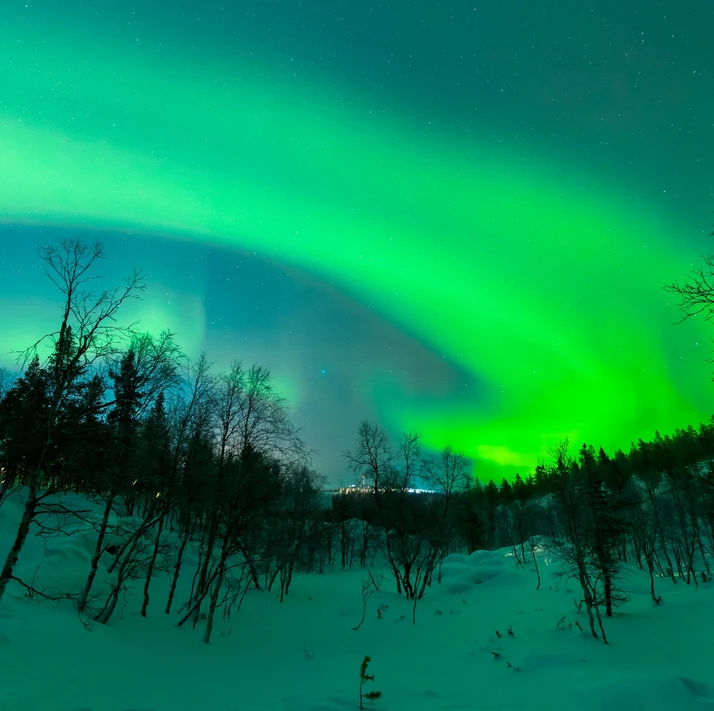
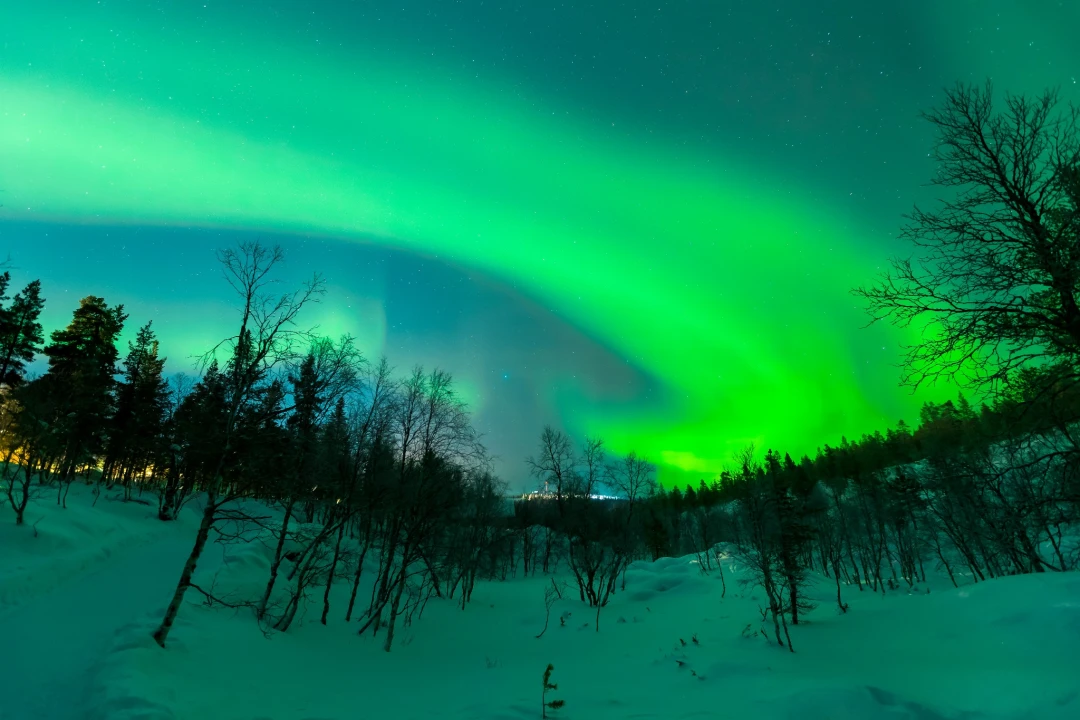
At first, it was just a faint trace of green light, drifting like smoke across the sky. Then it began to dance, swaying and flickering, brightening and dimming in utter silence. The crowd erupted in cheers, as if forgetting all the cold and waiting that had come before. In that moment, I understood what it meant for something to be "worth it."


Three years later, on New Year's Eve 2019, I stood in Alaska, USA, in minus 45 degrees Celsius of extreme cold.

This time, the aurora goddess was not stingy. A massive arched curtain of light tore across the night sky, dyeing the entire forest an emerald green. The scene was like Pandora from Avatar descending to Earth. Three hours of patient waiting were rewarded with the most stunning "lucky start" to the new year.
Some beauty is worth trading your body heat for.
[Link: Northern Lights photography tips for beginners]
The Hour of the Tiger (03:00-05:00): Pre-Dawn Magic at Grand Teton and Sicily
The Hour of the Tiger is the transition between night and day, and the most precious "golden window" for landscape photographers. Many people think photographing a sunrise means photographing the sun—but they're wrong. The real magic happens before the sun even appears.

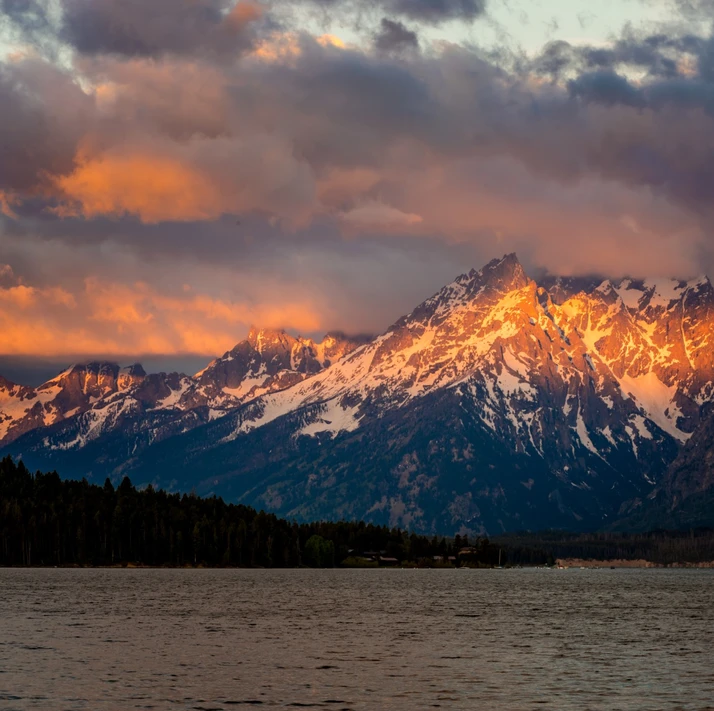
Jackson Lake, Wyoming, USA. A one-hour drive under a sky full of stars.
I watched in silence as the Grand Teton peak awakened from its slumber. The mountain's silhouette grew clearer in the faint light, and the lake reflected the sky's gradient from deep blue to pale purple. I happened upon a group of Chinese tourists who had arrived by bus. They said, "It doesn't look like much. Those photos online are all fake."
I smiled and didn't argue. They had come to the right place, but at the wrong time. They saw the ashes of a dying campfire, while I saw the raw wilderness of Earth from billions of years ago.
In Taormina, Sicily, Italy, there is a mysterious path.
It's called the "Path to Isola Bella," and it only appears at low tide, leading out to a small island in the sea. From above, the island sits perfectly at the center of a heart-shaped formation. I hiked up the mountain before dawn, under the stars, just to capture that moment when the morning glow painted the sea red and the island was outlined in golden light.
The elements of love always seem to appear in exquisite places.
[Link: Best pre-dawn photography locations in Europe]
The Hour of the Rabbit (05:00-07:00): Sunrise Photography at Utah's Great Salt Lake and Mesa Arch
After the magnificent prelude of the Hour of the Tiger, the sun at the Hour of the Rabbit finally leaps above the horizon. Orange light carries warmth, driving away the chill of night.
The Great Salt Lake, Utah, USA, in June. The lake surface is gradually drying up.
Across the vast salt flats, only a few scattered shallow puddles remain. When the sun peeked over the horizon, the entire salt pan looked as if it had been dusted with gold powder, glittering brilliantly. The sky reflected in the water was dyed a fiery red.
Mesa Arch, a pilgrimage site for landscape photographers.
In the early morning, dozens of photographers from around the world crowded beneath the arch, which spans tens of meters wide. To secure a good spot, we hiked up in the dark under the stars and waited in the cold wind for dawn. When the first ray of sunlight pierced through the arch, turning the sandstone a rich orange-red, all the effort melted into pure satisfaction.
Kampot, Cambodia—a private beach with almost no tourists.
Strolling along the sand in the early morning, the sound of waves and wind intertwined, making it feel like the whole world was yours. The sun, like a salted egg yolk, slowly broke through the clouds, painting the sky a shade of pink.
[Link: Top sunrise photography spots in Southeast Asia]
The Hour of the Dragon (07:00-09:00): Capturing Ancient Cities in Golden Light
The ancients said, "At the Hour of the Dragon, it's time for breakfast." But for a photographer, this is not yet time to eat. The light is soft, the angles are varied—it's the perfect time to shoot.
Dubrovnik, Croatia.
It was because of this city that we came to this country. The sunlight at this hour was like the magic brush of the legendary Chinese painter Ma Liang, painting the old town in vibrant colors. This ancient city, perched between mountains and sea and encircled by stone walls, is hailed as the most beautiful city on the Balkan Peninsula.
Bagan, Myanmar. Over two thousand pagodas spread across 25 square kilometers.
Once, there were tens of thousands of pagodas here. After a thousand years of wear and tear, more than two thousand still stand on the plain. When the sun rose and hot air balloons drifted gently over the pagoda clusters, time itself seemed to stand still.
[Link: How to photograph ancient cities like a pro]
The Hours of the Snake, Horse, and Goat (09:00-15:00): Midday Photography Surprises in Matera, Italy
These three periods are usually the most leisurely for photographers. The sun climbs to its zenith, the light changes become gradual, and it's a good time for shopping, eating, and enjoying afternoon tea. But occasionally, surprises come.
Matera, Italy—a stone city with 7,000 years of history.
Primitive people once carved cave dwellings into the cliffs here, and today it's a UNESCO World Heritage site. I was on a viewing platform, about to find a restaurant for a hearty meal, when a sudden storm made me pick up my camera again. Dark clouds churned, light pierced through the clouds, creating a scene of breathtaking natural artistry.
Sometimes, the best scenery isn't in the plan.
[Link: UNESCO World Heritage photography tips]
The Hour of the Monkey (15:00-17:00): Slanted Sunlight in Fes, Morocco and Arches National Park
At the Hour of the Monkey, the sun begins to slant low, and everything once again reveals enchanting colors.
Fes, Morocco—a maze of 9,000 streets.

The old men in the ancient city are its soul. Wandering through alleys where even GPS fails feels like stepping into One Thousand and One Nights. One moment, the place is bustling with noise; the next, you turn a corner and find absolute stillness. An elderly man in traditional attire strolled leisurely through the narrow streets.
Arches National Park, USA—Delicate Arch.
This is the world's largest concentration of sandstone arches, with over 2,000 scattered across the landscape. Delicate Arch is the symbol of Utah, and the Olympic torch once passed through it. A 5-kilometer round-trip hike along cliff edges—no shortcuts, no excuses. The reward? A view that makes every step worthwhile.
[Link: Best hiking trails for photography in US national parks]
Frequently Asked Questions (FAQ)
1. What is the best time of day for travel photography?
 The golden hours—just after sunrise and just before sunset—offer the most flattering natural light. However, as this article shows, every hour has its unique photographic opportunities. The Hour of the Ox (01:00-03:00) is ideal for aurora hunting, while midday storms can create dramatic effects.
2. How do you prepare for extreme cold photography (like Arctic aurora shoots)?
 Dress in layers (thermal base, insulating mid-layer, windproof outer shell), bring hand warmers, and keep spare batteries warm in your inner pockets. Use a tripod with rubber feet to prevent slipping on ice, and consider a remote shutter release to minimize hand exposure.
3. What camera settings work best for low-light landscape photography?
 For aurora and pre-dawn shots, use a wide aperture (f/2.8 or lower), a slow shutter speed (15-30 seconds), and a high ISO (1600-3200). For sunrise and sunset, start with ISO 100, aperture f/8-f/11, and adjust shutter speed based on light conditions. Always shoot in RAW format for maximum editing flexibility.
4. How do you find hidden photography spots like the "Path to Isola Bella" in Sicily?
 Research local tide charts, talk to resident photographers, and explore off-the-beaten-path locations. Social media groups and photography forums are goldmines for insider tips. Sometimes, the best spots come from getting lost intentionally.
5. What's the most challenging photography location mentioned in this article?
Alaska at minus 45°C during the 2019 New Year's Eve aurora shoot. The extreme cold can freeze camera batteries in minutes, and your fingers lose dexterity quickly. The reward—a massive emerald-green aurora curtain—made every frozen moment unforgettable.
Conclusion: Your Journey Through the World's Twelve Shifts Starts Now
From the Arctic aurora of the Hour of the Ox to the slanted sunlight of Fes at the Hour of the Monkey, every shift of time offers a unique canvas for light. The world's beauty isn't reserved for professional photographers—it's waiting for anyone willing to wake before dawn, brave the cold, or get lost in a medieval maze.
Your next step: Pick one of these twelve shifts and plan your own light-chasing adventure. Whether it's the Hour of the Tiger at Grand Teton or the Hour of the Dragon in Bagan, the camera is in your hands, and the world is ready to be captured.
Ready to start your journey? Bookmark this guide, pack your camera, and remember: the best light is the one you chase. Share your own "shift" photos with us using #WorldTwelveShifts—we'd love to see how you capture the world's light.
[Link: Ultimate travel photography checklist for beginners]
You may also like