The Ultimate Summer Guide to Doing Nothing: Rediscovering Yourself in the Sun and Sea Breeze of Palawan, Philippines

Meta Description: Escape the noise and rediscover yourself with this Palawan travel guide. Learn how 4 days of doing nothing on Dimakya Island became the perfect summer detox—sun, sea, and serenity.
Introduction: The Art of Doing Nothing in Palawan
Four days. One island. One stretch of sand. The same routine—chatting, sunbathing, swimming, eating, retreating to the room. Sounds monotonous? Yet this is exactly the kind of perfect vacation many people dream of.
Every summer, there's an irresistible call—from the ocean, from the sunlight, from that reassuring shade of sea-blue. When I was buried in work, not even knowing where we were headed, my partner had already quietly arranged everything: visas, flights, accommodation, itinerary. That's our dynamic—he plans, I enjoy.
Welcome to Palawan, Philippines—a destination where doing nothing is the ultimate luxury.
Why Choose a "Do Nothing" Trip to Palawan?
To be honest, I hesitated before writing this travelogue. Our itinerary was so "simple"—no rushing between attractions, no queuing, no check-ins. We just stayed on a private island, repeating the same activities day after day.

But perhaps this is exactly the kind of travel modern people need most. When life is crammed with work, social obligations, and information overload, what we need isn't more stimulation—it's total mental disconnection.
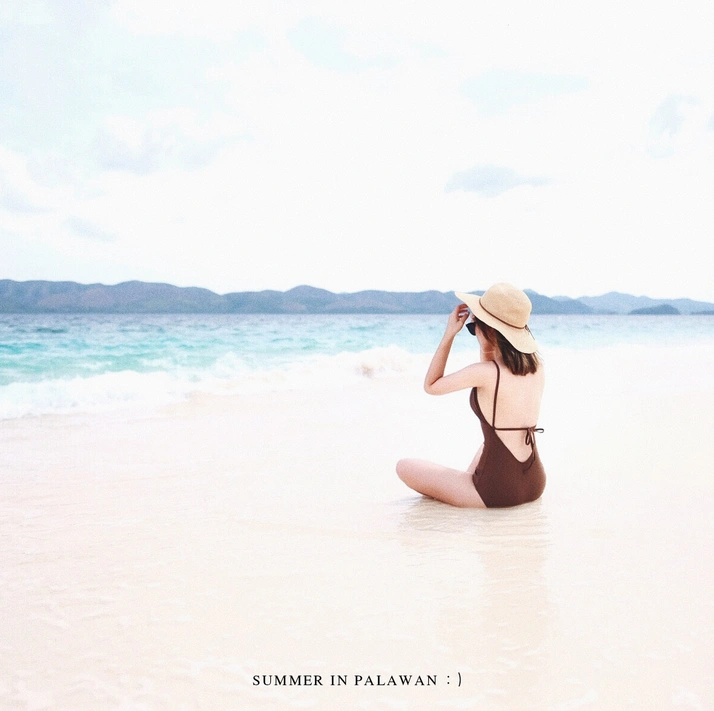
Palawan's sun-drenched beaches, gentle sea breezes, and crystal-clear waters create the perfect environment for digital detox travel. It's not about what you do—it's about what you don't do.
Day 1: From Shenzhen to Manila – An Unexpected Adventure
Departing from Hong Kong Airport: A Long Wait
We set off from Hong Kong International Airport. The wait before boarding was much longer than expected. After three hours, we landed in Manila—it was already past three in the afternoon.
Travel tip for first-timers: Always factor in potential delays when flying to Manila. The airport can be chaotic, but patience pays off.
First Taxi Experience: A Lesson in Getting Overcharged
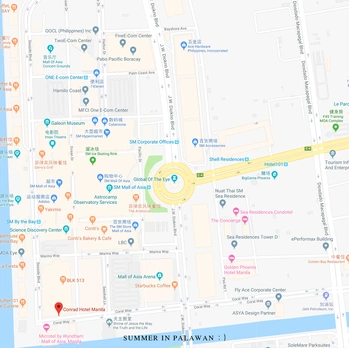
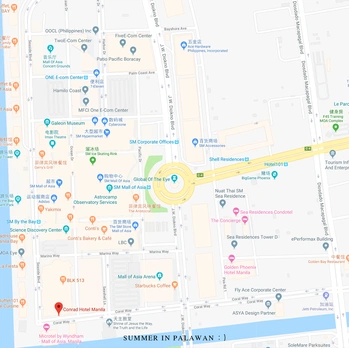
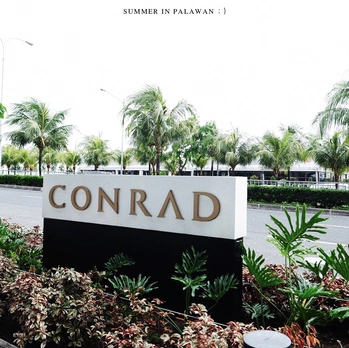
The journey from the airport to the Conrad Manila hotel was about 8.9 kilometers. The hotel offered airport transfers, but they required advance booking and were expensive. We opted for the yellow taxis waiting outside the terminal. The driver overcharged us at the toll booth—we clearly saw the posted fare, but he charged double.
Practical tip: We later discovered that Uber was the smarter choice. The next day, when the front desk called an Uber to take us to the domestic terminal, it cost only 110 pesos—nearly four times cheaper than the taxi.
Conrad Manila: A Five-Star Experience Overlooking an Amusement Park
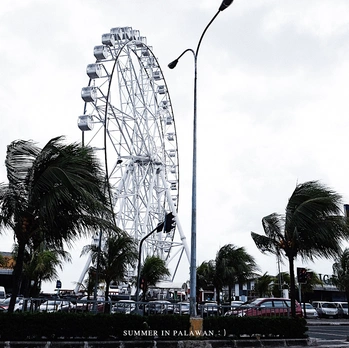
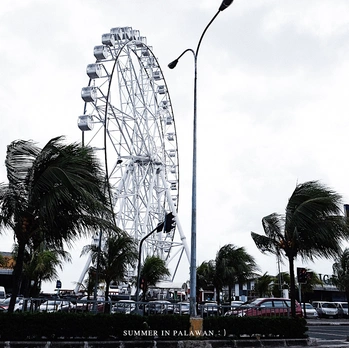
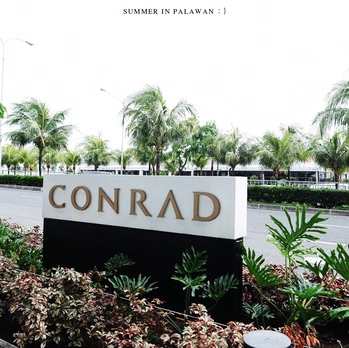
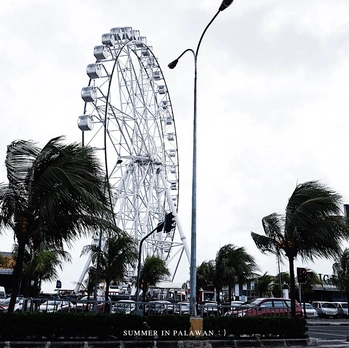
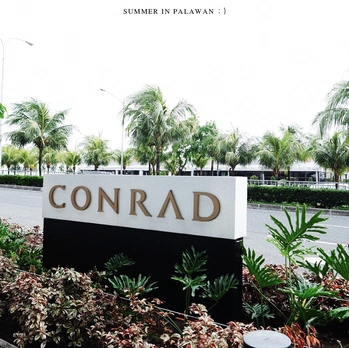
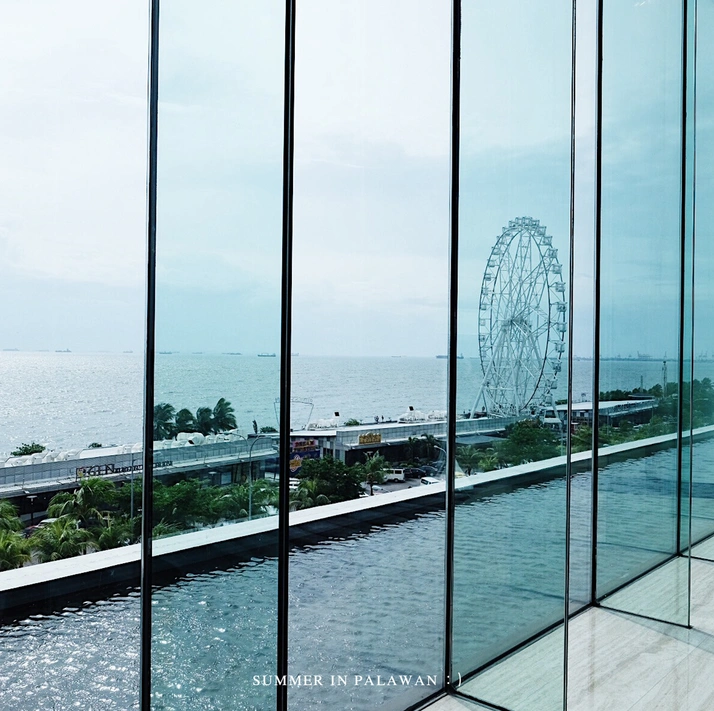
We chose Conrad mainly because it's close to Manila's domestic airport and in a lively area. Across the street is SM By the Bay Amusement Park, where you can hear laughter and screams drifting over from the rides.
The surrounding area offers plenty of dining options, from Chinese to Western cuisine. SM Mall of Asia is a local shopping paradise—if you forgot any toiletries before your trip, the supermarket here has you covered.
The hotel rooms are spacious and comfortable, with standard five-star amenities. The most amusing experience was watching from our window as people by the pool scrambled for cover when an unexpected downpour hit.
A Small Surprise: The Blue Donkey
Around six in the evening, a staff member rang our doorbell and handed us a small blue donkey—it turned out to be the hotel's mascot, which they'd forgotten to give us at check-in. It was a small gesture that felt genuinely warm.
That evening, we wandered through the shopping district and picked up some wooden items, woven crafts, and linen products at a souvenir shop. The quality was excellent, and the prices were much lower than similar items back home. If we weren't worried about luggage weight, we would have bought the whole store.
Recommendation: These small items make great souvenirs. [Link: Best souvenirs to buy in the Philippines]
Day 2: Stranded in Palawan – Discovering Paradise
Good Morning, Manila

The hotel's buffet breakfast was quite generous, though I couldn't find anything that fully suited my taste. We grabbed a window seat, eating while watching the Ferris wheel outside as another drizzle began.
First Ride in a Propeller Plane
We left the hotel at 9 a.m. for Terminal 4, the domestic terminal. It was basic, crowded, and flight delays were the norm.
This was our first time on a small propeller plane—exciting and novel. Fellow passengers acted like school kids on a field trip, pulling out their phones to snap photos as they queued to board. The cabin was small, but it didn't feel uncomfortable.
The flight stayed low enough that we could admire the scenery the whole way—islands and ocean in shifting shades of deep and light blue, breathtakingly beautiful.
Practical tip: Francisco B. Reyes Airport is tiny. The runway can only handle one plane at a time, so delays are common. Be mentally prepared.
From Airport to Paradise Island: A "Kidnapping" Fantasy

After landing, we collected our luggage directly from the conveyor belt—no carousel here. Outside the terminal, shuttle buses from various hotels were waiting. Since there are only two flights a day to the Coron Bay islands, everyone knew where they were going, and the crowd dispersed quickly.
We were directed to a seven-seat van. It was just my partner and me inside. The van rattled over a few kilometers of gravel roads to a small private dock, where we transferred to a spider-like wooden boat heading to Dimakya Island, where our resort was located.
Honestly, during the ride, my mind wandered to scenarios involving "kidnapping," "ransom," and "worst-case outcomes." Fortunately, it turned out I was just being dramatic.
Dimakya Island: A Private Paradise
After about 30–40 minutes by boat, we arrived at Dimakya Island. The entire island is essentially the resort's territory—privacy is excellent.
The island has several main areas: - Ocean Restaurant: Located at the southern end, where we ate and relaxed for the entire stay - Sunset Beach: A stretch of sand on the west side where you can book an outdoor dinner and watch the sunset - Sunrise Beach: On the east side, where our garden-view room was located
First Impressions of the Room: Humidity, Bugs, and Creepiness
Our garden room was spacious but dimly lit. The moment we stepped in, the humid, stuffy air hit us. Mosquitoes and bugs were everywhere—in the bathroom, on the bed, on the desk. To be fair, that's normal for a beachfront wooden cabin.
Practical tip: Bring insect repellent! Crank the air conditioning to the lowest temperature and highest fan speed, and keep it running continuously. This makes the room much more comfortable and reduces bugs. Don't leave the door wide open when entering or leaving, or the outdoor lights will attract a swarm of insects. [Link: Essential packing list for tropical island vacations]
Bat Heaven: A Spine-Tingling Sight
Almost every tree on the island was covered in clusters of bats—large, thick-furred creatures. During the day, they hung from branches, making loud calls. At night, they swooped through the air, which was genuinely unsettling. But they don't bother humans, and they're one of the island's unique features.
Day 3: From Sunrise to Sunset – Just Soaking It In
A Lazy Morning
We slept in, then ambled over to the restaurant for a late breakfast. By the time we arrived, there wasn't much appealing food left in the buffet.
The Decision: Sunbathing from Dawn Till Dusk
That day, we resolved to do absolutely nothing except soak up the sun.
Complimentary ice water was available—just ask a staff member to bring it to the beach. During our stay, the weather wasn't great—overcast skies alternating with clear patches, and the wind and waves were quite strong.
I'm not good at swimming or water sports, so I stayed in the shallow area. My partner put on a life jacket and tried to drag me further out for snorkeling, but I was too scared. Eventually, he went snorkeling alone while I watched from the shore like an anxious mother, checking every few minutes to see if I needed to call a lifeguard.
Insider tip: If you're not a strong swimmer, stick to shallow areas or use a life jacket. The waters around Dimakya Island are generally calm, but currents can pick up.
Day 4: Sea Breeze, Seawater, and Endless Shades of Blue
Snagging a Thatched Umbrella
We got lucky today and secured one of the thatched umbrellas—the "prime real estate" of the beach. From under its shade, we watched the world go by: the gentle lapping of waves, the distant calls of seabirds, the occasional boat passing by.
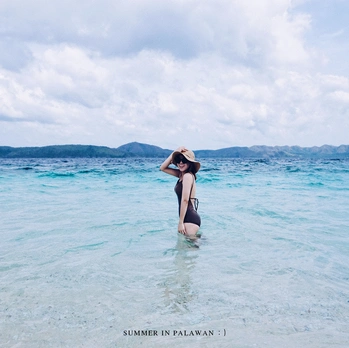
The sea here is a palette of blues—from pale turquoise near the shore to deep navy at the horizon. Each hour brings a new shade, a new mood. This is the kind of beach relaxation that makes you forget time exists.
Afternoon Snorkeling Attempt
Despite my earlier fear, I decided to give snorkeling another try. With a life jacket and my partner's hand to hold, I floated over the coral gardens. Fish of every color darted beneath us—neon blues, electric yellows, striped oranges. It was like swimming inside a kaleidoscope.
Snorkeling tip: Bring your own mask and snorkel if possible. Rental equipment can be hit-or-miss, and having a comfortable fit makes all the difference.
Sunset Dinner on the Beach
That evening, we booked a private dinner on Sunset Beach. The resort set up a table right on the sand, with candles flickering in the breeze. As the sun dipped below the horizon, the sky exploded in shades of pink, orange, and purple. We ate fresh seafood, drank cold beer, and said nothing.
It was perfect.
Frequently Asked Questions About Palawan's "Do Nothing" Vacation
1. Is Palawan safe for solo travelers?
 Yes, Palawan is generally safe for solo travelers, especially on private islands like Dimakya. However, always practice standard precautions—keep valuables secure, avoid walking alone at night on remote beaches, and inform staff of your whereabouts.
2. What is the best time to visit Palawan?
The best time is from November to May, during the dry season. June to October is rainy season, though you might still get sunny days—as we did. Avoid typhoon months (August-October) for the most reliable weather.
3. Do I need a visa to visit the Philippines?
 Many nationalities (including US, UK, EU, and most Asian countries) can enter visa-free for up to 30 days. Check with your local Philippine embassy for specific requirements.
4. What should I pack for a "do nothing" trip to Palawan?
Pack light: swimwear, cover-ups, sandals, insect repellent, sunscreen (reef-safe), a hat, sunglasses, and a good book. Leave the formal wear at home—you won't need it.
5. How much does a trip like this cost?
Costs vary widely. For a 4-day trip including flights, accommodation, and meals, expect to spend around $800–$1,500 per person, depending on resort choice and season.
Conclusion: Your Invitation to Do Nothing
In a world that glorifies busyness, choosing to do nothing is a radical act of self-care. Palawan offers the perfect setting for this kind of mindful travel—where the only agenda is the tide, the only deadline is sunset, and the only goal is rediscovering yourself.
Whether you're a stressed professional, a burnt-out parent, or simply someone craving peace, Palawan's private islands await. Book that flight. Check into that resort. Let the sun and sea breeze do the rest.
Ready to rediscover yourself? Start planning your Palawan escape today. [Link: Best Palawan resorts for digital detox] [Link: How to book flights to Palawan on a budget]
P.S. Don't forget to pack insect repellent—and leave your guilt at home.
Article originally inspired by a travelogue from Mafengwo. All factual details preserved.
You may also like