The Tasha Ancient Road: A Complete Guide to Pamir Apricot Blossoms & Perilous Mountain Passes
Meta Description: Discover the Tasha Ancient Road, where Pamir apricot blossoms meet treacherous mountain passes. A firsthand account of Kukosiruk, Datong Township, and survival on one of China's most dangerous roads.
Introduction: When Six Months of Waiting Meets the Pamir Apricot Blossom Season
Have you ever waited so long for something that when it finally arrives, you're paralyzed by fear? That was me, standing in Kashgar after six months of anticipation—from autumn leaves to spring blooms—waiting to witness the legendary Pamir apricot blossoms.
The Tasha Ancient Road had been calling my name. Those poetic lines—"After the rain, the doves coo outside the grove; at dawn, apricot blossoms flourish by the rooftop"—had danced through my imagination for twenty years. But apricot blossoms are notoriously unpredictable. They bloom when they choose and wither within a week. And the apricot blossom villages of the Pamir Plateau lie hidden deep in the Karakoram Mountains: distant, dangerous, and impossible to time perfectly.
This wasn't going to be an easy journey. But isn't that always the case? The most beautiful destinations demand the highest price.
Kukosiruk Township: First Glimpse of Paradise on the Pamir Plateau
The Journey to Kukosiruk
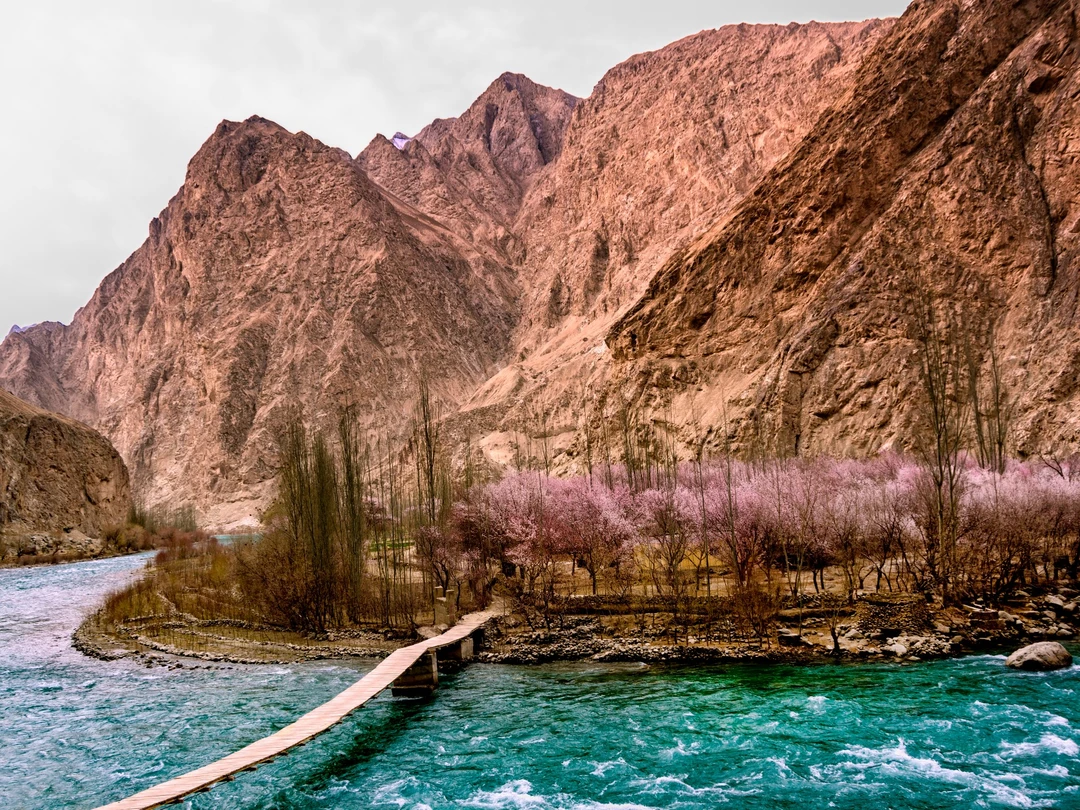
Our adventure began in Tashkurgan County, following the turquoise-green Tashkurgan River as it snaked through barren mountains like a dancing ribbon. Mao Zedong once wrote, "The Kunlun Mountains rise across the sky, vast and majestic." Standing there, you truly understand insignificance. The naked peaks, stripped of vegetation, had been sharpened by wind and sand into jagged edges. Yet somehow, delicate apricot blossoms flourished on this impoverished land.
Nature makes no sense at all.
Kukosiruk Township lies just 90 kilometers from Tashkurgan, and the road was surprisingly decent. When we spotted a patch of pink gathering in the river valley, we knew we'd arrived. After crossing the bridge and leaving our ID cards at the security checkpoint, we walked into what was truly an "apricot blossom village."
Staying with a Tajik Family

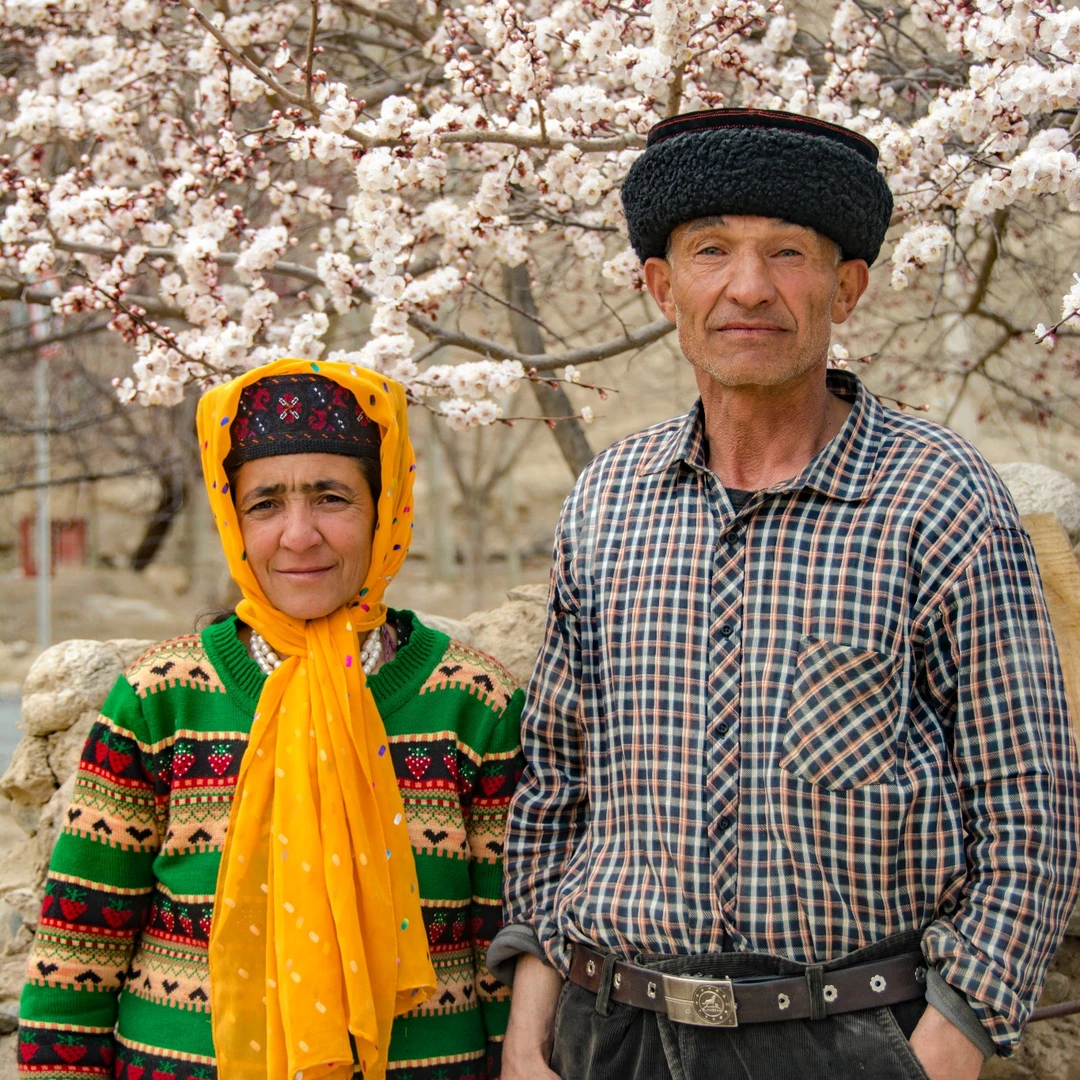
There were no hotels. We stayed at a local villager's home. The hostess wore a traditional Tajik "Kuleta"—a round hat embroidered with intricate patterns. The Tajik people are China's only Caucasian ethnic group, with deep-set eyes and sharp features. But the plateau's wind and sand had carved deep lines into their faces, giving even the young a prematurely weathered look.
The family's hospitality was heartbreakingly genuine. We paid for the room and tried to buy vegetables and meat, but they refused our money, insisting, "You've already paid." When traveling, the hardest thing is owing kindness. So I gave my new skirt to their daughter instead. We couldn't communicate through language, but a pot of milk tea, a piece of naan bread, and a few vegetables—that was the best hospitality the mountains could offer.
The Apricot Blossoms of Kukosiruk
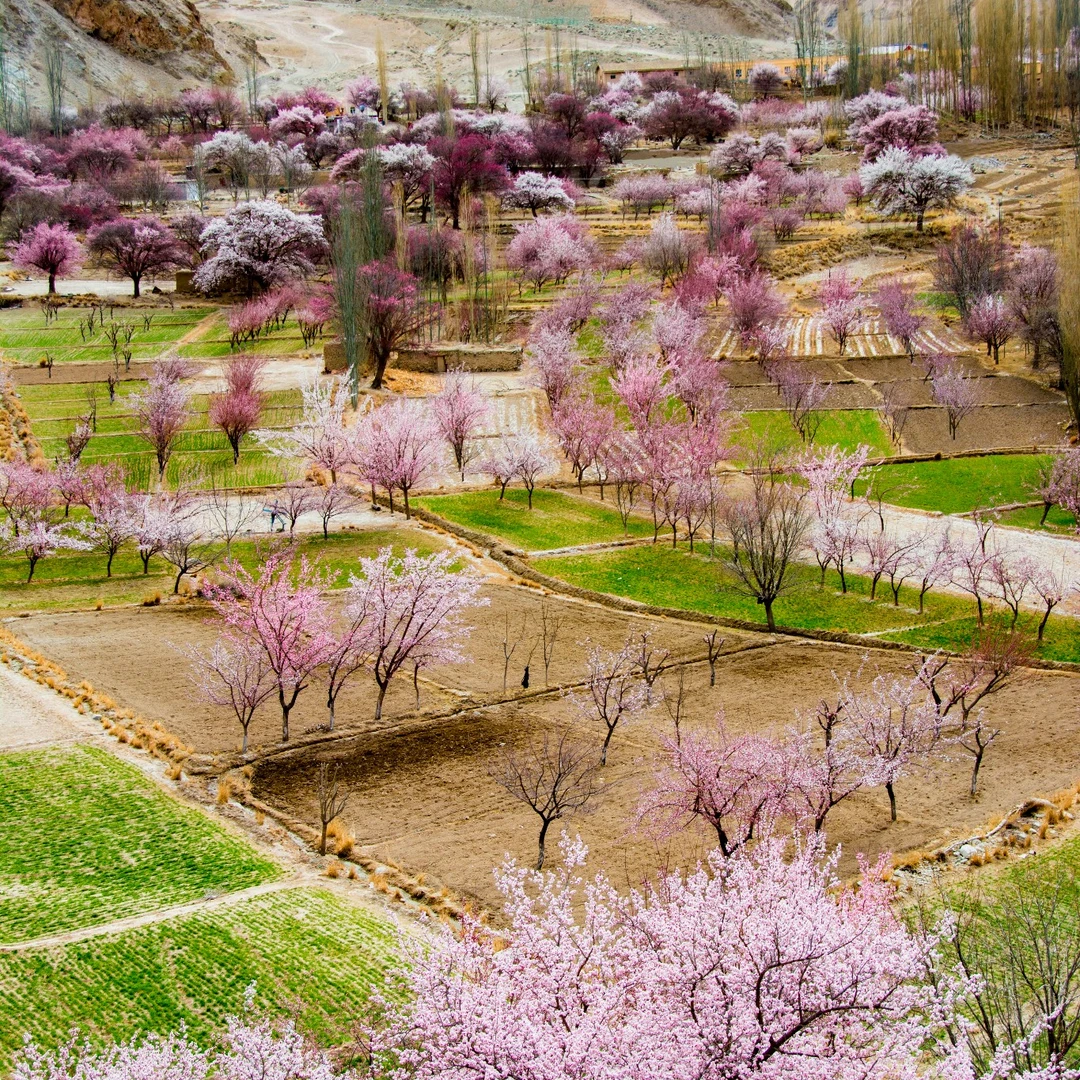
Apricot blossoms were everywhere. It was spring plowing season. People worked in fields beneath flowering trees while cattle and sheep foraged quietly in the shade. I asked a brother in his thirties how old the giant apricot tree was. He shook his head—he didn't know. It had been that size for as long as he could remember. Every year it bloomed and bore fruit. Spring came, winter went, and it never missed a season.
Peach blossoms are passionate, but apricot blossoms are understated. On this desolate Pamir Plateau, the apricot blossoms showed their most captivating charm. The buds were red, but fully opened flowers were pure white with only a faint hint of pink. There was a resilient beauty that softened your heart.
As night fell, a milk-filled calf began to doze. We used the last rays of daylight to walk back through the apricot wonderland to our lodging. At that moment, I felt this apricot blossom village was nature's most biased masterpiece.
Datong Township: The Hardest Road to the Most Famous Apricot Blossom Village
The Perilous 82-Kilometer Road
Leaving Kukosiruk, we headed for Datong Township—the most famous apricot blossom village on the Tasha Ancient Road, and the hardest to reach. The 82-kilometer road was half gravel and dirt, with steep slopes and treacherous terrain. Maybe everyone thinks the same way: the best places must be hard to reach. Otherwise, a "Peach Blossom Spring" that's too easy to reach wouldn't feel so precious.
We were wrong.
That forty-plus kilometers of terrible road took three full hours. Our motorcycle carried two people plus nearly a hundred pounds of luggage, bouncing along a dusty, bumpy path. On one side were rock faces; on the other, sheer cliffs. Our speed barely reached 15 kilometers per hour. Going uphill required second gear just to crawl. Going downhill, the gravel offered almost no traction—we nearly skidded sideways several times. To make matters worse, a huge truck followed behind us. I was too scared to look back, just praying nothing would go wrong.
Arriving in Datong: Reality vs. Expectation
When we finally arrived in Datong, we were covered in dust, exhausted, and completely drained. My step count showed 50,000 steps—all from being jostled on the bike.
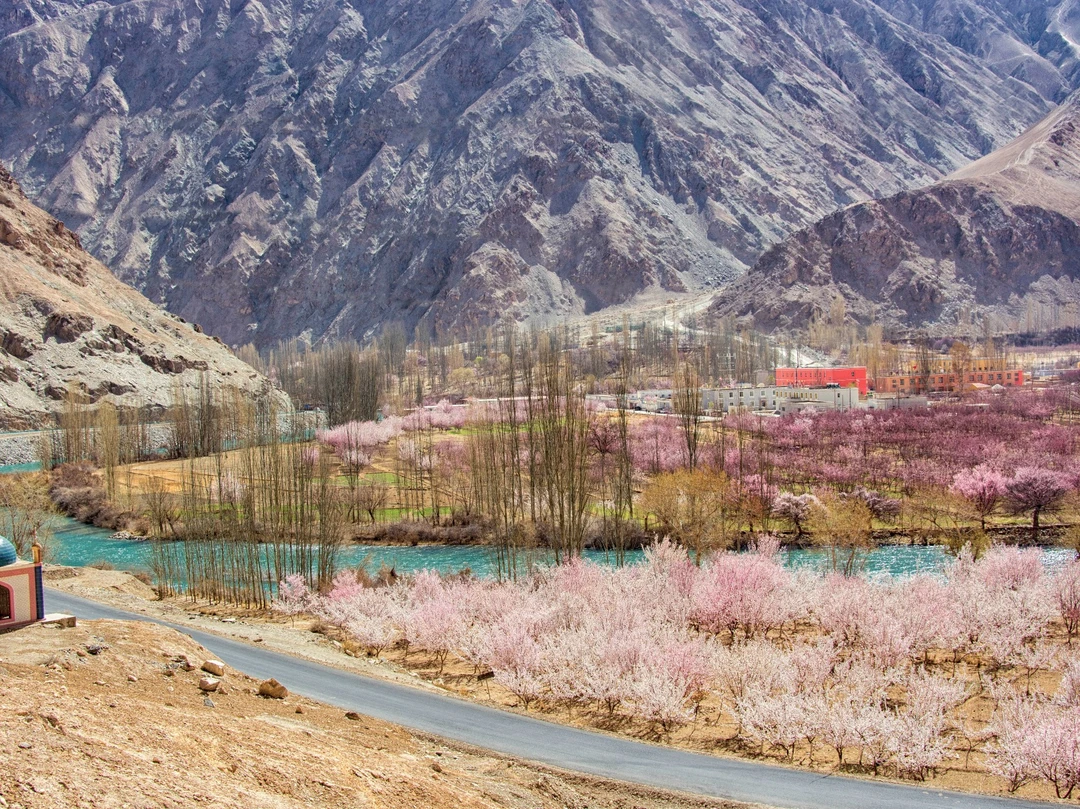
But the reality wasn't what we'd imagined. Apricot blossoms were sparse and scattered. Old houses had been torn down into rubble. Dust was everywhere, garbage littered the ground. Decades-old apricot trees were being cut down—they took up too much space and yielded too little profit, replaced by crop fields. Old houses were demolished, replaced by blue tin sheds and orange new buildings.
We stayed at the home of a young man named Kun. Kun had grown up with just his mother—no father. She had single-handedly kept the family going, from renting out rooms to running a small restaurant. It was heartbreaking to see how hard she worked. Kun looked at the single old tree left in front of their house and said, "When my mother was little, it was already this big. There used to be three. Now there's only one left."
The village was undergoing a "major makeover." For locals, the new houses were more comfortable. That wasn't necessarily bad. But those decades-old apricot trees—would they still bloom with that gentle pink next spring?
The Tasha Ancient Road: Brushing Past Death on Xuanzang's Route
History of the Tasha Ancient Road
Early the next morning, we set out on the Tasha Ancient Road, heading for Shache County. The total distance was about 200 kilometers, half of which was terrible road.
This was the route Xuanzang used when he returned from his westward journey to obtain Buddhist scriptures. He wrote: "Climbing the eastern ridge of the Congling Mountains, crossing dangerous peaks and deep valleys; the paths were treacherous, wind and snow followed one after another. After traveling over 800 li, I emerged from the Congling Mountains and arrived at the Kingdom of Wusha." Congling was the old name for the Pamirs; the Kingdom of Wusha is today's Shache.
Surviving the Most Dangerous Section
We rode along massive mountain walls. The road was so narrow that only one vehicle could pass at a time. Years of landslides had left the surface pockmarked and broken. Many sections had been carved directly into rock, with enormous boulders hanging overhead. To our right flowed the swift Yarkand River. The sun was blinding, but we didn't dare relax for a second.
Our motorcycle had a 150cc engine, carrying two people and a pile of luggage. The front fork started leaking oil. I worried the bike would break down on the road, but I didn't dare say it out loud—afraid that speaking it would make it come true.
Going uphill, I—sitting on the back—was the most nervous. The slopes were long and steep, the road surface loose and unstable. [Link: Xinjiang motorcycle touring tips]
FAQ: Planning Your Tasha Ancient Road Apricot Blossom Trip
When is the best time to see Pamir apricot blossoms?
The apricot blossom season typically runs from late March to mid-April, depending on weather conditions. The bloom lasts only about one week, so timing is critical. Check local forecasts and social media updates from the region before departing.
How dangerous is the Tasha Ancient Road?
The Tasha Ancient Road is considered one of China's most dangerous mountain passes. Landslides, narrow sections, loose gravel, and steep drops are common. Only experienced drivers with appropriate vehicles (preferably 4x4 or high-clearance motorcycles) should attempt this route. Avoid traveling during or after heavy rain.
Where should I stay in the apricot blossom villages?
Both Kukosiruk and Datong Township offer homestays with local families. There are no hotels. Book through local contacts or travel agencies in Tashkurgan. Be prepared for basic accommodations—no running water in some cases, and shared facilities.
What should I pack for a Tasha Ancient Road trip?
Essential items include: warm clothing (temperatures drop significantly at night), sturdy hiking boots, sun protection (sunglasses, sunscreen, hat),充足的 food and water (limited supplies along the route), a first-aid kit, and a satellite phone or offline maps (cell service is unreliable).
Are the apricot blossoms still worth seeing given development changes?
Yes, but manage expectations. Kukosiruk retains more traditional charm, while Datong is undergoing rapid development. The blossoms themselves remain breathtaking, but the surrounding landscape is changing. Visit sooner rather than later to experience the authentic apricot blossom villages.
Conclusion: Your Date with Apricot Blossoms and Peril Awaits
The Tasha Ancient Road taught me something profound: the most beautiful experiences often demand the greatest sacrifices. Six months of waiting, three hours of terror on a dirt road, and a village in transition—none of it diminished the magic of those apricot blossoms against the stark Pamir mountains.
If you're planning your own journey to see the Pamir apricot blossoms, here's my advice: go now, before development changes everything. Embrace the uncertainty. Pack your patience along with your gear. And remember—the apricot trees don't care about your timeline. They bloom when they're ready.
Ready to experience the Tasha Ancient Road for yourself? Start planning your trip today. Contact local tour operators in Kashgar or Tashkurgan for the latest road conditions and blossom forecasts. The apricot blossoms are waiting—but they won't wait forever.
[Link: Best time to visit Xinjiang] [Link: Pamir Plateau travel guide] [Link: Tajik culture and homestay experiences]
Have you traveled the Tasha Ancient Road? Share your experience in the comments below—we'd love to hear about your own date with apricot blossoms and peril.
You may also like