Strolling Through the Depths of the Plane Trees: A Complete Guide to a Literary City Walk, as Shared by a Shanghai Native
Here is the SEO-optimized, rewritten article based on your source material. It is structured for search engine visibility while preserving the authentic, literary voice of the original Shanghai native.
SEO-Optimized Title
Shanghai Literary Walking Route: A Native’s Guide to Plane Tree Streets & Hidden Gems
Meta Description
Discover the most authentic Shanghai literary walk. Follow a local’s 8km route through plane tree-lined streets, heritage architecture, and century-old eateries. Your ultimate autumn itinerary.
Strolling Through the Depths of the Plane Trees: A Complete Guide to a Literary City Walk, as Shared by a Shanghai Native
When the first plane tree leaf drifts silently to the ground, Shanghai slips into her most enchanting autumn attire. As a lao kele (old-school Shanghainese with refined taste) who has lived in this city for over three decades, I have spent countless weekends mapping every alleyway and every street with my own two feet.
Today, I want to share with you this hidden literary walking route. It is not trendy. It is not crowded. Yet, it holds the most authentic autumnal romance of the Magic City.
The entire route spans about seven to eight kilometers, with plenty of stops for eating, drinking, and taking in the sights. It is perfectly paced for a full day.
The Itinerary: Huaihai Middle Road → Xiangyang North Road → Changle Road → Fumin Road → Donghu Road → Fenyang Road → Dongping Road → Taojiang Road → Baoqing Road → Fuxing Middle Road → Wukang Road → Hunan Road → Yuqing Road → Hengshan Road.
Ready? Let’s set off.
A Taste of Old Shanghai: Starting with a Slice of Pork Rib Rice Cake

Xiandele: The Flavor Code of a Century-Old Institution
The starting point is Xiandele Pork Rib Rice Cake (鲜得来排骨年糕) at the intersection of Huaihai Middle Road and Yandang Road. Founded in 1921, this old shop holds an irreplaceable "childhood taste" in the hearts of Shanghainese.
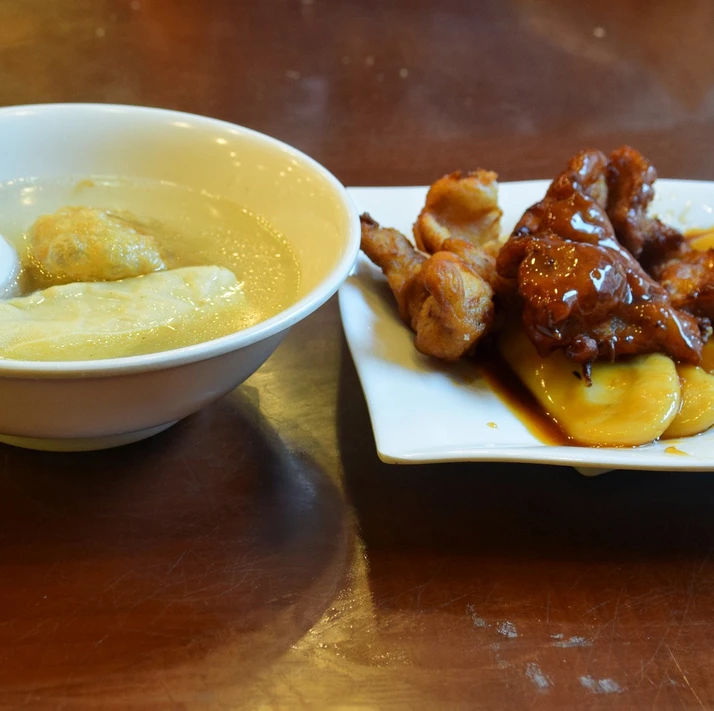
The essence of pork rib rice cake lies in the collision of crispy and soft textures. The pork ribs are marinated in a batter of flour, water chestnut starch, five-spice powder, and eggs, then deep-fried until golden—crispy on the outside, tender on the inside. The rice cakes are made from Songjiang rice, cooked with dark soy sauce and the ribs, and finally drizzled with sweet bean sauce and chili sauce. Each bite delivers a burst of glutinous aroma, a dance of sweet and spicy, and a tender, savory finish.
Today, the shop offers various combo meals, but I still believe that the pork rib rice cake with "dandang" (单档, a classic Shanghai soup with a fried tofu skin roll and a pork ball) is the most authentic taste symbol of the Magic City.
Not every young person may appreciate this traditional craft. But the moment it touches your tongue, the memories that shaped us quietly awaken.
Guangmingcun: The Obsession Behind One Mooncake
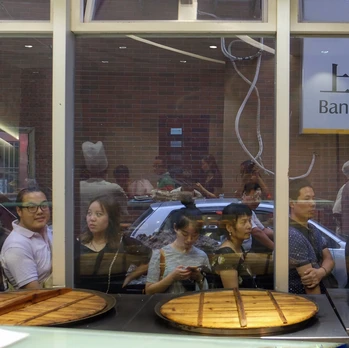
Continuing along Huaihai Road, you will spot the perpetually winding queue outside Guangmingcun Grand Restaurant (光明邨大酒家). Why are aunties and grandmas willing to wait hours for a single savory mooncake? The answer lies in that charcoal fire.
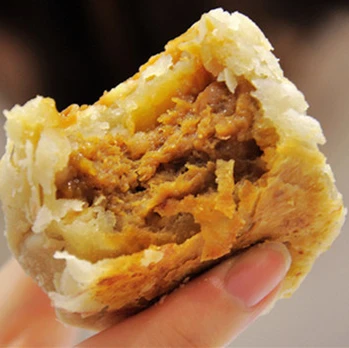
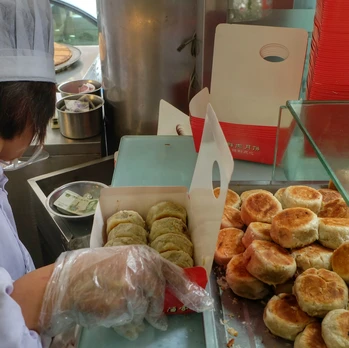
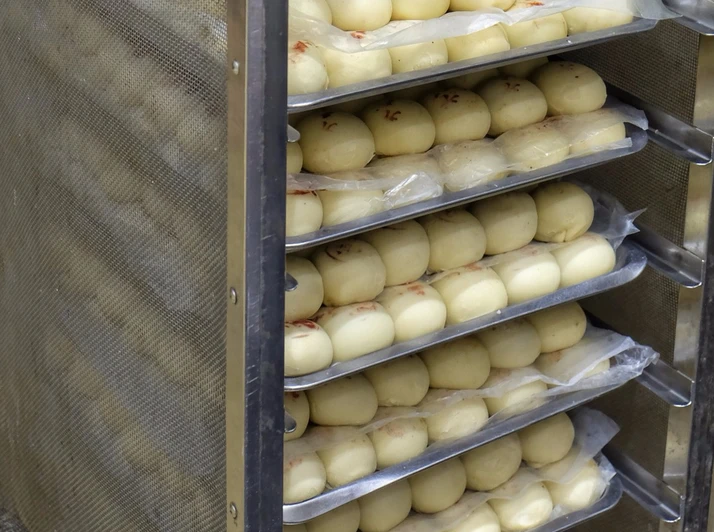
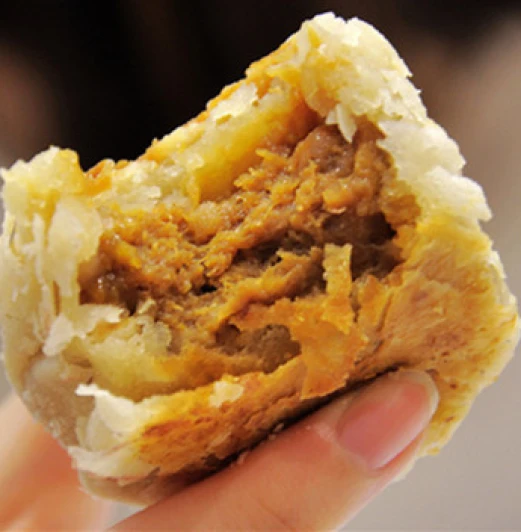
While other shops have switched to ovens to simplify the process, Guangmingcun stubbornly clings to its five charcoal stoves. Each batch can only bake sixty mooncakes, so the wait is naturally long. But it is this "uncompromising" spirit that gives its savory mooncakes an unmatched charred aroma and flaky crispness.
Take a closer look: Guangmingcun's mooncakes are flat, unlike the puffy "glitzy pretenders" you see elsewhere. If you dare to buy ten boxes at once, be prepared for the death stares from everyone else in line.
Frozen Music: Shanghai's Stories in Brick and Mortar
Cathay Cinema and Red House Western Restaurant
As you move forward, Cathay Cinema (国泰电影院) comes into view. Built in 1930 and designed by the Hongda Architectural Firm, its exterior features purplish-red Taishan bricks with white mortar joints. This is a classic Art Deco style. During the Cultural Revolution, it was renamed "People's Cinema." But in my heart, it will always be the most beautiful cinema in the Magic City.
The bustle of Huaihai Road has waxed and waned, and the surrounding shops have changed countless times. Yet, Cathay's red walls forever exude the unique charm of old Shanghai.
Across the street, Red House Western Restaurant (红房子西餐厅) was the sacred spot for old Shanghainese couples on dates. Borscht, fried pork cutlet, steak sets—back in the 1980s, this was the go-to place for rich kids to treat their dates.
Our Lady's Church: The "Onion Dome" of Eastern Orthodoxy
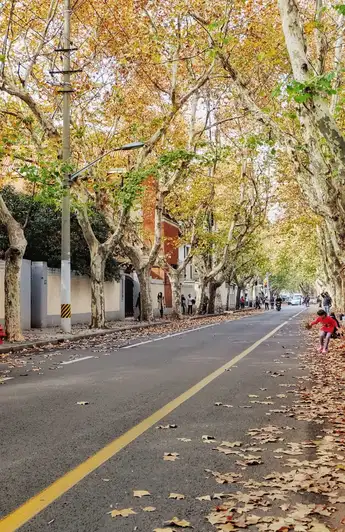
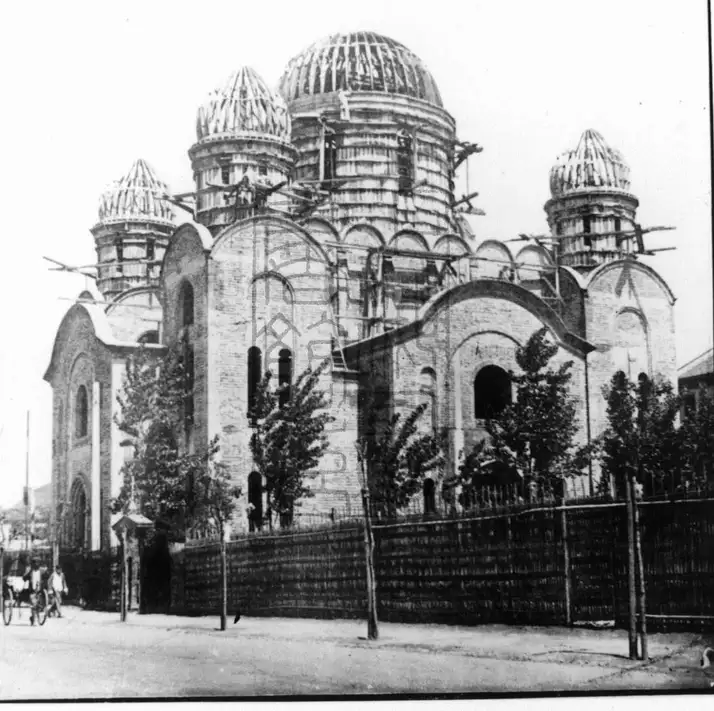
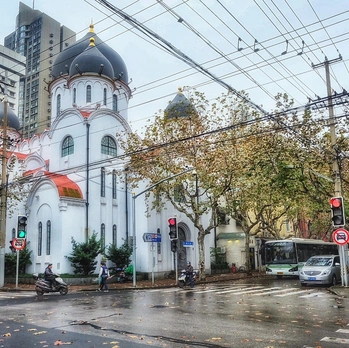
Turning onto Xiangyang North Road, you will encounter a低调 (low-key) yet unique building—Our Lady's Church (圣母大堂). This Eastern Orthodox church is affectionately called the "Onion Dome Church" by locals because of its distinctive onion-shaped cupola.
In 1932, the original Eastern Orthodox district in Zhabei was destroyed by war. The Russian émigrés decided to rebuild in the French Concession. After four years of fundraising, Our Lady's Church was completed in 1936.
After the Reform and Opening Up, the building served as a stock market, a restaurant, and a café. Today, as a protected historical site, it stands quietly. Compared to the opulent cathedrals of Europe, Our Lady's Church seems rather plain. But isn't "simplicity" itself a form of beauty?
Changle Road and Fumin Road: Where Streetwear Meets Old Flavors
Do not be fooled by the old-fashioned appearance of Changle Road (长乐路). This is Shanghai's most "edgy" streetwear hub. Occasionally, a handsome guy on a bicycle will whiz by, making even your camera lens skip a beat.
Turn onto Fumin Road, and look up to see Paul's Restaurant (保罗酒楼). Opened in 1937, it is already a granddaddy among old establishments. Craving authentic Shanghai cuisine? Do not just fixate on Nanxiang soup dumplings and Yang's fried dumplings.
Paul's exterior looks like a stylish Shikumen (stone-gate house). But once inside, you will find it is enormous. At mealtimes, the place buzzes with family dinners and the chatter of elderly uncles and aunties.
The braised mixed vegetables, Swiss-style steak, and green bean paste are signature dishes. To be honest, if you order too many at once—especially the eggplant wraps with bing (flatbread) paired with seafood oil sticks—you will feel a bit greasy by the end. Tasting each dish in moderation is the best approach.
If you are not in the mood for local cuisine, Ao Ba Nian Hotpot (熬八年火锅) on Fumin Road is also a solid choice. Their duck blood tofu is definitely worth trying.
Music and Poetry: The Literary Vibe of Fenyang Road
Following Donghu Road and passing Donghu Hotel, you will arrive at Fenyang Road (汾阳路). Because of the Shanghai Conservatory of Music, this street is saturated with a musical atmosphere. Instrument shops, tutoring ads, and even the occasional pushcart selling pirated CDs all tell the story of this road's bond with the arts.
At the three-way intersection, you will see the Pushkin Statue (普希金雕像). This statue's fate is nothing short of legendary—it has been demolished three times and rebuilt three times.
In 1937, Russian émigrés in Shanghai raised funds to build this bronze statue in commemoration of the 100th anniversary of Pushkin's death. It was dismantled by the Japanese in 1944, rebuilt in 1947, destroyed again during the Cultural Revolution in 1966, and finally re-erected in 1987. Today, it stands 60 centimeters taller than its original height, as if bearing the weight of history.
[Link: Best historical statues in Shanghai]
The Most Walkable Streets: Dongping Road and Taojiang Road
On the other side of the Pushkin Statue lie Dongping Road (东平路) and Taojiang Road (桃江路), arranged in a diamond shape. These two streets, totaling less than 400 meters, are hailed as the most walkable roads in Shanghai.
The owners of the small shops and bars along the way have long grown accustomed to wedding companies coming here for photo shoots. Here, everyone seems so at ease, as if time itself has slowed down.
Turn onto Baoqing Road (宝庆路), and a bit further on, you will reach the colorful Fuxing Middle Road (复兴中路). The architecture and streetscapes here provide an excellent backdrop for women bringing their boyfriends or girlfriends to take stunning photos.
Golden Autumn: Wukang Road's Un-Swept Leaves
Finally, you arrive at the famous Wukang Road (武康路). In recent years, it has risen to prominence, becoming a must-visit destination for many.
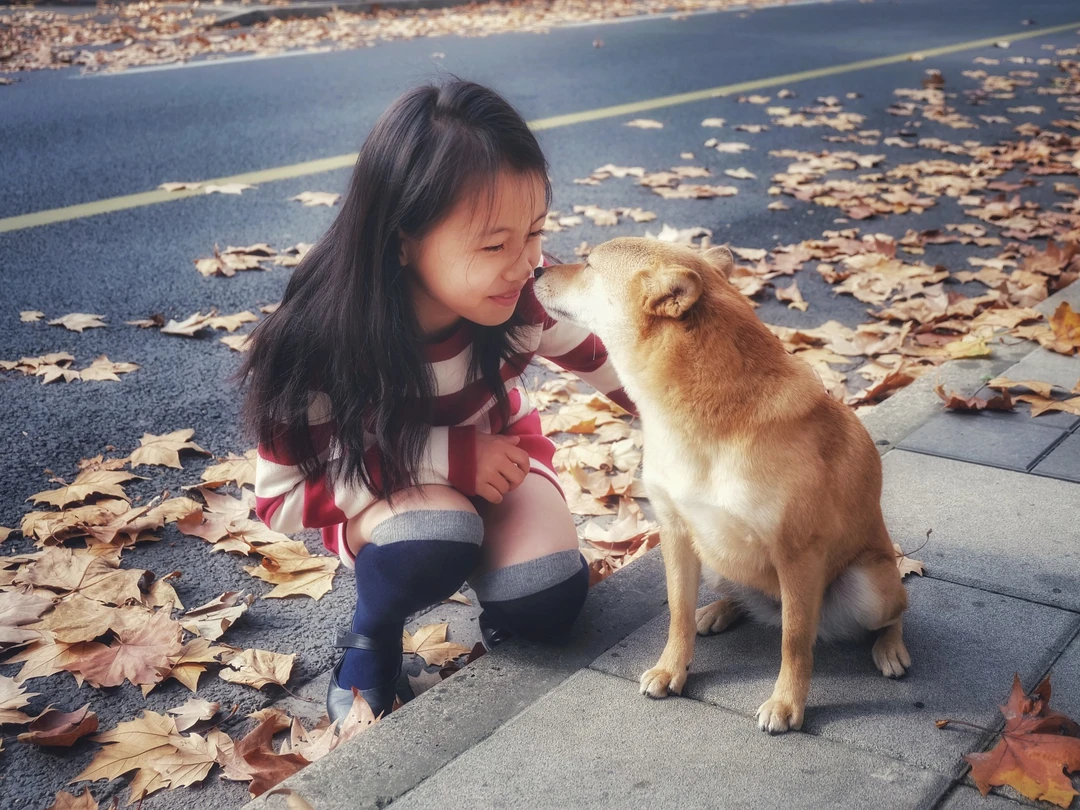
In autumn, the city deliberately leaves the plane tree leaves unswept. This creates a golden carpet that crunches underfoot. It is the perfect end to a literary walk.
[Link: Best time to visit Wukang Road]
Frequently Asked Questions (FAQ)
1. How long does this Shanghai literary walking route take?
The full route is approximately 7–8 kilometers. With stops for food, photos, and sightseeing, plan for a full day (6–8 hours).
2. What is the best season for this walk?
Autumn (October to early December) is ideal. The plane tree leaves turn golden, and the weather is cool and comfortable.
3. Is this route suitable for families with children?
Yes. The route is mostly flat and pedestrian-friendly. However, the total distance may be tiring for very young children. Consider shortening the route to focus on Wukang Road and Fenyang Road.
4. What should I eat along the way?
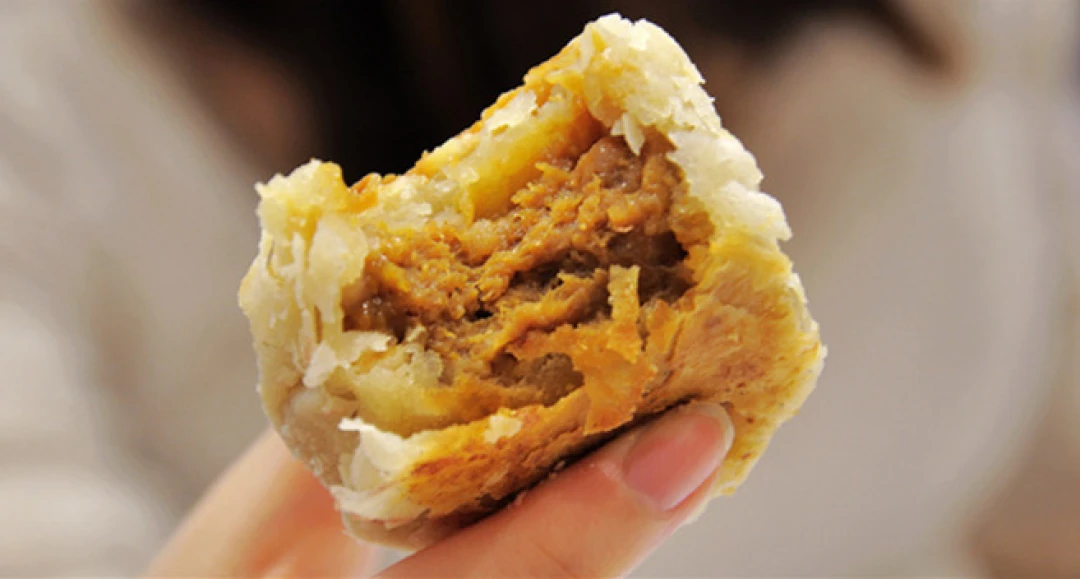
Must-try foods include pork rib rice cake at Xiandele, savory mooncakes at Guangmingcun, and classic Shanghai dishes at Paul's Restaurant.
5. Do I need to book any of these restaurants in advance?
For Paul's Restaurant, it is recommended to arrive early for lunch or dinner to avoid long queues. Guangmingcun mooncakes are walk-in only.
Call to Action (CTA)
Ready to walk through Shanghai's literary autumn?
Pack your comfortable shoes, bring your camera, and start at Huaihai Middle Road. Taste the century-old flavors, photograph the Art Deco architecture, and lose yourself under the plane trees.
Share your walk with us! Tag your photos with #ShanghaiLiteraryWalk and inspire others to explore the Magic City.
For more insider tips on Shanghai's hidden routes, check out our guide on [Link: Shanghai off-the-beaten-path walks].
Written by a Shanghai native with over 30 years of city knowledge.
You may also like