Shanghai on Wheels: City Corners Reshaped by Time: An SEO-Optimized Guide to Urban Art & Industrial Revitalization
Meta Description: Explore Shanghai's transformed industrial landmarks by car. From the Long Museum West Bund to Tank Shanghai, discover how docks, oil tanks, and factories became must-see art destinations.
Introduction: Why Seeing Shanghai from the Driver's Seat Changes Everything
Some say the best way to get to know a city is to walk its streets on foot. But when wheels replace feet, and the windshield becomes your viewfinder, Shanghai reveals itself in an entirely different light. This isn't a first-time visitor's tale—it's the story of a seasoned traveler who thought they knew the city, only to discover its hidden layers from behind the wheel.
Countless trips between Hongqiao and Pudong had me convinced I understood Shanghai well enough. It wasn't until a drizzly spring day, when I merged onto the elevated expressway, that I realized I had never truly "seen" Shanghai at all. Tires hummed over wet asphalt. Overpasses spiraled overhead like concrete ribbons. Tunnels stretched beneath the city like arteries. The routes I once viewed as mere lines between two points suddenly became a code for deciphering the city's character.
So I decided to spend a day exploring spaces that time had reshaped. Once they were docks, oil tanks, and factories. Now reborn in new forms, they have become some of the most poignant footnotes in Shanghai's story.
H2: Long Museum West Bund: Where Industrial Relics Meet Contemporary Art
H3: A Coal Dock Transformed into a Cultural Landmark

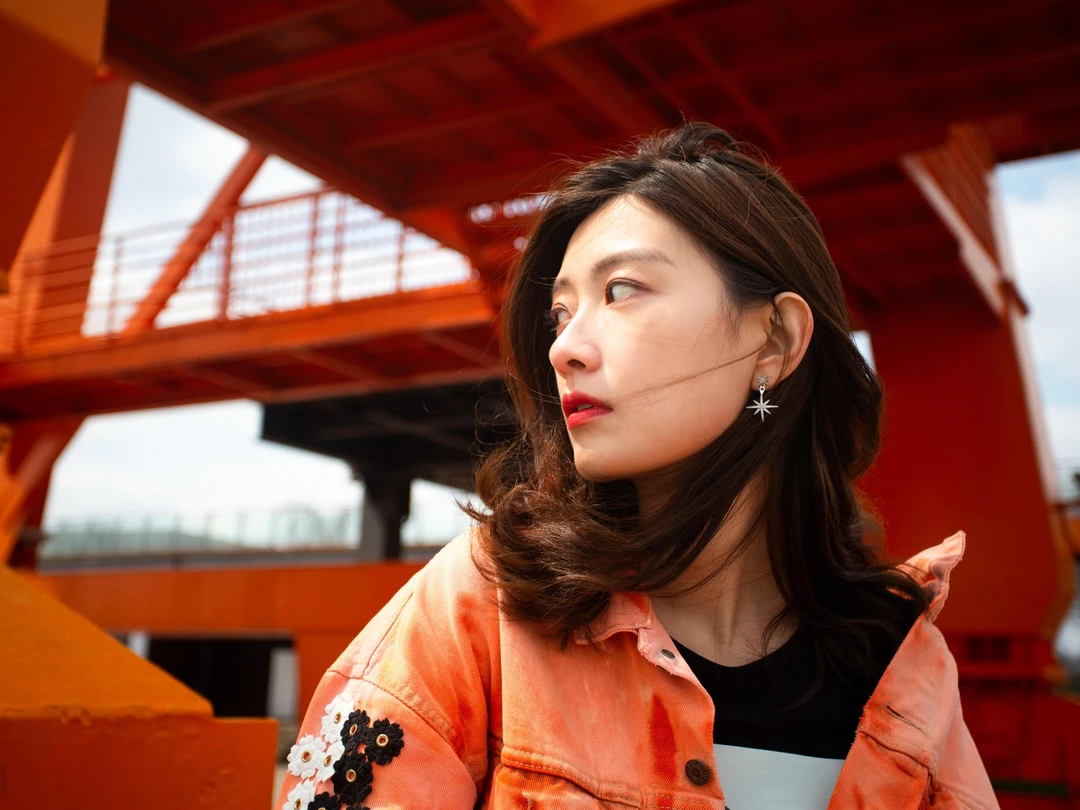
On the banks of the Huangpu River, the Long Museum West Bund stands like a silent sentinel. Its gray concrete architecture engages in a curious dialogue with the rust-red iron structures along the waterfront—as if time had folded in on itself, past and present coexisting in the same frame.
This was once a coal-loading dock for Shanghai's waterfront. Today, the coal hopper unloading bridge from the 1950s still stands—110 meters long, 10 meters wide, and 8 meters high, like a sleeping steel beast. On weekend afternoons, skateboarders practice their tricks here, while fashionistas hunt for the perfect shot against the backdrop of industrial decay. The raw, gritty texture of the industrial age has become a new kind of allure.
H3: Inside the Museum: Yu Hong's "The World of Samsara"
Step inside the museum, and the space shifts abruptly from chaos to quiet. During my visit, artist Yu Hong's major solo exhibition "The World of Samsara" was on display. It tells the story of a female artist's growth and serves as a retrospective of her life's work.
"The World of Samsara" draws from Buddhist philosophy, meaning "a world that demands endurance and patience." The exhibition unfolds in four acts: "Time of Rebirth," "Portraits," "Half a Century," and "Witnessing Growth"—a complete artistic universe built like a four-act play.
The first floor features abstract artistic language, while the second floor presents photography-based paintings with stronger narrative elements. Yu Hong uses her brush to trace China's developmental trajectory over the past three decades, capturing uniquely Chinese imprints amidst the wave of globalization.
H3: Practical Information for Visitors
| Detail | Information |
|---|---|
| Address | No. 3398 Longteng Avenue, Xuhui District, Shanghai |
| Hours | Tuesday to Sunday, 10:00 AM – 6:00 PM |
| Ticket Price | 100 RMB/person (covers all concurrent exhibitions) |
Driving Tips: The entrance to the Long Museum West Bund's public parking lot is on the right after a left turn—it's easy to miss, so slow down as you approach. The employee parking lot is not open to the public. The underground parking has two levels with plenty of spaces, so no need to worry.
[Link: Best driving routes to Xuhui art district]
H2: Tank Shanghai: From Aviation Fuel to Artistic Energy
H3: The Surprising Transformation of Longhua Airport's Oil Tanks
Every year, the massive Teamlab exhibition makes its much-anticipated return to Shanghai. And this year, its venue was something unexpected: a real oil tank.
Five gleaming white aviation fuel tanks sit scattered by the roadside, surrounded by reeds taller than a person. Even more surprising is the active helicopter pad nearby—the collision of industry and art here feels almost surreal.
This site was once the century-old Longhua Airport. Under the vision of architect Li Hu, five abandoned aviation fuel tanks are transforming into a brand-new public art park. Tanks 1 and 2 remain as independent exhibition spaces, while Tanks 3, 4, and 5 have been connected by an enclosed museum hall.
H3: Teamlab's Immersive Experience in Tank 5
The largest tank, Tank 5, is home to Teamlab's "Water Particle World in the Oil Tank." Walking into the pitch-black tank, countless computer-simulated water particles rain down from above. They form lines, then surfaces, eventually converging into a massive waterfall. Walking through the waterfall, you somehow stay dry—wherever your toes touch, the water parts, and flowers slowly bloom in its place.
"Flowers" is another piece within the waterfall. Lean against the wall, and flowers gradually grow behind you, going through the entire cycle of life: growth, blooming, withering, and death. This isn't pre-programmed animation—it's deeply interactive. Gaze at the flowers, and they bloom brighter than usual. Touch or step on them, and they wither quickly.
Move into another space, and "Black Waves: Lost, Immersed, Reborn" invites quiet contemplation. Wave after wave extends infinitely in mirrored reflections, their shapes reminiscent of Japanese ukiyo-e depictions of water. The deep blue ocean, combined with the surrounding mirrors, easily tricks you into feeling like you're adrift at sea.
H3: Practical Information for Visitors
| Detail | Information |
|---|---|
| Address | Tank 5, Tank Shanghai Art Center, No. 2380 Longteng Avenue, Xuhui District |
| Hours | Tue–Fri: 10 AM – 8 PM; Weekends & Holidays: 10 AM – 9 PM |
| Ticket Price | 120–200 RMB/person |

Driving Tips: The roads around Tank Shanghai are wide and comfortable to drive. The parking lot is diagonally across from the main gate of the tanks. Search for "AI Conference Parking Lot" on your navigation app—it's free. If you miss this turn, it's hard to find parking for miles around.
[Link: Teamlab Shanghai ticket booking guide]
H2: Mixpace Youguang: Bringing Light to the Dark
H3: A Rivet Factory's Second Life as a Co-Working Space
Mixpace Youguang is tucked away in a narrow alley, difficult to reach by car. But hidden here is a story about entrepreneurship and transformation.
Its most famous feature is the all-white spiral staircase. When I first saw photos, I assumed it was some kind of art gallery. Only upon arriving did I realize it's a co-working office space. Non-employees can register by scanning a QR code at the entrance for a visit.
Working in a space like this would probably put anyone in a good mood. Past the café at the entrance, the stunning white spiral staircase comes into view. Shoot from above, below, or the side; sit, crouch, or even lie down to take the photo—no matter how you frame it, you'll easily capture a structurally stunning shot.
H3: The Architectural Genius of Light
Light is the soul of this place. Sunlight streams in through the dome overhead, filling the shared space with vitality and energy. The upward-curving spiral staircase has become a must-visit spot for countless tourists.
Who would have guessed that this was once a dilapidated four-story rivet factory, receiving less than 0.1 hours of sunlight per day? During the renovation, the floor slabs on the second, third, and fourth levels were removed, and a new dome was opened in the factory roof. Sunlight from above was channeled directly to the first floor—areas that had long been shrouded in darkness finally saw the light.
Address: Near Xintiandi, Huangpu District (exact location available via navigation apps)
[Link: Shanghai co-working spaces with architectural significance]
H2: Frequently Asked Questions About Shanghai's Industrial Art Spaces
Q1: Which is better for first-time visitors—Long Museum or Tank Shanghai?
Both are excellent, but they offer different experiences. Long Museum West Bund is ideal for those who appreciate traditional art exhibitions with a focus on Chinese contemporary artists. Tank Shanghai offers a more immersive, interactive experience with Teamlab's digital installations. If you have time, visit both—they're located on the same stretch of Longteng Avenue.
Q2: Are these venues suitable for children?
Yes, but with considerations. Tank Shanghai's Teamlab exhibition is highly interactive and visually stunning for children, though some dark spaces might be intimidating for very young kids. Long Museum's exhibitions are more contemplative and may not hold a child's attention for long.
Q3: What's the best time of day to visit these art spaces?
Weekday mornings are generally quieter. For photography enthusiasts, visit Long Museum in the late afternoon for golden hour light on the industrial structures. Tank Shanghai's mirrored installations are stunning any time, but the outdoor tanks photograph best in soft morning or late afternoon light.
Q4: How much time should I allocate for each venue?

Plan for 1.5–2 hours at Long Museum, 2–3 hours at Tank Shanghai (especially if you want to fully experience Teamlab), and 30–45 minutes at Mixpace Youguang.
Q5: Can I take photos inside these venues?
Long Museum: Photography is generally allowed, but flash and tripods may be prohibited. Tank Shanghai: Photography is encouraged, especially for the interactive installations. Mixpace Youguang: Photography is allowed in public areas; be respectful of people working in the co-working space.
H2: Plan Your Shanghai Art Road Trip Today
Shanghai's transformation from industrial powerhouse to cultural capital is nowhere more evident than in these repurposed spaces. The Long Museum West Bund, Tank Shanghai, and Mixpace Youguang represent the city's ability to honor its past while embracing the future.
Whether you're an art enthusiast, a photography lover, or simply someone seeking unique experiences, these destinations offer a fresh perspective on Shanghai's urban evolution. And the best way to connect them? Behind the wheel, watching the city unfold through your windshield.
Ready to explore? Start your journey at the Long Museum West Bund, then drive south to Tank Shanghai, and finish with a visit to Mixpace Youguang in the evening. Don't forget to bookmark the parking tips—they'll save you time and frustration.
[Link: Shanghai driving routes for art lovers] [Link: Best parking apps for Shanghai drivers]
Have you visited any of these transformed industrial spaces in Shanghai? Share your experience in the comments below, or tag us in your photos from the Long Museum or Tank Shanghai.
You may also like