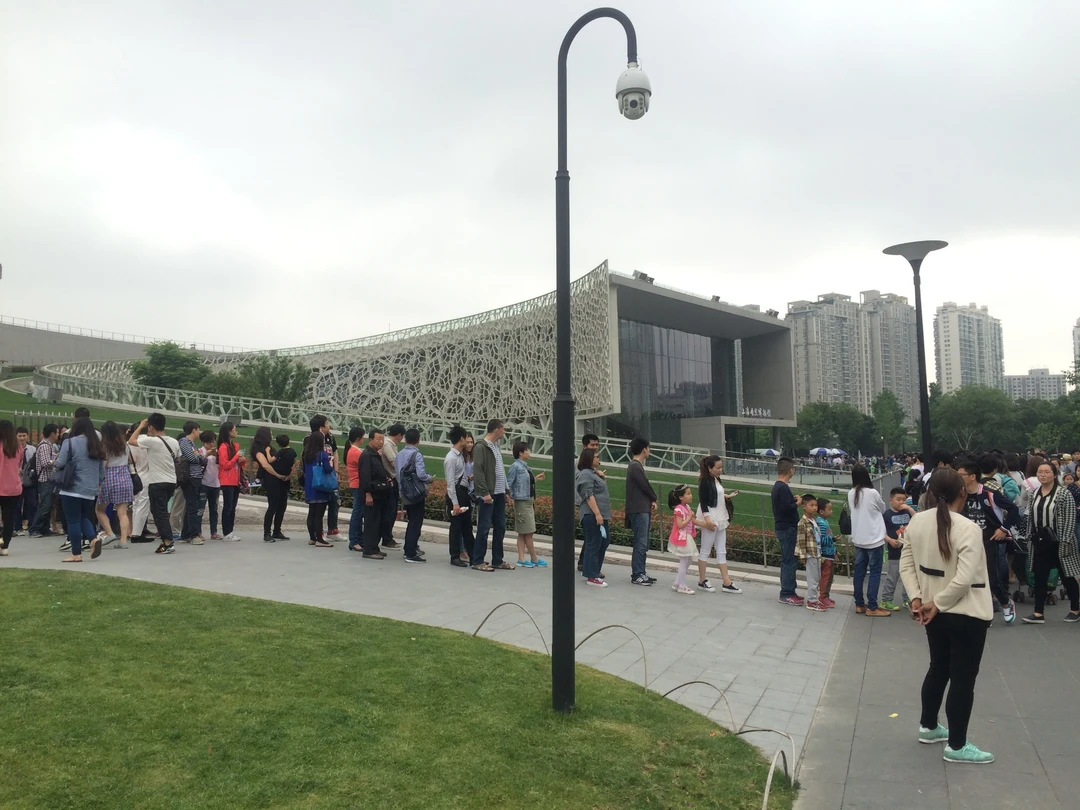
Shanghai Museum: An Eternal Journey to the Peak of the Pyramids – Ancient Egypt Exhibition Guide
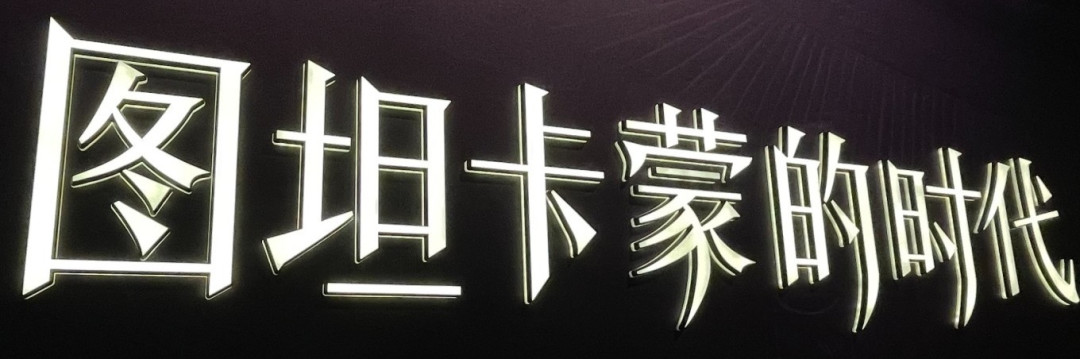
Meta Description: Explore the Shanghai Museum's "At the Peak of the Pyramids" exhibition. Discover ancient Egyptian artifacts, pharaoh statues, mummification secrets, and the Book of the Dead. Plan your visit now.
Introduction: A Dialogue Across Five Millennia
Step into the Shanghai Museum, and you embark on a journey that transcends time and geography. The exhibition "At the Peak of the Pyramids" brings the wonders of ancient Egypt to China, offering an unparalleled glimpse into a civilization that flourished along the Nile over 5,000 years ago. There are no massive pyramid stones here, yet the memories held within these galleries are harder than any rock. Ancient Egyptians used granite, bronze, and papyrus to crystallize their faith, power, and views on life and death into eternity.
In this comprehensive guide, we walk you through the exhibition's highlights, from the towering heads of pharaohs to the delicate scrolls of the Book of the Dead. Whether you're planning a visit or exploring virtually, this article will deepen your appreciation of one of the most remarkable ancient Egyptian artifact exhibitions in Asia.
The Realm of the Pharaohs: Faces of Power and Divine Radiance
Senusret I: The "Appropriated" King
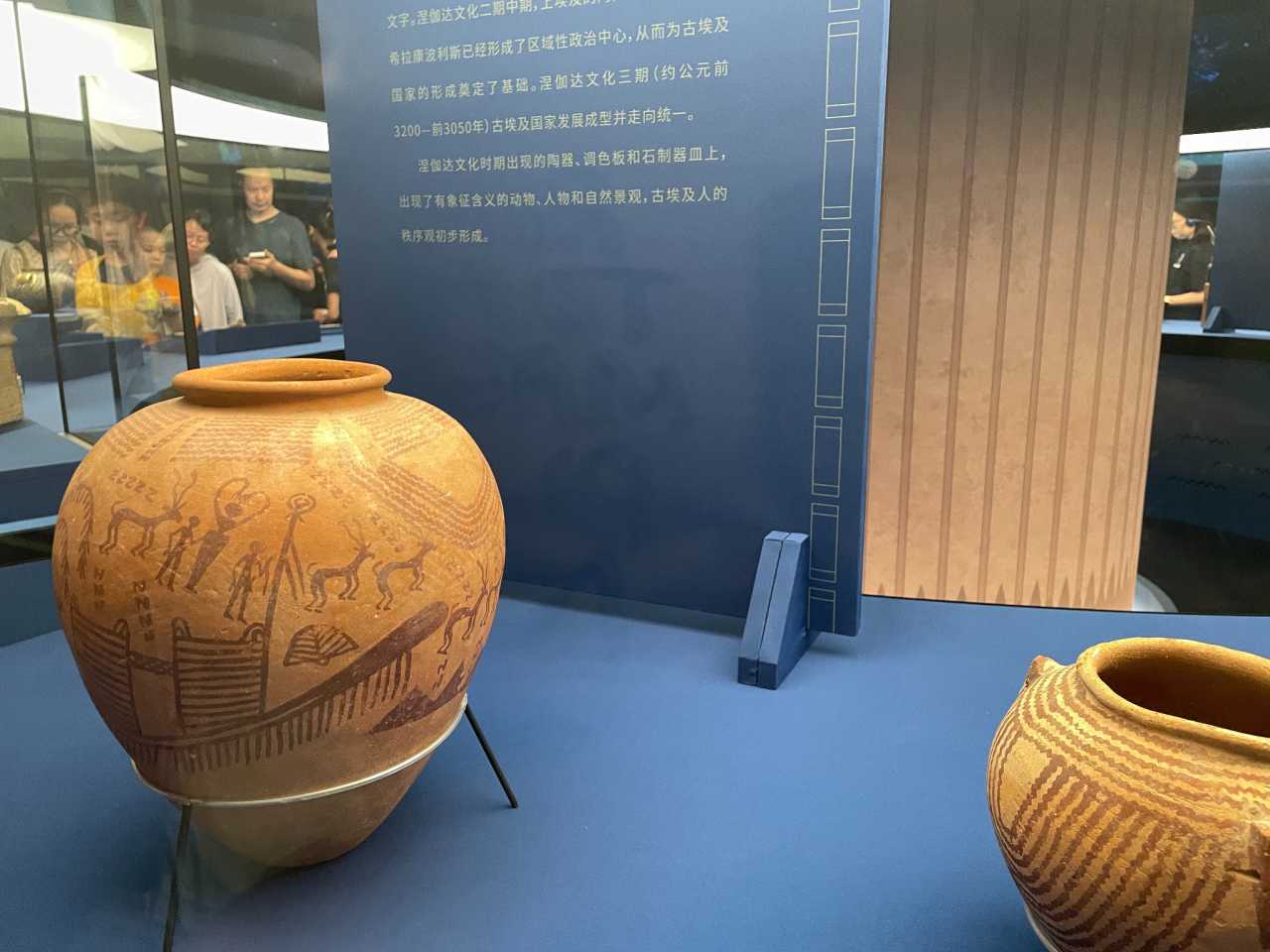
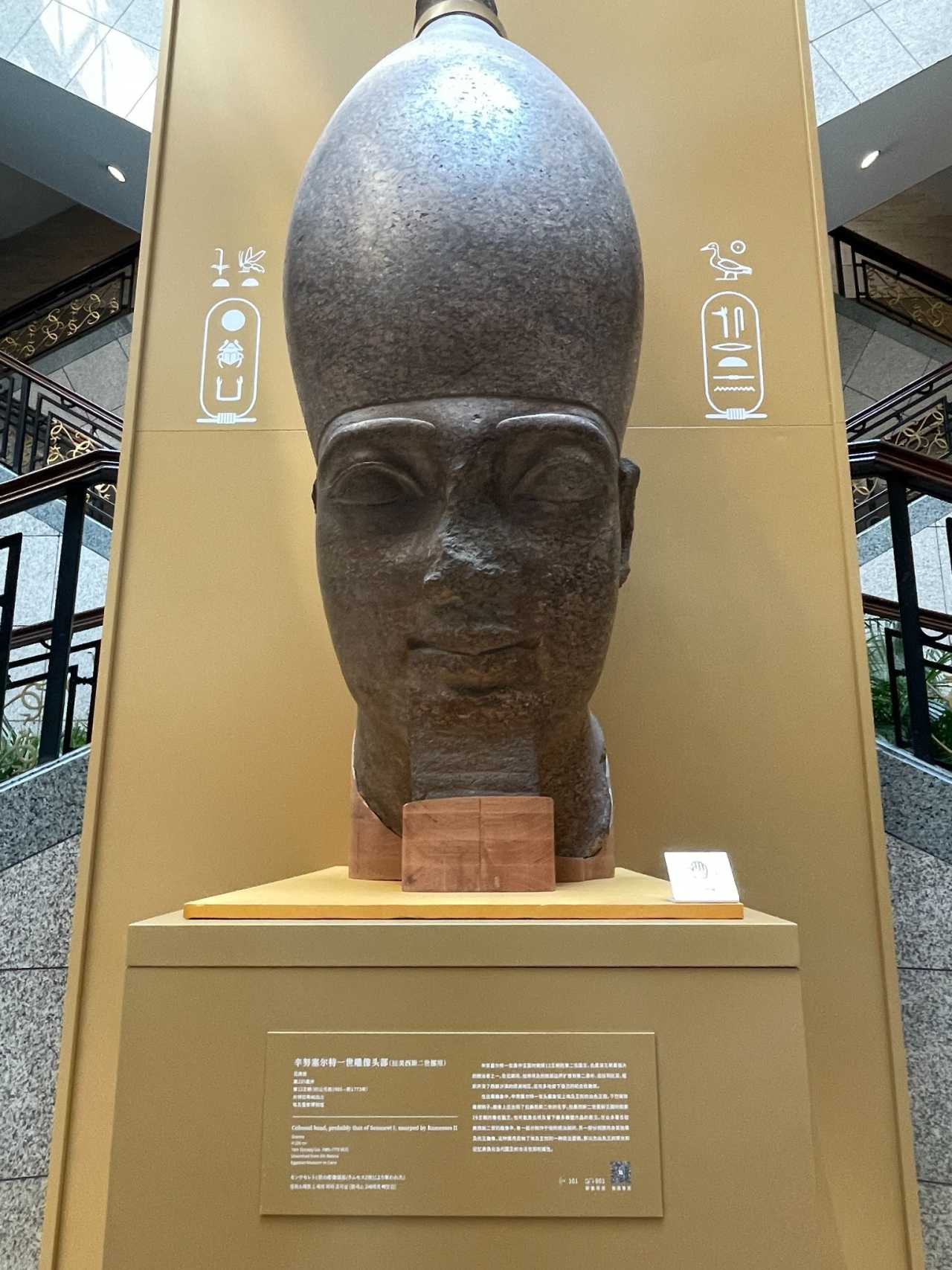
The most eye-catching piece in the hall is the head of a granite statue standing 235 centimeters tall. It belongs to Senusret I of the 12th Dynasty, but observant visitors will notice that the statue also bears the name of Ramesses II. This great pharaoh of the New Kingdom had a passion for "appropriating" statues of his predecessors—he ordered his own royal name to be carved onto older statues, thereby strengthening his connection to past pharaohs and the gods.
This act was not simple "theft" but a unique expression of power succession in ancient Egypt. By embedding himself into history in this way, Ramesses II became part of the eternal order. This statue is a must-see for anyone interested in ancient Egyptian pharaohs and their complex relationship with legacy.
Amenemhat III: The "Golden Age" of the Middle Kingdom
Standing alongside the statue of Senusret I is a figure of Amenemhat III. This pharaoh, who ruled Egypt for forty-five years, together with his father Senusret III, ushered in the "Golden Age" of the Middle Kingdom. His expression is stern and slightly worried—a typical style for Middle Kingdom royal statues. The pharaoh is no longer a perfect embodiment of divinity but is depicted as a ruler burdened by the weight of governance.
During his reign, Amenemhat III vigorously developed the Faiyum Oasis, launched large-scale mining operations, and explored long-distance trade routes. His commercial expeditions covered Upper and Lower Egypt and the surrounding deserts, providing ample precious stone for construction and statue-making. This statue made of granodiorite stands as a testament to that era.
Hatshepsut: From Queen to "King"
A thought-provoking group of statues in the hall shows Hatshepsut's image gradually transitioning from female to male. This legendary queen of the 18th Dynasty in the New Kingdom initially acted as regent during the early reign of Thutmose III, then ruled Egypt as King of Upper and Lower Egypt, bringing two decades of peace and prosperity.
Because the tradition of royal succession in ancient Egypt passed from father to son, Hatshepsut had to gradually transform her statues from traditional female forms to male ones as she consolidated power. However, after her death, Thutmose III systematically erased the queen's traces—a "damnatio memoriae" aimed at consolidating his rule and warning future generations. History is, after all, written by the victors. For those fascinated by female pharaohs in ancient Egypt, this section is particularly compelling.
[Link: Hatshepsut and female rulers in ancient history]
Guardians of the Underworld: Death Is Not the End
Osiris: The Mystery of Resurrection
A rare statue in the hall depicts the resurrection of Osiris, lord of the underworld. He lies face down on the stone bed used for making mummies, arms rigid at his sides, head raised, staring straight ahead. This statue from the 26th Dynasty showcases Osiris's mysterious ability to be reborn from death.
In ancient Egyptian mythology, Osiris was killed and dismembered by his brother Seth. His wife Isis pieced together his body parts, making him into the first mummy and bringing him back to life. This story is not just myth—it reflects the ancient Egyptian attitude toward death: death is not the end, but the beginning of the journey to eternal life. This is a central theme in ancient Egyptian mummification and afterlife beliefs.
Anubis: The Guide of the Underworld
A damaged limestone statue of a jackal-headed figure still retains its former majesty: Anubis crouches atop a shrine, head held high, gazing forward with a vigilant eye. Anubis is the god of cemeteries, overseeing mummification and the "Opening of the Mouth" ceremony.
Why did the ancient Egyptians regard the jackal as the "guide to the underworld"? The answer may lie in the jackal's habits—they roam the edges of deserts and are known to consume corpses. This association with death led the Egyptians to see them as beings connecting life and death. Anubis originally guarded the tombs of kings but later evolved into the guide and protector of all the deceased.
The Book of the Dead: A Guide Through the Underworld
The hall contains a scroll of the Book of the Dead belonging to Her-Wer-Ben-Kot, a female singer of Amun. It contains a set of spells to guide her through the underworld. The papyrus is read from right to left, with text and images depicting scenes of the deceased meeting with the gods. The singer appears in the scroll wearing a long wig and white clothing; her mother was also a female singer of Amun.
The most famous scene in the Book of the Dead is the "Weighing of the Heart": the deceased's heart is placed on a scale and weighed against the feather of Ma'at, the goddess of justice. Anubis conducts the weighing, while Thoth records the result. If the heart is heavier than the feather, it indicates guilt, and the heart will be devoured by the monster Ammit, leading to the "true death" of the deceased. If the heart is lighter, it shows that the deceased lived by truth and justice, allowing them to be reborn. This concept of judgment predates Dante's Divine Comedy by more than three thousand years. For anyone curious about Egyptian Book of the Dead meaning, this scroll is a highlight.
[Link: Ancient Egyptian mythology and gods explained]
Daily Life and the Sacred: Bread, Beer, and the Solar Boat
Bread and Beer: Sustenance for the Afterlife
A group of painted wooden models in the hall shows servants baking bread and brewing beer. Beer and bread were staple foods for the ancient Egyptians and were essential offerings in rituals for gods or the deceased. These funerary models could replace real servants, providing a continuous supply of food and drink for the tomb owner in the afterlife.
Interestingly, the ancient Egyptians believed that life in the afterlife mirrored life on earth, so they required the same material provisions. This straightforward view of life and death fills funerary art with a sense of everyday vitality. These models offer a fascinating glimpse into daily life in ancient Egypt.
The Solar Boat: A Vehicle Through the Underworld
A painted model of a solar boat is closely linked to the god Ra. In mythology, Ra sails his solar boat across the sky during the day, illuminating the world; at night, he enters the underworld, defeating the chaos serpent Apophis and lighting the realm of the dead. Solar boat models were often placed as burial goods in the tombs of kings and nobles to help the deceased cross the underworld and reach the eternal realm of the gods.
This concept of a "vehicle" reflects the ancient Egyptian understanding of the cosmic order—the rising and setting of the sun is an eternal voyage. And the deceased needed such a journey to complete the transition from life to death.
Scribes and Craftsmen: The Power of Knowledge
The Scribe: The Power Broker Behind the Throne

A seated statue of a scribe made of gray granite in the hall shows him in his most common working posture: cross-legged, with a center-parted wig that was fashionable during the Old Kingdom. A scribe's duties included writing court documents, organizing and filing correspondence, copying religious texts, recording the king's achievements, and participating in major affairs such as censuses, land surveys, tax collection, construction projects, mining expeditions, trade, and military campaigns.
Becoming a scribe required long-term education. They not only learned to write various documents but also studied mathematics, geometry, and religion. In ancient Egypt, scribes were among the few who possessed writing skills. They were, in effect, monopolists of knowledge and the power brokers behind the throne. This section is perfect for those interested in ancient Egyptian scribes and education.
Imhotep: From Mortal to Deity
A bronze seated statue in the hall depicts Imhotep. He was the vizier of King Djoser during the 3rd Dynasty, architect of the Step Pyramid at Saqqara, and a high priest of Ra. Over time, Imhotep was deified—a rare honor for a non-royal figure. He became a god of medicine and wisdom, often depicted holding a papyrus scroll. His story illustrates the high regard ancient Egyptians had for knowledge and craftsmanship.
Frequently Asked Questions About the Shanghai Museum Egyptian Exhibition
1. What are the must-see artifacts in the "At the Peak of the Pyramids" exhibition?
The exhibition features several iconic pieces, including the 235-cm granite head of Senusret I (with Ramesses II's cartouche), the rare Osiris resurrection statue, the Anubis guardian figure, and the Book of the Dead scroll of Her-Wer-Ben-Kot. Don't miss the painted wooden models of bread and beer making, and the solar boat model.
2. How long does it take to explore the entire exhibition?
Most visitors spend 1.5 to 2 hours exploring the exhibition. However, if you are a dedicated Egyptology enthusiast, you may want to allocate 3 hours to fully appreciate the details of each artifact and read the accompanying descriptions.
3. Is the exhibition suitable for children?
Yes, the exhibition is family-friendly. The colorful models, animal-headed gods, and dramatic stories of pharaohs and mummies captivate children. However, some descriptions of mummification and the underworld may be intense for very young visitors. Parental guidance is recommended for children under 8.
4. Are there audio guides or guided tours available?
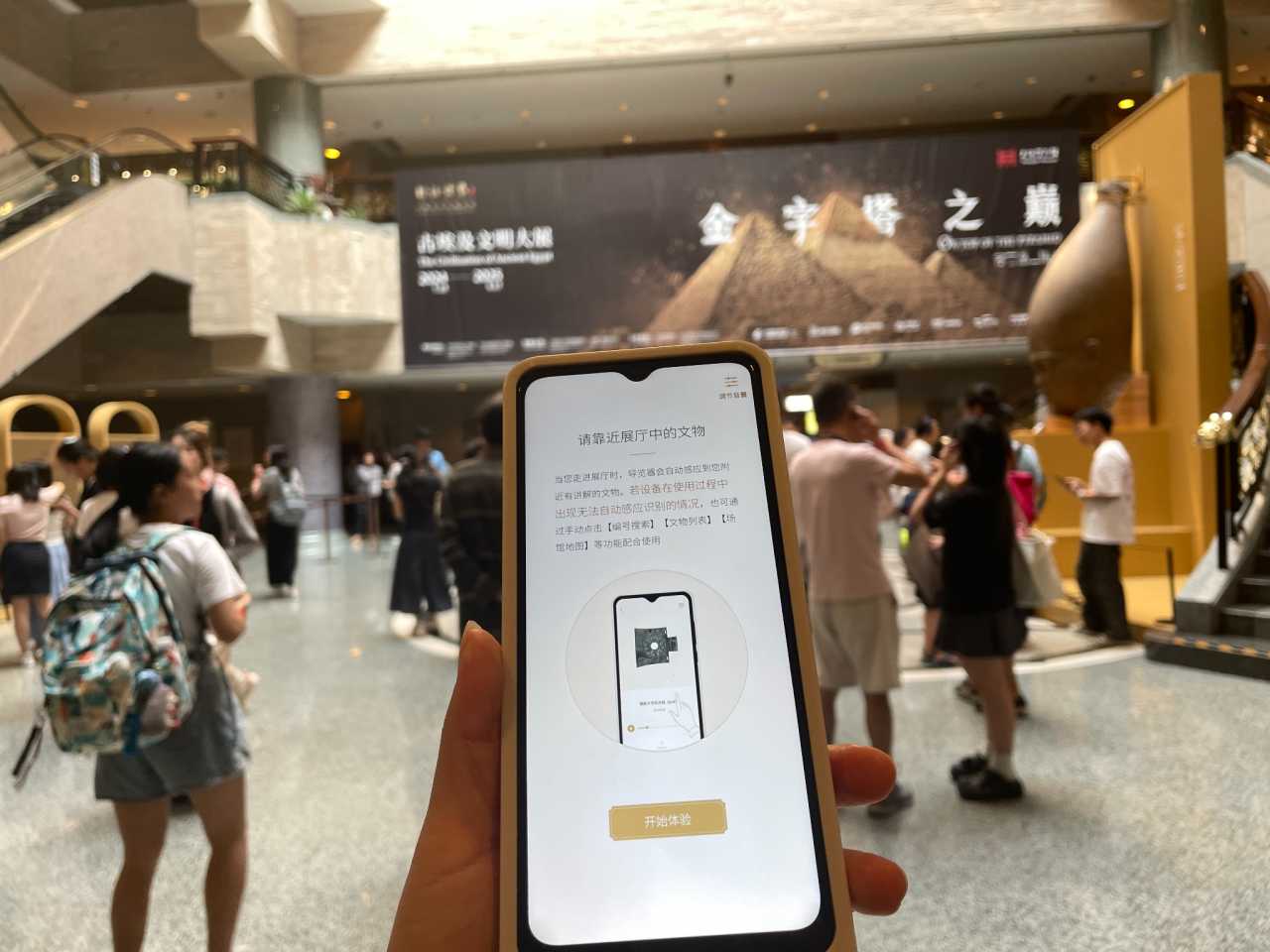
The Shanghai Museum typically offers audio guides in multiple languages, including English and Chinese. Check the museum's official website or inquire at the ticket counter for availability. Private guided tours may also be arranged in advance.
5. What is the best time to visit to avoid crowds?
Weekday mornings, especially Tuesday through Thursday, are generally less crowded. The museum is closed on Mondays (except during public holidays). Arriving right at opening time (usually 9:00 AM) gives you a head start before the midday rush.
[Link: Shanghai Museum visiting tips and ticket information]
Conclusion: Your Journey Awaits
The "At the Peak of the Pyramids" exhibition at the Shanghai Museum is more than a display of ancient artifacts—it is a bridge between two great civilizations. From the stern gaze of Amenemhat III to the mysterious resurrection of Osiris, from the practical bread-and-beer models to the cosmic solar boat, every piece tells a story of faith, power, and the eternal human quest for meaning.
Plan your visit today. Whether you are a history buff, a student of ancient cultures, or simply curious about the wonders of the world, this exhibition offers an unforgettable experience. Book your tickets online, bring your curiosity, and prepare to be transported to the banks of the Nile.
Ready to explore? Share this article with fellow history lovers, and let us know in the comments which artifact you are most excited to see. Your journey to the peak of the pyramids starts here.
Note: Exhibition details and artifact availability may vary. Please check the Shanghai Museum's official website for the most current information before your visit.
You may also like