Seoul in High Summer: A Romantic Adventure Dancing with the Scorching Sun
Meta Description: Discover Seoul in July with our 10-day summer itinerary. From Gyeongbokgung Palace to Nami Island, experience K-drama romance and heatwave survival tips. Perfect for couples seeking an unforgettable Korean summer adventure.
Introduction: Why Summer in Seoul is Worth the Heat
When the July heatwave swept across East Asia, my husband Jack and I chose to embark on a journey to South Korea in this "thermometer-shattering" season. Friends jokingly warned me that this trip might turn me into "Grilled Sisi"—and as it turned out, they were absolutely right. But who says blazing sunshine can't serve as the backdrop for a perfect trip?
It's only a three-hour direct flight from Chengdu to Seoul. The moment the plane door opened, it felt like stepping into a parallel universe. This country—both familiar and foreign—gave us the warmest "hug" with its suffocating heat. From July 24 to August 2, 2018, a ten-day journey took us from Seoul to Jeju Island, from ancient palaces to romantic K-drama filming locations, measuring the temperature of summer with every step.
In this comprehensive guide, I'll share our Seoul summer travel tips, heatwave survival strategies, and the best K-drama filming locations that make the scorching sun worth every drop of sweat.
First Impressions of Seoul: Surviving the Heatwave Welcome
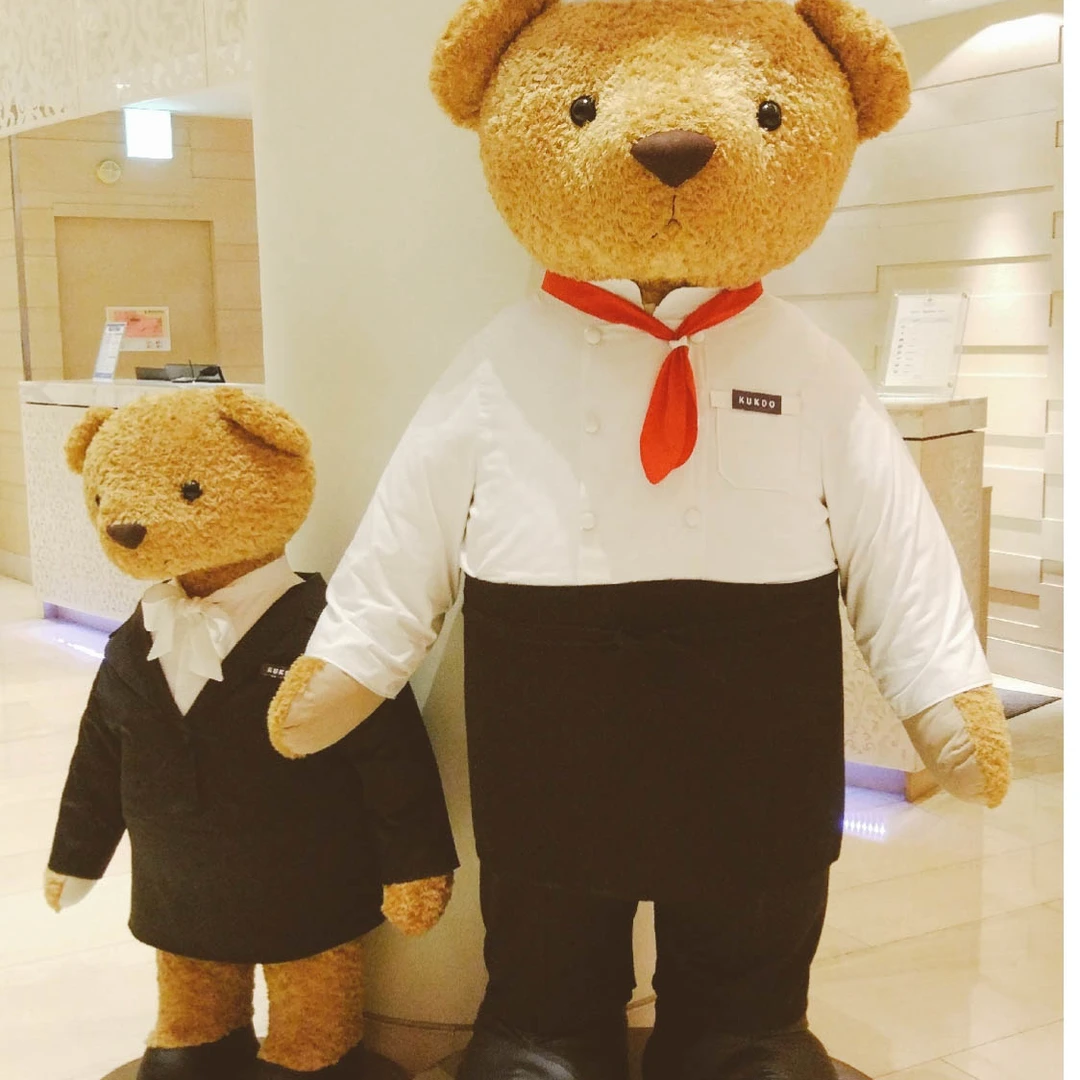
By the time we arrived at the hotel, it was already 9 PM, but Seoul's "hospitality" showed no signs of cooling down with the night. The Kukdo Hotel we stayed at was perfectly located—airport bus 6015 stopped right at the entrance, and it even had Chinese stop announcements, so there was no worry about missing your stop. That said, if you book an airport transfer online in advance, you'll get a better deal—the driver we met, who held dual Chinese-Korean citizenship, gave us plenty of practical travel tips.

The hotel room was more spacious than I'd imagined, and the biggest surprise was the bathtub—in this sweltering heat, a soak was practically a "secret weapon" for recovery. No power adapter needed, the front desk spoke fluent English, there was a 7-Eleven and a mini-mart nearby, and the subway was easily accessible. For independent travelers, this kind of accommodation was practically perfect.
Summer Travel Tip: Book your airport transfer online in advance for better rates. [Link: Seoul Airport Transfer Guide]
Gwanghwamun: Royal Ceremonies "Melted" by the Sun
Time-Traveling Guard Ceremony at Gwanghwamun Square
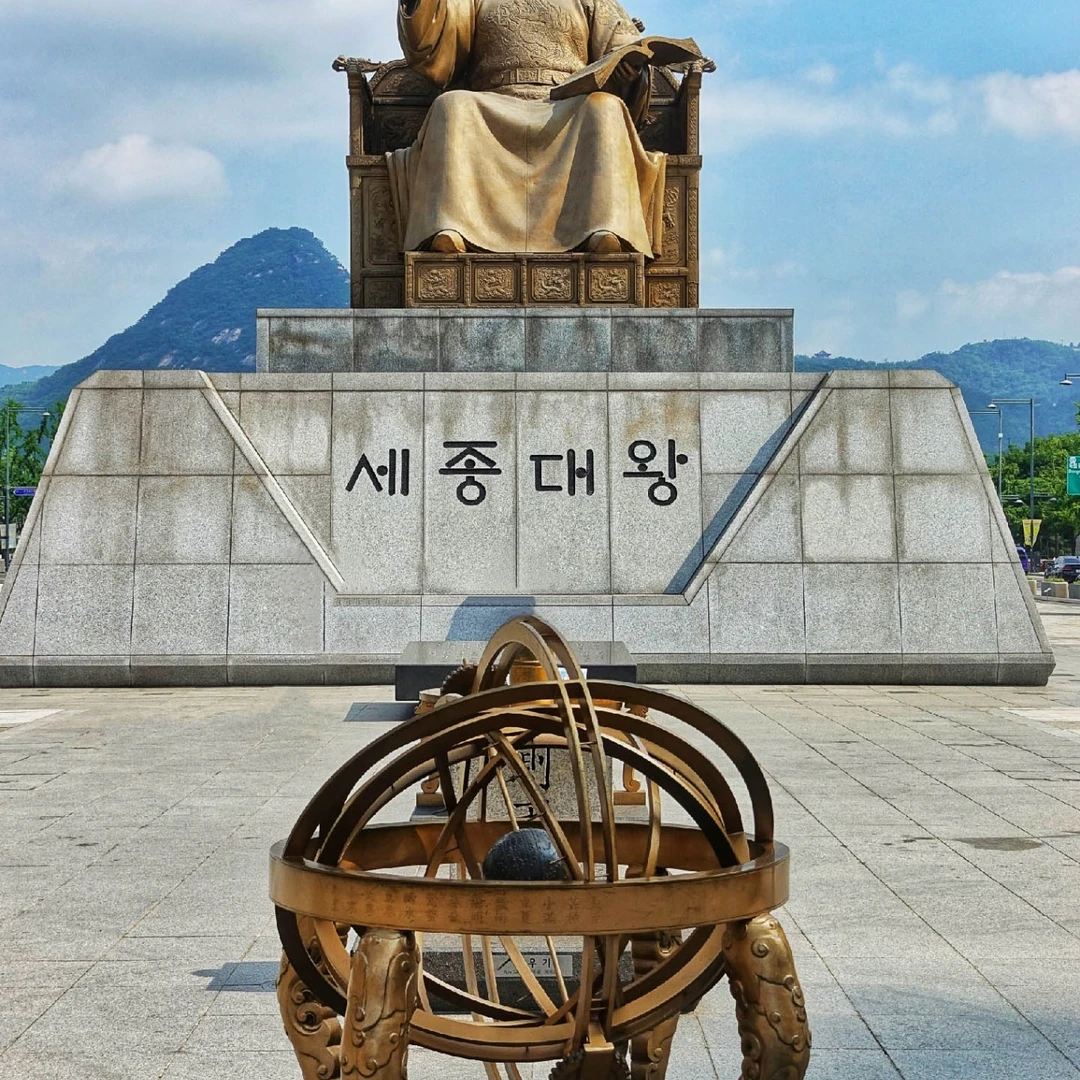
Early the next morning, we headed straight for Gwanghwamun Square. Standing 6.2 meters tall and weighing 20 tons, the bronze statue of King Sejong the Great dominates the area. This fourth king of the Joseon Dynasty is beloved by the nation for inventing the Korean alphabet (Hangeul) and remains a source of pride for Koreans to this day.
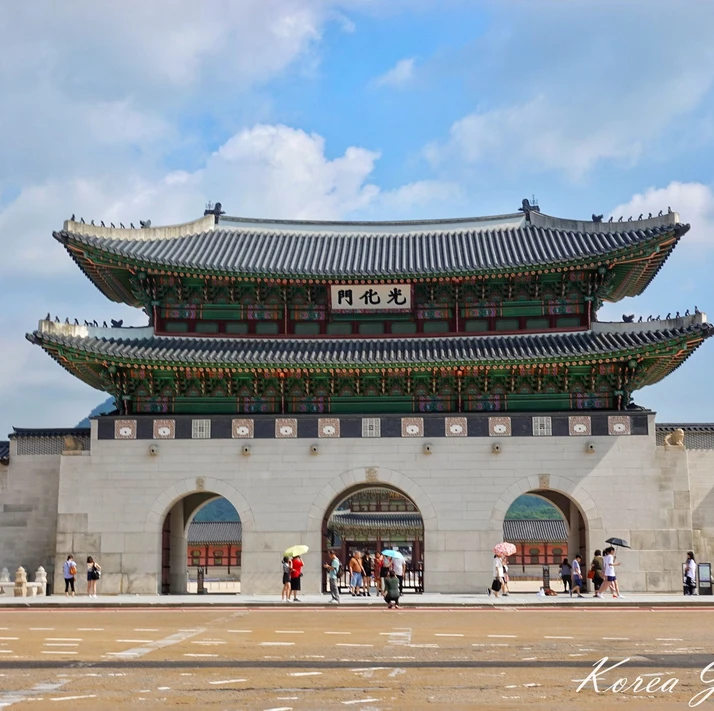
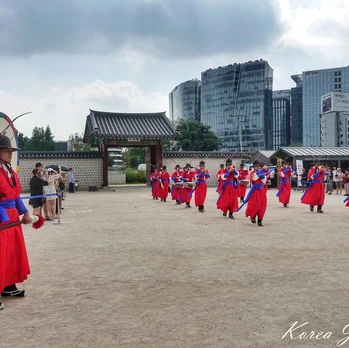
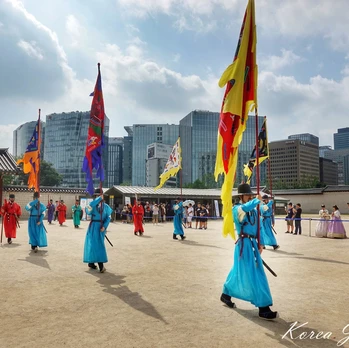
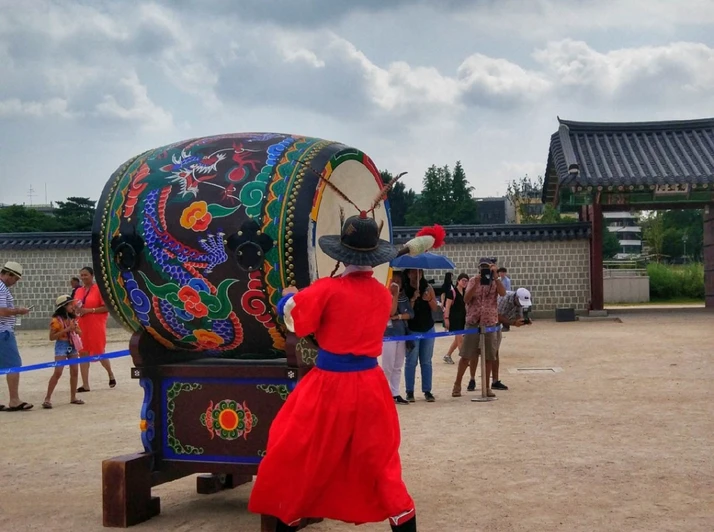
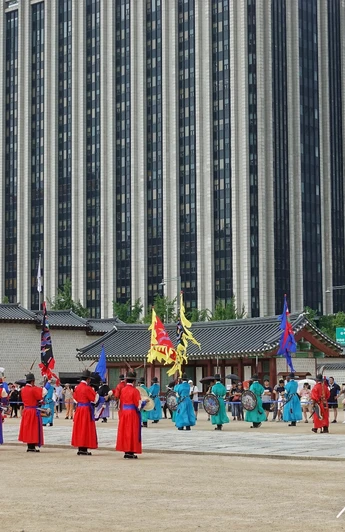
Directly in front of the statue lies Gwanghwamun—the main gate of Gyeongbokgung Palace. As a historic royal palace, its significance to Koreans is akin to the Forbidden City for the Chinese. When the royal guards marched out in traditional costumes, it instantly felt like stepping back into the Joseon era. The grand procession and imposing formation made you hold your breath involuntarily.
This Changing of the Royal Guard ceremony was revived in 1996 and has since become a beloved cultural activity for tourists. The ceremony is held three times daily (10 AM, 1 PM, and 3 PM), each lasting about 20 minutes. Afterward, you can take photos with the guards, but remember—no physical contact. After all, they're "on duty."
Heatwave Survival Tip: Visit the guard ceremony at 10 AM to avoid the midday sun. Bring a portable fan and stay hydrated. [Link: Best Times to Visit Seoul Palaces]
Palace Heat Survival Guide: Gyeongbokgung and Huwon (Secret Garden)
South Korea has no shortage of palaces, but only two are truly worth visiting: Gyeongbokgung Palace and the Huwon (Secret Garden) of Changdeokgung. Gyeongbokgung's status is irreplaceable, while Changdeokgung's Huwon represents the pinnacle of Korean court gardens.
We booked the 12:30 PM Chinese-language guided tour of Changdeokgung's Huwon. There were far fewer visitors here than at Gyeongbokgung, and our guide told us to imagine ourselves as aristocrats, experiencing the tour as if we were the owners. The Huwon, also known as the Secret Garden, was recognized by UNESCO when Changdeokgung was designated a World Heritage site in 1997—the evaluators considered it the best-preserved example of classical Korean court garden beauty. During the 2010 G20 Summit, the spouses of world leaders also visited here.
The moment we stepped into the Huwon, a wave of coolness washed over us—a welcome relief in the scorching heat, practically a summer retreat. The garden preserves nature in its original state, with only minimal modifications where necessary. Inside, there are numerous pavilions and structures: Buyongjeong Pavilion, Buyongji Pond, Juhapru Pavilion, and Eosumun Gate. The most interesting feature was the wooden panels that could be adjusted to change the size of interior spaces and even help with cooling.
The pond's shape was particularly intriguing—many people say it looks like an "S" or a gourd, but our guide told us it was actually shaped like the Korean Peninsula. When the maple leaves turn red in autumn, the garden looks like a spilled paint palette—a completely different world from the lush greenery of summer.
Practical Tips for Summer Palace Visits: - Tickets for Changdeokgung's Huwon must be booked in advance on the official website. The Chinese-language tour is only available at 12:30 PM, and tickets cost 5,000 KRW. - The last Wednesday of every month is Korea's "Culture Day"—on this day, Gyeongbokgung, Changdeokgung, and other ancient palaces (excluding the Huwon) offer free admission. - The Huwon can only be visited with a guided tour—you are not allowed to wander off on your own.
Bukchon Hanok Village: Wearing Hanbok in Summer Isn't Hot at All
Bukchon Hanok Village, located between Gyeongbokgung and Changdeokgung, is one of Seoul's most traditionally charming areas. The hanok (traditional Korean houses) here embody the structural elegance of Korean architecture. While they may lack the complete authenticity of traditional hanok, they compensate with a sense of "evolved tradition" and "decorative flair."
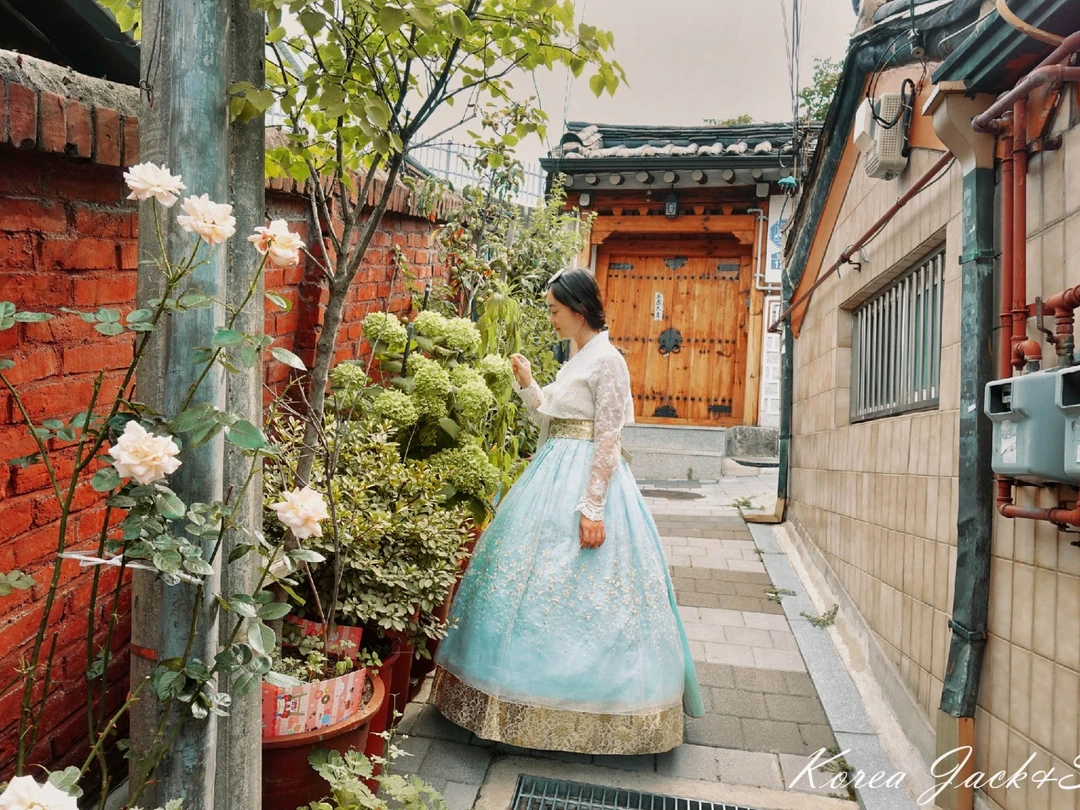
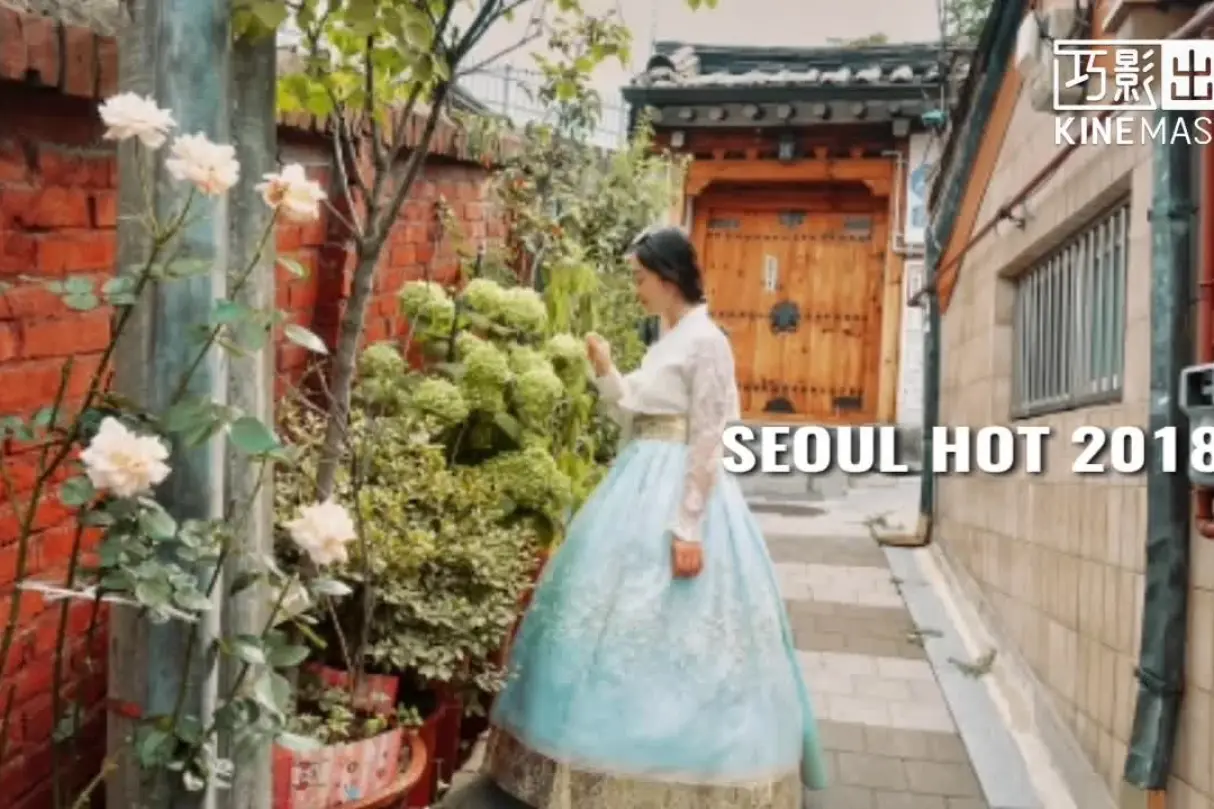
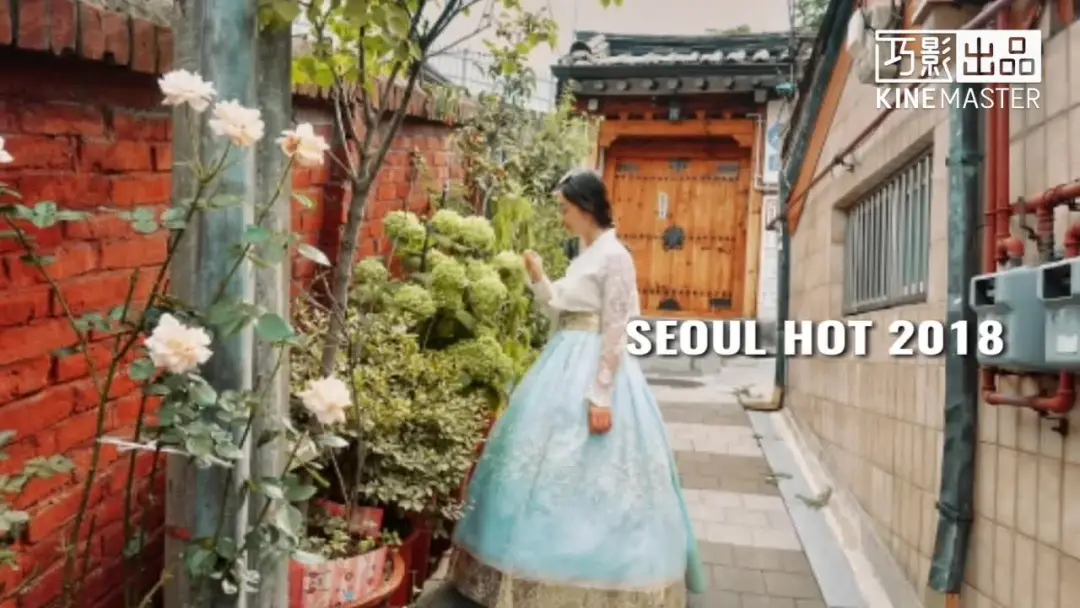
Bukchon has eight famous scenic spots, but it's perfectly fine if you don't visit them all—aimless wandering can lead to unexpected discoveries. We rented a blue-and-white hanbok at the village and took photos against the backdrop of real hanok houses. The immersion was incredible—it felt like we'd traveled back in time.
Before we left, I'd been hesitant about renting a hanbok, worried I'd be suffocatingly hot. But it turned out to be much cooler than expected—the petticoat underneath (which left the lower body feeling "airy") combined with a sleeveless top and a light vest made it feel no different from wearing a sun-protection jacket. The shop I rented from charged 12,000 KRW per hour for their main styles, and that didn't include hairstyling.
Summer Hanbok Tip: Opt for light-colored hanbok with breathable fabrics. The traditional design actually helps with air circulation, making it ideal for summer photoshoots. [Link: Hanbok Rental Guide in Seoul]
As evening fell, we grabbed dinner at "twotwo Chicken" downstairs from our hotel. It was a very traditional little restaurant run by an elderly couple. Plain fried chicken with beer—simple yet satisfying. This, I think, is the most unpretentious happiness Seoul's summer has to offer.
Petite France: A Concentrated Dose of K-Drama Romance
On the third day, we hired a car and headed to Gyeonggi Province for a K-drama romantic tour. Our first stop was Petite France Village, a place made famous by numerous K-dramas and variety shows. The most unforgettable scene? From My Love from the Star, when Professor Do Min-joon uses his superpowers to light up the lamps and kiss Cheon Song-yi.
Petite France's design concept is "flowers, stars, and the Little Prince." Sixteen brightly colored French-style buildings—almost every house a different color—create a rainbow-like spectacle. Little Prince figurines can be found everywhere in the park; calling it a Little Prince theme park wouldn't be an exaggeration.
The "European Doll Museum" displays about 300 traditional dolls from Germany, France, the Czech Republic, and other countries, organized by era and theme. While some of the dolls were a bit creepy, the overall collection was quite distinctive. At the entrance, a sunken circular outdoor amphitheater hosts musical performances when the weather is good. The French traditional marionette show is worth watching—the puppet Michael's performance was quite impressive.
K-Drama Location Tip: Visit Petite France early in the morning to avoid crowds and capture the best photos. The lighting is also ideal for recreating your favorite drama scenes. [Link: Best K-Drama Filming Locations in Korea]
For lunch, we sampled Chuncheon's specialty—Chuncheon Dakgalbi (spicy stir-fried chicken)—and it was delicious.
Nami Island: Summer Echoes of K-Drama Romance
Nami Island is arguably the most iconic K-drama filming location in South Korea, famous for its tree-lined paths from Winter Sonata. While winter offers snow-covered romance, summer brings a lush green paradise that's equally enchanting.
The island can be reached by ferry from Gapyeong Pier. During summer, the ferry ride offers refreshing breezes and stunning views of the Bukhan River. Once on the island, rent a bicycle or take the electric train to explore the famous Metasequoia Lane—the same path where the iconic snowball fight scene from Winter Sonata was filmed.
Summer on Nami Island Tip: Visit in the late afternoon when the heat subsides. The golden hour light filtering through the trees creates magical photo opportunities. Don't forget insect repellent—the island is lush and green, which means mosquitoes are active.
FAQ: Seoul Summer Travel Questions Answered
1. Is July a good time to visit Seoul?
 Yes, if you're prepared for heat. July in Seoul averages 25-30°C (77-86°F) with high humidity. The upside is fewer crowds at major attractions, lower hotel rates, and vibrant summer festivals. Pack light clothing, sunscreen, and a portable fan.
2. How do I stay cool while visiting Seoul's palaces in summer?
 Visit early morning (9-11 AM) or late afternoon (4-6 PM). Book the Huwon (Secret Garden) tour, which offers natural shade and cooler temperatures. Carry a refillable water bottle—many palaces have free water stations. Wear breathable fabrics and take frequent breaks in shaded areas.
3. Is it worth renting a hanbok in summer?
Absolutely! Modern hanbok rentals are made from lightweight materials that actually keep you cooler than regular summer clothes. The airy petticoat and sleeveless designs allow for excellent ventilation. Plus, you get free admission to Gyeongbokgung Palace when wearing hanbok.
4. What are the must-visit K-drama filming locations near Seoul?
 Top picks include Petite France (My Love from the Star), Nami Island (Winter Sonata), Bukchon Hanok Village (Personal Taste), and Gyeongbokgung Palace (The King's Affection). All are within 1-2 hours from central Seoul.
5. How many days do I need for a Seoul summer trip?
For a comprehensive experience, 5-7 days in Seoul is ideal. This allows time for palaces, hanok villages, K-drama locations, shopping in Myeongdong, and a day trip to Nami Island and Petite France.
Conclusion: Dance with the Seoul Summer Sun
Our ten-day journey from Seoul to Jeju Island proved that summer in South Korea is not just bearable—it's unforgettable. The heatwave that friends warned us about became the backdrop for royal ceremonies, hanbok photoshoots, and K-drama romance. From the cool sanctuary of Changdeokgung's Secret Garden to the vibrant streets of Bukchon, every moment was a testament to the beauty of embracing the season.
Ready to plan your own Seoul summer adventure? Start by booking your airport transfer and palace tickets in advance. Pack light, stay hydrated, and don't forget your camera—the golden summer light in Seoul is something you'll want to capture forever.
[Book Your Seoul Summer Package Now] – Includes airport transfer, 4-star accommodation, and guided palace tours with heatwave survival kits.
Have you visited Seoul in summer? Share your tips and experiences in the comments below!