Paradise on the Left, Garzê on the Right: The Ultimate 7-Day Western Sichuan Self-Drive Itinerary
Meta Description: Discover the ultimate 7-day Western Sichuan self-drive loop through Garzê. From Enshi's Daughter City to Leshan's Giant Buddha, experience paradise in the clouds. Expert itinerary, tips & FAQs.
Introduction: Where Heaven Meets Earth in Western Sichuan
Zhuangzi dreamed of a butterfly, unable to distinguish illusion from reality. Tsangyang Gyatso wrote poetry, forever caught between the mortal world and paradise. In Western Sichuan, that blurred boundary follows you like a shadow from the moment you set foot on this land.
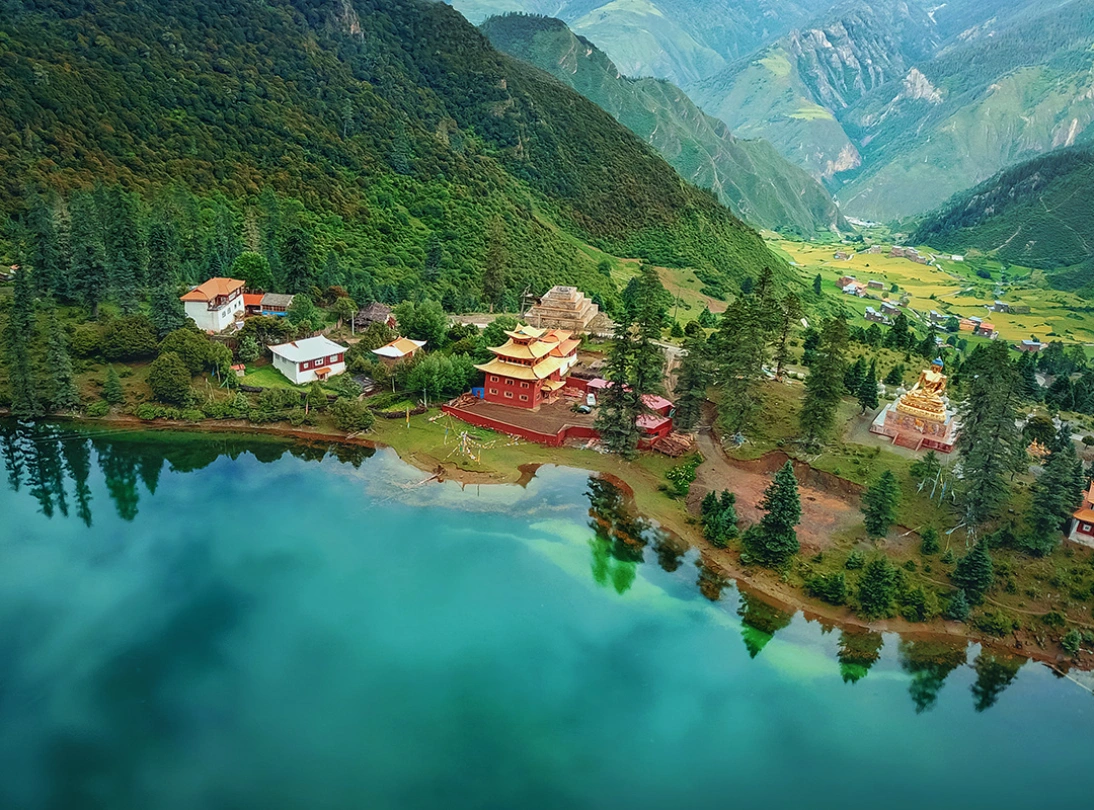
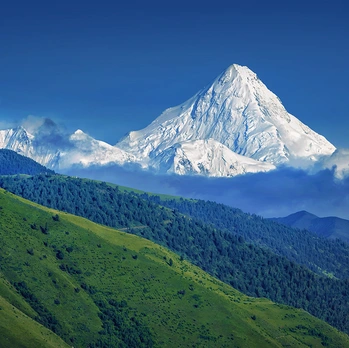
Western Sichuan—once merely a fringe on the western edge of the Sichuan Basin—has evolved into a synonym for the Garzê and Ngawa Tibetan regions. It's a "paradise garden" wrapped in a tapestry of snow-capped mountains, meadows, forests, lakes, glaciers, hot springs, waterfalls, and canyons. This is where the southeastern edge of the Qinghai-Tibet Plateau meets the Hengduan Mountains, with elevations fluctuating between 4,000 and 4,500 meters.
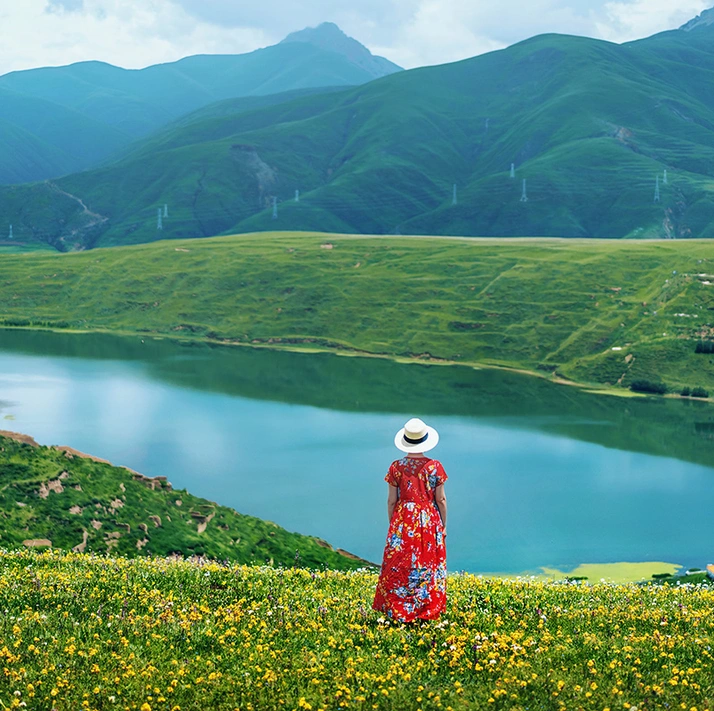
Western Sichuan does not speak, yet it dazzles every passerby. In spring and summer, rolling on the grass leaves you covered in flower scents. In autumn, the sky is so blue you feel you could touch it. In winter, pure white snow makes you forget the path you came from.
Self-driving in Western Sichuan typically divides into big and small loops. The small loop starts at Xinduqiao, circles Tagong Grassland, and takes three to four days. The big loop extends to Daocheng Yading, passes through Dêgê and Sertar, and returns via Barkam—requiring ten to fifteen days. But we had only seven days. So we connected the dots on the map and drew our own path through the clouds.
Planning Your Western Sichuan Self-Drive Adventure
The 1,600-Kilometer Cloud Loop

Considering limited time, we set out from Chengdu and planned a seven-day loop. To avoid detours, we skipped the popular destinations of Daocheng Yading and Sertar, carefully selecting stops along the main road. The actual total journey reached 6,000 kilometers: Suzhou → Enshi → Leshan → Chengdu → Luding → Kangding → Xinlong → Garzê → Luhuo → Daofu → Danba → Xiaojin → Yingxiu → Chengdu → Dianjiang → Ezhou → Suzhou.
Weather Gambling in the Rainy Season
This year's rainy season arrived unusually early. Before departure, weather forecasts showed rain, rain, rain. On WeChat Moments, news of torrential rain in Sichuan and "watching the sea" in Chengdu flooded our feeds. But the rainy season in Western Sichuan has a characteristic—"one mountain has four seasons, ten miles apart, different skies." We decided to gamble on our luck. Fortunately, the journey proved this bet paid off.
Paradise is not a fairyland found only in dreams. Paradise is the mountains, the water, the lakes, the wind—it is the beautiful scenery you long to see and are fortunate enough to behold. Paradise is on the left, Garzê on the right. When you first encounter Garzê, you feel the breathtaking scenery is one of a kind. But if you traverse all of Garzê, you discover that every single view here is paradise.
[Link: Best time to visit Western Sichuan]
Day 1-2: Enshi – The First City of Daughters
Arriving in Enshi, Hubei
Setting out from Suzhou, heading west, the landscape gradually opened up. We couldn't reach Sichuan in a single day, so we chose to stop in Enshi, Hubei. We arrived in the evening and headed straight for Daughter's City—a place that truly comes alive at night.
"There is no man in the world with a second heart, and there is the first city of daughters under heaven." Daughter's City is located in Qiliping, Enshi. Although a man-made ancient town, it is well-planned and faithfully preserves the architectural features and folk customs of the Tujia people.
Where to Stay in Daughter's City
We stayed at the Baren Inn, the most centrally located inn in the city. At 330 yuan for a standard room, it was decent and unremarkable aside from its prime location near the performance area and the beautifully decorated lobby.
Evening Entertainment
At the music shop outside the inn, a handsome singer performed quite well. Step outside, and you're in the performance center. Shows start at 8 p.m., so early sleep is out of the question. Fortunately, after 11 p.m., Daughter's City returns to tranquility. The visitor center occasionally hosts shadow puppet shows, and "Dream Town" is a street dedicated to stalls.
Dining at Barentang
Dinner options in Daughter's City are plentiful, with the most famous being Barentang. The barbarians of Chu, the might of Ba—watching a Tujia performance here, drinking a bowl of "smash-the-bowl" wine, and eating a table of Tujia dishes is absolutely unforgettable. The dining tables and chairs are low, forcing you to lower yourself—perhaps to make it easier to smash the bowls? Ordering is convenient at 50 yuan per person. For every pot of main soup ordered, ten side dishes are automatically included, and the flavors are excellent.
Morning Stroll and Attractions
After dinner, stroll through the streets. At the Shinan Teahouse, rows of bamboo tables and chairs await, where you can savor the lingering fragrance of selenium tea. Daughter's City in the early morning is very quiet, perfect for a leisurely walk. Surprisingly, there's even an ocean park here—reportedly the largest in the central minority regions—featuring marine animal shows, a 5D sci-fi pavilion, the Daughter's Kingdom, an ocean exploration playground, and even an indoor bungee jump.
The snack street in the southern part of the city gathers all kinds of delicacies from Enshi Prefecture and is the liveliest area. There are also unique literary cafes, small bars, and teahouses. If you're just stopping in Enshi for the night, spending an evening in Daughter's City is worth it—it's surely much livelier than the city center.
[Link: Enshi Grand Canyon hiking guide]
Day 3: Leshan – Snacks and the Giant Buddha
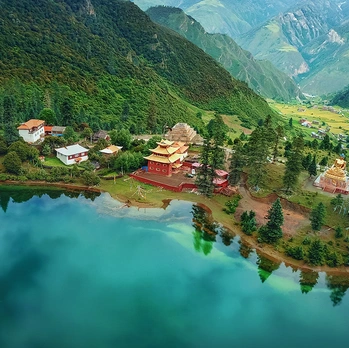
The Drive to Leshan
After leaving Enshi, aside from a brief traffic jam in downtown Chongqing, the rest of the journey was smooth sailing. In particular, the Leshan-Zigong Expressway from Zigong to Leshan was an absolute joy for those of us from the "free shipping" region. Back in Jiangsu, Zhejiang, and Shanghai, we're used to highways where a kilometer can be clogged with hundreds of cars. Here, on a 130-kilometer stretch, we never touched the brakes, coasting all the way to Leshan without encountering more than ten cars in either direction.
Accommodation Recommendation
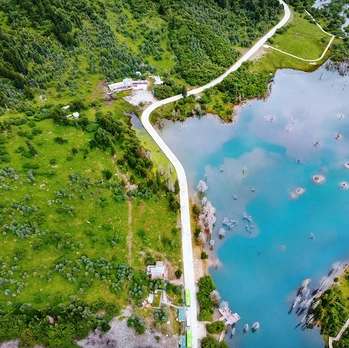
We checked into the Leshan Xi'an Qingya Hotel, a standalone six-story building. Though not large, the service was excellent, and the room was clean and spacious. Right downstairs was Zhanggongqiao Food Street, where almost all of Leshan's famous snacks can be found: sweet-skinned duck, "qiaojiao" beef, "boboji" (cold skewers in chili broth), crayfish, grilled fish, barbecue, tofu pudding—everything you could imagine, dazzling the eyes.
Leshan Food Tour
As night falls, Zhanggongqiao Street starts to "get delicious." Leshan has countless Suji Zhoucun "qiaojiao" beef shops. Besides Tangniutang, reputable ones include Chen Laosan, Li Laosi, Feng Si Niang, Gushixiang, and Che Qi—all worth a try. This century-old, three-generation-evolving hot pot has become a long-standing famous dish of Leshan. Besides drinking the soup and eating the beef, stir-fried beef liver and blood stew are also incredibly tasty.
Niuhua Bapo Malatang (spicy hot pot), which sells 500,000 skewers a month and was featured on A Bite of China 3, was founded by "Bapo," who turns out to be a middle-aged man with a medical background. Leshan locals call sweet-skinned duck "lu duck" (braised duck), following the imperial kitchen techniques of the Qing Dynasty. The skin is sweet and crispy, making it a culinary icon of Leshan.
[Link: Leshan Giant Buddha history and visiting tips]
Day 4-7: The Garzê Loop – Paradise in the Clouds
Entering the Tibetan Plateau
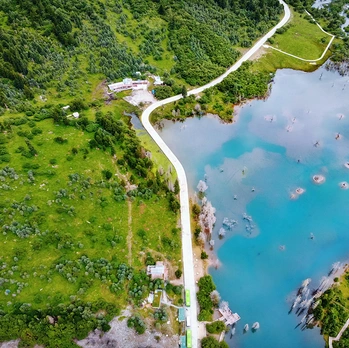
From Leshan, we headed toward Luding and Kangding, the gateway to the Garzê Tibetan Autonomous Prefecture. The landscape transforms dramatically as you ascend—from lush subtropical valleys to alpine meadows and snow-capped peaks. This is where the Western Sichuan self-drive loop truly begins.
Kangding: The Love Song City
Kangding, famous for the folk song "Kangding Love Song," sits at the confluence of three rivers. The elevation here (around 2,560 meters) serves as an excellent acclimatization stop before heading higher into the plateau. The Tibetan quarter offers authentic momos (dumplings), butter tea, and tsampa (roasted barley flour).
Xinlong and Garzê County
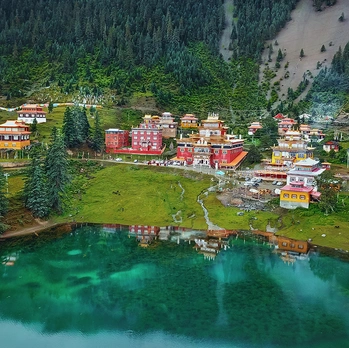
Continuing west, we reached Xinlong County and then Garzê County itself. The landscape here is characterized by vast grasslands dotted with yaks and Tibetan nomad tents. Garzê County sits at an elevation of approximately 3,400 meters and serves as a cultural hub for the region. The Garzê Monastery, one of the largest Gelugpa monasteries in Kham, is worth a visit for its stunning architecture and peaceful atmosphere.
Luhuo and Daofu: The Grassland Experience
From Garzê, we headed east toward Luhuo County and Daofu County. This stretch offers some of the most spectacular grassland scenery in Western Sichuan. The Tagong Grassland area is particularly famous for its vast, open spaces and traditional Tibetan culture. If you're lucky, you might witness a local horse festival or traditional archery competition.
Danba: The Valley of Beautiful Women
Danba County is renowned for its stunning Tibetan villages and the legendary "beautiful women of Danba." The Jiaju Tibetan Village is a must-visit—a UNESCO World Heritage candidate featuring unique stone houses built into the mountainside, surrounded by terraced fields and fruit trees. The elevation here (around 1,800 meters) provides a welcome relief after the high plateau.
Xiaojin and the Return to Chengdu
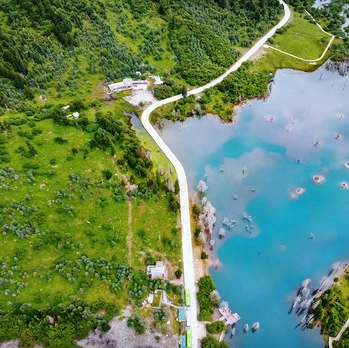
From Danba, we passed through Xiaojin County, home to the Siguniang Mountain (Four Girls Mountain) scenic area. Though we didn't have time to hike, the views of these snow-capped peaks from the road were breathtaking. Finally, we descended through Yingxiu (the epicenter of the 2008 Wenchuan earthquake) and back to Chengdu.
Essential Tips for Your Western Sichuan Self-Drive
Altitude Acclimatization
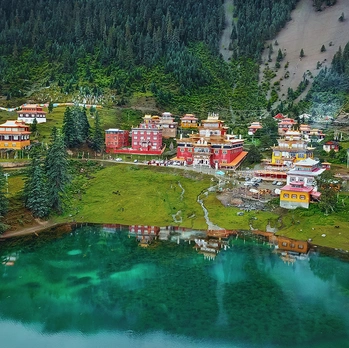
The Garzê region averages 3,000-4,500 meters in elevation. Acute mountain sickness is a real risk. Plan to ascend gradually, stay hydrated, and consider carrying Diamox (acetazolamide) as a preventive measure. Avoid alcohol and strenuous activity during the first two days.
Vehicle Requirements
A 4WD vehicle is highly recommended, especially if you plan to venture off the main roads. The roads in Western Sichuan are generally well-maintained, but conditions can change rapidly due to weather. Carry snow chains during winter months (November-March).
Best Time to Visit
The best time for a Western Sichuan self-drive is from May to October. July and August offer the greenest grasslands but also the highest rainfall. September and October provide clear skies and stunning autumn colors. Winter (November-March) offers fewer crowds but requires careful planning for snow and ice.
Permits and Documentation
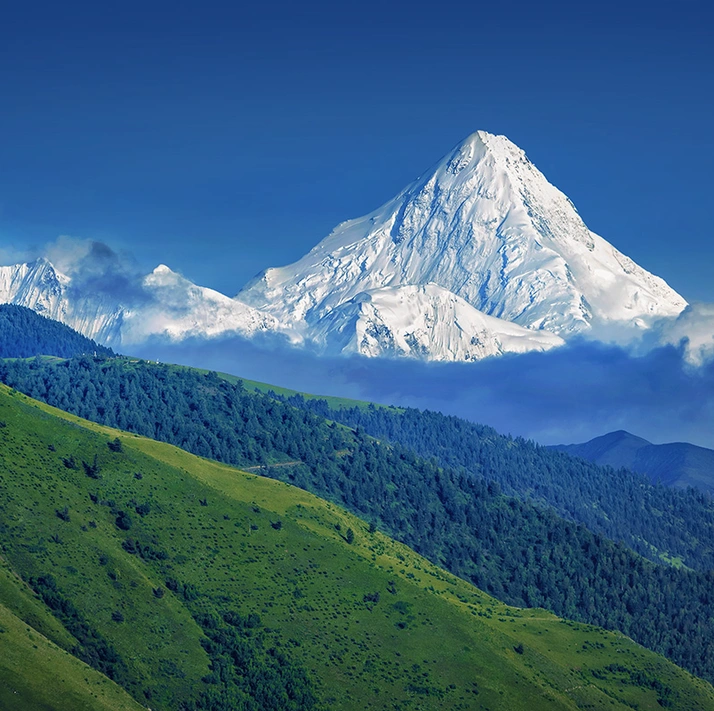
Foreign travelers need a Tibet Travel Permit to enter certain areas of Garzê and Ngawa. Chinese citizens only need their ID card. Always carry your passport or ID when traveling through checkpoints.
[Link: Western Sichuan self-drive packing checklist]
Frequently Asked Questions (FAQ)
1. Is Western Sichuan safe for self-driving?
Yes, Western Sichuan is generally safe for self-driving, provided you take proper precautions. Roads are well-maintained on the main routes, but weather conditions can change rapidly. Always check road conditions before departure, carry emergency supplies, and ensure your vehicle is in good condition. Altitude sickness is a greater concern than road safety.
2. How many days do I need for a Western Sichuan self-drive loop?
A minimum of 5-7 days is recommended for a small loop covering Xinduqiao, Tagong, and Danba. For a big loop including Daocheng Yading, Dêgê, and Sertar, plan for 10-15 days. Our 7-day itinerary covers the highlights efficiently without rushing.
3. What should I pack for a Western Sichuan road trip?
Pack layers: thermal underwear, fleece, waterproof jacket, and comfortable hiking boots. Sun protection (hat, sunglasses, SPF 50+ sunscreen) is essential at high altitudes. Bring a first-aid kit with altitude sickness medication, rehydration salts, and basic medicines. A portable oxygen canister can be helpful for those prone to altitude issues.
4. Can I visit Western Sichuan without a 4WD vehicle?
On the main routes (G318, G317, and provincial roads), a regular sedan is sufficient during dry seasons (May-October). However, a 4WD vehicle is strongly recommended if you plan to visit remote villages, off-road attractions, or travel during rainy season (July-August) or winter (November-March).
5. What is the food like in Western Sichuan?
Western Sichuan offers a unique blend of Sichuan and Tibetan cuisine. Expect hearty dishes like yak meat hot pot, Tibetan momos (dumplings), butter tea, tsampa (barley flour), and dried yak meat. In larger towns like Kangding and Garzê, you'll find standard Sichuan restaurants. Vegetarian options are limited in remote areas, so plan accordingly.
Conclusion: Your Journey to Paradise Awaits
Paradise on the left, Garzê on the right. This seven-day journey through Western Sichuan's clouds proves that paradise isn't a distant dream—it's a road you can drive. From the cultural richness of Enshi's Daughter City to the culinary delights of Leshan, from the vast grasslands of Garzê to the Tibetan villages of Danba, every kilometer offers a new revelation.
Western Sichuan does not speak, yet it dazzles every passerby. The mountains, the rivers, the monasteries, and the people—they all tell a story of a land where heaven and earth meet. Whether you're a seasoned road tripper or a first-time visitor to the Tibetan Plateau, this itinerary offers the perfect balance of adventure, culture, and natural beauty.
Ready to drive through the clouds? Start planning your Western Sichuan self-drive adventure today. Book your accommodation in advance during peak season (July-October), check road conditions before departure, and prepare for an experience that will stay with you forever.
Your paradise awaits—left at Garzê, right into the clouds.
[Link: Book your Western Sichuan self-drive package] [Link: Rent a 4WD vehicle for your Sichuan road trip] [Link: Western Sichuan travel insurance recommendations]
Note: This article is based on a real 7-day self-drive journey through Western Sichuan. Route conditions, prices, and availability may change. Always check current travel advisories and road conditions before departure.