North Africa Chronicles: Morocco | A Fairytale Road Trip Through the Sahara
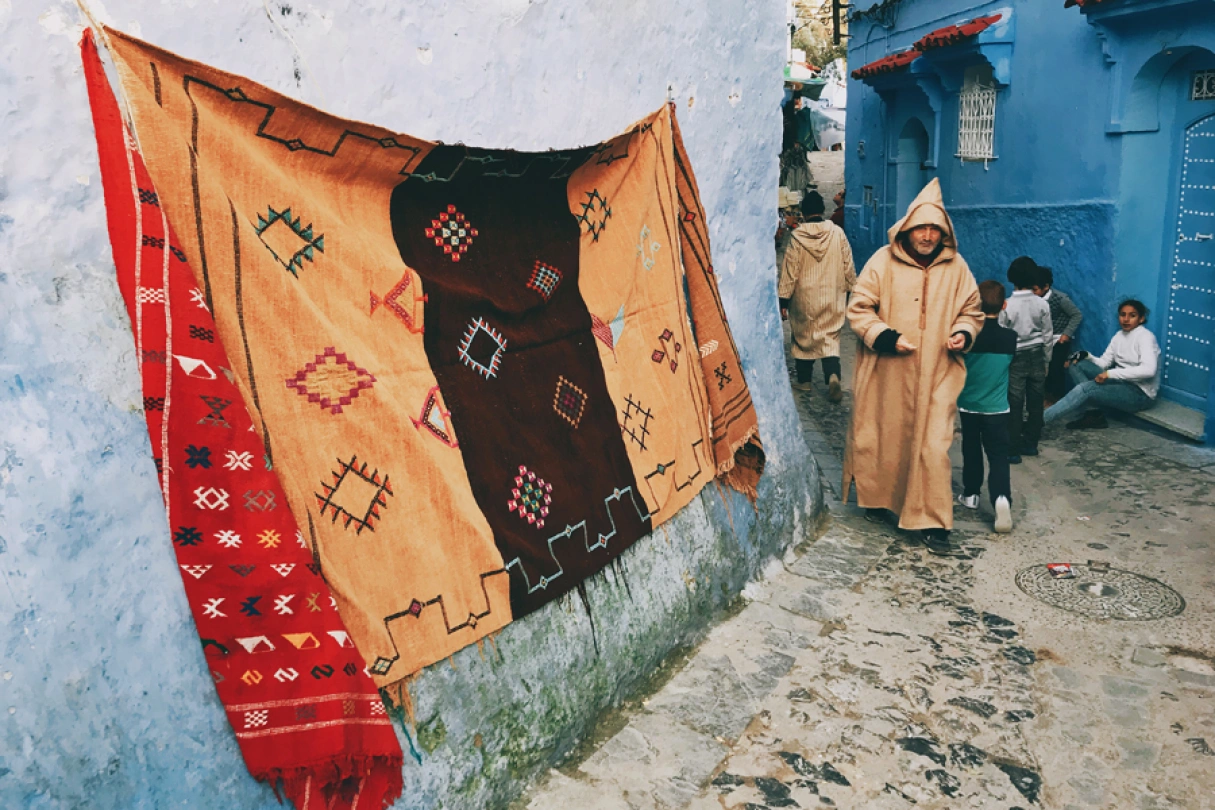
Meta Description: Discover Morocco's Sahara Desert on an epic road trip from Casablanca to Merzouga. Experience camel rides, starry nights, and ancient fossil beds in this SEO-optimized travel guide.
Introduction: An Unexpected Invitation to North Africa
Some journeys are long-planned romances; others are gifts from fate. My trip to Morocco earlier this year belonged to the latter. When my original annual leave itinerary fell through just two weeks before departure, I needed a backup—fast. Scrolling through maps, the name Morocco caught my eye once again. In June 2016, this North African country had waived visa requirements for Chinese citizens, meaning no tedious paperwork—just pack up and go.
Within a single day, we researched guides, mapped out an itinerary, booked hotels, and rented a car. Two weeks later, we were on an Air France flight from Beijing to Paris, then transferring to land in Casablanca. This Morocco road trip began in Casablanca, winding through Marrakech, Essaouira, Agadir, Ouarzazate, Merzouga, the Sahara Desert, Meknes, Fes, Chefchaouen, Tetouan, Tangier, Asilah, Rabat, and finally back to where we started—14 days in total. But the experience that lingered most in my soul was that one night deep in the Sahara Desert.
Chapter One: A Night in the Sahara—Eternity Under the Stars

Departure: Heading into the Heart of the Desert
On the sixth morning after arriving in Morocco, we set out from Ouarzazate, driving five or six hours to the small desert-edge town of Merzouga. This is the gateway to the Sahara.
We arrived early, before the camel caravan had set off. Curiosity got the better of us, and we tried driving a little way into the desert. Soon, the wheels were spinning in the soft sand—our non-off-road vehicle was no match for this sea of dunes. We parked, snapped a few photos against the dunes, and returned to the meeting point to wait.
I booked the desert camp through Booking.com. After confirming, I communicated with the camp owner via email to finalize the meeting point and time in Merzouga—a crucial step that saved us a lot of hassle.
Sunset on Camelback: Riding the Ships of the Desert
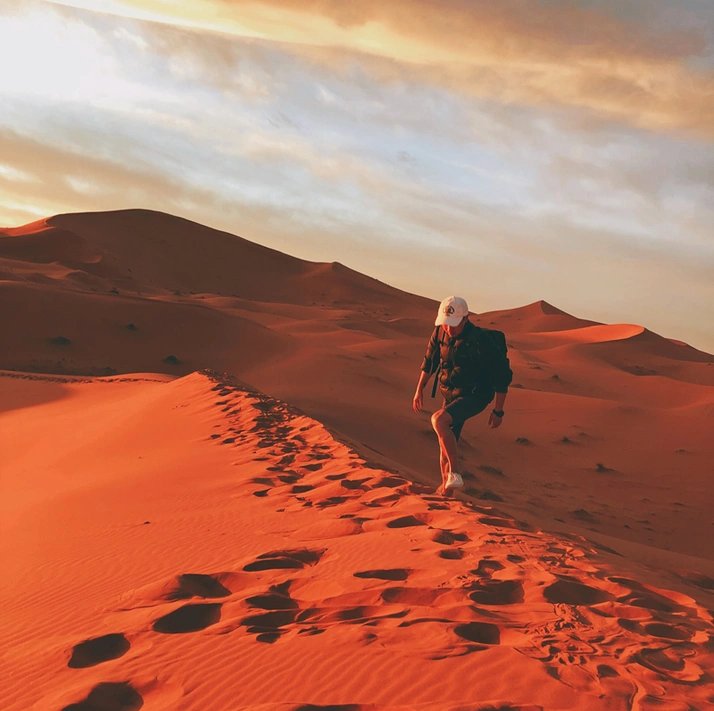
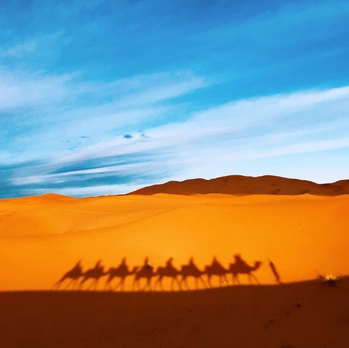
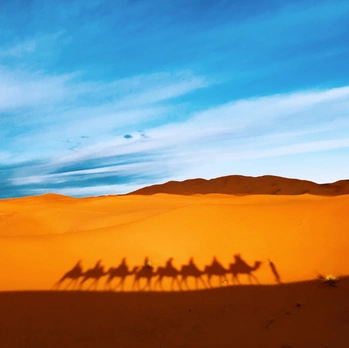
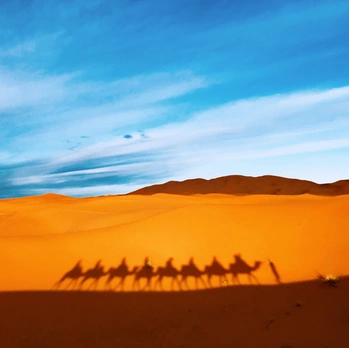
At 3:30 PM, the camel caravan slowly set off. Our silhouettes stretched long across the dunes in the fading sun. Having never set foot in a real desert before, I chose to ride a camel without hesitation—how could I miss the chance to experience this "ship of the desert"?
Of course, romance aside, camel riding isn't exactly comfortable. After about an hour, my companion and I were aching in places we didn't know could ache—our thighs and backsides were screaming. Fortunately, I had wisely chosen a camp with a shorter ride time when booking. Some camps require two hours to reach, and just thinking about that made me shudder.
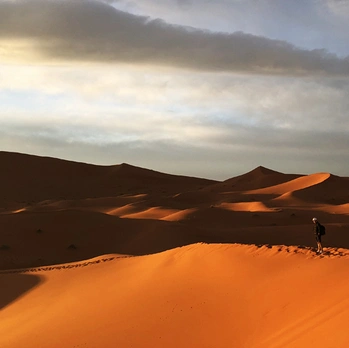
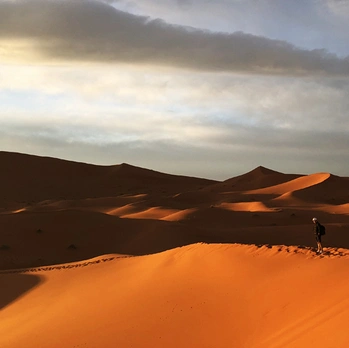
When the camp finally came into view, all around us was nothing but endless golden sand. Under the evening sun, the dunes glowed a mysterious red. That sense of vast openness—where the earth seems to stretch forever—I had only ever felt before in the middle of the ocean. I couldn't help myself; I ran and frolicked in the sand like a child.
Desert Temperature Swings: What to Pack for Sahara Nights
The camp was nestled in a small basin surrounded by dunes, offering shelter from the wind and sand. There weren't many tents—enough for about a dozen people. January in the desert isn't scorching; during the day, with the sun out, it was warm enough for me to wear shorts without feeling cold. But once the sun dipped below the horizon, the temperature dropped sharply—and you'd regret not bringing an extra thick jacket.
Thankfully, I had done my homework and packed enough warm clothing. The tent's quilt was thick, keeping me cozy inside, but my exposed nose was freezing. Eventually, I pulled the quilt over my entire head.
Pro tip: When planning a Sahara Desert trip, pack layers—light clothing for daytime, a heavy jacket for nighttime, and a hat or scarf to cover your face from the cold.
Sunset: A Blaze of Fire Across the Sky
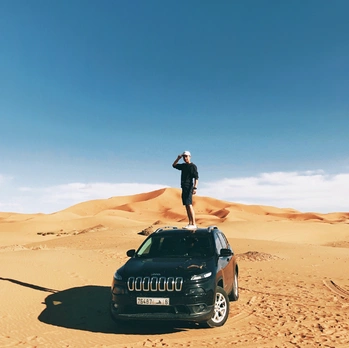
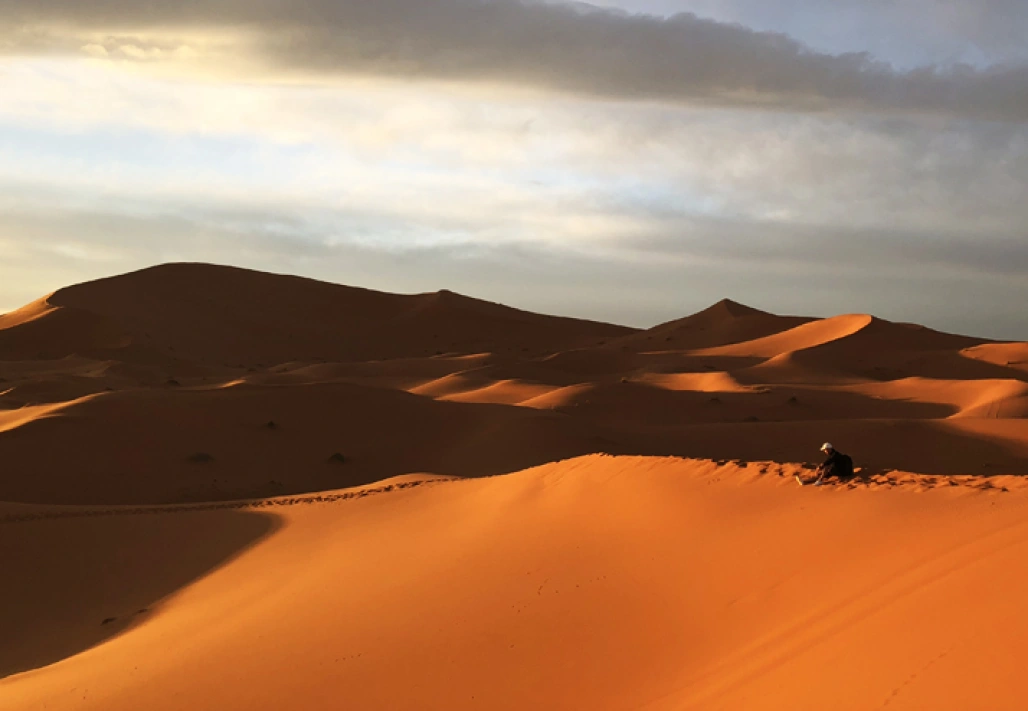
As dusk fell, fiery clouds appeared. Standing on the dunes, watching the clouds ignite into flames of red under the setting sun, the grandeur was breathtaking. The dunes looked close together, but walking between them revealed how far apart they really were—out in the vast desert, you truly understand the despair of someone lost.
The sunset glow faded, and I stumbled back down the dunes, my feet sinking with every step. Turning back, I saw my companion still standing on a dune, gazing at the remaining pink clouds. In that moment, I felt so small—between heaven and earth, we are nothing but specks of dust.
The Starry Sky: A Jewel Box Spilled Across the Heavens
I had worried that thick clouds would block the Sahara's starry sky. But after sunset, those burning clouds gradually dispersed. After dinner, everyone gathered around a campfire, listening to the Berbers beat drums and sing folk songs. Later, I stepped out of the camp and climbed a dune—before me was a night sky as dazzling as a scattered treasure.
I lay on the dune, watching the Milky Way stretch across the sky. Occasionally, a shooting star would streak by, too fast to make a wish. Turning my head to see the camp's lights brought me back to reality. In that moment, I felt lost—under this eternal sky, time seemed meaningless.
Sunrise: The Hope of a New Day
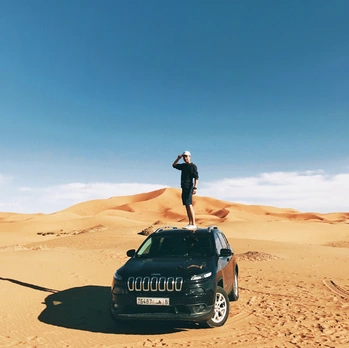
The next morning, the camp owner woke everyone before sunrise. A man from London was already sitting in a chair on the dunes, waiting. Soon, his companion joined him. The sky turned a mesmerizing purple, and the sun slowly rose—a new day had begun.
We mounted our camels and headed back to Merzouga. In the distance, the sound of camel bells drifted over; another caravan passed us by. The ships of the desert, on this ancient land, remain the most reliable companions.
A Surprising Discovery: The Sahara Was Once a Seafloor
After leaving the desert, we drove toward our next stop, Meknes. A sign caught my attention. We pulled over to investigate and found a five-kilometer-long fossil belt. Embedded in the ground and rocks were fossils of ancient creatures—worms, snails.
A palm-sized spiral shell fossil reminded us: this vast desert was once an ocean floor. Trilobite-shaped fossils, mysterious organisms resembling the Eiffel Tower—all were witnesses to time. We lingered there for over an hour until we had to hurry on our way.
Later, in Meknes, we saw the news: after we left, it snowed in the Sahara.
Chapter Two: Essaouira—The Slave's Bay from Game of Thrones
First Impressions: Astapor Comes to Life
From Marrakech, we drove to Essaouira. This coastal town was the filming location for Astapor in Game of Thrones. At dusk, standing by the harbor, looking at the Skala de la Ville fortress, I felt like I had stepped into the story—Daenerys buying the Unsullied, freeing slaves, executing the masters.
Essaouira became my favorite stop on this trip. It's a charming seaside town: blue-and-white medina, crashing waves, endless seagulls, fiery sunsets, a bustling fish market, ancient fortresses—every corner made me want to linger.
Seagulls: So Many You Question Reality
Before coming, I read a line in a guide: "The seagulls here are so many they'll make you question reality." I couldn't imagine it then. But standing at the harbor, overwhelmed by the sheer number of seagulls filling the sky, I understood. Every other place I'd seen seagulls paled in comparison.
The next morning, we returned to the harbor. Fishermen returning from sea were cleaning their fresh catch, tossing out innards that sent the seagulls into a frenzy. It was a spectacular scene, and tourists raised their cameras in unison.
The Fish Market and the Cats
The Skala de la Ville fortress walls have many circular openings. Peering through one, the view of the medina was stunning. After coming down, we wandered into the fish market. The variety of seafood was vast, and the prices cheap. Later, in another coastal town, Asilah, we bought a live king crab for 40 dirhams (about 30 RMB) and had it cooked at a roadside stall—a feast.
There were many cats near the harbor, utterly unafraid of people. One spotted cat was eyeing the fish market with a predatory gaze, waiting for a careless fisherman to drop a morsel.
Frequently Asked Questions About Morocco Travel
1. Is Morocco visa-free for Chinese citizens?
Yes, since June 2016, Morocco has waived visa requirements for Chinese citizens. You can enter with just your passport and stay for up to 90 days.
2. What is the best time to visit the Sahara Desert?
 The best time is from October to April, when daytime temperatures are warm but not scorching. January can be cold at night, so pack warm layers. Avoid summer (June–August) when temperatures can exceed 45°C (113°F).
3. How long does it take to drive from Ouarzazate to Merzouga?
The drive takes approximately 5–6 hours, depending on road conditions and stops. The route passes through stunning desert landscapes, so plan for photo breaks.
4. Is camel riding comfortable for beginners?
 Camel riding is a unique experience but can be uncomfortable for long periods. Most desert camps offer rides of 1–2 hours. Choose a camp with a shorter ride time if you're a beginner, and bring a cushion if needed.
5. What should I pack for a Sahara Desert camp?
Pack lightweight clothing for daytime, a heavy jacket for cold nights, a hat or scarf, sunscreen, sunglasses, a flashlight or headlamp, and a camera for star photography. Don't forget toiletries and any medications.
Internal Linking Suggestions
[Link: Morocco travel guide – best time to visit] [Link: Sahara Desert camping tips – what to expect] [Link: Marrakech to Merzouga road trip itinerary] [Link: Essaouira Game of Thrones filming locations] [Link: Moroccan cuisine – must-try dishes]
Conclusion: Your Moroccan Adventure Awaits
From the starry skies of the Sahara to the seagull-filled harbors of Essaouira, Morocco offers a journey that feels both ancient and alive. Whether you're riding a camel across golden dunes, discovering fossils that whisper of a prehistoric sea, or wandering through blue-and-white medinas, every moment is a story waiting to be told.
This North African gem is more accessible than ever—no visa hassles, affordable travel costs, and a warm welcome from the Berber people. So why wait? Start planning your Morocco road trip today. Book your flights, reserve your desert camp, and prepare for a fairytale adventure that will stay with you forever.
Ready to experience the magic of Morocco? [Link: Book your Morocco desert camp now] or [Link: Download our free Morocco itinerary checklist].
Have you visited Morocco or dream of going? Share your questions or experiences in the comments below!
You may also like