My 2020: A Deep Dive into Shanghai – Those Breathtaking Hidden Gems
SEO-Optimized Title
Shanghai Hidden Gems 2020: A Local’s Guide to Off-the-Beaten-Path Attractions
Meta Description
Discover Shanghai's best-kept secrets in 2020. From historic Bund architecture to literary homes in Hengshan-Fuxing, explore hidden gems most tourists miss. Perfect for staycationers and culture lovers.

Introduction: When "Poetry and Distance" Became "Travel in My Own Backyard"
For someone like me who loves to travel, 2020 was nothing short of dramatic. As a seasoned globetrotter who has visited more than 30 countries, I was used to packing my bags on a whim and chasing landscapes far away. But the sudden arrival of the pandemic forced me, a native Shanghainese, to press pause on international travel and turn my gaze back to the city where I've lived for decades – a city I had never truly "seen."
At first, I was resistant. What's so great about Shanghai? Isn't it just a concrete jungle? But when I finally calmed down and started exploring every nook and cranny of this city through the eyes of a tourist, I realized I couldn't have been more wrong. From the historic buildings along the Bund Origin to the literary homes in the Hengshan-Fuxing area, from the everyday hustle and bustle of shikumen (stone-gate houses) to the trendy exhibitions in shopping malls, the magic of Shanghai far exceeded my imagination.
This article is my record of a deep dive into Shanghai in 2020, without ever leaving the city. If you're planning to visit, don't forget to bring your health code – it's the "travel pass" of 2020 😉
[Link: Shanghai travel guide 2024]
The Bund Origin: A Century-Spanning Architectural Epic
Yuanmingyuan Road: A Street Forgotten by Time
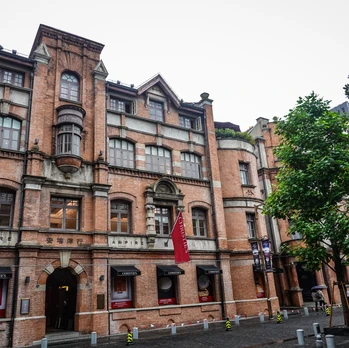
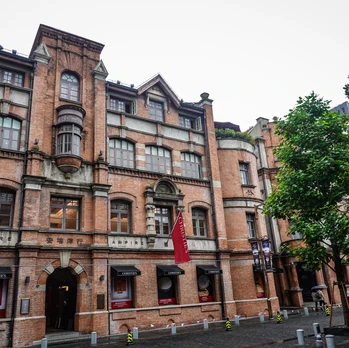
When most people think of the Bund, they picture the grand colonial buildings along the main promenade. But if you turn off East Beijing Road onto Yuanmingyuan Road, you'll discover another world – no crowds of tourists, just cobblestone-paved streets and quietly standing old buildings, as if time has frozen here.
On the east side of Yuanmingyuan Road, you'll find the former Union Church, the former British Consulate, and the Peninsula Hotel. On the west side stand historic buildings like the Arnhold & Co. Building, the Yuanmingyuan Apartment, and the YWCA Building. For architecture enthusiasts, this street is an open-air museum.
[Link: Best photo spots on the Bund]
Arnhold & Co. Building: British Elegance from a Century Ago
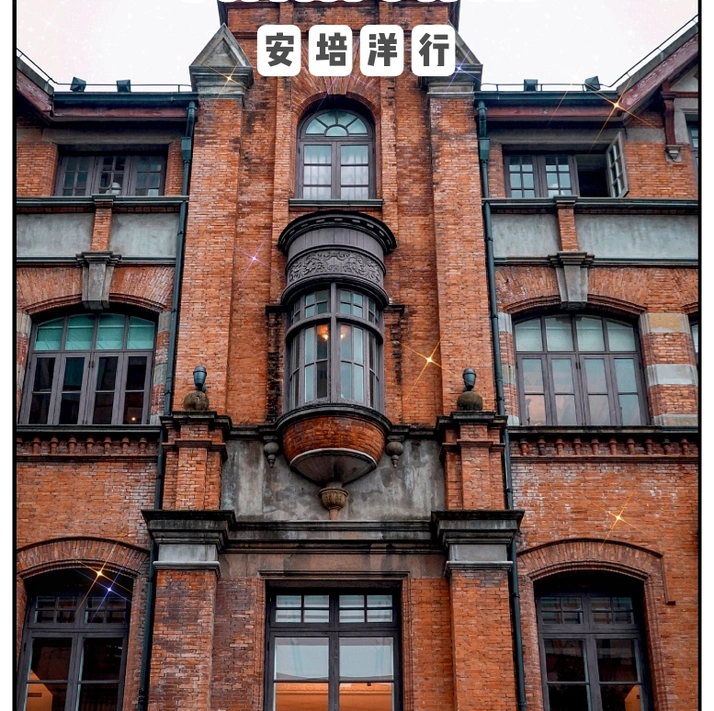
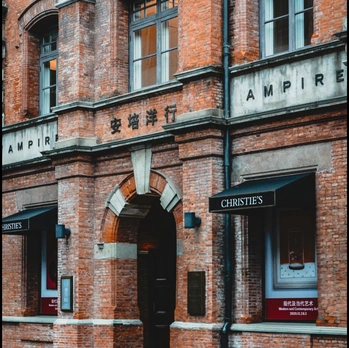
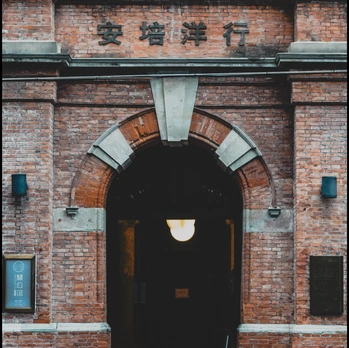
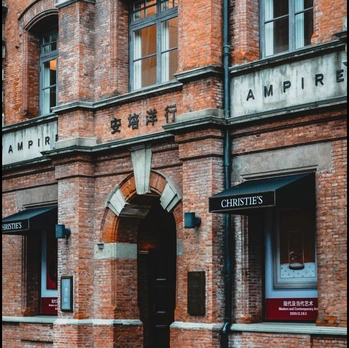
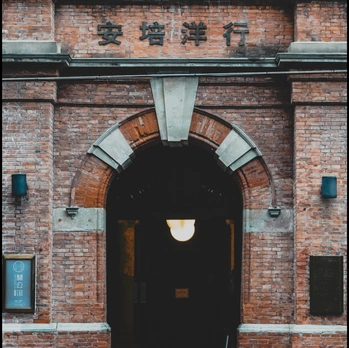
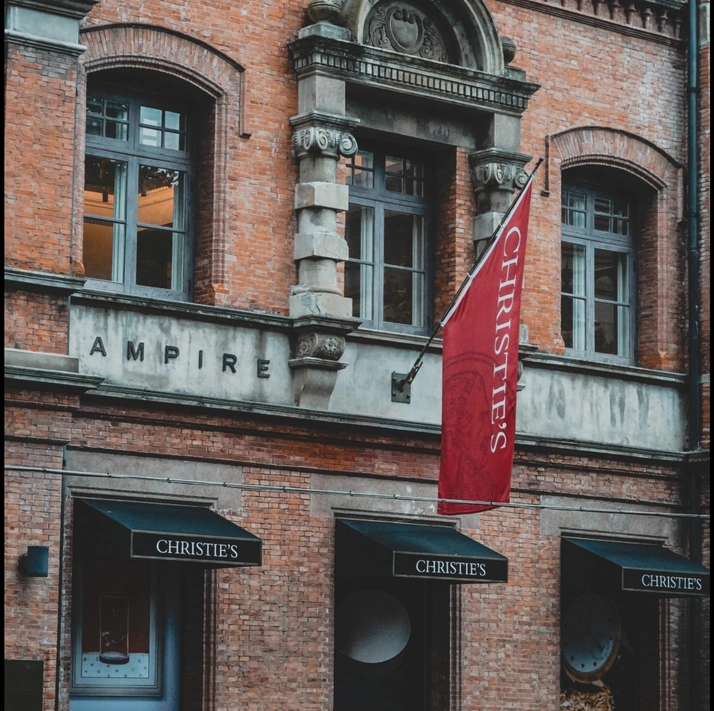
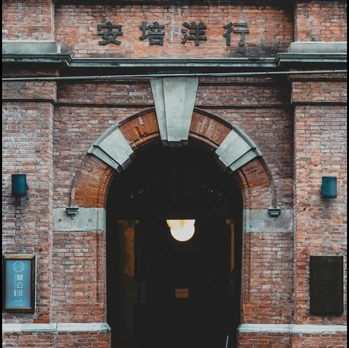
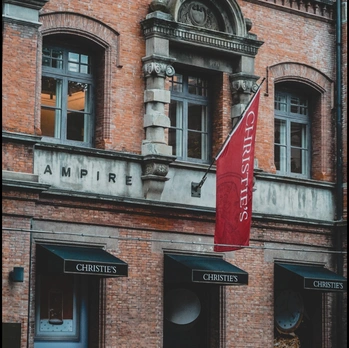
Located at No. 97 Yuanmingyuan Road, the Arnhold & Co. Building was constructed in 1907 and is a key part of the Bund Origin. This building adopts the British classical style, with its exposed red brick walls bearing the rough texture of age – every brick tells a story from a hundred years ago.
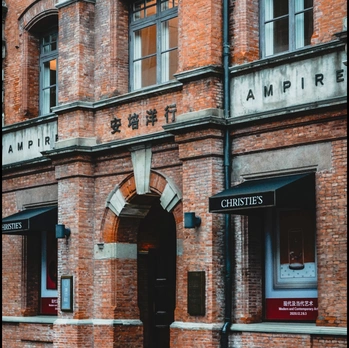
What caught my eye the most was the circular bay window on the third floor. It hangs like an exquisite chandelier on the building's facade, both classic and unique. I've heard that the interior ceilings are over four meters high, and there's a wine-red carved staircase. Unfortunately, I thought it was an office area at the time and didn't dare go in – now I really regret it.
In 2014, Christie's auction house moved in, so you can see plenty of "CHRISTIE'S" signs on the ground floor. The red flag adds a splash of color to this historic building.
Practical Information: - 📍 Address: No. 97 Yuanmingyuan Road, Rock Bund, Shanghai - 🚇 Metro: Line 2, East Nanjing Road Station, Exit 6
Yuanmingyuan Apartment: The Aristocratic Air of the Queen Anne Style
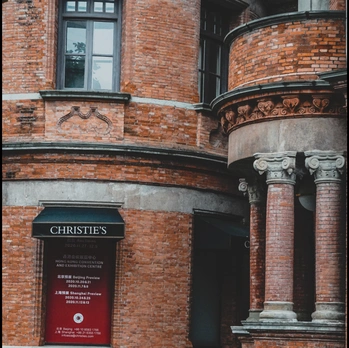
Adjacent to the Arnhold & Co. Building, the Yuanmingyuan Apartment was built in 1904 and is one of Shanghai's earliest British-style apartment buildings. This four-story brick-and-timber structure features chamfered corners on both street-facing sides. On the ground floor, a semi-circular shallow porch is supported by two Ionic columns – a clever design that naturally creates a semi-circular balcony for the second floor.
The entire building exemplifies the "Queen Anne Revival style." This style emerged during the Victorian era of the 19th century and was reserved for royalty and nobility, symbolizing status and prestige. Standing beneath it and looking up, you can almost feel the elegance and refinement of aristocratic life from that era.
Practical Information: - 📍 Address: No. 115 Yuanmingyuan Road, Shanghai - 🚇 Metro: Line 2, East Nanjing Road Station, Exit 6
[Link: Shanghai architecture walking tour]
Hengshan-Fuxing Area: Stepping into the Spiritual Homes of Literary Giants
Ke Ling's Former Residence: A Writer's Simplicity and Abundance
If you're interested in Shanghai's cultural history, the "Hengshan-Fuxing Historical and Cultural Area" is a must-visit. This area clusters together "Four Residences and One Museum" – the former homes of Zhang Leping, Ke Ling, Xia Yan, the study of Cao Ying, and the Hengfu Cultural Museum. They're all within walking distance, so you can visit them all in one go.
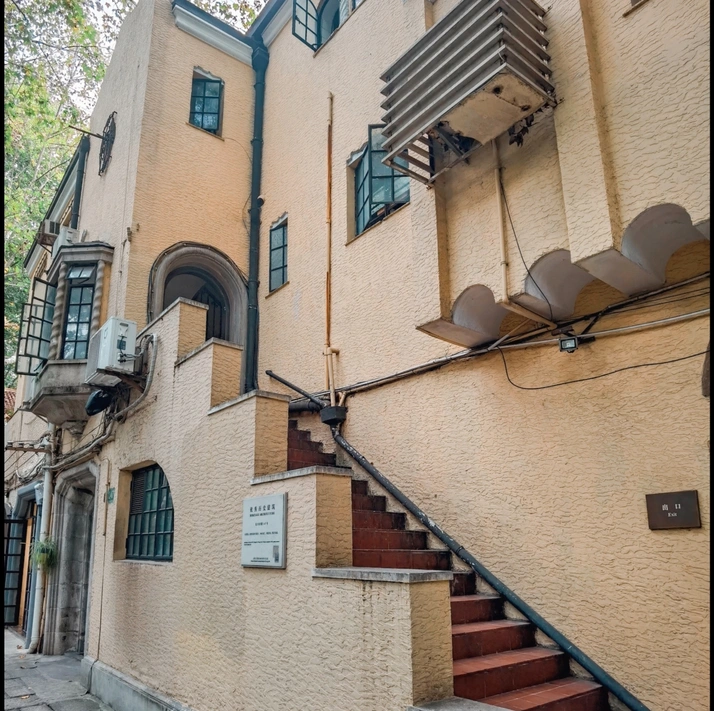
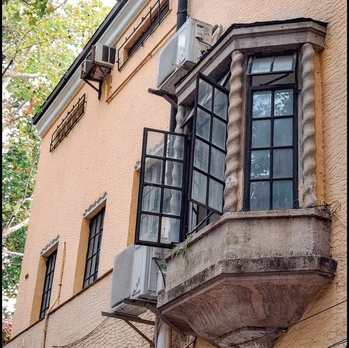
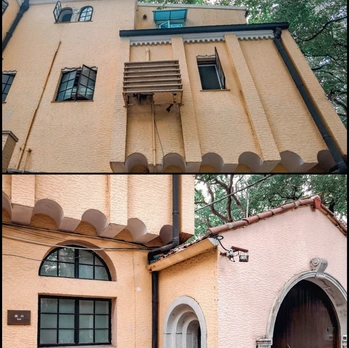
Ke Ling's former residence is located at No. 147 West Fuxing Road, a Spanish-style yellow apartment built in 1933. To be honest, before my visit, I only had a vague impression of the name Ke Ling. It wasn't until I toured the place that I truly learned about this Chinese film theorist and playwright – his original name was Gao Jilin, he served as deputy editor-in-chief of Wenhui Daily, and wrote the film script Sleepless City and the novel One Hundred Years of Shanghai.
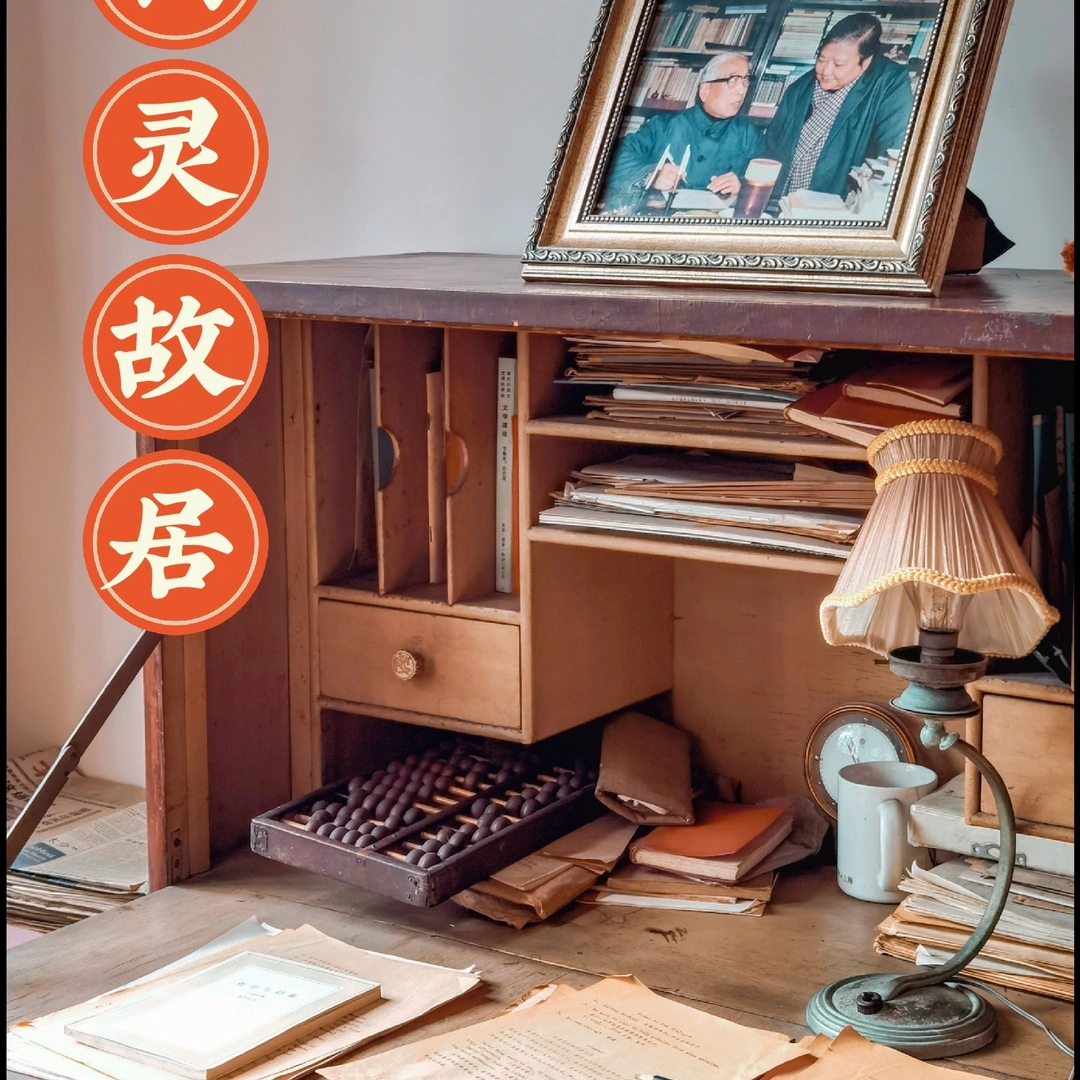
On the first floor of the residence, there's a spiraling wrought-iron staircase that's incredibly charming but so narrow it makes you wonder – anyone weighing over 60 kilograms would probably struggle to climb it. The second floor was where Ke Ling and his wife lived for nearly half a century. In the living room, the set of Twenty-Four Histories bookcases was his most treasured possession. Compared to the modest kitchen, this space vividly reveals a writer's inner world: a simple material life, but an immensely rich spiritual one.
Practical Information: - 📍 Address: No. 147 West Fuxing Road, Xuhui District, Shanghai - 🚇 Metro: Line 10, Shanghai Library Station - 🕙 Hours: 10:00 AM – 4:30 PM, open Wednesday to Saturday - 💰 Admission: Free, reservation required via the "Charming Hengfu" (魅力衡复) WeChat public account
[Link: Shanghai literary landmarks]
Xia Yan's Old Residence: The Footsteps of a Revolutionary Artist
2020 marked the 120th anniversary of Xia Yan's birth. This pioneer of China's New Culture Movement once lived in a garden villa at No. 178 South Urumqi Road. Unlike Ke Ling's residence, this one is called an "old residence" (jiuju) rather than a "former residence" (guju). Apparently, guju typically refers to a birthplace home, while jiuju refers to a home that wasn't one's birthplace.
Entering the residence, the first thing you see is a bronze bust of Xia Yan, with his major works displayed behind it. The ceiling design is quite creative – his famous quotes are illuminated with lighting, creating a unique atmosphere. The first floor is themed "Xia Yan and Shanghai," tracing his footsteps in the city. The second floor showcases his bedroom and study, with furniture and decorations donated by his children.
The biggest surprise was the back garden – walking along a wooden path under the shade of trees, admiring the full view of the villa, every shot looks like a professional photo. Across from Xia Yan's residence is Cao Ying's study, so you can visit both in one trip.
Practical Information: - 📍 Address: Building 2, No. 178 South Urumqi Road, Xuhui District, Shanghai - 🕰️ Hours: 10:00 AM – 4:30 PM, Wednesday to Saturday - 🎫 Admission: Free, online reservation required (one QR code per person) - 💡 Tips: You'll need to show your reservation QR code and health code on-site; no ID card required
[Link: Free things to do in Shanghai]
Shikumen Nostalgia: The Everyday Memories of the Shikumen Museum
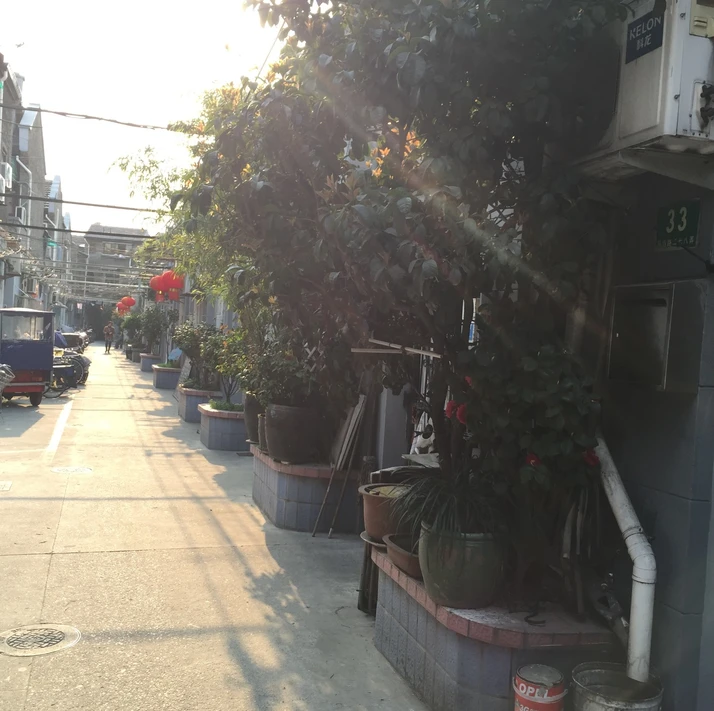
While shopping in Xintiandi, I stumbled upon the "Shikumen Museum" (Wulixiang). The words "shikumen" instantly brought back a flood of childhood memories – I grew up in a shikumen neighborhood called "Sanxinli" on North Sichuan Road. We shared a kitchen and bathroom with neighbors; it was cold in winter and hot in summer, and for bathing, we had to set up a plastic shower tent at home and wash in a basin. Life was tough, but the relationships between neighbors were incredibly close – chatting, gossiping, and laughing together.
The Shikumen Museum is a living time capsule. It recreates a typical 1930s Shanghai lane house, complete with a small kitchen, a shared bathroom, and a narrow staircase. Walking through it, you can almost hear the echoes of daily life – the clatter of mahjong tiles, the sizzle of a wok, the chatter of neighbors. It's a rare glimpse into the authentic Shanghai that's rapidly disappearing beneath skyscrapers.
Practical Information: - 📍 Address: Inside Xintiandi, 181 Taicang Road, Huangpu District - 🚇 Metro: Line 1, South Huangpi Road Station, Exit 1 - 🕙 Hours: 10:00 AM – 10:00 PM daily - 💰 Admission: Free (included in Xintiandi area)
[Link: Xintiandi shopping and dining guide]
Hidden Gems Beyond the Main Attractions
The Rock Bund: Where History Meets Modern Luxury
The "Rock Bund" area around Yuanmingyuan Road has become a hotspot for boutique hotels, art galleries, and high-end restaurants. It's a perfect blend of old-world charm and contemporary sophistication. The cobblestone streets are perfect for a leisurely stroll, and the quiet atmosphere is a welcome escape from the tourist crowds on the main Bund.
Hengfu Cultural Museum: A Deep Dive into Shanghai's Literary Heritage
Located within the Hengshan-Fuxing area, the Hengfu Cultural Museum offers rotating exhibitions on Shanghai's cultural history. It's a great starting point for your literary tour, providing context on the writers who shaped modern Chinese literature.
FAQ: Shanghai Hidden Gems
Q1: Are these hidden gems free to visit?
 A: Yes! All the attractions mentioned in this guide – Yuanmingyuan Road, the Arnhold & Co. Building, Yuanmingyuan Apartment, Ke Ling's former residence, Xia Yan's old residence, and the Shikumen Museum – are free to enter. However, some require advance reservations, especially the literary residences.
Q2: How much time should I allocate for exploring these hidden gems?
 A: I recommend dedicating at least one full day for the Bund Origin area (Yuanmingyuan Road and surrounding architecture) and another half-day for the Hengshan-Fuxing literary tour. The Shikumen Museum can be combined with Xintiandi shopping in a single afternoon.
Q3: Do I need to book in advance for the literary residences?
 A: Yes, for Ke Ling's former residence and Xia Yan's old residence, you must make a reservation through the "Charming Hengfu" (魅力衡复) WeChat public account. Walk-ins are not accepted. The Shikumen Museum and outdoor areas like Yuanmingyuan Road do not require reservations.
Q4: What's the best time of year to visit these hidden gems?
 A: Spring (March–May) and autumn (September–November) offer the most pleasant weather for walking tours. Summer can be hot and humid, while winter is chilly but less crowded. Weekdays are generally quieter than weekends.
Q5: Are these locations accessible by public transport?
A: Absolutely. The Bund Origin area is served by East Nanjing Road Station (Line 2, Exit 6). The Hengshan-Fuxing area is accessible via Shanghai Library Station (Line 10). Xintiandi (for the Shikumen Museum) is reachable via South Huangpi Road Station (Line 1). Shanghai's metro system is efficient and English-friendly.
Conclusion: Rediscovering Shanghai, One Hidden Gem at a Time
2020 was a year that forced us to slow down and look closer at the world around us. For me, it was a revelation – Shanghai is not just a transit hub or a business center; it's a living museum of architecture, history, and culture. The hidden gems I discovered – from the cobblestone streets of Yuanmingyuan Road to the quiet studies of literary giants – reminded me that sometimes the best travel experiences are right in your own backyard.
If you're planning a trip to Shanghai, or if you're a local looking for a new adventure, I encourage you to step off the beaten path. Explore the Bund Origin, wander through the Hengshan-Fuxing area, and step into a shikumen lane house. You'll discover a Shanghai that most tourists never see – and you'll fall in love with this incredible city all over again.
Ready to explore Shanghai's hidden gems? Bookmark this guide, pack your walking shoes, and don't forget your camera. The real Shanghai is waiting for you – one hidden gem at a time.
[Link: Shanghai itinerary 3 days] [Link: Shanghai off the beaten path]
Have you discovered any hidden gems in Shanghai? Share your finds in the comments below!
You may also like