Meow Meow's Kenyan Summer Escape: A Spontaneous Grassland Adventure – A Mother-Daughter Safari Guide
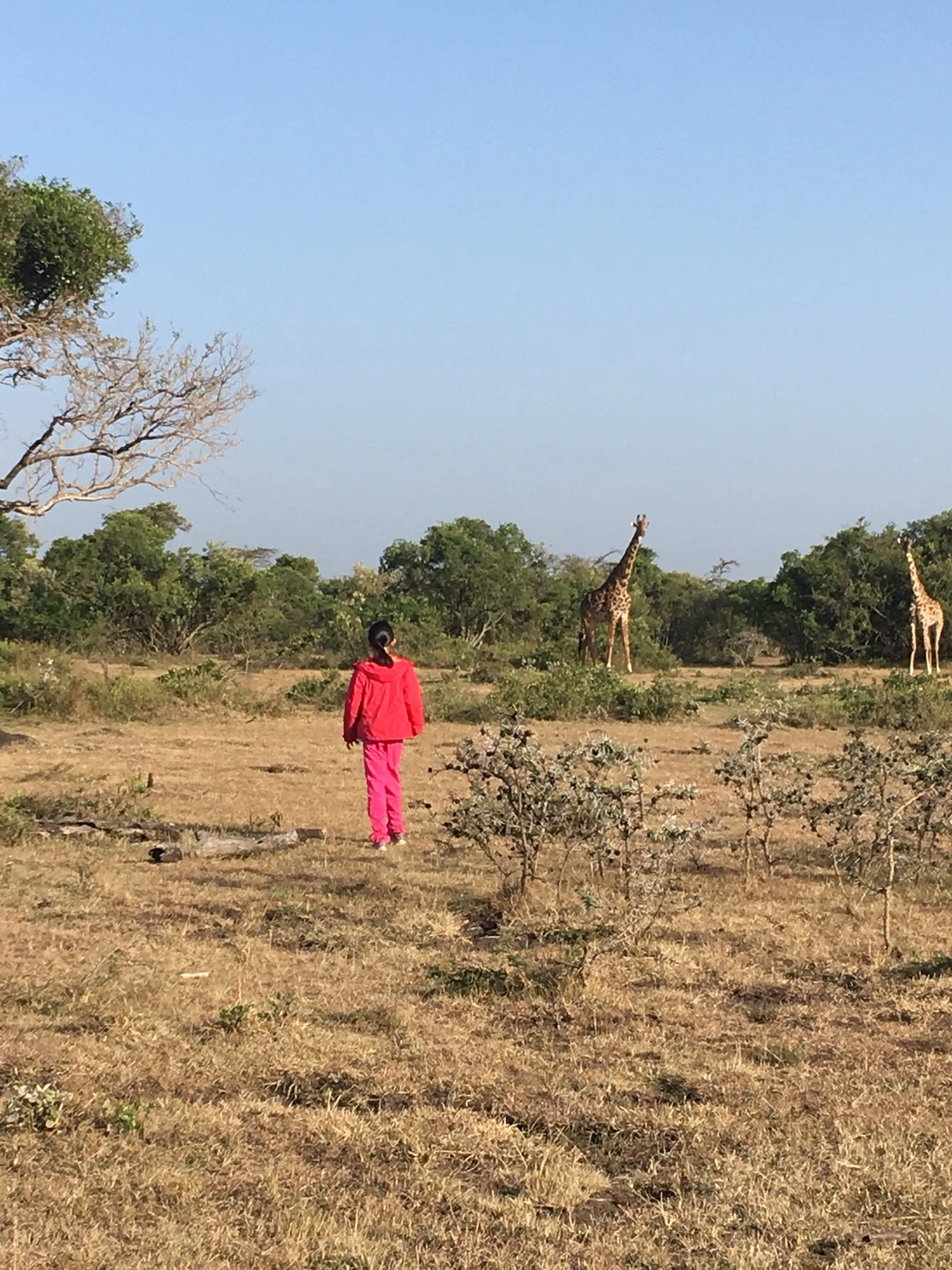
Meta Description: Planning a Kenya safari with kids? Follow Meow Meow's spontaneous Kenyan summer escape—from Nairobi to Mombasa. Get tips on visas, packing, and family-friendly wildlife encounters.
Introduction: When a Nine-Year-Old Dreams of Africa
Nine-year-old Meow Meow is no ordinary girl. While kids her age are lost in Barbie dolls and cartoons, she has a special fondness for National Geographic and Human and Nature. Her cousin's family has lived in Nairobi for years, and every time they return to China for visits, they tempt her with tales of the wild beasts on the savannah.
This May, when her cousin's family came back for a holiday, her sister-in-law mentioned the Nairobi-based Excellence Travel Agency — a well-established, experienced, and highly reputable outfit. That was the spark that finally ignited Meow Meow's longing for a Kenya family safari.
One afternoon in late May, I sat in my office idly browsing flight tickets. I had no idea what I was in for — checking the prices left me stunned. Morning and afternoon fares were both hitting new highs. Without a second thought, I booked the round-trip tickets right then and there. Then I called my cousin, who cheered on the other end: "After years of talking about a Kenya trip, it's finally happening!"
Sometimes, making a decision really does take just a moment. But in the days after booking, I was still in a daze: Are we really going to Africa?
Pre-Trip Preparations: Details Make All the Difference
Timing and Planning for a Kenya Summer Escape

The Great Migration in Kenya peaks from July to August, making these two months the golden season for tourism in both Kenya and Tanzania. If you're planning to travel during this period, you need to book your itinerary, flights, and hotels well in advance. Leave it too late, and airfares will skyrocket, while hotel rooms, local drivers, domestic flights, and train tickets become as scarce as seats during China's Spring Festival rush.
My sister-in-law works at Excellence Travel and provided incredibly professional service. The itinerary she sent covered several nature reserves, each with its own unique highlights. The only thing I hesitated over was the Mombasa beachside relaxation — I live in a coastal city myself and have visited plenty of beaches along China's southeastern coast, so I figured it would be more of the same. But my cousin insisted: "Trust me, it's a completely different experience." As it turned out, Mombasa beach vacation became the perfect finale to our trip.
[Link: Best time to visit Kenya for wildlife viewing]
Visas and the Yellow Book: Essential Kenya Travel Documents
Two major tasks awaited before departure: getting the visa and the Yellow Book (International Certificate of Vaccination). You can apply for the visa through a travel agency or directly on the Kenyan embassy's official website — the price difference is only about $5. Either way, do it early: during peak tourist season, the embassy is swamped, and you don't want to delay your trip.
For the Yellow Book, you need to visit a designated international travel health service center. In Dalian, it's located opposite the Kaidan Plaza on Donggang Road. They do vaccinations and check-ups on weekday mornings, and you can pick up the certificate three working days later in the afternoon.
Important note: Anyone allergic to eggs or poultry cannot receive the yellow fever vaccine.
Tip for families: Children under 16 are visa-exempt for entry, but the e-visa must be printed in color. I printed three copies: one for the Yellow Book application, one for entry, and one as a backup. When applying for the Yellow Book, you need to provide your visa or itinerary as proof of your destination country.
Packing List for a Kenya Safari with Kids
I won't go into the basics like band-aids, basic medications, eye masks, and earplugs, but here are a few special items worth mentioning:
- Lightweight down jacket: July and August are Kenya's dry season, with average daily temperatures ranging from 9°C to 27°C (48°F to 81°F). Don't bring a heavy shell jacket — they're bulky and hard to pack. A lightweight down jacket in your carry-on is perfect: it'll keep you warm during the second half of the flight, and when you land at 6 a.m. in temperatures below 10°C (50°F), you'll need it immediately.
- Disposable face masks: Great for dust protection and sun protection during game drives.
- E-reader: The plane has a TV to pass the time, but if your flight is delayed, an e-reader is a lifesaver for staving off anxiety.
- Memory foam travel pillow and lumbar support: On a flight lasting over a dozen hours, your neck and lower back need proper support. I recommend putting on the lumbar support after going through security, or it'll be a hassle during the security check.
- Bottled water: Worried about getting acclimated to the local water? You can check in two bottles of water from home and mix them with local water for a couple of days to ease the transition. We've done this on every trip abroad and never had issues with stomach trouble.
- Plastic ban reminder: Kenya has a strict nationwide ban on plastic bags. Shopping bags are strictly prohibited, and airport inspections can result in heavy fines. Nairobi customs officers especially love checking Chinese travelers' luggage.
- Hotel amenities: For environmental reasons, local hotels don't provide toothpaste, toothbrushes, or slippers — bring your own. Since we had the Mombasa beach leg, we packed sandals right from the start.
- Photography gear: I brought a 70-200mm telephoto lens and a 16-35mm wide-angle lens. In practice, the telephoto wasn't enough — to get clear shots from the car, you'd really want a 400mm or 500mm lens. It's also a good idea to have a dust cover for your camera. And a waist pouch is essential — you'll need to keep your passport on you at all times.
[Link: Kenya packing list for families]
Why Just the Two of Us?
Before we left, I posted online looking for travel buddies so Meow Meow could have a companion. But everyone had their reasons: the destination was too far, safety was a concern, hygiene standards were questionable, the trip was too long, or the goals didn't align (photography tours aren't suitable for kids). In the end, only Meow Meow and I — a mother-daughter duo that our friends called "crazy enough to have lost all reason" — set off on July 31.
The truth is, what stops most people are stubborn prejudices, the inability to break free from daily routines, and the fear of the unknown. Traveling to Kenya with a child is absolutely possible — and incredibly rewarding.
First Arrival in Nairobi: Trees Like Feather Dusters and a Refreshing 20°C
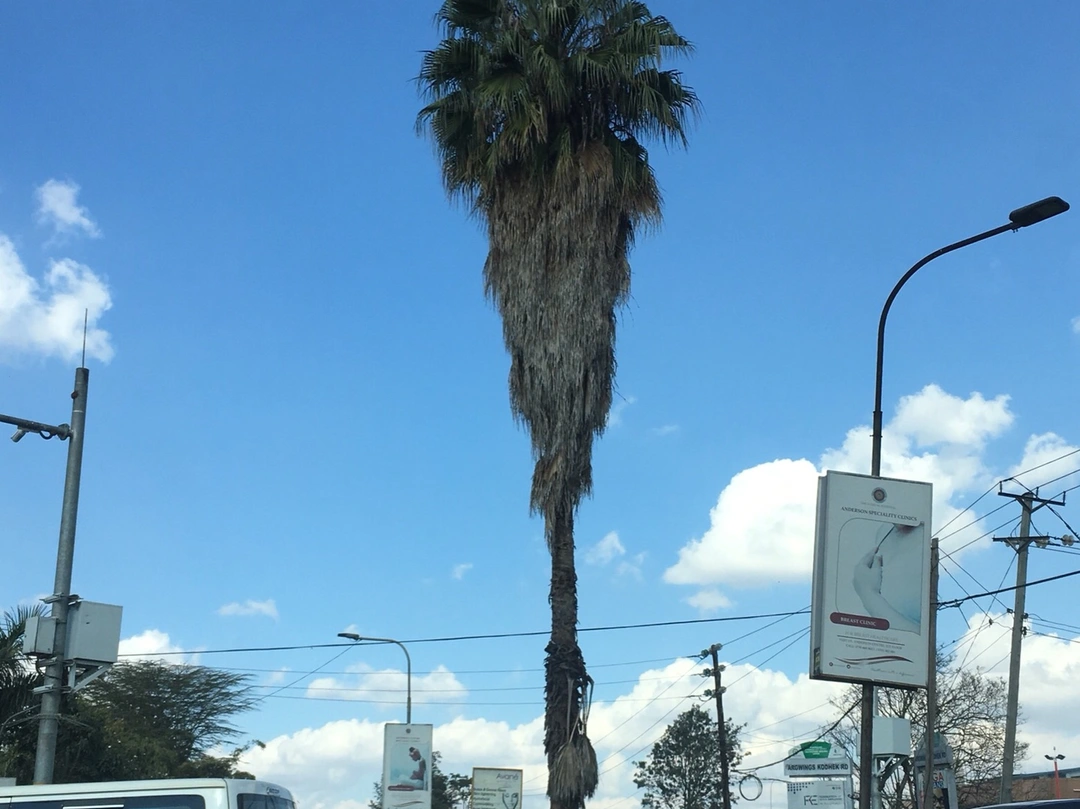
When we left Dalian, the city was in the grip of its worst heatwave in over a decade. Stepping off the plane in Nairobi at 10 a.m. to a temperature of 20°C (68°F) was an instant relief. The travel agency had arranged a pickup — there are almost no taxis on the streets, and my cousin said Uber works fine. Nairobi is five hours behind Beijing, so it was around 3 p.m. back home, and Meow Meow was full of energy.
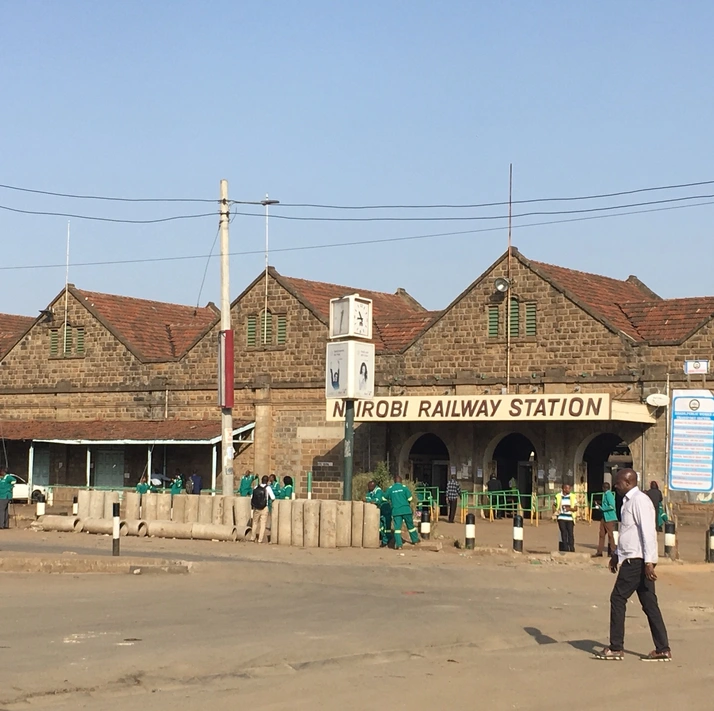
My cousin's family lives near the Presidential Palace, in a neighborhood with tight security where kids play in the courtyards. We planned to spend a day and a half in Nairobi, covering the "warm-up" itinerary: the Giraffe Centre, the David Sheldrick Wildlife Trust (elephant orphanage), and the Nairobi National Museum.
Giraffe Centre: A Wet Kiss
Kenya has many private animal sanctuaries and reserves that rely on ticket sales and visitor donations to operate. At the Giraffe Centre, visitors can feed the giraffes — but only with the feed provided by the center. You hold out your palm flat, and the giraffe will lean over, curl its tongue around the food, and sometimes nuzzle you affectionately.
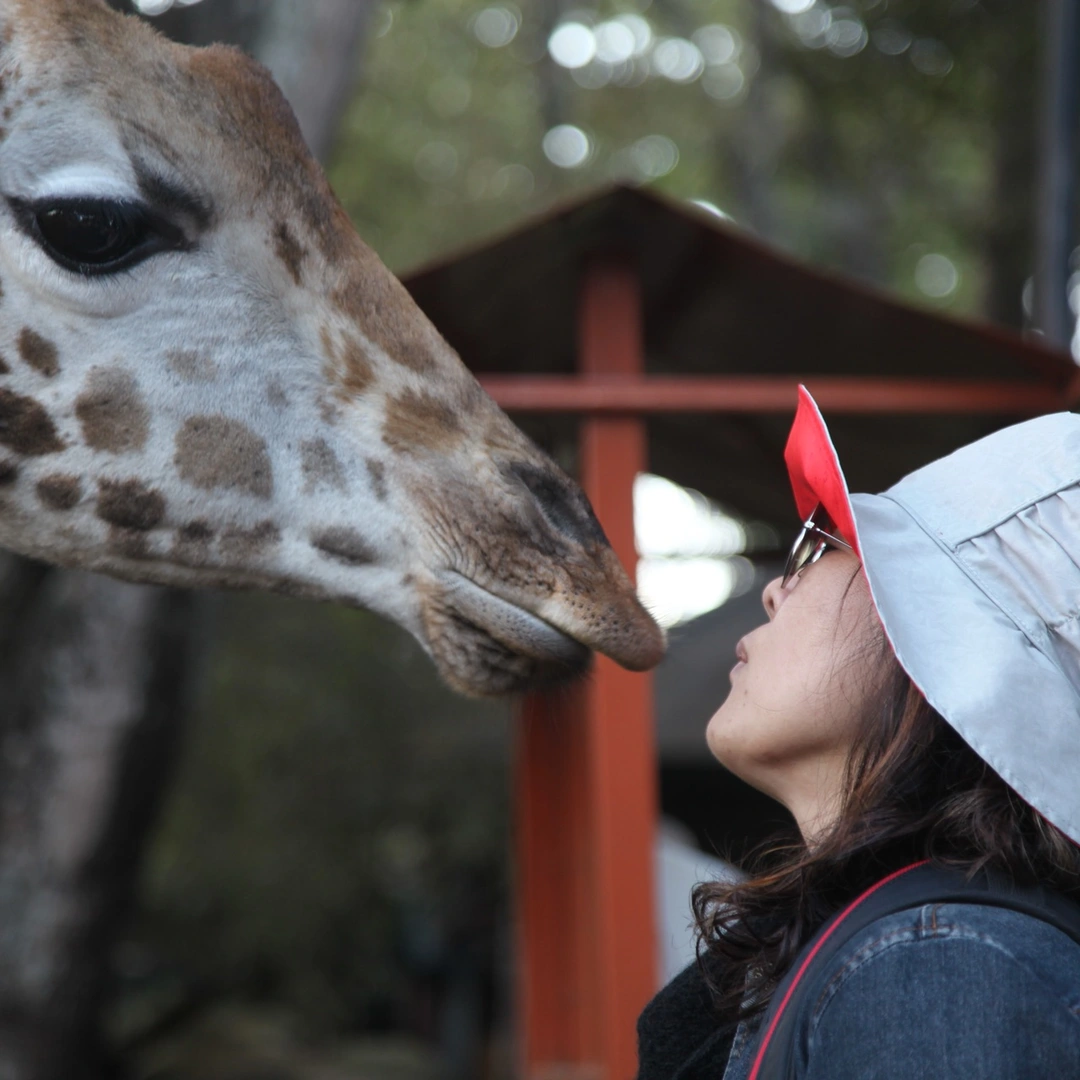
Inside, there's a room that showcases the history and offers educational displays about giraffes. We learned that the giraffes in the Maasai Mara and those on Mount Kenya are different subspecies, and that giraffe leg bones are solid — they have no marrow. A staff member let Meow Meow try lifting a leg bone, and she gasped: "It's half as heavy as I am!" Meow Meow weighs 25 kilograms (55 pounds), so she's our go-to unit of measurement.
When a giraffe reached over and gave me a kiss, the first thing that came to mind was Dustin Hoffman's line in Rain Man: "Wet!"
[Link: Giraffe Centre Nairobi review]
David Sheldrick Wildlife Trust: Every Elephant Has a Story
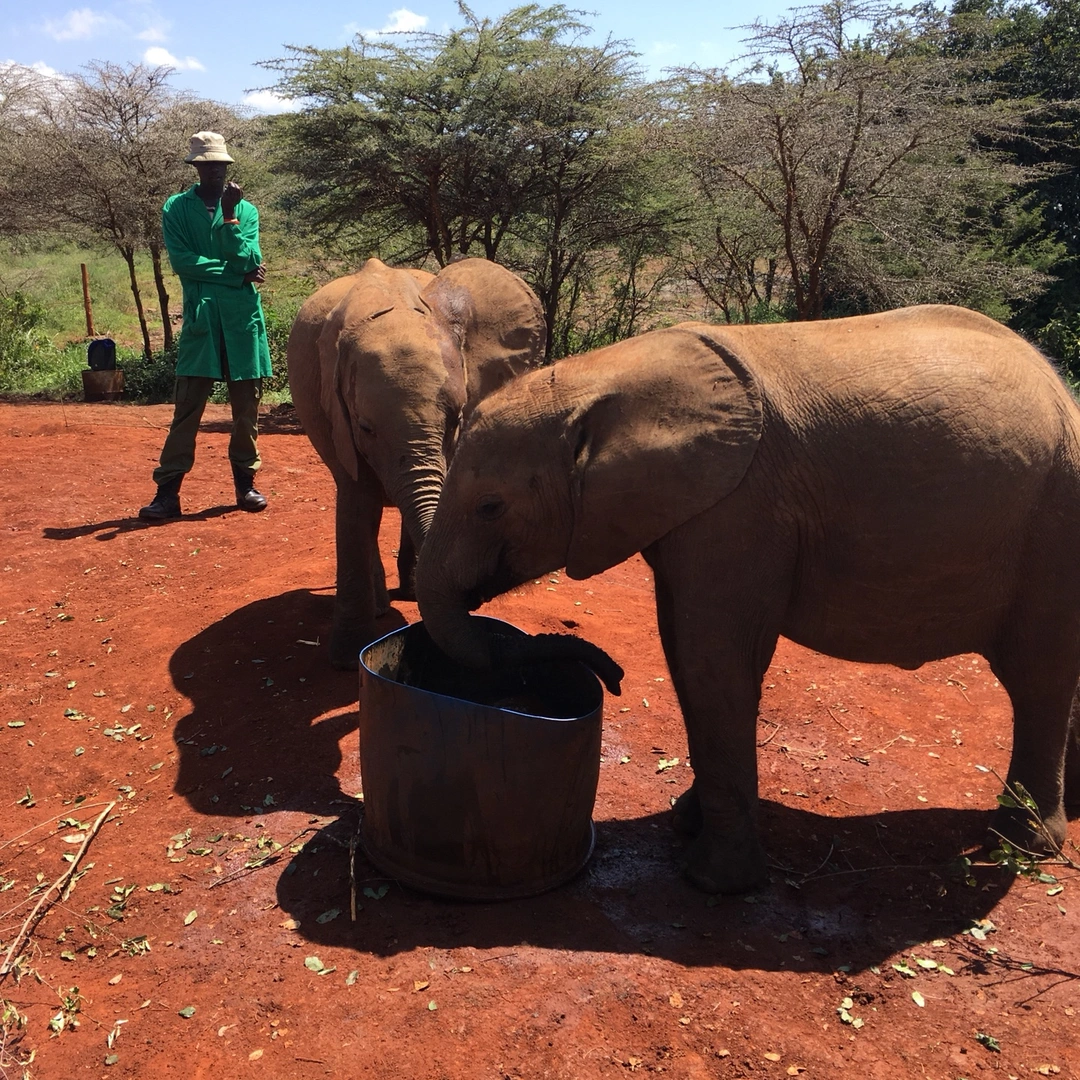
The David Sheldrick Wildlife Trust in Nairobi is one of the world's most successful elephant orphan rescue and rehabilitation programs. Open to the public for just one hour each morning (11 a.m. to 12 p.m.), this is a must-visit for families. The baby elephants are brought in from various parts of Kenya, many orphaned due to poaching or natural disasters.
Meow Meow was mesmerized as the keepers fed the calves with giant bottles of milk. Each elephant has a name and a story — some were found wandering alone, others rescued from wells. The trust allows visitors to "adopt" an elephant for a small donation, receiving updates and photos. We adopted a little one named "Kiasa," and Meow Meow still checks her progress online.
Pro tip: Arrive early — the queue forms well before 11 a.m., and the experience is worth every minute of waiting.
The Maasai Mara: Where the Wild Things Are
From Nairobi, we took a domestic flight to the Maasai Mara National Reserve. The flight itself was an adventure — a small propeller plane that flew low enough to spot herds of zebras and wildebeests from the window. Meow Meow pressed her face against the glass, squealing with delight.
Our driver-guide, Joseph, had been working in the Mara for over 15 years. He knew every watering hole, every pride of lions, and every shortcut through the bush. Within hours of arriving, we witnessed a cheetah hunt — a heart-pounding chase that ended with the cheetah catching a young gazelle. It was raw, real, and unforgettable.
Game Drives: A Daily Ritual
Each day began at dawn. We'd wrap ourselves in blankets (the morning chill is real) and climb into the open-top Land Cruiser. Joseph would scan the horizon with practiced eyes, pointing out a leopard lounging in a sausage tree or a family of elephants crossing the river.
We saw the "Big Five" — lion, leopard, elephant, buffalo, and rhino — within three days. But the true magic of the Mara is the smaller moments: a baby hippo yawning, a dung beetle rolling its prize, or a herd of giraffes galloping across the plains.
Tip for families: Bring snacks and drinks. Game drives can last 4-6 hours, and kids get hungry. Also, a good pair of binoculars is worth its weight in gold.
[Link: Maasai Mara family safari tips]
Mombasa: The Perfect Beachside Finale
After the dust and excitement of the Mara, Mombasa was a welcome change of pace. We stayed at a beachfront resort with a pool that overlooked the Indian Ocean. The water was warm, the sand was white, and the sunsets were spectacular.
Meow Meow spent hours snorkeling in the coral reefs, spotting parrotfish and sea turtles. We took a dhow cruise at sunset, sipping fresh coconut water while the sky turned shades of orange and pink. My cousin was right — this was nothing like the beaches in China. It was a completely different experience, one that combined relaxation with a touch of Swahili culture.
Fun fact: Mombasa's Old Town is a UNESCO World Heritage site, with narrow streets, ancient mosques, and spice markets. We spent a morning wandering through the stalls, buying hand-carved wooden animals and colorful kangas.
FAQ: Planning Your Kenya Family Safari
1. Is Kenya safe for children?
Yes, Kenya is generally safe for families, especially in well-touristed areas like Nairobi, Maasai Mara, and Mombasa. Stick to guided tours, avoid walking alone at night, and follow your guide's instructions during game drives. The biggest risks are sunburn and dehydration — not wild animals.
2. What is the best time to visit Kenya with kids?
The best time is during the dry season, from July to October. This coincides with the Great Migration in the Maasai Mara, offering incredible wildlife viewing. The weather is pleasant, and roads are passable. Avoid the rainy season (April-May and November-December) when many camps close.
3. Do I need a visa for Kenya?
Yes, most nationalities need a visa. You can apply online through the Kenyan e-visa portal. Children under 16 are exempt from the visa fee but still require a printed e-visa. Apply at least two weeks in advance during peak season.
4. What vaccinations do I need for Kenya?
The yellow fever vaccine is mandatory if you're traveling from a country with risk of yellow fever. Other recommended vaccines include hepatitis A, typhoid, and tetanus. Malaria prophylaxis is also recommended, especially for lower-altitude areas like the Mara and Mombasa.
5. How much does a Kenya family safari cost?
Costs vary widely. A budget safari can start at $150-200 per person per day, while luxury camps can cost $500-1000 per person per day. Flights, visas, and vaccinations add to the total. Booking through a local agency like Excellence Travel can save money and ensure a smooth experience.
Conclusion: Why You Should Take the Leap
Meow Meow's Kenyan summer escape was more than a vacation — it was a lesson in courage, curiosity, and the beauty of stepping into the unknown. We returned home with thousands of photos, a dozen new stories, and a deeper appreciation for the wild world.
If you're considering a Kenya safari with kids, don't let fear hold you back. The logistics are manageable, the rewards are immense, and the memories will last a lifetime.
Ready to plan your own spontaneous grassland adventure? Start by checking flight prices, applying for your visa, and connecting with a trusted local agency. The savannah is waiting.
[Link: Book a Kenya family safari package]
This article was originally inspired by a travelogue from Mafengwo. All factual details have been preserved, including visa rules, packing tips, and the mother-daughter duo's experience.
You may also like