Kyoto After Dark: The Ultimate Night Stroll Guide to Hidden Magic
Meta Description: Discover Kyoto's secret night magic with this after-dark walking route. From illuminated Yasaka Shrine to the phantom Yasaka Pagoda, explore Kyoto's iconic landmarks without crowds. Your nocturnal pilgrimage awaits.
Introduction: Why Kyoto After Dark is a Must-Experience
When the last temple gates creak shut at 5 PM and department stores pull down their grilles by 9, most guidebooks tell you Kyoto's day is done. But for travelers accustomed to cities that never sleep, the question lingers: What do you do when the night is still young and your hotel room feels like a cage?
The answer lies in a route beyond tourist maps—a nocturnal pilgrimage through Kyoto's most iconic landmarks, transformed by darkness into something entirely otherworldly. No time limits, no entry fees, no crowds. Just you, the shadows, and a city that reveals its true soul after sunset.
This guide offers a secret night stroll through Kyoto's hidden magic, perfect for solo travelers, couples, and night owls seeking authentic experiences. [Link: Best time to visit Kyoto for night activities]
The Gateway: Yasaka Shrine at Midnight
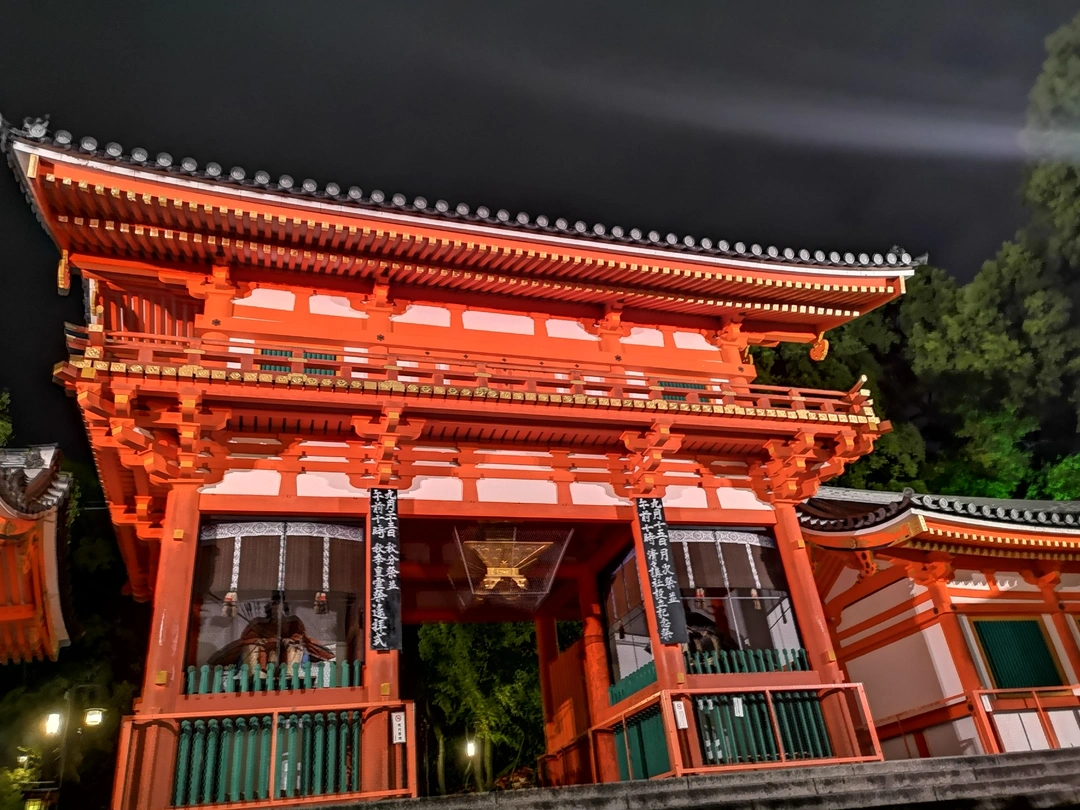
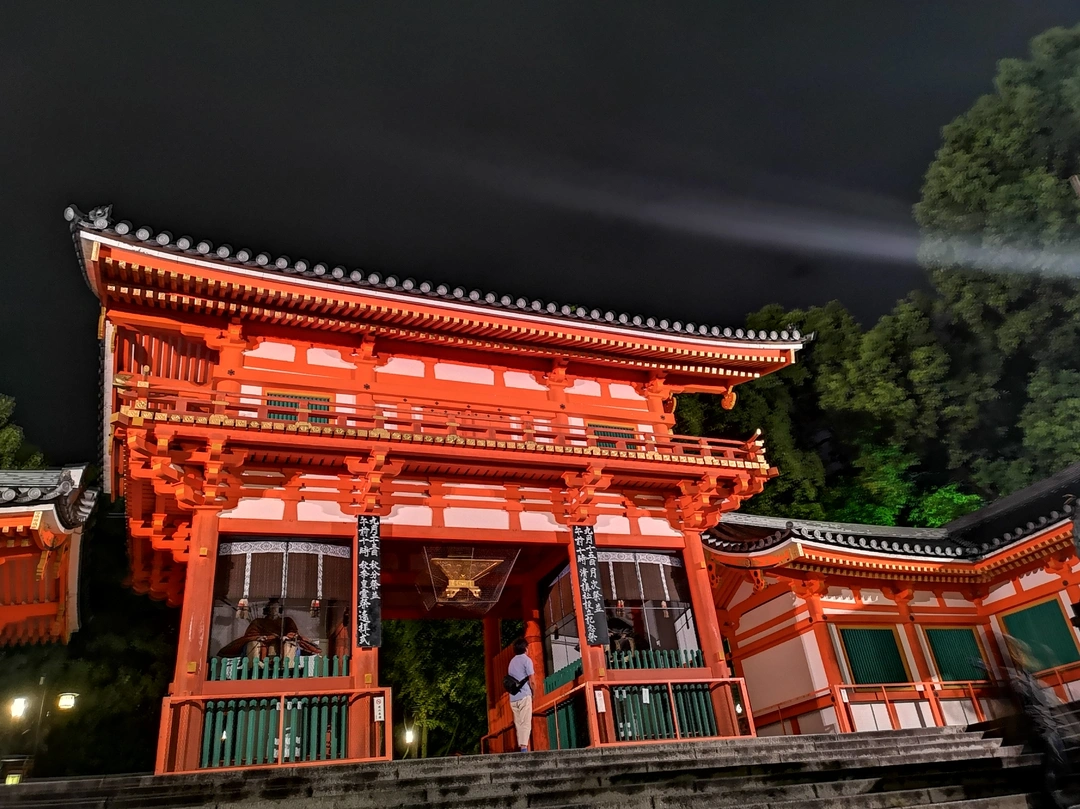
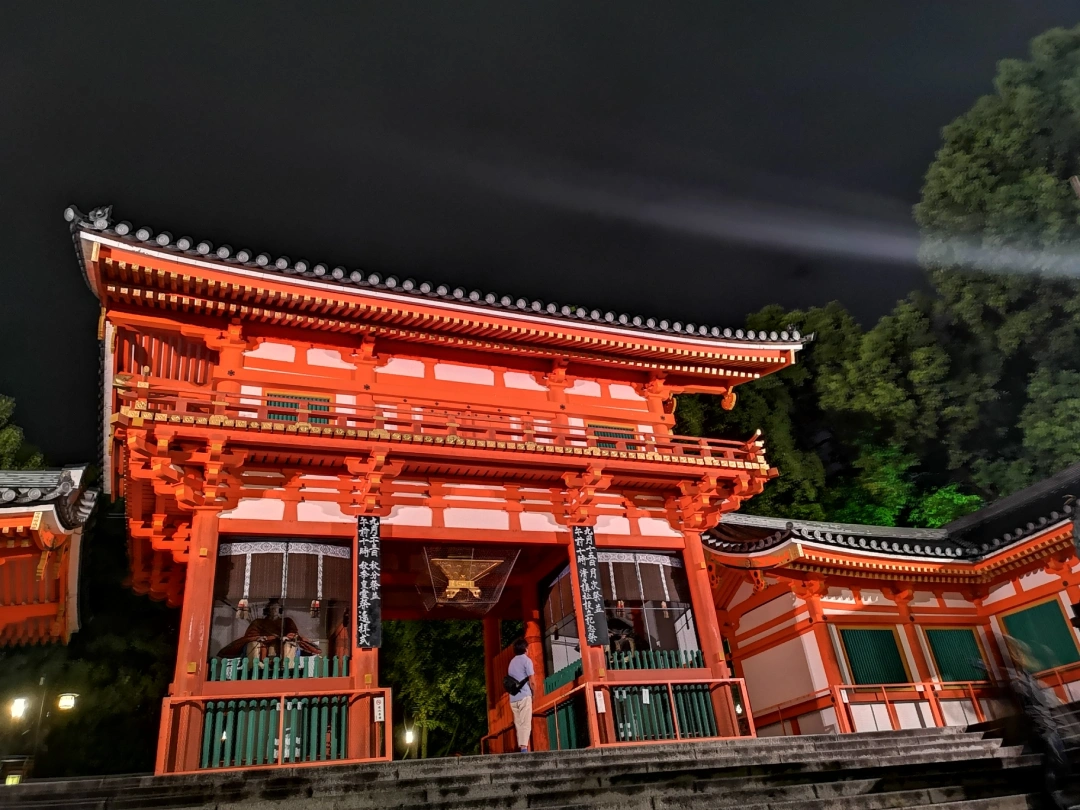
Start your Kyoto night stroll where the buses drop you off in Gion. Walk east along Shijo Street toward the towering vermilion gate of Yasaka Shrine, and prepare for your first shock: this place is alive at night. Unlike the hushed, reverent atmosphere of daytime shrines, Yasaka after dark feels like a stage set—red wooden pillars, emerald trees, and stone steps bathed in an almost theatrical glow.

The twin statues flanking the main gate are worth a moment's pause, though perhaps not too long. Armed with bows, arrows, and swords, their faces carry an intensity that feels unsettling under the moonlight. You'll likely share the space with little more than a handful of patrolling police officers—a far cry from the daytime crowds.
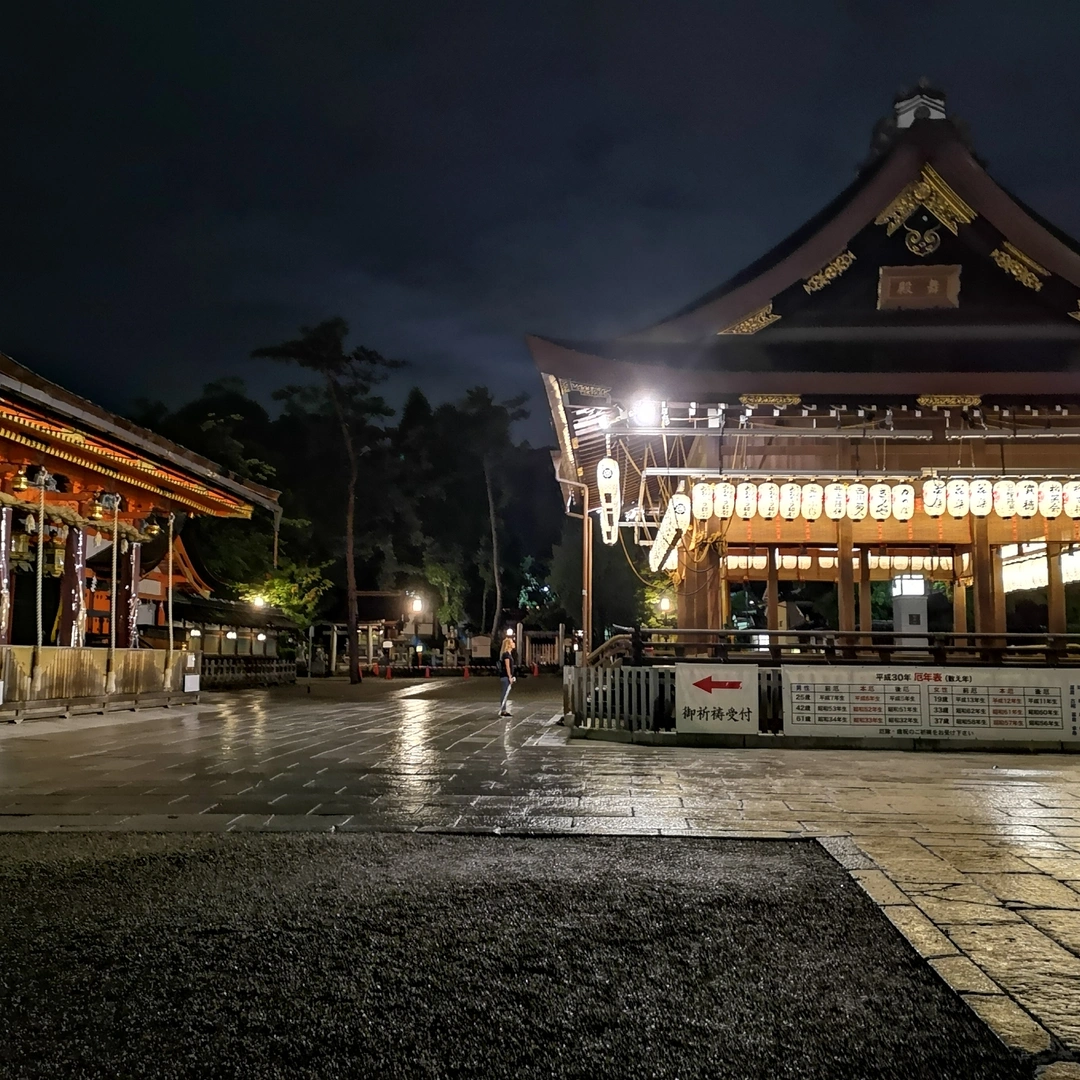
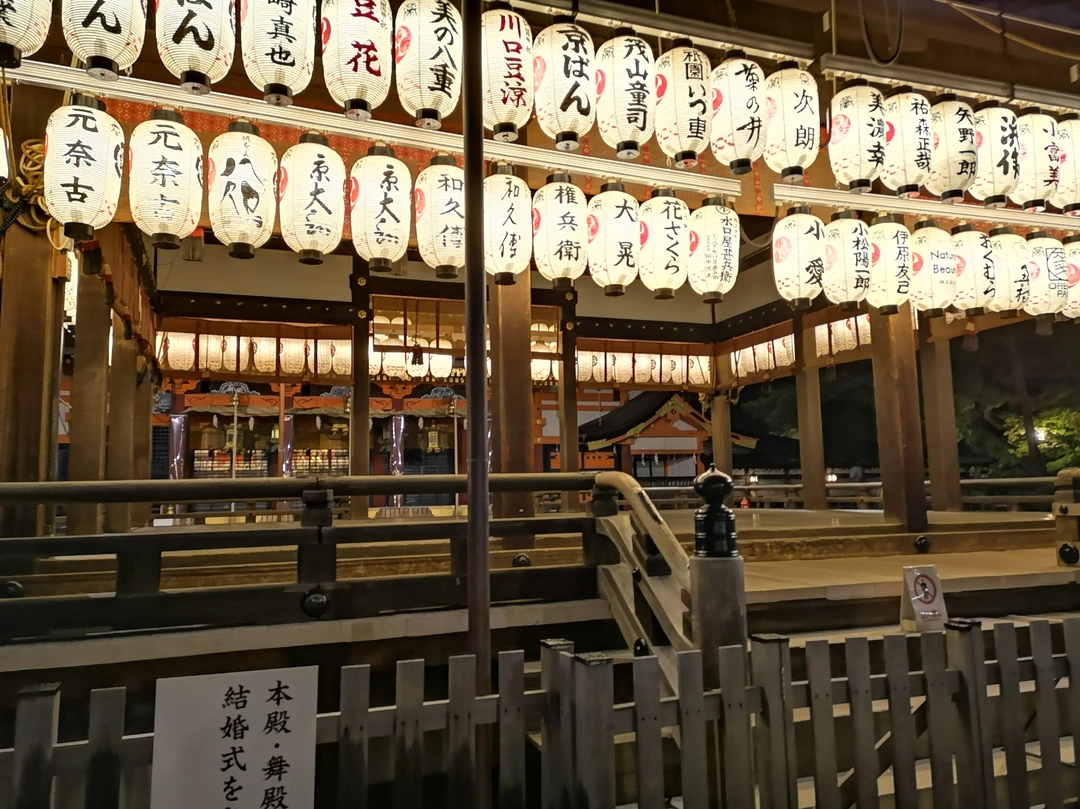
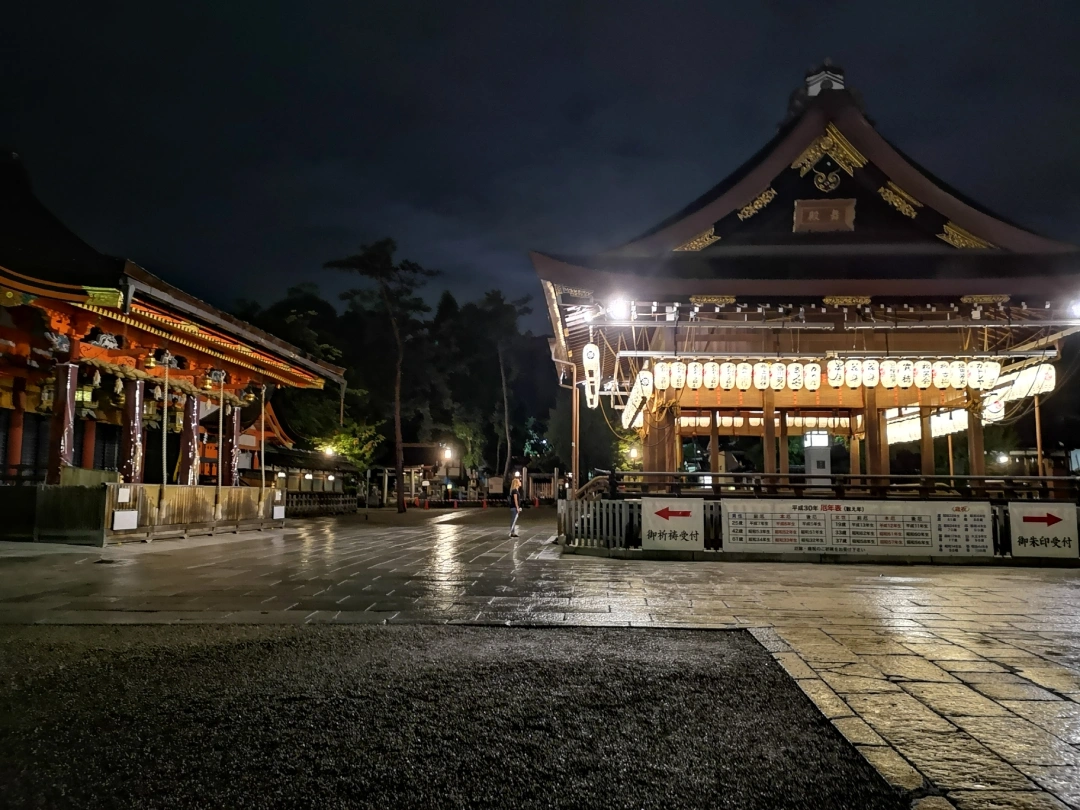
But the real transformation happens at the Main Hall (Maiden) . By day, it's an unremarkable dark-wood pavilion, its brown-black beams blending into the background like a forgotten prop. The lanterns hanging from its eaves look no more special than restaurant signage. At night, everything changes. The same wooden pillars now gleam with a metallic sheen—polished brass near the brighter lanterns, almost golden where the light hits just right. The gold-leaf patterns on the roof, invisible in daylight, become impossible to ignore. You finally understand why they call it a "hall"—it's not architecture; it's a living painting, lit from within.
Pro tip: Visit Yasaka Shrine around 10 PM for the most dramatic lighting effects. [Link: Top night photography spots in Kyoto]
The Ritual: How to Pray at a Shrine at Night
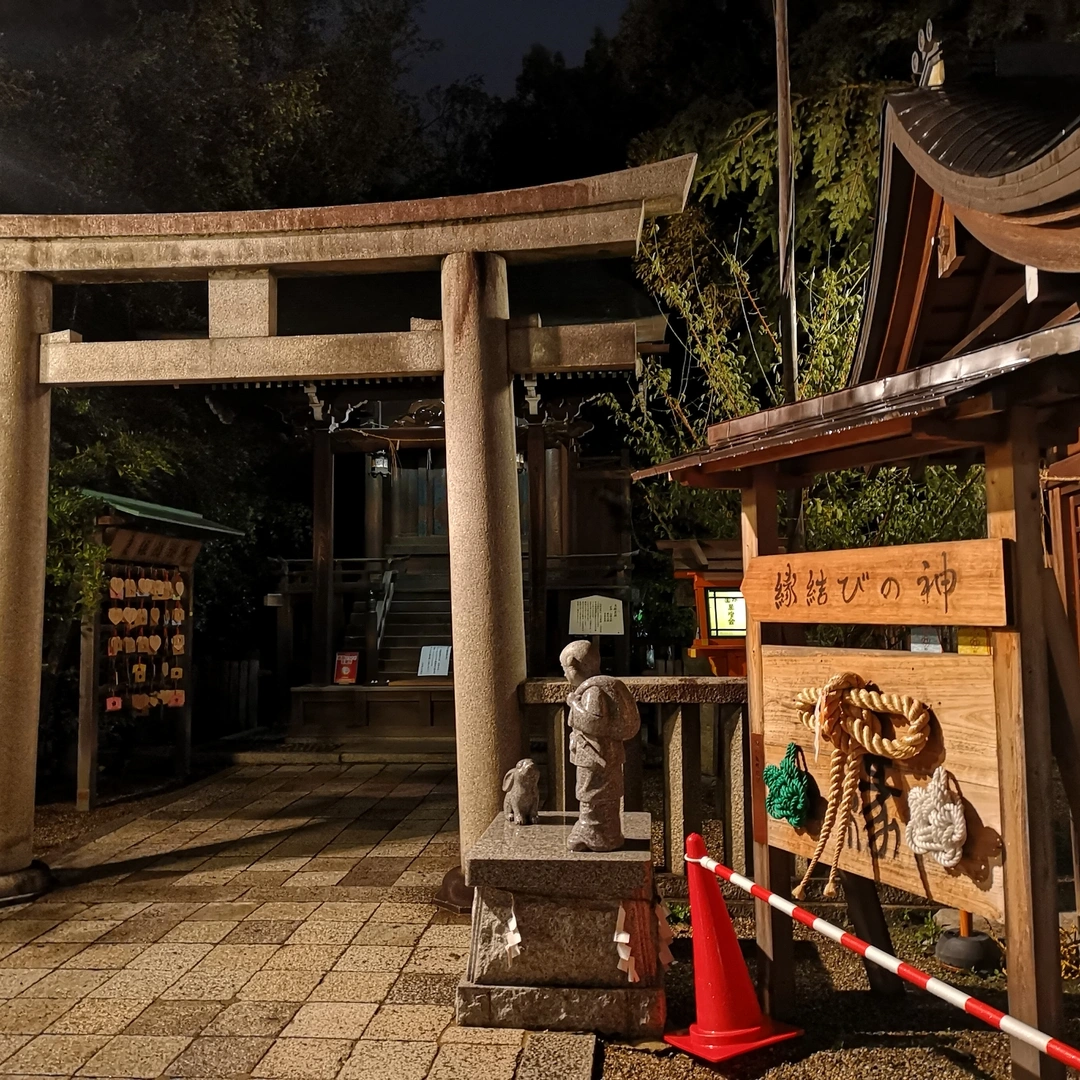
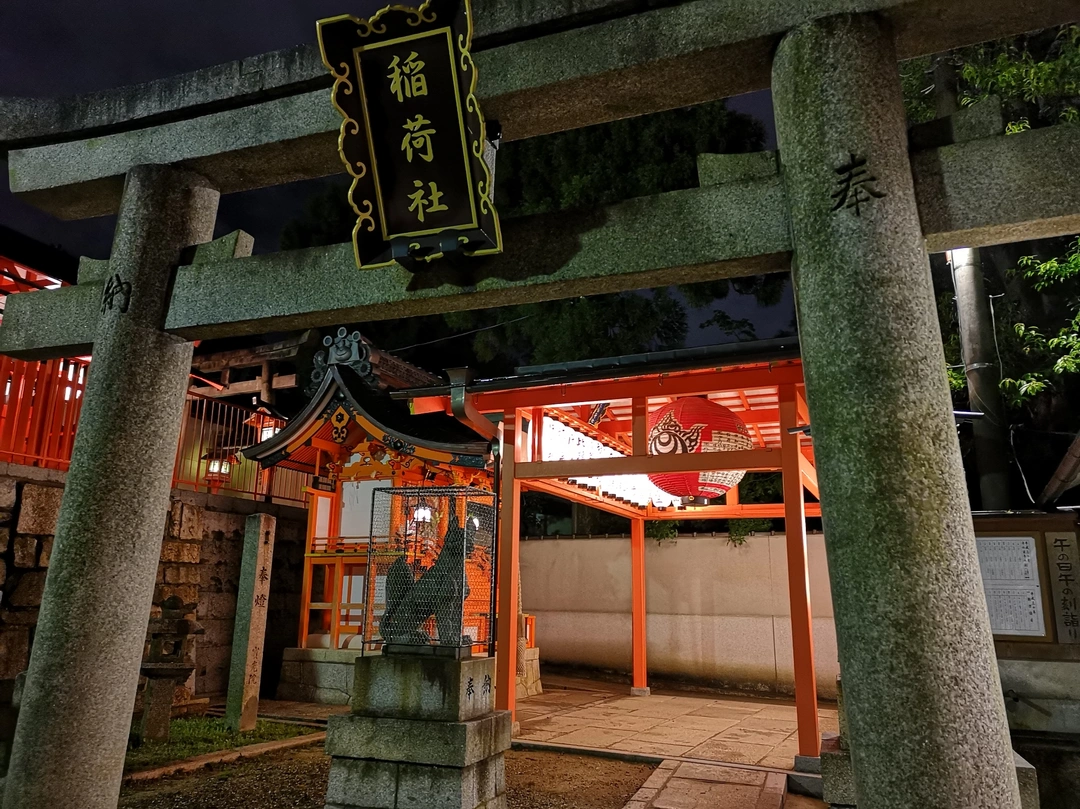
Yasaka Shrine remains open for prayer even after dark, and not just at the main hall. Scattered across the grounds are smaller shrines, each waiting for visitors who know the proper etiquette.
Here's the thing: you cannot photograph the main hall's interior, no matter how tempting. Respect the rules—this is a sacred space, not a photo op.
For those who want to pray correctly (and I learned this the hard way, after tossing in 10-yen coins like a clueless tourist), here's the proper sequence:
- Drop a 5-yen coin into the offering box (saisenbako). Why 5 yen? Because go-en sounds like "good fortune" in Japanese.
- Ring the bell to summon the gods.
- Bow twice, clap twice, bow once. (Yes, it's that specific.)
- Make your wish silently.
Before you approach the main hall, stop at the hand-washing station (temizuya) . This is where you purify yourself—and trust me, the steps matter more than you think:
- Scoop water with the ladle.
- Rinse your right hand first, then your left.
- Pour water into your left palm, rinse your mouth (don't drink directly from the ladle).
- Rinse your left hand again (because it just touched your unwashed mouth).
- Finally, tilt the ladle upright so the remaining water cleans the handle, then return it face-down.
Yes, it feels absurd when you've just touched your bag and umbrella. But the ritual is the point. This purification process is part of the hidden magic of Kyoto at night—a moment of mindfulness in an otherwise bustling city. [Link: Shinto shrine etiquette guide for travelers]
The Enchanted Path: Ninenzaka After Hours
Leave Yasaka through one of its side gates, and you'll find yourself on a road that leads to Ninenzaka—a stone-paved slope that feels like stepping into a ukiyo-e woodblock print. The walk is about a kilometer or two, passing by the grave of Sakamoto Ryoma (we skipped it. At night. No thanks.)
But once you turn onto Ninenzaka, the world shifts. The rain-washed cobblestones reflect amber streetlights like scattered gold coins. Wooden lattice windows glow from within, their warm light spilling onto the street. The shops are shuttered, their signs reduced to small, mysterious lanterns that reveal nothing about what they sell.
The effect is hypnotic. You walk in silence, afraid to speak too loudly—not because of rules, but because you feel like an intruder in a painting. Every step feels like it might break the spell.
And then you see it.
At the end of the slope, floating in the darkness like a phantom, is Yasaka Pagoda (Hokanji Temple) . It appears suspended in mid-air, utterly black against the night sky. Your brain struggles to process its scale—it's too large, too close, yet somehow feels like a distant backdrop. The longer you stare, the more it seems to grow, like a black beast rising from a canyon, watching you with ancient eyes. Keep walking, and you'll feel a primal fear—the sense that you're being drawn toward something vast and unknowable.
This is not a place for the faint of heart. But it is unforgettable.
Night safety tip: This path can be very dark. Carry a small flashlight or use your phone's light. [Link: Safe night walking routes in Kyoto]
The River and the City: Kamo River to Shijo Kawaramachi
If your legs can handle another 20,000 steps (and they will, because you won't want to stop), continue through Hanamikoji Street back toward Gion. On a lucky night, you might spot a geiko or maiko hurrying along the cobblestones, clutching an elegant bag, her wooden sandals clicking like a metronome.
Before you catch the bus, take a detour down to the Kamo River. During the day, it's a pleasant backdrop. At night, the water's voice takes center stage—a steady, rushing whisper that fills the silence. The water glows a deep jade green under the dim lights of riverside houses. On clear nights, you can pick out stars: Mars, Vega, Altair. We tried to find Sagittarius, but the clouds rolled in just as we crossed the bridge. Such is the way of sky-gazing.
This stretch is perfect for a quiet moment of reflection after your Kyoto night stroll. [Link: Best riverside cafés in Kyoto for night views]
Two Ways to Own the Night
The beauty of this secret night stroll route is its flexibility. Here are two approaches, depending on your energy and ambition:
Option A: The Classic Day-Night Combo
Wake up at a reasonable hour (8–9 AM—please, don't sleep until noon; Kyoto's daylight is too precious). Visit temples and shrines until they close at 4–5 PM. Use the 6–8 PM window for a hearty dinner and a coffee break at a riverside café near Shijo Kawaramachi. Or, if your feet are screaming, treat yourself to a foot massage or onsen (a few thousand yen well spent). Once darkness falls, begin your night route.
Option B: The Vampire's Choice
For the true night owl: wake at 4–5 AM and explore temples, shrines, museums, and forests while the world is still asleep. Continue until 2–4 PM, when fatigue sets in. Return to your hotel for a shower and a nap. Rise again at 7–8 PM, ready to conquer the night. This schedule lets you avoid crowds entirely—perfect for those who want to drink in Gion or stroll the Kamo River under the stars without a single selfie stick in sight.
Both options let you experience Kyoto's hidden magic without the daytime crowds. [Link: Kyoto itinerary for night owls]
Frequently Asked Questions About Kyoto After Dark
1. Is it safe to walk around Kyoto at night?
Yes, Kyoto is one of Japan's safest cities. The routes described in this guide—Yasaka Shrine, Ninenzaka, and Kamo River—are well-lit and patrolled by police. However, always carry a flashlight and stay aware of your surroundings, especially on quieter streets.
2. Can I visit temples and shrines at night?
 Some shrines like Yasaka Shrine remain open 24/7 for prayer. However, most temples close by 5 PM. The magic of this night stroll is experiencing the exteriors and grounds of iconic landmarks without entry fees or crowds.
3. What should I wear for a night stroll in Kyoto?
Comfortable walking shoes are essential—you'll cover 15,000–20,000 steps. Dress in layers, as nights can be cool even in summer. A light jacket and a small flashlight are recommended.
4. Are there any food options during the night stroll?
 Yes! The Gion and Shijo Kawaramachi areas have late-night izakayas and convenience stores. For a unique experience, try a riverside café near Kamo River that stays open until 10 PM.
5. How long does the full night route take?
The complete route from Yasaka Shrine to Ninenzaka and back via Kamo River takes 2–3 hours at a leisurely pace, including stops for photos and prayer. Add extra time if you plan to dine or rest.
Final Thoughts: The City That Never Sleeps (But Pretends To)
This route wasn't discovered in a day. It took four nights of wandering, getting lost, and learning from mistakes. The inspiration came from a slim book called The Outsider's Guide to Kyoto—a treasure trove of hidden gems that I now recommend to anyone who wants to see beyond the postcards.
A few parting notes:
- Timing matters. Some streets close earlier than others. A café you wanted to visit might shutter at 8 PM; a hidden izakaya might stay open until dawn. Embrace the randomness.
- Don't force it. If you're not in the mood for a 20,000-step hike, just sit by the river and watch the water. The night will reward you either way.
- Carry a small flashlight. Some parts of Ninenzaka are very dark. And yes, you might get spooked by the pagoda. That's part of the magic.
Kyoto after dark is not a tourist attraction. It's a secret whispered between the lanterns and the shadows—a city that reveals its true self only to those willing to wander when everyone else has gone home.
Ready to Discover Kyoto's Hidden Magic?
Download our free Kyoto night walking map with GPS coordinates for every stop on this route. Plus, get exclusive tips for spotting geiko after dark and finding the best late-night ramen spots near Gion.
[Download Your Free Kyoto Night Map Now]
Already planning your trip? Share your Kyoto night photos with us on social media using #KyotoAfterDark—we might feature your adventure on our blog!
Article originally inspired by a traveler's experience on Mafengwo. All locations and etiquette tips verified for accuracy as of 2025.
You may also like