Gansu-Qinghai Loop Road Trip: A Northwest Rhapsody Through Four Seasons – The Ultimate 8-Day Self-Drive Itinerary
Meta Description: Explore the Gansu-Qinghai loop road trip across the Qilian Mountains, Dunhuang murals, and Qinghai Lake. This 8-day, 2,500-km Northwest China self-drive guide covers routes, costs, and hidden gems for every season.
Introduction: Why the Gansu-Qinghai Loop Is a Bucket-List Road Trip
What is the Northwest? It's the perennial snow atop the Qilian Mountains, the wind howling across the Gobi Desert, the thousand-year gaze from the Dunhuang murals, and the bone-chilling sunrise by Qinghai Lake. The Gansu-Qinghai loop road trip captures all of this in one epic journey.
When I set foot on this land again, three years had passed since my last visit. On Qixi Festival (Chinese Valentine's Day) in 2016, as we were dining in Zhangye, a friend raised his glass and said, "Let's travel together again next year." I smiled but didn't respond. Life is unpredictable—who could know what would happen three years later?
Yet fate has its own whims. In October 2019, I set off once more with my father and three friends—Yanzi, the decisive and efficient one; Ersha, perpetually a beat behind everyone else; and Lin Chong, our resident comedian. This Northwest China self-drive itinerary became a rhapsody across four seasons in just eight days.
Pre-Trip Preparations: How to Plan a Gansu-Qinghai Self-Drive
The Mysterious Logic of Airfare

From Jinjiang to Lanzhou, round-trip tickets cost just 910 RMB ($126), with a flight time of three and a half hours. The price was so ridiculously low it made you question reality. But everyone knows budget airlines' tricks—no free checked luggage. However, Yanzi, true to her reputation as a "savings wizard," not only snagged seats in the first row but also got our luggage checked for free.
The only thing that made us laugh and cry was that Yanzi rushed to book tickets before Ersha had even decided whether to come. The very next day, the ticket price dropped by 300 RMB ($42). Infuriating, right? But thinking about it, it was worth it—after all, "strike while the iron is hot" is the first rule of travel. [Link: Best time to visit Gansu-Qinghai loop]
Route Planning: 8 Days, 2,500 Kilometers
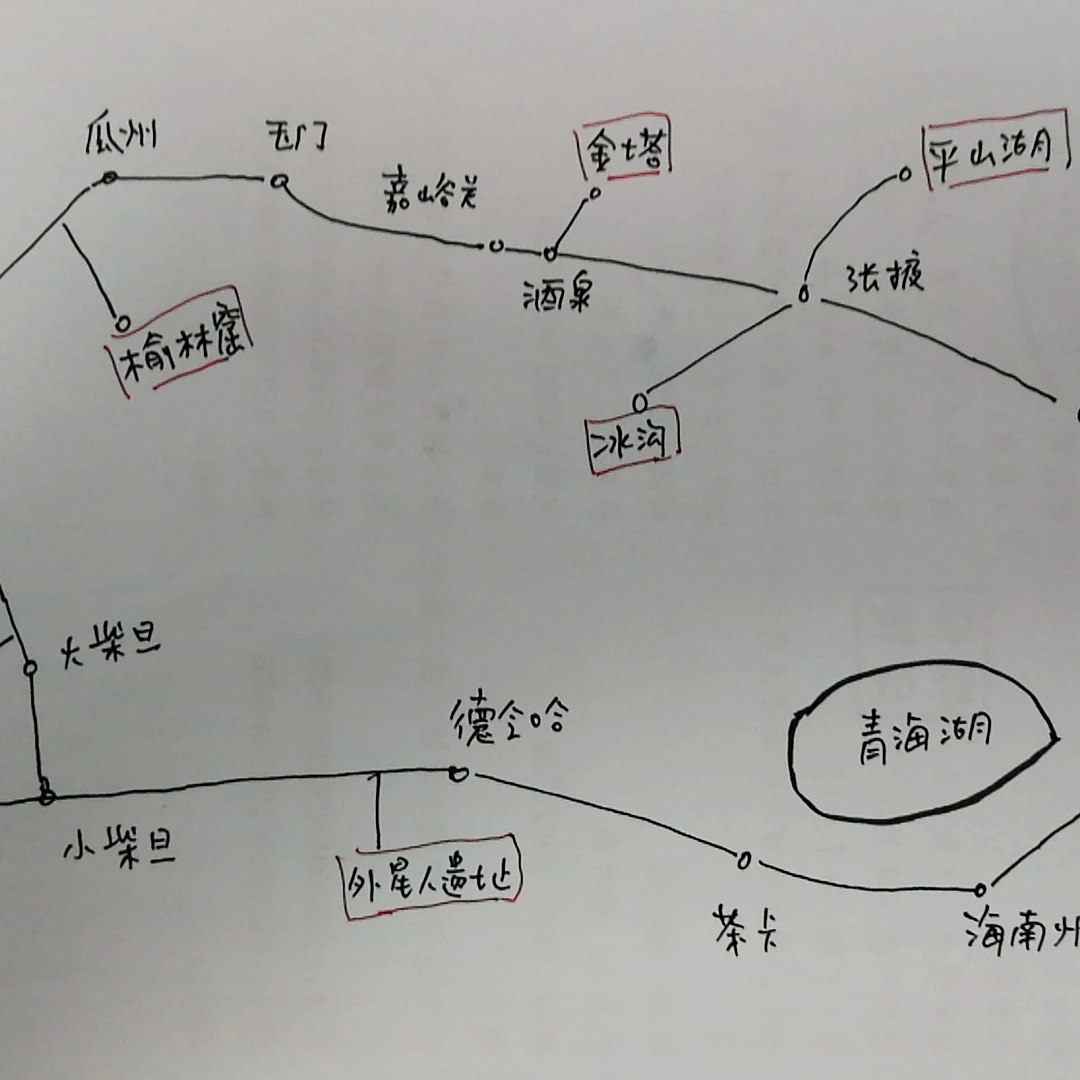
Here was our Gansu-Qinghai loop itinerary:
| Day | Route | Highlights |
|---|---|---|
| 1 | Jinjiang → Lanzhou → Zhangye | Flight, rental car pickup, overnight drive |
| 2 | Zhangye → Binggou Danxia → Pingshan Lake Grand Canyon → Jiuquan | Danxia landforms, canyon hiking |
| 3 | Jiuquan → Jinta Poplar Forest → Jiayuguan → Dunhuang | Golden poplars, Great Wall fortress |
| 4 | Mogao Caves → Mingsha Mountain & Crescent Moon Spring → Shazhou Night Market | Ancient murals, desert camping |
| 5 | Dunhuang → Yangguan Pass → Emerald Lake → Dachaidan | Silk Road relics, turquoise lakes |
| 6 | Dachaidan → G315 National Highway → Wusute Water Yadan → Heima River | Highway photography, Yadan landforms |
| 7 | Qinghai Lake → Xining → Lanzhou Zhongchuan Airport | Lake views, return drive |
| 8 | Lanzhou → Jinjiang | Flight home |
To be honest, this itinerary was a bit "insane." Hundreds of kilometers of driving every day was a serious test for two self-proclaimed "veteran female drivers." Especially since October in the Northwest already sees snowfall, making road conditions even more nerve-wracking. [Link: Northwest China road trip tips]
Day 1: From Southeast to Northwest – A Time-Space Journey
Flight Delay, Sunset as Company
The flight was scheduled for 11:50 AM on the 17th but was delayed by an hour and a half. Our ambitious plan to reach Zhangye (500 kilometers away) that same day was now a prayer to not arrive too late.
After picking up the rental car around 5 PM and leaving Lanzhou, the western sun was still hanging high in the sky. This was probably the Northwest's first gift to us—it doesn't get dark until 8 PM, giving us three extra hours of daylight.
First Meal: A Surprise at the Service Area
Once we left the airport and hit the highway, Lanzhou pulled noodles (兰州拉面) had to wait. At Longquan Temple Service Area, we hastily had our first meal of the day. Surprisingly, it tasted amazing—probably proving the truth that "when you're starving, everything tastes good."
As darkness fell, the temperature dropped. Wearing a dress with bare legs, I was laughed at by passengers from another SUV at Yongchang Service Area for "prioritizing style over warmth." Little did they know I had just flown in from the southeastern coast, 2,400 kilometers away, and my body hadn't adjusted to the temperature difference yet. [Link: What to pack for Gansu-Qinghai road trip]
Accommodation Disaster: The Lesson of Finding a Room at Midnight
We arrived in Zhangye at 11 PM, too exhausted to speak. It was nearly midnight, and we had no energy to search for a good place, so we settled for a random inn—the worst accommodation of our entire trip. The landlady was already asleep and couldn't be bothered to turn on her computer; we didn't even need to register.
Lesson Learned: During peak season or when arriving late, always book your room in advance. [Link: Best hotels on Gansu-Qinghai loop]
Day 2: Danxia Landforms and Canyons – Nature's Masterpieces
A 6-Yuan Bowl of Noodles to Start the Northwest Mode
In the morning, at the Ming-Qing Ancient Style Street near our inn, a bowl of 臊子面 (shredded pork noodles) cost only 6 RMB ($0.83)—delicious and affordable. That's the Northwest for you—reasonable prices, honest flavors.
Binggou Danxia: The Understated "Museum of Figurative Rocks"
Today's itinerary included two attractions: Binggou Danxia and Pingshan Lake Grand Canyon. Centered around Zhangye, they lie in opposite directions, each about an hour's drive away.
I skipped the Rainbow Danxia (七彩丹霞)—I had visited in 2016, and yes, I'm that "selfish and domineering." But Binggou Danxia was my first time. The ticket plus shuttle cost 65 RMB ($9), and my father got a 20 RMB ($2.80) discount with his senior ticket.
If Rainbow Danxia is famous for its colors, Binggou Danxia is known for its figurative rock formations. "Divine Camel Welcoming Guests," "Three Brothers Sworn Brotherhood," "Dark Gate of Xuanwu," "Qilian Torch," "Louvre Phantom"—these names might feel a bit "forced," but when you look closely, they actually resemble their namesakes.
There weren't many tourists, and security was lax, so everyone was climbing wherever they pleased—until the staff arrived and chased us all down.
Binggou Danxia isn't large, but we spent over three hours there. Nature's creativity never ceases to amaze. [Link: Zhangye Danxia vs Binggou Danxia comparison]
Pingshan Lake Grand Canyon: An Underrated Gem
We arrived at Pingshan Lake Grand Canyon at 4 PM, with the park closing at 7 PM. Time was tight, but the 135 RMB ($19) ticket was absolutely worth it.
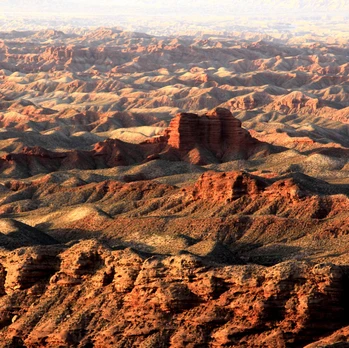
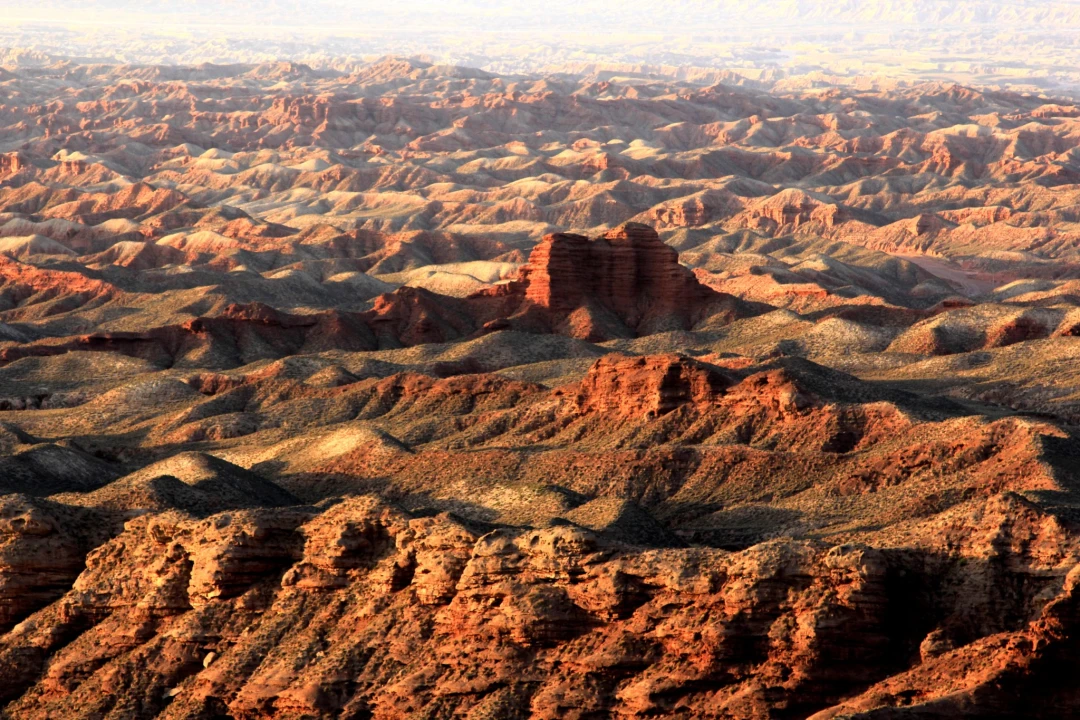
The first glimpse was breathtaking—countless ravines, a sea of fiery red, clear skies with sparse clouds, and striking color contrasts. I've seen many Danxia landforms, but never anything this red.
The stairs descending into the canyon were terrifyingly steep. We advised my father not to push himself too hard, as there was still a long way ahead. He assessed the situation wisely and gave up, waiting for us at Observation Deck No. 4.
The path at the bottom felt like it had been carved straight out of the mountain—raw and rugged, winding through red sandstone. The sun was still blazing at 6 PM. We should have waited longer, but my father kept urging us to hurry, afraid we'd miss the last shuttle.
Pingshan Lake Grand Canyon isn't a popular attraction, with few visitors, but it's absolutely worth a visit.
That evening, we drove over 200 kilometers to Jiuquan. Yanzi didn't want to waste daylight hours on the road, so we had to drive at night.
Day 3: Poplar Forest and Jiayuguan – Imprints of Time
Jinta Poplar Forest: A Miracle of Desert Control
Around 9 AM, we had Lanzhou pulled noodles with stir-fried beef at a restaurant near our inn. Since we only had one proper meal a day, we made sure to eat plenty.
It took an hour to drive from Jiuquan to Jinta Poplar Forest. The ticket was 65 RMB ($9), parking was 30 RMB ($4.15), and we could drive into the scenic area.
The poplars had already turned yellow. Jinta Poplar Forest is a result of desert control efforts—artificially planted, covering a large area, but not as impressive in form as the poplars in Ejina Banner. We skipped Ejina because we didn't have enough time and had heard that the leaves had fallen badly this year. Jinta's poplars would have to be our consolation prize.
The beacon tower was essentially just a pagoda. Only I went up to take photos. The other three were busy—one buying corn, one buying cantaloupe, and the other buying both corn and cantaloupe.
Jiayuguan: The Western End of the Great Wall
From Jinta, we drove to Jiayuguan, the western terminus of the Ming Great Wall. The ticket costs 110 RMB ($15) and includes the fortress, the overhanging Great Wall, and the first beacon tower.
The fortress itself is impressive—a massive stone structure guarding the Silk Road. But the real highlight is the Overhanging Great Wall (悬壁长城), which climbs a steep hillside like a dragon's spine. We spent about two hours here, climbing to the top for panoramic views of the Gobi Desert. [Link: Jiayuguan travel guide]
That evening, we pushed on to Dunhuang, arriving around 9 PM. We checked into a comfortable hotel near the Shazhou Night Market and finally had a proper dinner—lamb skewers, hand-pulled noodles, and local beers.
Day 4: Dunhuang – The Heart of the Silk Road
Mogao Caves: A Thousand Years of Art
We booked our Mogao Caves tickets online a week in advance—essential during peak season. The ticket costs 238 RMB ($33) and includes access to 8 caves with a guided tour.
The caves are a UNESCO World Heritage Site, containing the world's largest collection of Buddhist art. Our guide was knowledgeable, explaining the evolution of painting styles from the Northern Wei to the Yuan dynasties. The highlight was Cave 96, housing the 35-meter-tall Maitreya Buddha.
Tip: Book the earliest time slot (8 AM) to avoid crowds. Photography is not allowed inside the caves, so just soak in the experience. [Link: Mogao Caves ticket booking guide]
Mingsha Mountain & Crescent Moon Spring: Desert Mirage
In the afternoon, we visited Mingsha Mountain and Crescent Moon Spring. The ticket costs 120 RMB ($17), and camel rides cost an additional 100 RMB ($14).
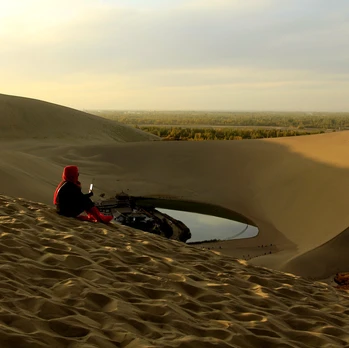
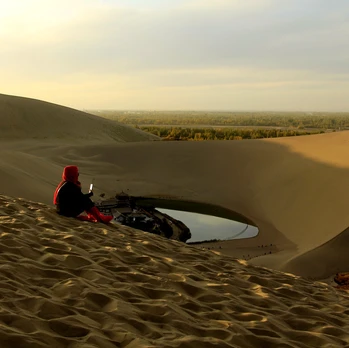
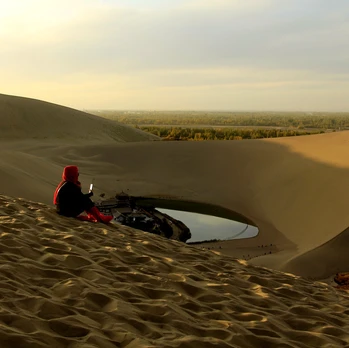
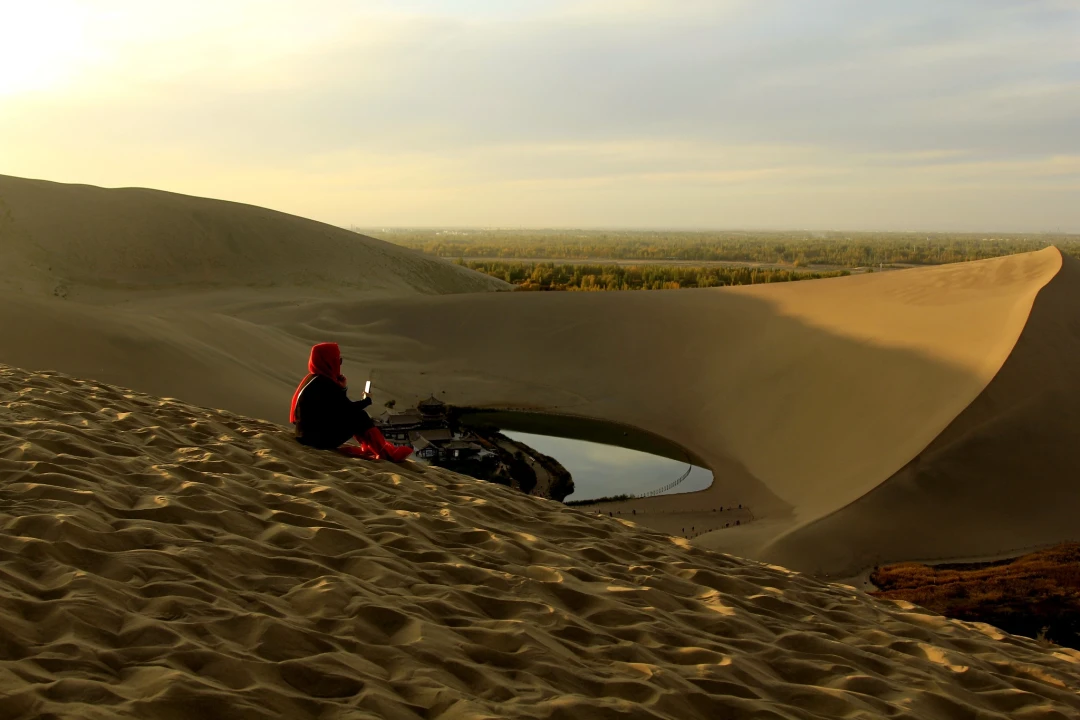
The sand dunes are enormous—some reaching 250 meters high. We climbed to the top for sunset views, watching the crescent-shaped spring shimmer below. The sand here really does "sing" when the wind blows, hence the name "Singing Sand Mountain."
We stayed until dark, watching the stars emerge over the desert. It was one of those moments that makes all the driving worthwhile. [Link: Mingsha Mountain sunset tips]
Shazhou Night Market: Foodie Paradise
That evening, we hit the Shazhou Night Market. This is where you'll find the best street food in Dunhuang—lamb skewers, donkey meat noodles, apricot peel water, and sugar-fried chestnuts. We spent about 150 RMB ($21) per person and left completely stuffed.
Day 5: From Dunhuang to Dachaidan – Crossing Provincial Borders
Yangguan Pass: The Western Gate
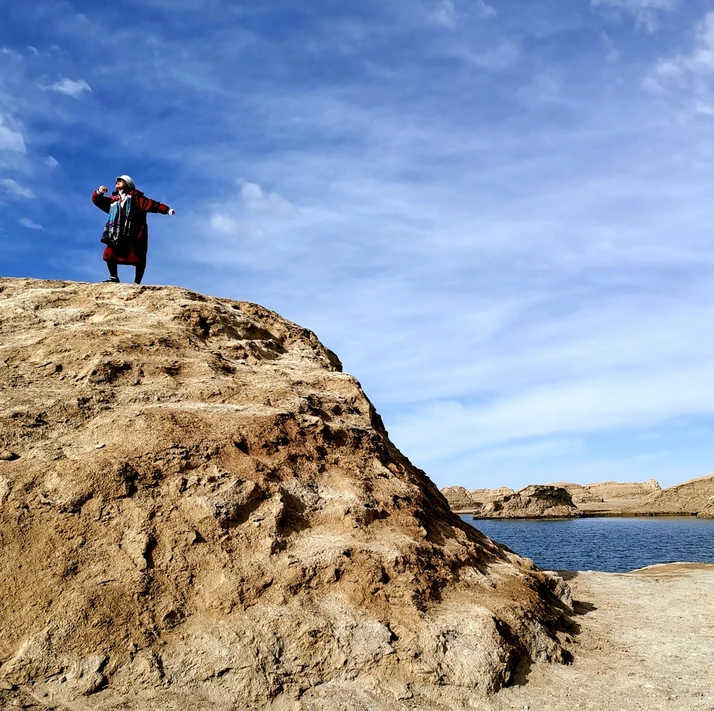
In the morning, we drove 70 km southwest to Yangguan Pass, the ancient gateway to the Western Regions. The ticket costs 50 RMB ($7), and the site includes a museum, a beacon tower, and a vast desert landscape.
There's not much to see here—just ruins and a sense of history. But standing where Tang dynasty poets once stood, reciting Wang Wei's "劝君更尽一杯酒,西出阳关无故人" (Drink one more cup of wine, west of Yangguan you'll meet no old friend), is a powerful experience. [Link: Yangguan Pass history]
Emerald Lake: A Hidden Gem in Qinghai
From Yangguan, we drove east into Qinghai Province, heading toward Emerald Lake (翡翠湖) near Dachaidan. The drive took about 4 hours, crossing the Dangjin Mountain Pass at 3,700 meters elevation.
Emerald Lake is a series of saltwater ponds, each a different shade of green and blue. Unlike Qinghai Lake, it's still relatively unknown, with no entrance fee (as of 2019). We spent an hour here, taking photos and marveling at the colors.
We checked into a basic guesthouse in Dachaidan for the night. The altitude (3,200 meters) gave us all mild headaches, but a good night's sleep helped.
Day 6: The G315 Highway and Wusute Water Yadan
G315 National Highway: China's "Highway to Heaven"
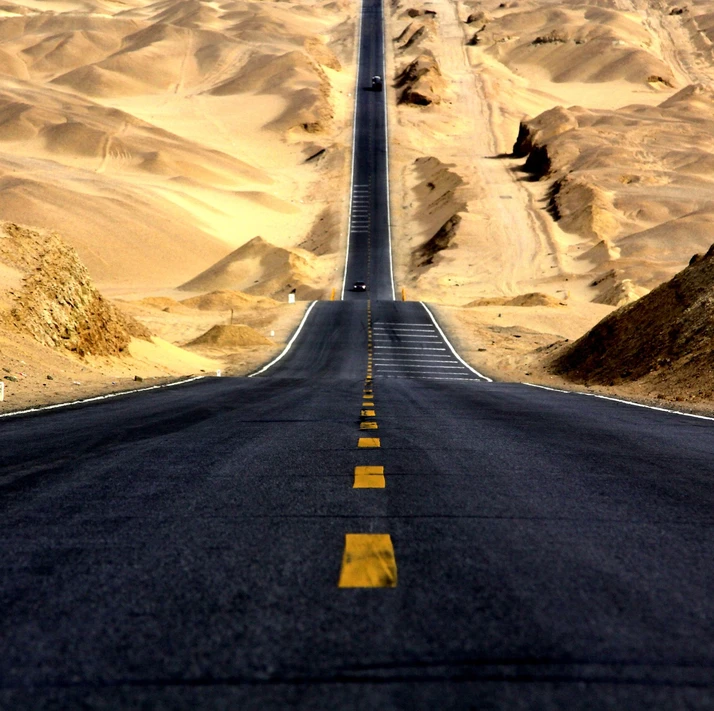
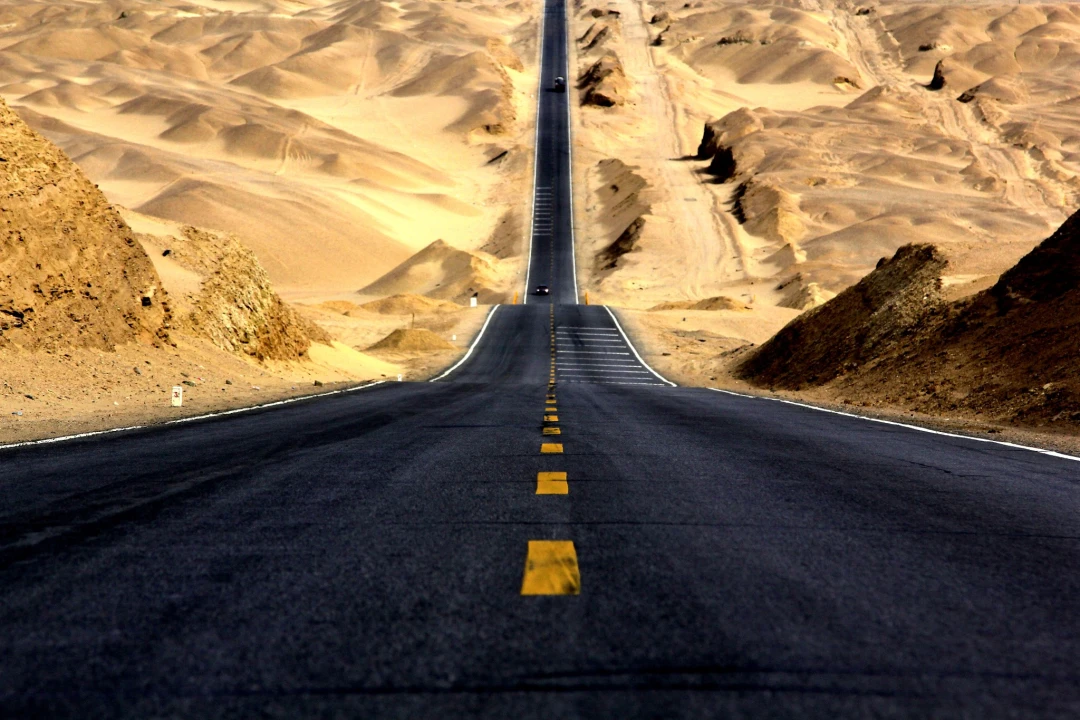
The G315 National Highway is one of China's most scenic drives, crossing the Qaidam Basin between Dachaidan and Golmud. The road is straight as an arrow, flanked by endless Gobi Desert and distant snow-capped mountains.
We stopped at several viewpoints, including the famous "U-shaped" section where the road appears to drop off the edge of the earth. This is a popular photo spot, so be careful of traffic.
Wusute Water Yadan: A Martian Landscape
About 2 hours from Dachaidan, we reached Wusute Water Yadan (乌素特水上雅丹). This is a unique Yadan landform where wind-eroded rock formations rise from turquoise water. The ticket costs 120 RMB ($17), including a shuttle bus.
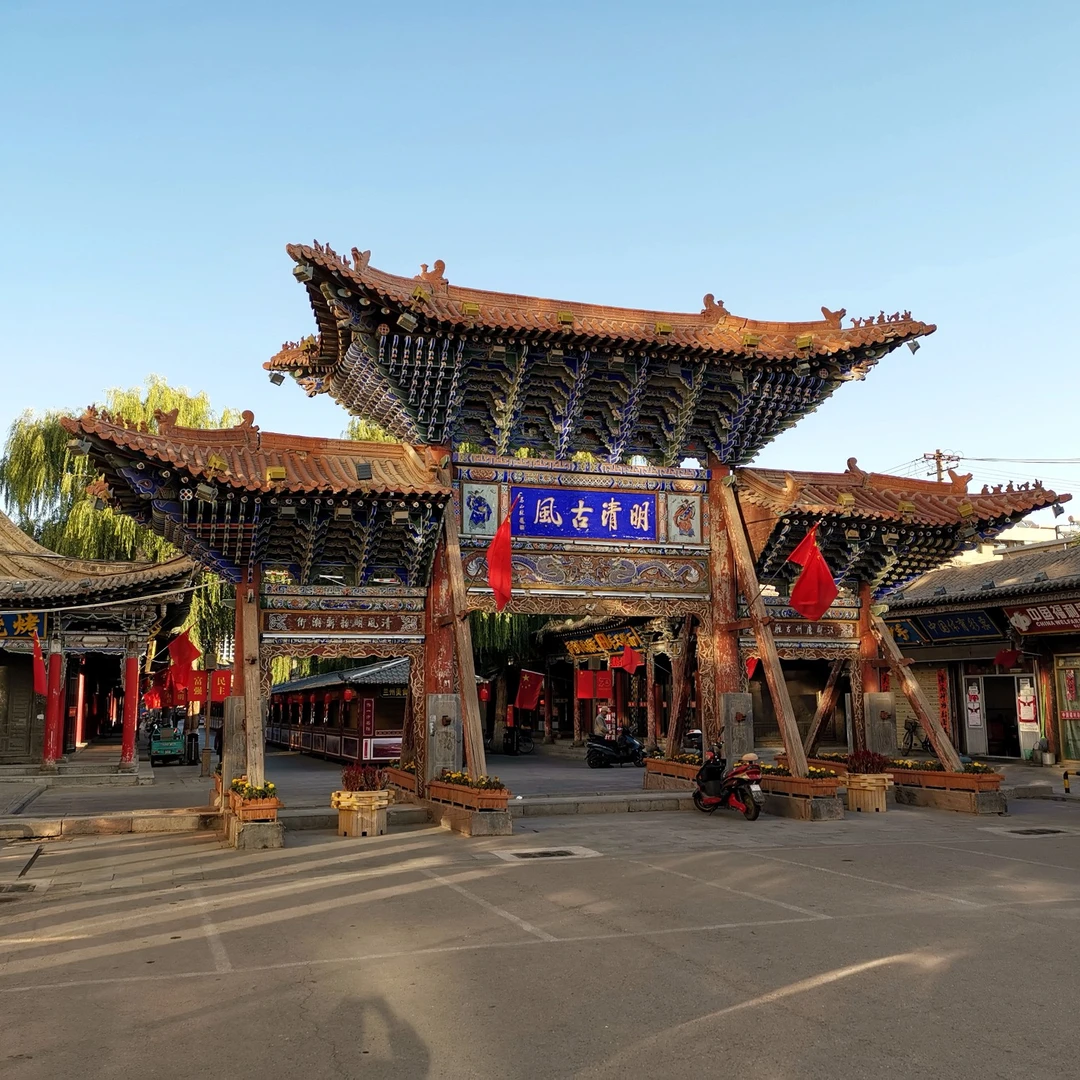
We spent 3 hours here, walking along the boardwalks and climbing some of the smaller formations. The contrast between the red rocks and blue water is surreal—it feels like another planet. [Link: Wusute Water Yadan photography tips]
That evening, we drove to Heima River (黑马河), a small town on the western shore of Qinghai Lake. We arrived around 8 PM, just in time for a stunning sunset over the lake.
Day 7: Qinghai Lake – The Finale
Sunrise at Qinghai Lake

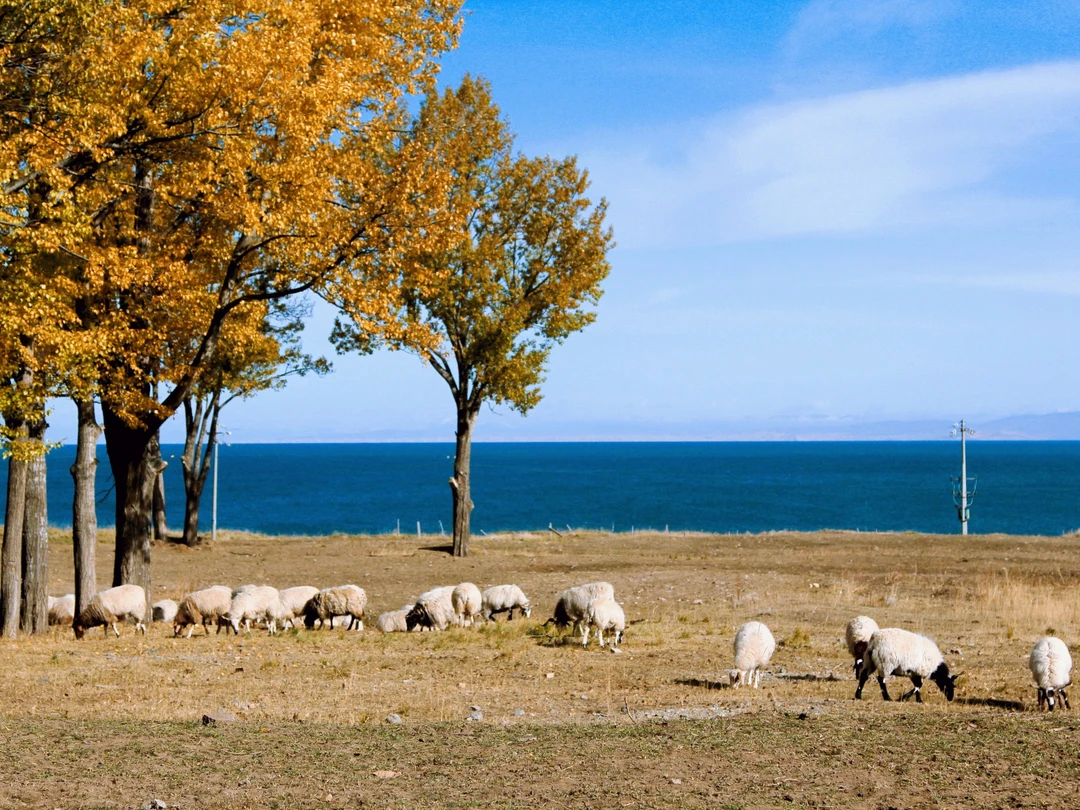
We woke up at 6 AM to catch the sunrise at Qinghai Lake. The temperature was below freezing, but the view was worth it—the sun rising over the lake, painting the sky in shades of orange and pink.
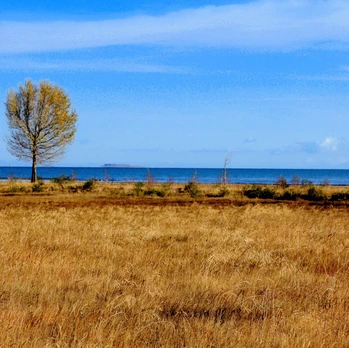
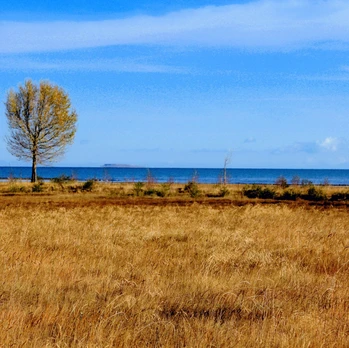
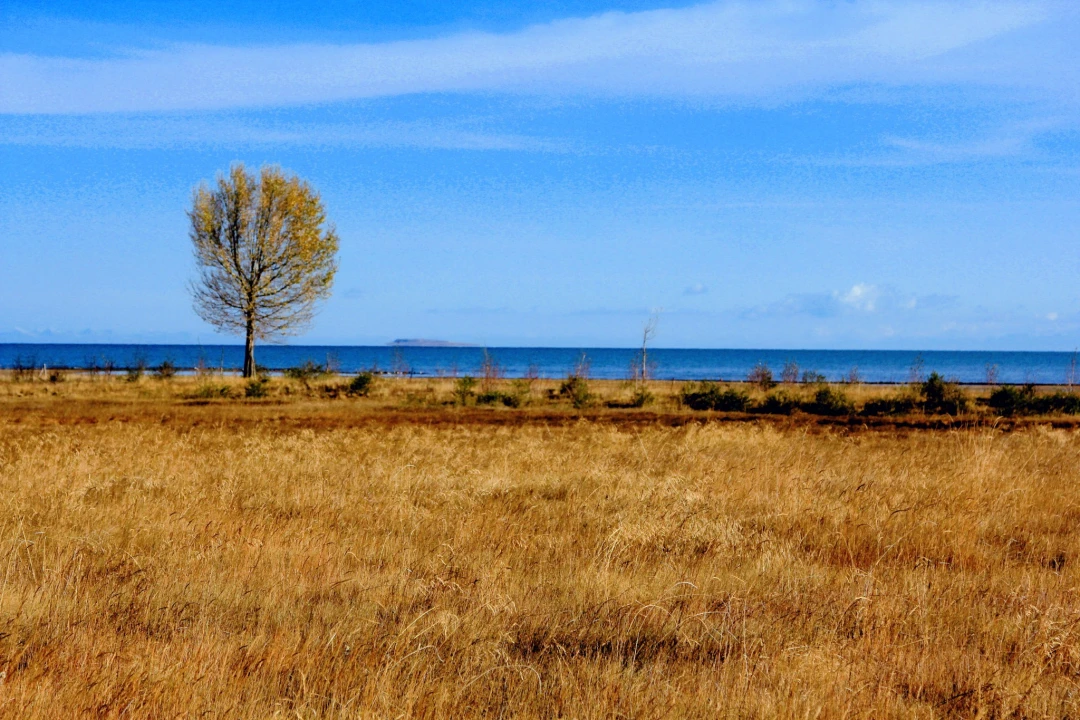
Qinghai Lake is China's largest saltwater lake, covering 4,500 square kilometers. In summer, the surrounding grasslands are covered in yellow rapeseed flowers. In October, the flowers are gone, but the lake itself is still breathtaking.
We drove along the lake's southern shore, stopping at several viewpoints. The ticket for the main scenic area costs 100 RMB ($14), but you can also access the lake from smaller, cheaper entrances along the road. [Link: Qinghai Lake travel tips]
Return to Lanzhou
From Qinghai Lake, we drove to Xining (about 3 hours), then continued to Lanzhou Zhongchuan Airport (another 2 hours). We returned the rental car and checked into an airport hotel for the night.
Day 8: Farewell to the Northwest
Our flight departed at 10 AM, arriving back in Jinjiang by 2 PM. The eight-day, 2,500-kilometer journey was over, but the memories would last a lifetime.
FAQ: Gansu-Qinghai Loop Road Trip
Q1: What is the best time for a Gansu-Qinghai loop road trip?
A: The best time is September to October for autumn colors (golden poplars) and mild temperatures. July to August offers green grasslands and rapeseed flowers around Qinghai Lake but is peak tourist season. May-June and October-November are shoulder seasons with fewer crowds and lower prices, but some high-altitude passes may have snow.
Q2: How many days do you need for a complete loop?
A: A minimum of 7-10 days is recommended for a comfortable loop covering Lanzhou, Zhangye, Jiayuguan, Dunhuang, Qinghai Lake, and back. Our 8-day itinerary was tight—adding 2-3 days would allow for more flexibility and rest stops.
Q3: Is it safe to self-drive in the Gansu-Qinghai region?
A: Yes, but with precautions. The roads are generally well-maintained, but long stretches between towns mean you need a reliable vehicle, sufficient fuel, and emergency supplies. Altitude sickness is a concern above 3,000 meters—carry oxygen cans and drink plenty of water. Winter driving (November-March) requires snow tires and experience with icy roads.
Q4: What is the approximate budget for a Gansu-Qinghai loop?
A: For a mid-range trip (including flights, rental car, accommodation, food, and attractions), budget around 5,000-7,000 RMB ($700-1,000) per person for 8 days. Costs can be reduced by sharing a car (4 people), eating local street food, and booking budget hotels.
Q5: What should I pack for a Gansu-Qinghai road trip?
A: Pack for four seasons in one day. Essentials include: - Layers: thermal base layer, fleece, windproof jacket - Sun protection: hat, sunglasses, sunscreen (SPF 50+) - Comfortable walking shoes - Altitude sickness medication (e.g., Diamox) - Reusable water bottle and snacks - Camera with extra batteries (cold drains batteries quickly) - Power bank for phone navigation
Conclusion: Your Northwest Adventure Awaits
The Gansu-Qinghai loop road trip is more than a vacation—it's a journey through time, across deserts, mountains, and ancient civilizations. From the thousand-year murals of Dunhuang to the turquoise waters of Emerald Lake, from the golden poplars of Jinta to the fiery red canyons of Zhangye, every day brings a new wonder.
Ready to plan your own Northwest rhapsody? [Link: Book your Gansu-Qinghai road trip package] or [Link: Rent a car for Northwest China self-drive]. The road is calling—answer it.
Article originally published on Mafengwo. Optimized for SEO by [Your Name/Brand].