From Machu Picchu to Lake Titicaca: Your Ultimate Peru Travel Guide (2024)
Meta Description: Discover the magic of Peru from Machu Picchu to Lake Titicaca. This comprehensive travel guide covers itineraries, transportation tips, Cusco highlights, and Sacred Valley secrets for an unforgettable South American adventure.
When the sea breeze of Ecuador still whispered in our ears and the wonders of the Galápagos Islands lingered before our eyes, we had already set foot on the second stop of our South American adventure—Peru. If the Galápagos is a miracle of nature, then Peru, the cradle of the Inca civilization, carries the brilliance and mystery of human history. And Machu Picchu, that lost city perched above the clouds, was the burning heart of our expectations for this journey.
Whether you're a solo traveler, a couple, or a small group of friends, this Peru travel itinerary will help you navigate from the Sacred Valley to the highest navigable lake in the world. Let's dive into our fantastical journey through Peru.
Who We Are: Three Travelers, One Unforgettable Peru Adventure
Our "little wandering squad" consists of three friends from different cities in China, each bringing a unique perspective to the trip:
- Lao Biao – From Guangdong, a freelancer and coffee lover who explores every corner of the world on his own terms.
- Apple – A Beijing girl, also a freelancer, who loves hiking and measures every inch of land with her steps.
- Me – Based in Shanghai, a teacher who believes life is not just about the mundane present but also about poetry and distant horizons.
This mix of personalities made our Peru trip—from Machu Picchu to Lake Titicaca—a rich tapestry of experiences, challenges, and joyful discoveries.
Peru Itinerary Overview: A Three-Act Adventure
Our journey through Peru unfolded in three distinct chapters, each offering unique landscapes and cultural immersion:
Act One: Fly from Guayaquil to Lima, then transfer to Cusco—the ancient Inca capital sitting at 3,410 meters above sea level.

Act Two: Depart from Cusco, cross the Sacred Valley, arrive at Machu Picchu, then return to Cusco.
Act Three: Take a bus from Cusco southward, passing through Puno (Lake Titicaca) and Arequipa, before crossing the border into Chile at Tacna.
This route allows you to experience the best Peru has to offer—from high-altitude ruins to floating islands on Lake Titicaca.
Transportation in Peru: Every Vehicle Tells a Story
Flights: The "Roller Coaster in the Sky" from Lima to Cusco
Our first Peru flight was plagued by dramatic delays. Originally scheduled for 8 a.m., it was pushed to 9:45 due to overbooking, then delayed again until we finally took off at 11:40. The entire morning, Lima Airport felt like a giant maze.
Pro tip: Avoid Peruvian Airlines if possible—their punctuality is shockingly bad. [Link: Best airlines for domestic Peru flights]
Private Car: Best Choice for Sacred Valley Day Trip
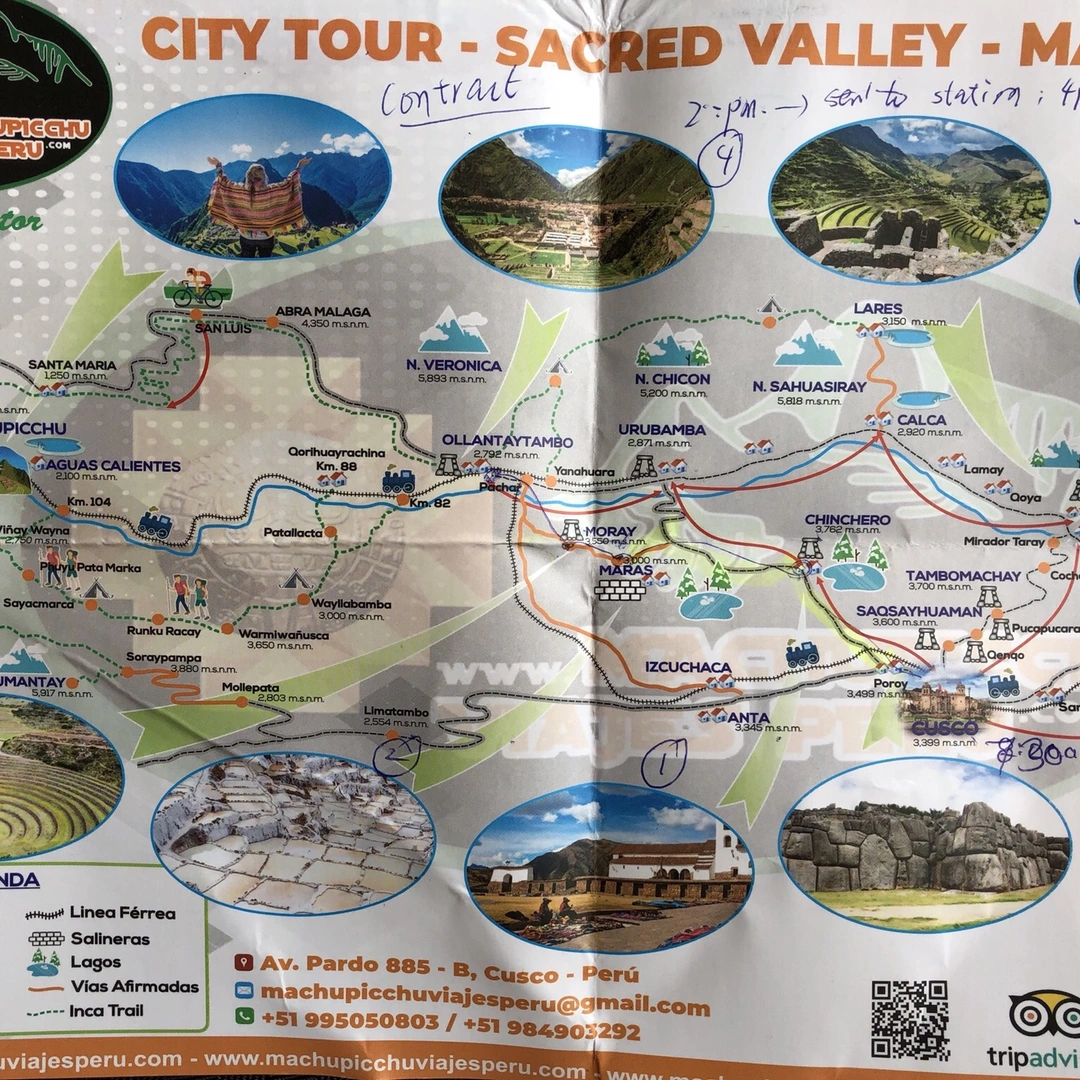
In Cusco, we booked a tour through a travel agency recommended by TripAdvisor, located across from our hotel. It cost $80 per person and came with a professional guide, Ramiro de los Rios, who accompanied us the entire way.
Budget option: Group tours start at $35 per person. But the freedom and expert commentary of a private car are absolutely worth the extra cost.
Train to Machu Picchu: The Only Railway to the Lost City
There is only one railway to Machu Picchu, operated by two companies: Peru Rail (blue trains) and Inca Rail (silver trains with orange trim). We initially wanted Peru Rail tickets, but after a failed payment, we switched to Inca Rail.
Pricing: We bought the $70 Voyager class for the outbound trip and splurged on the $115 360-degree panoramic train for the return. Honestly, the panoramic view wasn't as breathtaking as we imagined. After the initial novelty wore off, it felt similar to the regular model.
Recommendation: If you're on a budget, the standard class is more than enough. [Link: How to book Machu Picchu train tickets]
Buses: Peru's "Business Class in the Sky"
Peru's long-distance buses are surprisingly comfortable. We mainly used Cruz del Sur, whose buses have two levels: - Lower level: 180-degree reclining seats comparable to airplane business class - Upper level: More affordable option
The 7-hour ride from Cusco to Puno cost only 85 soles (about $23). Another good option is Flores, which also offers reclining seats.
Tip: All bus tickets can be booked in advance through their official websites. Cruz del Sur even has a Chinese-language interface.
Practical Information: Must-Know Before You Go to Peru
Language Tips
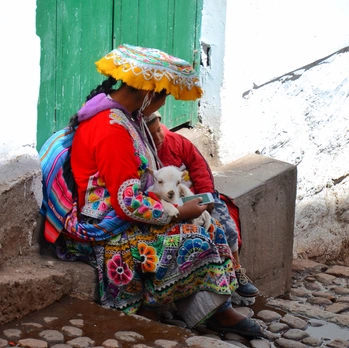
The official language of Peru is Spanish. Most people don't speak English—not even basic words. Make sure to download a translation app like Google Translate or iTranslate. That said, hotel and tourism staff can usually communicate in English.
Currency Exchange
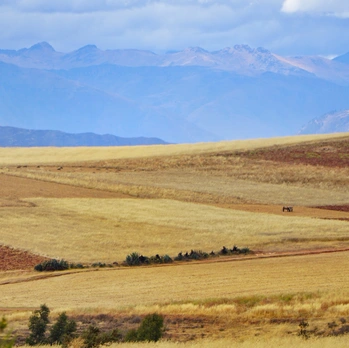
The local currency is the sol (PEN). While many places accept US dollars, exchanging dollars for soles gives you a better deal. It's best to exchange at official exchange offices or banks. Avoid street changers.
Cusco: The Ancient Capital's Low-Key Opening
First Impressions: Chaos with a Touch of Charm
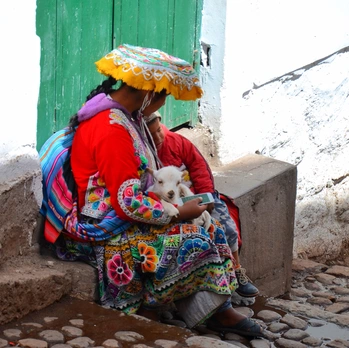
Stepping out of Cusco Airport, the scene was a bit disappointing—crumbling streets, chaotic traffic, nothing like what you'd expect from a UNESCO World Heritage city. But this "rough-around-the-edges" authenticity made Cusco feel surprisingly welcoming.
We hailed a taxi on the spot. The ride from the airport to our hotel, about 4 kilometers, cost just 10 soles. The online horror stories about "unregulated Cusco taxis" seemed exaggerated—at least our driver was honest.
Accommodation: A Warm Harbor in the Andes
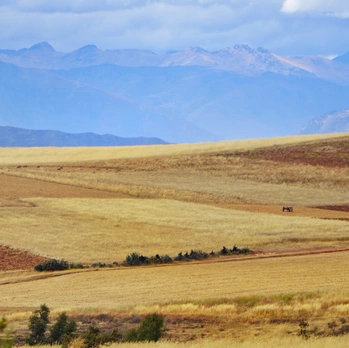
Our hotel was about 1 kilometer from the Plaza de Armas and an 800-meter walk from the Temple of the Sun. The room had soft, cozy duvets, plenty of heating, and a generous breakfast spread. Rating: 4.6/5 stars.
Temple of the Sun: Where Inca Meets Spanish
In every Inca ruin, the Temple of the Sun is the core. Cusco's temple was once a sacred site where the Incas worshipped the sun god, the moon, stars, rainbows, and the god of lightning. After the Spanish conquest, it was converted into a four-sided courtyard surrounded by two-story arcades.
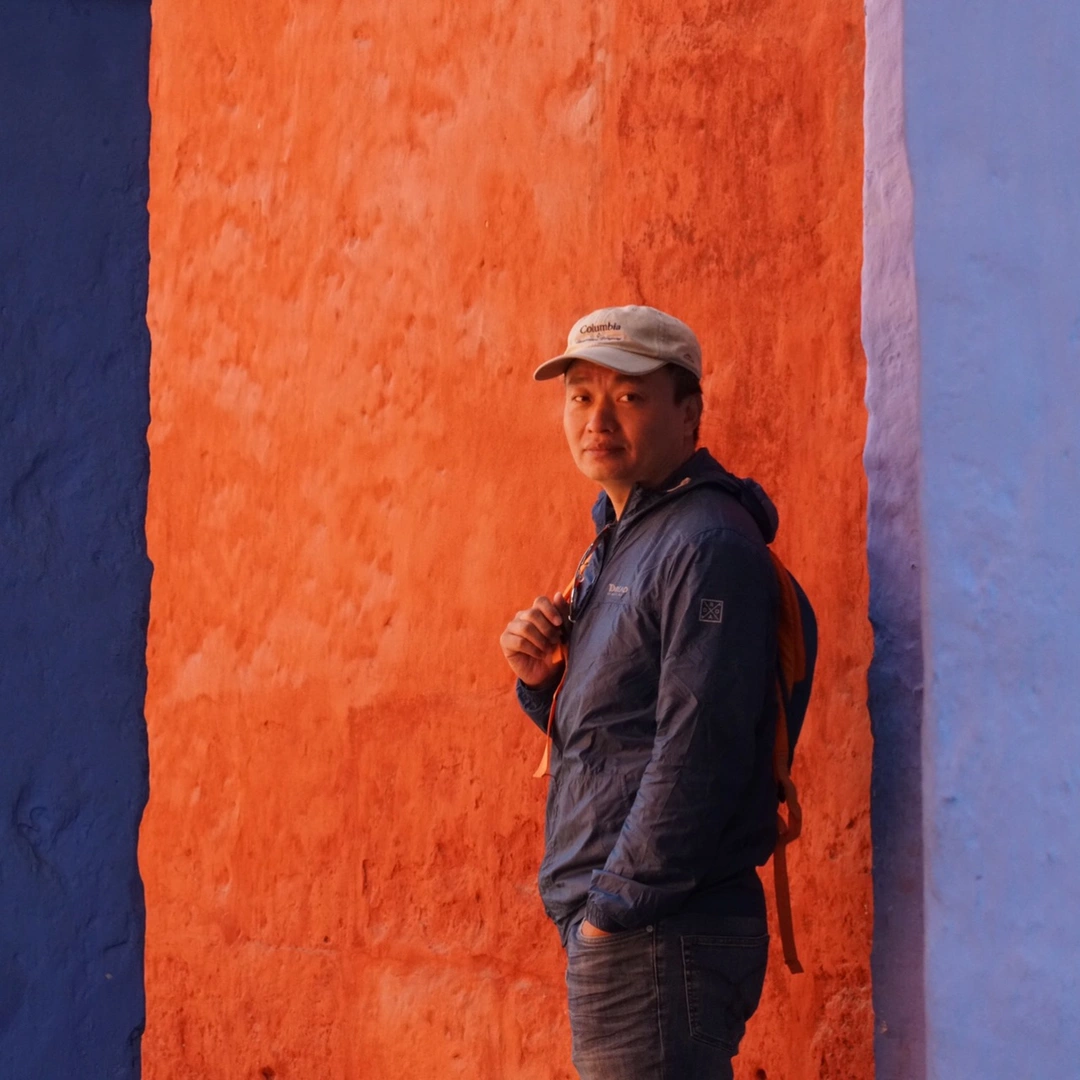
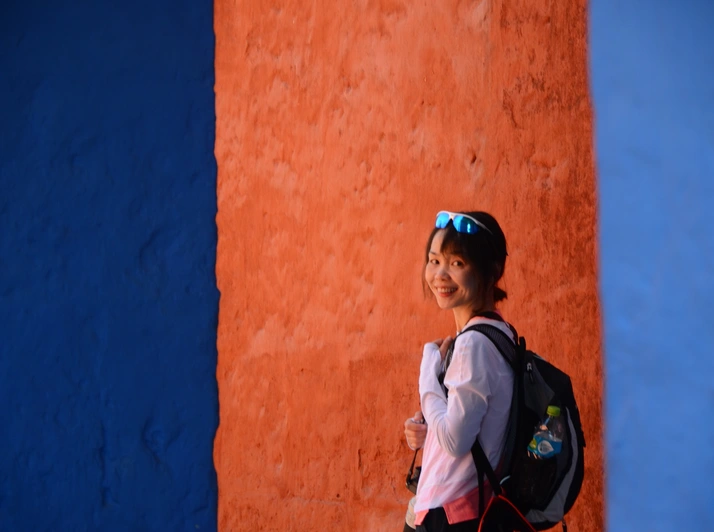
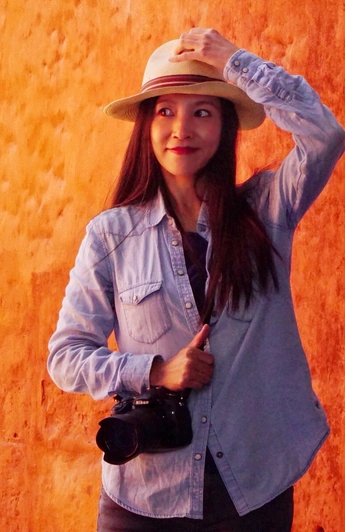
I have an inexplicable obsession with long corridors. Here, we launched into full-on "emoji photo shoot" mode, every snapshot freezing a moment of pure joy.
Plaza de Armas: A Place Where Time Stands Still
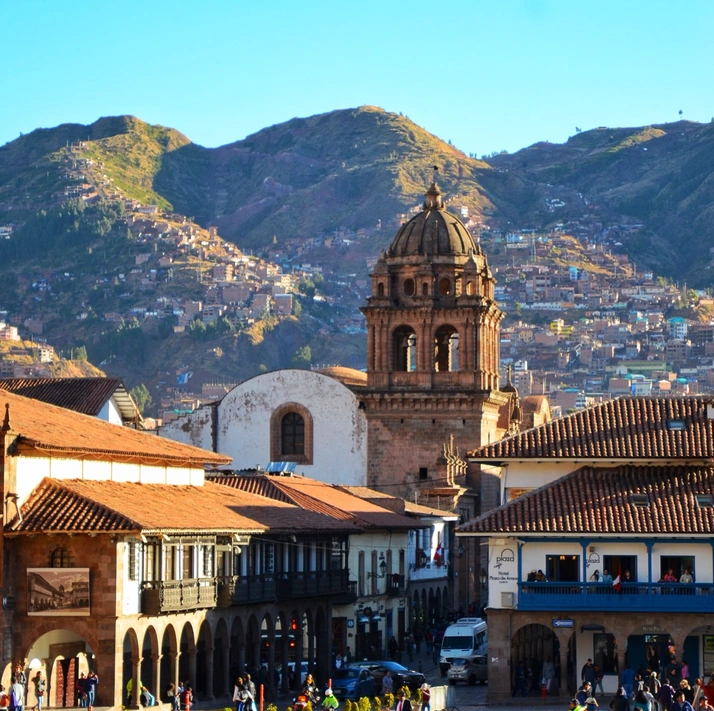
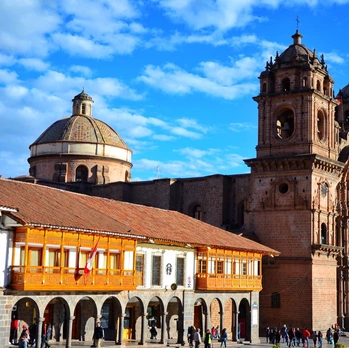
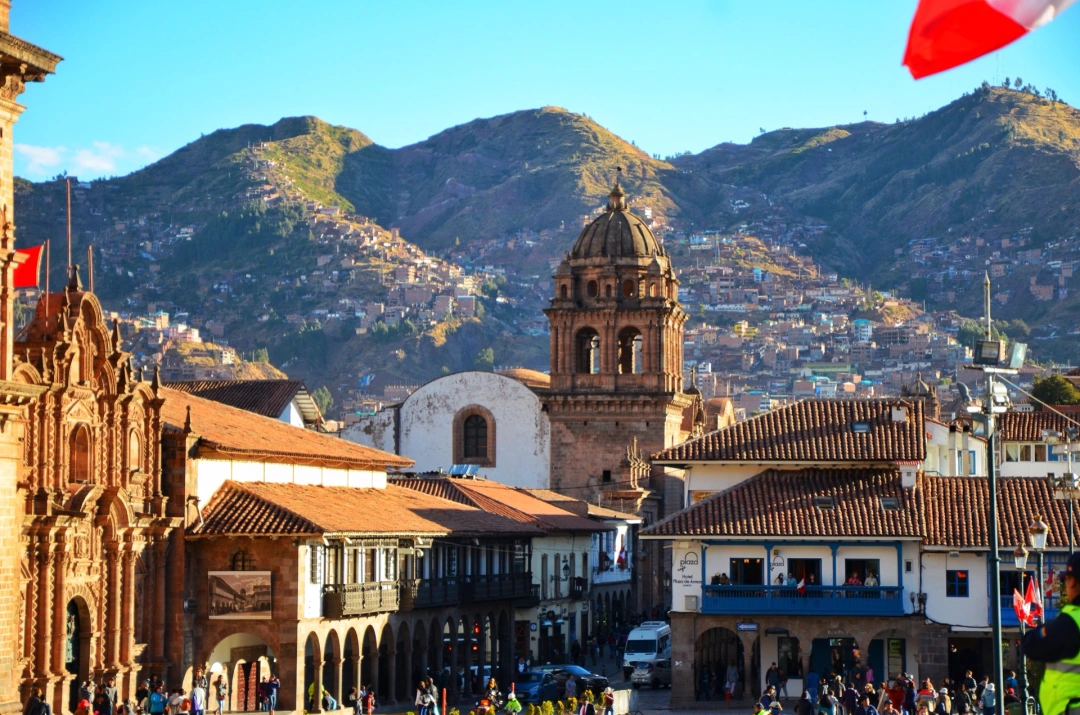
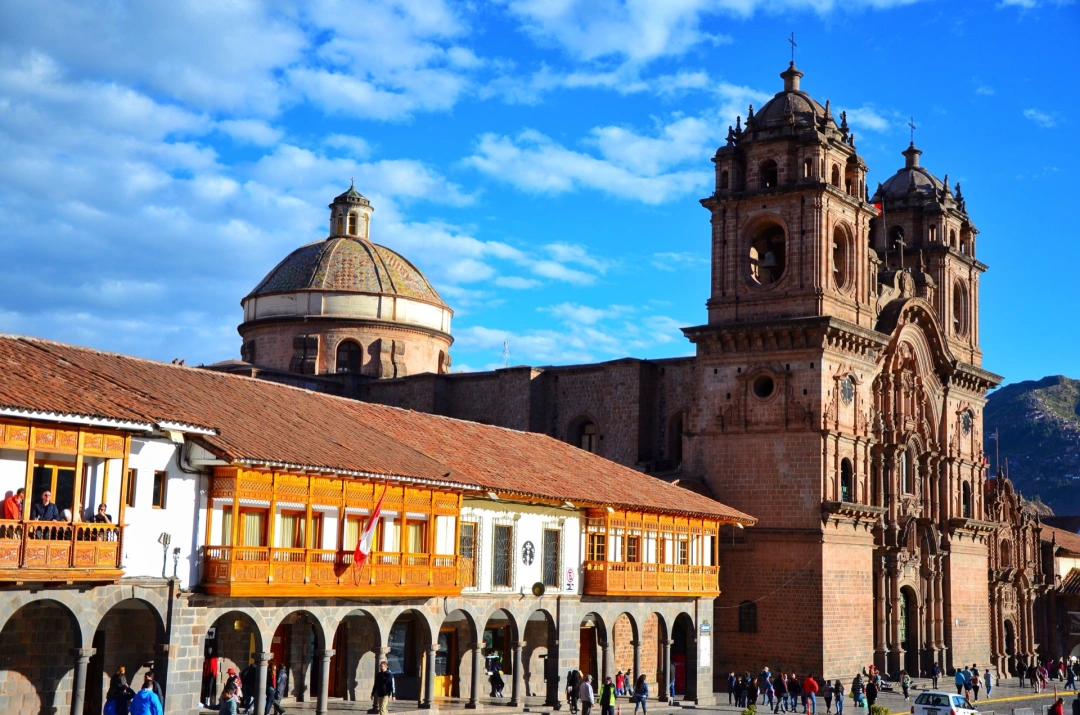
The afternoon sun bathed the Plaza de Armas in golden light, illuminating the ancient cathedral and stone steps. The Cusco Cathedral is the square's landmark. Entry costs 25 soles, or 30 soles for a combination ticket covering four churches. Photography is not allowed inside, but there's one painting worth noting: a unique version of The Last Supper where a roasted guinea pig sits prominently on the table before Jesus—which explains why this dish became Peru's national cuisine.
Climbing the stairs beside the square at an altitude of 3,400 meters, every step reminds you: this is not flatland. A small chapel at the top offers the best panoramic view of Cusco—a sea of red-tiled roofs cascading down the hillside, a stunning tableau.
Unexpected Warmth on the Steps
On our way down, we encountered a group of young musicians playing on the steps. A bearded man cheerfully handed us a cup of steaming hot drink. Though a bit hesitant, his genuine smile convinced us to take a sip. Later we learned it was Argentine mate tea.
The most precious moments of travel are often not the planned attractions, but these unplanned encounters. Language may fail us, but smiles and music are universal.
A Taste of Cusco: Best Restaurants
Cusco's food scene was unexpectedly delightful. Based on TripAdvisor recommendations, we tried three restaurants:
The Lazy Bistro Near Our Hotel – Just 100 meters away, with a crackling fireplace, lazy music, and exquisite, flavorful dishes.
Creative Sushi Spot – Tucked in an alley between the old town and Plaza de Armas, serving sushi with a bolder, more intense flavor than traditional Japanese style. But skip the pork udon noodles.
Hilltop Organic Restaurant – Next to the stairs leading to the hilltop chapel, with dishes adorned with fresh flowers. It often has a queue at lunchtime.
Sacred Valley Day Trip: A Majestic Canvas Between Heaven and Earth
Early in the morning, Mr. Ramiro de los Rios was waiting for us punctually at the hotel. Today's route: Cusco → Chinchero → Moray Terraces → Maras Salt Mines → Ollantaytambo.
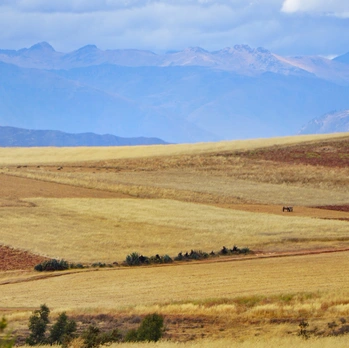
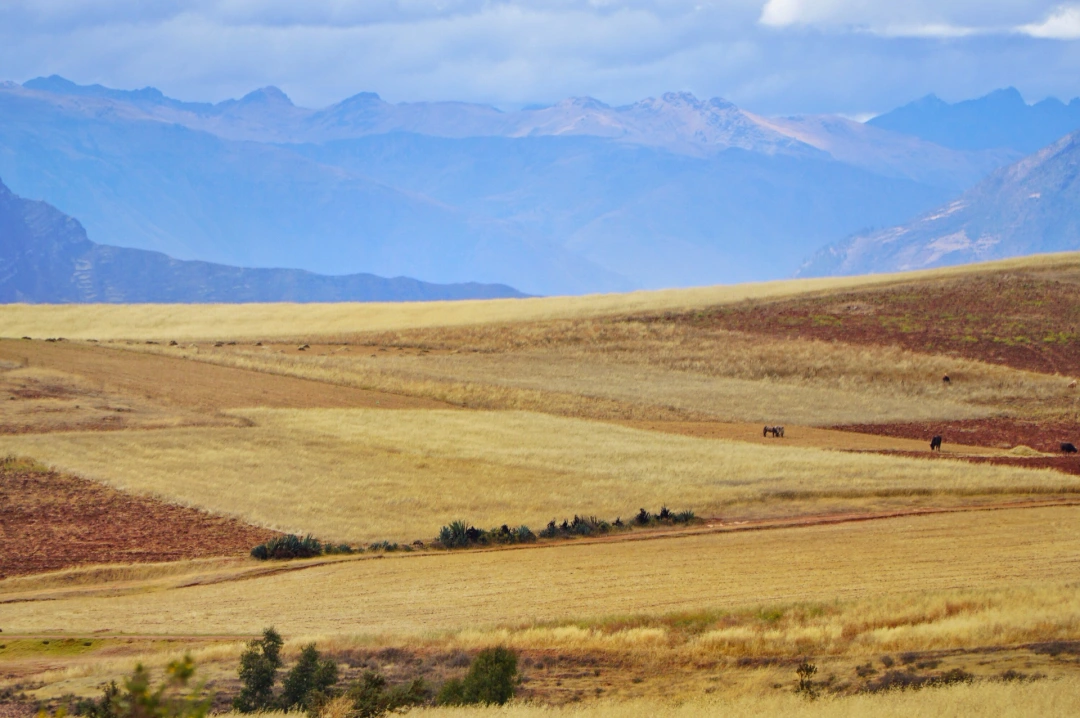
Just outside Cusco, the scenery was typical countryside. But as the mountain road wound higher, the landscape became breathtaking—snow-capped peaks, terraced fields, and ancient ruins dotting the horizon.
Chinchero: The Living Inca Village
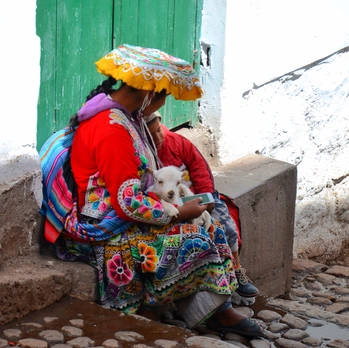
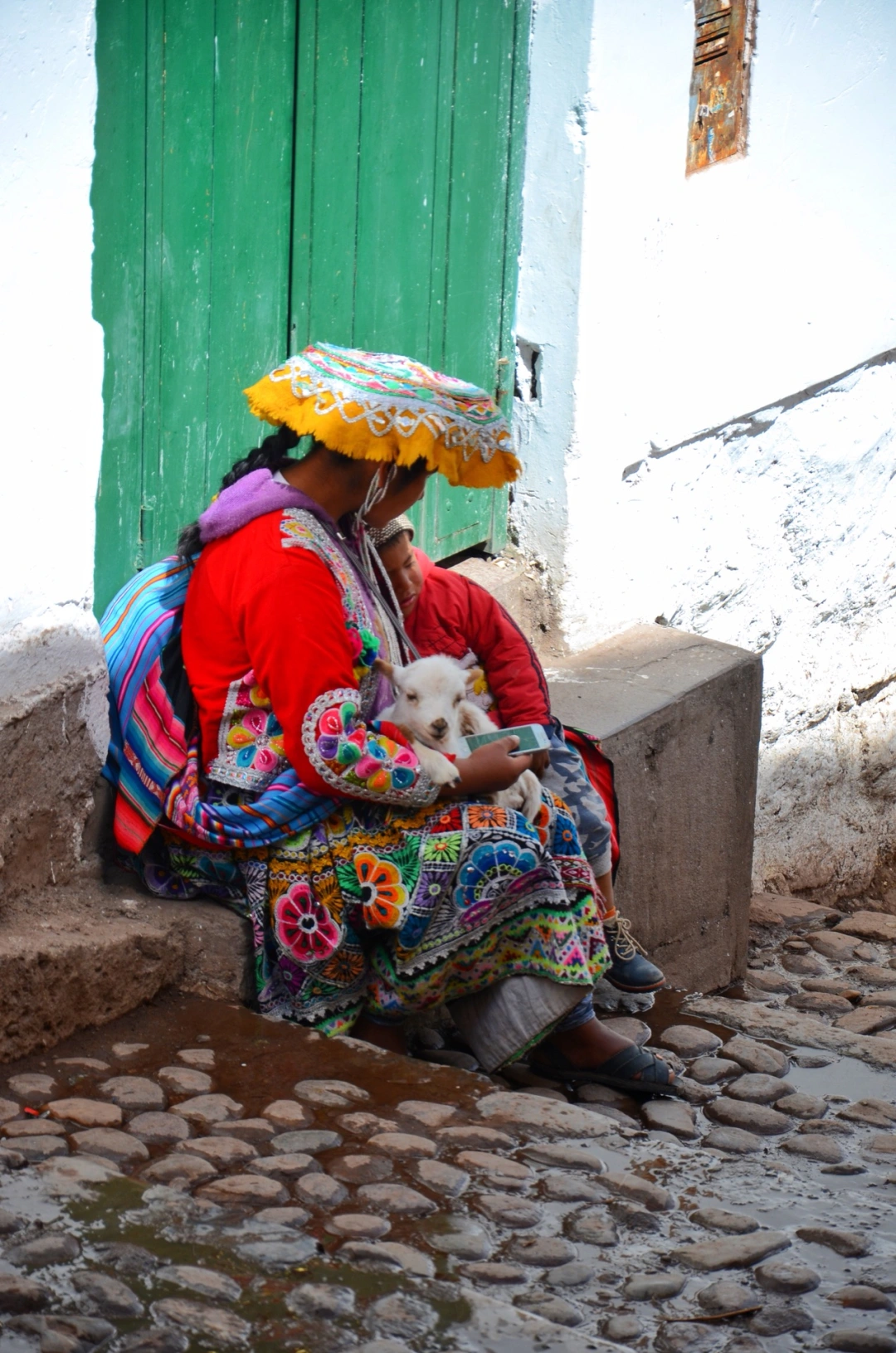
Chinchero is often called the "birthplace of the rainbow" due to its vibrant textile traditions. Here, local women demonstrate traditional weaving techniques using natural dyes from plants and insects. The Sunday market is a must-visit for authentic Andean crafts.
Moray Terraces: Inca Agricultural Laboratory
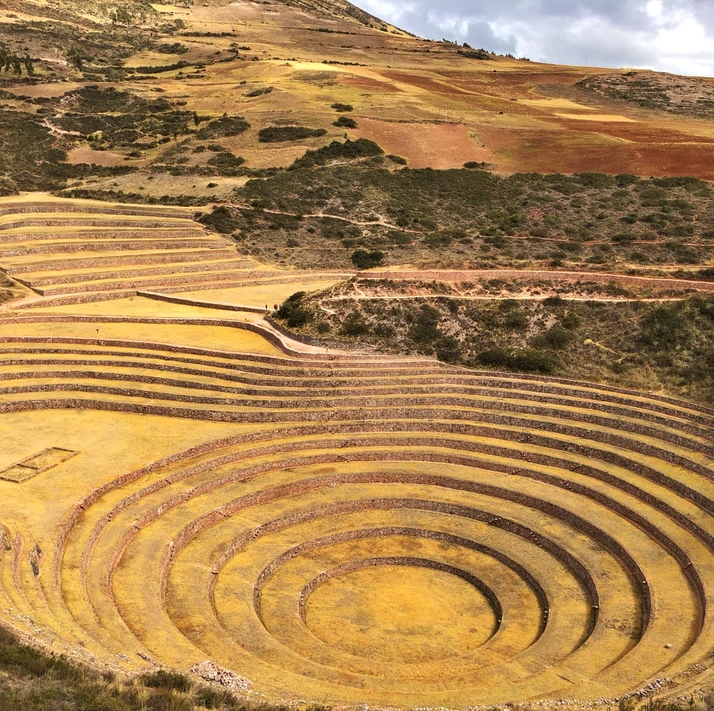
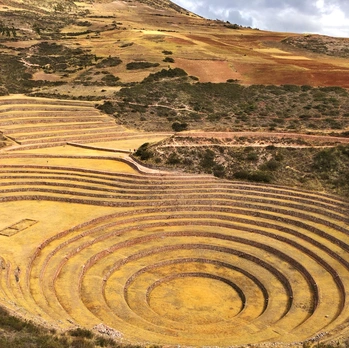
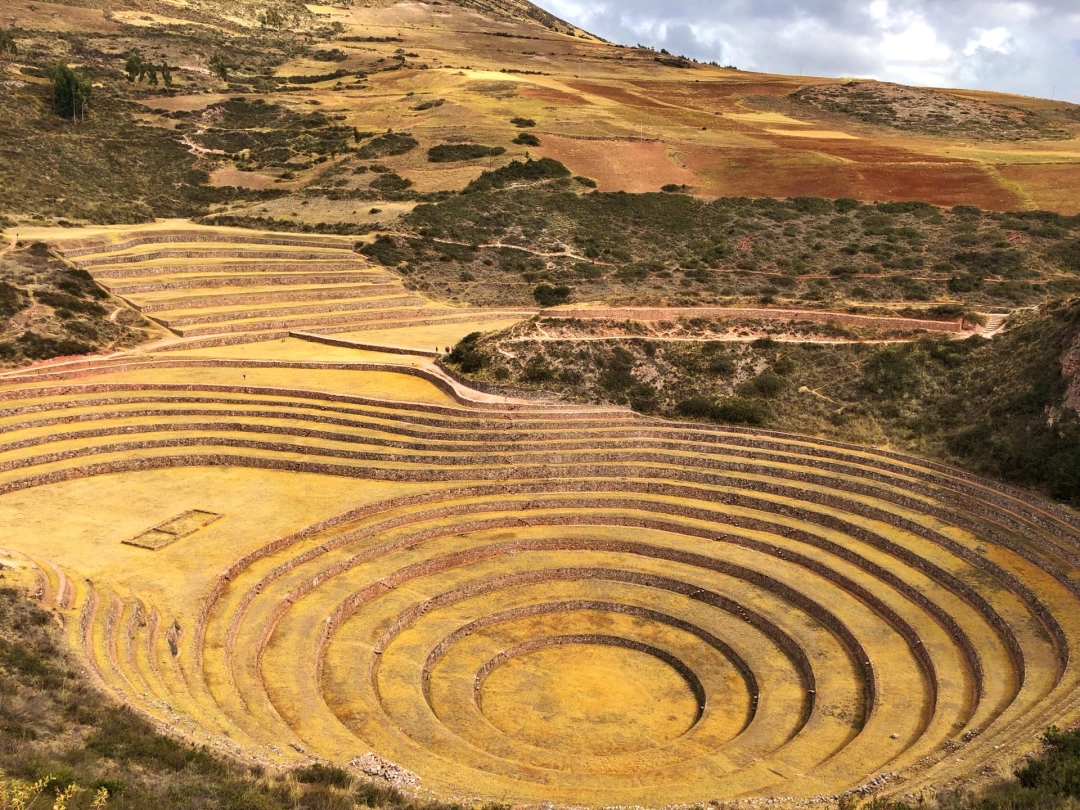
These circular terraces were an Inca agricultural experiment station, with each level representing a different microclimate. The temperature difference between the top and bottom can be as much as 15°C (27°F). It's a photographer's dream—especially in the golden hour.
Maras Salt Mines: A Pre-Inca Wonder
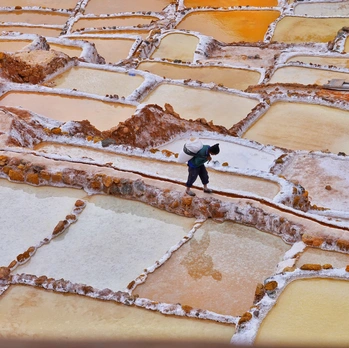
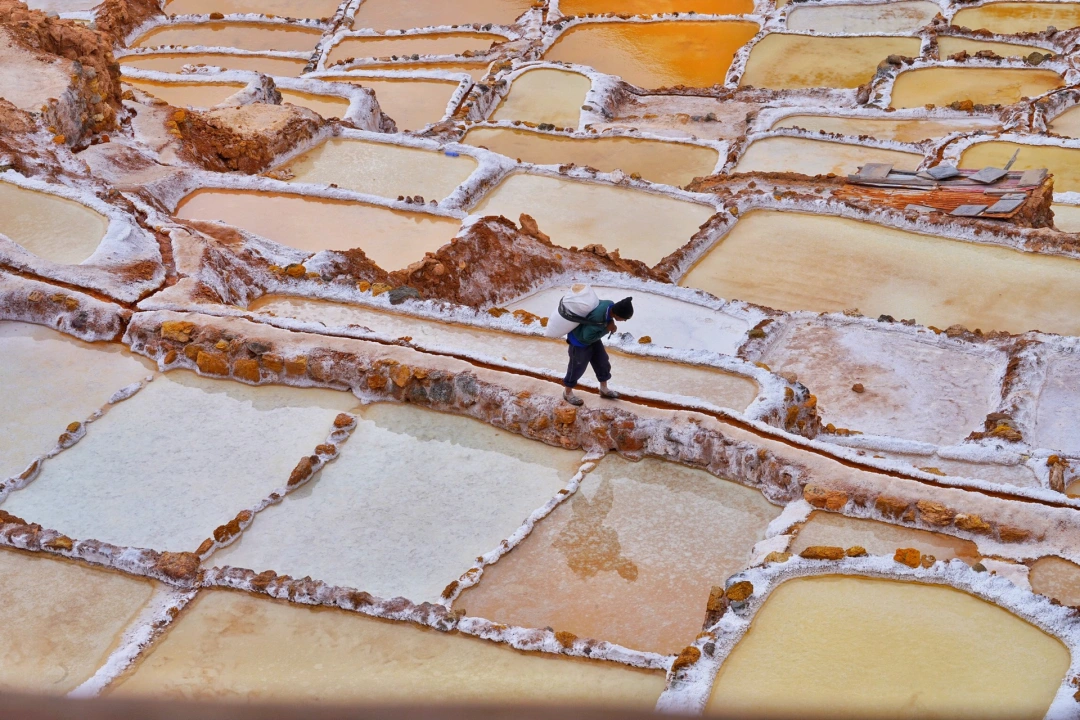
The Maras Salt Mines have been in operation since pre-Inca times. Thousands of salt-evaporation ponds cascade down a hillside, creating a stunning patchwork of white, beige, and brown. Entry costs 10 soles. Wear sturdy shoes—the paths can be slippery.
Ollantaytambo: The Last Inca Stronghold
Ollantaytambo is one of the best-preserved Inca towns and the starting point for the train to Machu Picchu. The fortress above the town offers incredible views of the Sacred Valley. It was here that the Incas won a rare victory against the Spanish conquistadors.
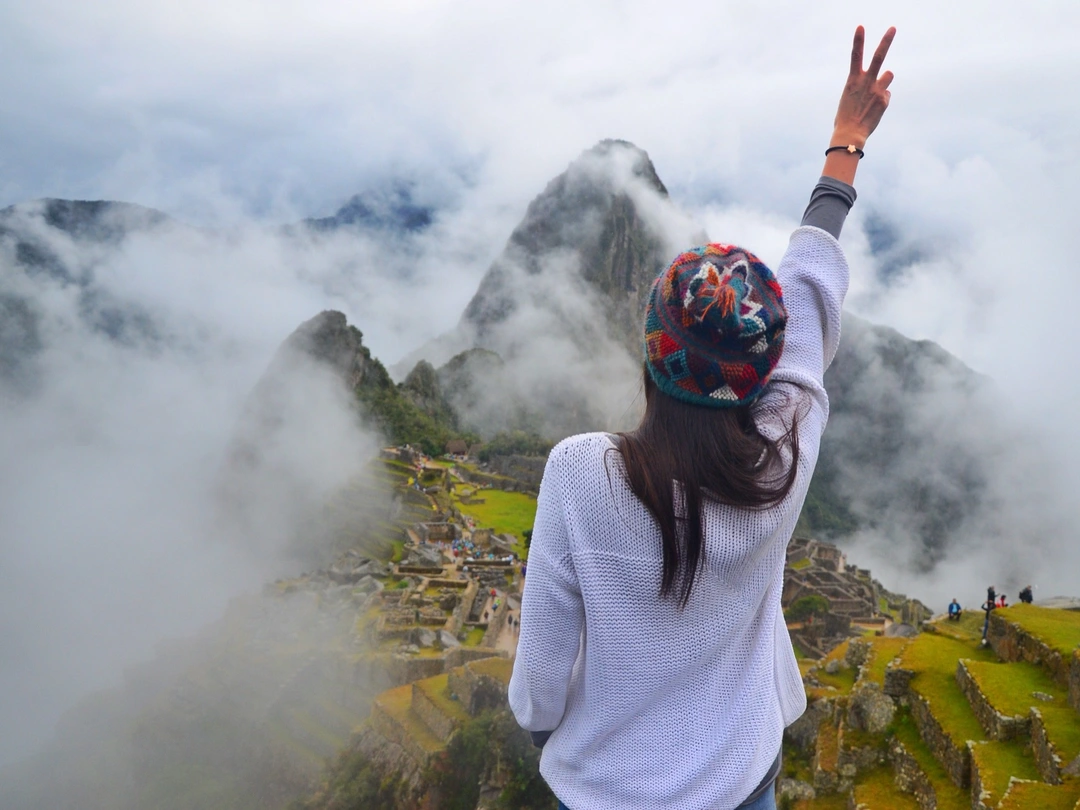
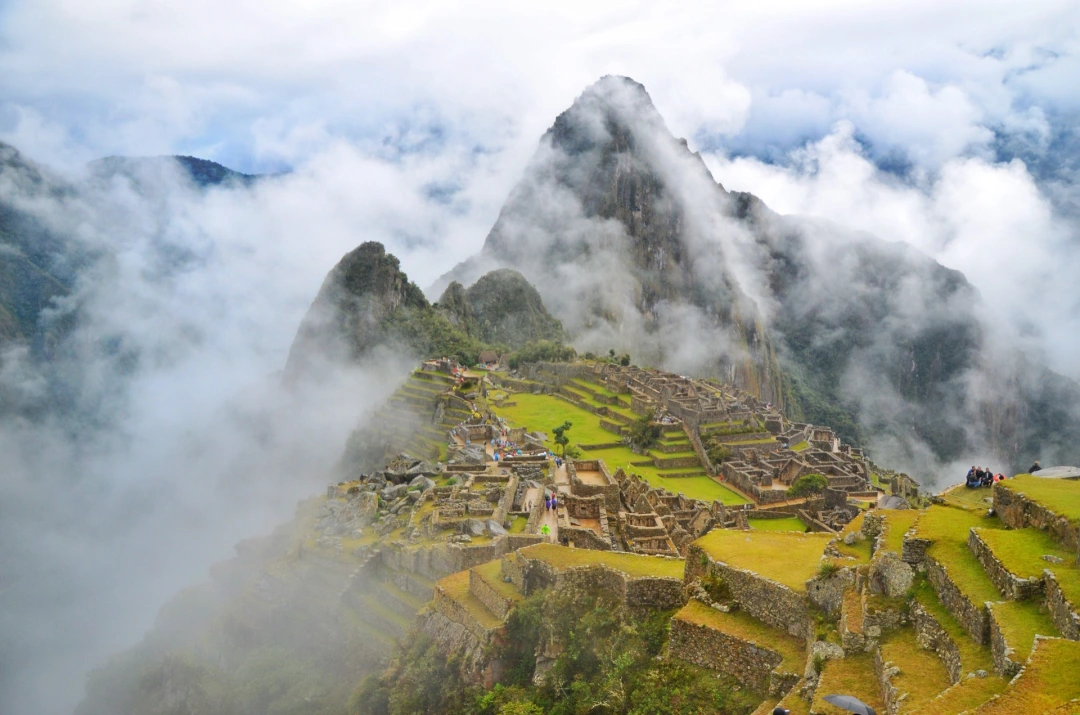
Machu Picchu: The Lost City Above the Clouds
After a scenic train ride from Ollantaytambo, we arrived at Aguas Calientes, the gateway town to Machu Picchu. The next morning, we took the first bus up the winding road to the citadel.
Tip: Book your Machu Picchu entry tickets at least 2-3 months in advance. The daily limit is 2,500 visitors, and tickets sell out quickly.
Highlights of Machu Picchu
- The Sun Gate (Inti Punku): The classic viewpoint for the iconic postcard photo. It's a 45-minute hike from the main entrance.
- Huayna Picchu: The mountain behind the classic Machu Picchu photo. Requires a separate ticket and is limited to 400 visitors per day.
- Temple of the Sun: A semicircular structure with precision stonework that aligns with the winter solstice.
Pro tip: Hire a guide at the entrance (around $30 for a group). They'll explain the history and point out details you'd otherwise miss.
Lake Titicaca: The Highest Navigable Lake in the World
From Cusco, we took a comfortable Cruz del Sur bus to Puno, the lakeside city on the shores of Lake Titicaca. The 7-hour ride was smooth, with stunning views of the altiplano.
Uros Floating Islands
The Uros people have lived on man-made floating islands made of totora reeds for centuries. A boat tour takes you to several islands, where locals demonstrate how they build and maintain their homes. You can even take a ride on a traditional reed boat.
Taquile Island
A 3-hour boat ride from Puno, Taquile Island is known for its textile traditions and stunning views. The islanders are famous for their intricate knitting—men learn to knit from a young age. The hike to the main square is steep but rewarding.
Tip: Bring cash—there are no ATMs on the islands. Also, pack sunscreen and a hat; the sun at 3,800 meters is intense.
FAQ: Your Peru Travel Questions Answered
1. How many days do you need for a Peru trip from Machu Picchu to Lake Titicaca?
A minimum of 10-14 days is recommended. This allows 2-3 days for Cusco and the Sacred Valley, 1-2 days for Machu Picchu, 2 days for Lake Titicaca, and travel time between destinations.
2. Is altitude sickness a problem in Cusco and Lake Titicaca?
Yes. Cusco sits at 3,410 meters (11,200 feet), and Lake Titicaca is even higher at 3,812 meters (12,500 feet). Acclimate for at least 2 days before attempting strenuous activities. Drink coca tea, stay hydrated, and consider medication like acetazolamide (Diamox).
3. What's the best time to visit Machu Picchu and Lake Titicaca?
The dry season (May to September) offers the best weather—clear skies and minimal rain. However, this is also peak tourist season. The shoulder months of April and October offer a good balance of weather and fewer crowds.
4. Do I need a visa for Peru?
Citizens of the US, Canada, UK, Australia, and most European countries do not need a visa for tourist stays up to 183 days. Always check with the Peruvian embassy or consulate in your country for the latest requirements.
5. How much does a Peru trip from Machu Picchu to Lake Titicaca cost?
A mid-range 10-day trip costs approximately $1,500-$2,500 per person, including flights, accommodation, meals, transportation, and entrance fees. Budget travelers can do it for $800-$1,200, while luxury travelers should budget $3,000+.
Internal Linking Suggestions
- [Link: Best time to visit Machu Picchu – month-by-month guide]
- [Link: How to book Machu Picchu train tickets online]
- [Link: Cusco to Lake Titicaca bus routes and schedules]
- [Link: Sacred Valley day trip itinerary from Cusco]
- [Link: Peru travel packing list for high-altitude destinations]
Ready to Book Your Peru Adventure?
From the cloud-shrouded ruins of Machu Picchu to the floating islands of Lake Titicaca, Peru offers an unforgettable journey through history, culture, and breathtaking landscapes. Whether you're a solo traveler, a couple, or a group of friends, this itinerary gives you the blueprint for an incredible South American adventure.
Start planning today: Book your flights to Lima, reserve your Machu Picchu tickets, and pack your bags for the trip of a lifetime. Peru is waiting—and it's more magical than you can imagine.
Have questions about your Peru trip? Drop them in the comments below, and we'll help you plan the perfect itinerary!
Disclaimer: Prices mentioned in this article are based on 2023 travel and may vary. Always check current rates and availability before booking.
You may also like