August 2025 Shanghai City Walk: Hidden Gems Around Jing'an Temple and North Shaanxi Road
Meta Description: Discover Shanghai's best-kept secrets on an August 2025 city walk around Jing'an Temple and North Shaanxi Road. Explore former residences, historic lanes, and offbeat attractions away from tourist crowds.
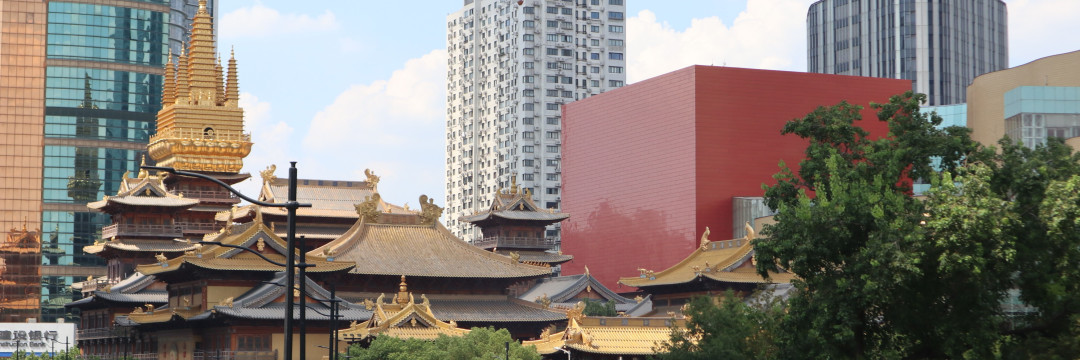
Shanghai is a city of dazzling skyscrapers and neon-lit streets, but its true soul lies in the quiet corners where time seems to stand still. On a weekend in August 2025, I set out on a carefully planned city walk—a "hidden route" ranked among the city's best-kept secrets—around Jing'an Temple and North Shaanxi Road. What began as an ordinary stroll quickly became a journey through living history.
If you're tired of the crowded chaos on Wukang Road, this offbeat itinerary offers a spectacular alternative. No queues, no selfie sticks—just old villas, former residences of famous figures, and streets polished smooth by decades of footsteps.
Changshu Road Metro Station: Unexpected Surprises at the Starting Point
Exiting Changshu Road Station on Metro Line 7, I had planned to head straight for the Former Residence of Cai Yuanpei. But my map revealed four small attractions scattered nearby like pearls waiting to be strung together.
The Former Residence of Luo Bozhao: Patriotism Wrapped in Ancient Coins
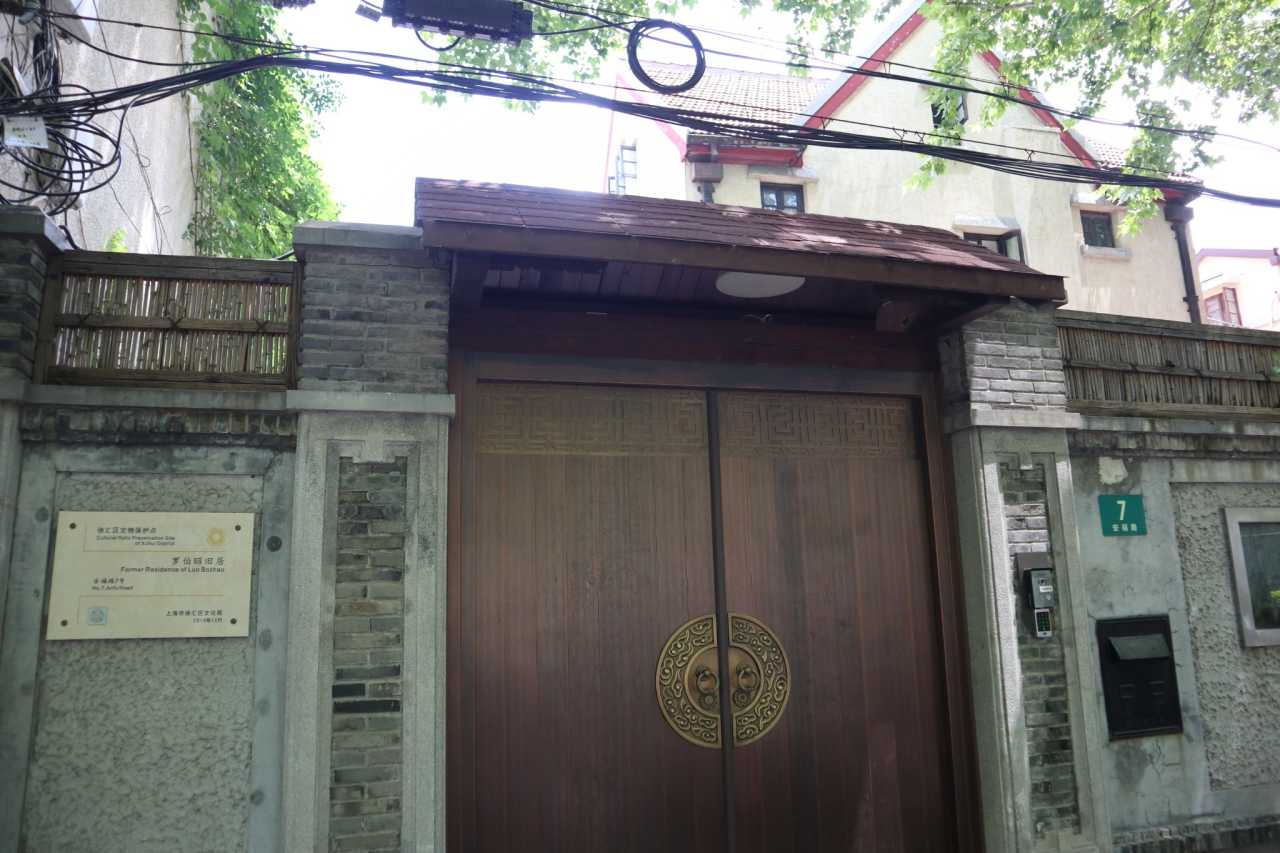
At 7 Anfu Road stands an unremarkable residential building that holds an extraordinary story of obsession and patriotism.
Luo Bozhao—a name unfamiliar to most, but legendary in China's coin-collecting world. Known as "Luo of Bashu" among the "Southern Zhang, Northern Fang, and Bashu Luo" trio, he was born in 1899 in Chongqing. In 1924, he began collecting ancient coins, sparing no expense to acquire rare pieces in Wuhan during the 1930s.
In 1957, Luo donated his entire collection—including the precious "New Coin of Eleven Zhu"—to the Beijing National Museum of Chinese History. In 1962, he gave his finest pieces to the Shanghai Museum. Even more touching: when he spotted a "Zhuangquan Forty" coin that the Shanghai Museum was missing, he bought it at a high price and donated it free of charge.
From 1940 until his death in 1976, Luo lived in this house, gathering fellow coin enthusiasts to admire his treasures. Today, it's an ordinary residence—but push open that door, and you can almost hear the clink of ancient coins.
[Link: Shanghai Museum visitor guide]
The Former Residence of Zhou Xinfang: The Shanghai Imprint of "Qilin Boy"
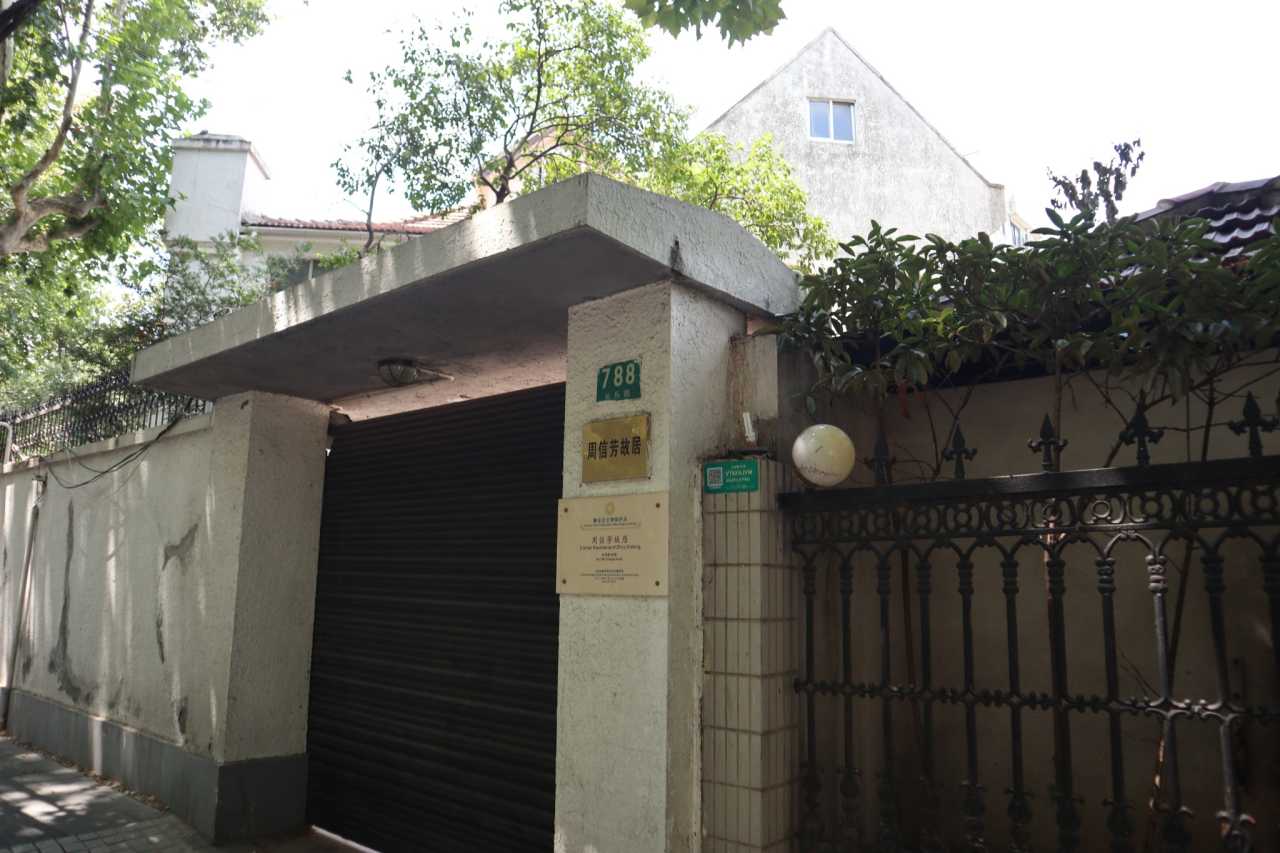
At 800 Changle Road lies the former home of Zhou Xinfang, founder of the Qipai school of Peking opera.
Known by his stage name "Qilin Boy" (Kirin Boy), this master began learning opera at six, made his stage debut at seven, and after wandering across China, finally put down roots in Shanghai. In 1915, he joined the Dangui First Stage and began experimenting with opera reforms. Performing alongside Mei Lanfang and collaborating with Tan Xinpei, Zhou created countless classic characters with his unique Qipai style.
Standing before his former residence, a line came to mind: "Opera is like life, and life is like an opera." Zhou Xinfang's own life was nothing less than a dramatic performance.
The Former Residences of Pan Hannian and Zhang Yuanji: Underground Front and a Publishing Giant
Following my navigation to Pan Hannian's former residence, I circled several times without finding any heritage plaque. This extraordinary leader of the Communist Party's underground front was arrested in 1955, died in disgrace in 1977, and was only posthumously rehabilitated in 1982. His former residence, like his life, remains low-key and hidden.

In contrast, Zhang Yuanji's former residence is much easier to find. At 24 Lane 1285, Middle Huaihai Road, inside the Upper Garden (Shangfang Huayuan), this Spanish-style garden villa was home to the legendary publisher from 1946 to 1959. A Jinshi (imperial scholar) during the Guangxu era, Zhang was dismissed after participating in the Hundred Days' Reform. He then turned to cultural endeavors, leading the Commercial Press for nearly six decades. During the War of Resistance against Japan, he refused to cooperate with the Japanese puppet regime, making a living by selling his calligraphy—the backbone of a true scholar.
[Link: Middle Huaihai Road shopping and dining guide]
Julu Road: One Street, Half a History of Republican China
Turning from Middle Huaihai Road onto Julu Road feels like stepping through a time warp. The density of historically protected buildings on this small street is astonishing.
Julu Garden and Jinghua New Village: British Elegance and Modern Lane Houses
Julu Garden at No. 889, built in 1929, consists of semi-detached British-style garden villas originally housing executives of the Asiatic Petroleum Company. Today, it's a dining hub, but the buildings retain their old-world grace.
Jinghua New Village at Lane 820, a modern lane-house complex built in 1937, was designated an excellent historical building in 1994. The painter Zhu Qizhan once lived here, as did the calligrapher Pan Boying, a devotee of the "Two Wangs" style whose works are still sought after by collectors.
The Former Residence of Hu Die: The Movie Queen's Shanghai Story
Lane 786 is the former home of Hu Die, the "Movie Queen." Born Hu Ruihua to Cantonese parents in Shanghai, she launched her film career in 1925 with The Battle of Merit. In 1933, she was elected "Movie Queen" with 21,334 votes, then went on to win three consecutive titles. She was the lead actress in China's first sound film, The Singing Girl Red Peony, and a pioneer in left-wing cinema with The Torrent.
Hu Die's life is a microcosm of Shanghai's golden age of cinema. She passed away in Canada in 1989, but her stories still echo through this city.
[Link: Shanghai film history walking tours]
Lane 303, Huashan Road: Cai Yuanpei's Spiritual Home
The Former Residence of Cai Yuanpei is at 16 Lane 303, Huashan Road—a three-story British-style garden villa. In 1937, Cai rented it and, from here, joined with other university presidents to condemn the Japanese invasion. He later moved to Hong Kong due to the war and died there in 1940.
Note: The second and third floors are only open to the public on Wednesdays. I came on a Sunday, so I could only visit the ground-floor exhibition hall. But even that was enough to leave me awestruck.
The hall displays Cai Yuanpei's imperial examination papers, the typewriter he used, letters from Sun Yat-sen, and his appointment letter as President of Peking University. What moved me most was a copy of The Complete Works of Lu Xun—the intersection of these two cultural giants felt tangible within these walls.
Cai Yuanpei was a Jinshi of the Qing dynasty, but he abandoned officialdom for education, drafting China's first modern higher education law, the University Ordinance. As President of Peking University from 1916 to 1927, he implemented democratic reforms to the education system, nurturing an entire generation of outstanding talent. Standing before his portrait, I finally understood what "the doyen of academia" truly means.
[Link: Peking University history and notable alumni]
Around Jing'an Temple: From Mao Zedong's Former Residence to Zhang Ailing's Apartment
The 1920 Former Residence of Mao Zedong: Spark of Revolution in a Shikumen Building
At 63 Anyi Road, a shikumen (stone-gate) building surrounded by the Kerry Centre complex, stands the 1920 Shanghai residence of Mao Zedong.
On May 5 of that year, Mao came to Shanghai to lead Hunan students in protesting against the warlord Zhang Jingyao. During his stay, he attended the Bansong Garden Conference, established the Hunan Reconstruction Promotion Association, wrote for Ask Heaven and Hunan magazines, and met with Chen Duxiu to discuss Marxism-Leninism.
This two-story brick-and-wood building has a ground-floor living room with a square table and chairs, and an upstairs bedroom where Mao slept on a simple plank bed by the floor-to-ceiling windows. Though the residence is small and the second floor was under maintenance during my visit, the historical weight of this space is palpable.
Zhang Ailing's Apartment: Literary Legacy at 195 Maoming Road
Just a short walk from Jing'an Temple, at 195 Maoming Road, stands the former apartment of Zhang Ailing (Eileen Chang) , one of modern China's most celebrated writers. While the building is not open to the public, standing outside feels like stepping into one of her novels—the same streets, the same Shanghai she immortalized in works like Love in a Fallen City and The Golden Cangue. For literary travelers, this is a must-visit spot.
[Link: Zhang Ailing literary walking tour Shanghai]
Hidden Gems Around North Shaanxi Road
North Shaanxi Road itself is a treasure trove of architectural history. Running parallel to the more touristy Middle Huaihai Road, it offers a quieter, more authentic experience.
The Mansion of Du Yuesheng: Gangster Grandeur
At 287 North Shaanxi Road stands the former mansion of Du Yuesheng, the notorious Shanghai gangster and philanthropist. This French-style villa, built in the 1930s, once served as a hub for the Green Gang's operations. Today, it's a restaurant, but the building's intricate ironwork and grand staircase remain intact. It's a fascinating glimpse into Shanghai's underworld history.
The Shanghai Jewish Refugees Museum: A Story of Sanctuary
While technically a short detour, the Shanghai Jewish Refugees Museum at 62 Changyang Road is easily accessible from North Shaanxi Road. This museum tells the story of 20,000 Jewish refugees who found shelter in Shanghai during World War II. It's a moving testament to Shanghai's role as a global city of refuge.
[Link: Shanghai Jewish history walking tour]
Practical Tips for Your August 2025 Shanghai City Walk
- Best time to visit: Early morning (8:00–10:00 AM) or late afternoon (4:00–6:00 PM) to avoid the August heat and crowds.
- Duration: Allow 3–4 hours for the full route, including stops at each site.
- What to bring: Comfortable walking shoes, a refillable water bottle, and a camera. Many sites are outdoor or have limited air conditioning.
- Entry fees: Most former residences are free to enter, but check opening hours online. Some require advance booking.
- Getting there: Start at Changshu Road Station (Line 7). End at Jing'an Temple Station (Lines 2, 7, 14).
Frequently Asked Questions
1. Is this route suitable for families with children?
Yes, but note that many sites are historical buildings with limited interactive exhibits. Children may enjoy the open spaces at Julu Garden and the Jing'an Temple area.
2. Are the former residences open every day?
Most ground-floor exhibitions are open daily, but upper floors (like at Cai Yuanpei's residence) are only open on Wednesdays. Always check official websites before visiting.
3. Can I take photos inside the residences?
 Photography is generally allowed in exhibition halls, but flash photography is prohibited to protect artifacts. Some private residences may have restrictions.
4. What is the best way to get around?
Walking is ideal for this compact route. However, you can use shared bikes or taxis between major stops if needed. The distance between Changshu Road and Jing'an Temple is about 2.5 km (1.5 miles).
5. Are there dining options along the route?
Yes! Julu Garden and the Jing'an Temple area have numerous restaurants and cafés. Try local Shanghainese cuisine at Lao Shanghai near Julu Road or grab a coffee at Seesaw Coffee near Jing'an Temple.
Your Turn: Experience Shanghai's Hidden History
This August 2025 Shanghai city walk around Jing'an Temple and North Shaanxi Road is more than a tourist itinerary—it's a journey through the city's layered past. From ancient coin collectors to movie queens, from underground revolutionaries to literary giants, every corner tells a story.
Ready to explore? Start your walk at Changshu Road Station, follow the route outlined above, and let Shanghai's hidden gems reveal themselves to you.
Share your experience: Tag your photos with #ShanghaiHiddenGems and let us know which site moved you most. And if you discover a new hidden gem along the way, drop us a comment below!
[Link: Book a private Shanghai walking tour guide] [Link: Shanghai August weather and travel tips]
Note: All information is accurate as of August 2025. Opening hours and access may change. Always verify details before your visit.