A Tale of Two North African Cities: Morocco vs Tunisia – Your Ultimate 15-Day Travel Guide
Meta Description: Discover the magic of Morocco and Tunisia in this SEO-optimized travel guide. From Sahara dunes to Chefchaouen's blue streets, plan your North African adventure with expert tips, itinerary, and FAQs.
Introduction: Why North Africa Belongs on Your Bucket List
When your travels finally bring you to the shores of North Africa, you'll discover a land that isn't Europe, yet understands color magic better than any European destination. It belongs to Africa, yet feels closer to a fairy tale than you ever imagined. Morocco and Tunisia—these two North African countries are like natural-born "flat models" for the camera. They may not be instant beauties at first glance, but every frame comes with its own filter, and every street corner hides a story.
In the autumn of 2018, I spent 15 days exploring the highlights of both countries. From the red dunes of the Sahara to the blue labyrinth of Chefchaouen, from the mosque of Casablanca to the Mediterranean towns of Tunisia, this journey felt like a carefully choreographed play—each scene so captivating you'd hate to blink.
Whether you're a photographer, a history buff, or a culture seeker, this Morocco and Tunisia itinerary will help you plan the trip of a lifetime.
Why Visit Morocco and Tunisia? Top Highlights Worth Flying For
The Sahara Desert: Sanmao's Longing, Now the World's Largest Sea of Sand

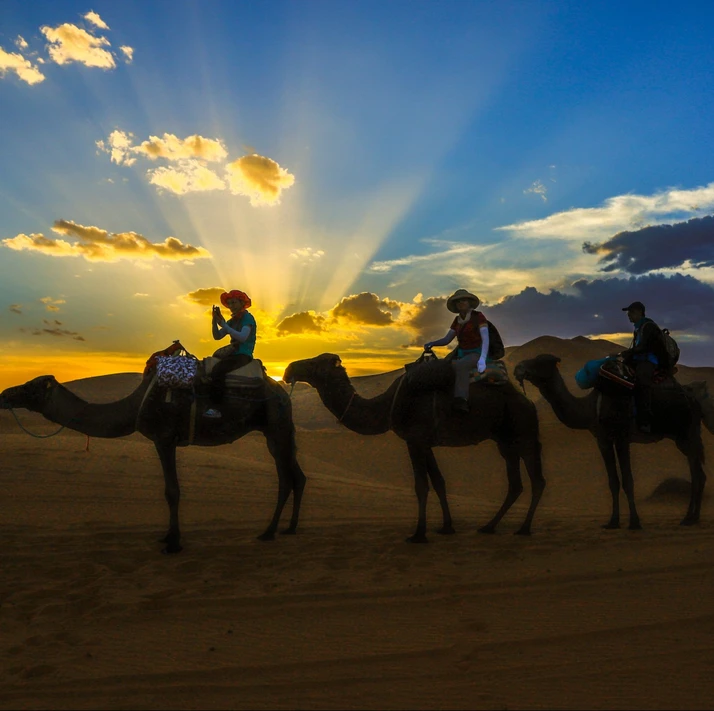
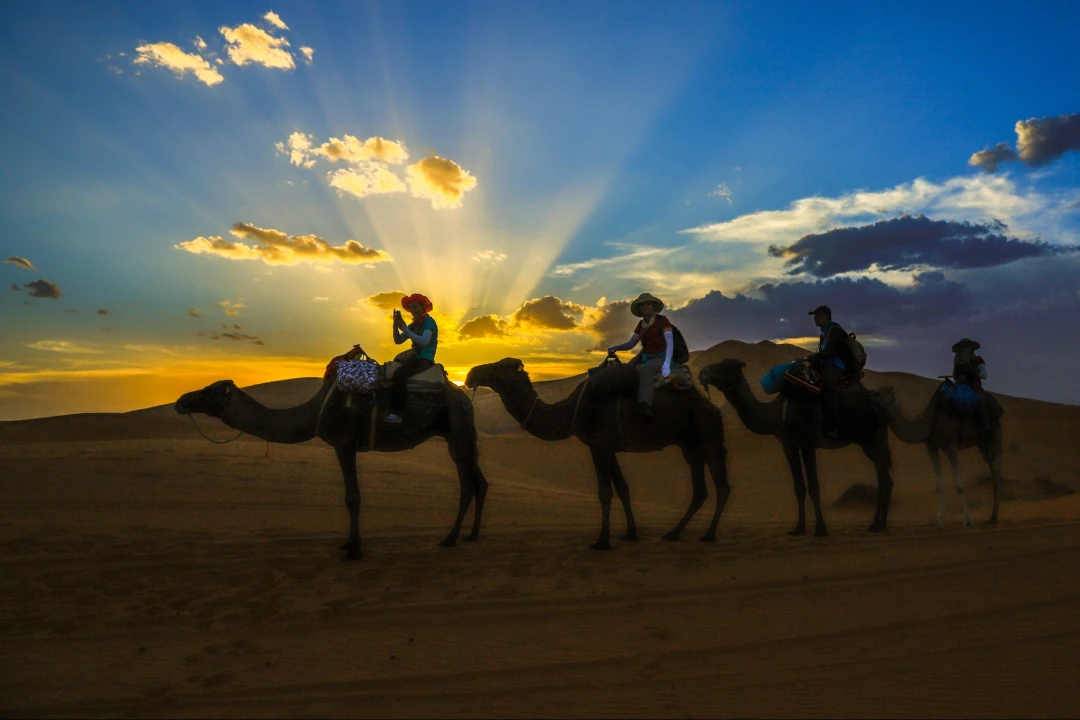
"Every time I miss you, a grain of sand falls from the sky, and thus the Sahara was formed." These words by Taiwanese writer Sanmao have ignited a yearning in countless souls for this vast desert. The Sahara is the largest hot desert on Earth, covering over 9 million square kilometers—nearly the entire expanse of North Africa. When you finally stand atop a dune, watching the sunset paint the grains in hues of gold and crimson, you'll understand why this place has become a "must-see once in a lifetime" for so many.
For the best desert experience, Morocco's Sahara offers finer sand, a richer red hue, and a more spectacular scale than Tunisia's desert regions. [Link: Best Sahara Desert tours in Morocco]
Chefchaouen: When God Spilled the Blue Palette
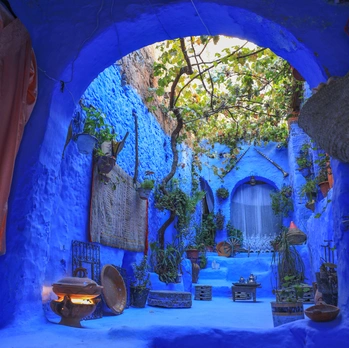
Every wall, every step, every door in this little town is painted in shades of blue—mint blue, peacock blue, sapphire blue. Some say God accidentally knocked over His palette while painting the sky. For photography enthusiasts, this place is paradise. Find any corner, slip into a white dress, and you'll capture images that will flood your social media feed with likes. [Link: Chefchaouen photography guide]
Fes: The Real-Life Thousand and One Nights
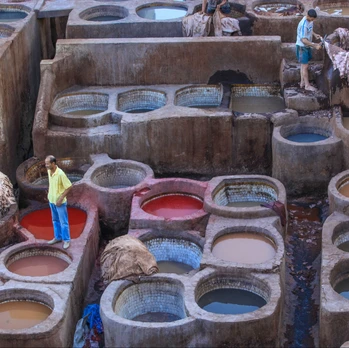
Over 900 alleyways twist and turn like a labyrinth. The air here is thick with the scent of spices, leather, and history. Walking through these narrow lanes, you half expect to bump into Ali Baba and his forty thieves. And the famous leather tanneries—though pungent to the nose—are living fossils of a thousand-year-old craft. [Link: Fes leather tanneries history]
Tunisian Towns: Europe's Dream in North Africa
This is North Africa, but with a European twist. Close to the Mediterranean, yet firmly African. Arabic is the official language, but cultures blend here, and minds are open. The beaches of Hammamet, the cafés of Sidi Bou Said, the ruins of Carthage—every corner makes you pause and wonder: Am I in Africa, or in some Mediterranean European town?
15-Day Morocco and Tunisia Itinerary: Why This Design Works
Itinerary Overview
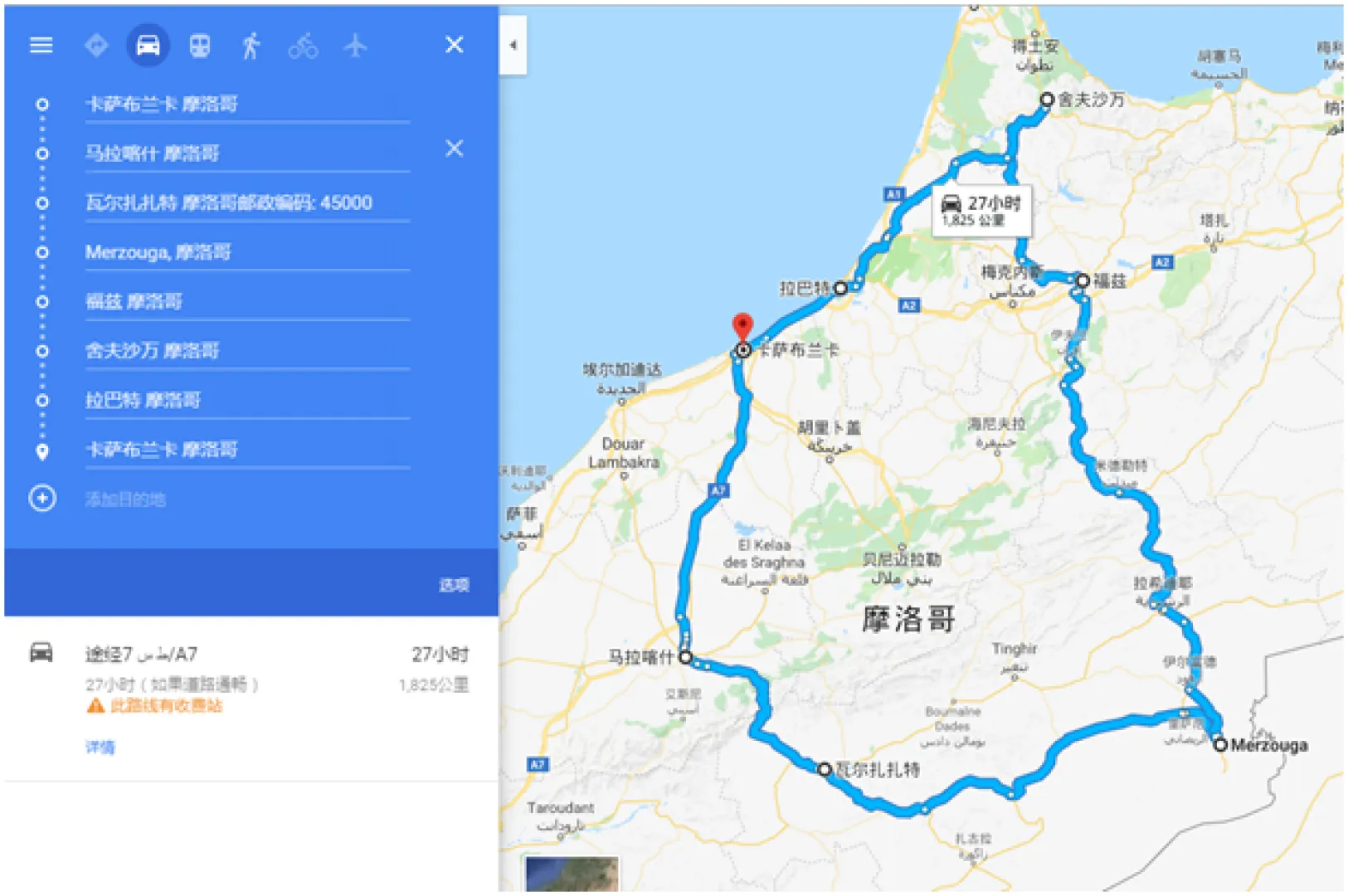
Day 1-2: Shanghai → Paris → Casablanca
Day 3: Casablanca → Marrakech
Day 4: Marrakech → Aït Benhaddou → Ouarzazate
Day 5: Ouarzazate → Merzouga (Sahara Desert)
Day 6: Merzouga → Fes
Day 7: Fes → Meknes → Chefchaouen
Day 8: Chefchaouen → Rabat → Casablanca
Day 9: Casablanca → Tunis → Hammamet
Day 10: Hammamet → Kairouan
Day 11: Kairouan → Matmata
Day 12: Matmata → El Jem Amphitheatre → Sousse
Day 13: Sousse → Carthage → Sidi Bou Said → Tunis
Day 14-15: Tunis → Paris → Shanghai
Why Mid-September Is the Best Time for North Africa Travel
According to travel guides, the best time to visit is from mid-March to mid-June, and from mid-September to mid-October. Autumn in North Africa brings richer colors and more pleasant weather. More importantly, by avoiding China's National Day Golden Week, you can save significantly on flights—my round-trip ticket cost 7,260 RMB per person. Had I traveled during the holiday, the price would have soared to over 9,000 RMB.
Morocco's Desert vs. Tunisia's Desert: Which Is Worth It?
Many North Africa two-country tours place the desert experience in Tunisia, citing shorter driving distances from Matmata and lower costs. But my view is clear: the Sahara was the centerpiece of this trip. If you're going to see a desert, see the best one. Morocco's Sahara has finer sand, a richer red hue, and a more spectacular scale. So I chose Morocco's desert without hesitation.
Why Skip Morocco's Coastal Cities?
My design philosophy was simple: the first half in Morocco would focus on exotic cultural experiences with a tighter schedule; the second half in Tunisia would slow down for a beachside vacation. A 15-day trip is already long enough. Adding Tangier, Asilah, Essaouira, and other Atlantic coastal towns would have left me exhausted. So I saved the relaxation for Tunisia.
Why Choose a Customized Tour for North Africa?
Group tours are convenient but lack flexibility. Independent travel offers freedom, but North Africa's security and transportation can be worrisome. A customized tour strikes the perfect balance—it allows for personalized itinerary adjustments while providing professional guides and drivers. For a destination like North Africa, this is the most cost-effective option.
Transport and Accommodation Tips for Photographers
Since this was a trip designed for photographers, our group of 20 used a bus with over 48 seats, ensuring two seats per person—plenty of room for camera gear and personal items.
Accommodation highlights worth mentioning: - Sahara Desert: The BIVOUAC CAFE DU SUD luxury tent camp in Merzouga was an oasis in the sand. The tents were fully equipped with private bathrooms, minimalist decor, and warm, soft lighting—a true experience of "simple luxury." - Fes: We stayed in a charming riad (traditional Moroccan guesthouse) in the old city. Open the window, and you're face-to-face with a thousand years of history. - Matmata: We checked into the same cave hotel featured in the Chinese travel show "Sisters Over Flowers," experiencing the traditional way of life of the Berber people.
Camera Gear Recommendations for North Africa

I'm a Canon user. For this trip, I brought two bodies—a 5D Mark IV and a 5D Mark II—paired with a 16-35mm f/2.8 and a 70-200mm f/2.8 lens. The desert is windy and sandy, so changing lenses outdoors is not advisable. Two bodies allowed me to have different focal lengths ready at all times. If you prefer to travel lighter, a single camera with a 24-105mm zoom lens will suffice.
Casablanca: The White Tower by the Atlantic
Departing from Shanghai, a 12-hour-20-minute flight brought us to Paris. After a 1.5-hour layover and another 3 hours in the air, we finally landed in Casablanca. The time difference is 7 hours behind Beijing, so it was 9 a.m. local time when we arrived. Despite a sleepless night, the Atlantic breeze swept away all fatigue.
"Casablanca" means "white city" in Spanish. It's Morocco's largest city and economic hub. The famous film Casablanca (known as North African Spy in Chinese) put this city on the global map, and our North African journey began right here.
Hassan II Mosque: The Pinnacle of Faith and Art
This mosque is Casablanca's most unmissable attraction—bar none. Construction began in 1987, took 8 years, cost over 500 million dollars, and opened to the public in 1993. One-third of the mosque is built over the sea, reportedly to commemorate the Arabs who arrived from across the ocean.
It is the third-largest mosque in the Islamic world, after Mecca and Medina. It measures 200 meters long and 100 meters wide, with a retractable roof and 25 automatic doors made entirely of titanium alloy to resist seawater corrosion. The marble floors are heated year-round, making it the most technologically advanced mosque in the world.
Even as we approached it, we were deeply awed. From every angle, it exudes solemn grandeur. Non-Muslim tourists can only enter this one mosque in all of Morocco, so treasure the opportunity.
You must remove your shoes before entering. Our guide reminded everyone to dress modestly and maintain silence inside. The experience is both humbling and inspiring.
FAQ: Planning Your Morocco and Tunisia Trip
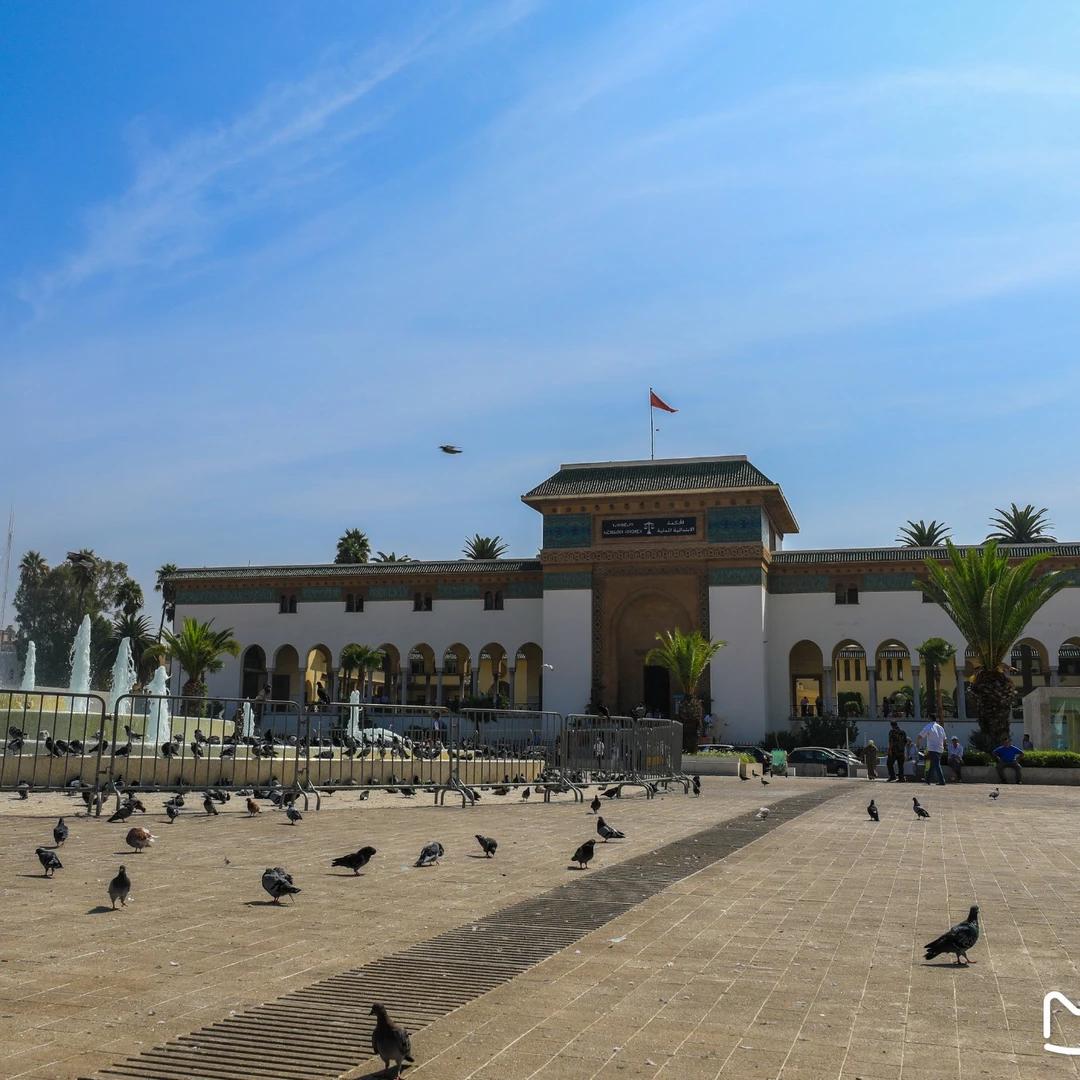
1. Is it safe to travel to Morocco and Tunisia as a solo traveler?
Yes, both countries are generally safe for tourists, especially in popular destinations like Marrakech, Fes, Chefchaouen, and Tunis. However, it's wise to stay alert in crowded markets and avoid walking alone at night in unfamiliar areas. A customized tour or guided group is recommended for first-time visitors.
2. What is the best time to visit Morocco and Tunisia?

The best time is from mid-March to mid-June and from mid-September to mid-October. Autumn offers pleasant weather, fewer crowds, and lower flight prices. Summer can be extremely hot, especially in the desert, while winter is mild but cooler in the mountains.
3. How much does a 15-day Morocco and Tunisia trip cost?
A mid-range customized tour for two people typically costs between $3,000 and $5,000 per person, including flights, accommodation, guide, and transport. Flight prices vary significantly by season—booking in mid-September can save up to 20% compared to peak holiday periods.
4. Do I need a visa for Morocco and Tunisia?
Many nationalities, including US, UK, Canadian, and EU citizens, can enter Morocco and Tunisia visa-free for up to 90 days. Always check the latest visa requirements with your local embassy before traveling.
5. What should I pack for a North Africa trip?
Pack lightweight, modest clothing (long pants, long sleeves for women), a scarf for mosque visits, comfortable walking shoes, sunscreen, a hat, and a reusable water bottle. For the desert, bring warm layers for cool nights. Camera gear, a power bank, and a universal adapter are essential.
Conclusion: Your North African Adventure Awaits
From the golden dunes of the Sahara to the blue-washed streets of Chefchaouen, from the grandeur of Hassan II Mosque to the Mediterranean charm of Sidi Bou Said, a journey through Morocco and Tunisia is a journey through time, color, and culture. This 15-day itinerary balances cultural immersion with relaxation, ensuring you experience the best of both worlds.
Whether you're a photographer chasing the perfect shot, a history lover exploring ancient medinas, or a traveler seeking a unique adventure, North Africa will leave you spellbound.
Ready to book your Morocco and Tunisia trip? [Link: Customized North Africa tour packages] Start planning today and let the magic of the Thousand and One Nights become your reality.
Disclaimer: This article is based on personal travel experience in 2018. Prices, availability, and travel conditions may vary. Always check current travel advisories and book with reputable operators.
You may also like