9 Days on the Eastern Silk Road: From Dunhuang to Lanzhou – A Complete Hexi Corridor Travel Guide
Meta Description: Explore the Eastern Silk Road in 9 days from Dunhuang to Lanzhou. Discover Mogao Caves, Yangguan Pass, and the Hexi Corridor. Your ultimate Gansu travel itinerary.
Introduction: Why the Hexi Corridor Belongs on Your Bucket List
Never lose your curiosity about the world. That’s the meaning of travel—and the meaning of life itself. Walking through the land of Gansu, I felt this truth more intensely than ever.
Gansu—a province many travelers overlook—is actually one of the brightest jewels on China’s historical map. If Henan and Shaanxi are the cradle of Chinese civilization, then Gansu is the bridge connecting East and West. You might be surprised to learn that many people draw a blank when they hear “Gansu.” That realization genuinely saddened me.
Let me put it simply: Gansu is the province that wraps around the Hexi Corridor. To its east lies the once-glorious Chang’an (modern-day Xi’an); to its west, the exotic Western Regions. The world-famous Silk Road, starting from Chang’an, passed through key nodes in what is now Gansu Province before entering the Western Regions: Lanzhou, Tianshui, Wuwei (ancient Liangzhou), Zhangye (ancient Ganzhou), Jiuquan (ancient Suzhou), and Dunhuang (ancient Shazhou). Only after leaving Dunhuang through the Yangguan Pass or Yumen Pass did travelers truly enter the Western Regions.
At the end of May 2014, a friend and I spent nine days tracing this ancient route. Starting from Guangzhou, we pushed westward and then looped back to Lanzhou, completing a condensed version of the Eastern Silk Road journey.
[Link: Best time to visit Gansu Province]
9-Day Hexi Corridor Itinerary: Dunhuang to Lanzhou
After several revisions, we settled on a relatively relaxed itinerary:

| Day | Route | Highlights |
|---|---|---|
| 1 | Guangzhou → Lanzhou | Gansu Provincial Museum, overnight train to Dunhuang |
| 2 | Dunhuang | Leiyin Temple, Shazhou Night Market |
| 3 | Dunhuang West Route | Ancient City, Yangguan Pass, Yumen Pass, Han Great Wall, Yardang Devil City |
| 4 | Dunhuang | Mogao Caves, Singing Sand Mountain & Crescent Moon Spring |
| 5 | Dunhuang → Jiayuguan | First Pier of the Great Wall, Overhanging Great Wall, Jiayuguan Pass |
| 6 | Jiayuguan → Zhangye | Giant Buddha Temple |
| 7 | Zhangye | Mati Temple, Danxia Landform |
| 8 | Zhangye → Lanzhou | Zhongshan Bridge, Baita Mountain, Zhangye Road |
| 9 | Lanzhou → Guangzhou | Departure |
Pro tip: If you’re short on time, combine Mogao Caves and Singing Sand Mountain on Day 2 (summer sunsets are late), merge Zhangye’s two days into one by visiting only the Danxia, and condense Lanzhou’s two days into half a day.
[Link: How to get from Dunhuang to Jiayuguan]
Day 1: Lanzhou – Meeting the Galloping Horse and the Yellow River Ancient Elephant
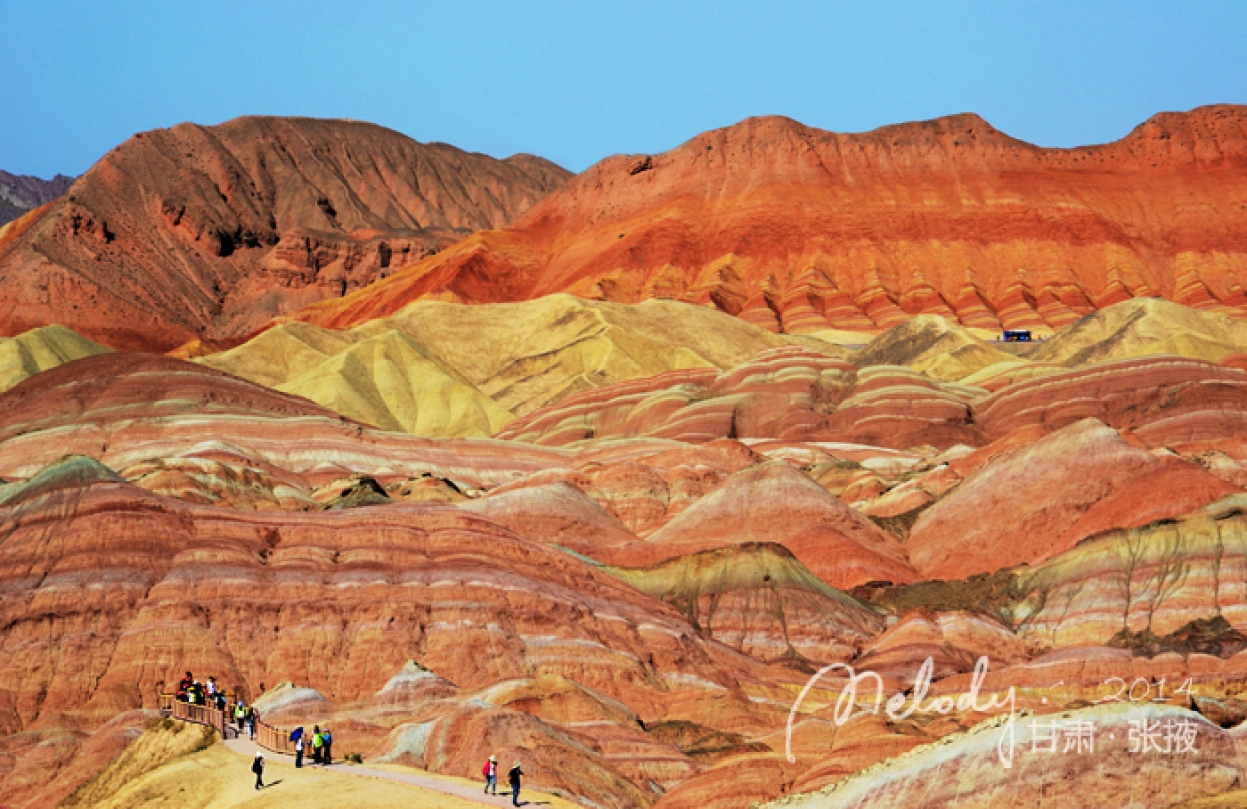
Gansu Provincial Museum: A Conversation Across Millennia
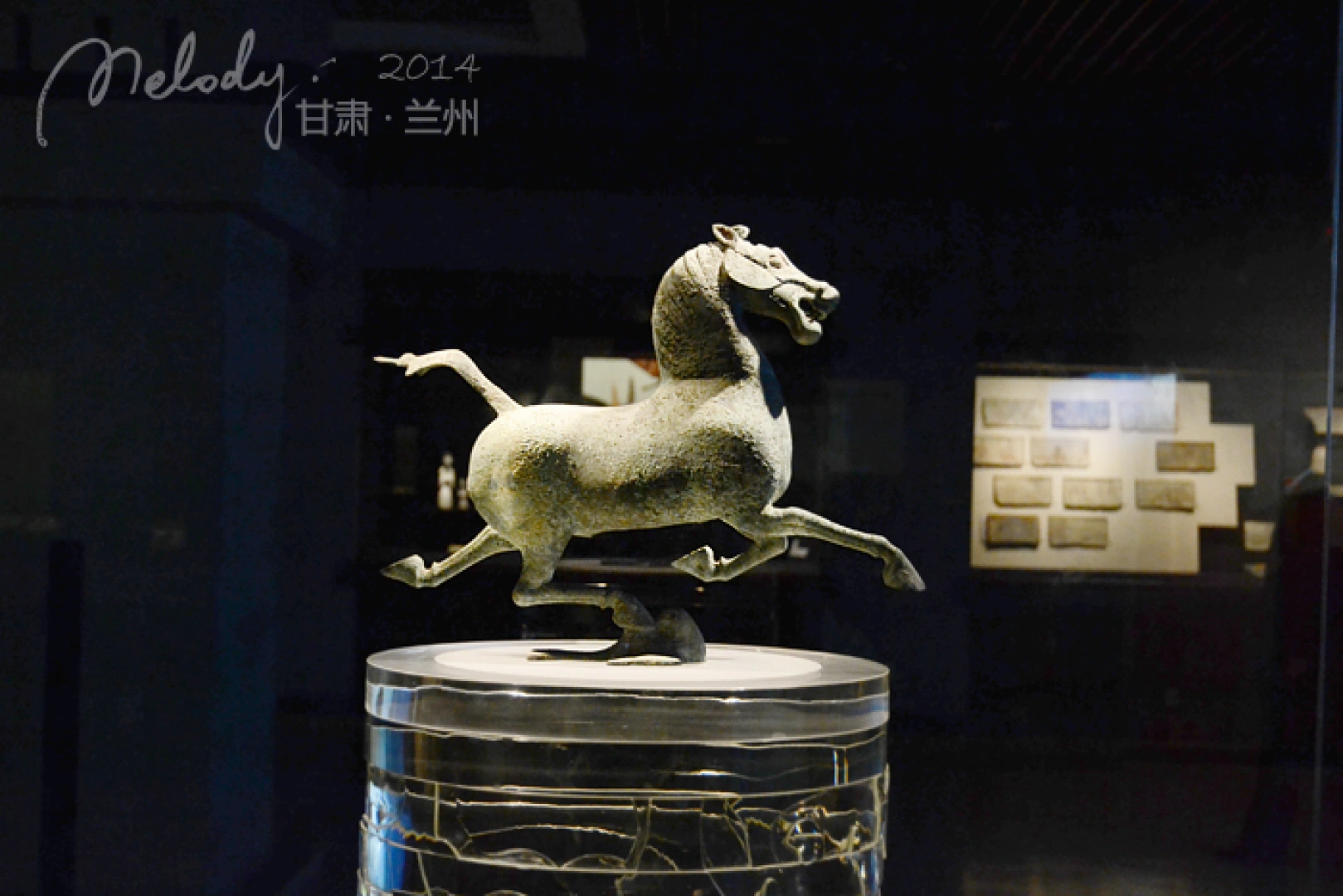
The Gansu Provincial Museum is free—just exchange your ID card for a ticket. My main goal here was to see the world-famous “Galloping Horse Treading on a Flying Swallow” in person.
This bronze horse, also known as Ma Ta Fei Yan, is an Eastern Han Dynasty artifact unearthed in 1969 from the Leitai Han Tomb in Wuwei. Standing 34.5 cm tall, 45 cm long, and 13 cm wide, its elegant form and ingenious mechanical design are remarkable: the flying swallow serves as the center of gravity, making the entire sculpture as stable as a mountain. In 1983, it was designated as China’s tourism logo—a title it still holds.
Getting to see it required a little adventure. The museum closes at 5 PM, and we only found the horse’s exhibition hall at 4:30. A guard at the entrance stopped us, saying the area had already been cleared. We pleaded. Just as we were about to give up, we passed another guard near the exit. I explained, “We’re catching a train to Dunhuang tonight. This is our only chance.” He softened. “Just the two of you? Go ahead.” We sprinted, thanking him over our shoulders, darting through several halls until we finally saw the legendary horse.
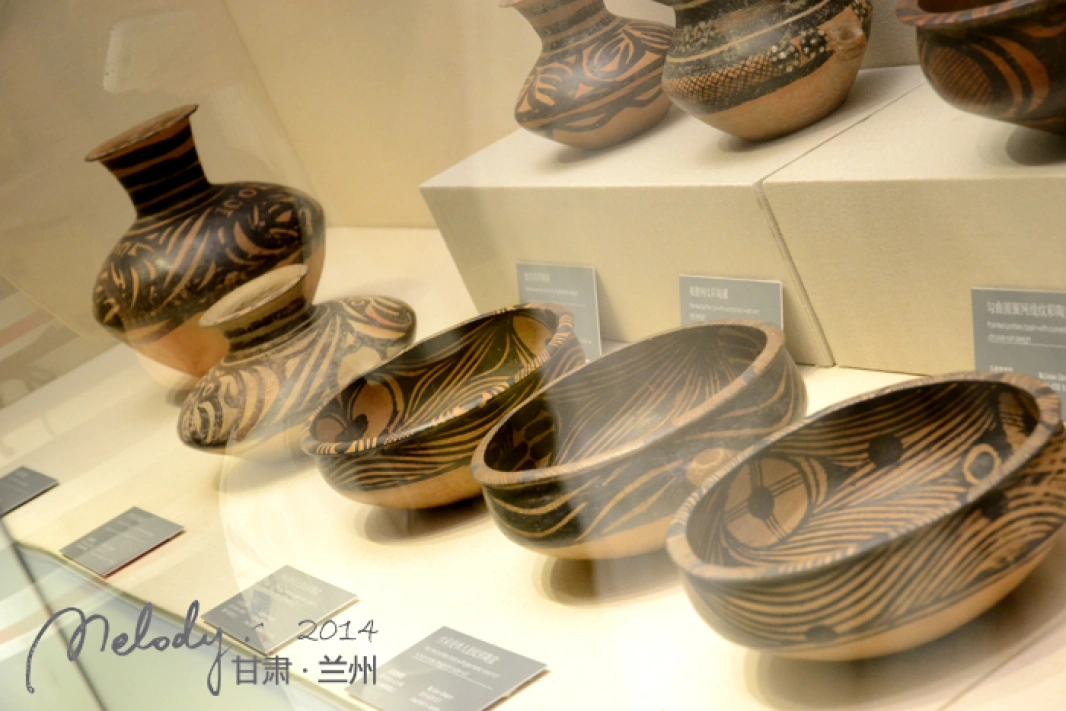
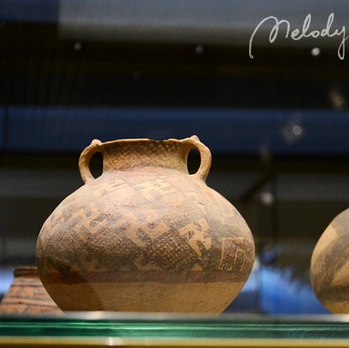
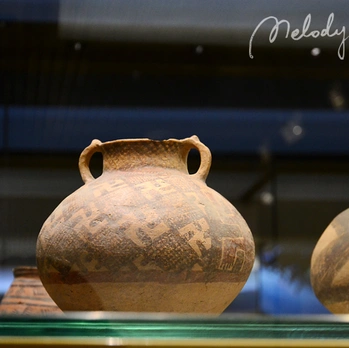
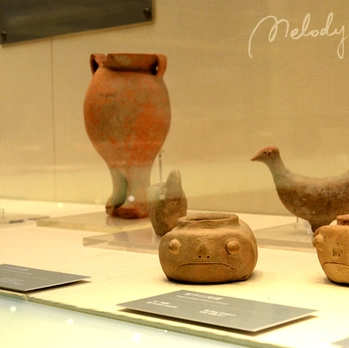
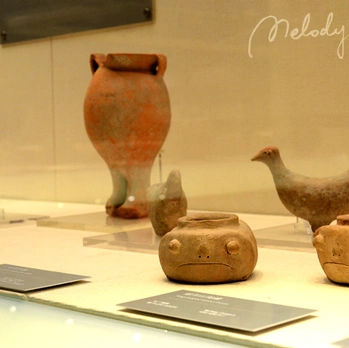
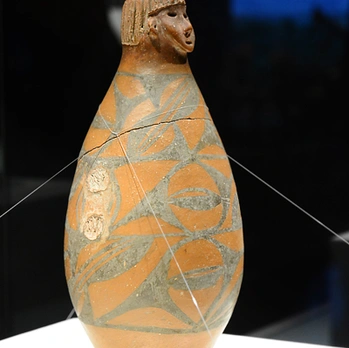
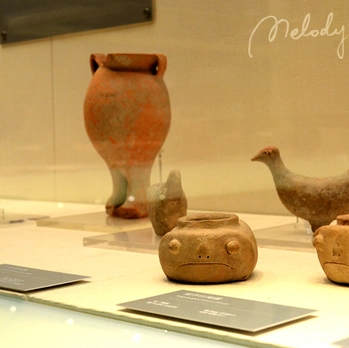
Beyond the bronze horse, the museum’s pottery collection is also worth your time. Some of these vessels, thousands of years old, still feel strikingly modern in their design. One piece bore a symbol resembling the Buddhist swastika (卍), but dated from long before Buddhism existed. Others had playful shapes that wouldn’t look out of place in a modern cartoon.
The most awe-inspiring piece for me was a seemingly ordinary pottery vessel—it depicted the human king Fuxi and was the museum’s crown jewel. There was also the Yellow River Ancient Elephant fossil: 4 meters tall, 8 meters long, with tusks over 2 meters in length—the most complete stegodon skeleton ever discovered.
The museum also had some fascinating details: a “concrete” floor made from a mixture of mud, eggshells, and oats, a testament to ancient building techniques; and a coin inscribed with Western Xia script, whispering the existence of that mysterious dynasty.
[Link: Top 10 things to do in Lanzhou]
Day 3: The Lingering Echoes of the Silk Road in the Barren Gobi
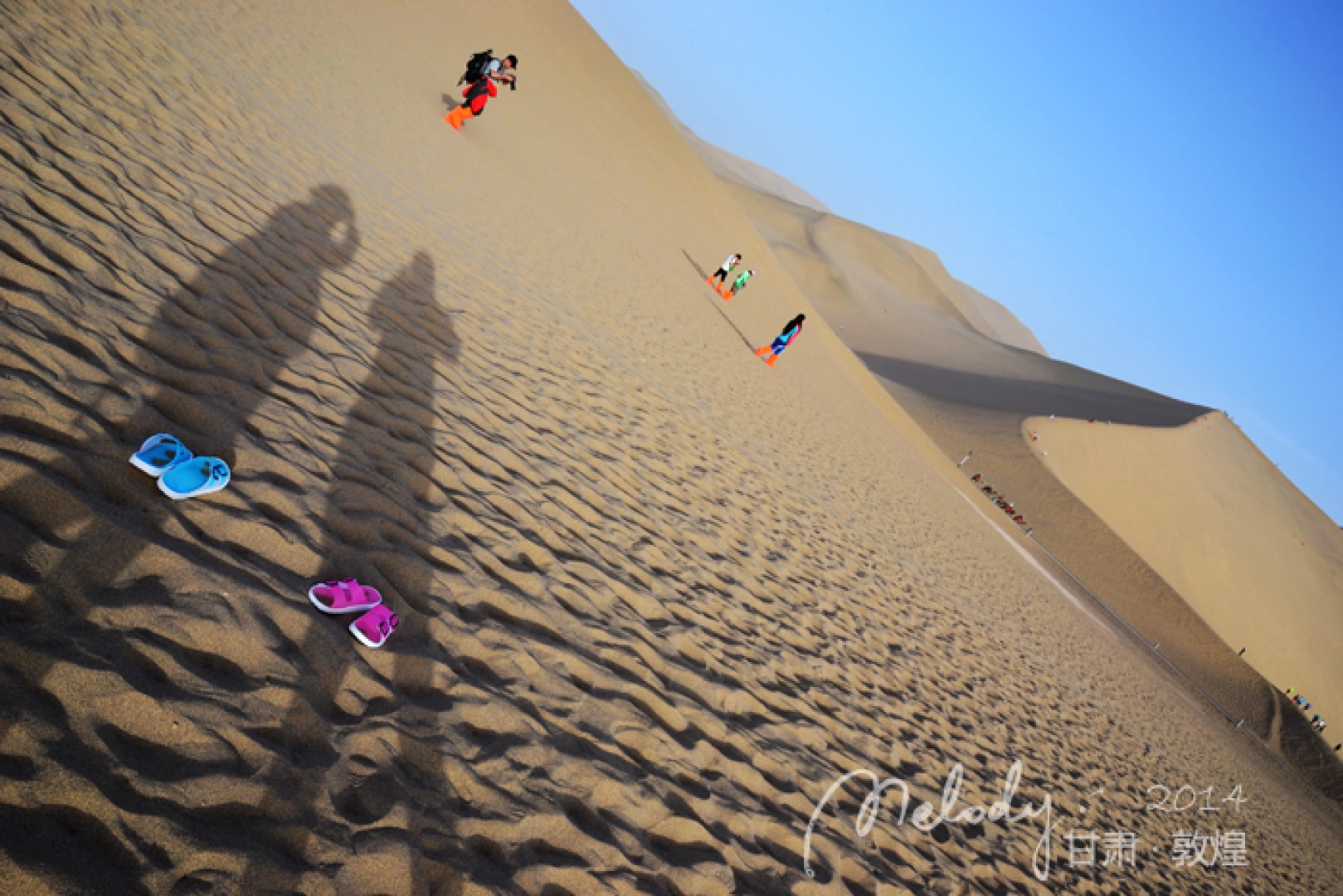
Yangguan Pass: “West of Yangguan, No Old Friends”
“Drink one more cup of wine, my friend; west of Yangguan, you’ll find no old friends.” Wang Wei’s poem has made Yangguan Pass one of the most poignant landmarks in the Chinese imagination.
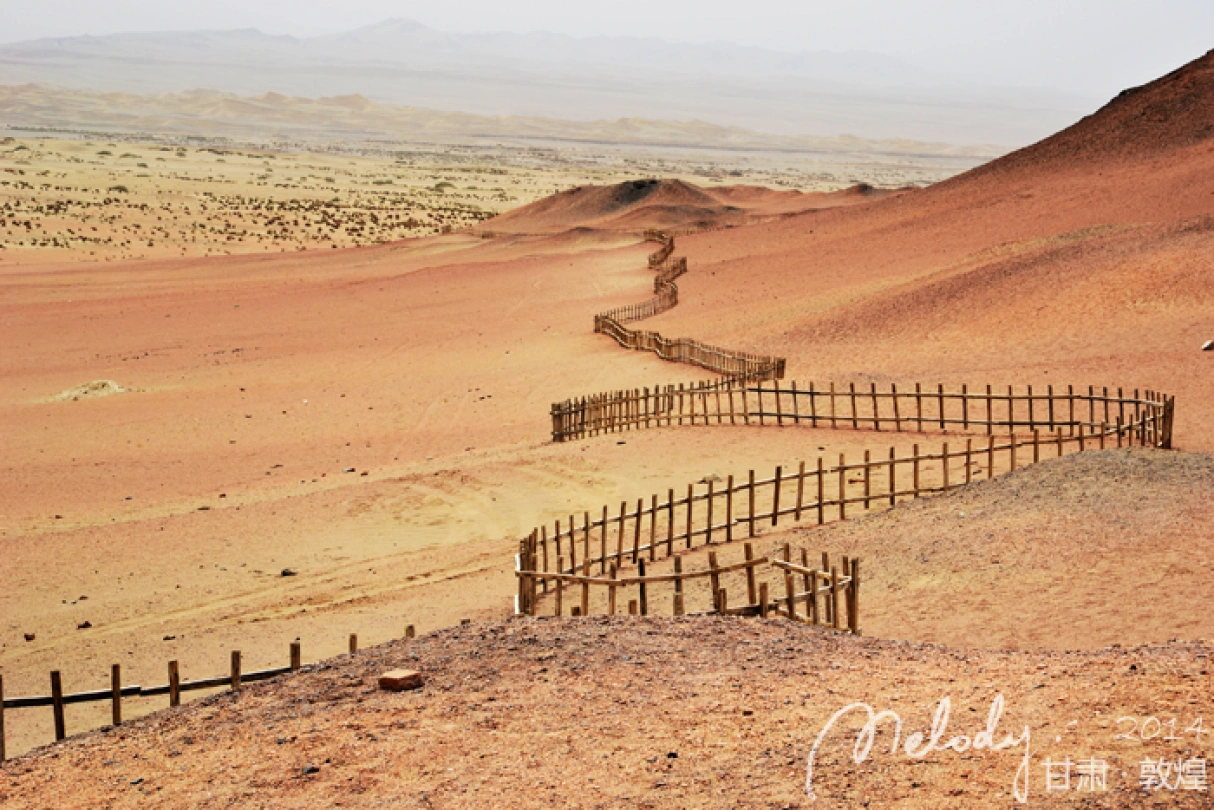
But standing there, you realize Yangguan itself no longer exists. After the Song and Yuan dynasties, as the Silk Road declined, the pass was gradually abandoned. What’s now called the “Yangguan Site” is merely a conjectured area based on historical records—a stretch of Gobi desert to the left of a fence, extending to distant hills.
Yangguan is gone, leaving only a crumbling beacon tower, standing alone as a guardian of this vast, barren land. The wheels of history have ground the once-vital fortress into nothingness. Yet, standing here, gazing at this “emptiness,” a profound sense of desolation rises within you—the very feeling of “west of Yangguan, no old friends.” It’s as if you’ve lived through that history yourself, and it all comes vividly to mind.
Yumen Pass: “Spring Breeze Never Crosses Yumen Pass”
Yumen Pass and Yangguan are like sister landmarks. Also known as Xiaofangpan City, Yumen Pass was built around 111 BC, serving as the strategic throat of the Silk Road’s northern route into the Western Regions. The pass is a square fortress made of rammed earth, 10 meters high, 24 meters from east to west, and 26.4 meters from north to south, relatively well-preserved.
Outside Yumen Pass once lay a marsh, forming a natural barrier. Nearby, the Han Dynasty Great Wall ruins are among the best-preserved sections of the Hexi Corridor’s Han wall. Built from sand, gravel, tamarisk, and loess, these walls have weathered millennia of wind and rain. Though they’ve lost their original grandeur, their outlines remain recognizable.
Yardang Devil City: Nature’s Masterpiece
Yardang Devil City lies 184 kilometers west of Dunhuang, covering an area of 398 square kilometers, part of the ancient Lop Nor region. Only China Mobile has a faint signal here—China Unicom and China Telecom lose connection long before you arrive.
You explore the area via a scenic shuttle that stops at five points. The ochre “hills” contrast sharply with the black surface gravel. The final stop is called “Western Fleet”—rows of elongated hillocks that look like a naval armada on a vast ocean. It’s spectacular, but you can only admire it from a distance; getting close is forbidden.
[Link: Dunhuang West Route day trip guide]
Day 4: Dunhuang – A Cultural Feast Along the Silk Road
Singing Sand Mountain & Crescent Moon Spring: Miracles in the Desert
Singing Sand Mountain is a transitional zone between the Badain Jaran and Taklamakan Deserts, stretching 40 kilometers in length and 20 kilometers in width. My first close encounter with a desert was exhilarating. A local man we met on the train gave us a practical tip: “No matter what shoes you wear to climb Singing Sand Mountain, bare feet are the best.”
Crescent Moon Spring, embraced by Singing Sand Mountain, is about 150 meters long and 50 meters wide, named for its moon-shaped surface. Historically, the spring never dried up and was a vital water source for Silk Road caravans. Today, it remains one of Dunhuang’s most iconic sights—a true desert oasis.
[Link: Mogao Caves ticket booking tips]
FAQ: Eastern Silk Road Travel Questions
1. What is the best time to visit the Hexi Corridor?
 The best time is May to October, when temperatures are mild and skies are clear. Summer (June–August) offers long daylight hours, ideal for desert activities. Avoid winter (December–February) when temperatures can drop below -15°C and some sites close early.
2. How many days do I need for the Eastern Silk Road in Gansu?
 A minimum of 7–9 days is recommended for a comfortable journey from Lanzhou to Dunhuang. If you’re short on time, focus on Dunhuang (3 days) and Zhangye (2 days), and skip Jiayuguan.
3. Is it safe to travel alone on the Hexi Corridor?
Yes, the Hexi Corridor is very safe for solo travelers, especially along the main tourist route. Public transport is reliable, and major attractions have English signage. However, always carry enough water and sun protection, especially in desert areas.
4. Do I need to book Mogao Caves tickets in advance?
 Absolutely. Mogao Caves limit daily visitors to protect the murals. Book tickets at least 2–3 weeks in advance during peak season (May–October). Tickets can be purchased online via the official Dunhuang Research Academy website.
5. What should I pack for a Hexi Corridor trip?
Pack layers (desert days are hot, nights are cold), comfortable walking shoes, sunscreen, sunglasses, a hat, and a reusable water bottle. If visiting Yardang Devil City, bring a power bank—only China Mobile has signal there.
[Link: What to wear in Gansu desert regions]
Conclusion: Start Your Silk Road Adventure Today
The Eastern Silk Road from Dunhuang to Lanzhou is more than a journey—it’s a pilgrimage through 2,000 years of history, culture, and natural wonder. From the haunting silence of Yangguan Pass to the vibrant murals of Mogao Caves, every step reveals a story waiting to be discovered.
Gansu may be overlooked by many, but that’s precisely what makes it special. You won’t battle crowds. You’ll find authentic encounters. And you’ll leave with memories that last a lifetime.
Ready to walk the ancient path? Start planning your Hexi Corridor itinerary today. Book your train tickets, reserve your Mogao Caves entry, and pack your curiosity. The Silk Road is waiting.
[Link: Book Dunhuang tours and hotels]
You may also like